Category Archives: Vegetarian cuisine

Kitayama Organic Farm: Great Chefs meet Great Farmers in Fujinomiya City!

Fuminori Nishitani/藤谷文紀 of Nori in Fujieda City, Tooru Arima/有馬亨 of Pissenlit in Shizuoka City and the Hirakakis, Masaaki and Kiko/平垣正明・紀子 at Kitayama Organic Farm/北山農園 in Fujinomiya City!

Today I finally had the honor and pleasure to introduce two of the very top chefs in Shizuoka Prefecture, namely Fuminori Nishitani/藤谷文紀 of Nori in Fujieda City and Tooru Arima/有馬亨 of Pissenlit in Shizuoka City to the Hirakakis, Masaaki and Kiko/正明・紀子, owners and producers at Kitayama Organic Farm/北山農園 in Fujinomiya City!
This had been long in the offing and the three of us decided to drive this Tuesday all the way from Shizuoka City to Fujinomiya City at the very foot of Mount Fuji to visit the Organic Farm of the Kitayamas not only for a formal meeting but also to establish a gastronomic event to take place in the very near future!

The Hirakakis have refurbished this ancient farmhouse on their own!
Both were professional photographers before deciding to venture in organic farming!

Pure water gushing down the slopes of Mount Fuji is one reason why Fujinomiya City is so celebrated for its superlative agriculture!

Having gone through the necessary introductions I made myself scarce after a while to let them discuss their plans.
The two chefs had struck on the idea of a collaboration dinner at Restaurant Pissenlit on the 10th of March based on the vegetables grown by the Kitayamas whose merits I had praised for some time.

Some of their vegetables on the table around which they were sitting…

Delicious pickles from the same vegetables.
Sorry for the fuzzy pictures but it was very dark inside the farmhouse!

More pickles…

While they were deep in talks I took a peek inside a greenhouse behind the farmhouse.
What are these?

All kinds of sliced radishes and turnips left to dry!

Swiss chards!

I came back to find them snacking on dried sweet potatoes!

Artichokes that will be harvested beginning of next summer!

Time had finally come to make a grand tour of the 3 ha where the Kitayamas grow more than 190 varieties of organic vegetables at different times of the year!

Golden carrot!

Burgundy carrot!
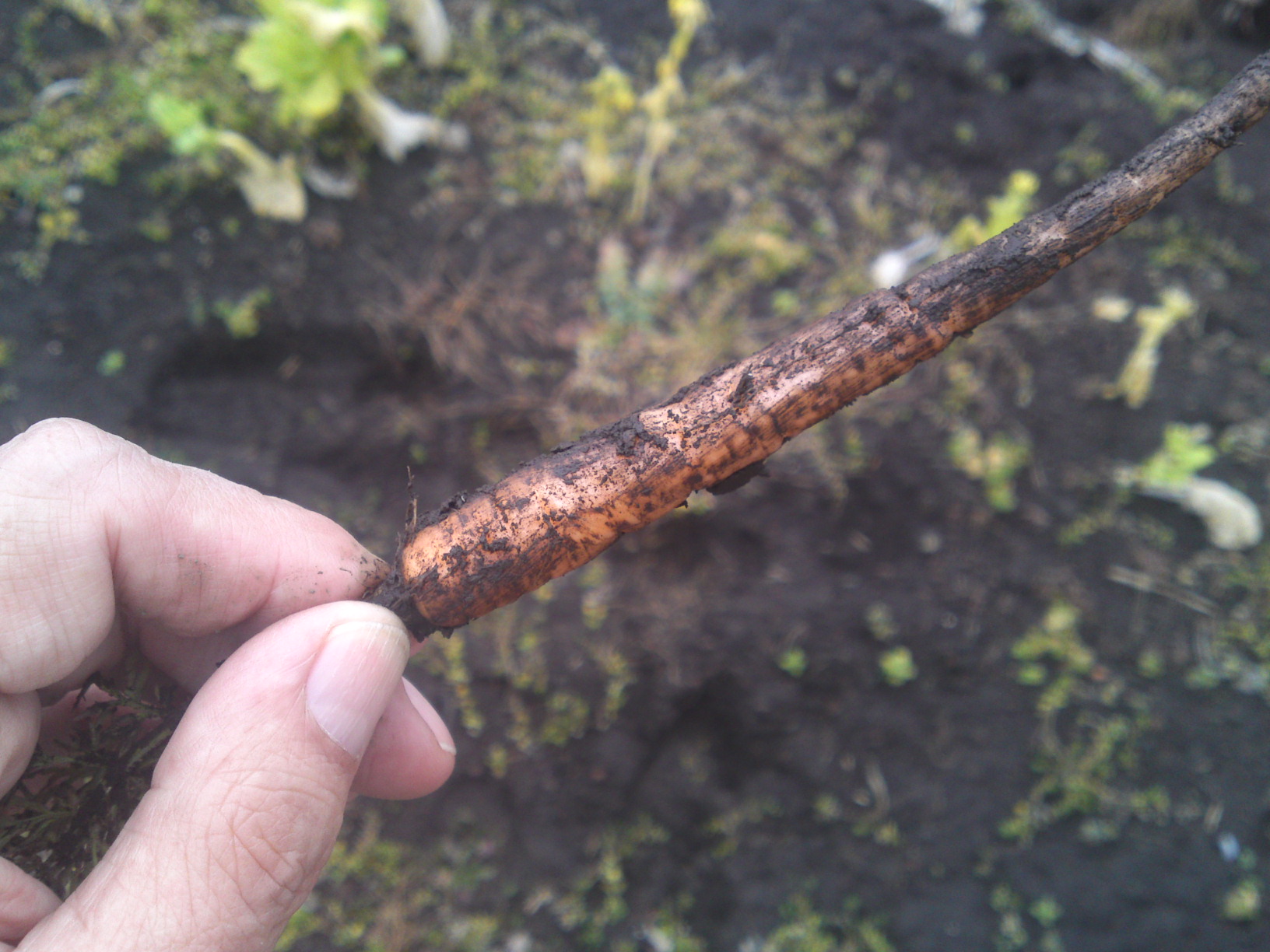
Cute orange carrot!

Purple daikon field!

The purple daikon!

To be frank, there were so many kinds I didn’t have the time to write down their names! Shall we call these mini thread purple and white daikon?

Komatsuna!

Romanesco broccoli!

Red daikon field!

Organic cabbages!

Organic red cabbages!

Shimonita leeks field!

Highly valued variety of leek in Japan!

Some of the beauties I took back home!

Looking forward to visiting the Kitayamas again next spring!

KITAYAMA ORGANIC FARM

Masaaki and Kiko Hirakaki
418-0112 Fujinomiya Shi, Kitayama, 3102
Tel./Fax: 0544-25-2795
Mobile phone: 090-2261-8821
HOMEPAGE
Private orders welcome over the phone!

PISSENLIT

420-0839 Shizuoka City, Aoi Ku, Takajo, 2-3-4
Tel.: 054-270-8768
Fax: 054-627-3868
Business hours: 11:30~14:30; 17:00~22:00
Closed on Tuesdays and Sunday evening
HOMEPAGE (Japanese)
E-Mail: pissenlit2008@ybb.ne.jp
Credit Cards OK
Entirely non-smoking!

NORI

426-0204 Shizuoka Ken, Fujieda Shi, Tokigaya, 864-3
Tel./Fax: 054-641-4778
Opening hours: 11:30~14:00; 18:00~22:00
On reservation only for dinner
Closed on Tuesdays and first Monday
Credit cards OK
HOMEPAGE (Japanese, but do check it for great photographs of the house and garden!)
Entirely non-smoking!

RECOMMENDED RELATED WEBSITES

Foodhoe, Chucks Eats, Things that Fizz & Stuff, Five Euro Food by Charles,Red Shallot Kitchen by Priscilla,With a Glass, Nami | Just One Cookbook, Peach Farm Studio, Clumsyfingers by Xethia, PepperBento,Adventures in Bento Making, American Bent, Beanbento, Bento No, Bento Wo Tsukurimashou, Cooking Cute, Eula, Hapabento , Happy Bento, Jacki’s Bento Blog, Kitchen Cow, Leggo My Obento, Le Petit Journal Bento & CO (French), Lunch In A Box,
Susan at Arkonlite, Vegan Lunch Box; Tokyo Tom Baker, Daily Food Porn/Osaka, Only Nature Food Porn, Happy Little Bento, The Herbed Kitchen, J-Mama’s Kitchen, Cook, Eat, Play, Repeat, Bento Lunch Blog (German), Adventures In Bento, Anna The Red’s Bento Factory, Cooking Cute, Timeless Gourmet, Bento Bug, Ideal Meal, Bentosaurus, Mr. Foodie (London/UK), Ohayo Bento,

Must-see tasting websites:

-Sake: Tokyo Through The Drinking Glass, Tokyo Foodcast, Urban Sake, Sake World
-Wine: Palate To Pen, Warren Bobrow, Cellar Tours, Ancient Fire Wines Blog
-Beer: Good Beer & Country Boys, Another Pint, Please!
-Japanese Pottery to enjoy your favourite drinks: Yellin Yakimono Gallery

Japanese Vegetarian & Vegan Cakes: Wagashi/和菓子 18: Sweet Potato Wagashi Recipe

Sweet potatoes or Satsuma Imo/薩摩芋 in Japanese are a popular vegetable throughout the world as it can be accomodated both as a vegetable dish or a dessert!
The Japanese make a great use of it in Wagashi/和菓子/Japanese cakes, especially in home-cooking!
Here is a very simple and easy to adapt recipe that will please vegans, vegetarians and omnivores alike, kids and adults!
The style is ohagi/おはぎ!

SATSUMA IMO OHAGI/薩摩芋おはぎ RECIPE

-INGREDIENTS (for 6 balls)
Sweet potato (steamed): 70g
Marmelade or yuzu (Japanese Lime) jam: 1 tablespoon
White miso paste (shiro miso): 2.5g (small teaspoon)
Sweetmeats/Anko/餡子: 120=150g
Ground sesame seeds: as you like

-RECIPE

Steam the sweet potato or soften it ina microwave oev. Mix it well with the white miso and the jam.

Form 6 balls of equal size.

Divide the sweetmeats into 6 equal portions.
Spread one portion over a piece of cellophane paper into a circle large enough to wrap around the whole sweet potato ball.

Place a sweet potato ball in the center of the sweetmeat circle.

This is the only “difficult” part you will master easily enough: bring the cellophane paper sides up and twist them together so as to form a ball by bringing the sweetmeat around the sweet potato ball.

If you think that the ball is too warm to unwrap easily after all this work, leave it in the fridge until before serving (not in the freezer!).
Unwrap the balls over a serving plate and sprinkle them with ground sesame seeds.
Naturally it is open to your imagination!

Have the kids make them!

RECOMMENDED RELATED WEBSITES

With a Glass,
Clumsyfingers by Xethia
Adventures in Bento Making, American Bento, Beanbento, Bento No1, Bento Wo Tsukurimashou, Cooking Cute, Eula, Hapabento , Happy Bento, Jacki’s Bento Blog, Kitchen Cow, Leggo My Obento, Le Petit Journal Bento & CO (French), Lunch In A Box, My Bento Box, Vegan Lunch Box; Tokyo Tom Baker, Daily Food Porn/Osaka, Only Nature Food Porn, Happy Little Bento, The Herbed Kitchen, J-Mama’s Kitchen, Cook, Eat, Play, Repeat; Bento Lunch Blog (German); Adventures In Bento; Anna The Red’s Bento Factory; Cooking Cute; Timeless Gourmet; Bento Bug; Ideal Meal; Bentosaurus; Mr. Foodie (London/UK); Ohayo Bento

Must-see tasting websites:

-Sake: Tokyo Through The Drinking Glass, Tokyo Foodcast, Urban Sake, Sake World
-Wine: Palate To Pen, Warren Bobrow, Cellar Tours, Ancient Fire Wines Blog
-Beer: Good Beer & Country Boys, Another Pint, Please!
-Japanese Pottery to enjoy your favourite drinks: Yellin Yakimono Gallery

Japanese Vegetarian & Vegan Cakes: Wagashi/和菓子 17: Wagashi Christmas Cakes Pictures

Pyramid-style Christmas Tree?

I’m an unrepentant agnostic hedonist (and an omnivore to boot!), but since some of my vegan and vegetarain friends are Christian, I hope these pictures will inspire them!

Flowery Christmas!

What’s in Santa’s bag?

Bring your forks and knives!

Holy (Holly) Christmas!

For the toddlers!

Pity you have to eat it!

Definitely Japanese-style!

They almost look like sushi!

Elegant simplicity!

RECOMMENDED RELATED WEBSITES

With a Glass,
Clumsyfingers by Xethia
Adventures in Bento Making, American Bento, Beanbento, Bento No1, Bento Wo Tsukurimashou, Cooking Cute, Eula, Hapabento , Happy Bento, Jacki’s Bento Blog, Kitchen Cow, Leggo My Obento, Le Petit Journal Bento & CO (French), Lunch In A Box, My Bento Box, Vegan Lunch Box; Tokyo Tom Baker, Daily Food Porn/Osaka, Only Nature Food Porn, Happy Little Bento, The Herbed Kitchen, J-Mama’s Kitchen, Cook, Eat, Play, Repeat; Bento Lunch Blog (German); Adventures In Bento; Anna The Red’s Bento Factory; Cooking Cute; Timeless Gourmet; Bento Bug; Ideal Meal; Bentosaurus; Mr. Foodie (London/UK); Ohayo Bento

Must-see tasting websites:

-Sake: Tokyo Through The Drinking Glass, Tokyo Foodcast, Urban Sake, Sake World
-Wine: Palate To Pen, Warren Bobrow, Cellar Tours, Ancient Fire Wines Blog
-Beer: Good Beer & Country Boys, Another Pint, Please!
-Japanese Pottery to enjoy your favourite drinks: Yellin Yakimono Gallery

Japanese Vegetarian & Vegan Cakes: Wagashi/和菓子 16: Yatsuhashi/-Tabe

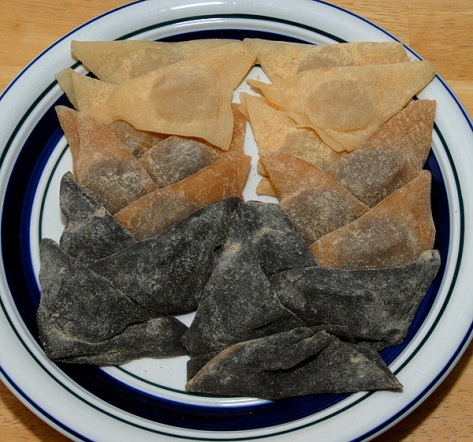
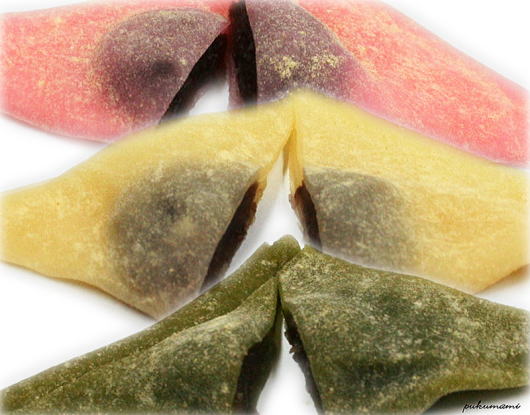
Yatsuhashi (八ツ橋 or 八橋) is a Japanese confectionery sold mainly as a souvenir sweet (miyagegashi/土産菓子). It is one of the best known meibutsu/名物 (famous regional products) of Kyoto.
It is also widely known under the name of O-Tabe/お食べ (“please eat”).

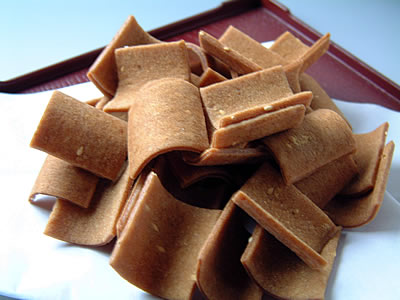
It is made from rice flour (上新粉, jōshinko), sugar and cinnamon. Baked, it is similar to senbei, making it suitable for both vegans and flour allergics!

Baked Yatsuhashi

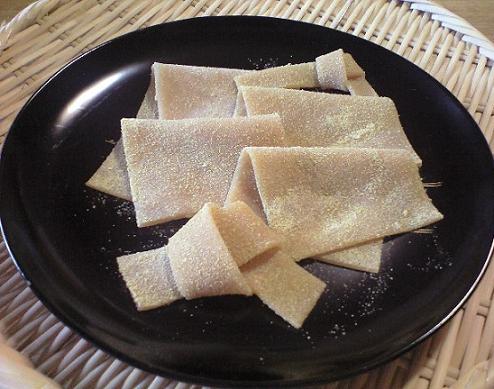
Raw Yatsuhashi

Raw, unbaked yatsuhashi (Nama yatsuhashi/生八橋) has a soft, mochi-like texture and is often eaten wrapped around red bean paste (餡, an), and may come in a variety of different flavours.

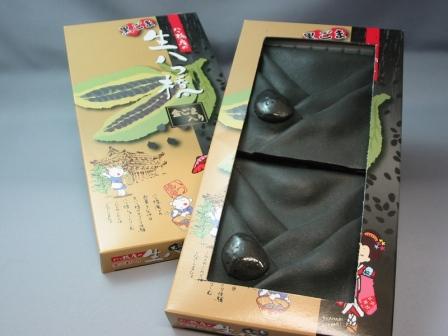
Black Yatsuhashi

Most notable to the Kyoto area is the black version of this. The addition of black bean powder and black sesame seed powder to the wrapper and the an give a distinctive black color.

Different flavoured Yatsuhashi

Not so long ago, there were only a few flavours available.
Now, all kinds of flavours are on sale for the pleasur of all:
Cinnamon, Matcha Tea, Ume an (sweetmeats mixed with Jpanese plum), Mandarine, Strawberries, Cherry blossoms, Ramune, Chocolate-banana, Chocolate, Kyoto baked sweet potato, Chestnuts, Green apple, Blueberries, Mango, Orange, Red wine and more seasonal offerings!

RECOMMENDED RELATED WEBSITES

With a Glass,
Clumsyfingers by Xethia
Adventures in Bento Making, American Bento, Beanbento, Bento No1, Bento Wo Tsukurimashou, Cooking Cute, Eula, Hapabento , Happy Bento, Jacki’s Bento Blog, Kitchen Cow, Leggo My Obento, Le Petit Journal Bento & CO (French), Lunch In A Box, My Bento Box, Vegan Lunch Box; Tokyo Tom Baker, Daily Food Porn/Osaka, Only Nature Food Porn, Happy Little Bento, The Herbed Kitchen, J-Mama’s Kitchen, Cook, Eat, Play, Repeat; Bento Lunch Blog (German); Adventures In Bento; Anna The Red’s Bento Factory; Cooking Cute; Timeless Gourmet; Bento Bug; Ideal Meal; Bentosaurus; Mr. Foodie (London/UK); Ohayo Bento

Must-see tasting websites:

-Sake: Tokyo Through The Drinking Glass, Tokyo Foodcast, Urban Sake, Sake World
-Wine: Palate To Pen, Warren Bobrow, Cellar Tours, Ancient Fire Wines Blog
-Beer: Good Beer & Country Boys, Another Pint, Please!
-Japanese Pottery to enjoy your favourite drinks: Yellin Yakimono Gallery

Vegan Gastronomy: a Heaven in Shizuoka, Japan!

Chinese vegan gastronomy at Cham!

How many times have I heard expats and Japanese telling me, “I dare not go out of Tokyo as I’m vegan!”
Well, you may have some specialized vegan restaurants in Tokyo, but here in Shizuoka, the Prefecture counting (officially!) the greatest number of vegetable varieties in Japan, you do not need to look for (in vain!) a vegan restaurant!
Either you can find enough in the local markets, or better explore the many restaurants of this Prefecture and City of the same name that is THE gastronomic region of Japan. As you will discover below you are bound to find something absolutely delicious according to your priorities in menus of all genres!

Let me take your hand (or arm) and leave it to me! And we are visiting Shizuoka City only!

Vietnamese Sauteed vegetables at Annam!

Italian sauteed organic vegetables at Aquavite!

West African lunch, all vegetables cooked in coconut milk at Capu!

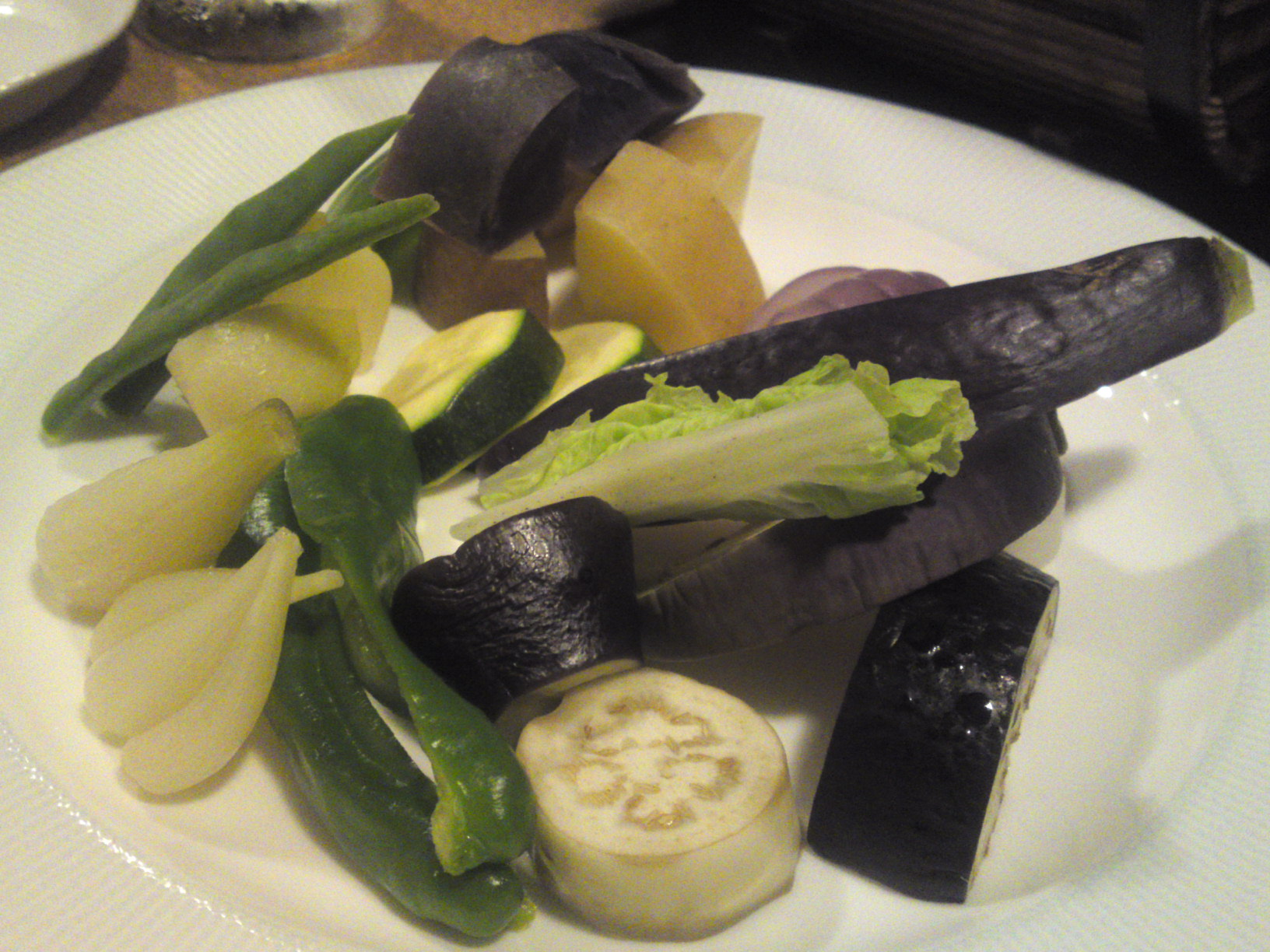
Chinese steamed vegetables at Cham served with a scented oil and soy sauce, or just plain salt and matcha powder!

Vegan sushi at Sushi Ko!

Organic shiitake at Yasaitei!

Vegetables baked in skillet from Solio Italian Restaurant’s own garden!

Tomato tempura (no egg white used) with yuzu koshio at Uzu Izakaya!

“Goro goro” fried and steamed salad at Uzu Izakaya!

Vegetable sashimi at Yasaitei!

Vegan steak at Tetsuya Sugimoto French Restaurant!

Fried Vegetables at Yasaitei!

Yomogi Wagashi, anywhere in town!

Misoyaki (miso paste and buckwheat), a personal favorite of mine at Yoshino Soba Restaurant!

If you need more explanations and guidance, I’ll be glad to help!

Incidentally I’m neither a vegan or vegetarian, but I understand my friends’ priorities!

RECOMMENDED RELATED WEBSITES

With a Glass,
Clumsyfingers by Xethia
Adventures in Bento Making, American Bento, Beanbento, Bento No1, Bento Wo Tsukurimashou, Cooking Cute, Eula, Hapabento , Happy Bento, Jacki’s Bento Blog, Kitchen Cow, Leggo My Obento, Le Petit Journal Bento & CO (French), Lunch In A Box, My Bento Box, Vegan Lunch Box; Tokyo Tom Baker, Daily Food Porn/Osaka, Only Nature Food Porn, Happy Little Bento, The Herbed Kitchen, J-Mama’s Kitchen, Cook, Eat, Play, Repeat; Bento Lunch Blog (German); Adventures In Bento; Anna The Red’s Bento Factory; Cooking Cute; Timeless Gourmet; Bento Bug; Ideal Meal; Bentosaurus; Mr. Foodie (London/UK); Ohayo Bento

Must-see tasting websites:

-Sake: Tokyo Through The Drinking Glass, Tokyo Foodcast, Urban Sake, Sake World
-Wine: Palate To Pen, Warren Bobrow, Cellar Tours, Ancient Fire Wines Blog
-Beer: Good Beer & Country Boys, Another Pint, Please!
-Japanese Pottery to enjoy your favourite drinks: Yellin Yakimono Gallery

Japanese Vegetarian & Vegan Cakes: Wagashi/和菓子 14: Satsuma Imo/Sweet Potatoes-Recipe

SATSUMA-WAGASHI-1

Satsuma Imo or Sweet Potatoes are often used in Japanese cakes/Wagashi.
The great advantage is that it makes for completely vegan cakes with an almost endless source of variations.

Here is the basice recipe from you will be able to improvise!

INGREDIENTS:

-Satsuma/Sweet Potato: 400g (peeled)
-Sugar: 75 g
-Agar agar powder: 3 g
-Salt: a pinch
-Water: 20 ml

RECIPE:

SATSUMA-WAGASHI-2
-Cut the sweet potato into small pieces and wash under clear cold water to take off astringency.
Boil in a pan with 20 ml of water until soft.

-Just before the potatoes are completely cooked, add sugar, agar agar and salt. Bring to boil and switch off fire. Bear in mind there will be very little water. Do not burn the poatoes!

-Transfer potatoes into a frying pan and fry until they get smooth.

-Return to boiling pan and heat to get all excess water out.

-Pass through a sieve, or process.

-Wet the inside of a refrigerator recipient before spreading cellophane paper inside. Pour the potato puree into the recipient and fold the cellophane paper on top, leaving no air between cellophane paper and potato. Chill inside refrigerator.

SATSUMA-WAGASHI-3

Before eating unwrap cellophane paper and cut into preferred shape.
This is where the fun begins!

RECOMMENDED RELATED WEBSITES

With a Glass,
Clumsyfingers by Xethia
Adventures in Bento Making, American Bento, Beanbento, Bento No1, Bento Wo Tsukurimashou, Cooking Cute, Eula, Hapabento , Happy Bento, Jacki’s Bento Blog, Kitchen Cow, Leggo My Obento, Le Petit Journal Bento & CO (French), Lunch In A Box, My Bento Box, Vegan Lunch Box; Tokyo Tom Baker, Daily Food Porn/Osaka, Only Nature Food Porn, Happy Little Bento, The Herbed Kitchen, J-Mama’s Kitchen, Cook, Eat, Play, Repeat; Bento Lunch Blog (German); Adventures In Bento; Anna The Red’s Bento Factory; Cooking Cute; Timeless Gourmet; Bento Bug; Ideal Meal; Bentosaurus; Mr. Foodie (London/UK); Ohayo Bento

Must-see tasting websites:

-Sake: Tokyo Through The Drinking Glass, Tokyo Foodcast, Urban Sake, Sake World
-Wine: Palate To Pen, Warren Bobrow, Cellar Tours, Ancient Fire Wines Blog
-Beer: Good Beer & Country Boys, Another Pint, Please!
-Japanese Pottery to enjoy your favourite drinks: Yellin Yakimono Gallery

Japanese Vegetarian & Vegan Cakes: Wagashi/和菓子13: Recipe-Kabotcha/Pumpkins

WAGASHI-PUMPKIN-1

Just found this recipe to please vegans (and others) with a sweet tooth:
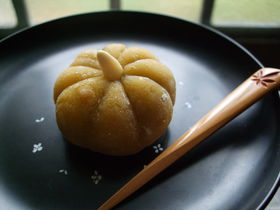
Japanese Cake/Wagashi: Pumpkin/Kabotcha Wagashi!

INGREDIENTS: For 5 cakes
-Pumkin paste: 20 g
-Rice flour: 30 g
-Sugar: 12 g
-Water: 50 ml
-Sweetmeats/Anko (See Recipe here)
-Cornstarch: enough for operation
-Pumpkin seeds or pine nuts: 5 (for decoration)

RECIPE:

WAGASHI-PUMPKIN-2
-Peel skin from pumkin and heat pulp inside microwave oven until soft enough to make paste. Let cool down completely.

WAGASHI-PUMPKIN-3
-In an oven bowl mix well punpkin paste, rice flour, sugar and water until it becomes bubbly. Cover with cellophane paper and heat for 40 seconds at 700W inside microwave oven.

WAGASHI-PUMPKIN-4
-Work the paste until smooth.

WAGASHI-PUMPKIN-5
-Using cornstarch to work paste more easily as it will easily stick to your fingers, divide the paste into 5 identical portions.

WAGASHI-PUMPKIN-6
-Divide sweetmeats/anko into 5 identical parts and fashion them into small balls.
Coat your fingers with a little cornstarch and completely wrap sweetmeat/anko ball with pumpkin paste as shown in picture.

WAGASHI-PUMPKIN-7
-Make indents around the ball with a wooden sticks to shape the ball into a small pumpkin.

WAGASHI-PUMPKIN-8
-As soon as the ball is finished, gently brush away whatever cornstarch is left on the surface.

WAGASHI-PUMPKIN-9
-On top of each pumpkin cake place a seed for decoration and effect!

WAGASHI-PUMPKIN-10
-That is how your “pumpkin” will look when you cut it!

NOTE:
You can sieve the pumpkin pulp first for a finer texture.

RECOMMENDED RELATED WEBSITES

With a Glass,
Clumsyfingers by Xethia
Adventures in Bento Making, American Bento, Beanbento, Bento No1, Bento Wo Tsukurimashou, Cooking Cute, Eula, Hapabento , Happy Bento, Jacki’s Bento Blog, Kitchen Cow, Leggo My Obento, Le Petit Journal Bento & CO (French), Lunch In A Box, My Bento Box, Vegan Lunch Box; Tokyo Tom Baker, Daily Food Porn/Osaka, Only Nature Food Porn, Happy Little Bento, The Herbed Kitchen, J-Mama’s Kitchen, Cook, Eat, Play, Repeat; Bento Lunch Blog (German); Adventures In Bento; Anna The Red’s Bento Factory; Cooking Cute; Timeless Gourmet; Bento Bug; Ideal Meal; Bentosaurus; Mr. Foodie (London/UK); Ohayo Bento

Must-see tasting websites:

-Sake: Tokyo Through The Drinking Glass, Tokyo Foodcast, Urban Sake, Sake World
-Wine: Palate To Pen, Warren Bobrow, Cellar Tours, Ancient Fire Wines Blog
-Beer: Good Beer & Country Boys, Another Pint, Please!
-Japanese Pottery to enjoy your favourite drinks: Yellin Yakimono Gallery

Japanese Vegetarian & Vegan Cakes: Wagashi/和菓子12: Dango-団子-Sweet Dumplings-Recipe

DANGO-1a
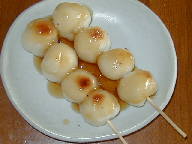
(Mitarashi Dango)

Japanese dango are not complicated, although it might be better to make a lot at a time!

INGREDIENTS:
-Rice (“Uruchi Kome”/normal Japnese round rice): 200g
-Water (for dango): 130cc
-Water (for sauce): 60cc
-Cornstarch: 1 teaspoon
-Sugar: 1 teaspoon
-Soy sauce: 2 teaspoons

RECIPE:

DANGO-RECIPE-1

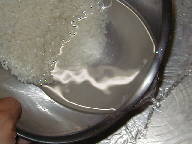
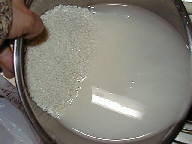
Wash rice thoroughly.
If rice is no-wash type, skip 3 first steps.

DANGO-RECIPE-2

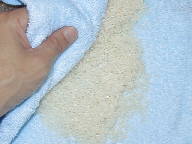
Once the rice washing water is coming out clean, drain rice and spread ontowel. Take off all excess humidity.

DANGO-RECIPE-4

Let the rice dry for two hours.

DANGO-RECIPE-3

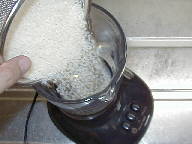
Pour rice in Blender/mixer. First work the blender for only a few seconds at a time until all the rice has been broken completeley. Then blend three times 15 seconds at a time.

DANGO-RECIPE-5

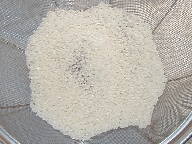
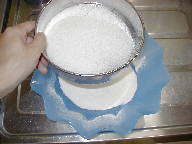
If the rice does not turn into powder easily, sift rice as many times as necessary until all rice has been reduced to powder.

DANGO-RECIPE-6

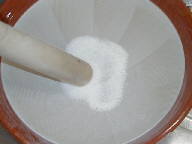
Finish the job with mortar and pestle.

DANGO-RECIPE-7

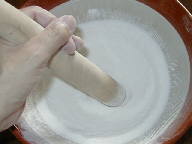
Once the rice has been reduced completely into powder, work the pestle in for 5 more minutes.

DANGO-RECIPE-8

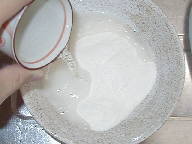
Add water and mix well with spoon.

DANGO-RECIPE-9

Divide into small portions and steam for 15 minutes.

DANGO-RECIPE-10

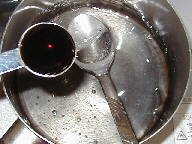
In a pan add cornstarch to water (for the sauce). keep stirring over a low fire. once the water has been become transparent add sugar and soy sauce and mix well until you obtain a smooth syrup. take off fire.

DANGO-RECIPE-11

Fill a glass with water and keep within arm’s reach.
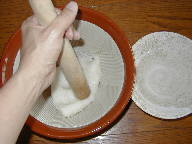
Drop all the steamed dango paste into mortar.
Work dango paste with a wet wooden pestle.
Once the paste has been become sticky and elastic, form small balls (the operation should not last more than 10 minutes).
Wet them to prevent them from sticking to each other.

DANGO-RECIPE-12

Push a wet (important!) stick through the balls (4 or 5 at the most).
Grill the balls (or not) for better effect.
Serve them smeared with syrup.

RECOMMENDED RELATED WEBSITES

With a Glass,
Clumsyfingers by Xethia
Adventures in Bento Making, American Bento, Beanbento, Bento No1, Bento Wo Tsukurimashou, Cooking Cute, Eula, Hapabento , Happy Bento, Jacki’s Bento Blog, Kitchen Cow, Leggo My Obento, Le Petit Journal Bento & CO (French), Lunch In A Box, My Bento Box, Vegan Lunch Box; Tokyo Tom Baker, Daily Food Porn/Osaka, Only Nature Food Porn, Happy Little Bento, The Herbed Kitchen, J-Mama’s Kitchen, Cook, Eat, Play, Repeat; Bento Lunch Blog (German); Adventures In Bento; Anna The Red’s Bento Factory; Cooking Cute; Timeless Gourmet; Bento Bug; Ideal Meal; Bentosaurus; Mr. Foodie (London/UK); Ohayo Bento

Must-see tasting websites:

-Sake: Tokyo Through The Drinking Glass, Tokyo Foodcast, Urban Sake, Sake World
-Wine: Palate To Pen, Warren Bobrow, Cellar Tours, Ancient Fire Wines Blog
-Beer: Good Beer & Country Boys, Another Pint, Please!
-Japanese Pottery to enjoy your favourite drinks: Yellin Yakimono Gallery

Japanese Vegetarian & Vegan Cakes: Wagashi/和菓子11: Dango-団子-Sweet Dumplings

DANGO-1a
(Mitarashi Dango)

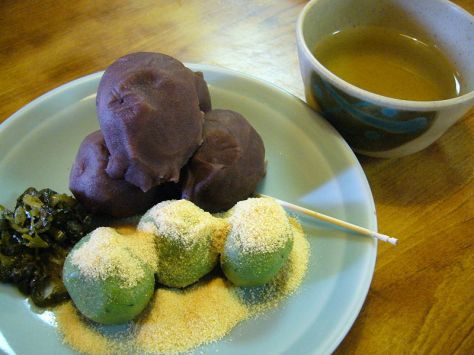
Dango (団子) is a Japanese dumpling made from mochi-ko (rice flour), related to mochi. It is often served with green tea.
In Edo times, they were very popular at tea stands along the country roads.

Dango are eaten year-round, but the different varieties are traditionally eaten in given seasons. Three to four dango are often served on a skewer. One variety of dango from Hokkaidō is made from potato flour and baked with shoyu (soy sauce).

Types of dango:

There are many different varieties of dango which are usually named after the various seasonings served on or with it.

DANGO-2
Chadango: Green-tea flavored Dango.

DANGO-4
Dango served covered with anko.

Actually, if you want to write all about Dango, you’d need to publish a whole book!

But I will publish an easy recipe tomorrow!

RECOMMENDED RELATED WEBSITES

With a Glass,
Clumsyfingers by Xethia
Adventures in Bento Making, American Bento, Beanbento, Bento No1, Bento Wo Tsukurimashou, Cooking Cute, Eula, Hapabento , Happy Bento, Jacki’s Bento Blog, Kitchen Cow, Leggo My Obento, Le Petit Journal Bento & CO (French), Lunch In A Box, My Bento Box, Vegan Lunch Box; Tokyo Tom Baker, Daily Food Porn/Osaka, Only Nature Food Porn, Happy Little Bento, The Herbed Kitchen, J-Mama’s Kitchen, Cook, Eat, Play, Repeat; Bento Lunch Blog (German); Adventures In Bento; Anna The Red’s Bento Factory; Cooking Cute; Timeless Gourmet; Bento Bug; Ideal Meal; Bentosaurus; Mr. Foodie (London/UK); Ohayo Bento

Must-see tasting websites:

-Sake: Tokyo Through The Drinking Glass, Tokyo Foodcast, Urban Sake, Sake World
-Wine: Palate To Pen, Warren Bobrow, Cellar Tours, Ancient Fire Wines Blog
-Beer: Good Beer & Country Boys, Another Pint, Please!
-Japanese Pottery to enjoy your favourite drinks: Yellin Yakimono Gallery

Japanese Vegetarian & Vegan Cakes: Wagashi/和菓子10: Youkan-Easy Recipe-Mizu Youkan

MIZU-YOKAN-1

Youkan come in many guises. Here is an easy and very basic recipe for “Mizu Youkan” that you will be able to adapt into many creations of yours! For vegans, vegetarians and omnivores!

INGREDIENTS:
-Boiled azuki beans: 1 can (430 g)
-Brown sugar: 60 g
-Salt: a pinch
-Agar agar Powder (“kanten” in Japanese): 4 g
-Water: 300 ml + 300 ml

RECIPE:

MIZU-YOKAN-2

Blend beans and 300 ml of water until smooth.

MIZU-YOKAN-3

Pass mixture through fine sieve.

MIZU-YOKAN-4

In 300 ml of water drop agar agar. Bring to boil, stiring at the same time. Then keep stiring vover medium fire for 1 minute.

MIZU-YOKAN-5

Switch off fire. Add sugar and salt. Mix well. Add bean paste. Mix well.

MIZU-YOKAN--6

Pour in recipients of your choice (that is when the fun starts!) and let cool completely. Keep in fridge (not too cold, please). Take out of recipient and serve!

RECOMMENDED RELATED WEBSITES

With a Glass,
Clumsyfingers by Xethia
Adventures in Bento Making, American Bento, Beanbento, Bento No1, Bento Wo Tsukurimashou, Cooking Cute, Eula, Hapabento , Happy Bento, Jacki’s Bento Blog, Kitchen Cow, Leggo My Obento, Le Petit Journal Bento & CO (French), Lunch In A Box, My Bento Box, Vegan Lunch Box; Tokyo Tom Baker, Daily Food Porn/Osaka, Only Nature Food Porn, Happy Little Bento, The Herbed Kitchen, J-Mama’s Kitchen, Cook, Eat, Play, Repeat; Bento Lunch Blog (German); Adventures In Bento; Anna The Red’s Bento Factory; Cooking Cute; Timeless Gourmet; Bento Bug; Ideal Meal; Bentosaurus; Mr. Foodie (London/UK); Ohayo Bento

Must-see tasting websites:

-Sake: Tokyo Through The Drinking Glass, Tokyo Foodcast, Urban Sake, Sake World
-Wine: Palate To Pen, Warren Bobrow, Cellar Tours, Ancient Fire Wines Blog
-Beer: Good Beer & Country Boys, Another Pint, Please!
-Japanese Pottery to enjoy your favourite drinks: Yellin Yakimono Gallery

Japanese Vegetarian & Vegan Cakes: Wagashi/和菓子7: Creation 2-Hanabira Mochi

WAGASHI-HANABIRAMOCHI

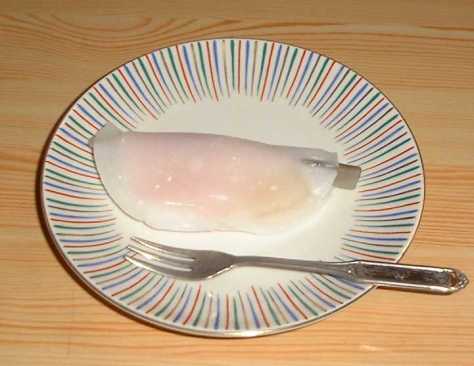
Here is another traditional Japanese Cake/Wagashi: Hanabira Mochi (菱葩餅 in Japanese)!
Hanabiramochi is a Japanese sweet usually eaten at the beginning of the year. Hanabiramochi is also served at the first tea ceremony of the New Year.

The name “Hanabiramochi” literally means “Flower petal mochi”. The original form of Hanabiramochi is Hishihanabira, a dessert that was eaten by the Imperial family at special events coinciding with the beginning of the year.

Hanabiramochi was first made in the Meiji Era (8 September 1868 – 30 July 1912), but it is now a familiar New Year wagashi.

The exact shape of Hanabiramochi is strictly defined by tradition. The white mochi covering is flat and round, folded over to form a semicircular shape, and must have a pink color showing through in the center of the confection, fading to a white at the edge. Unlike a daifuku, the mochi must not completely seal the insides.

In the center of a hanabiramochi is a layer of anko, a sweet bean paste, commonly the white kind made from sweetened mung beans. In the very center is a thin strip of sweetly flavoured gobo (burdock root) which protrudes from the mochi on both sides.

Each element of the hanabiramochi is significant.

The red colour showing through the white mochi is not only appropriate to the celebration of the New Year but also evokes the Japanese apricot/plum (ume) blossom, which in turn represents the purity, perseverance, and renewal associated with the New Year.

The gobo represents pressed ayu, a fish exclusive to East Asia, and a prayer for a long life.

A vegan way to celebrate the New Year!

RECOMMENDED RELATED WEBSITES

With a Glass,
Clumsyfingers by Xethia
Adventures in Bento Making, American Bento, Beanbento, Bento No1, Bento Wo Tsukurimashou, Cooking Cute, Eula, Hapabento , Happy Bento, Jacki’s Bento Blog, Kitchen Cow, Leggo My Obento, Le Petit Journal Bento & CO (French), Lunch In A Box, My Bento Box, Vegan Lunch Box; Tokyo Tom Baker, Daily Food Porn/Osaka, Only Nature Food Porn, Happy Little Bento, The Herbed Kitchen, J-Mama’s Kitchen, Cook, Eat, Play, Repeat; Bento Lunch Blog (German); Adventures In Bento; Anna The Red’s Bento Factory; Cooking Cute; Timeless Gourmet; Bento Bug; Ideal Meal; Bentosaurus; Mr. Foodie (London/UK); Ohayo Bento

Must-see tasting websites:

-Sake: Tokyo Through The Drinking Glass, Tokyo Foodcast, Urban Sake, Sake World
-Wine: Palate To Pen, Warren Bobrow, Cellar Tours, Ancient Fire Wines Blog
-Beer: Good Beer & Country Boys, Another Pint, Please!
-Japanese Pottery to enjoy your favourite drinks: Yellin Yakimono Gallery

Japanese Vegetarian & Vegan Cakes: Wagashi/和菓子6: Creation 2-Sakura Mochi (& Recipe!)

WAGASHI-SAKURA-MOCHI-2

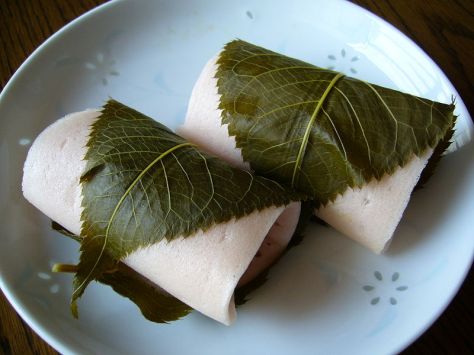
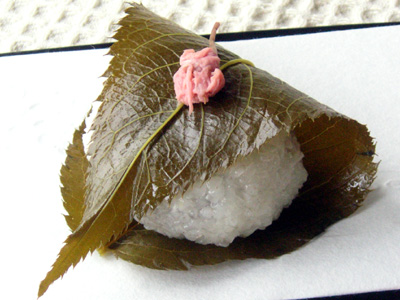
Sakura Mochi (桜餅) is a variety of wagashi, or Japanese confectionery consisting of a sweet pink mochi (rice cake) and red bean paste, covered with a leaf of sakura (cherry blossom).

Sakura Mochi (桜餅) or Cherry Blossom Mochi has been popular all over Japan since the beginning of gastronomy in the Land of the Rising Sun.
The style of Sakura Mochi differs with the regions in Japan.
Basically, the east of Japan such as Tokyo uses shiratama-ko (白玉粉/ rice flour) and the west side such as Kansai uses dōmyōji-ko (道明寺粉/glutinous rice flour) for “batter”.

WAGASHI-SAKURA-MOCHI
Anko is folded inside a mochi sheet and again inside an edible cherry tree leaf.

WAGASHI-SAKURA-MOCHI-3

Here the anko is inside white mochi, then folded in cherry tree leaf and topped with an edible cherry flower.

WAGASHI-SAKURA-MOCHI-4

A smaller, very cute Sakura Mochi: the colored mochi contains anko and is presented inside an edible cherry tree leaf.

WAGASHI-SAKURA-MOCHI-5

Sakura mochi as sold over the counter in the Kansai/West Japan Region.
They are also called Sakura Dango/Cherry Balls (no comment, please!LOL)

SIMPLE RECIPE
This recipe is for making Western-style sakuramochi. Serves 8.

INGREDIENTS:
3/4 cup glutinous rice flour
1/3 cup sugar
1 cup water
3/4 cup red bean paste
red food coloring (optional)
8 sakura leaves pickled in salted water

PREPARATION:
Wash pickled sakura leaves and dry.
Boil water in a pan.
Mix glutinous flour in the water.
Cover the pan with a lid and leave it for 5 minutes.
Place a wet cloth in a steamer and put the dough on the cloth.
Steam the dough for about 20 minutes over medium heat.
Remove the steamed dough to a bowl.
Mash the dough slightly with a wooden pestle, mixing sugar into the dough.
Dissolve a little bit of red food color in some water.
Add some of the red water in the dough and mix well.
Divide the pink mochi into 8 balls.
Flaten each mochi ball by hands and place red bean paste filling on the dough.
Wrap the filling with mochi and rounds by hands.
Wrap each mochi with a sakura leaf.

RECOMMENDED RELATED WEBSITES

With a Glass,
Clumsyfingers by Xethia
Adventures in Bento Making, American Bento, Beanbento, Bento No1, Bento Wo Tsukurimashou, Cooking Cute, Eula, Hapabento , Happy Bento, Jacki’s Bento Blog, Kitchen Cow, Leggo My Obento, Le Petit Journal Bento & CO (French), Lunch In A Box, My Bento Box, Vegan Lunch Box; Tokyo Tom Baker, Daily Food Porn/Osaka, Only Nature Food Porn, Happy Little Bento, The Herbed Kitchen, J-Mama’s Kitchen, Cook, Eat, Play, Repeat; Bento Lunch Blog (German); Adventures In Bento; Anna The Red’s Bento Factory; Cooking Cute; Timeless Gourmet; Bento Bug; Ideal Meal; Bentosaurus; Mr. Foodie (London/UK); Ohayo Bento

Must-see tasting websites:

-Sake: Tokyo Through The Drinking Glass, Tokyo Foodcast, Urban Sake, Sake World
-Wine: Palate To Pen, Warren Bobrow, Cellar Tours, Ancient Fire Wines Blog
-Beer: Good Beer & Country Boys, Another Pint, Please!
-Japanese Pottery to enjoy your favourite drinks: Yellin Yakimono Gallery

Japanese Vegetarian & Vegan Cakes: Wagashi/和菓子5: Creation 1-Birthday Cake

WAGASHI-VARIETIES-1

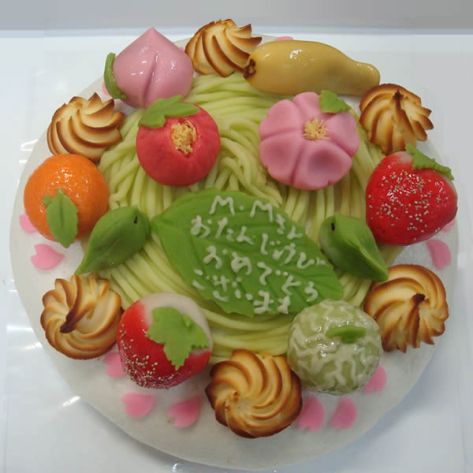
Here is an example of what could be done by a Japanese chef as Wagashi/Japanese Cake!
This particular Birthday Cake creation is the work of Chef Maeda at Kouseido in Osaka City!
Will look around and post other creations whenever I can!

Here is a breakdown of the above:

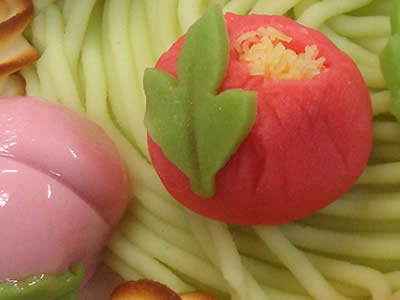
WAGASHI-VARIETIES-MOMO

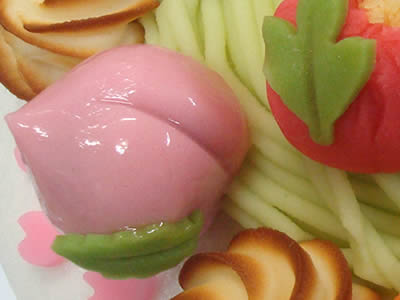
“Momo”/Peach

WAGASHI-VARIETIES-MIKAN

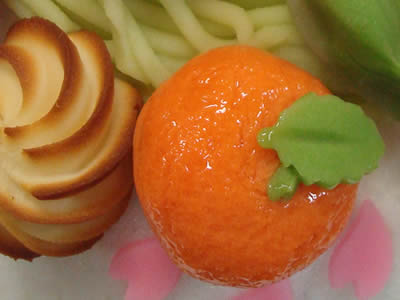
“MIkan”/Orange

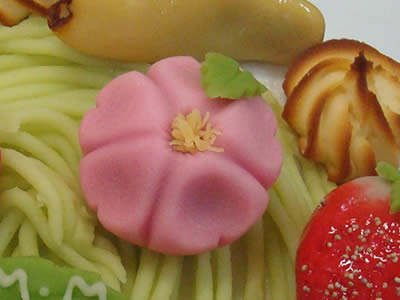
WAGASHI-VARIETIES-TSUBAKI

“Tsubaki”/Camelia

WAGASHI-VARIETIES-SAKURA

“Sakura”/Cherry Blossom

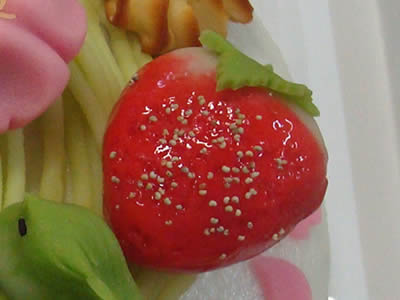
WAGASHI-VARIETIES-ICHIGO

“Ichigo”/Strawberry

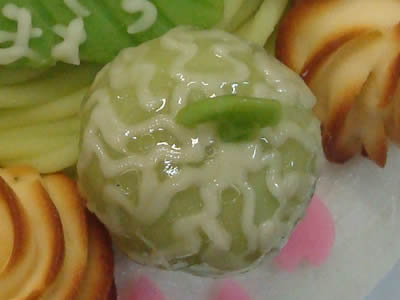
WAGASHI-VARIETIES-MELON

“Meron”/Melon

RECOMMENDED RELATED WEBSITES

With a Glass,
Clumsyfingers by Xethia
Adventures in Bento Making, American Bento, Beanbento, Bento No1, Bento Wo Tsukurimashou, Cooking Cute, Eula, Hapabento , Happy Bento, Jacki’s Bento Blog, Kitchen Cow, Leggo My Obento, Le Petit Journal Bento & CO (French), Lunch In A Box, My Bento Box, Vegan Lunch Box; Tokyo Tom Baker, Daily Food Porn/Osaka, Only Nature Food Porn, Happy Little Bento, The Herbed Kitchen, J-Mama’s Kitchen, Cook, Eat, Play, Repeat; Bento Lunch Blog (German); Adventures In Bento; Anna The Red’s Bento Factory; Cooking Cute; Timeless Gourmet; Bento Bug; Ideal Meal; Bentosaurus; Mr. Foodie (London/UK); Ohayo Bento

Must-see tasting websites:

-Sake: Tokyo Through The Drinking Glass, Tokyo Foodcast, Urban Sake, Sake World
-Wine: Palate To Pen, Warren Bobrow, Cellar Tours, Ancient Fire Wines Blog
-Beer: Good Beer & Country Boys, Another Pint, Please!
-Japanese Pottery to enjoy your favourite drinks: Yellin Yakimono Gallery
Japanese Vegetarian & Vegan Cakes: Wagashi/和菓子4: Recipe-Mochi

WAGASHI-SAKURA-MOCHI
Wagashi/Sakura Mochi

Mochi/餅 is probably the most ancient sweet/cake confectioned by humans in Japan as its main ingredient is glutinous rice.
It is the more popular as it can be eaten and made all year round.
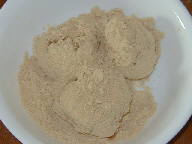
Kinako/黄粉 is a powder made from roasted soy beans (next article).
The combination of the two and other ingredients such as sweetmeats/anko/餡子, also made from soy beans, make for a valuable, tasty and nourishing food!
Read notes below!

Here is a simple way to make mochi.
Bear in mind that mochi can be eaten fresh as it is, especially with wagashi cakes, and that it can be mixed with other ingredients for colouring. It can be also dried and grilled and also included in soups and other recipes such as mochi pizza!

INGREDIENTS:
Glutinous rice: 3 go (Japanese measure): 540 cc (2.8 cups)
Kinako (to taste)

Notes on kinako and glutinous rice:

MOCHI-KINAKO

Kinako (黄粉 or きなこ), also known as soybean flour, is a product commonly used in Japanese cuisine. In order to create the soybean flour, soybeans are toasted and ground into powder. Its flavor is commonly compared to that of peanut butter.

Kinako, being composed of soybeans, is a healthy topping and flavoring which contains B vitamins and protein. It can also be used as a drink;. For example, warabi mochi is a famous kinako-covered sweet.

I will introduce a recipe soon!

MOCHI-TRADITIONAL

Glutinous rice (Oryza sativa var. glutinosa or Oryza glutinosa; also called sticky rice, sweet rice, waxy rice, botan rice, biroin chal, mochi rice, and pearl rice) is a type of short-grained Asian rice that is especially sticky when cooked. It is called glutinous (Latin glūtinōsus) in the sense of being glue-like or sticky and not in the sense of containing gluten; on the other hand, it is called sticky but should not be confused with the other varieties of Asian rice that become sticky to one degree or another when cooked.

RECIPE:

MOCHI-1
Wash the rice and let it soak in water overnight.

MOCHI-2
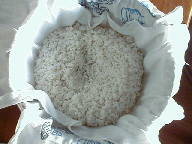
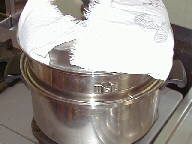
Pour water in steamer. Bring to boil. Set a clean cloth inside. Drain rice. Pour rice inside cloth. Dig a “well” in the middle for better cooking.

MOCHI-3
Steam over a medium fire for 20~25 minutes.

MOCHI-4
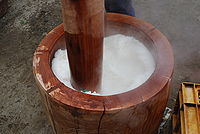
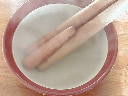
Pour hot water inside pestle bowl and leave the wooden sticks inside water for long enough to have all of them well impregnated with water. Throw water away just before next step. This will insure a better mochi!

MOCHI-5
Check rice for an even cooking. No water should be left or the mochi will be runny. If you make a small quantity, softer rice than usual is better as it will tend to dry faster than a large quantity.

MOCHI-6
Now this is the hard part!
You will need three adults to press hard on the rice with the wooden sticks at the same time to crush the rice completely. It might take as long as 10 minutes.

MOCHI-7
Now that the rice has been softened, one can continue on his own or work in shifts. Pound the rice in the middle 10 times. Turn over the rice from outside to inside and continue always around the clock.
Important: always pound in the middle, never on the sides or you will break the bowl!

MOCHI-8
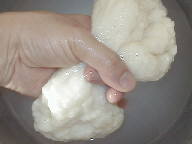
That is how it should look. Make balls by twisting rice out.

MOCHI-9
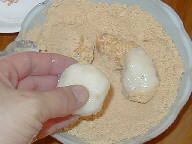
Roll mochi in kinako mixed with sugar to taste. They are ready to be eaten!

MOCHI-10
This is how they are served in Japan for children (and adults!)

MOCHI-11
If you want to preserve them for a while before eating, roll them in rice powder. Rice powder will come in useful if you want to fashion the mochi into thin sheets or else.

MOCHI-12
That is how they look grilled!

RECOMMENDED RELATED WEBSITES

With a Glass,
Clumsyfingers by Xethia
Adventures in Bento Making, American Bento, Beanbento, Bento No1, Bento Wo Tsukurimashou, Cooking Cute, Eula, Hapabento , Happy Bento, Jacki’s Bento Blog, Kitchen Cow, Leggo My Obento, Le Petit Journal Bento & CO (French), Lunch In A Box, My Bento Box, Vegan Lunch Box; Tokyo Tom Baker, Daily Food Porn/Osaka, Only Nature Food Porn, Happy Little Bento, The Herbed Kitchen, J-Mama’s Kitchen, Cook, Eat, Play, Repeat; Bento Lunch Blog (German); Adventures In Bento; Anna The Red’s Bento Factory; Cooking Cute; Timeless Gourmet; Bento Bug; Ideal Meal; Bentosaurus; Mr. Foodie (London/UK); Ohayo Bento

Must-see tasting websites:

-Sake: Tokyo Through The Drinking Glass, Tokyo Foodcast, Urban Sake, Sake World
-Wine: Palate To Pen, Warren Bobrow, Cellar Tours, Ancient Fire Wines Blog
-Beer: Good Beer & Country Boys, Another Pint, Please!
-Japanese Pottery to enjoy your favourite drinks: Yellin Yakimono Gallery

Japanese Vegetarian & Vegan Cakes: Wagashi/和菓子3: Recipe-Shiro Anko/White Sweetmeats

WAGASHI-SHIROANKO-1

In my previous article, I introduced the recipe for “red sweetmeats” or just “anko” in Japanese, an important ingredients in Wagashi.
But the red/violet colour is not always wanted.
Another popular way to make anko is to use “ingen mame”/kidney beans (US), or string/French beans (Europe).
Note that soy beans/”daizu” are not used in this recipe!
The advantage are multiple, as the “white” (actually beige) colour can be modified by adding green peas (green), pumpkin (yellow or orange), fruit pulp from papaya and mango (orange). Variations are practically unlimited!

INGREDIENTS:
Kidney beans: 500g
Sugar: 400g
Salt: three small pinches

RECIPE:

WAGASHI-SHIROANKO-2
Put beans with 3 times their volume of water in a large pan. Let soak for two nights. Change water twice a day.

WAGASHI-SHIROANKO-3
Beans should have lost their “wrinkles” by then.

WAGASHI-SHIROANKO-b
Bring water to boil over strong fire. Simmer for 5 minutes over medium fire.

WAGASHI-SHIROANKO-4
Drain water, making sure beans don’t dry up. The skin of the beans should peel off easily. Take skins and dark spots away.

WAGASHI-SHIROANKO-5
Simmer again peeled beans until they get soft and start breaking up. Start on a strong fire to bring to boil, then lower to medium fire.

WAGASHI-SHIROANKO-6
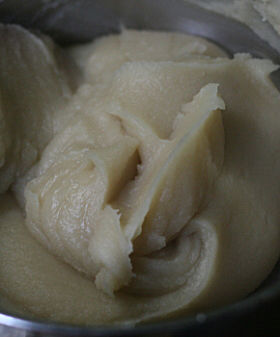
Heat until most of the water has evaporated. Beans will pass through sieve more easily.

WAGASHI-SHIROANKO-7
Pass all the beans through the sieve. Wash and dry the pan.

WAGASHI-SHIROANKO-8
Add sugar to sieved beans and stir/mix over low fire.

WAGASHI-SHIROANKO-9
Sugar becoming liquid upon heating will give a watery aspect to the mixture. Heat over low fire, stirring all the time for 25 minutes.

WAGASHI-SHIROANKO-10
Once satisfied with the paste consistency, add salt, mix and stop fire.

WAGASHI-SHIROANKO-11
Transfer to another dish for preserving until use. Do it at once while it is still hot.
Make sure it does not dry up.
Cover with a lid.
If lid does not close well enough, wrap the whole into cellophane paper.

RECOMMENDED RELATED WEBSITES

With a Glass,
Clumsyfingers by Xethia
Adventures in Bento Making, American Bento, Beanbento, Bento No1, Bento Wo Tsukurimashou, Cooking Cute, Eula, Hapabento , Happy Bento, Jacki’s Bento Blog, Kitchen Cow, Leggo My Obento, Le Petit Journal Bento & CO (French), Lunch In A Box, My Bento Box, Vegan Lunch Box; Tokyo Tom Baker, Daily Food Porn/Osaka, Only Nature Food Porn, Happy Little Bento, The Herbed Kitchen, J-Mama’s Kitchen, Cook, Eat, Play, Repeat; Bento Lunch Blog (German); Adventures In Bento; Anna The Red’s Bento Factory; Cooking Cute; Timeless Gourmet; Bento Bug; Ideal Meal; Bentosaurus; Mr. Foodie (London/UK); Ohayo Bento

Must-see tasting websites:

-Sake: Tokyo Through The Drinking Glass, Tokyo Foodcast, Urban Sake, Sake World
-Wine: Palate To Pen, Warren Bobrow, Cellar Tours, Ancient Fire Wines Blog
-Beer: Good Beer & Country Boys, Another Pint, Please!
-Japanese Pottery to enjoy your favourite drinks: Yellin Yakimono Gallery