Tag Archives: グルメ

Japanese Chicken Ham: The Recipe

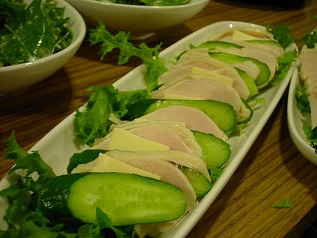
CHICKEN-HAM-SALAD

Following renewed queries about the Missus’ Chicken Ham included in some of my bentoes, I decided to post again the recipe for my friends’ benefit!
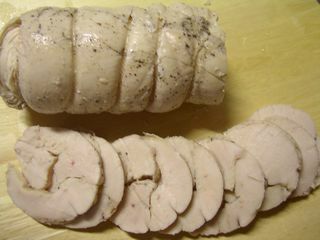
CHICKEN-HAM-ROLL1

Now, the following recipe is for Chicken Ham in the shape of a “ham”.
Naturally, you can, like the Missus, keep the original shape of the chicken breast.
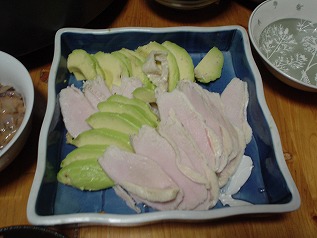
CHICKEN-HAM-SALAD-2

You can slice or shred the chicken as shown above in the combination chicken/avocado salad. Variations are almost endless!

INGREDIENTS:
-One large chicken breast: 250g
-Sugar: 1 large tablespoon
-Coarse salt-black pepper mixture: 1 large tablespoon

RECIPE:
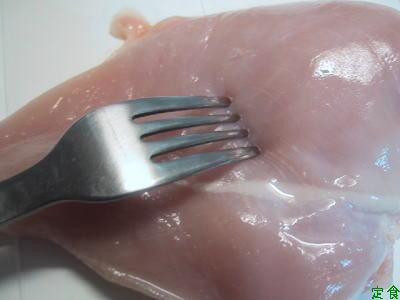
CHICKEN-HAM-RECIPE-1

Get rid of all skin and fat.
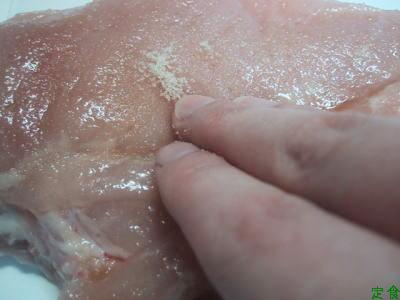
“Puncture” chicken shallowly on both sides.
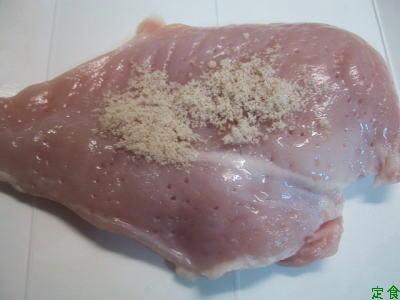
CHICKEN-HAM-RECIPE-2

Sprinkle sugar on both sides and

CHICKEN-HAM-RECIPE-3

Throughly brush it in on both sides.

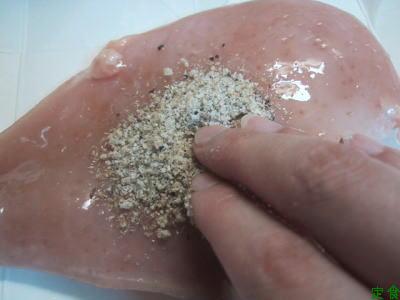
CHICKEN-HAM-RECIPE-4

Repeat procedure with coarse salt-black pepper mixture.
Water will start oozing out.
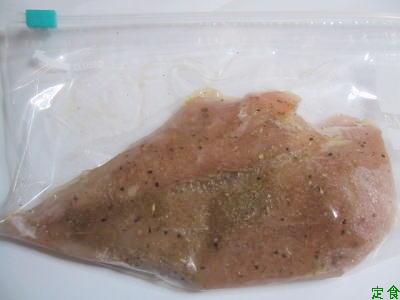
CHICKEN-HAM-RECIPE-5

Tightly seal inside zip-lock type vinyl envelope and leave it 48 hours inside the fridge (get as much air out as possible before sealing!).
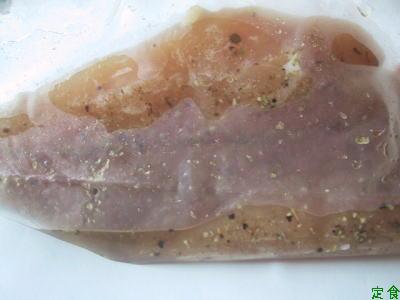
CHICKEN-HAM-RECIPE-6

After the first 24 hours inside the fridge, throw out the water that has accumulated, reseal and put back inside the fridge.
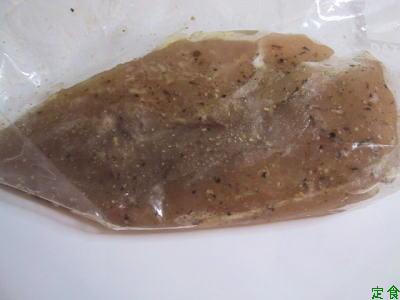
CHICKEN-HAM-RECIPE-7

That’s how it looks when you take it out of the fridge after 48 hours.
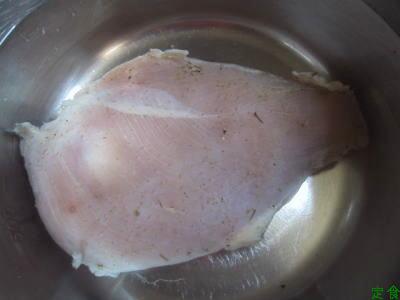
CHICKEN-HAM-RECIPE-8

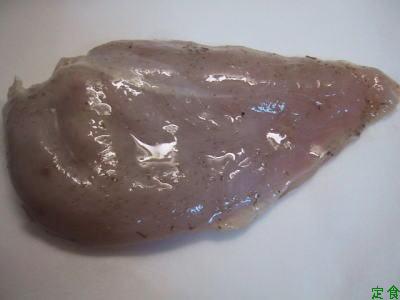
Take chicken ot, clean lightly with running water, and then let it rest in clear water for 30 minutes to get rid of the excess salt.
CHICKEN-HAM-RECIPE-9

Take out of water and carefully get the chicken rid of water with kitchen paper.
CHICKEN-HAM-RECIPE-10

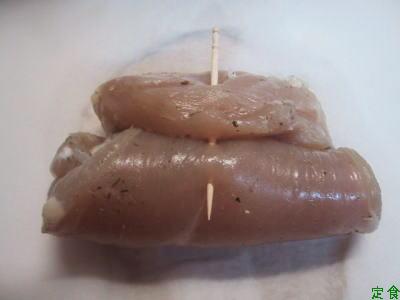
“Roll” the chicken breast into a “ham” shape and secure it with a wooden toothpick (avoid any contact with naked metal!).
CHICKEN-HAM-RECIPE-11

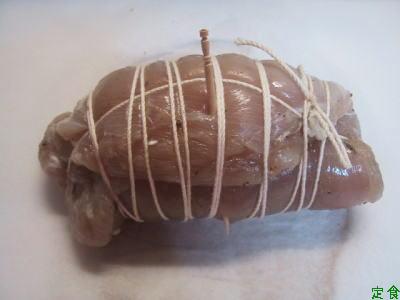
Bind the chicken with cooking thread tightly until you have attained a ham shape. Take toothpick out and discard.

CHICKEN-HAM-RECIPE-12

Wrap tightly into cellophane paper.

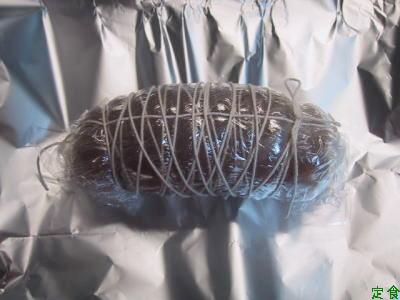
CHICKEN-HAM-RECIPE-13

Wrap into foil paper twice.
NOTE: the Missus does not wrap it into anything and just slowly and directly boil the chicken into chicken bouillon.

CHICKEN-HAM-RECIPE-14

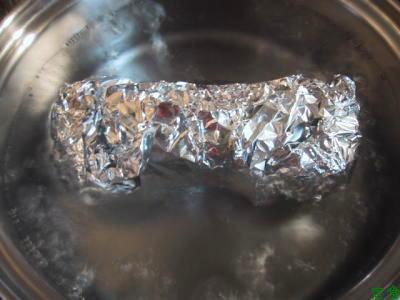
In a big enough pan bring water to boil.
CHICKEN-HAM-RECIPE-15

Put the foil paper-wrapped chicken inside water and switch off fire.
CHICKEN-HAM-RECIPE-16

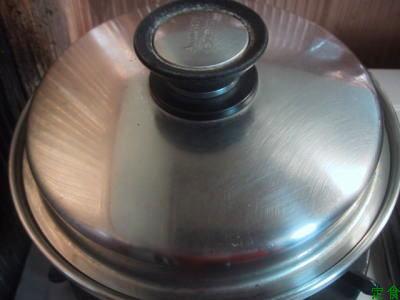
Cover with lid and leave it as it it is for 7~8 hours.
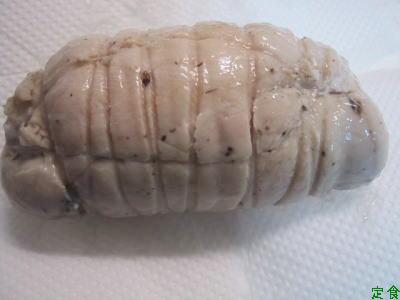
Take chicken out with its foil paper and let it rest inside fridge for 24 hours.
NOTE: The Missus will put the chicken and the whole broth inside a Tupperware box before puttin it inside the fridge.
CHICKEN-HAM-RECIPE-17

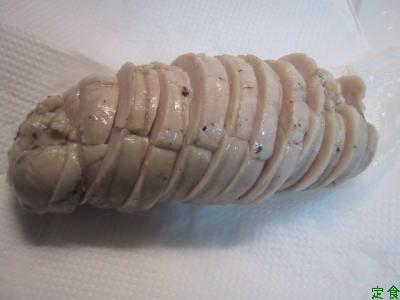
Get Chicken ham out. Discard foil paper and thread.
CHICKEN-HAM-RECIPE-18

Cut it to your liking.

CHICKEN-HAM-RECIPE-20
Serve.

That is when the fun starts!
Great as salads, in sandwiches and of course bentoes!

NOTE: The Missus sometimes, as an extra last step, smokes the whole chicken in green tea leaves!

RECOMMENDED RELATED SITES:
Warren Bobrow, Bread + Butter, Zoy Zhang, Hungry Neko, Think Twice, Frank Fariello, Mangantayon, Hapabento, Elinluv Tidbit Corner, Tokyo Terrace, Maison de Christina, Chrys Niles,Lexi, Culinary Musings, Wheeling Gourmet, Comestiblog, Chronicles Of A Curious Cook, Tokyo Through The Drinking Glass, Tokyo Foodcast, Palate To Pen, Yellin Yakimono Gallery, Tokyo Terrace, Hilah Cooking, More than a Mount Full, Arkonite Bento, Happy Little Bento; 5 Star Foodie; Jefferson’s Table; Oyster Culture; Gourmet Fury; Island Vittles; Good Beer & Country Boys; Rubber Slippers In Italy; Color Food daidokoro/Osaka;/a; The Witchy Kitchen; Citron Et Vanille, Lunsj Med Buffet/Estonian Gastronomy (English), Cook, Eat, Play, Repeat

Please check the new postings at:
sake, shochu and sushi

French Cake by Bernard Heberle: Mystral

My good friend, Bernard Heberle, the owner/chef of Abondance in Hamamatsu City has recently been elected the best patissier in Shizuoka Prefecture (4,000,000 souls) by the biggest Food Blog Community in Japan, namely Tabelog!

He was kind enough to send me his latest creation before taking some well-earned holidays back home in Alsace with the following comments in French:

“Voici la dernière nouveauté avant pour départ pour mes vacances , Mystral , non non ce n’est pas une faute d’orthographe ni de frappe , le mariage entre Myrtilles et Mistral car après avoir dégusté ce gâteau c’est comme une tornade de bien être qui envahie tout le corps et l’esprit.
La combinaison entre la verveine et ces myrtilles qui sont cultivées spécialement pour Abondance est un délice.
Le tout dans une crème diplomate verveine et une génoise mousseline au cassis.
Bonne dégustation !!!!”

“Here is my last creation before leaving on a long holiday:
Mystral. No, there is no mistake or typo in the name (usually written “mistral”). It is a marriage between Myrtilles/Blueberries and Mistral/Mistral wind blowing very hard down the Rhone Valley. After having tasted this cake, one feels like taken away by a tornado which spreads such great well-being through the body and mind!
The conbination of verveine with blueberries (especially grown for Abondance) is a delicacy!
The whole included inside a mousseline genoise perfumed with cassis!
Enjoy!”

Abondance
Address: Hamamatsu Shi, Sumiyoshi, 2-14-27 (in front of Seirei Hospital)
Tel.: 053-4738400
Fax: 053-4738401
Opening hours: 10:00~20:00. Closed on Tuesdays.
Homepage

RECOMMENDED RELATED SITES:
Warren Bobrow, Bread + Butter, Zoy Zhang, Hungry Neko, Think Twice, Frank Fariello, Mangantayon, Hapabento, Elinluv Tidbit Corner, Tokyo Terrace, Maison de Christina, Chrys Niles,Lexi, Culinary Musings, Wheeling Gourmet, Comestiblog, Chronicles Of A Curious Cook, Tokyo Through The Drinking Glass, Tokyo Foodcast, Palate To Pen, Yellin Yakimono Gallery, Tokyo Terrace, Hilah Cooking, More than a Mount Full, Arkonite Bento, Happy Little Bento; 5 Star Foodie; Jefferson’s Table; Oyster Culture; Gourmet Fury; Island Vittles; Good Beer & Country Boys; Rubber Slippers In Italy; Color Food daidokoro/Osaka;/a; The Witchy Kitchen; Citron Et Vanille, Lunsj Med Buffet/Estonian Gastronomy (English), Cook, Eat, Play, Repeat

Please check the new postings at:
sake, shochu and sushi

Food & Drinks Bloggers in Japan

The number of foreigners and Japanese nationals who write about the food and drinks in Japan in English (or at least answer comments in English) has remarkably increased lately.
I thought it was about time to start some kind of round-up to help people discover these deserving foodies and their blogs!The list below is far from exhaustive, but I’m planning to update and announce it regularly!
Of course if you know more foodies residing in Japan, do please direct them to me and I will introduce them gladly!

HOKKAIDO TRIBE
(Hokkaido Island)
Meishu no Yutaka by Carlin

TOHOKU TRIBE
(Norteastern Japan: Aomori, Iwate, Miyagi, Akita, Yamagata, Fukushima)
Slow Food From Japan by Nigel Fodgen in Miyagi Prefecture.

KANTO TRIBE
(Eastern Japan: Ibaraki, Tochigi, Gunma, Saitama, Chiba, Tokyo, Kanagawa)
Tokyo Through The Drinking Glass by Melinda Joe in Tokyo
Tokyo Foodcast by Etsuko Nakamura in Tokyo
Tokyo Terrace by Rachael in Tokyo
Gaijin Tonic in Tokyo and Kanagawa Prefecture
Nonjatta by Chris Bunting in Tokyo
The Soul Of Japan in Kanagawa Prefecture
Sake, kimono and Tabi In Tokyo
Tokyo Kawai, Etc… in Tokyo
Blue Lotus in Tokyo
The Japanese Food Report by Harris Salat in Tokyo
The Sake Chronicles in Tokyo
Watashi to Tokyo by Mari kanazawa in Tokyo
Japanese Food-Food Lover’s Guide by Yukari Yamamoto in Tokyo
Yamaonna by an Aussie girl in Tokyo but also other regions!
About Food in Japan by a Japanese Tokyoite!

CHUBU TRIBE
(Central Japan: Niigata, Toyama, Ishikawa, Fukui, Yamanashi, Nagano, Gifu, Shizuoka, Aichi)
Good Beer & Country Boys in Aichi Prefecture
Yellin Yakimono Gallery by Robert Yellin in Shizuoka Prefecture
Mangantayon by Marya in Shizuoka Prefecture
Shizuoka Gourmet, Shizuoka Sake, Shizuoka Sushi, Shizuoka Shochu all in Shizuoka Prefecture
Bryan Baird’s Beer & Brewery in Numazu in Numazu City, Shizuoka Prefecture

KANSAI TRIBE
(Western Japan: Mie, Shiga, Kyoto, Osaka, Hyogo, Nara, Kyoto, Wakayama)
Colorfood Daidokoro in Osaka (Englis & French)
Dominique Corby In Osaka (in French, but can answer and read in English)
Nagaijin in Osaka
Kyoto Foodie in Kyoto
Our Adventures in Japan by K and S Minoo in Osaka

CHUGOKU
(“Central Country”: Tottori, Shimane, Okayama, Hiroshima, Yamaguchi)
Get Hiroshima Blog in Hiroshima

SHIKOKU
(Shikoku Island: Kagawa, Kochi, Ehime, Tokushima)
Obachan’s Kitchen & Garden Balcony in Kochi Prefecture
Still Clumsy With Chopsticks in Kochi Prefecture (Continuation of Obachan’s Kitchen & Garden Balcony)
Fukuoka Dreaming in Fukuoka prefecture

KYUSHU
(Kyushu Island: Fukuoka, Nagasaki, Saga, Kumamoto, Miyazaki, Kagoshima)
Fukuoka Dreaming in Fukuoka

OKINAWA
(Okinawa Archipelago)
HWN Pake in Okinawa in Chatan, Okinawa

Health & Nutrition Facts in Japanese Food 7: Apples

As demonstrated by many food bloggers, cooking and creating great foods and drinks have become incomplete and unsatisfying when not considering the benefits or adverse effects of the same foods and drinks regardless of their taste.
I do not intend to delve into counselling or consulting, but only to offer some knowledge about the good sides of Japanese foods and drinks. I will not extoll on its possible lacks and negative aspects. After all, the Japanese are not the longest-living people in the world for no reason!
I will also offr at least one nutritious or healthy recipe at the end of each posting.

Health & Nutrition Facts in Japanese Food 7: Apple/Ringo/林檎

“An apple a day keeps the doctor away!”
Well, the Japanese have taken the precept to the letter, and since the apples were first introduced in this country in the second half of the 19 th Century, they have already created more than 17 hybrids and are still coming with new ones!
The only problem may be that the Japanese do not always eat the skin which contains so many nutrients!
Do remember to wash the apples before you eat them, flesh and skin!

For each 100g (edible parts) it contains:
-Energy: 54 kcal
-Water: 84.9 g
-Proteins: 0.2 g
-Fats: 0.1 g
-Carbohydrates: 14.6 g
-Ash: 0.2 g
-Natrium: 110 mg
-Calcium: 3 mg
-Magnesium: 3 mg
-Phosphorus: 10 mg
-Vitamin B1: 0.02 mg
-Niacin: 0.1 mg
-Vitamin B6: 0.03 mg
-Vitamin C: 4 mg
-Dietary (roughage) fibre: 1.5 g

HEALTH FACTS & TIPS:

-Combined with Pineapple, or with Chickory, or with trefoil, or with yma, will strengthen the digestive system, help prevent cancer and recover from diarrhea and constipation.

-Combined with konyaku/Devil’s Tongue Tuber, or with wakame seaweed, or with enoki mushrooms, or with grapefruit, will will help combat obesity, prevent cancer and help with blood quality

-Combined with kikurage/jew’s Ear mushroom, or with asparaguses, or with onion, or with egg-plant/aubergine, will help lower blood cholesterol, and help prevent heart diseases and cancer.

-Combined with tomato, or with broccoli, or with Qing geng cai (Chingensai/青梗菜 in Japanese), or with nori/dry seaweed, will hlep prevent cancer, will help combat aging, will help recover from illness and prevent obesity.

RECIPE:

Here is a recipe to help lower cholesterol and help prevent heart disease:

Apple: 1 large
Pork: 1 thin cutlet
Garlic: 1 clove (finely chopped)
Salt & pepper: a little
White wine: 1/2 cup/100 cc/ml
Salad oil

Take core out and peel skin (the latter only if you want so!). Cut into thin slices. Cut shallow indents along the cutlet to prevent it from shrinking and curling.
Season cutlet with salt and pepper according to preference.

Heat oil in frypan. Throw in the chopped garlic. Once the nice smell of the garlic comes out add the cutlet and apple and fry.

Fry the pork on both sides until it reaches a satisfactory color.
Add wine, reduce fire to medium and simmer for a while to allow the wine to season the whole!

RECOMMENDED RELATED SITES:
Warren Bobrow, Bread + Butter, Zoy Zhang, Hungry Neko, Think Twice, Frank Fariello, Mangantayon, Hapabento, Elinluv Tidbit Corner, Tokyo Terrace, Maison de Christina, Chrys Niles,Lexi, Culinary Musings, Wheeling Gourmet, Comestiblog, Chronicles Of A Curious Cook, Tokyo Through The Drinking Glass, Tokyo Foodcast, Palate To Pen, Yellin Yakimono Gallery, Tokyo Terrace, Hilah Cooking, More than a Mount Full, Arkonite Bento, Happy Little Bento; 5 Star Foodie; Jefferson’s Table; Oyster Culture; Gourmet Fury; Island Vittles; Good Beer & Country Boys; Rubber Slippers In Italy; Color Food daidokoro/Osaka;/a; The Witchy Kitchen; Citron Et Vanille, Lunsj Med Buffet/Estonian Gastronomy (English), Cook, Eat, Play, Repeat

Please check the new postings at:
sake, shochu and sushi

Vegan Japanese Cuisine: Fried Spicy Natto & Daikon

Since I started this series on natto, (Lou Ann, keep your eyes open!), I seem to have found more vegan recipes for it!

Fried Spicy Natto & Daikon:

INGREDIENTS: For 2~3 people

-Daikon: 10 cm long piece (peeled, bear in mind that the bottom tip is hotter!)

-Natto: 2 standard packs
-Soy sauce: 2 tablespoons
-Mirin/Sweet sake: 1 tablespoon

-Seven Flavor Chili Pepper/Shichimi Togarashi (Shichimi)/七味唐辛子/: as much as you like!

RECIPE:

-Cut the daikon into 1~2 cm square pieces.
Mix the natto with the tare and other condiments provided in a bowl. Put aside.

-Pour some oil in a frypan. Fry the daikon pieces over a medium fire until they become half transaprent.

-Lower the fire. Add the natto to the daikon and mix well while cooking until the natto has become less sticky.

-Add soy sauce and mirin. Stir. Check taste and add seasoning if needed.
Last add Shichimi and mix.
Serve with beer or Japanese sake!

RECOMMENDED RELATED SITES:
Warren Bobrow, Bread + Butter, Zoy Zhang, Hungry Neko, Think Twice, Frank Fariello, Mangantayon, Hapabento, Elinluv Tidbit Corner, Tokyo Terrace, Maison de Christina, Chrys Niles,Lexi, Culinary Musings, Wheeling Gourmet, Comestiblog, Chronicles Of A Curious Cook, Tokyo Through The Drinking Glass, Tokyo Foodcast, Palate To Pen, Yellin Yakimono Gallery, Tokyo Terrace, Hilah Cooking, More than a Mount Full, Arkonite Bento, Happy Little Bento; 5 Star Foodie; Jefferson’s Table; Oyster Culture; Gourmet Fury; Island Vittles; Good Beer & Country Boys; Rubber Slippers In Italy; Color Food daidokoro/Osaka;/a; The Witchy Kitchen; Citron Et Vanille, Lunsj Med Buffet/Estonian Gastronomy (English), Cook, Eat, Play, Repeat, Ideal Party

Please check the new postings at:
sake, shochu and sushi

Health & Nutrition Facts in Japanese Food 6: Celery

As demonstrated by many food bloggers, cooking and creating great foods and drinks have become incomplete and unsatisfying when not considering the benefits or adverse effects of the same foods and drinks regardless of their taste.
I do not intend to delve into counselling or consulting, but only to offer some knowledge about the good sides of Japanese foods and drinks. I will not extoll on its possible lacks and negative aspects. After all, the Japanese are not the longest-living people in the world for no reason!
I will also offr at least one nutritious or healthy recipe at the end of each posting.

Health & Nutrition Facts in Japanese Food 6: Celery/セロリー

Celery in Shizuoka Prefecture is a major vegetable as our Prefecture produces no less than half of the total National crop!

It is much appreciated in Japan for many reasons.
They love it raw for its crunchy and juicy bite with plenty of flavour.
It is known to be a very healthy vegetable and also possess a calming influence on quick-tempered or stressed people.

The Japanese are also very fond of its “cousin”, the white celery also called celery sprout, which makes for beautiful and tasty decoration!

For each 100g (edible parts) it contains:
-Energy: 15 kcal
-Water: 94.7 g
-Ash: 3.2 g
-Natrium: 28 mg
-Potassium: 410 mg
-Calcium: 39 mg
-Magnesium: 39 mg
-Phosphorus: 79 mg
-Iron: 0.2 mg
-Vitamin B1: 0.03 mg
-Vitamin B2: 0.03 mg
-Vitamin B6: 0.08 mg
-Folic acid: 29 microg
-Vitamin C: 7 mg
-Dietary (roughage) fibre: 1.5 g

HEALTH FACTS & TIPS:

Especially the green leaves are high in Vitamin C, B group, minerals, vegetal fibres and carotenes, all helping with blood quality.

-Combined with Cucumber, or with persimmon, or with watermelon, or with udo/独活/Aralia cordata (mountain vegetable variety), help the urinary system, help prevent kidney disease and helps with blood flow.

-Combined with okra, or with bamboo shoots, or with konbu seaweed, or with soba/buckwheat noodles, helps combat high blood pressure and lower blood cholesterol.

-Combined with shiitake mushrooms, or with cockles, or with cabbage, or with potatoes, helps prevent cancer and helps with brain activity.

-Combined with chicken, or with cheese, or with eggs, or with oysters, improves general stamina and mental toughness.

RECIPE:

Here is a simple recipe to help against stress and increase stamina:

-Celery: 2 branches
-Chicken breast: 1 (meaning one half of the whole breast)
-Oyster sauce: 1 tablespoon
-Japanese sake ( or white wine): 2 teaspoons
-Garlic: 1 clove (finely chopped)
-Salt and pepper: a little
-Sesame oil: a little

-Cut the chicken breast into bite-sized pieces. Season with salt and pepper. Cut the celery into pieces of your liking.

-Heat a frypan. Pour in some oil and throw in the finely chopped garlic. Add the chicken as soon as the smell of the garlic comes out.

-Fry the chicken on every side until it has attained a nice light brown colour. Throw in the celery and fry long enough to let the celery heat up. Add the sake/white wine and oyster sauce. Stir just long enough to let the seasoning take on. Take off fire and sprinkle with sesame oil. Serve immediately!

RECOMMENDED RELATED SITES:
Warren Bobrow, Bread + Butter, Zoy Zhang, Hungry Neko, Think Twice, Frank Fariello, Mangantayon, Hapabento, Elinluv Tidbit Corner, Tokyo Terrace, Maison de Christina, Chrys Niles,Lexi, Culinary Musings, Wheeling Gourmet, Comestiblog, Chronicles Of A Curious Cook, Tokyo Through The Drinking Glass, Tokyo Foodcast, Palate To Pen, Yellin Yakimono Gallery, Tokyo Terrace, Hilah Cooking, More than a Mount Full, Arkonite Bento, Happy Little Bento; 5 Star Foodie; Jefferson’s Table; Oyster Culture; Gourmet Fury; Island Vittles; Good Beer & Country Boys; Rubber Slippers In Italy; Color Food daidokoro/Osaka;/a; The Witchy Kitchen; Citron Et Vanille, Lunsj Med Buffet/Estonian Gastronomy (English), Cook, Eat, Play, Repeat

Please check the new postings at:
sake, shochu and sushi

Vegan Sushi: Natto & Sesame Seeds Roll

Some time ago, I did come with some Vegan Sushi suggestions.
Since I have started postings on natto (Lou Ann; , keep your eyes open!), combining it with vegan is only natural!

Natto & Sesame Seeds Sushi Roll!

INGREDIENTS:

-Natto: 1 standard pack
-Dry seaweed/nori: 1 standard sheet
-White (actually yellow!) sesame seeds: 8 tablespoons
-Rice: 1 “go” (180 cc/ml
-Konbu/seaweed (hard type for cooking): 3×3 cm piece

●Salt: 1/3 teaspoon
●Sesame oil: 1 teaspoon
●Japanese mustard: as appropriate
◎Rice vinegar: tablepsoons
◎Sugar: 1 teaspoon
◎Salt: 1/3 teaspoon

RECIPE:

-Wash the recipe and steam until still a little firmer than usual.

-Drop “◎” ingredients in a small and gently heat until all is dissolved. Try to keep it lukewarm.

-Add “●” ingredients to natto and mix.

-Mix in “◎” liquid with rice by “cutting ” it in.

-Line a sushi roll mat with cellophane paper and sprinkle the whole surface with sesame seeds.

-Spread the sushi rice evenely over the sesame seeds covered cellophane paper. Cover with the dry seaweed sheet.

-Spread the natto mix along one side of the sushi rice and on the seaweed.

-Roll in carefully by lifting the cellophane paper at the same time.

-If you think that the roll is not round enough to your taste, pinch each cellophane paper extremity shut and press into shape.
When cutting the sushi roll, you can do it across the cellophane paper with a sharp knife and then delicately unwrap it.
Wipe your knife clean after each cut!

RECOMMENDED RELATED SITES:
Warren Bobrow, Bread + Butter, Zoy Zhang, Hungry Neko, Think Twice, Frank Fariello, Mangantayon, Hapabento, Elinluv Tidbit Corner, Tokyo Terrace, Maison de Christina, Chrys Niles,Lexi, Culinary Musings, Wheeling Gourmet, Comestiblog, Chronicles Of A Curious Cook, Tokyo Through The Drinking Glass, Tokyo Foodcast, Palate To Pen, Yellin Yakimono Gallery, Tokyo Terrace, Hilah Cooking, More than a Mount Full, Arkonite Bento, Happy Little Bento; 5 Star Foodie; Jefferson’s Table; Oyster Culture; Gourmet Fury; Island Vittles; Good Beer & Country Boys; Rubber Slippers In Italy; Color Food daidokoro/Osaka;/a; The Witchy Kitchen; Citron Et Vanille, Lunsj Med Buffet/Estonian Gastronomy (English), Cook, Eat, Play, Repeat, Ideal Party

Please check the new postings at:
sake, shochu and sushi

Vegan Japanese Cuisine: Natto & Aburage Tofu

Tofu and natto are both made from soy beans and can be easily combined into vegan recipes!

Natto & Aburage Tofu!
If you have any problems with quantities, look at pics or experiment!

INGREDIENTS: For 2 people

-Abrage/deep-fried tofu: 1 standard pack/2 blocks
-Natto: 1/2 standard pack
-Natto tare/sauce/dresing (sold with pack): as appropriate
-Miso: 2 tablespoons
-Leek: 1/2 chopped
-Soy sauce: as appropriate

RECIPE:

-Sponge water the oil and humidity off the aburage with some kitchen apaper. Cut through as to be able to open and stuff the tofu. The best method is to cut at an angle as shown in above picture, leaving half closed. Actually, you had better experiment, although you must keep in mind that the tofu should not be completely cut!

-Add some chopped leeks and the tare/sauce to the natto and stir until sticky. Add remaing chopped leeks and stir well.

-Paste the inside of the tofu with miso. Use a spoon. Stuff each tofu block with half of the natto. Secure with a toothpick.

-Fry until tofu attains a nice toast colour. No need to use oil!
You can also grill inthe toaster!

-Cut to size of your preference or serve it whole. Provide soy sauce for more seasoning if needed.

-Aburage as sold packed in Japan, although you will find them freshly made at any good large supermarket here!

RECOMMENDED RELATED SITES:
Warren Bobrow, Bread + Butter, Zoy Zhang, Hungry Neko, Think Twice, Frank Fariello, Mangantayon, Hapabento, Elinluv Tidbit Corner, Tokyo Terrace, Maison de Christina, Chrys Niles,Lexi, Culinary Musings, Wheeling Gourmet, Comestiblog, Chronicles Of A Curious Cook, Tokyo Through The Drinking Glass, Tokyo Foodcast, Palate To Pen, Yellin Yakimono Gallery, Tokyo Terrace, Hilah Cooking, More than a Mount Full, Arkonite Bento, Happy Little Bento; 5 Star Foodie; Jefferson’s Table; Oyster Culture; Gourmet Fury; Island Vittles; Good Beer & Country Boys; Rubber Slippers In Italy; Color Food daidokoro/Osaka;/a; The Witchy Kitchen; Citron Et Vanille, Lunsj Med Buffet/Estonian Gastronomy (English), Cook, Eat, Play, Repeat, Ideal Party

Please check the new postings at:
sake, shochu and sushi

Natto, Tofu and Yam Fritters

Since Lou Ann at Oyster Culture has decided to run an article on natto (Japanese fermented beans), I thought that some recipes were in order!
Sorry for the small picture.

Here is a very simple recipe that vegans and vegeatarinas can re-arrange by replacing the egg!

Natto, tofu and yam fritters!

INGREDIENTS: For 2 people

-Tofu (solk tofu): 1 block/300~400 g
-Natto: 1 standar pack (more or less according to taste-Natto tare/natto dressing (usually sold together)
-Soy sauce: according to taste (experiment!)
-Yam/Yama imo: 5cm long piece/grated
-Egg: 1
-Leek (chopped): as much as you like!
-Rice powder or cornstarch: 3 tablespoons
-Salt, pepper, spices: according to preferences

RECIPE:

-Wrap the tofu in cellophane paper and heat in microwave oven for 2 minutes.
-In a large mortar, drop all ingredients and mix well.

-Add natto tare/natto dressing and soy sauce. Mix well.

-Heat deep-fry oil to 170 degrees Celsius.
Drop the fritter batter a large spoon at a time.

-Once it has reached a nice “fox” colour, take out of the oil. Serve on a dish lined with kitchen paper.

Serve with a sauce/dressing made with soy sauce, mustard and ponzu, or mustard, rice vinagar and ponzu.

Note that there endless possibilities with the recipe ingredients:
you can add or replace with shiso/perilla leaves, sesame seeds, hijiki/sweet seaweed, grated carrot and so on!

RECOMMENDED RELATED SITES:
Warren Bobrow, Bread + Butter, Zoy Zhang, Hungry Neko, Think Twice, Frank Fariello, Mangantayon, Hapabento, Elinluv Tidbit Corner, Tokyo Terrace, Maison de Christina, Chrys Niles,Lexi, Culinary Musings, Wheeling Gourmet, Comestiblog, Chronicles Of A Curious Cook, Tokyo Through The Drinking Glass, Tokyo Foodcast, Palate To Pen, Yellin Yakimono Gallery, Tokyo Terrace, Hilah Cooking, More than a Mount Full, Arkonite Bento, Happy Little Bento; 5 Star Foodie; Jefferson’s Table; Oyster Culture; Gourmet Fury; Island Vittles; Good Beer & Country Boys; Rubber Slippers In Italy; Color Food daidokoro/Osaka;/a; The Witchy Kitchen; Citron Et Vanille, Lunsj Med Buffet/Estonian Gastronomy (English), Cook, Eat, Play, Repeat, Ideal Party

Please check the new postings at:
sake, shochu and sushi

Bryan Baird’s Newsletter (2010/05/20)

Baird Beer & Taproom Events Bulletin
bryan-sayuri.gif

New Seasonal Releases; Great New Baird Beer Pub in Hamamatsu

Dear Taproom Friend & Baird Beer Enthusiast:

We brewers of Baird Beer tend to love the citrus character imparted by pungent American hop varieties. We also are fortunate to have access to a wide variety of fresh local citrus fruit here in Numazu. We combine this love and this fortune every year in the brewing of a special seasonal beer: Pacific Century Citrus IPA.

Pacific Century Citrus IPA 2010 (ABV 6.8%):

This 2010 version is stronger than ever at 70 bittering units and 6.8% alcohol by volume. In it we combine loads of citrusy American hops (Simcoe, Cascade, Ahtanum) with the tart, piquant and highly aromatic local citrus fruit called daidai. The result is an unique India Pale Ale defined by citrus character derived from ingredients from both sides of the Pacific.

Pacific Century Citrus IPA 2010 is available in limited quantities in both bottles (633 ml) and kegs. Consumers can purchase bottles direct from our brewery online E-Shop (http://bairdbeer.com/en/shop/).

We also are releasing a special experimental beer that we brewers make for our own edification and enjoyment. It will be available on draught only and exclusively at our Taproom pubs to those who know the brewer’s secret handshake! Come in for a pint soon before the brewers drink it all.

Beer House Tir nan-Og Opens in Hamamatsu:

We are thrilled to announce the opening on May 15 of a terrific new Baird Beer-dedicated pub in Hamamatsu called Beer House Tir nan-Og. This warm and sociable pub is the labor-love of our good friends and business partners Yoshiko and Hiro Oishi. This wonderful couple wondered in to our Fishmarket Taproom for the first time way back in September 2000 (before Baird Beer even was available). They immediately became close friends of ours and were smitten with the good beer and pub bug. Ten years later, they have opened the first non-Taproom 100% Baird Beer-dedicated pub in Japan (and the first to retail Baird Beer at all in the city of Hamamatsu). Please pay them a visit at the earliest opportunity and drink a pint to their future success and continued good health. Contact details are below:

Beer House Tir nan-Og
Tel/Fax: 053-450-6006
329-8 Maruman Bldg. 81
Nakaku Tamachi, Hamamatsu
Business Hours:
Weekdays (from 6:00 pm)
Saturday, Sunday, National Holidays (from 3:00 pm)
Closed Tuesdays

Cheers,

Bryan Baird

Baird Brewing Company
Numazu, Japan
HOMEPAGE


The Japan Blog List

———————————
Must-see tasting websites:
-Sake: Tokyo Through The Drinking Glass, Tokyo Foodcast, Urban Sake, Sake World
-Wine: Palate To Pen, Warren Bobrow, Cellar Tours, Ancient Fire Wines Blog
-Beer: Good Beer & Country Boys, Another Pint, Please!
-Japanese Pottery to enjoy your favourite drinks: Yellin Yakimono Gallery
——————————–
Please check the new postings at:
sake, shochu and sushi

—————————————-
日本語のブログ
—————————————-

Isojiman Brewery awarded 2 Gold Medals at International Wine Challenge 2010!


(Courtesy of Shizuoka Shinbun, May 20th, 2010)

Great news for Shizuoka Sake!
Isojiman Brewery in Yaizu City, Shizuoka Prefecture has been awarded 2 Gold Medals at the International Wine Challenge 2010 announced on May 19th 2010.

The two Gold Awards were won in the following categories:

-Junmai: Isojiman Omachi Tokubetsu Junmai

-Junmai Ginjo & Junmai Daiginjo: Isojiman Dai Ginjo Junmai

The sake section was inaugurated in 2007.
This year saw a total of 405 entries representing 176 breweries from all over Japan in 5 different divisions.

Last year, for their first participation, Isojiman had already garnered a siver medal in the Ginjo & Daiginjo Division.

Congratulations!

RECOMMENDED RELATED WEBSITES:
-Sake: Tokyo Through The Drinking Glass, Tokyo Foodcast, Urban Sake, Sake World
-Wine: Palate To Pen, Ancient Fire Wines Blog
-Beer: Good Beer & Country Boys, Another Pint, Please!
-Japanese Pottery to enjoy your favourite drinks: Yellin Yakimono Gallery
Warren Bobrow
Tokyo Terrace

Vegan Japanese Cuisine: Ko Imo No Nimono

In Jpanese Ko Imo/小芋 means small taro tubers, and Nimono/煮物 can be loosely translated as stew.
Imo are great for vegans as they are fulfilling and so healthy!

Ko Imo No Nimono: Small Taro Tubers Stew

INGREDIENTS: For up to 3 people

-Ko Imo/small taro tubers: 15
-Vegan Dashi: 1 cup/200 cc/ml. Check RECIPE.
-Mirin/Sweet sake: 1 tablespoon
-Japanese sake: 3 tablespoons
-Salt: a little less than 1/2 teaspoon
-Sugar: 1 large tablespoon
-Light soy sauce: 1/2 tablespoon
-Fresh string beans: as many as you want
-Yuzu/Lime

RECIPE:

-Wash the the ko imo/taro tubers throroughly. Cut off both hands and peel “straight” so as to form six distinct sides. Was in clear running water and drain.

-Drop the imo in a large pot and cover completely with water. add a little rice (it will add taste). Cook until you can pass a wooden skewer through the imo.

-Bring the pot at a slant under the water tap and let the cold water flow into the pot and out with the hot water. This simple techenique will get the imo rid of unwanted stickiness. Throw all water out, but keep the imo inside the pot.

-Pour all the sauce ingredients onto the imo. Switch on fire and simmer the imo over a weak fire long enough for the imo to “suck in” the sauce.

-Cut the extremeities off the string beans and boil in salted water until tender enough. The Japanese like them only lightly boiled and crispy.

-Let imo and string beans cool completely. Transfer the string beans with the imo. Chill if necessary.

-Serve in a dish as shown on picture above and press some lime/yuzu over it!

RECOMMENDED RELATED SITES:
Warren Bobrow, Bread + Butter, Zoy Zhang, Hungry Neko, Think Twice, Frank Fariello, Mangantayon, Hapabento, Elinluv Tidbit Corner, Tokyo Terrace, Maison de Christina, Chrys Niles,Lexi, Culinary Musings, Wheeling Gourmet, Comestiblog, Chronicles Of A Curious Cook, Tokyo Through The Drinking Glass, Tokyo Foodcast, Palate To Pen, Yellin Yakimono Gallery, Tokyo Terrace, Hilah Cooking, More than a Mount Full, Arkonite Bento, Happy Little Bento; 5 Star Foodie; Jefferson’s Table; Oyster Culture; Gourmet Fury; Island Vittles; Good Beer & Country Boys; Rubber Slippers In Italy; Color Food daidokoro/Osaka;/a; The Witchy Kitchen; Citron Et Vanille, Lunsj Med Buffet/Estonian Gastronomy (English), Cook, Eat, Play, Repeat

Please check the new postings at:
sake, shochu and sushi

Fruit Cocktails by Wataru Matsumoto 6: Dekopon

Service: very professional and friendly.
Facilities: great washroom, great cleanliness overall.
Prices: reasonable, good value.
Strong points: Fruit cocktails. Cozy and a comfortable, for ladies and gentlemen alike.

This is the sixth recipe of a (hopefully long) series of cocktails concocted by Wataru Matsumoto, owner/bartender at BOTANICAL (Comfort bar) in Shizuoka City.
No worries about copyrights as Mr. Matsumoto is only too happy to share his secrets!

Dekopon (デコポン) is a seedless and highly sweet citrus fruit, a hybrid between Kiyomi and ponkan , developed in Japan in 1972. While dekopon was originally a brand name, it has become a genericized trademark and it is used to refer to all brands of the fruit; the generic name is shiranuhi or shiranui (不知火). Dekopon is quite distinctive due to its sweet taste, large size and the large protruding bump on the top of the fruit.

In Brazil, dekopon is marketed under the brand name of Kinsei which derived from the Japanese word for Venus. Brazilian farmers have succeeded in adapting the variety to tropical to temperate climate in the highlands of São Paulo state. The work is done by Unkichi Taniwaki, a farmer of Japanese origin. Kinsei is easily harvested from May to September. In the high season for kinsei, each fruit costs around 0.50 USD at the Brazilian street market and supermarkets.

In Korea, dekopon is called hallabong (한라봉) named after Hallasan the mountain located in Jeju-do, where it is primarily grown.

The following cocktail could also be named “Dekopon Mimosa”!

INGREDIENTS:

-Dekopon: 1 (freshly pressed)
-Ice
-Mumm Champagne

RECIPE:

-In a large mixing glass pour the freshly pressed dekopon juice over a large ice cube. Stir to chill the juice, then take out ice and discard.

-Pour the juice in a wine glass.

-Add chilled Mumm Champagne. Stir gently and serve.

Makes for a great soft acidity!

BOTANICAL (Comfort Bar)
420-0082 Shizuoka City, Aoi Ku, Ryogae-cho, 1-6-13, Shade Bldg, 1F
Tel.: 054-221-8686
Opening hours: 17:00~01:00
Closed on Mondays.
Credit Cards OK

RECOMMENDED RELATED WEBSITES:
-Sake: Tokyo Through The Drinking Glass, Tokyo Foodcast, Urban Sake, Sake World
-Wine: Palate To Pen, Ancient Fire Wines Blog
-Beer: Good Beer & Country Boys, Another Pint, Please!
-Japanese Pottery to enjoy your favourite drinks: Yellin Yakimono Gallery
Warren Bobrow
Tokyo Terrace

————————-
英語を読めれば次のブログを是非ご覧になって下い!
Shizuoka Sake
Shizuoka Shochu
Shizuoka Sushi
Sizuoka Gourmet

Italian Cuisine: Appetizers at Il Paladino (4)

Service: Excellent and very friendly
Facilities: great and very large washroom, great cleanliness overall
Prices: reasonable to expensive.
Specialty:Sicilian Cuisine. Top-class Italian wines and great collection of Grappa.
no-smoking-logo1 Non-smoking at tables.

As I mentioned before, I’ve found over the years that in Japan, and especially Shizuoka, that it is more fun to ask for a few appetizers with a couple of glasses of good wine at Italian Restaurants (mind you, the same would apply to Spanish Restaurants and izakayas!).
When a good restaurant like Il Paladino in Shizuoka City agrees to it, it is simply great fun! This is I hope the continuation of a long series of delicious appetizers!

Anyway the above picture is an impromptu Ponpelmo Insalata/Grapefruit salad.

The chef used a half grapefruit, emptied it of its flesh and juice.
He prepared the filling/salad with raw shrimps, green asparagus, melon (orange fleshed), grapefruit flesh, Emmental cheese, tomato and sweet basil. The whole was seasoned with salt, pepper, White wine vinegar (Italian), balsamico and extra virgin oil.

Very refreshing and perfect for a warm day!

See you again next time around!

Tratorria . Il Paladino
420-9839 Shizuoka City, Aoi-Ku, Takajo, 2-8-19
Tel.: 054-253-6537
Opening hours: 11:30~13:30, 17:00~22:00
Closed on Mondays
Credit cards OK (Dinner only)

RECOMMENDED RELATED SITES:
Warren Bobrow, Bread + Butter, Zoy Zhang, Hungry Neko, Think Twice, Frank Fariello, Mangantayon, Hapabento, Elinluv Tidbit Corner, Tokyo Terrace, Maison de Christina, Chrys Niles,Lexi, Culinary Musings, Wheeling Gourmet, Comestiblog, Chronicles Of A Curious Cook, Bento Boutique, Tokyo Through The Drinking Glass, Tokyo Foodcast, Urban Sake, Sake World, Palate To Pen, Yellin Yakimono Gallery, Tokyo Terrace, Hilah Cooking, More than a Mount Full, Arkonite Bento, Happy Little Bento

Please check the new postings at:
sake, shochu and sushi

Health & Nutrition Facts in Japanese Food 5: Wasabi

As demonstrated by many food bloggers, cooking and creating great foods and drinks have become incomplete and unsatisfying when not considering the benefits or adverse effects of the same foods and drinks regardless of their taste.
I do not intend to delve into counselling or consulting, but only to offer some knowledge about the good sides of Japanese foods and drinks. I will not extoll on its possible lacks and negative aspects. After all, the Japanese are not the longest-living people in the world for no reason!
I will also offr at least one nutritious or healthy recipe at the end of each posting.

Health & Nutrition Facts in Japanese Food 5: Wasabi/Japanese Horseradish/山葵

First grown by humans from wild varieties in the 17th Century in Utougi (presently Shizuoka City in Japan), wasabi, or Japanese horseradish, is not only a condiment but is also consumed per se and shows a lot of qualities when it comes to nutrition, health and food hygiene.

Not only the roots, but the stems, flowers and the leaves are edible.
The leaves and flowers can be eaten raw, steamed or pickled, whether the stems are usually pickled but can aso be used in recipes in the steamed form.

It has a great value as a general natural food preservative.

For each 100g (edible parts) it contains:
-Energy: 88 kcal
-Water: 74.2 g
-Proteins: 5.6 g
-Ash: 18.4 g
-Natrium: 24 mg
-Potassium: 500 mg
-Calcium: 100 mg
-Magnesium: 46 mg
-Phosphorus: 79 mg
-Iron: 0.8 mg
-Vitamin B2: 0.15 mg
-Niacin: 0.6 mg
-Vitamin C: 75 mg
-Dietary (roughage) fibre: 4.4 g

HEALTH FACTS & TIPS:

-Combined with rice vinegar, or with mustard, or with ginger, or with Japanese pickled plums, protects food from germs and rot, will help combat obesity and promote blood flow.

-Combined with Chinese Cabbage, or with cabbage, or with moroheya/nalta jute/もろへや, or with yam/yamaimo/山芋 help prevent stomach and gastic problems, and is efective in preventing cancer.

-Combined with onion, or with Japanese parsley/Chinese celery/ser/せり, or with leek, or with Garlic chives/Chinese chives, nira/にら will combat blodd vessel hardening, promote recovery, help prevent heart disease and help with skin rejuvenation.

-Combined with chili peppers, or with Japanese pickled plum, or with orange, or with grapefruit will increase appetite, will help with recovery and skin rejuvenation, and combat aging.

RECIPE:

Here is a recipe that will help promote general health and skin quality:

-Wasabi (if possible fresh root): 1 teaspoon (grated)
-Rice: enough for 2 bowls

-Nametake (enoki mushrooms marinated in soy sauce and mirin/sweet sake): 3 tablespoons
-Egg: 1
-Dashi/soupstock: 2cups/400 cc/ml

-Kizaminori/Finely cut dry seaweed: as appropriaye
-Salt: a pinch

-Wash the rice well and drain.
-Pour the dashi in large pot. Add the nametake mushrooms. Heaand simmer for a little while on a medium fire. Add rice and cook. Check taste when the rice is cooked and add salt if needed. Beat the egg and pour over the rice. Stop fire.
Pour in 2 bowls. Top with grated wasabi and chopped dry seaweed and serve.
Mix around as you eat it!

RECOMMENDED RELATED SITES:
Warren Bobrow, Bread + Butter, Zoy Zhang, Hungry Neko, Think Twice, Frank Fariello, Mangantayon, Hapabento, Elinluv Tidbit Corner, Tokyo Terrace, Maison de Christina, Chrys Niles,Lexi, Culinary Musings, Wheeling Gourmet, Comestiblog, Chronicles Of A Curious Cook, Tokyo Through The Drinking Glass, Tokyo Foodcast, Palate To Pen, Yellin Yakimono Gallery, Tokyo Terrace, Hilah Cooking, More than a Mount Full, Arkonite Bento, Happy Little Bento; 5 Star Foodie; Jefferson’s Table; Oyster Culture; Gourmet Fury; Island Vittles; Good Beer & Country Boys; Rubber Slippers In Italy; Color Food daidokoro/Osaka;/a; The Witchy Kitchen; Citron Et Vanille, Lunsj Med Buffet/Estonian Gastronomy (English), Cook, Eat, Play, Repeat

Please check the new postings at:
sake, shochu and sushi