Tag Archives: 日本

Shizuoka Sake Tasting: Fuji-Takasago Brewery-Junmai Nama Genshu Homare Fuji

Fuji-Takasago Brewery went through a scare when a magnitude 6 earthquake hit Fujinomiya City almost just after the terrible earthquake that hit Northeastern Japan. They found cracks in walls in over ten spots and are busy repairing them now.
But it did not prevent them from brewing in general and certainly not their brews made with Shizuoka-grown Homare Fuji Rice!

No the label did not break during the earthquake!

Rice: Shizuoka-grown Fuji Homare
Rice milled down to: 60%
Alcohol: 17~18 degrees
Bottled in March 2011

Clarity: Very clear
Color: Very faint golden hue
Aroma: Fruity: Banana
Body: Fluid
Taste: Not as strong an attack as expected. Almost liquorish.
Fruity. Banana with hints of almonds and coffee beans.
Lingers for a while with alcohol background. Very pleasant despite high alcohol contents.
Hints of oranges, custard and macadamia nuts with further sips.
Changes little with food apart of getting a little drier.

Overall: Difficult to say whether best drunk on its own or with food.
Does marry well with any food, especially heavy izakaya fare.
Personally appreciated it on its own a little chilled!

RECOMMENDED RELATED WEBSITES

With a Glass,
Clumsyfingers by Xethia
Adventures in Bento Making, American Bento, Beanbento, Bento No1, Bento Wo Tsukurimashou, Cooking Cute, Eula, Hapabento , Happy Bento, Jacki’s Bento Blog, Kitchen Cow, Leggo My Obento, Le Petit Journal Bento & CO (French), Lunch In A Box, My Bento Box, Vegan Lunch Box; Tokyo Tom Baker, Daily Food Porn/Osaka, Only Nature Food Porn, Happy Little Bento, The Herbed Kitchen, J-Mama’s Kitchen, Cook, Eat, Play, Repeat; Bento Lunch Blog (German); Adventures In Bento; Anna The Red’s Bento Factory; Cooking Cute; Timeless Gourmet; Bento Bug; Ideal Meal; Bentosaurus; Mr. Foodie (London/UK); Ohayo Bento

Must-see tasting websites:

-Sake: Tokyo Through The Drinking Glass, Tokyo Foodcast, Urban Sake, Sake World
-Wine: Palate To Pen, Warren Bobrow, Cellar Tours, Ancient Fire Wines Blog
-Beer: Good Beer & Country Boys, Another Pint, Please!
-Japanese Pottery to enjoy your favourite drinks: Yellin Yakimono Gallery

Bryan Baird’s Newsletter (2011/06/17)

Baird Beer & Taproom Events Bulletin
bryan-sayuri.gif

Seasonal Release: Shizuoka Summer Mikan Ale 2011

Dear Taproom Friend & Baird Beer Enthusiast:

While the rainy season continues to be rainy, our beer thoughts have turned distinctly summer and sunny. Today we are pleased to announce the 2011 release of a special fruited summer seasonal brew: Shizuoka Summer Mikan Ale.

New Baird Beer Seasonal Releases:
*Shizuoka Summer Mikan Ale 2011 (ABV 5.5%):

A summer mikan (natsumikan)is a grapefruit-like citrus fruit that is tart and sweetly sour in flavor and wonderfully aromatic. The only fruit to make it through the doors of the Baird Brewery, of course, is fresh whole fruit recently plucked from the land. Our summer mikans are Shizuoka-grown, right in the Heda orchard of our carpenter-partner-friend, Mitsuo Nagakura. The bounty of fruit is painstakingly hand-processed by the Baird Brewery team before its introduction into the brewhouse and cellar. You can taste the glory of the freshness and wholesomeness of the natsumikan fruit in each sip of this extraordinarily zesty brew.

The refreshing citrus character of Shizuoka Summer Mikan Ale is not supplied by fruit alone, however. The natsumikansare complemented beautifully by deft additions of four citrusy-spicy American hop varieties: Citra, Centennial, Santiam and Ahtanum. The quenchingly brisk and tart result is summer paradise in a glass!

Shizuoka Summer Mikan Ale 2010 will be available on draught and in bottles (633 ml) beginning Saturday, June 18. Please visit a Taproom pub or local Baird Beer retailer while quantities last.

Cheers,

Bryan Baird

Baird Brewing Company
Numazu, Japan
HOMEPAGE


The Japan Blog List

———————————
Must-see tasting websites:
-Sake: Tokyo Through The Drinking Glass, Tokyo Foodcast, Urban Sake, Sake World
-Wine: Palate To Pen, Warren Bobrow, Cellar Tours, Ancient Fire Wines Blog
-Beer: Good Beer & Country Boys, Another Pint, Please!
-Japanese Pottery to enjoy your favourite drinks: Yellin Yakimono Gallery

Sushi Restaurant: Narukawa in Shizuoka City

“Namida Maki/涙巻/Tear Roll” made with fresh wasabi root from Shizuoka!

Service: Professional and very friendly. Keen to please customers
Facilities: Very clean overall. Great washroom
Prices: Appropriate
Strong points: Extensive usage of local fish. Shizuoka sake.

Hiroki Narukawa/生川広樹さん

I’ve known Chef Hiroki Narukawa for ages since his apprentice days.
Since then he has flown on his own wings and has recently opened his restaurant Narukawa/なるかわ at a new and more spacious address.

In spite of the higher class atmosphere and the increased staff, the prices have not changed and can be considered as reasonable for the quality he serves even in this very difficult to please Prefecture!

Although the seating is modern and almost western in concept it is still very much a traditional atmosphere!

There are naturally menus and sets, but I would encourage you to have a look at the offerings of the day under the glass display and talk with Narukawa San before you start ordering!
Personally I do not bother looking at menus and prefer a more social introduction. The fact that I know the chef also helps! LOL

The Missus and I usually starts with sashimi!
The above is hirame konbujime/平目昆布〆/sole lightly preserved in konbu seaweed. From Shizuoka!

Aka mutsu/赤むつ/Rosy Seabass from Shizuoka.

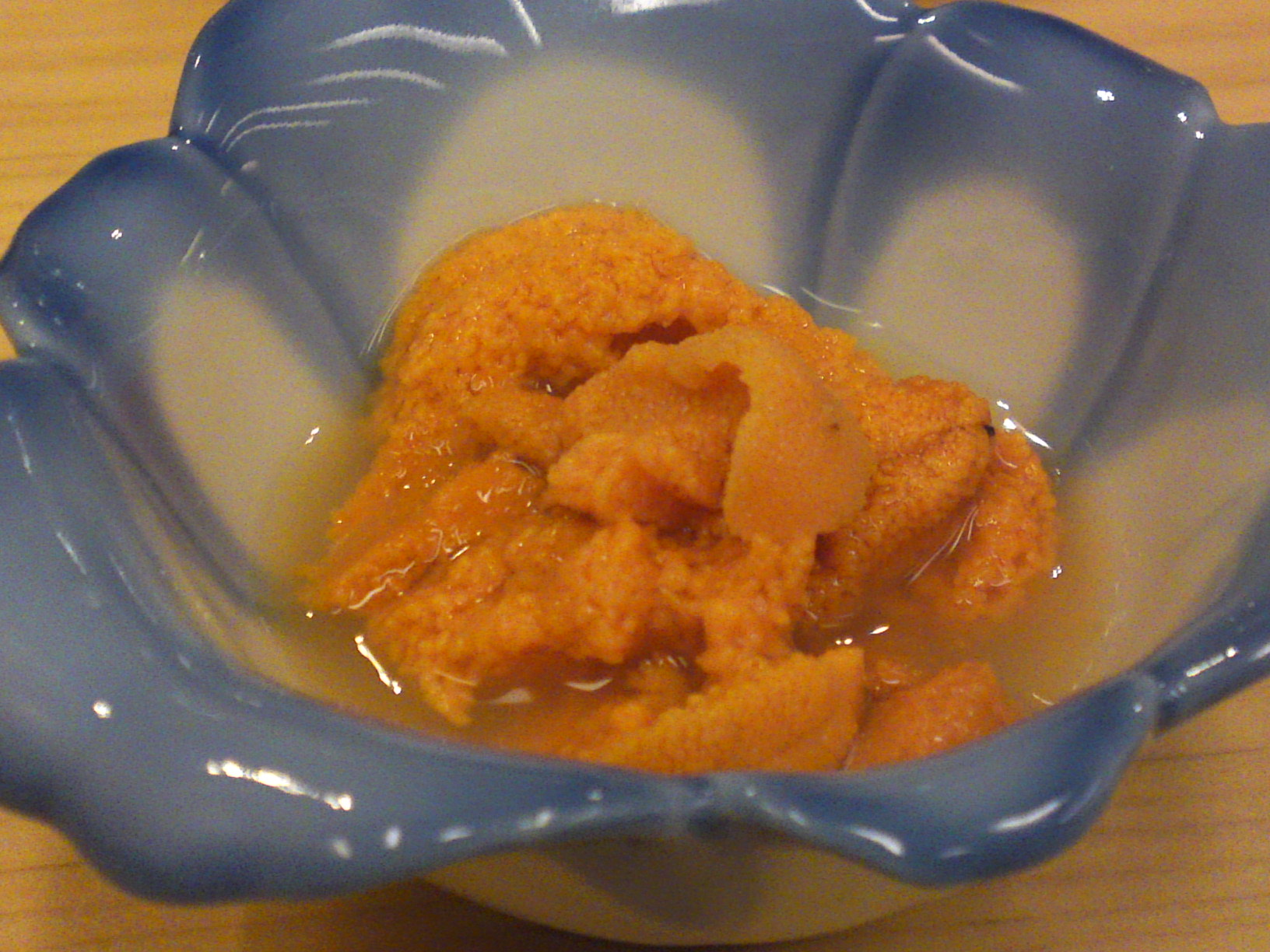
Kaisui uni/海水海栗/Sea Urchin in his original seawater eaten as it is! Extravagant! From Hokkaido!

Hotate nigiri/帆立握り/Scallops Nigiri. Large! From Northern Japan!

The filaments, roe and liver of the same scallops. A dish that would please a lot of people all over the world!

Madai nigiri/真鯛/True seabream/grouper-Red Seabream/grouper nigiri. From Shizuoka!

Magurozuke nigiri/鮪漬/marinated tuna (akami/lean part). Probably from Shizuoka or North of Japan (I forgot to ask as I always ask for this morsel in Shizuoka!).

Asupara mentaiko maki/アスパラ明太子巻/asparagus and hot cod roe (with mayonnaise) roll. For the Missus! The asparagus is from Shizuoka, the mentaiko from Kyushu island!

While the Missus had her mentaiko I had a kanpyou maki/干瓢巻/gourd shavings first dried, then marinated. With real wasabi from Shizuoka, almost a dessert!

Suwagani nigiri/諏訪蟹/snow crab nigiri from Hokkaido!

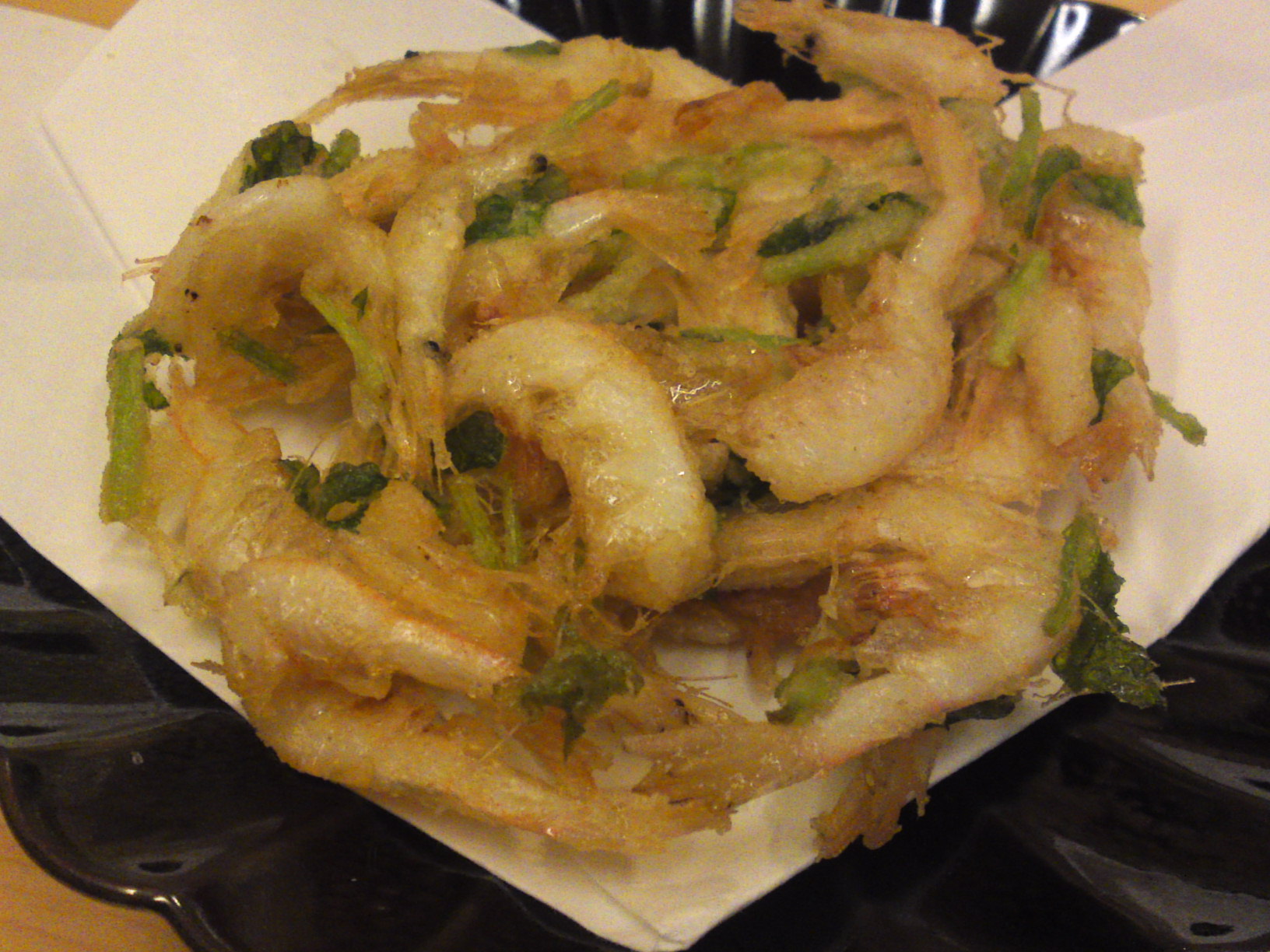
Shiroebi kakiage/白海老あき揚げ/white shrimps tempura from Toyama Prefecture!

</

Namida Maki/涙巻/Tear roll made with freshly sliced wasabi root from Shizuoka. Extravagant!

For a closer view!

Menegi nigiri to daikon zuke/芽葱と大根漬/leek sprouts and pickled (lime) daikon. All from Shizuoka!


Ikura Mini Donburi/イクラミニ丼/mini bowl of salmon’s roe!

To be continued…

NARUKAWA
Shizuoka City, Aoi Ku, Ryogae-cho, 1-5-2
Tel.: 054-221-1689
Business hours: 11::30~13:30, 17:00~02:00
Closed on Mondays
Credit cards OK
HOMEPAGE

RECOMMENDED RELATED WEBSITES

With a Glass,
Clumsyfingers by Xethia
Adventures in Bento Making, American Bento, Beanbento, Bento No1, Bento Wo Tsukurimashou, Cooking Cute, Eula, Hapabento , Happy Bento, Jacki’s Bento Blog, Kitchen Cow, Leggo My Obento, Le Petit Journal Bento & CO (French), Lunch In A Box, My Bento Box, Vegan Lunch Box; Tokyo Tom Baker, Daily Food Porn/Osaka, Only Nature Food Porn, Happy Little Bento, The Herbed Kitchen, J-Mama’s Kitchen, Cook, Eat, Play, Repeat; Bento Lunch Blog (German); Adventures In Bento; Anna The Red’s Bento Factory; Cooking Cute; Timeless Gourmet; Bento Bug; Ideal Meal; Bentosaurus; Mr. Foodie (London/UK); Ohayo Bento

Must-see tasting websites:

-Sake: Tokyo Through The Drinking Glass, Tokyo Foodcast, Urban Sake, Sake World
-Wine: Palate To Pen, Warren Bobrow, Cellar Tours, Ancient Fire Wines Blog
-Beer: Good Beer & Country Boys, Another Pint, Please!
-Japanese Pottery to enjoy your favourite drinks: Yellin Yakimono Gallery

Fruit Cocktails by Wataru Matsumoto: 14-Jaboticaba No1

Service: very professional and friendly.
Facilities: great washroom, great cleanliness overall.
Prices: reasonable, good value.
Strong points: Fruit cocktails. Cozy and a comfortable, for ladies and gentlemen alike.

This is the fourteenth recipe of a (hopefully long) series of cocktails concocted by Wataru Matsumoto, owner/bartender at BOTANICAL (Comfort bar) in Shizuoka City.

We called this particular cocktail “Jaboticaba No1” as I plan another visit to Nishikawa Garden and bring back more of these rare (in Japan) fruit!
You will find them only in a few orchards in Kyushu and Okinawa Islands and only one more away from these islands in Shizuoka City!

INGREDIENTS

-Jaboticaba: 5~6
-Tanqueray Gin: 1 measure
-Creme de Cassis: 1 dash
-Cointreau: 1 dash
-Cranberry Juice: 1/2 measure
-Ice

RECIPE

-In the glass half of a Boston shaker, drop the jaboticaba inside after having cut them in halves and taken out their pips.
Crush them as much as you can with a pestle.

-Add the Gin, Cassis, Cointreau and Cranberry juice.

-Pour ice in the metal glass of the Boston shaker. Drain any excess water. Transfer the ice into the glass half of the shaker. Close and shake well.

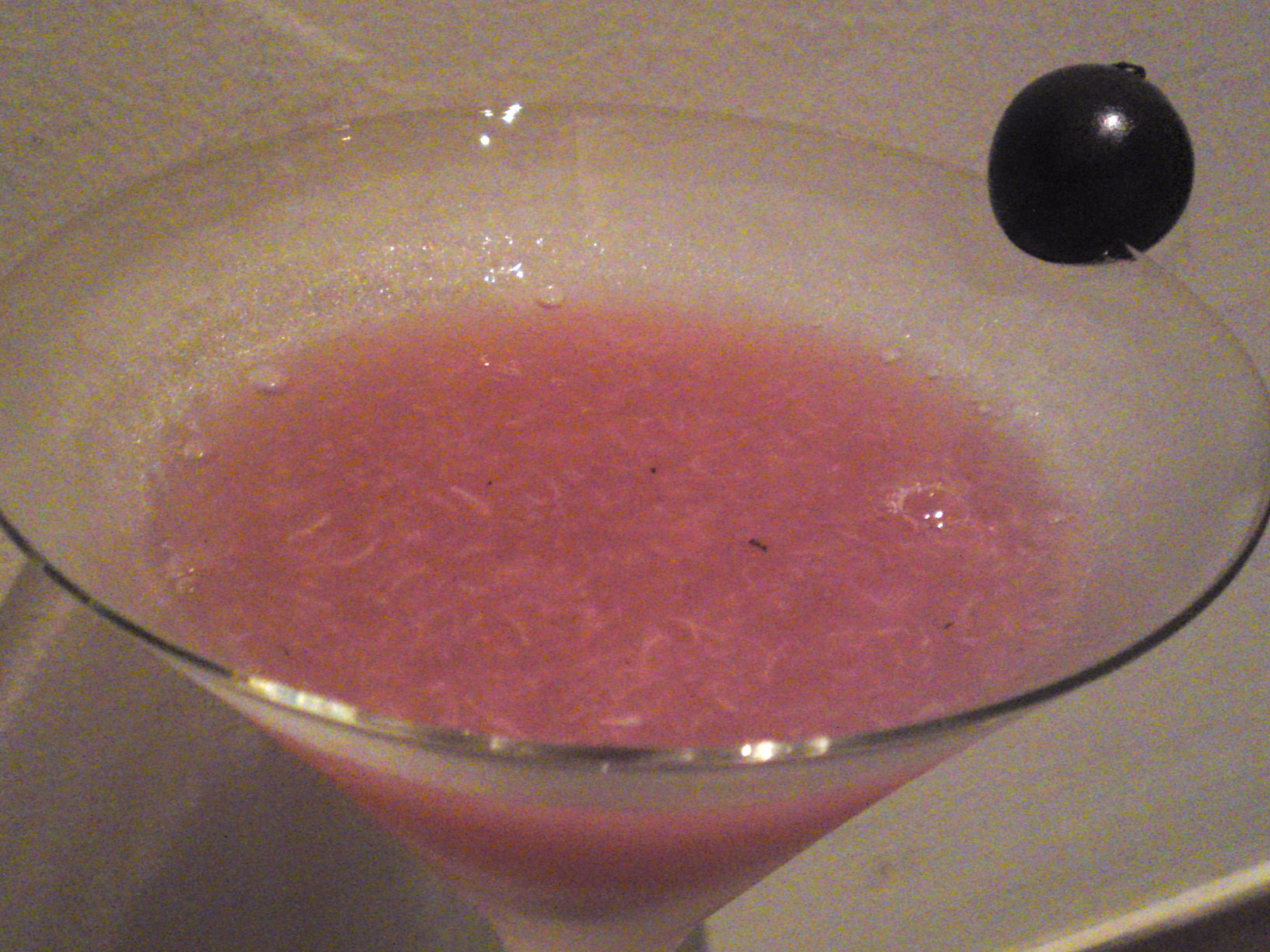
-Pour into a Martini glass through a strainer. Decorate with a Jaboticaba fruit.

Another very refreshing cocktail for hot summer evenings. Beware of the alcohol amount as it also disappears quickly!

BOTANICAL (Comfort Bar)
420-0082 Shizuoka City, Aoi Ku, Ryogae-cho, 1-6-13, Shade Bldg, 1F
Tel.: 054-221-8686
Opening hours: 17:00~01:00
Closed on Mondays.
Credit Cards OK

RECOMMENDED RELATED WEBSITES

With a Glass,
Clumsyfingers by Xethia
Adventures in Bento Making, American Bento, Beanbento, Bento No1, Bento Wo Tsukurimashou, Cooking Cute, Eula, Hapabento , Happy Bento, Jacki’s Bento Blog, Kitchen Cow, Leggo My Obento, Le Petit Journal Bento & CO (French), Lunch In A Box, My Bento Box, Vegan Lunch Box; Tokyo Tom Baker, Daily Food Porn/Osaka, Only Nature Food Porn, Happy Little Bento, The Herbed Kitchen, J-Mama’s Kitchen, Cook, Eat, Play, Repeat; Bento Lunch Blog (German); Adventures In Bento; Anna The Red’s Bento Factory; Cooking Cute; Timeless Gourmet; Bento Bug; Ideal Meal; Bentosaurus; Mr. Foodie (London/UK); Ohayo Bento

Must-see tasting websites:

-Sake: Tokyo Through The Drinking Glass, Tokyo Foodcast, Urban Sake, Sake World
-Wine: Palate To Pen, Warren Bobrow, Cellar Tours, Ancient Fire Wines Blog
-Beer: Good Beer & Country Boys, Another Pint, Please!
-Japanese Pottery to enjoy your favourite drinks: Yellin Yakimono Gallery

Joboticaba and Tropical Fruits at Nishikawa Garden!

Jaboticaba!

I finally made it to Nishikawa Garden!
It is located far into Mariko, a good hour by bicycle from the center of Shizuoka City!

I thought I was lost by the end of my journey and had to retrace my route before making another U-turn and finding the board sign I was looking for!

I knew I was in the right place when I discovered the “Truck cafe” at the entrance of the greenhouse!
I couldn’t afford to make any mistake as they open the greenhouse and cafe to the public only on Sundays!

Yoshinari and Aya Nishikawa/西川宣成と文夫妻!

Mr. Nishikawa, a tea and citrus grower got interested in tropical fruit about 8 years ago and started experimenting with Jaboticaba and mangoes in particular.

The original Jaboticaba tree!

Having succeeded with their cultivation inside his two big greenhouses, he opened Jaboticaba Cafe and Garden in October 2009 to allow customers to visit his greenhouses and buy his products on Sundays!

I first visited his mango garden.
Interestingly enough they are not on sale as they are completely booked by private clients!

Although this particular crop is not officially registered as such it is grown organically without pesticides or artificial fertilizers!

Mr. Nishikawa does not follow the general practice of pairing the trees to one single mango for each main branch.
He believes in natural growth!

These will become beauties soon, but I won’t be able to buy a single one then…

Jaboticaba is an odd fruit indeed!
Mr. Nishhikawa originally imported the seeds from Okinawa.
Although “classified” as a tropical fruit it grows best in temperate conditions (around 20 degrees) and can resist lower temperatures as long as no frost occurs.
A visit to the Wikipedia Site should give you a good idea of its rarity outside Southern America, the more for it because of its fragility!

The fruit-bearing flowers appear directly on the trunk and branches away from the leaves!

Then the many flowers suddenly become green fruit before maturing later into a big dark red pearl!

Mr. Nishikawa cultivates four varieties depending on size and fruiting seasons!
All are sweet with a taste both reminiscent of lychees and grapes.

The smallest variety!
It is packed with polyphenols and antioxydants!

Some Jaboticaba are grown in Kyushu and Okinawa islands but don’t appear on the markets because of their fragility.
The only other place where they are grown in Japan (some are in Taiwan) is Nishikawa Garden in Shizuoka City! And organic to boot!

Organic coffee trees on sale!

Mr. Nishikawa has also succeeded with the organic culture of coffee but the crop is just too small to be marketed!

Now, the Nishikawas struck on the great idea of creating a Cafe to encourage customers and their families to taste the various products they make with Jaboticaba and other crops!

The cafe extends inside the greenhouse!

Choose your seat!

Have a good look at the menu before choosing between breads, cakes, jaboticaba drinks and others!

Beautiful home-made breads!

Yummy cakes, some of them made from recipes offered by Pissenlit Restaurant in Shizuoka City!

A lovely panacotta with jaboticaba jelly!
This is the only place you will find jaboticaba jelly in Japan!
They even make jams!

My neighbors were sipping those beautiful jaboticaba soda drinks!

Mrs. Nishikawa has a very unusual hobby!
Oranges that cannot be sold because of blemishes on their skin are peeled before being processed.
Mrs. Nishikawa collects the soft white part between the skin and the flesh, dries it between sheets of newspaper and use it to make this big picture of jaboticaba trees!
The technique is called “oshibana/押し花” or “Pressed Flower Art” in English!
Who said farmers could not be artists!

To be continued…

Cafe Jaboticaba (mr. & Mrs. Nishikawa)
421-0103 Shizuoka City, Suruga Ku, Mariko, 7324
Mobile phone: 090-7605-3491
Business hours: Sundays only, 10:00~17:00

RECOMMENDED RELATED WEBSITES

With a Glass,
Clumsyfingers by Xethia
Adventures in Bento Making, American Bento, Beanbento, Bento No1, Bento Wo Tsukurimashou, Cooking Cute, Eula, Hapabento , Happy Bento, Jacki’s Bento Blog, Kitchen Cow, Leggo My Obento, Le Petit Journal Bento & CO (French), Lunch In A Box, My Bento Box, Vegan Lunch Box; Tokyo Tom Baker, Daily Food Porn/Osaka, Only Nature Food Porn, Happy Little Bento, The Herbed Kitchen, J-Mama’s Kitchen, Cook, Eat, Play, Repeat; Bento Lunch Blog (German); Adventures In Bento; Anna The Red’s Bento Factory; Cooking Cute; Timeless Gourmet; Bento Bug; Ideal Meal; Bentosaurus; Mr. Foodie (London/UK); Ohayo Bento

Japanese Izakaya: Odakkui

The first snack comes with a message!

Service: Very friendly
Facilities: Old but clean. Interesting and clean washroom!
Prices: appropriate
Strong points: Local traditional cuisine. Great sake and shochu!

Izakayas are the pillar of Japanese gastronomy as they are the best indication of any local food enjoyed in any particular region.
Naturally there are izakayas and izakayas!
To discover a worthy establishment you need only follow a few rules of the thumb:
A good izakaya serves:
-Local food made with local ingredients whenever possible.
-Variety in cooked and raw dishes
-At least one or two superlative local sake (or local drinks)
-A good choice of drinks to satisfy all tastes and priorities.
The (necessary) extras are:
-Conviviality
-Keen interest in customers’ requests
-Traditional atmosphere

Oddakui, although a celebrated (reserve your seat beforehand!) institution in Shizuoka City it is not easy to find as it is located on the second floor of an unremarkable building. Look for the sign below, and…

and above your head!

The MOTH: Naofumi Ohshiro/大代直史!

Naofumi is not only a great izakaya oyakata, he is also a remarkable business as he opened Yasaitei/やさい亭 with the help of Chef Aki Suzuki/鈴木朋 to offer a complementary establishment to his customers with an accent on vegetables while Odakkui/おだっ喰い serves typical izakaya food from sashimi to oden and croquettes (the last two a must!)

Naofumi has his customers’ bien-être at heart: a message greets each of them wrapped around the chopsticks!
One problem with such establishments is trying to take pictures without a flash!
But don’t worry, do refer to Odakkui’s Homepage for a great rendition of their food and atmosphere!

The little details that make a place so welcoming!

A great sake from Shizuoka: Shisizumi Brewery in Fujieda City!
The ladies must try the umeshu made with brown sugar!

This salad is called “Shizuoka Umare Sarada/静岡生まれサラダ/Shizuoka Birthplace Salad!
it is made with mitsuba/三つ葉/Japanese honeywort and shirasu/シラス/hard mouth sardine whitebait!
Shizuoka Prefecture is known all over Japan for its shirasu!

The whitefish has been steamed and cooled down beforehand.
With avocado in between, it certainly makes for a complete and healthy dish!

Although the menu is worth exploring, you ought to sample their suigyoza/dumplings in soup!
Even the Chinese would come for that!

They (or the Vietnamese!) would also come for the Raw Spring Rolls!

Yummy and so healthy again!

The customers are always offered a dessert before leaving: Brûlé Pudding and Strawberry Sorbet! Another detail which spells the difference!
Sorry for the fuzzy picture!

This is only a short start as I must sample their croquettes, oden and sashimi! LOL

ODAKKUI/おだっ喰い
420-0034 Shizuoka City, Aoi Ku, Tokiwa Cho, 1-8-1, Aoba Yokocho, 2F
Tel.]Fax: 054-253-6900
Business hours: 17:00~24:00
Closed on Mondays
HOMEPAGE

RECOMMENDED RELATED WEBSITES

With a Glass,
Clumsyfingers by Xethia
Adventures in Bento Making, American Bento, Beanbento, Bento No1, Bento Wo Tsukurimashou, Cooking Cute, Eula, Hapabento , Happy Bento, Jacki’s Bento Blog, Kitchen Cow, Leggo My Obento, Le Petit Journal Bento & CO (French), Lunch In A Box, My Bento Box, Vegan Lunch Box; Tokyo Tom Baker, Daily Food Porn/Osaka, Only Nature Food Porn, Happy Little Bento, The Herbed Kitchen, J-Mama’s Kitchen, Cook, Eat, Play, Repeat; Bento Lunch Blog (German); Adventures In Bento; Anna The Red’s Bento Factory; Cooking Cute; Timeless Gourmet; Bento Bug; Ideal Meal; Bentosaurus; Mr. Foodie (London/UK); Ohayo Bento

Must-see tasting websites:

-Sake: Tokyo Through The Drinking Glass, Tokyo Foodcast, Urban Sake, Sake World
-Wine: Palate To Pen, Warren Bobrow, Cellar Tours, Ancient Fire Wines Blog
-Beer: Good Beer & Country Boys, Another Pint, Please!
-Japanese Pottery to enjoy your favourite drinks: Yellin Yakimono Gallery

Robert Yellin Yakimono Gallery: JapanesePottery.com – June, 2011 Newsletter

Greetings from Kyoto,

It is with great pleasure that I write this to you from our new gallery located a few minutes walk from the Silver Pavilion. The setting is quite magical, that being an early Showa-period Sukiya style house built for a wealthy Tea and kendo patron; within the house full of tea rooms is also a kendo practice room!

Our New Gallery in Kyoto
Moving from Mishima to Kyoto will enable us to be closer to all the kilns we love in western Japan, as well as have access to more important secondary market works. I’m attaching a few photos of the gallery here and more can be found online at www.japanesepottery.com

The house was the residence for more then two decades of Tea Master John McGee, who returned to Canada to create a Tea room and center: http://www.shambhala.org/
arts/chanoyu.php. The spirit of Tea and wabi-sabi pervades the house and as such is the perfect stage for the many shibui ceramic art works we offer. In addition, we’ll be using the house—and garden—as a stage of sorts when showing new works online, such as for this Kato Takahiko Shigraki jar.

Kato, being the very talented artist he is, also carved a special wooden plaque for the gallery that reads from right to left Gin-Ro-An, which means Silver Dew Hermitage. I think ROsanjin would like it as much as RObert does.

Okini and all the best from Kyoto!

Robert Yellin (Robert@e-yakimono.net)
Robert Yellin Yakimono Gallery
Ginkakuji-mae-cho 39
Kyoto-shi, Kyoto-fu
JAPAN 606-8407
Phone- Int’l: 81-75-708-5581, fax: 81-75-708-5393
Within Japan: 075-708-5581, fax: 075-708-5393
www.japanesepottery.com

Other News

As summer slowly drifts by we’ll be having a few autumn exhibitions with Iga great Fujioka Shuhei surely set for mid-October. I’ll also be traveling a bit more to regional kilns so also please look for a few summer mini-exhibitions.

And, of course if ever in Kyoto please do stop by. The area is rich with history and as noted a very short walk to the Silver Pavilion and the Philosopher’s Path.

RECOMMENDED RELATED WEBSITES

With a Glass,
Clumsyfingers by Xethia
Adventures in Bento Making, American Bento, Beanbento, Bento No1, Bento Wo Tsukurimashou, Cooking Cute, Eula, Hapabento , Happy Bento, Jacki’s Bento Blog, Kitchen Cow, Leggo My Obento, Le Petit Journal Bento & CO (French), Lunch In A Box, My Bento Box, Vegan Lunch Box; Tokyo Tom Baker, Daily Food Porn/Osaka, Only Nature Food Porn, Happy Little Bento, The Herbed Kitchen, J-Mama’s Kitchen, Cook, Eat, Play, Repeat; Bento Lunch Blog (German); Adventures In Bento; Anna The Red’s Bento Factory; Cooking Cute; Timeless Gourmet; Bento Bug; Ideal Meal; Bentosaurus; Mr. Foodie (London/UK); Ohayo Bento

Fruit Cocktails by Wataru Matsumoto: 13-Leaf Ginger & Watermelon

Service: very professional and friendly.
Facilities: great washroom, great cleanliness overall.
Prices: reasonable, good value.
Strong points: Fruit cocktails. Cozy and a comfortable, for ladies and gentlemen alike.

This is the thirteenth recipe of a (hopefully long) series of cocktails concocted by Wataru Matsumoto, owner/bartender at BOTANICAL (Comfort bar) in Shizuoka City.
No worries about copyrights as Mr. Matsumoto is only too happy to share his secrets!

Now this cocktail conceived as a kind of Salty Dog is very much a Shizuoka-style cocktail as the leaf ginger and watermelon were grown in our Prefecture!

INGREDIENTS:

-Fresh leaf Ginger: 1 (if unavailable use as fresh a root as possible or pure ginger juice)
-Watermelon 1 wedge
-Beefeater gin: 1 measure
-Ice cubes : 1~2 large
-Salt

RECIPE:

-Apply salt over the rim of a large glass like one in the picture above. Drop large cubes of ice in it.

-Grate the fresh leaf ginger to extract its juice.

-Cut the watermelon into small pieces (discard the seeds!)
Reduce to pulp (you must be able to almost “eat” the watermelon.

-In a large tumbler pour the gin, leaf ginger juice and watermelon.
Mix well and pour over the ice for a good chill.

A very refereshing cocktail for hot days and nights.
Beware, it tends to disappear quickly!LOL

BOTANICAL (Comfort Bar)
420-0082 Shizuoka City, Aoi Ku, Ryogae-cho, 1-6-13, Shade Bldg, 1F
Tel.: 054-221-8686
Opening hours: 17:00~01:00
Closed on Mondays.
Credit Cards OK

RECOMMENDED RELATED WEBSITES

With a Glass,
Clumsyfingers by Xethia
Adventures in Bento Making, American Bento, Beanbento, Bento No1, Bento Wo Tsukurimashou, Cooking Cute, Eula, Hapabento , Happy Bento, Jacki’s Bento Blog, Kitchen Cow, Leggo My Obento, Le Petit Journal Bento & CO (French), Lunch In A Box, My Bento Box, Vegan Lunch Box; Tokyo Tom Baker, Daily Food Porn/Osaka, Only Nature Food Porn, Happy Little Bento, The Herbed Kitchen, J-Mama’s Kitchen, Cook, Eat, Play, Repeat; Bento Lunch Blog (German); Adventures In Bento; Anna The Red’s Bento Factory; Cooking Cute; Timeless Gourmet; Bento Bug; Ideal Meal; Bentosaurus; Mr. Foodie (London/UK); Ohayo Bento

Must-see tasting websites:

-Sake: Tokyo Through The Drinking Glass, Tokyo Foodcast, Urban Sake, Sake World
-Wine: Palate To Pen, Warren Bobrow, Cellar Tours, Ancient Fire Wines Blog
-Beer: Good Beer & Country Boys, Another Pint, Please!
-Japanese Pottery to enjoy your favourite drinks: Yellin Yakimono Gallery

Shizuoka Sake Fair: 19th Shisa Heiya Bishu Story 2011

Junmai Ginjyo created by Oomuraya Brewery (Shimada City) with Hyakumangoku Rice, Yeast and water all form Shizuoka Prefecture (limited batch!)!
Courtesy of Marcus Grandon

On the 9th of June 2011 the 19th Shida Beya Bishu Monogatari 2011 was held in Yaizu City at the Hotel Ambia Shyofuku!
”大19回志田平野美食物語2011” means “19th Shida Plain Beautiful Sake Story 2011”!

Welcoming 400 guests through the lobby!

My friend Marcus and I have been invited at the event for the last 4 years and we can afford (politely) to take some liberties.
After having gone through the reception motion we decided to take a quick peek before the official entrance!

Getting the sake tasting space ready before the rush!

Preparations for the meal by the hotel staff were almost completed!

Almost finished!
About time we made ourselves scarce!

The sake kegs from the 6 participating breweries in front of the entrance hust be fore the official entrance!

400 guests patiently queuing up…

Guests seated and everyone waiting for the official beginning of the festivities…

Isojiman Brewery in Yaizu City!

Shidaizumi Brewery in Fujieda City!

Hatsukame Brewery in Okabe, Fujieda City!

Oomuraya Brewery in Shimada City!

Sugii Brewery from Fujieda City!

Aoshima Brewery in Fujeda City!

Still looking at the “wrapped” food before the brewers’ presentation…

Official speech and presentation!

And then… Tasting Battle Royale!

The yearly attendance by John Gauntner proves this is a major sake event in Japan!

The dessert was sakekasu/sake white lees mousse!

Growers of the Shizuoka Homare Fuji sake rice!

This emblem was created by a university student!

See you next year!
But before that be assured I will pay a few visits to these 6 breweries!

RECOMMENDED RELATED WEBSITES

With a Glass,
Clumsyfingers by Xethia
Adventures in Bento Making, American Bento, Beanbento, Bento No1, Bento Wo Tsukurimashou, Cooking Cute, Eula, Hapabento , Happy Bento, Jacki’s Bento Blog, Kitchen Cow, Leggo My Obento, Le Petit Journal Bento & CO (French), Lunch In A Box, My Bento Box, Vegan Lunch Box; Tokyo Tom Baker, Daily Food Porn/Osaka, Only Nature Food Porn, Happy Little Bento, The Herbed Kitchen, J-Mama’s Kitchen, Cook, Eat, Play, Repeat; Bento Lunch Blog (German); Adventures In Bento; Anna The Red’s Bento Factory; Cooking Cute; Timeless Gourmet; Bento Bug; Ideal Meal; Bentosaurus; Mr. Foodie (London/UK); Ohayo Bento

Must-see tasting websites:

-Sake: Tokyo Through The Drinking Glass, Tokyo Foodcast, Urban Sake, Sake World
-Wine: Palate To Pen, Warren Bobrow, Cellar Tours, Ancient Fire Wines Blog
-Beer: Good Beer & Country Boys, Another Pint, Please!
-Japanese Pottery to enjoy your favourite drinks: Yellin Yakimono Gallery

Bryan Baird’s Newsletter (2011/06/08)

Baird Beer & Taproom Events Bulletin
bryan-sayuri.gif

New Seasonal Releases: Kiwi Strong Pale Ale and Wabi-Sabi IPA

Dear Taproom Friend & Baird Beer Enthusiast:

We are excited to announce the release of two more first-time seasonal Baird Beers: Kiwi Strong Pale Ale and Wabi-Sabi IPA. Both of these brews are innovative and distinct hop-forward treats.

New Baird Beer Seasonal Releases:
*Kiwi Strong Pale Ale (ABV 5.5%):

As you know, we love hops — all hops! Two years ago we got our greedy hands on our first lots of New Zealand hops. The more we experiment with them, the more we love them. This crisp yet hardy Strong Pale Ale is hopped exclusively with the New Zealand varieties we have on hand (Hallertau Aroma, Motueka and Cascade). The aroma is beautifully fragrant, reminiscent of ripe citrus fruit and flowers in bloom. A honey-malt sweetness in the mouth quickly gives way to an invigoratingly brisk, bitter-dry finish.

Kiwi Strong Pale Ale begins pouring from our Taproom taps Wednesday, June 8. It is available for immediate release to all Baird Beer retailers in Japan and to individual consumers via our online Eshop.

*Wabi-Sabi IPA (ABV 6%):

Can there ever be enough permutations of the great India Pale Ale style? Of course not. In this beautifully nuanced, Japanese esthetic-influenced ale, we marry in the conditioning tank ample dosages of earthy-herbal dry hops (Hersbrucker, Styrian Golding, Santiam) with deft additions of whole leaf Shizuoka green tea. The result of this international botanical marriage is, in a word, sublime.

Baird Beer, as you know, is unfiltered and the addition of whole leaf green tea to Wabi-Sabit IPA has contributed a very strong particle sediment. Do not fear or fret, this is all-natural good stuff and it tastes great! You will not find this in a can or mug of your favorite industrial brew. Enjoy!

Wabi-Sabi IPA will be available at our Taproom pubs and at other Baird Beer retailing establishments in Japan beginning Friday, June 10.

Cheers,

Bryan Baird

Baird Brewing Company
Numazu, Japan
HOMEPAGE


The Japan Blog List

———————————
Must-see tasting websites:
-Sake: Tokyo Through The Drinking Glass, Tokyo Foodcast, Urban Sake, Sake World
-Wine: Palate To Pen, Warren Bobrow, Cellar Tours, Ancient Fire Wines Blog
-Beer: Good Beer & Country Boys, Another Pint, Please!
-Japanese Pottery to enjoy your favourite drinks: Yellin Yakimono Gallery

Shizuoka Sake Tasting: Suginishiki Junmai Yamahai Homare Fuji

The beauty of Japanese sake (like wine) is that, regardless of the same methods, same ingredients or same skills, the same brewery will not be able to reproduce exactly the same brew as the precedent year!
And when it comes to making Yamahai it is simply, and luckily to my own mind, impossible!

Sugii Brewery in Fujieda City has never been afraid to experiment.
Once again they used the Shizuoka-grown Fuji Homare rice and brewed it with a yeast not from our Prefecture to produce a very interesting Yamahai!

Sugii Brewery; Suginishiki Junmai Yamahai Fuji Homare

Rice: Homare Fuji (100% Shizuoka-grown)
Rice milled down to 70%
Alcohol: 15~16 degrees
Dryness: + 4.5
Acidity: 1.6
Yeast: Association No 7
Heated only once
Bottled in April 2011

Clarity: Very clear
Color: Light golden hue (normal for Yamahai)
Aroma: Dry and fruity: custard, macadamia nuts
Body: fluid and slightly syrupy
Taste: Dry fruity attack backed up by strong junmai petillant
Custard, oranges, almonds.
Stays very dry but fruity all along.
Lingers for a short while before leaving with a warm note and dry nuts.
Pleasant, although the final dry note might surprise a few people.
Changes little with food.
Further sips end with a dry note of apricots and oranges.

Overall: A sake conceived to be enjoyed with food, especially heavy izakaya food, the dry note compensating the heaviness of sauces.
Typical sake from Sugii Brewery, a favorite with food!

Must-see tasting websites:
-Sake: Tokyo Through The Drinking Glass, Tokyo Foodcast, Urban Sake, Sake World
-Wine: Palate To Pen, Warren Bobrow, Cellar Tours, Ancient Fire Wines Blog
-Beer: Good Beer & Country Boys, Another Pint, Please!
-Japanese Pottery to enjoy your favourite drinks: Yellin Yakimono Gallery

Shizuoka Agriculture New Generation: Takeshi Ichikawa!

Takeshi Ichikawa/市川武史 (22 years old!)

The Western part of Shizuoka Prefecture is also called the greatest garden of Japan by many for good reasons.
Not so much for the quantity but for the extravagant quality and abundance of varieties!
A lot of devoted farmers and cooperating researchers from all fields have contributed to this amply justified reputation, but all this work would have come to nought without an emerging new generation, the more for it that the previous generation was practically lost to the lure of towns and desk jobs.

Takeshi Ichikawa and one of his clients, Chef Hiroyuki Adachi/足立久幸 at Harmony!

Fortunately times have changed, and with the advent of the Internet more young people are attracted to a healthier life, however physically strenuous it might prove.
That is why more and more young men and women like Takeshi Ichikawa, instead of wasting time at universities where students are increasingly losing their goals, prefer to learn and study through real experience and enjoy the joys of true social life with their peers and customers.

Takeshi Ichikawa ‘s outdoors corn fields!

Takeshi Ichikawa, after graduating from Iwata Prefceture Agriculture High School, decided neither to continue school or succeed to his father as a Nashi/Japanese pear producer, but to start his own corn and lettuce cultivation. At the age of 22 he already has 5 years of experience and is still learning fast!
It was never easy, especially considering the resistance of older generations to changes. He has been trying for some time to encourage young farmers like him to venture into new types of culture including poly-culture. He told me that still too few are allowed by their families to move that step forward…

That crow has become a real scarecrow!

But Takeshi has stayed humble all the time. He fully realizes he still has lots to learn. He couldn’t believe me when I told him crows are found all over the world!

These corn ears in the outdoors fields will soon be harvested!

Greenhouse corn

Takeshi grows two varieties of corn, kankan Musume and SKA 318, both Japanese hybrids, both in greenhouses and outdoors for a longer harvesting season.
This means very few holidays during the year. Fortunately for him his school sweetheart has become his wife and she has become the true half of their farming team.
I was invited inside their home and I can tell you these two are really young at heart and certainly more modern and world-conscious than many people of their age!

That is what I call real corn!

Takeshi is appalled at the idea that some people use gene-modified corn and will replant corn only from his own crop!
These kankan musume corn are a real beauty not only in shape and color but in taste.
I tasted them both raw (juicy and so sweet!) and cooked. No wonder they fetch a good price on the market!

Takeshi does not rest on his laurels and grows other vegetables like Qing geng cai (Green pak choi) to answer market demands and his own consumption.

They certainly look appetizing, but once again it looks like a lot of work!

His education at a top-class agricultural high school is paying off as he is conducting his own experiments on potential crops!

But this does not mean he is rejecting his own roots: he grows his own rice!

I told him it reminded me of an English lawn!

Now, Takeshi’s father is a renown grower of nashi/Japanese pears with fields dispersed all over the city!
A proof that his kosui/幸水 and hosui/豊水 are popular is that he sells them exclusively on a direct-sale basis!

These trees are 30 years old!

These fruits need constant pruning, a back-breaking and neck-twisting work if there is one!

These fruit will be ripe next August!
I do not need telling you when I’m paying my next visit to Takeshi! (and his father!)

Takeshi Ichikawa/Chouchou Farm
438-0804 Shizuoka Ken, Iwata Shi, Kamo, 200
静岡県磐田市加茂200
Tel/Fax: 0538-34-0629
Mobile: 080-1614-2271

Lettuce: October~April
Corn: June~July (May for greenhouse)
Japanese pears/nashi: August~September
Rice: Middle of September
Other vegetables (please call for more information!)
Private orders welcome!

RECOMMENDED RELATED SITES:
With a Glass,
Bread + Butter, Zoy Zhang, Hungry Neko, Think Twice, Frank Fariello, Mangantayon, Hapabento, Elinluv Tidbit Corner, Tokyo Terrace, Maison de Christina, Chrys Niles,Lexi, Culinary Musings, Wheeling Gourmet, Comestiblog, Chronicles Of A Curious Cook, Tokyo Through The Drinking Glass, Tokyo Foodcast, Palate To Pen, Yellin Yakimono Gallery, Tokyo Terrace, Hilah Cooking, More than a Mount Full, Arkonite Bento, Happy Little Bento; 5 Star Foodie; Jefferson’s Table; Oyster Culture; Gourmet Fury; Island Vittles; Good Beer & Country Boys; Rubber Slippers In Italy; Color Food daidokoro/Osaka;/a; The Witchy Kitchen; Citron Et Vanille, Lunsj Med Buffet/Estonian Gastronomy (English), Cook, Eat, Play, Repeat, Chrisoscope, Agrigraph, The Agriculture Portal to shizuoka!

Bryan Baird’s Newsletter (2011/06/01)

Baird Beer & Taproom Events Bulletin
bryan-sayuri.gif

Seasonal Release: Rainy Season Black Ale 2011

Dear Taproom Friend & Baird Beer Enthusiast:

The rainy season kicked off a bit early this year and, fortunately, we were not caught off guard. Yes, Rainy Season Black Ale 2011 was brewed in plenty of time to meet the early arrival of Japan’s grey season. This hoppy black ale begins pouring from our Taproom taps today, Wednesday, June 1.

New Seasonal Baird Beer Releases:
*Rainy Season Black Ale 2011 (ABV 6.0%):

A torrential down-pouring of hops define this otherwise roasty, toasty, espresso-like black ale. 60 bittering units of clean, crisp lupulin-resin (courtesy of Warrior, Magnum, Horizon, Tradition, Glacier and Santiam) emerge from our kettle boil; the lupulin-oils (from our friends Tradition, Glacier and Santiam) join the gig via dry-hopping in the conditioning tank and contribute a pleasant herbal-spicy-peppery aromatic character. After a few sips of the pint glass you will find yourself licking from your lips a resinous stickiness that can best be characterized as pungently pleasurable. Here’s to the rainy season!

Rainy Season Black Ale 2011 is available throughout Japan in both draught and bottle (633 ml) form at pubs, restaurants and liquor shops that constitute our wonderful and growing network of Baird Beer retailers. Check out the expanding list of Baird Beer retailers on the retailer’s page of our website: http://bairdbeer.com/en/bairdbeer/retailers.

Individual consumers can order bottles direct from the brewery via our website E-Shop: http://bairdbeer.com/en/shop/.

Cheers,

Bryan Baird

Baird Brewing Company
Numazu, Japan
HOMEPAGE


The Japan Blog List

———————————
Must-see tasting websites:
-Sake: Tokyo Through The Drinking Glass, Tokyo Foodcast, Urban Sake, Sake World
-Wine: Palate To Pen, Warren Bobrow, Cellar Tours, Ancient Fire Wines Blog
-Beer: Good Beer & Country Boys, Another Pint, Please!
-Japanese Pottery to enjoy your favourite drinks: Yellin Yakimono Gallery

Japanese Soy Sauce Varieties (updated)

SOY-2-KINDS
Japanese meal served with two kinds of soy sauce

To answer a query by my friend Sissi at With a Glass on tamari soy sauce, I thought that the best way to answer was to republish this old article of mine!

Almost everyone knows or has heard about soy sauce (or soya sauce in Europe).
It is even used in all kinds of cuisines in the world, be they vegetarian or not.
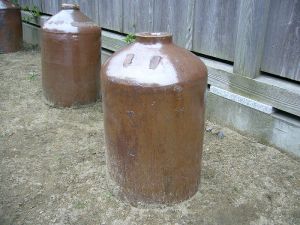
SOY-VATS
Ancient soy vats.

Authentic soy sauces are made by mixing the grain and/or soybeans with yeast or kōji (麹, the mold Aspergillus oryzae or A. sojae) and other related microorganisms. Traditionally soy sauces were fermented under natural conditions, such as in giant urns and under the sun, which was believed to contribute to additional flavours. Today, most of the commercially-produced counterparts are instead fermented under machine-controlled environments.

Although there are many types of soy sauce, all are salty and “earthy”-tasting brownish liquids used to season food while cooking or at the table. Soy sauce has a distinct basic taste called umami by the Japanese (旨味, literally “delicious taste”). Umami was first identified as a basic taste in 1908 by Kikunae Ikeda of the Tokyo Imperial University. The free glutamates which naturally occur in soy sauce are what give it this taste quality.
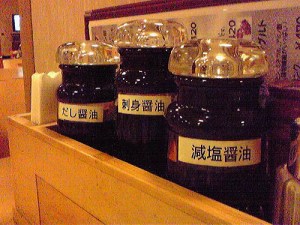
SOY-3-KINDS
3 kinds of soy sauce as served in a Japanese izakaya: だし醤油/Dashi Soy Sauce, 刺身醤油/soy Sauce for sashimi, 減塩醤油/salt-reduced soy sauce

Artificially hydrolyzed Soy sauce
Many cheaper brands of soy sauces are made from hydrolyzed soy protein instead of brewed from natural bacterial and fungal cultures. These soy sauces do not have the natural color of authentic soy sauces and are typically colored with caramel coloring, and are popular in Southeast Asia and China, and are exported to Asian markets around the globe. They are derogatorily called Chemical Soy Sauce (“化學醬油” in Chinese), but despite this name are the most widely used type because they are cheap. Similar products are also sold as “liquid aminos” in the US and Canada.

Some artificial soy sauces pose potential health risks due to their content of the chloropropanols carcinogens 3-MCPD (3-chloro-1,2-propanediol) and all artificial soy sauces came under scrutiny for possible health risks due to the unregulated 1,3-DCP (1,3-dichloro-2-propanol) which are minor byproducts of the hydrochloric acid hydrolysis.

SOY-2-KINDSa
Difference in colour between 薄口醤油/light soy sauce and 濃口醤油/strong soy sauce

Japanese soy sauce varieties

Buddhist monks introduced soy sauce into Japan in the 7th century, where it is known as “shōyu”. The Japanese word “tamari” is derived from the verb “tamaru” that signifies “to accumulate”, referring to the fact that tamari was traditionally from the liquid byproduct produced during the fermentation of miso. Japan is the leading producer of tamari.

Japanese soy sauce or shō-yu (しょうゆ, or 醤油), is traditionally divided into 5 main categories depending on differences in their ingredients and method of production. Most but not all Japanese soy sauces include wheat as a primary ingredient, which tends to give them a slightly sweeter taste than their Chinese counterparts. They also tend towards an alcoholic sherry-like flavor, due to the addition of alcohol in the product. Not all soy sauces are interchangeable.

Koikuchi (濃口, “strong flavor”)
Originating in the Kantō region, its usage eventually spread all over Japan. Over 80% of the Japanese domestic soy sauce production is of koikuchi, and can be considered the typical Japanese soy sauce. It is produced from roughly equal quantities of soybean and wheat. This variety is also called kijōyu (生醤油) or namashōyu (生しょうゆ) when it is not pasteurized.
Usukuchi (淡口, “light flavor”)
Particularly popular in the Kansai region of Japan, it is both saltier and lighter in color than koikuchi. The lighter color arises from the usage of amazake, a sweet liquid made from fermented rice, that is used in its production.
Tamari (たまり)
Produced mainly in the Chūbu region of Japan, tamari is darker in appearance and richer in flavour than koikuchi. It contains little or no wheat; wheat-free tamari is popular among people eating a wheat free diet. It is the “original” Japanese soy sauce, as its recipe is closest to the soy sauce originally introduced to Japan from China. Technically, this variety is known as miso-damari (味噌溜り), as this is the liquid that runs off miso as it matures.
Shiro (白, “white”)
A very light colored soy sauce. In contrast to “tamari” soy sauce, “shiro” soy sauce uses mostly wheat and very little soybean, lending it a light appearance and sweet taste. It is more commonly used in the Kansai region to highlight the appearances of food, for example sashimi.
Saishikomi (再仕込, “twice-brewed”)
This variety substitutes previously-made koikuchi for the brine normally used in the process. Consequently, it is much darker and more strongly flavored. This type is also known as kanro shoyu (甘露醤油) or “sweet shoyu”.

Newer varieties of Japanese soy sauce include:

Gen’en (減塩, “reduced salt”)
Low-salt soy sauces also exist, but are not considered to be a separate variety of soy sauce, since the reduction in salt content is a process performed outside of the standard manufacture of soy sauce.
Amakuchi (甘口, “sweet flavor”)
Called “Hawaiian soy sauce” in those few parts of the US familiar with it, this is a variant of “koikuchi” soy sauce.

All of these varieties are sold in the marketplace in three different grades according to how they were produced:

Honjōzō hōshiki (本醸造 方式)
Contains 100% naturally fermented product.
Shinshiki hōshiki (新式 方式)
Contains 30-50% naturally fermented product.
Tennen jōzō (天然 醸造)
Means no added ingredients except alcohol.

All the varieties and grades may be sold according to three official levels of quality:

Hyōjun (標準)
Standard pasteurized.
Tokkyū (特級)
Special quality, not pasteurized.
Tokusen (特選)
Premium quality, usually implies limited quantity.

Other terms unrelated to the three official levels of quality:

Hatsuakane (初茜)
Refers to industrial grade used for flavoring, powder.
Chōtokusen (超特選)
Used by marketers to imply the best.

RECOMMENDED RELATED SITES:
With a Glass,
Bread + Butter, Zoy Zhang, Hungry Neko, Think Twice, Frank Fariello, Mangantayon, Hapabento, Elinluv Tidbit Corner, Tokyo Terrace, Maison de Christina, Chrys Niles,Lexi, Culinary Musings, Wheeling Gourmet, Comestiblog, Chronicles Of A Curious Cook, Tokyo Through The Drinking Glass, Tokyo Foodcast, Palate To Pen, Yellin Yakimono Gallery, Tokyo Terrace, Hilah Cooking, More than a Mount Full, Arkonite Bento, Happy Little Bento; 5 Star Foodie; Jefferson’s Table; Oyster Culture; Gourmet Fury; Island Vittles; Good Beer & Country Boys; Rubber Slippers In Italy; Color Food daidokoro/Osaka;/a; The Witchy Kitchen; Citron Et Vanille, Lunsj Med Buffet/Estonian Gastronomy (English), Cook, Eat, Play, Repeat, Chrisoscope, Agrigraph, The Agriculture Portal to shizuoka!

2nd Great Shizuoka Local Food Meet by Nagashima Liquor Shop!

Shizen No Chikara Organic Farm was participating!

A great consciousness of the merits, both gastronomic and healthy, of locally produced foods, drinks and processed foods has developed into a veritable revolution in Shizuoka Prefecture.
Uncountable events are organized and eagerly participated to all over the Prefecture, and one such event of note is the “Chisan Chishou.Shindofuji-Umai Mon Kai
./地産地消.身土不二・旨いもん会/ Locally produced and Consumed. Good Food Slogan and Association organized on May 29th by Nagashima Liquor Shop (Shizuoka City) at Fugetsuro/浮月楼, the former last residence of the Tokugawa Shogun Family.
Shindofuji/身土不二 was a slogan created in 1907 to exhort citizens to produce and eat local food!

Nagashima Liquor Shop was also contributing part of the fees paid by guests to help the victims of the recent terrible earthquake and tsunami in the north east of Japan!

As usual I came a bit early to check the preparations and take pictures of all participants before the guests would be in the way!

Amano Shoyu/a producer of great soy sauce made with the water of Mount Fuji in Gotenba City!

Local processed foods by Suzuyo Stores from Hamamatsu City!

Naturally the sake from Shizuoka Prefecture were well represented:
Shidaizumi Brewery in Fujieda City!

Fuji Takasago Brewery in Fujinomiya City!

Eikun Brewery from Yui, Shimizu Ku, Shizuoka City!

Sanwa Brewery from Shimizu Ku, Shizuoka City!

Kanzawagawa Brewery from Yui, Shimizu Ku, Shizuoka City!

Suruga Brewery from Suruga Ku, Shizuoka City!

Isojiman Brewery in Yaizu City!

Hatsukame Brewery from Okabe, Fujieda City!

Oumuraya Brewery in Shimada City!

Morimoto Brewery from Kikugawa City!

Hana No Mai Brewery from Nishi Ku, Hamamatsu City!

Aoshima Brewery from Fujieda Citry!

Sugii Brewery from Fujieda City!

Sorry, but I did not have the time to take a picture of Takashima Brewery, Numazu City!

Shizuoka wine was also represented by Naka Izu Winery all the way from the Izu Peninsula!

Wines from Yamanashi Prefecture were represented by three guest wineries!

Superlative organic vegetables from Shizuoka Prefecture were introduced by Shizen No Chikara farm!

All the food, cold and hot, was prepared by Fugetsurou!

Roast beef salad!

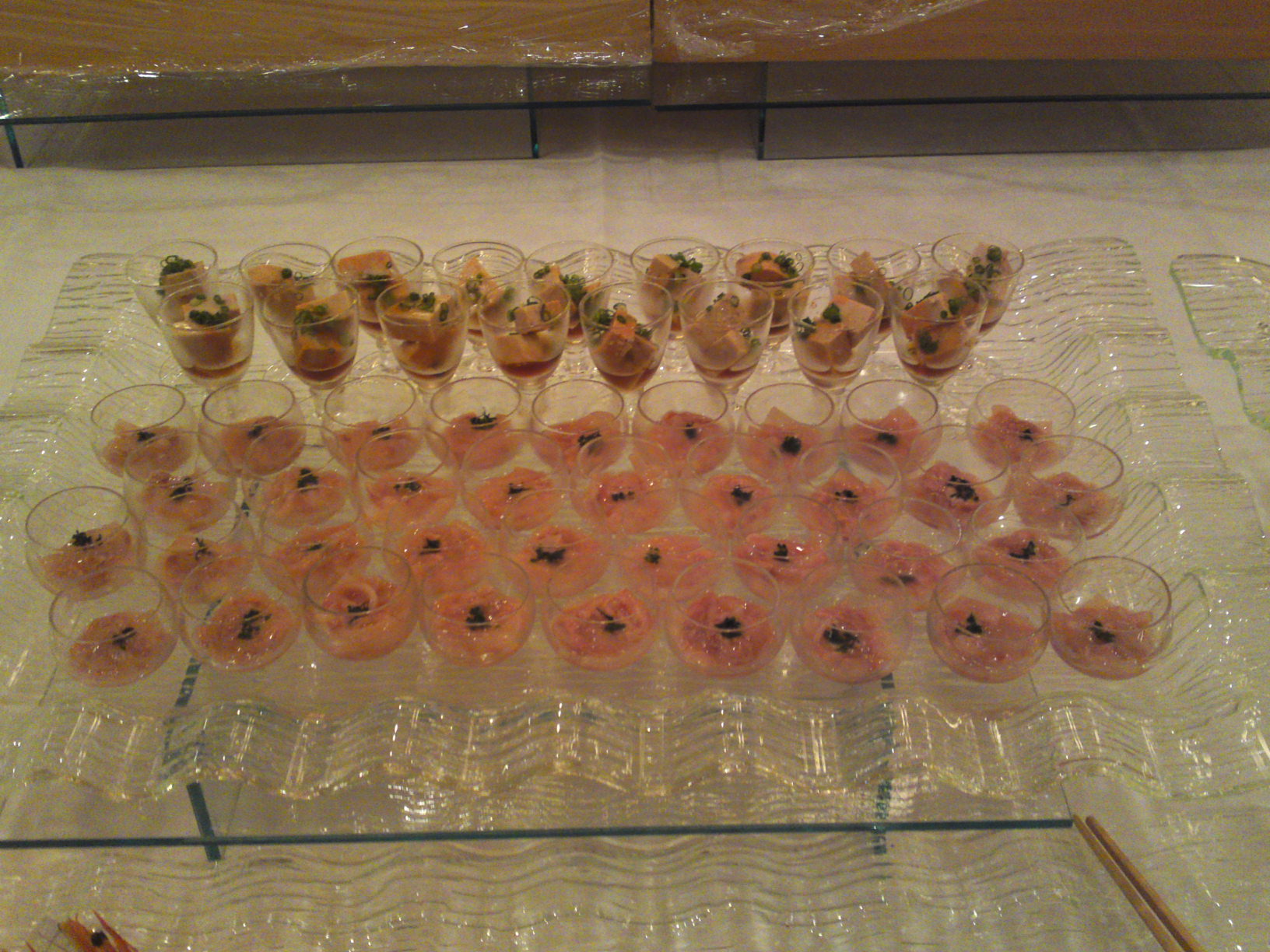
Japanese appetizers!

More Japanese appetizers!

And more Japanese appetizers!

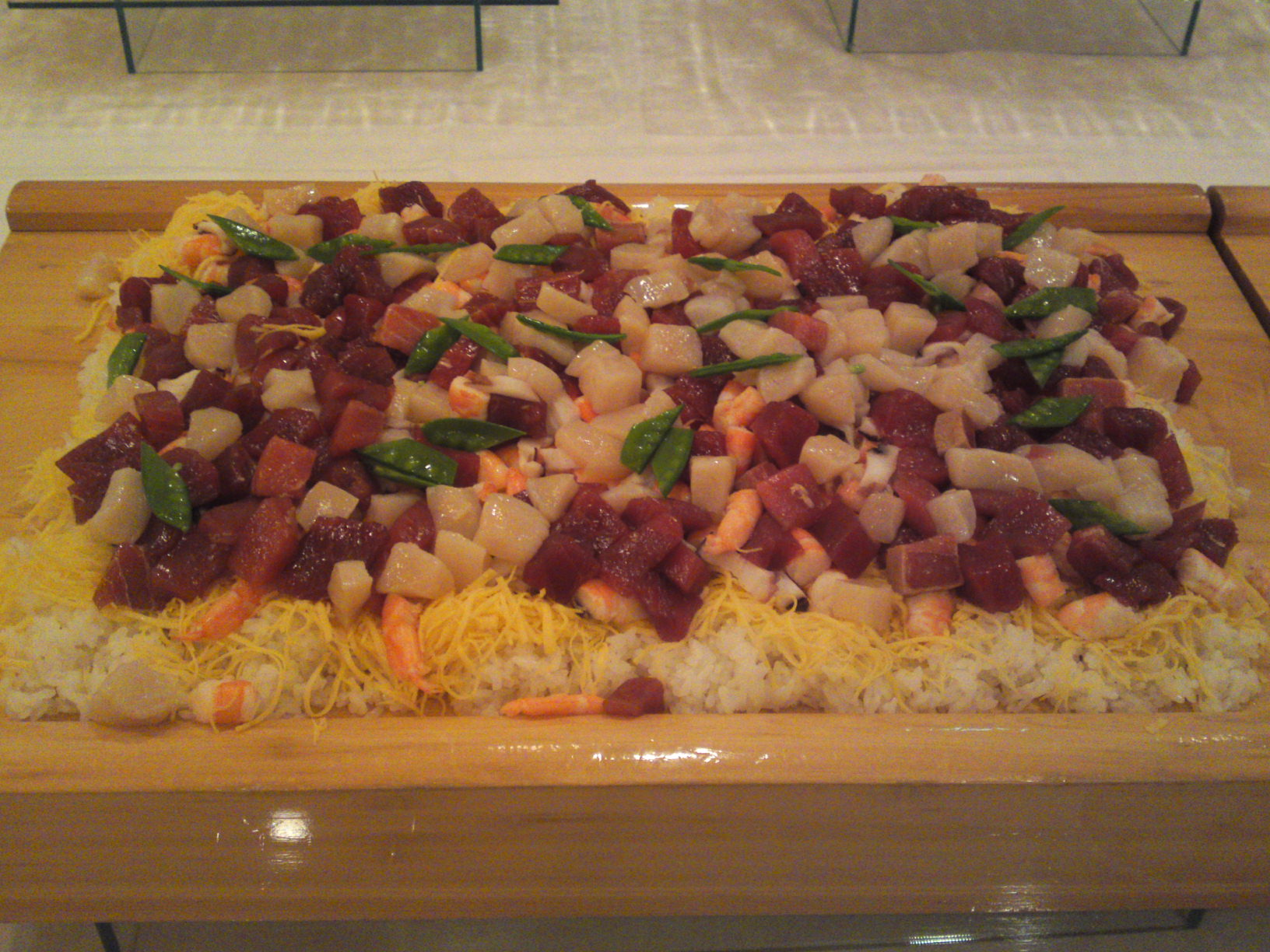
Chirashi Sushi!

I finished my round of pictures just in time before the guests made their entrance!

The place was soon crowded with more than 120 guests!

Some well-known faces!

Well, after that I was very busy for the next two hours tasting, eating, chatting and introducing many friends to each other.

At the end of the party Nagashima Liquor Shop and Kasai Izakaya expressed their sincere thanks to all the guests for a very successful party again!
More of the same is planned in the very near future, I can tell you!
Anyway this will lead to many interviews in the near future!

Nagashima Liquor Shop/長嶋酒店
420-0804, Shizuoka City, Aoi Ku, Ryuunan, 1-12-7
Tel.: 054-245-9260
Fax: 054-245-9252
BLOG (Japanese)

RECOMMENDED RELATED SITES:
With a Glass,
Bread + Butter, Zoy Zhang, Hungry Neko, Think Twice, Frank Fariello, Mangantayon, Hapabento, Elinluv Tidbit Corner, Tokyo Terrace, Maison de Christina, Chrys Niles,Lexi, Culinary Musings, Wheeling Gourmet, Comestiblog, Chronicles Of A Curious Cook, Tokyo Through The Drinking Glass, Tokyo Foodcast, Palate To Pen, Yellin Yakimono Gallery, Tokyo Terrace, Hilah Cooking, More than a Mount Full, Arkonite Bento, Happy Little Bento; 5 Star Foodie; Jefferson’s Table; Oyster Culture; Gourmet Fury; Island Vittles; Good Beer & Country Boys; Rubber Slippers In Italy; Color Food daidokoro/Osaka;/a; The Witchy Kitchen; Citron Et Vanille, Lunsj Med Buffet/Estonian Gastronomy (English), Cook, Eat, Play, Repeat, Chrisoscope, Agrigraph, The Agriculture Portal to shizuoka!