Tag Archives: 美食

Japanese seasonal Fish: Sanma/Mackerel Pike


The Japan Blog List

Please check the new postings at:
sake, shochu and sushi

—————————————-

“Sanma” or Mackerel Pike has come on our plates with the advent of Autumn and will stay with us until almost end of the year.
Known under other names such “Saira” or “Banjyo”, it is a fish with red meat rich with proteins.
In Japanese, 秋刀魚, it means “Autumn Sword Fish”!
In season, the flesh is fatty and sweet and ought to be sampled as sashimi served with grated fresh ginger and thinly cut leeks:

(Pic taken at Tonami, Shizuoka City. Notice the shiso/perilla flowers)
It is mainly caught off the north eastern shores of Japan as the fish swim down from Hokkaido.
But the more south it is caught, the less fat it will contain.
The annual catch exceeds 20,000 tonnes, although breeding is increasingly successful.
Incidentally for all the fish consumed in this country, Japan is the World leader when it comes to marine research and stock renewal develoment!
If you eat it at a good place such as Tonami in Shizuoka, you will be served its with its bones and head deep-fried.
Of course, as a sushi it is a morsel to savour!

Eel Species

Please check the new postings at:
sake, shochu and sushi

—————————————-
日本語のブログ
—————————————-

Here is another fish, second only to tuna, so popular in Japan!

Anago/Conger Eel
anago1.jpg

Anago or Conger Eel, a favourite all over Japan, does come in many varieties, some edible, some not.

The most popular conger eel in Japan is “Maanago” (“True Conger Eel”).
It is also called “Anago”, “Hakarime” and “Hamo” (although this particular kind should be treated separately)
Summer is the best season, although they are available all year round in Sushi restaurants.
They are mainly caught in Tokyo Bay, Jyowata Bay and Seto Sea.
anago3.jpg
Most Japanese appreciate them first boiled in broth then cooked on a grill over charcoal fire and then dipped in “tare/Japanese grill sauce”.
anago4.jpg anago5.jpg
As for nigiri, they come in many guises: topped with “tare” (sauce) or just with a light brush of shoyu (see above pics)
anago6.jpg anago7.jpg
Or a bit on the crispy side, or on the very soft and melting one (see above pics)
It basically depends on the chef’s skills and preferences.
anago2-tempura.jpg
One should not forget they also taste great as tempura, including the bones, a particular favourite of mine!

Samples with bright skin transaprent flesh are the best.
Imports from China and Korea have increased recently, although Japan is starting putting strong regulations to protect the species.
As for Shizuoka Prefecture, we do have access to fresh fish. Select your sushi restaurant accordingly!
———————————
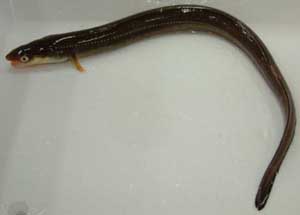
Unagi/Common Eel

Unagi or common eel is fish which made Hamanako/Hamana Lake famous in western Shizuoka Prefecture.
As summer approaches, the Japanese are looking forward to eat the delicacy as it is supposed to revitalize your body on very hot days.
Also called “Kayoko”, “Subera” or “Aobai”, it is farmed mainly in Shizuoka, Aichi and Gifu Prefectures.
It is only in the Edo Period that the Japanese starting it after they realized it could not be eaten raw as opposed to anago/conger eel or hamo/pike conger eel (coming soon!).
Japan presently produces more than 24,000 tonnes and still imports 14,000 tonnes whole and 71,000 tonnes cooked, most of it from China.

It is quite popular as nigiri in any part of Japan.

But the Japanese are simply crazy about “kabayaki”, which requires to grill and baste the fish at the same time, a fairly tedious process. It is a bit of an acquired taste as the connoisseurs eat the skin, which a bit oily to my liking.
In Hamamtsu, it is possible to eat the real wild fish in a very few restaurants, but you will know the difference when the bill comes!

Chinese Restaurant: Shikinjo (revisited)

Please check the new postings at:
sake, shochu and sushi

—————————————-
日本語のブログ
—————————————-

shichi-1

Shizuoka City is lucky to count one real Chinese Restaurant whose owner and staff are all from Beijing!
The Missus and I visit regularly. The main chef has changed, meaning that some seafood dishes have been added!
Here is what we enjoyed last Sunday (sorry for the late posting!)

shichi-2
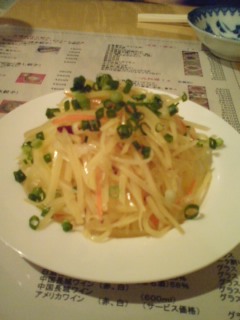
Half-raw potato salad, a great appetizer with the first drink (beer in that case).

shichi-3
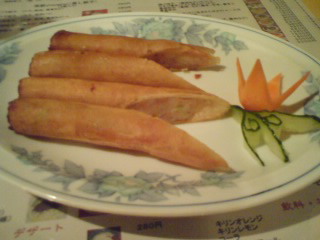
Deep-fried seafood Spring rolls.

shichi-4 shichi-5
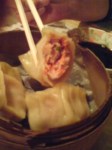
Time for the dim sung: steamed gyooza/dumplings. Above are pork dumplings.

shichi-6 shichi-7
Carrot dumplings.

shichi-8
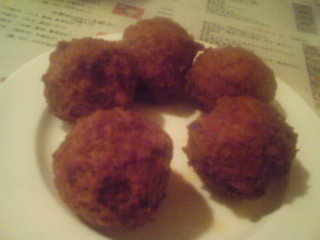
A favourite: deep-fried pork balls. And a must as the Missus have given up of reproducing at home!

shichi-9
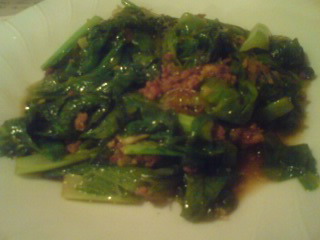
Sauteed greens with minced pork meat and rice vermicelli for the Vitamin C!

shichi-10
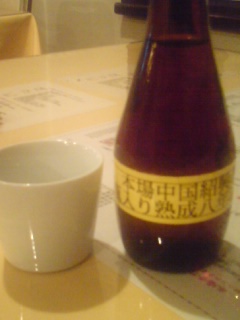
Shikinjo has great old Chinese rice wines that I never fail to taste (at room temperature)! That’s when the Missus switch to Chinese Great Wall white wine!

shichi-111
As we still had some space left in our stomachs, fried (sauteed) seafood gyooza and

shichi-12
boiled seafood dumplings!

No more space left for dessert!
Pity as they have some great home-made almond curd!

Shikinjo
Shizuoka City, Aoi Ku, Takajo Machi, 3-21-20, Kawai Bldg 1F
Tel. & fax: 054-2742727
Opening hours:
weekdays: 11:30~13:30 & 17:30~22:00
Saturdays, Sundays & National Holidays: 17:00~22:00
Closed on Wednesdays.
Parties welcome
Very reasonable
Homepage: Homepage (Japanese)
10 minutes walk from Shin Shizuoka Station

French Cake: Nectarines Tart

Please check the new postings at:
sake, shochu and sushi

—————————————-
日本語のブログ
—————————————-

nectarinetart.jpg

Nectarines being smaller and a lot firmer than peaches, they make for a great fruit in tarts.
Here is a simple enough recipe you could apply for other fruit such as apricots, apples and even mangoes, fresh or in Syrup (the latter would have to drained out, though)!

Ingredients (for 6 people):
Pastry: flour: 200g
butter: 75g
egg: 1
powdered sugar: 50g
water
salt
Filling: nectarines: 750g
butter: 100g
powdered sugar
almond powder: 125g
eggs: 2
rum: 1 tablespoon
minced pistachio: 1 tablespoon
glazing sugar: 2 tablespoons

Recipe:

A) Pastry:
In an all-purpose bowl mix eggs with sugar until smooth. Then mix in butter (softened) until smooth. Add a pinch of salt. Then mix in flour little by little to obtain a homogeneous paste. Mix in water little by little until pastry is “as soft as your earlobe”. Wrap in cellophane and leave in refrigerator for an hour.
B) Take pastry out of refrigerator and knead a little until soft enough to spread.
Spread inside tart dish and punch a few holes with a fork.
C) Preheat oven to 6 (180 degrees Ceslius). Melt the butter and pour it in an electric blender (if you do not have one, use some elbow power and mix in all-purpose bowl), add almond powder, sugar, whole eggs and rum. Blend until smooth and pour on pastry.
D) Clean nectarines in cold water. Wipe and cut them in thin slices. Put them onto almond paste pushing them each a little onto the paste so as to make a nice regular pattern for better impression and easier cutting. Sprinkle with glazing sugar. Cook for 50 minutes.
Take out of the oven and out of its mold onto a dish or cake grill. Let it cool. Sprinkle with minced pistachio before serving.

Tuna Species

Please check the new postings at:
sake, shochu and sushi

—————————————-
日本語のブログ
—————————————-

I noticed that many friends at Foodbuzz are anglers and fish lovers.
Here is some useful information on the most popular fish in Japan (and in Spain, too), namely Tuna!
Kuromaguro/Blue Fin Tuna

kuromaguro.jpg

Tuna or “Maguro” is the most popular fish for sushi and sashimi lovers in Japan (and abroad). It is said that more than 60% of total catch is consumed in Japan alone (and probably a lot higher depending on species). Incidentally, Japan is not the single bigger consumer of fish. Spain is!

Now, there is tuna and tuna. Briefly said there many species with many names and very different price tags as well!

The first species I would like to introduce is “Kuromaguro”, or Blue Fin Tuna (or Tunny). It has many other names in Japanese: Honmaguro, Maguto,Meji,Yokowa, Shibi, Imoshii, Shibimaguro, Kuroshibi, and Hatsu!

The best are caught in Winter mainly in the seas off Kochi (Shikoku Island), Miyagi and Hokkaido Prefectures.
This variety is the most expensive and can reach astronomical prices, especially caught in Winter off Hokkaido.
Imported Kuromaguro usually reaches Japan frozen, but in recent years the fish has been successfully raised in semi-wild environments in Spain, Australia and Croatia and arrives in Japan fresh by plane.
Import and sale of Kuromaguro are monopolised by Japanese trade associations, unless you are lucky enough to catch one (careful here, as poaching is a major offense in Japan!).
Between you and me, if you want to eat Kuromaguro sashimi, it might come cheaper if you do it while travelling in Spain!
Did you know that Japanese importers will fly to Spain and other countries just to check that the fish are bled properly?
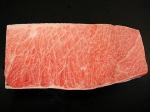
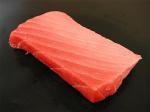
kuromaguro-otoro
Kuromaguro Otoro (fat part)

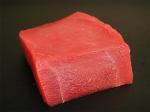
kuromaguro-chutoro
Kuromaguro Chutoro (semi-fat part)

kuromaguro-akami
Kuromaguro Akami (lean part)

———————

Mebachi/Big-eyed Tuna

mebachi.jpg

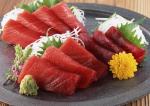
We are nearing the season for savouring Mebachi or Big-eyed Tuna, a fairly reasonable kind of tuna especially popular for its “akami” (lean part)
mebachi-akami

It has different names according to the areas: “Darumashibi” (Mie Prefecture), “Mebuto” (Kyushu). In Tokyo, Shizuoka and Wakayama, it is called “Daruma” when caught a young age.
The best seasons for catching are during the rainy season or the Fall.
This kind of tuna is mainly caught off the shores of Miyagi, Kagoshima, Kochi, Shizuoka, Kanagawa and Hokkaido Prefectures.

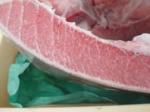
As said before it is mainly appreciated for its lean beautiful red flesh, but also cooked and grilled as “kama”:
mebachi-kama
In the fall it is also a source of toro (fatty part) when kuromaguro is not available.
In recent years it has been extensively caught in the Pacific, Atlantic and Indian Oceans and in the Mediterranean Sea. It also comes frozen from Chile, Peru and North America. It is also flown fresh from Australia, Indonesia and New York. A lot equally comes frozen from South Korea and Taiwan.

——————–

Kihada: Yellowfin Tuna

kihada1.jpg

“Kihada maguro” or Yellowfin Tuna” will appear on our tables from early summer.
It is mainly caught off Shizuoka, Miyagi and Kochi Prefectures coasts.
Like all other fish it is called other names in different regions:
Kiwada, Itoshibi (Wakayama, Kochi, Kyushu), Shibi (Kyusyu, Osaka), Ban (Osaka) and Tuna Kajibi (Okinawa)
Kihada roams over many seas between 30 degrees north latitude and 30 degrees south latitude and even wider depending on the season.
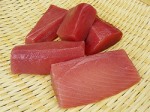
Most of the fish caught in Japan is served locally as sashimi:
efbd8befbd89efbd88efbd81efbd84efbd81efbc92
Very recognizable for its pinkish colour.
It is also widely appreciated as Zuke (first lightly grilled, then dipped into ice water before being cut in thin slices) on nigiri:
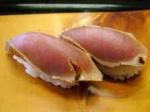
kihada3
A lot is imported frozen.
In Shizuoka try to go for the freshly caught samples coming from Yaizu or Numazu.

—————–

Minamimaguro/Southern Blue Fin Tuna
minamimaguro.jpg

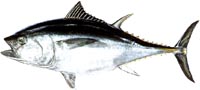
Minamimaguro or Southern Blue Fin Tuna could be called a true Shizuoka Prefecture tuna as our Prefecture accounts for 30% of the total in Japan!
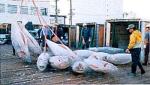
shizuokaminamimaguro
Like all fish it has different names: Indomaguro, Goushyumaguro, Bachimaguro.
In Autumn it is mainly caught off Australia, New Zealand, Capetown (South Africa) in the Southern Hemisphere and off the coasts of Shizuoka, Kochi, Kagoshima and Miyagi Prefectures in Japan.
Mianmimaguro is comparatively cheaper than its fellows as it contains little fat, which on the other hand makes it very easy to freeze and preserve.
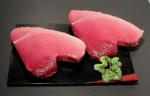
shizuokaminamimagurochu
Regardless of the lack of fat, it makes for excellent sashimi, sushi and various parts are succulent grilled or cooked.
The parts discarded by humans make for a lot of cat food!

————————

Binnaga/Albacore Tuna

binnaga.jpg

Binnaga or Albacore is very often called Tonbo Maguro in Japan. It is also known under the name of Binchyou.
It is caught in the Summer off the coasts of Miyagi, Kochi, Mie and Miyazaki Prefectures.
This is probably the cheapest kind of tuna available in Japan apart of Marlin.
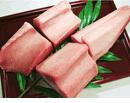
binnagatonbo
It makes for most of the cheaper tuna sashimi in supermarkets.
I personally like it fried in large slices before eating them as tuna hamburgers. Absolutely delicious and far healthier than a McDonald’s (let them sue me!)!
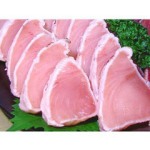
efbd82efbd89efbd8eefbd8eagatataki
For people who want to try their hand at making “tataki”, it would be the perfect first step into Japanese gastronomy.
It is also vastly used by canneries under the name of “Sea Chicken”.
It is probably the most popular tuna species outside Japan.
———————–
Mekajiki/Big-eye Marlin

mekajiki.jpg

Strictly speaking, marlins are only a different branch from tuna, but as it is so often offered as a substitute for true tuna, I decided to introduce it as such.
There are many types of marlins all over the world, but the most commonly caught and eaten is “Mekajiki”/Big-eye Marlin.
kajiki1.jpg
It is found in various supermarkets and cheap izakaya. Still it is a very popular as sashimi as well as grilled fish. Even in my home country it is served as “Carpaccio”.
It is caught all around Japan from Atumn to Winter.
It is also called “Meka” in Tokyo or “Mesara” in Kanagawa Prefecture.
Sashimi varieties came in two main kinds: “kuro” and “shiro”.
“Makajiki” (“true marlin”) is peach pink while “Mekajiki” (“big-eye marlin”) is of a whitish orange.
More than 1,000 tonnes are caught off Japan, whereas imports amount to more than 1,100 tonnes.
In Europe and America it is popular as canned food or grilled.
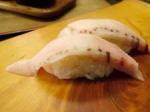
mekajiki-sushi
One can enjoy it as cheap “nigiri” in sushi restaurants.
Fresh marlin should be shiny and show veins bright red.
It is mainly caught at night as it swims near the surface then.

Vegetarian French Cuisine: Cream Mushrooms

Please check the new postings at:
sake, shochu and sushi

—————————————-
日本語のブログ
—————————————-

cream-mushrooms.gif

We are still in mushrooms season, wild ones or cultivated species, fresh, dehydrated or frozen. Mushrooms are low in calories, but high in quality, whether it concerns taste or nutrients.
Some people have told that mushrooms cannot be frozen. This is a fallacy. Full stop.
I personally receive frozen chanterelles, trompettes and what else from the internet and I can assure they are delicious.

Here is the recipe of a dish my father (83) cooked for us last time I came back home in Burgogne, France. It was made with exclusively frozen mushrooms! It can accompany any meat, especially white-flesh meat, or can be appreciated on its own as accompaniment with a solid white wine or heady Japanese sake.
Great for vegetarians! Vegans can accomodate it witheir own substitutes, too.

Ingredients (3~4 people):
Mixed mushrooms of your choice, fresh or frozen (if frozen, let them thaw slowly inside refrigerator for a few hours and get rid of excess water): 500g
Shallots (echalottes): 2 finely chopped
Garlic: 2~3 cloves finely chopped (crush garlic before chopping it. Do not forget to discard core!)
Parsley or Italian flat parsley: half a cup finely chopped
Fresh cream: 200cc
Madeira wine: 50cc (yellow port is fine, too, as well as sweet sherry)
Olive oil and unsalted butter: about 2 large spoons of each
Salt, pepper, nutmeg (to taste)

Recipe:
On a medium fire in large frypan melt an equal quantity of olive oil and unsalted butter (some people prefer more, some less. Experiment!). Throw in the shallots and garlic and slowly fry until shallots turn transparent. Throw in all the mushrooms and fry untilthey give back enough water. Add Madeira wine. Stir well. Next add fresh cream and stir until cream is perfectly blended. Add salt, peeper and nutmeg last, stir. Check taste and add more spices if needed.
Pour the whole in a large dish and sprinkle parsley over the mushrooms before serving.
Eat hot.

Cheese Plate at Gentil (3)


The Japan Blog List

Please check the new postings at:
sake, shochu and sushi

—————————————-
日本語のブログ
—————————————-

gentil-cheese-12-a
(oven dried lotus root, potato and red yam slices)

This is the third installment of a hopefully long series of cheese plates served at Gentil Restaurant in Shizuoka City.
The Cheese Sommelier, Ms. Keiko Kubota is the not only the sole Japanese holding the title of compagnon d’Honneur de Taste Fromage in Japan, but she was asked to choose, prepare and serve the cheeses offered to all these vey improtant people at the G8 Summit held last July in Hokkaido.

gentil-cheese-12-b

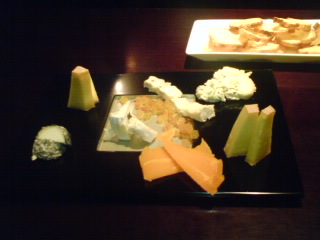
Top left: “Yama no Chiizu”/Mountain Cheese (Cow’s milk from “Mitomo Bokujyo” in Hokkaido)
Left bottom: Truffes (Goat’s milk/Provence-France)
Centre top: Gorgonzola Dolce (Cow’s milk/Italy) for Rowena?
Centre Middle: Dry raisins from France and “Sakura”) (cow’s milk/Hokkaido)
Centre Bottom: Vieile Mimolette (France)
Top right: Fourme d’Ambert (Cow’s milk/France)
Right bottom: “Yama no Chiizu”/Mountain Cheese (Cow’s milk from “Mitomo Bokujyo” in Hokkaido)

gentil-cheese-12-c

Additional plate:
Epoisses affine au Chablis (Cow’s milk/France) and Blue Stilton (cow’s milk/Egland)

Restaurant Gentil
Address:420-0031 Shizuoka Shi, Gofuku-cho, 2-9-1, Gennan Kairaku building, 2F
Tel.: 054-2547655 (Reservations advisable)
Fax: 054-2210509
Opening hours: 12:00~14:00, 18:00~last orders for meals at 21:30. Bar time 18:00~23:30. Closed on Mondays.
Credit cards OK
Homepage (Japanese)

Taky’s Classic Cakes (4): Dry Figs and Walnuts Tart


The Japan Blog List

Please check the new postings at:
sake, shochu and sushi

—————————————-
日本語のブログ
—————————————-

fig-walnut-tart1

As predicted before, not only Taky’s came up with another creation for the pleasure of my students!
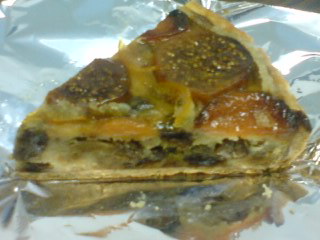
Dry Figs and Wanuts Tart!

fig-walnut-tart2

Again this tart is a creation for the pleasure of adults more than that of younger customers.
The top, layered with a very thin layer of syrup, is covered with slices of dry figs, orange peels and slices of dry apricot which have been marinated in dark rum.
Under them a very elegant marzipan contains walnuts and raisins over over an elefant and thin crispy pastry.
a very compex cake as a succession of flavours appear over the palate thanks to the different kinds of fruit included.

To eat slowly with a great English tea!

TAKY’S
420-0839 Shizuoka City, Aoi Ku, Takajo, 1-11-10
Tel.: 054-255-2829
Opening hours: 11:00~22:00
Closed on Sundays

Hot Asparagus Pudding/Flan chaud d’Asperges

Please check the new postings at:
sake, shochu and sushi

—————————————-
日本語のブログ
—————————————-

asparaflan.jpg

Fresh asparaguses are becoming available all year roun here in Shizuoka Prefecture, a region famous for its Winter-cultivated vegetables.
Here a traditional French recipe for the green ones. It is not as difficult as the title might suggest!
When you choose your asparaguses, check the cut part at the bottom of the stems. The more moisture, the less peeling needed!

Vegans and vegetarians seeking substitutes for milk, butter and eggs should check with Miss V’s excellent suggestions!

INGREDIENTS (4 people):
Green Asparaguses: 1.25 kg
Eggs: 5
Milk: 250cc
Butter: 50g
Trefoil or Italian Parsley (optional): 4 sprigs for decoration
Thyme, laurel & nutmeg (optional & varying to taste)
Salt
White Pepper

RECIPE:

Peel asparaguses from top, cut out the bottom fibery part. Cut the tips and keep them aside.
Cut the stems in 1 cm-thick slices and put them in a pot. pour in milk, salt, white pepper and spices to taste. Let cook for 15 minutes. Take away from fire and transfer to food processor.
Add a few leaves of trefoil or Italian parsley and process to a fine mash.
Preheat oven to 6 (180 degrees Celsius) and put a large dish with water in it to be ready as a bain-marie.
Break the eggs in a large bowl, beat slightly, pour in the asparagus puree and mix.
Butter the inside of 4 small oven dishes (ramequin-style), pour in the mixture and cook in bain-marie for 20 minutes.
During that time put the asparagus tips in a frying pan, add the rest of the butter, 200cc of water, some salt and let cook for 20 minutes stirring from time to time until there is no more liquid left.
When the puddings are cooked, unmold them onto individual plates and decorate with asparagus tips and some trefoil or Italian parsley.
Serve at once.

Shizuoka Beer 8/3: Usami Brewery


The Japan Blog List

Please check the new postings at:
sake, shochu and sushi

—————————————-
日本語のブログ
—————————————-

donau-izu

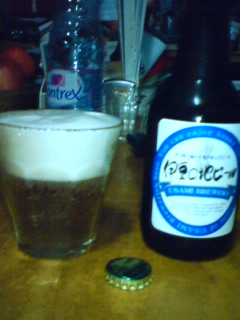
This is the 8th Micro Brewery in Shizuoka Prefecture I finally have ascertained. So far, I have nine confirmed! Usami Micro-Brewery and Restaurant are located in Ito City, Usami in the Izu Peninsula where great water is plentiful!
Good Beer and Country Boys, Beer Haiku Daily and BeerMason, keep your eyes open!

Note that their front label is always the same. Check the sticker behind the bottle and the cap!

This is the third tasting:

Usami Brewery: Donau (Hungarian Type)
Ingredients: Malt and hops
Alcohol: 3.5%
Contents: 330 ml
Unpasteurized, Unfiltered.

Foam: Long head, fine bubbles
Clarity: Very clear
Colour: dark lemon colour
Aroma: light and fresh, citruses, lemons, oranges.
Taste: Soft attack, dry and tangy with a pleasant slightly acid finish.
Complex: Lemons, oranges.
Does not vary with food and stays faithful to first taste.

Overall: Refreshing. Thirst-quenching for all seasons

Usami Brewery
European Ji Beer Company
Ito City, Usami, 3504-1
Tel.: 0557-33-0333
HOMEPAGE (Japanese)

Seafood Souffle


The Japan Blog List

Please check the new postings at:
sake, shochu and sushi

—————————————-
日本語のブログ
—————————————-

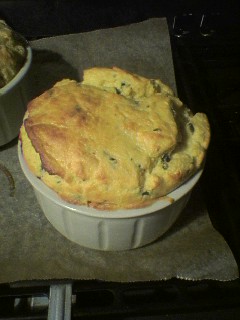
I decided to re-post this particular recipe as it appears that souffle are so popular with friends at Foodbuzz!

As explained before, souffle is not that complicated.
There are simple rules to follow though:
-Get all your ingredients ready within reach first.
-Souffle must be savoured as soon as it comes out of the oven. As the adage says, “The guests wait for the souffle; the souffle does not wait for the guests!”.
It is another way to eat seafod in season and it’s a favourite when Spring and Autumn nights are still cool or cold. Of course it is a great dish in winter as it will warm up your guests or family!
Ingredients can be easy replaced according to season or supply. The spices indicated are basic and also open to imagination!

Ingredients (large portions for 2 persons)
-Eggs:5
Separate yolks from whites. Keep yolks in a small dish. Pour the whites into a large bowl with a pinch of salt.
-Milk: 1 cup/200 cc
-Butter: 50 grams
-Flour: 70 grams/2 large tablespoons
-Salt, pepper, nutmeg, thyme (powder) to taste.
-Olive oil: 1 large tablespoon
-Oysters: 12 out of their shells in a small strainer to allow excess water out.
-Mussles: 24 large shells bushed and cleaned under running water.
-Crab: 1 small tin. If fresh, a “fistful” slightly boiled or steamed).
-Shallots: 1 large, thinly chopped
-Garlic: 1 clove, thinly chopped
-Noilly or sweet white wine: 1 glass/50cc/a quarter cup
-Thinly chopped fresh herbs (Italian parsley, basil, etc.): 1 “fistful”.

Recipe:
1) Pour oil into a deep non-stick frypan over a medium high fire. Cook shallots and garic until shallots turn transparent. Take care that garlic does not darken.
2) Drop the mussles in. Close with glass lid.
3) When mussles are all open switch off fire and take them out shaking all vegetables and juice out. Delicately separate mussles from their shells. Put aside in a small dish. Discard shells.
4) Switch on ffire again to medium and drop oysters in.
Cook them just long enough for them to stay tender. Switch off fire and take oysters out delicately. Put aside in a small dish.
5) Take crab out of the tin and squeeze out juices into the frying pan.
Put aside in a small dish.
6) Switch on fire again and reduce sauce at least to half. Switch off fire and strain the sauce into a cup. Put aside for white sauce.
7) White sauce:
On a medium fire, in a large deep pot melt butter completely. Drop in all the flour and whisk until smooth. Pour in milk little by little, whiking all the time to attain a smooth sauce. Add salt, pepper, nutmeg and thyme, and cup of reduced juices. Mix. Keep stirring gently until sauce is very thick and adheres to the whisker.
8) Switch off fire. Mix in the yolks with whisker until smooth. Drop in fresh herbs and mix well.
Beat the egg whites until very firm
Fold whites into sauce one third at a time with a spatula (if you mix with a whisker, the souffle will not rise. If you pour all the whites at once you will end up with white “blobs” and uncooked liquid yellow sauce).

9) Butter the inside of 2 (or more, reducing the size of each) oven dishes/ramequins about 12 cm across and 7 cm high.
Pour in one layer of sauce on the bottom of each dish.
Place half of the oysters in each dish and cover with one more layer of sauce.
Place half of the mussles on top and cover with one more layer of sauce.
Spread half of the crab in each dish on top of the last layer of sauce and cover the lot with the rest of the sauce.

Preheat the oven to 180 degrees.
Cook for 35~45 minutes depending on your oven.
Check if souffle is ready with a thin stick. It should come out with no sauce attached to it.
Serve immediately!

Accompany it with a solid white wine!

California Roll made easy!

Please check the new postings at:
sake, shochu and sushi

—————————————-
日本語のブログ
—————————————-

homemade-sushi4.gif

I would like to dedicate this particular recipe to all sushi and sushi rol lovers!
My better (worse?) half came up with this simple recipe the same day she prepared the bonito sushi.
Once again she used traditional sushi rice added with fine pieces of pickled fresh ginger.

On a large piece of cooking cellophane paper she first placed thin strips of avocado and slices of smoked salmon, and finally the rice, keeping in mind to place them as to form a regular-shaped cylinder.

homemade-sushi3.gif

She then wrapped the cellophane paper around the whole as shown on above picture.

She cut the sushi roll through the cellophane paper with a sharp knife she wiped between each cut.
N.B.: Wiping the knife the knife on a humid cloth is a technique universally used in Sushi restaurants to insure clean cuts!

She finally served the cuts topped “Tobikko” (flying fish roe). Lghtly dipped in shoyu, great with Japanese sake!

Healthy Hamburger: Tuna Burger!

Please check the new postings at:
sake, shochu and sushi

—————————————-
日本語のブログ
—————————————-

magburger.jpg

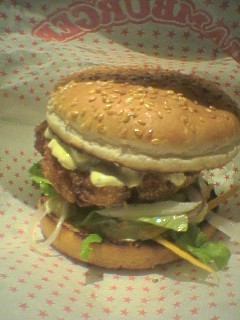
Somew time ago I had the occasion to taste again Maguroya Izakaya’s fine Tuna Burger in spite of my worse half’s interference!

It is actually an original creation of their Izakaya, in downtown Shizuoka City, which specializes in anything about Tuna/Maguro.
Americans and all expats ought to try it. The price is ridiculous when you compare to some notorious chain junk food restaurants. And the taste is simply an experience. I’m sure you will get hooked!
For people who prefer to make them at home, it is pretty simple:
Buy some tuna already ground for “negitoro”, make a ball of the wanted size, dip in flour and then beaten egg and very fine breadcrums or “karaagekona”/powder for deep-fried food and deep-fry!
Of course you will be responsible for a perfectly grilled bread, nice vegetables and tartare sauce!

Maguroya
420-0839 Shizuoka City, Aoi Ku, Takajo, 1-11-9, 2F
Tel.: 054-2514101
Open: 17:30~24:00
Closed on Sundays

Italian Restaurant: Aquavite (revisited)

Please check the new postings at:
sake, shochu and sushi
Shizuoka Pics

—————————————-
日本語のブログ
—————————————-

aqua-11-1

Last night, I finally had the pleasure the visit again one of the “best three Italian Restaurants” in Shizuoka City and Prefecture: Aquavite.
As I was sharing the company of two old friends, Marcus and Yumiko, we were no less than three Foodbuzz Foodies from Shizuoka City to make sure that compliments thrown by Rowena and Jen were amply hustified by a more appropriate tasting report of the wines of the day!
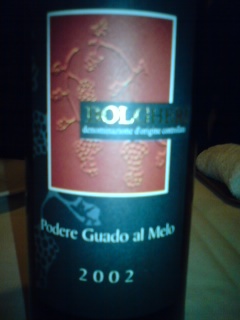
I had the honour th o choose the first bottle (see pic above. Sorry, the pics are not great, the light being too dimmed!):

2002 BOLGHERI by Podore Guado al Mela i Castagneto Cardocci in Toscana.
Red made with Merlot, Cabernet-Sauvignon and Sangiovese grapes.

Colour: Rich dark red/Garnet

Aroma: Floral/red roses, deep, really full

Taste: Strong attack. Not open yet. Tannic and still young.
Red fruits/cassis. Hints of chocolate later.
Loses its tannin quickly though and turns gentler with time.

Overall: Very positive wine. Takes time to develop, but worth waiting.

aqua-11-2
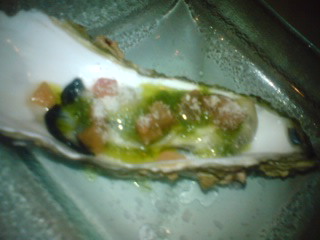
The first hors d’oeuvre was oyster from Iwate Prefecture.

aqua-11-3
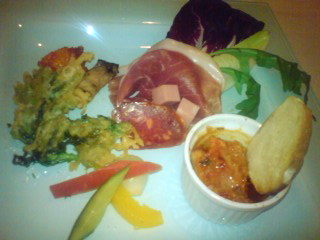
Antipasto Misto.

aqua-11-4
I forgot to take a pic during the very busy conversation of the moment: Hokkaido Spider Crab Safran Risotto including the “brains” of the Crab.
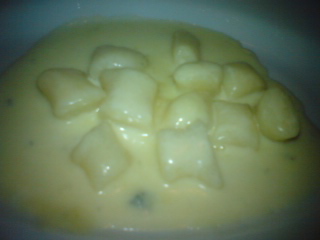
Followed by Gorgonzola Cheese Cream Gnocchi.

aqua-11-5

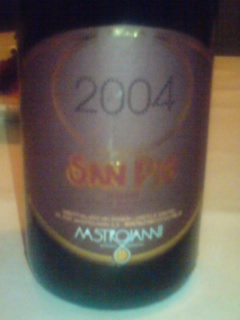
Marcus chose the next bottle:
2004 San Pio by Mastroianni in Sienna, Toscana.
Red made from Cabernet (80%) and Sangiovese (20%) grapes

Colour: Rich deep red

Aroma: Hearty, young, Terroir. Red fruits: strawberries and cherries.

Taste: Smooth. Little or no tannin. Fruity: red fruits.
Soft attack, pleasant.
Tends to come back later with more strength.

Overall: Solid pleasant wine perfectly suited to food.

aqua-11-6

“Kajiki/Marlin” prepared in “Katsu/Deep-fried cutlet” fashion.
Once again I lost the picture of the sauteed fresh Porcini Mushroom and during the very serious wine tasting view exchange! I’ll ask Yumiko if she has got them!

aqua-11-71

Dessert: La France pears tart on a bed of fresh cream and custard with chocolate, cranberry and mint sauce!

Address: 420-0034 Shizuoka Shi, Tokiwa-cho, 1-2-7, Tomii Bldg. 3F
Tel. & fax: 054-2740777
Opening hours: 11:30~14:00 (on reservations only), 18:00~22:00
Closed on Sundays
Homepage (Japanese)
Credit Cards OK

Tuna Trio Hors d’oeuvre

Please check the new postings at:
sake, shochu and sushi
Shizuoka Pics

—————————————-
日本語のブログ
—————————————-

tuna-trio.jpg

Here what my better (worse?) half came up last night as a starter after she found a good bargain at our nearby Coop Supermarket. Plenty for two, the fish costing only 440 yen (US$ 4.50)!

From top left around the clock:

-Maguro akami (lean part of the tuna) thin sashimi topped with homemade pickled wasabi plant and Shizauok wasabi dressing.
-Maguro akami/maguro zuke (lean part of the tuna marinated Japanese style) topped with “shigeki rayu” (Chinese style hot sesame oil) dressing from Ishigaki Island, Okinawa.
-Negitoro (minced tuna semi-fat part, but without the usual chopped leeks) topped with “kizami tamanegi” (onion cream) dressing

The whole on a bed of fresh cress grown in our Prefecture. The perfect starter for her wine and my sake (I mean the drink!)