All posts by dragonlife

Robert-Gilles Martineau hails from Bourgogne/Burgundy, France and presently resides in Shizuoka/Japan

Japanese Fish Species 1: Ainame/Fat Greening

Ainame/アイナメ/Hexagrammos otakii or Fat Greening is a truly Japanese seasonal fish, which has become a rarity as it lives only around the Japanese archipelago along rocky shores in water comparatively high in salt (some are also found around the Korean Peninsula).
Luckily enough it has been raised successfully in the Western part of Shizuoka Prefecture for the last few years.
Its rarity is caused by its popularity with anglers and its very fine taste.
A cousin of the rock fish, it is called many other names such as Aburako, Aburame and when young, Kujime.
The best season is in may and June. As it lay eggs in Winter, the taste loses its appeal.

It is a real morsel to be enjoyed in many ways:

As sashimi, even its skin is edible!

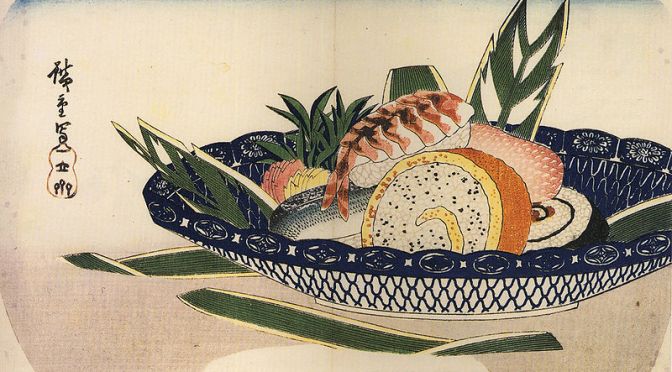
It makes for superb sushi nigiri!

Like any great white-fleshed fish, you must sample it in karaage/deep-fried!

The same karaage can be then marinated!

Another great way to enjoy it is to cook it as Japanese nimono, either slowly simmered or steamed and served with a soy sauce, sake and mirin sauce!

Of course it makes for a supreme delicacy “poelee” in French or Italian gastronomy!

RECOMMENDED RELATED WEBSITES

So Good Sushi Restaurant in Nice France
Navigating Nagoya by Paige, Shop with Intent by Debbie, BULA KANA in Fiji, Kraemer’s Culinary blog by Frank Kraemer in New York,Tokyo Food File by Robbie Swinnerton, Green Tea Club by Satoshi Nihonyanagi in Shizuoka!, Mind Some by Tina in Taiwan, Le Manger by Camille Oger (French), The Indian Tourist, Masala Herb by Helene Dsouza in Goa, India, Mummy I Can Cook! by Shu Han in London, Pie
rre.Cuisine
, Francescannotwrite, My White Kitchen, Foodhoe, Chucks Eats, Things that Fizz & Stuff, Five Euro Food by Charles,Red Shallot Kitchen by Priscilla,With a Glass, Nami | Just One Cookbook, Peach Farm Studio, Clumsyfingers by Xethia, PepperBento, Hapabento, Kitchen Cow, Lunch In A Box, Susan at Arkonlite, Vegan Lunch Box; Tokyo Tom Baker, Daily Food Porn/Osaka, Only Nature Food Porn, Happy Little Bento, J-Mama’s Kitchen, Cook, Eat, Play, Repeat, Bento Lunch Blog (German), Adventures In Bento, Anna The Red’s Bento Factory, Ohayo Bento,

Must-see tasting websites:

-Sake: Ichi For The Michi by Rebekah Wilson-Lye in Tokyo, Tokyo Through The Drinking Glass, Tokyo Foodcast, Urban Sake, Sake World
-Wine: Palate To Pen, Warren Bobrow, Cellar Tours, Ancient Fire Wines Blog
-Beer: Another Pint, Please!, Beering In Good Mind: All about Craft Beer in Kansai by Nevitt Reagan!
ABRACADABREW, Magical Craftbeer from Japan
-Whisky: Nonjatta: All about whisky in Japan by Stefan Van Eycken
-Japanese Pottery to enjoy your favourite drinks: Yellin Yakimono Gallery

Non gastronomy must-see sites by Shizuoka Residents

Shizuoka Beer Tasting: Yonekyu-Biru no Mori Brewery (Gotenba Koogen Beer): Fuji Sansan!

Gotenba Koogen Brewery in Gotenba City, Shizuoka Prefecture, does bear a misleading name because Yonekyu Co,the owner of Mori no Biru (Forest Beer) Brewery, is also the owner of the Gotenba Koogen Resort beer Hall & Restaurant!

SN3O0028

Since the brewery is located at the foot of Mount Fuji, no wonder they call it “Fuji Sansan/富士燦燦/Mount Fuji Brilliance”! There is a kind of pun involved as in Japanese you can Mount Fuji, “Fuji San”!

SN3O0031

Most beer produced at the brewery is commercial beer for its resort, but this particular one is one of their few craft beers!

SN3O0030

Product name: Fuji Sansan
Unpasteurized (生/nama)
Ingredients: Grain malt, Grain, Hop
Alcohol/ABV: 5.5 %
Contents: 330 ml

SN3O0032

Short head
Bubbles: fine, white
Color: golden
Aroma: assertive. Bread, hints of oranges
Dry attack, refreshing pilsner type.
Bread, hops, hints of roasted oats.
Lingers for a while with a late appearance of oranges.
Gets noticeably drier with food.

Overall: A good quality thirst quencher best suited for a hot summer afternoon or evening.

Yonekyu-Mori no Biru Brewery (Gotemba Koogen)
421-0046 Gotemba City, Hodosawaji, Sumiyakisawa, 1015-1
Tel 0550-89-7611
Gotemba Koogen Homepage

RECOMMENDED RELATED WEBSITES

So Good Sushi Restaurant in Nice France
Navigating Nagoya by Paige, Shop with Intent by Debbie, BULA KANA in Fiji, Kraemer’s Culinary blog by Frank Kraemer in New York,Tokyo Food File by Robbie Swinnerton, Green Tea Club by Satoshi Nihonyanagi in Shizuoka!, Mind Some by Tina in Taiwan, Le Manger by Camille Oger (French), The Indian Tourist, Masala Herb by Helene Dsouza in Goa, India, Mummy I Can Cook! by Shu Han in London, Pie
rre.Cuisine
, Francescannotwrite, My White Kitchen, Foodhoe, Chucks Eats, Things that Fizz & Stuff, Five Euro Food by Charles,Red Shallot Kitchen by Priscilla,With a Glass, Nami | Just One Cookbook, Peach Farm Studio, Clumsyfingers by Xethia, PepperBento, Hapabento, Kitchen Cow, Lunch In A Box, Susan at Arkonlite, Vegan Lunch Box; Tokyo Tom Baker, Daily Food Porn/Osaka, Only Nature Food Porn, Happy Little Bento, J-Mama’s Kitchen, Cook, Eat, Play, Repeat, Bento Lunch Blog (German), Adventures In Bento, Anna The Red’s Bento Factory, Ohayo Bento,

Must-see tasting websites:

-Sake: Ichi For The Michi by Rebekah Wilson-Lye in Tokyo, Tokyo Through The Drinking Glass, Tokyo Foodcast, Urban Sake, Sake World
-Wine: Palate To Pen, Warren Bobrow, Cellar Tours, Ancient Fire Wines Blog
-Beer: Another Pint, Please!, Beering In Good Mind: All about Craft Beer in Kansai by Nevitt Reagan!
ABRACADABREW, Magical Craftbeer from Japan
-Whisky: Nonjatta: All about whisky in Japan by Stefan Van Eycken
-Japanese Pottery to enjoy your favourite drinks: Yellin Yakimono Gallery

Non gastronomy must-see sites by Shizuoka Residents

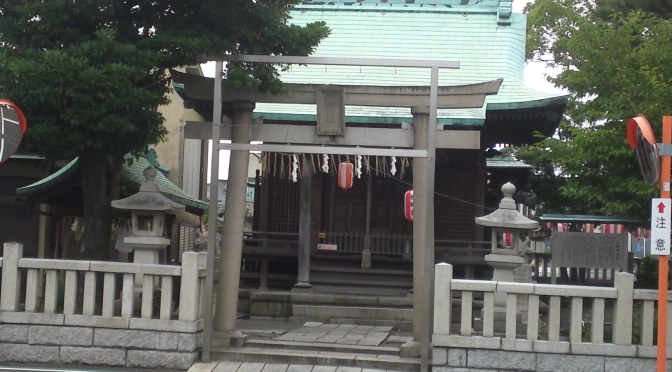
Suijinsan Shrine (水神社) in Shimizu Ku, Shizuoka City!

There are many shrines in the Tomoe Rvier and the Jiroucho areas as they were nearer to the sea and the harbor in the old times.

SN3O0006

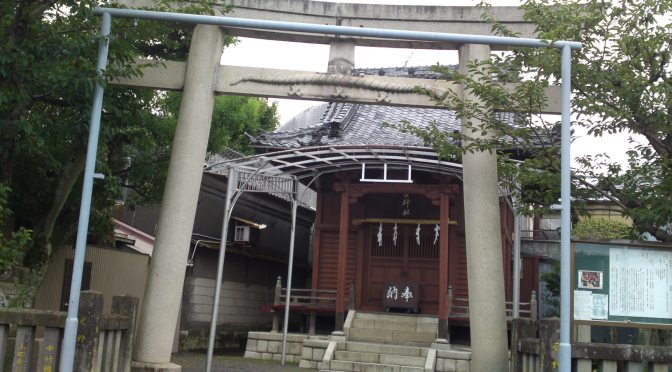
The torri gate!

SN3O0007

Although the name written on the torii gate plaque reads “みず神社/Mizu Jinja”, the locals prefer to call it “Suijinsan”!

SN3O0026

There is a second torii gate with the the same name on its plaque!

SN3O0008

Two fairly recent stone lanterns stand on both side of a signboard!

SN3O0009

The shrine was built between 1624 and 1643 and its festival is held on the 25th of June!

SN3O0010

The second stone lantern!

SN3O0011

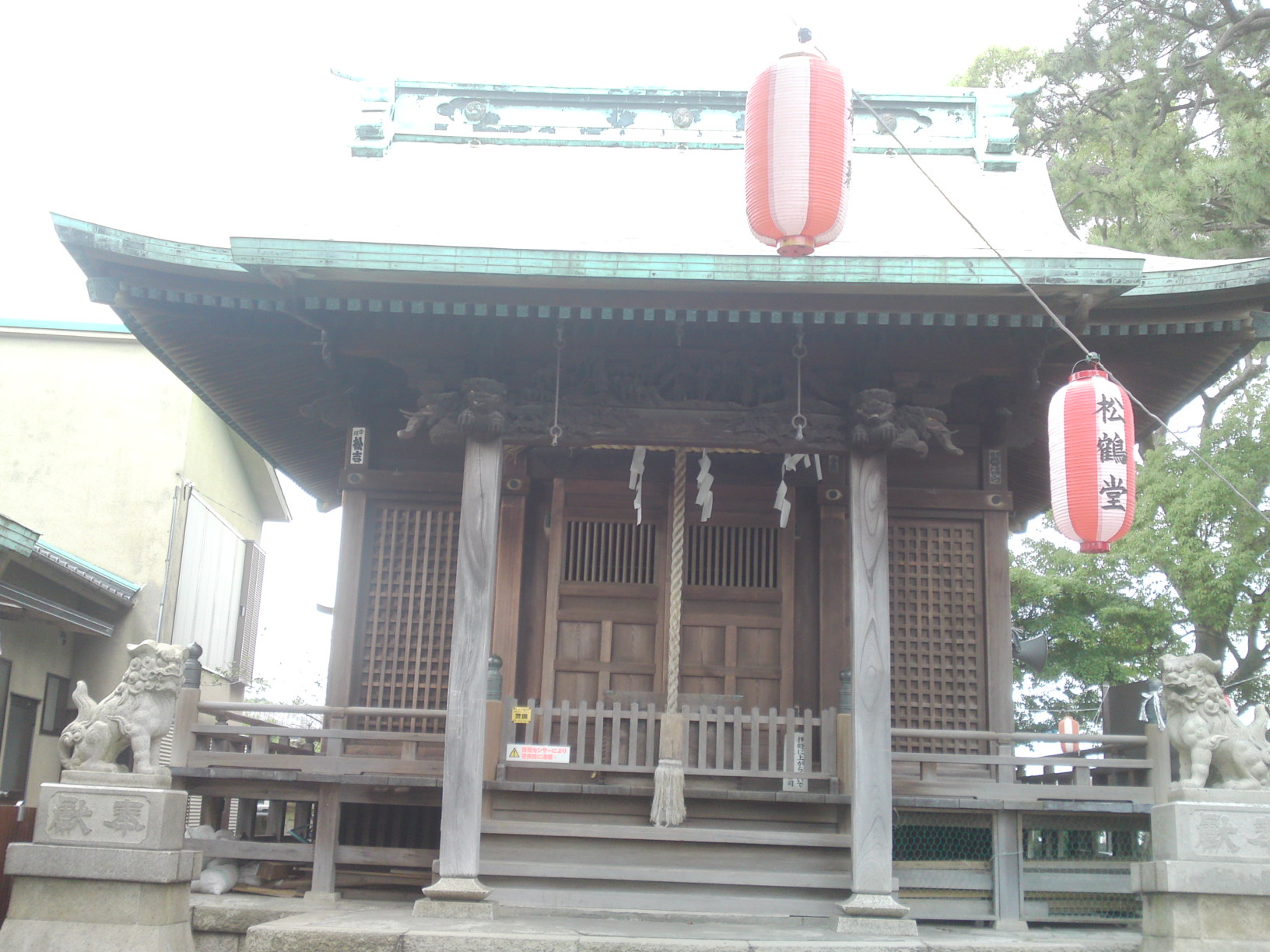
The main shrine!

SN3O0012

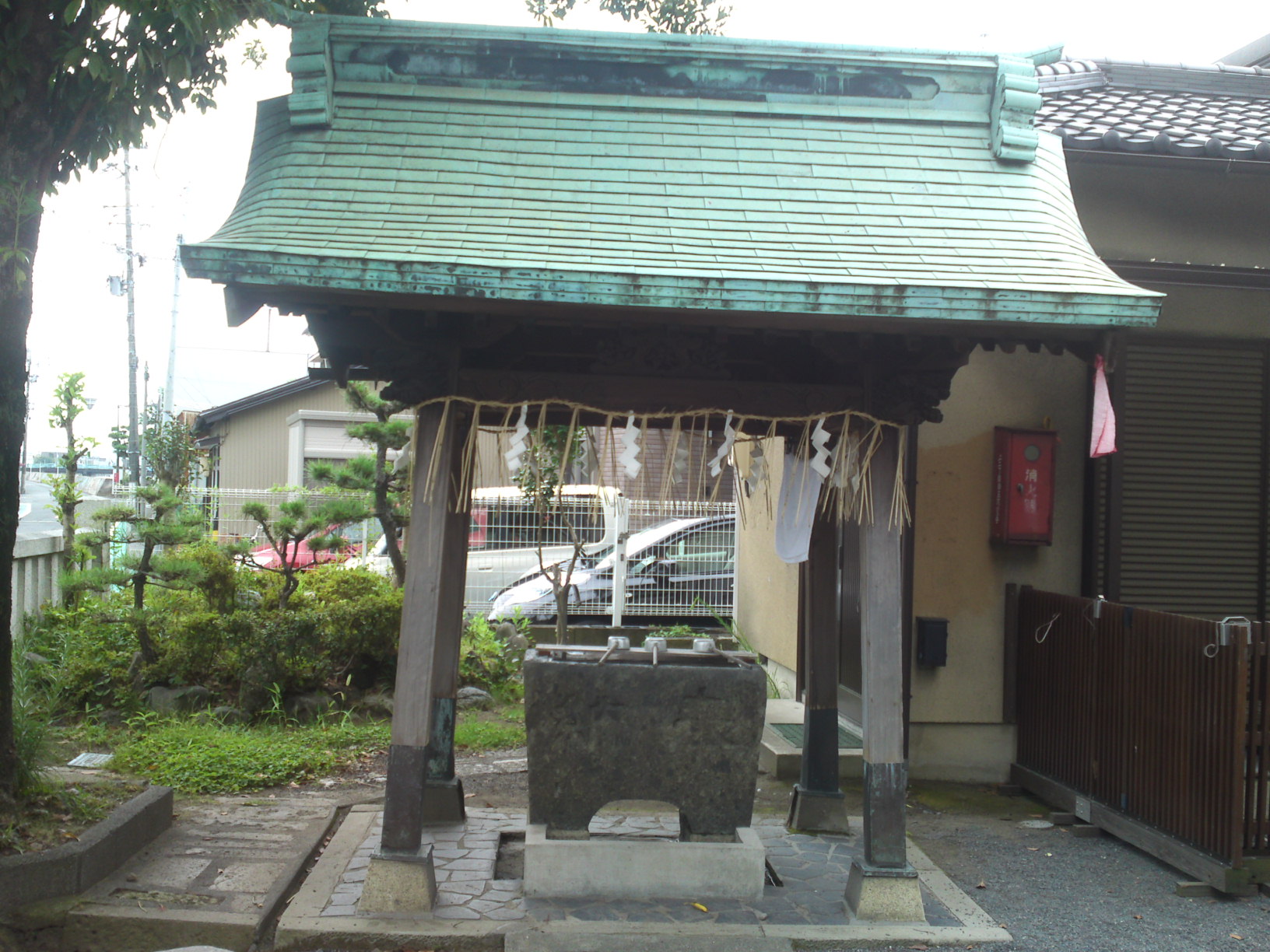
The stone hand-washing basin under its roof!

SN3O0013

The “smiling” lion guard!

SN3O0014

The roaring lion guard!

SN3O0015

The wooden money offerings box and the bell rope!

SN3O0016

Can you see the bell?

SN3O0019

The worshipers ring the bell by shaking (not pulling) the rope, before prayers!

SN3O0017

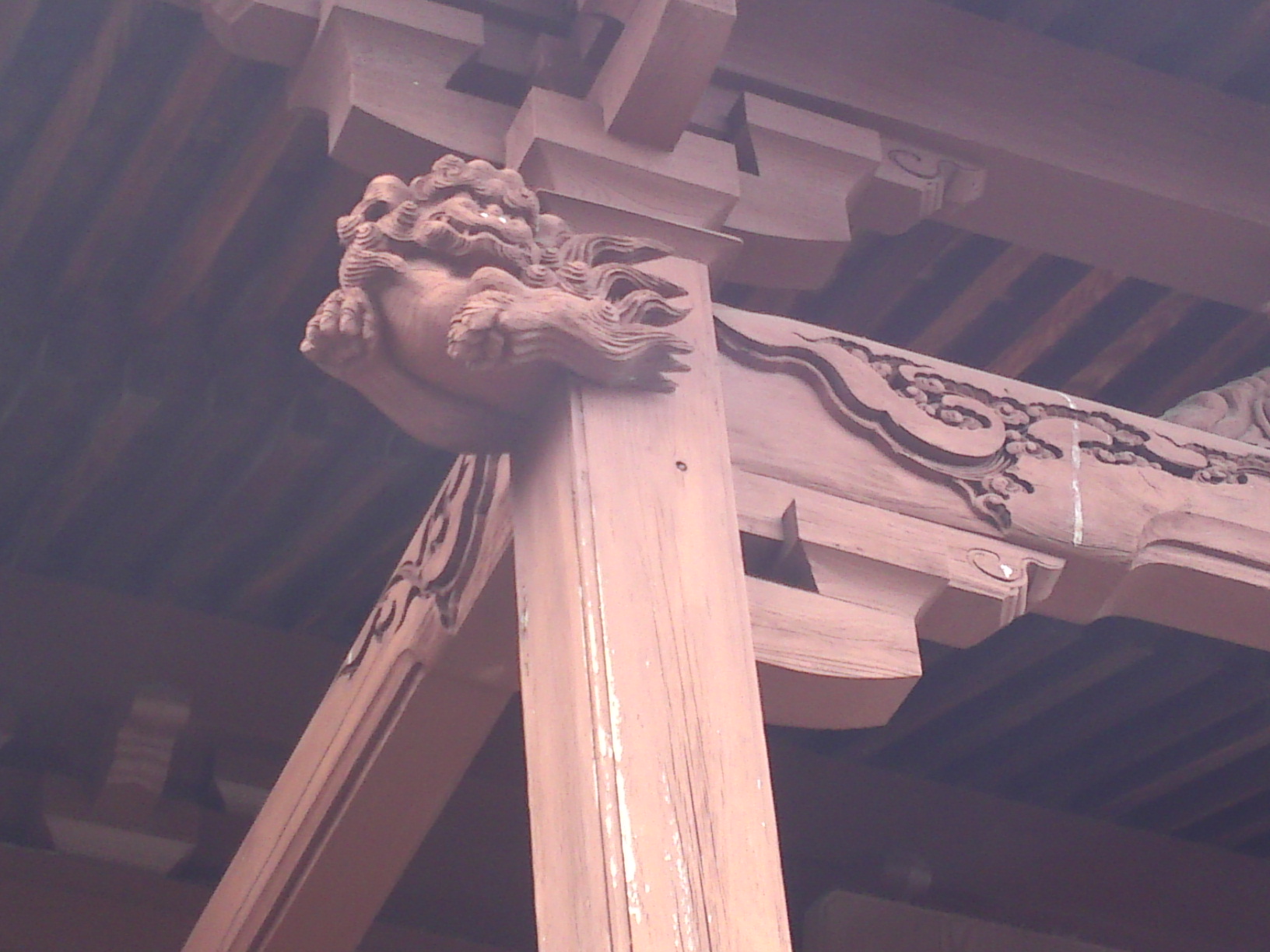
The guarding lion and wild boar under the eaves!

SN3O0018

“Wild boars” do very much look like “elephants” sometimes but the ears give them away, although this is very debatable!

SN3O0025

Their golden eyes are also unusual!

SN3O0021

That tree must have witnessed a lot of history!

SN3O0022

A back slanted view of the second shrine behind the main shrine!

SN3O0023

Great roofing!

SN3O0027

The two shrines with roofs looking like waves!

SN3O0020

Good-bye, Suijinsan!

RECOMMENDED RELATED WEBSITES

So Good Sushi Restaurant in Nice France
Navigating Nagoya by Paige, Shop with Intent by Debbie, BULA KANA in Fiji, Kraemer’s Culinary blog by Frank Kraemer in New York,Tokyo Food File by Robbie Swinnerton, Green Tea Club by Satoshi Nihonyanagi in Shizuoka!, Mind Some by Tina in Taiwan, Le Manger by Camille Oger (French), The Indian Tourist, Masala Herb by Helene Dsouza in Goa, India, Mummy I Can Cook! by Shu Han in London, Pie
rre.Cuisine
, Francescannotwrite, My White Kitchen, Foodhoe, Chucks Eats, Things that Fizz & Stuff, Five Euro Food by Charles,Red Shallot Kitchen by Priscilla,With a Glass, Nami | Just One Cookbook, Peach Farm Studio, Clumsyfingers by Xethia, PepperBento, Hapabento, Kitchen Cow, Lunch In A Box, Susan at Arkonlite, Vegan Lunch Box; Tokyo Tom Baker, Daily Food Porn/Osaka, Only Nature Food Porn, Happy Little Bento, J-Mama’s Kitchen, Cook, Eat, Play, Repeat, Bento Lunch Blog (German), Adventures In Bento, Anna The Red’s Bento Factory, Ohayo Bento,

Must-see tasting websites:

-Sake: Ichi For The Michi by Rebekah Wilson-Lye in Tokyo, Tokyo Through The Drinking Glass, Tokyo Foodcast, Urban Sake, Sake World
-Wine: Palate To Pen, Warren Bobrow, Cellar Tours, Ancient Fire Wines Blog
-Beer: Another Pint, Please!, Beering In Good Mind: All about Craft Beer in Kansai by Nevitt Reagan!
ABRACADABREW, Magical Craftbeer from Japan
-Whisky: Nonjatta: All about whisky in Japan by Stefan Van Eycken
-Japanese Pottery to enjoy your favourite drinks: Yellin Yakimono Gallery

Non gastronomy must-see sites by Shizuoka Residents

From My Recipe Book: Cream Sauce Prawns & Potato Pagoda

Recently I’ve been digging in my cooking books & notes and dug out some easy recipes!
Here we go!

prawns-cream-potatoes

Frankly speaking, I was stumped by how to call this simple, healthy but fulfilling home-made recipe reminiscent of the Curry Sauce Mango Prawns and Scallops recipe I posted a couple of days ago!
Lauren would probably have kicked if I had called it “Prawns and Potatoes Sandwich in Cream Sauce”! LOL
As with other recipes, it can be multiplied into many variations. Vegetarians can replace the prawns with boiled cauliflower and Broccoli for example!

Ingredients (for 2 people/large appetites!):

Small -medium prawns: 18 without their shells and kept in a little lemon juice
Potatoes: 4 medium-large
Courgette/Zucchini: 1 small cut in thin strips (at least 9 or 10. See pic above)
Eringi Mushrooms or substitute: 2 large cut in thin strips (at least 9 or 10. See pic above)
Fresh dill (for decoration)
Fresh sweet basil (for topping)
Sauce:
Shallots: 1 large, finely chopped
Garlic: 1 large clove, finely chopped
Red, yellow, green pimento: 2 large tablespoons of each, finely chopped
Fresh Cream: 1 cup (200 cc)
White wine: 1 quarter of a cup (50 CC)
Olive oil
Lemon juice: 1 lemon
Salt, pepper, nutmeg, chili pepper (the last to taste). You can make it Indian by using curry mix powder.

Recipe:
Organize yourself so as to have everything on hand and ready from the beginning!
You will need at least two frying pans and one deep pan.

-Cut potatoes as thin as possible. The thinner, the better. Also keep in mind you have to make 6 “pancakes”. Wash them. Take all water off them with a clean cloth or kitchen paper. Add a little salt, pepper, nutmeg and chili pepper (last one can be discarded) to them in a bowl.
-Pour a little olive oil in one non-stick frying pan. On a medium-large fire wait until oil is hot enough and form a “pancake with potato slices. The trick is that no space should be left between potatoes and at the same time avoiding two sliced to cover each other completely. Wait until potatoes have cooked enough to stick together (“help” them if necessary by pressing them). Turn them over and cook the other side to a nice crispy light brown. Continue until you have obtained 6 “pancakes”. Keep warm.
-While the potatoes cook, fry first zucchini then eringi mushrooms in a little olive oil until tender to taste. Add a (very) little salt to them while cooking. Keep warm.
-Sauce: In a deep pan, pour 3 large tablespoon of olive oil, heat oil over medium fire. Fry shallots and garlic. When shallots have become translucent, add wine, fresh cream, lemon juice, salt, pepper, nutmeg and other spices. Take it easy with salt and spice at first. You can always rectify later. Let cook for a few minutes. Sieve sauce, add chopped pimento and cook for a good 5 minutes on a medium fire. Lower fire if it boils.
-Fry prawns in a little olive oil until only their centers are still a little raw. If you cook them any longer, they will harden up.

On a large plate you had kept hot in the oven, first place one potato pancake then 3 prawns on top. Repeat the operation twice more to obtain the “pagoda” or “Sandwich” shape. Place alternatively zucchini and eringi around to form a crown. With a large tablespoon scoop up the pimento out of the sauce and pile them on top of the Pagoda. Pour the sauce on the vegetables around the Pagoda. Decorate with plenty of fresh dill around and sweet basil leaves on top as shown on pic above.

Serve with a dry white wine or Pilsner type beer. Non-drinkers could drink a nice fresh lemonade (real one!) with it!

Enjoy!

RECOMMENDED RELATED WEBSITES

So Good Sushi Restaurant in Nice France
Navigating Nagoya by Paige, Shop with Intent by Debbie, BULA KANA in Fiji, Kraemer’s Culinary blog by Frank Kraemer in New York,Tokyo Food File by Robbie Swinnerton, Green Tea Club by Satoshi Nihonyanagi in Shizuoka!, Mind Some by Tina in Taiwan, Le Manger by Camille Oger (French), The Indian Tourist, Masala Herb by Helene Dsouza in Goa, India, Mummy I Can Cook! by Shu Han in London, Pie
rre.Cuisine
, Francescannotwrite, My White Kitchen, Foodhoe, Chucks Eats, Things that Fizz & Stuff, Five Euro Food by Charles,Red Shallot Kitchen by Priscilla,With a Glass, Nami | Just One Cookbook, Peach Farm Studio, Clumsyfingers by Xethia, PepperBento, Hapabento, Kitchen Cow, Lunch In A Box, Susan at Arkonlite, Vegan Lunch Box; Tokyo Tom Baker, Daily Food Porn/Osaka, Only Nature Food Porn, Happy Little Bento, J-Mama’s Kitchen, Cook, Eat, Play, Repeat, Bento Lunch Blog (German), Adventures In Bento, Anna The Red’s Bento Factory, Ohayo Bento,

Must-see tasting websites:

-Sake: Ichi For The Michi by Rebekah Wilson-Lye in Tokyo, Tokyo Through The Drinking Glass, Tokyo Foodcast, Urban Sake, Sake World
-Wine: Palate To Pen, Warren Bobrow, Cellar Tours, Ancient Fire Wines Blog
-Beer: Another Pint, Please!, Beering In Good Mind: All about Craft Beer in Kansai by Nevitt Reagan!
ABRACADABREW, Magical Craftbeer from Japan
-Whisky: Nonjatta: All about whisky in Japan by Stefan Van Eycken
-Japanese Pottery to enjoy your favourite drinks: Yellin Yakimono Gallery

Non gastronomy must-see sites by Shizuoka Residents

Shizuoka Beer Tasting: Hamamatsu Tenjingura Brewery-Weizen

Not many people know yet that the sake, shochu, liqueur and beer brew master in Hamamatsu Tenjingura Brewery in Hamamatsu City is actually is a mistress brewer!

SN3O0116

On the other hand the owner is a gentleman, although well helped by his spouse!
Marketing is making use of local celebrities combining Lord Tokugawa Ieyasu and Mount Fuji!

SN3O0118

Product name: Hamamatsu-Tenjingura Brewery Weizen
Ingredients
grain, grain malt, hop, yeast
Alcohol: 5%
Contents: 330 ml

SN3O0119

Shortish head
Bubbles: Fine, white
Color: deep orange/persimmon
Aroma: Citruses
Taste: Dry and fruity attack.
Very refreshing.
Citruses, hints of bread, apricots and persimmons.
Drinks very easily.
Little affected by food.

Overall: Probably conceived as a thirst quencher, but reveals a superior character with a lot of depth and complexity for such a type of craft beer!

RECOMMENDED RELATED WEBSITES

So Good Sushi Restaurant in Nice France
Navigating Nagoya by Paige, Shop with Intent by Debbie, BULA KANA in Fiji, Kraemer’s Culinary blog by Frank Kraemer in New York,Tokyo Food File by Robbie Swinnerton, Green Tea Club by Satoshi Nihonyanagi in Shizuoka!, Mind Some by Tina in Taiwan, Le Manger by Camille Oger (French), The Indian Tourist, Masala Herb by Helene Dsouza in Goa, India, Mummy I Can Cook! by Shu Han in London, Pie
rre.Cuisine
, Francescannotwrite, My White Kitchen, Foodhoe, Chucks Eats, Things that Fizz & Stuff, Five Euro Food by Charles,Red Shallot Kitchen by Priscilla,With a Glass, Nami | Just One Cookbook, Peach Farm Studio, Clumsyfingers by Xethia, PepperBento, Hapabento, Kitchen Cow, Lunch In A Box, Susan at Arkonlite, Vegan Lunch Box; Tokyo Tom Baker, Daily Food Porn/Osaka, Only Nature Food Porn, Happy Little Bento, J-Mama’s Kitchen, Cook, Eat, Play, Repeat, Bento Lunch Blog (German), Adventures In Bento, Anna The Red’s Bento Factory, Ohayo Bento,

Must-see tasting websites:

-Sake: Ichi For The Michi by Rebekah Wilson-Lye in Tokyo, Tokyo Through The Drinking Glass, Tokyo Foodcast, Urban Sake, Sake World
-Wine: Palate To Pen, Warren Bobrow, Cellar Tours, Ancient Fire Wines Blog
-Beer: Another Pint, Please!, Beering In Good Mind: All about Craft Beer in Kansai by Nevitt Reagan!
ABRACADABREW, Magical Craftbeer from Japan
-Whisky: Nonjatta: All about whisky in Japan by Stefan Van Eycken
-Japanese Pottery to enjoy your favourite drinks: Yellin Yakimono Gallery

Non gastronomy must-see sites by Shizuoka Residents

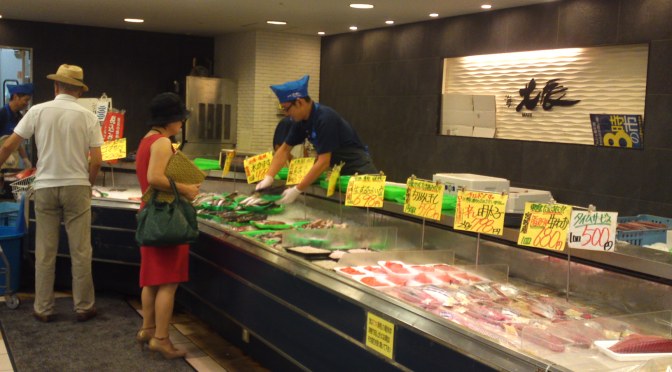
Local Shizuoka Fish & Seafood at Parche Fish market in Shizuoka City: Including Splendid Alfonsino!

these last past weeks have witnessed extreme heats and it must be reaaly tough work for fishermen to go at sea even at night!
Yesterday I visited Parch Market in JR Shizuoka Station to find out what was available as local fish and seafood!

SN3O0049

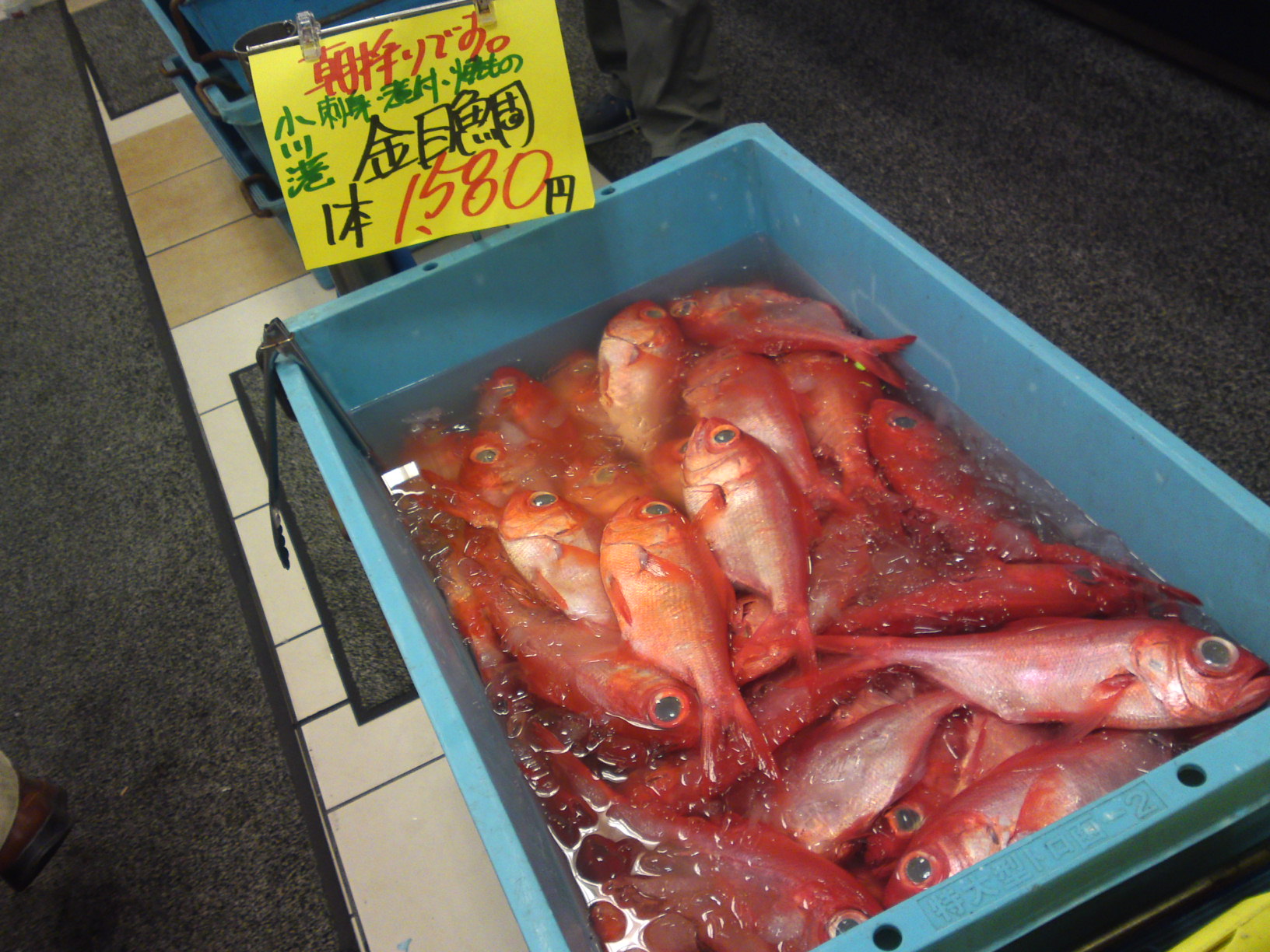
Beautiful red fish over there!

SN3O0050

Kinmedai/金目鯛/splendid alfonsino!
A local delicacy with a great name!

SN3O0051

Not cheap for a medium-sized fish!
They had been brought in the morning from Kogawa harbor in Yaizu City!

SN3O0052

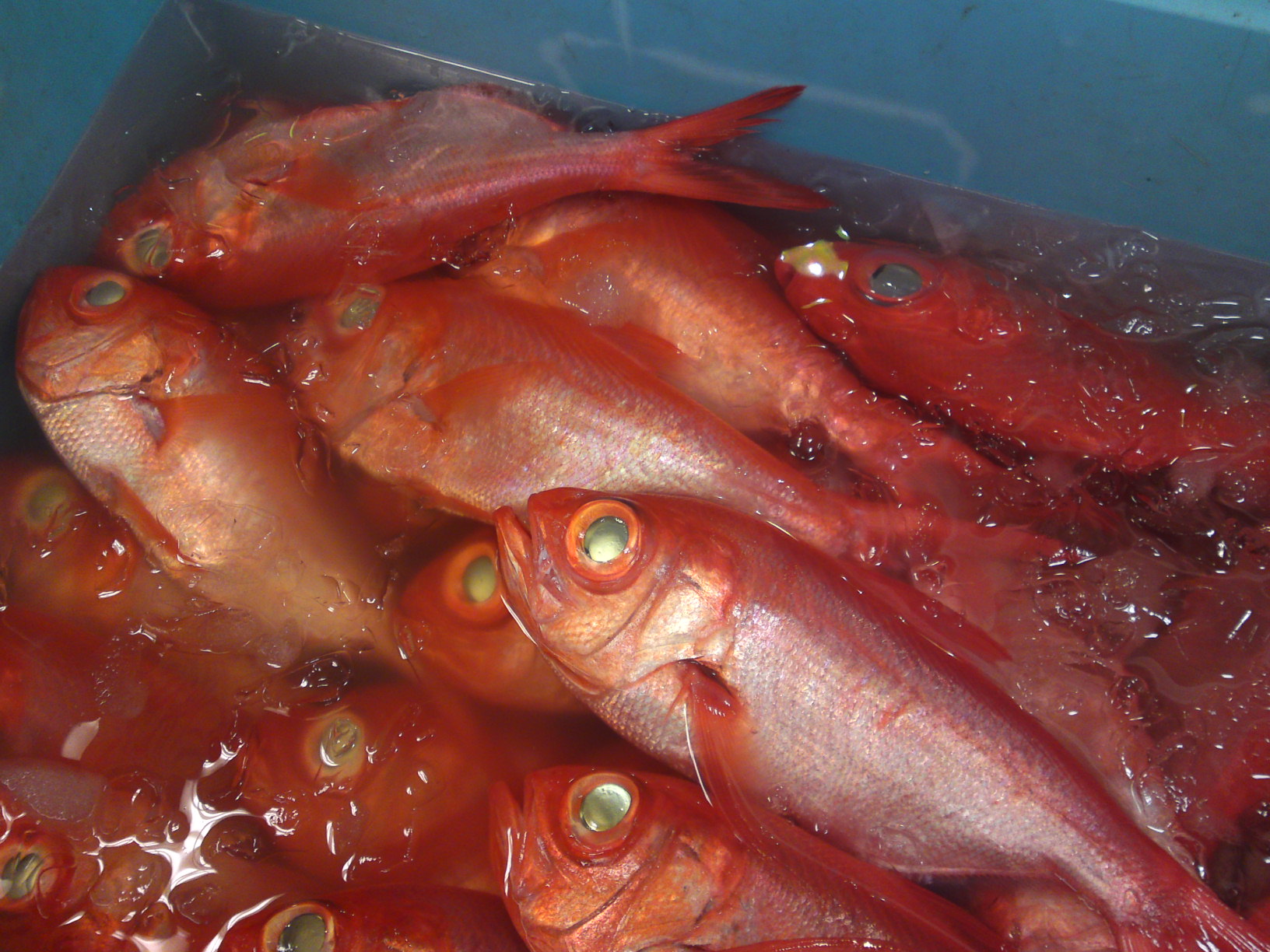
there still some beautiful fish left in the “mixed batch”, too!
Kinmedai/金目鯛/splendid alfonsino (above) and Hobou/方々/red robins 8below)!

SN3O0053

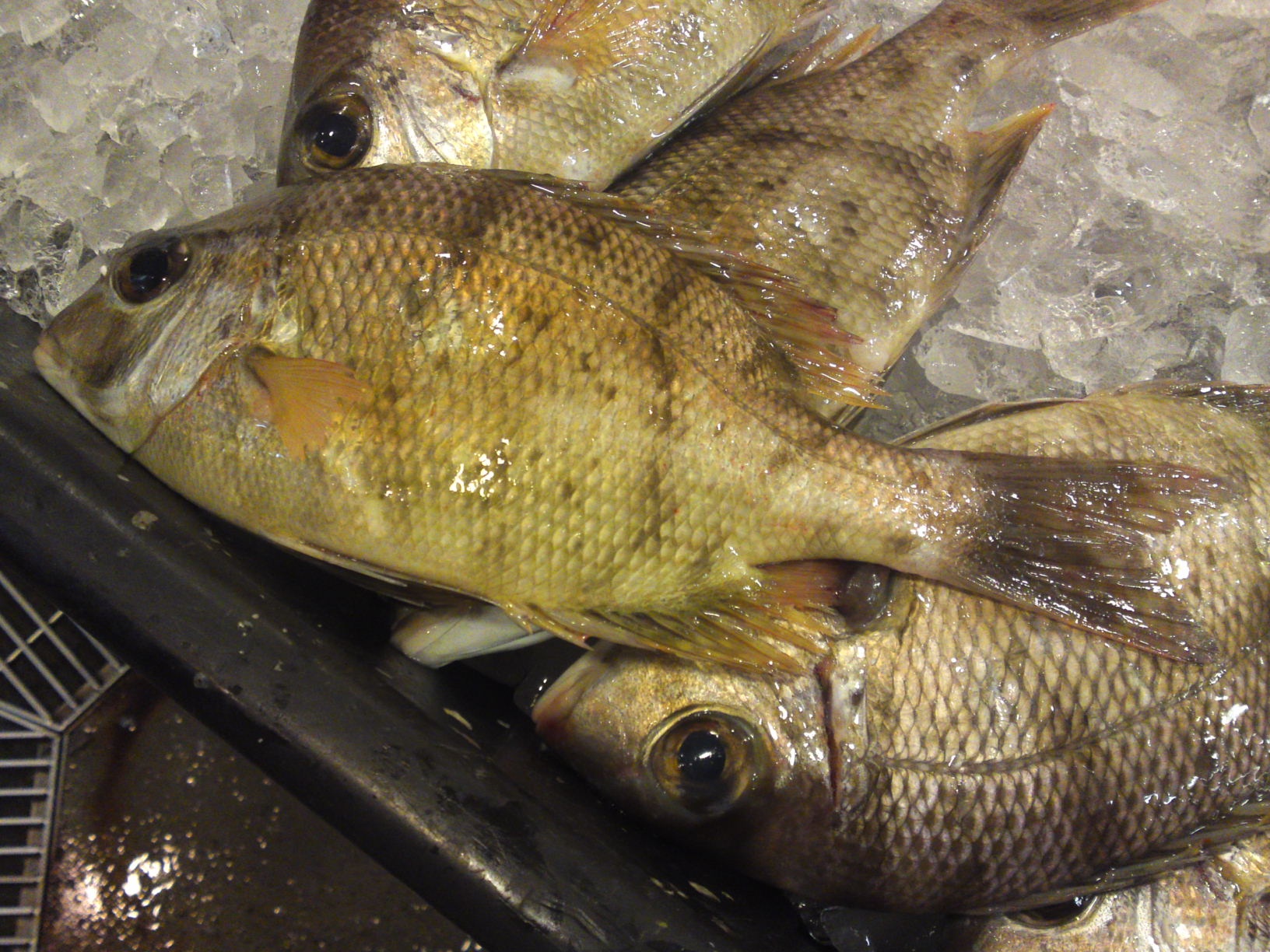
Small but expensive Kuchimidai/口美鯛/haarder, redlip mullet-Liza haematocheila (Temminck and Schlegel)!
A local expensive grouper also going by the name of “Menada/目奈陀・目魚”!
Other names I will have to add to the lexicon!

SN3O0056

Usumebaru/薄目張 (also called Okimebara/沖目張): sebastes Thompson (Jordan and Hubbs): a variety of Japanese sea perch, Japanese rock fish.

SN3O0057

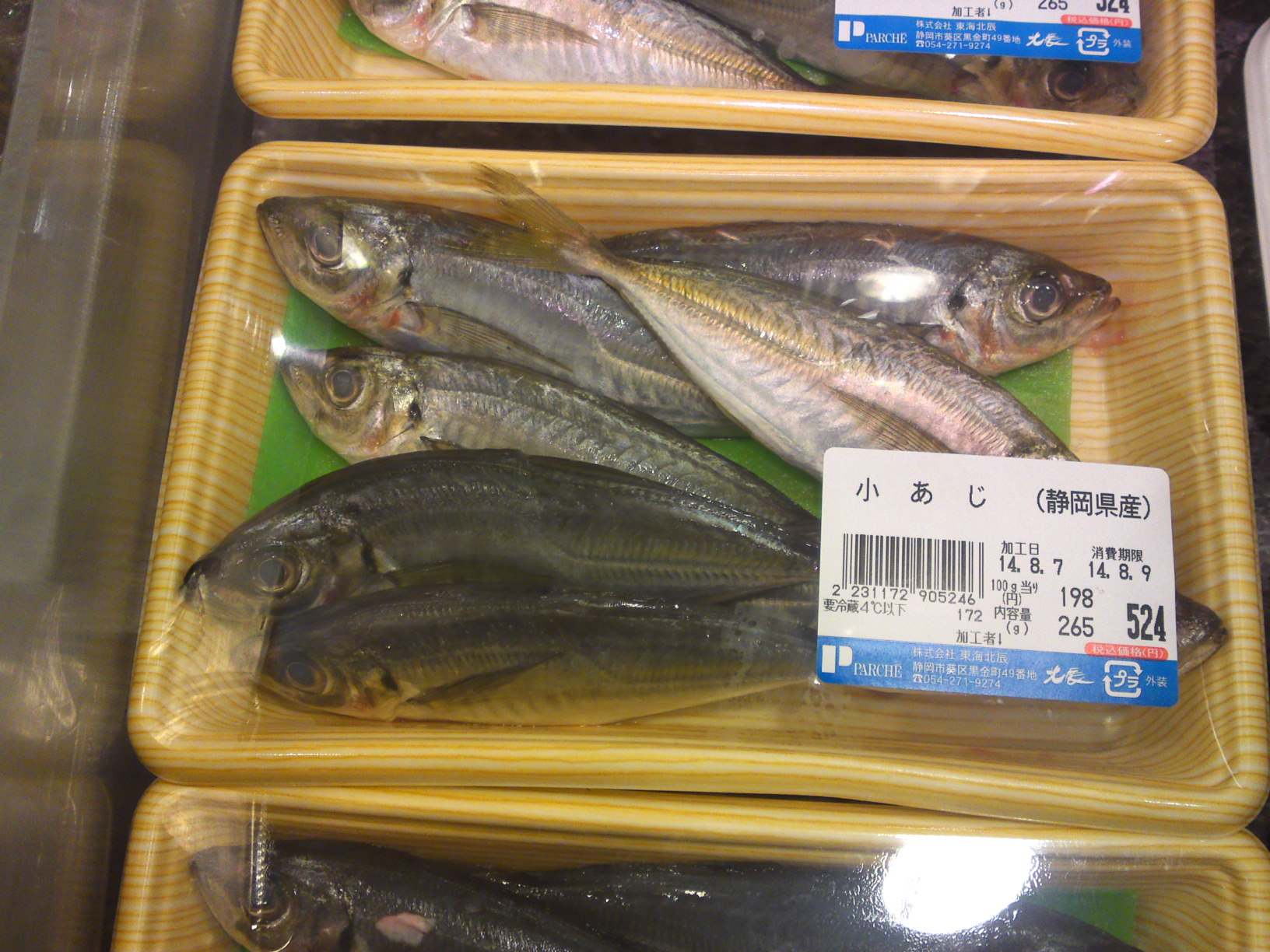
Ko Aji/子鯵: very young horse mackerel (also called Mame aji/豆鯵)!

SN3O0060

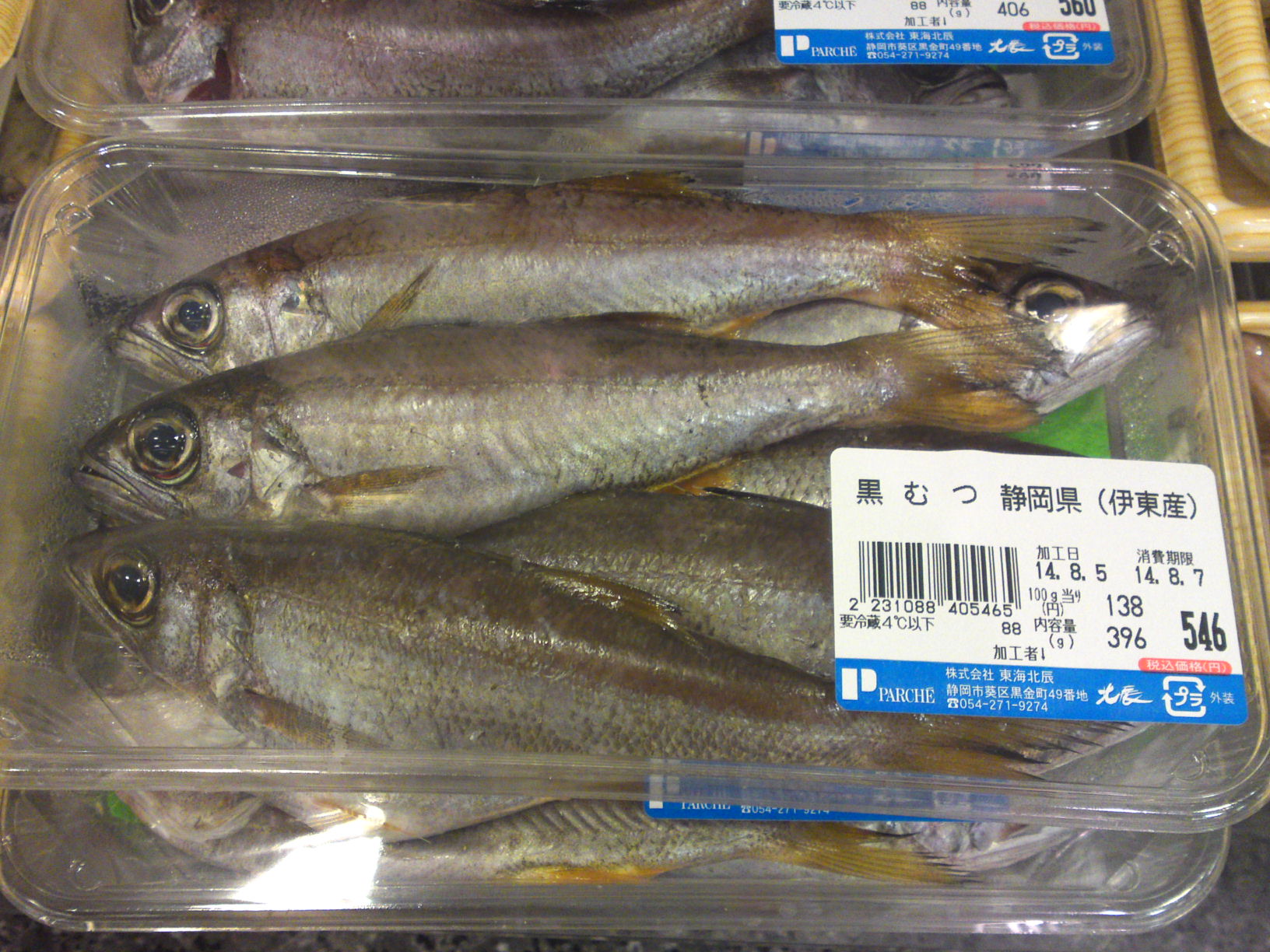
Kuromutsu/黒鱫、黒鯥: Black gnomefish from Ito City!

SN3O0061

Kisu /鱚、鼠頭魚: sand boarer!

SN3O0062

Kuro shitabirame/黒舌平目: Black Sole!

Looking forward to my next visit!

RECOMMENDED RELATED WEBSITES

So Good Sushi Restaurant in Nice France
Navigating Nagoya by Paige, Shop with Intent by Debbie, BULA KANA in Fiji, Kraemer’s Culinary blog by Frank Kraemer in New York,Tokyo Food File by Robbie Swinnerton, Green Tea Club by Satoshi Nihonyanagi in Shizuoka!, Mind Some by Tina in Taiwan, Le Manger by Camille Oger (French), The Indian Tourist, Masala Herb by Helene Dsouza in Goa, India, Mummy I Can Cook! by Shu Han in London, Pie
rre.Cuisine
, Francescannotwrite, My White Kitchen, Foodhoe, Chucks Eats, Things that Fizz & Stuff, Five Euro Food by Charles,Red Shallot Kitchen by Priscilla,With a Glass, Nami | Just One Cookbook, Peach Farm Studio, Clumsyfingers by Xethia, PepperBento, Hapabento, Kitchen Cow, Lunch In A Box, Susan at Arkonlite, Vegan Lunch Box; Tokyo Tom Baker, Daily Food Porn/Osaka, Only Nature Food Porn, Happy Little Bento, J-Mama’s Kitchen, Cook, Eat, Play, Repeat, Bento Lunch Blog (German), Adventures In Bento, Anna The Red’s Bento Factory, Ohayo Bento,

Must-see tasting websites:

-Sake: Ichi For The Michi by Rebekah Wilson-Lye in Tokyo, Tokyo Through The Drinking Glass, Tokyo Foodcast, Urban Sake, Sake World
-Wine: Palate To Pen, Warren Bobrow, Cellar Tours, Ancient Fire Wines Blog
-Beer: Another Pint, Please!, Beering In Good Mind: All about Craft Beer in Kansai by Nevitt Reagan!
ABRACADABREW, Magical Craftbeer from Japan
-Whisky: Nonjatta: All about whisky in Japan by Stefan Van Eycken
-Japanese Pottery to enjoy your favourite drinks: Yellin Yakimono Gallery

Non gastronomy must-see sites by Shizuoka Residents

Nishinomiya Shrine (西宮神社) & Masa Ichi Inari Shrine (正一位稲荷神社) in Shimizu Ku, Shizuoka City!

Shinto shrines in Japan very often are associated with other shrines, especially in harbor cities where the locla worshipoers like to combine them for better fortune.
The other day before I reported on a local festival I found these two shrines in Shimizu Ku (formerly Shimizu City) in Shizuoka City, near Jirochou, one of the oldest and most tradtional areas of the town.

SN3O0030

The main entrance through the torii gate.

SN3O0031

The name plaque having disappeared I was a bit confused about its name first!

SN3O0032

Fortunately a placard was there for explantions!
The shrine name is Nishinomiya/西宮神社. It also has the second name of Abessan and is deicated to the God Ebisu.
It was built between 1596 and 1614!

SN3O0033

A stone lantern has all but disappeared!

SN3O0034

Apparently, its lion guards have also disappeared!

SN3O0035

The main shrine!

SN3O0036

The money offerings wooden box and the rice straw garland are nonetheless well looked after!

SN3O0037

At least the lion guards still strive under the eaves!

SN3O0038

And gracefully laughing!

SN3O0039

The ame of the shrine is clearly written!

SN3O0040

You will find the second smaller shrine on the right!

SN3O0041

Masa Ichi Inari Shrine (正一位稲荷神社)!

SN3O0042

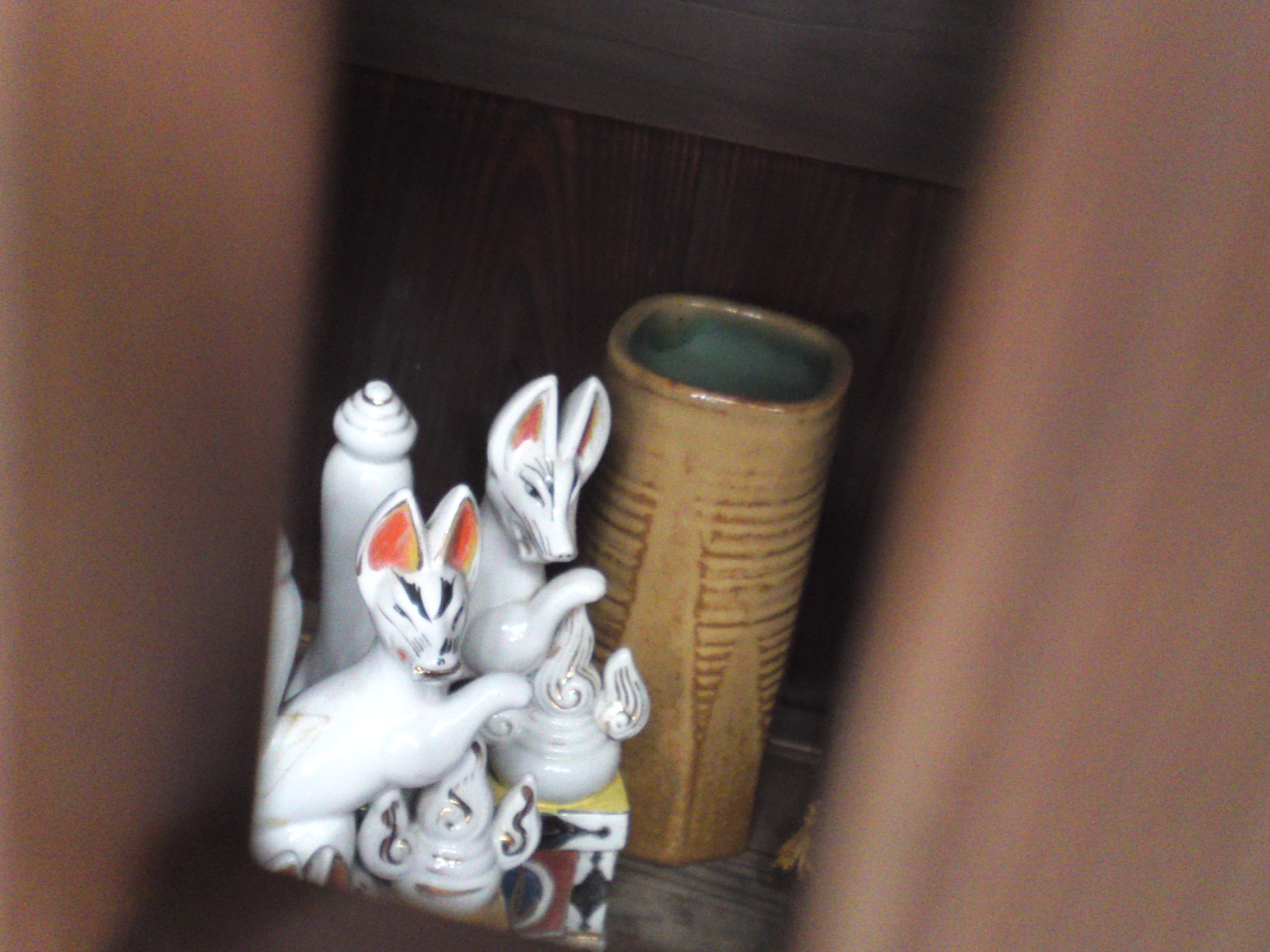
All shrines bearing the name of Inari/稲荷/rice bag, have fox guards!

SN3O0043

Apparently they have to be protected from theft!
Theft is rare in this country, but I noticed many fox statues being protected in the same way!

SN3O0044

The small shrine!

SN3O0045

The rice straw garland is regularly replaced!

SN3O0048

A symbol of prosperity!

SN3O0046

The doors of the shrine were padlocked for a good reason!

SN3O0047

No one wants these cute foxes stolen!

RECOMMENDED RELATED WEBSITES

So Good Sushi Restaurant in Nice France
Navigating Nagoya by Paige, Shop with Intent by Debbie, BULA KANA in Fiji, Kraemer’s Culinary blog by Frank Kraemer in New York,Tokyo Food File by Robbie Swinnerton, Green Tea Club by Satoshi Nihonyanagi in Shizuoka!, Mind Some by Tina in Taiwan, Le Manger by Camille Oger (French), The Indian Tourist, Masala Herb by Helene Dsouza in Goa, India, Mummy I Can Cook! by Shu Han in London, Pie
rre.Cuisine
, Francescannotwrite, My White Kitchen, Foodhoe, Chucks Eats, Things that Fizz & Stuff, Five Euro Food by Charles,Red Shallot Kitchen by Priscilla,With a Glass, Nami | Just One Cookbook, Peach Farm Studio, Clumsyfingers by Xethia, PepperBento, Hapabento, Kitchen Cow, Lunch In A Box, Susan at Arkonlite, Vegan Lunch Box; Tokyo Tom Baker, Daily Food Porn/Osaka, Only Nature Food Porn, Happy Little Bento, J-Mama’s Kitchen, Cook, Eat, Play, Repeat, Bento Lunch Blog (German), Adventures In Bento, Anna The Red’s Bento Factory, Ohayo Bento,

Must-see tasting websites:

-Sake: Ichi For The Michi by Rebekah Wilson-Lye in Tokyo, Tokyo Through The Drinking Glass, Tokyo Foodcast, Urban Sake, Sake World
-Wine: Palate To Pen, Warren Bobrow, Cellar Tours, Ancient Fire Wines Blog
-Beer: Another Pint, Please!, Beering In Good Mind: All about Craft Beer in Kansai by Nevitt Reagan!
ABRACADABREW, Magical Craftbeer from Japan
-Whisky: Nonjatta: All about whisky in Japan by Stefan Van Eycken
-Japanese Pottery to enjoy your favourite drinks: Yellin Yakimono Gallery

Non gastronomy must-see sites by Shizuoka Residents

Seaweed: The Vegetable of the Oceans! (updated)

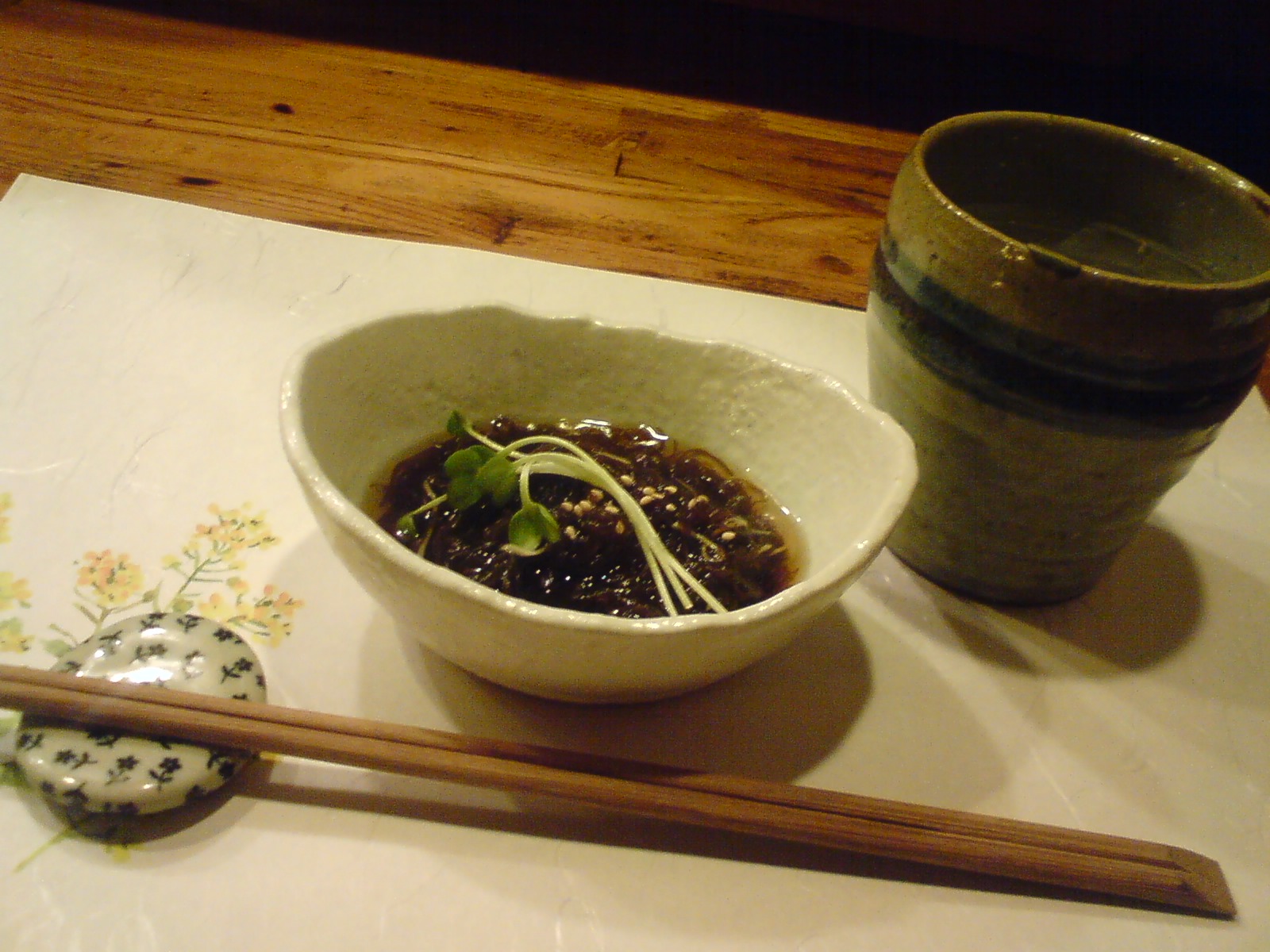
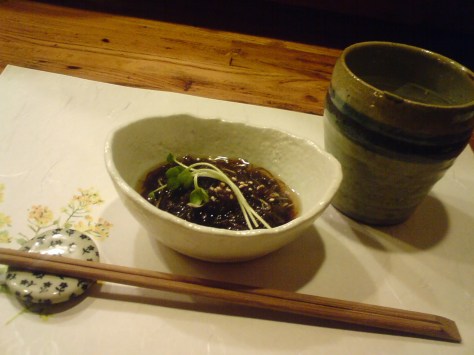
Mozuku in amazu/sweet vinegar as served at Yasaitei, Shizuoka City.

Seaweed or algae have been used for eons by humans, but have only been recently rediscovered as a food of their own.
Seaweeds are consumed by coastal people, particularly in East Asia, e.g., Japan, China, Korea, Taiwan, Thailand, and Vietnam, but also in Indonesia, Belize, Peru, the Canadian Maritimes, Scandinavia, Ireland, Wales, Philippines, and Scotland.
It is rich in calcium and magnesium and seaweed noodles can be cooked into pancit canton, pancit luglug, spaghetti or carbonara.
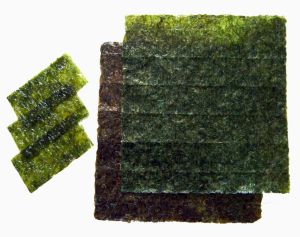
Nori

In Asia, Zicai (紫菜) (in China), gim (in Korea) and nori (in Japan) are sheets of dried Porphyra used in soups or to wrap sushi. Chondrus crispus (commonly known as Irish moss or carrageenan moss) is another red alga used in producing various food additives, along with Kappaphycus and various gigartinoid seaweeds. Porphyra is a red alga used in Wales to make laver. Laverbread, made from oats and the laver, is a popular dish there. Affectionately called “Dulce” in northern Belize, seaweeds are mixed with milk, nutmeg, cinnamon, and vanilla to make a common beverage.

Seaweeds are also harvested or cultivated for the extraction of alginate, agar and carrageenan, gelatinous substances collectively known as hydrocolloids or phycocolloids. Hydrocolloids have attained commercial significance as food additives. The food industry exploits their gelling, water-retention, emulsifying and other physical properties. Agar is used in foods such as confectionery, meat and poultry products, desserts and beverages and moulded foods. Carrageenan is used in salad dressings and sauces, dietetic foods, and as a preservative in meat and fish products, dairy items and baked goods.

Alginates are used in wound dressings, and production of dental moulds. In microbiology research, agar is extensively used as culture medium.

Seaweed is a source of iodine, necessary for thyroid function and to prevent goitre.

Seaweed extract is used in some diet pills. Other seaweed pills exploit the same effect as gastric banding, expanding in the stomach to make the body feel more full.
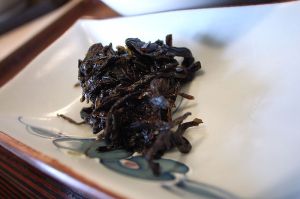
Konbu Tsukudani, a popular Japanese seaweed dish.

The Japanese divide their edible seaweed into three main groups:
BROWN ALGAE:

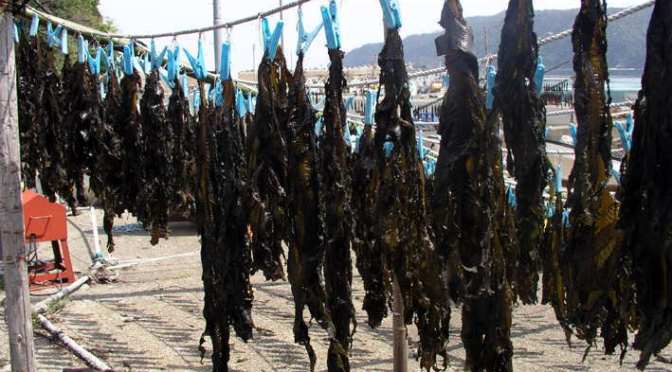
-Konbu/昆布, or Laminariaceae Bory (Latin), comprises many varieties, some of them regional: Makonbu or Saccharina japonica(真昆布), Onikonbu or Laminaria diabolica(羅臼昆布), Rishiri Konbu or Laminaria ochotensis(利尻昆布), Hosome Konbu or Laminaria religiosa(細目昆布), Hitaka or Mitsuishi Konbu or Laminaria angustata(日高昆布、三石昆布), Naga or Hamanaka Konbu or Laminaria longissima(長昆布、浜中昆布), and Kagome or Kjellmaniella crassifolia(籠目昆布).

-Hijiki or hiziki (ヒジキ, 鹿尾菜 or 羊栖菜, hijiki) (Sargassum fusiforme, or Hizikia fusiformis) is a brown sea vegetable growing wild on rocky coastlines around Japan, Korea, and China. Its two names mean deer-tail grass and sheep-nest grass respectively.

-Hibatama or Fucus, a genus of brown alga in the Class Phaeophyceae to be found in the intertidal zones of rocky seashores almost everywhere in the world.

-Hondawara or ホンダワラ(馬尾藻、神馬藻 (Sargassum fulvellum)

-Mozuku, or Cladosiphon okamuranus (水雲; 藻付; 海蘊; 海雲) , a type of edible seaweed in the genus Cladosiphon, naturally found in Okinawa, Japan. Most of the mozuku now is farmed by locals, and sold to processing factories. The main use of mozuku is as food, and as source of one type of sulfated polysaccharide called Fucoidan to be used in cancer treatment aid health supplements.

-Wakame (ワカメ), Undaria pinnatifida, a sea vegetable, or edible seaweed. In Japan it is most widely used in miso soup.
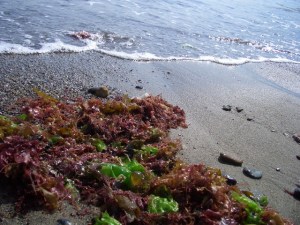
Yes, these violet and green alagae are edible!

VIOLET ALGAE:

-Asakusa Nori, or アサクサノリ(浅草海苔 (Porphyra tenera).

-Tengusa, which gives agar agar, a gelatinous substance. Historically and in a modern context, it is chiefly used as an ingredient in desserts throughout Japan, but also as solid jelly used as decoration in salads and others.

GREEN ALGAE:

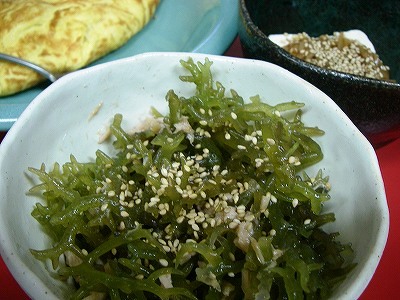
-Aosa or sea lettuce comprising comprise the genus Ulva, a group of edible green algae that are widely distributed along the coasts of the world’s oceans.

-Aonori (青海苔 or アオノリ, “blue seaweed” or “green seaweed”), also known as green laver, a type of edible green seaweed, including species from the genera Monostroma and Enteromorpha of Ulvaceae. It is commercially cultivated in some bay areas in Japan, such as Ise Bay. It contains rich minerals such as calcium, magnesium, lithium, vitamins, and amino acids such as methionine.
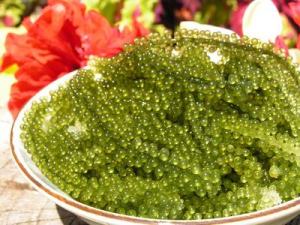
-Umibudou, or sea grapes, a delicacy of its own!

MARKET AVAILABILITY IN JAPAN:

In Japan it is interesting to note you can easily buy seaweed in paste form:
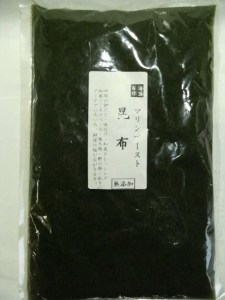
Konbu
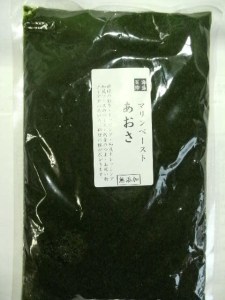
Aosa
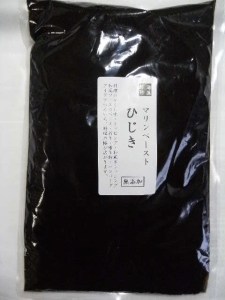
Hijiki

Next here are some pics to help you discover/recognize edible varieties in the markets:
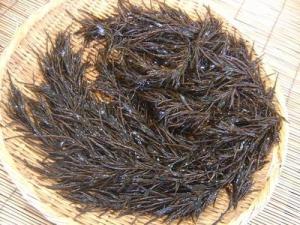
Akamoku
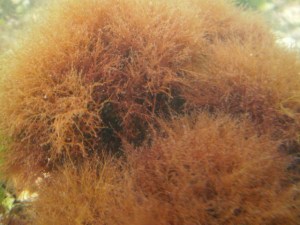
Makusa
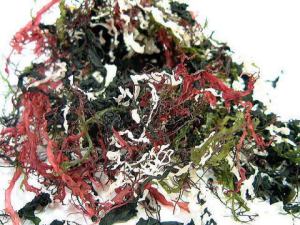
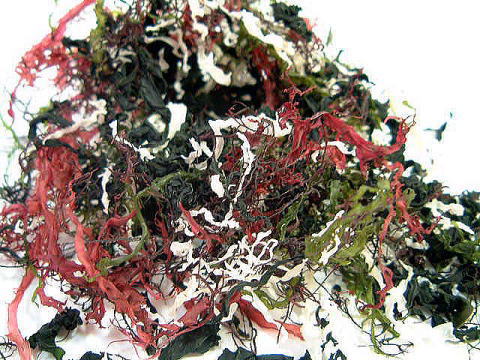
They often come as a mixture!
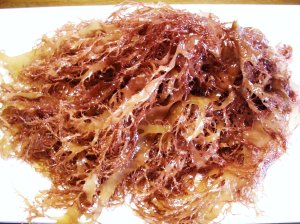
Red Algae

JAPANESE GASTRONOMY:

Here are some examples of the use of seaweed in Japanese gastronomy that can be expanded and inspired from wherever in the world you are, you being vegan, vegetarian or omnivore!
I have reduced the size of the pictures. Click on them to enlarge and copy them!
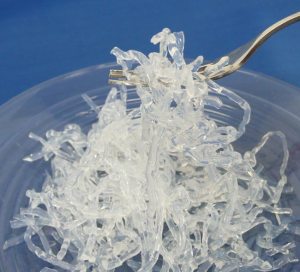
Agar or Crystal Kaiso/Crystal Seaweed!
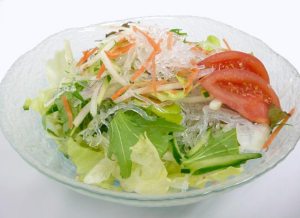
The same in a salad!

An example of seaweed salad with wakame and agar.
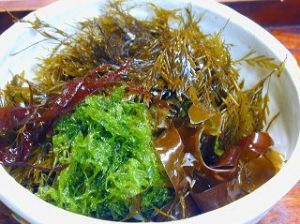
Another seaweed salad with samples harvesyed in Noto Peninsula, Ishikawa Prefecture!
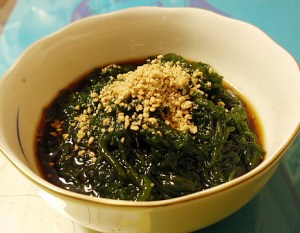
An Okinawa variety called somen nori!
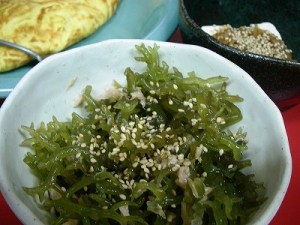
Another local variety called Tsunotama/Horns and Balls!
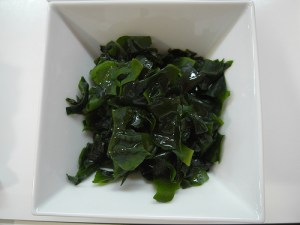
Wakame appetizer!
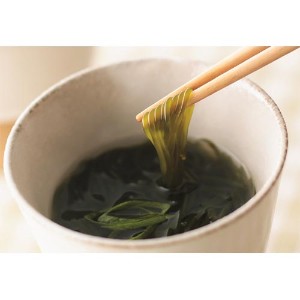
Wakame Noodles!
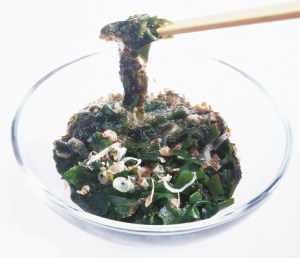
Another Wakame salad!
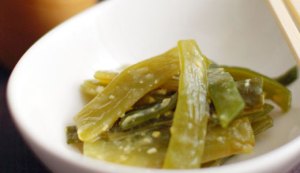
Wakame sticks cooked with miso paste!
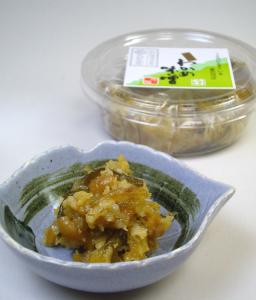
Wakame and Miso Paste mix from Kanzanji, Shizuoka Prefecture!
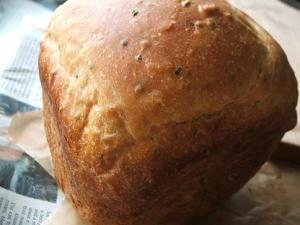
Wakame and Miso Bread!
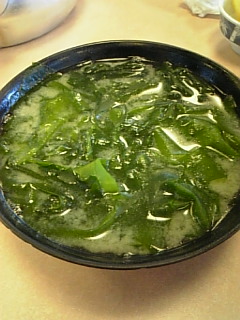
Wakame Miso Soup!
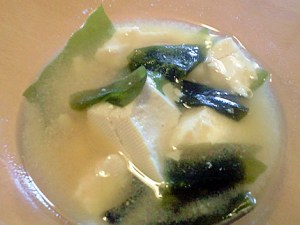
Wakame, tofu and miso Soup!
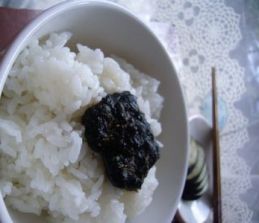
A bowl of freshly steamed rice with seaweed paste!
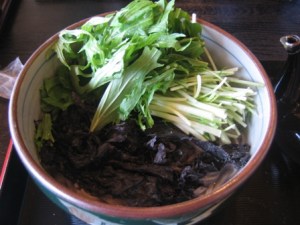
Soba/Buckwheat noodles with nori and green leaf vegetables!
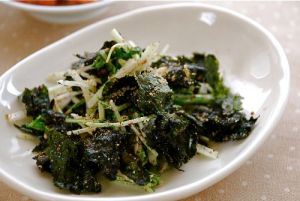
Seaweed, trefoil and ground seame seeds salad!
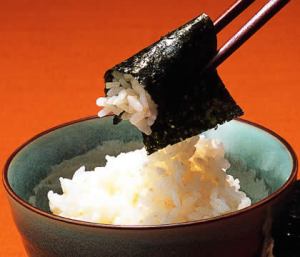
The best way to eat rice?

RECOMMENDED RELATED WEBSITES

So Good Sushi Restaurant in Nice France
Navigating Nagoya by Paige, Shop with Intent by Debbie, BULA KANA in Fiji, Kraemer’s Culinary blog by Frank Kraemer in New York,Tokyo Food File by Robbie Swinnerton, Green Tea Club by Satoshi Nihonyanagi in Shizuoka!, Mind Some by Tina in Taiwan, Le Manger by Camille Oger (French), The Indian Tourist, Masala Herb by Helene Dsouza in Goa, India, Mummy I Can Cook! by Shu Han in London, Pie
rre.Cuisine
, Francescannotwrite, My White Kitchen, Foodhoe, Chucks Eats, Things that Fizz & Stuff, Five Euro Food by Charles,Red Shallot Kitchen by Priscilla,With a Glass, Nami | Just One Cookbook, Peach Farm Studio, Clumsyfingers by Xethia, PepperBento, Hapabento, Kitchen Cow, Lunch In A Box, Susan at Arkonlite, Vegan Lunch Box; Tokyo Tom Baker, Daily Food Porn/Osaka, Only Nature Food Porn, Happy Little Bento, J-Mama’s Kitchen, Cook, Eat, Play, Repeat, Bento Lunch Blog (German), Adventures In Bento, Anna The Red’s Bento Factory, Ohayo Bento,

Must-see tasting websites:

-Sake: Ichi For The Michi by Rebekah Wilson-Lye in Tokyo, Tokyo Through The Drinking Glass, Tokyo Foodcast, Urban Sake, Sake World
-Wine: Palate To Pen, Warren Bobrow, Cellar Tours, Ancient Fire Wines Blog
-Beer: Another Pint, Please!, Beering In Good Mind: All about Craft Beer in Kansai by Nevitt Reagan!
ABRACADABREW, Magical Craftbeer from Japan
-Whisky: Nonjatta: All about whisky in Japan by Stefan Van Eycken
-Japanese Pottery to enjoy your favourite drinks: Yellin Yakimono Gallery

Non gastronomy must-see sites by Shizuoka Residents
French Recipe: Caviar d’Aubergines-Eggplant Paste!

Summer is a season for fresh eggplants (aubergines in French and British English) aplenty and this seemingly modest vegetable can be easily turned into an elegant and sophisticated dish, appetizer or a finishing touch for a multitude of dishes.
This is the basic recipe of a French I was wolfing down every summer back home that is so easy to reproduce even here in Japan!
This is the basic recipe for Caviar d’Aubergines or Eggplant Paste that you can transform and expand on at will!

SN3O0114

Eggplants: 6 (only 3 shown in picture for lack of space!)
Fresh garlic: 2 cloves (reduce if you are not too keen on garlic taste. Can be replaced with fresh red chili peppers)
Rosemary: a small sprig (can be ignored or replaced with another fresh herb)
A few black olives (not on the picture above). Use spicy ones if you like your food so.
Lemon: 1:2 Important as it will preserve the color and the food!
Salt
Black pepper
Optional spices
High quality olive oil

SN3O0115

Cut the eggplants/aubergines in halves and grill them until their inner surface gets dark.
Do it in two batches if necessary.

SN3O0116

Cut garlic cloves in halves and take out the central green core. Important as that particular part is indigestible!

SN3O0117

Crush and chop garlic as finely as possible.
Chop rosemary as fine as possible.
Can be done with a blender.
If using a blender use it for the above first as the eggplants may not be blended too long or they will becone a running paste!

SN3O0119

Chop the black olives as finely as possible. Do not blend.

SN3O0118

Once the eggplants/aubergines are properly cooked, scoop the flesh with a spoon.
Discard any long dry filaments or burned skin.

SN3O0120

Drop the eggplant/aubergine flesh, garlic, rosemary, and black olives into a bowl.
Add lemon juice, a little salt (you can rectify the seasoning later!), black pepper.
Mix roughly.
Add olive oil little by little and whisk to form a kind of mayonnaise (without eggs?).
Taste regularly to check if you have poured in enough olive oil.
Rectify seasoning with salt, pepper, and spices if deemed necessary.
Blend a few seconds if you wish to obtain a smoother paste, but do be easy with the blender. Hand work is definetly recommended!

SN3O0121

Some like to eat lukewarm especially if you add it immediately to another dish, but I prefer to preserve it in the fridge for snacks and appetizers!

SN3O0123

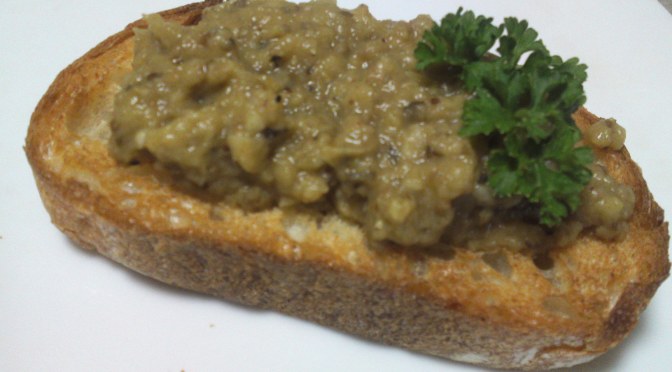
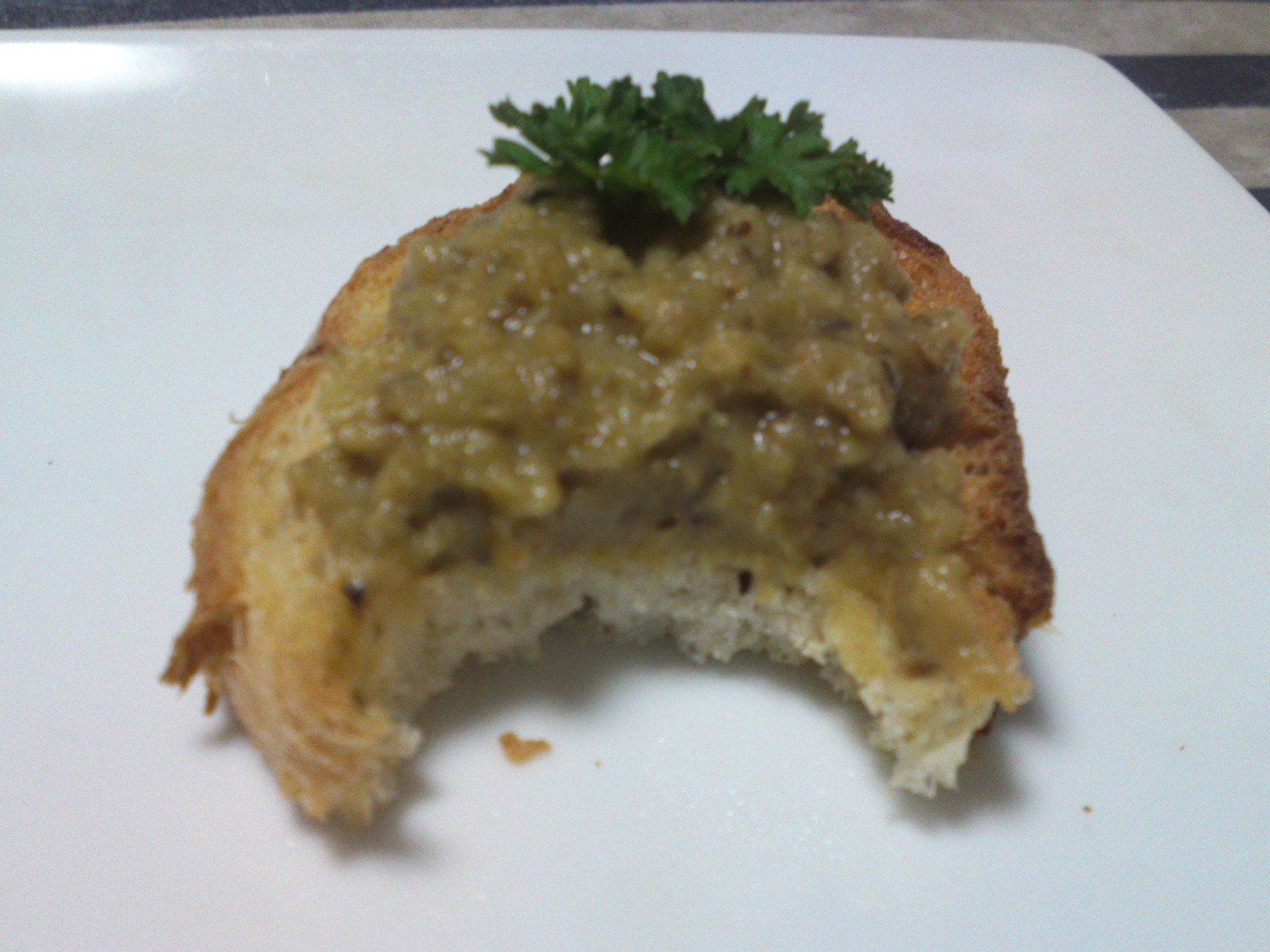
I like it best on a toasted piece of superior bread!

You can add the caviar d’aubergines to many dishes as a finishing touch such as ratatouille, pizzas, sandwiches, hamburgers, eggs mimosa, carpaccio.
Suggestion: prepare very fresh white flesh fish cut into thin slices. Apply a thin layer of caviar d’aubergine on them, roll them and secure them with toothpicks to be served as tapas!
Best enjoyed with a solid re wine or a great craft beer!

RECOMMENDED RELATED WEBSITES

So Good Sushi Restaurant in Nice France
Navigating Nagoya by Paige, Shop with Intent by Debbie, BULA KANA in Fiji, Kraemer’s Culinary blog by Frank Kraemer in New York,Tokyo Food File by Robbie Swinnerton, Green Tea Club by Satoshi Nihonyanagi in Shizuoka!, Mind Some by Tina in Taiwan, Le Manger by Camille Oger (French), The Indian Tourist, Masala Herb by Helene Dsouza in Goa, India, Mummy I Can Cook! by Shu Han in London, Pie
rre.Cuisine
, Francescannotwrite, My White Kitchen, Foodhoe, Chucks Eats, Things that Fizz & Stuff, Five Euro Food by Charles,Red Shallot Kitchen by Priscilla,With a Glass, Nami | Just One Cookbook, Peach Farm Studio, Clumsyfingers by Xethia, PepperBento, Hapabento, Kitchen Cow, Lunch In A Box, Susan at Arkonlite, Vegan Lunch Box; Tokyo Tom Baker, Daily Food Porn/Osaka, Only Nature Food Porn, Happy Little Bento, J-Mama’s Kitchen, Cook, Eat, Play, Repeat, Bento Lunch Blog (German), Adventures In Bento, Anna The Red’s Bento Factory, Ohayo Bento,

Must-see tasting websites:

-Sake: Ichi For The Michi by Rebekah Wilson-Lye in Tokyo, Tokyo Through The Drinking Glass, Tokyo Foodcast, Urban Sake, Sake World
-Wine: Palate To Pen, Warren Bobrow, Cellar Tours, Ancient Fire Wines Blog
-Beer: Another Pint, Please!, Beering In Good Mind: All about Craft Beer in Kansai by Nevitt Reagan!
ABRACADABREW, Magical Craftbeer from Japan
-Whisky: Nonjatta: All about whisky in Japan by Stefan Van Eycken
-Japanese Pottery to enjoy your favourite drinks: Yellin Yakimono Gallery

Non gastronomy must-see sites by Shizuoka Residents

Visiting Shizuoka Prefecture by Bus: Shimada City~Yoshida Cho~Makinohara City

When you do not want to drive a car, nor ride a bicycle and when there is no railroad available the best means to travel through Shizuoka Prefecture is the bus. And it can prove cheaper as well!

shizuokamap

I have very few occasions to visit the Yoshida Cho and Makinohara City areas by the waters of Suruga Bay in Central Shizuoka Prefecture as they are simply too far from the railroad linking the cities of Atamai and Hamamatsu through Mishimsa, Fuji, Shizuoka, Shimada and Kakegawa, but I found an easy enough way to reach them!

SN3O0001

First of all ride the train till Shimada JR Station along the Tokaido Line and get out from the North exit!

SN3O0003

Do pay a visit to the tourism information bureau on the left where they will give you all the information you need and more!

SN3O0004

The bus stop, No 3, is just across the street!

SN3O0005

Don’t forget to check the timetable!
There is only one bus to Shizunami/静波, a beach resort in Makinohara City/真琴腹市!
Mind you, considering the distance and the destination, it is more than enough!

SN3O0006

The bus of the Shizutetsu Company (based in Shizuoka City, but covering most of central Shizuoka Prefecture!)!

SN3O0007

Riding along Oi River!

SN3O0008

Finally crossing Oi River and riding full south!

SN3O0009

The Oi River, a major river in Japan, needed no less than 650 resident porters during the Edo Era!

SN3O0010

Check the map inside the bus. Drivers will always kindly answer to your enquiries and indicate your stop when needed!

SN3O0011

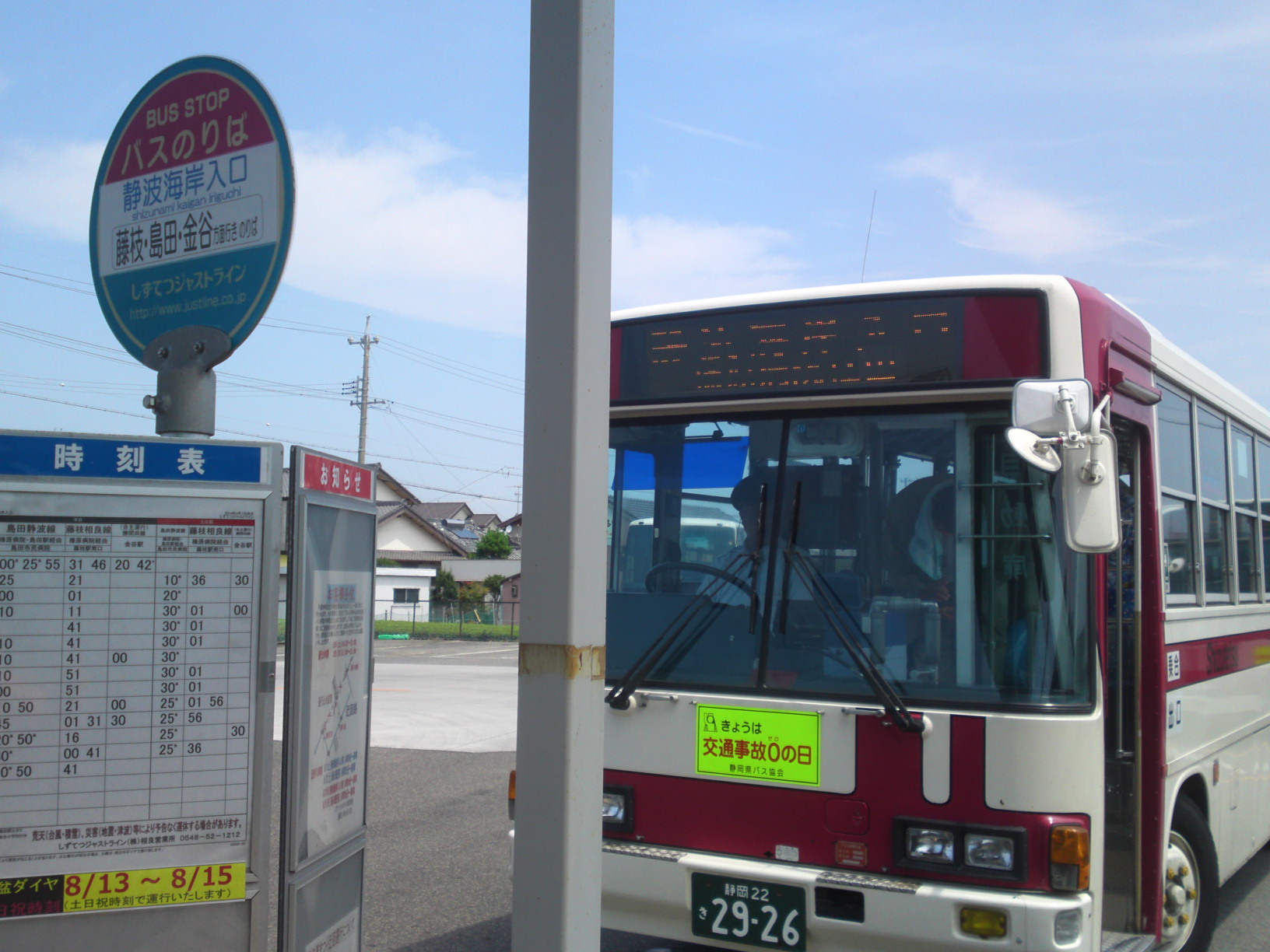
My first destination and actual terminal for that particular bus: Shizunami Kaigan Iriguchi/静波海岸入口/Entry to Shizunami Beach (860 yen from Shimada City)!

SN3O0012

Checking the bus schedule for my next destination before walking down to the beach!

SN3O0013

I will have to leave from that bus stop sign for my next destination!
Ok! Let’s start walking!

SN3O0017

No need for a guide, just follow the bathers!

SN3O0043

Shinshuu Ootaniha Daishin Kaizan Myoushyouji Temple (真宗大谷派大心海山明照寺)
I had to forget the bathers walking ahead as there too many distractions on the way! LOL

SN3O0020

Quite a few rich residences along the way, too!

SN3O0021

Found my bathers again!

SN3O0022

These gourds seem popular with the local farmers!

SN3O0024

Summer beach camps and parking lots along the way as we get nearer!

SN3O0025

Ubiquitous beach hotel!

SN3O0026

The ocean!

SN3O0027

Lonely mermaid?

SN3O0028

Official entrance to the beach!

SN3O0029

Beach facilities! A bit old to my taste!
This beach is not really a major one in this Prefecture, after all!

SN3O0030

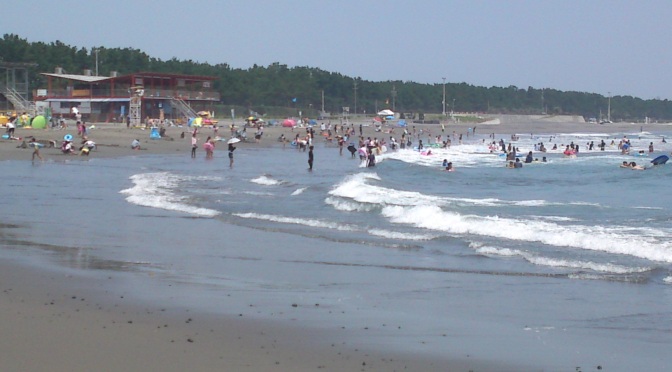
Bathers!

SN3O0031

Young lifeguard!

SN3O0032

Japanese beaches are always heavily monitored, that is only in July and August!

SN3O0033

Taking a dip!

SN3O0034

At low tide the waves are innocuous, although they can be pretty big in other seasons!

SN3O0035

Not many bathers on a weekday in spite of the heat!

SN3O0036

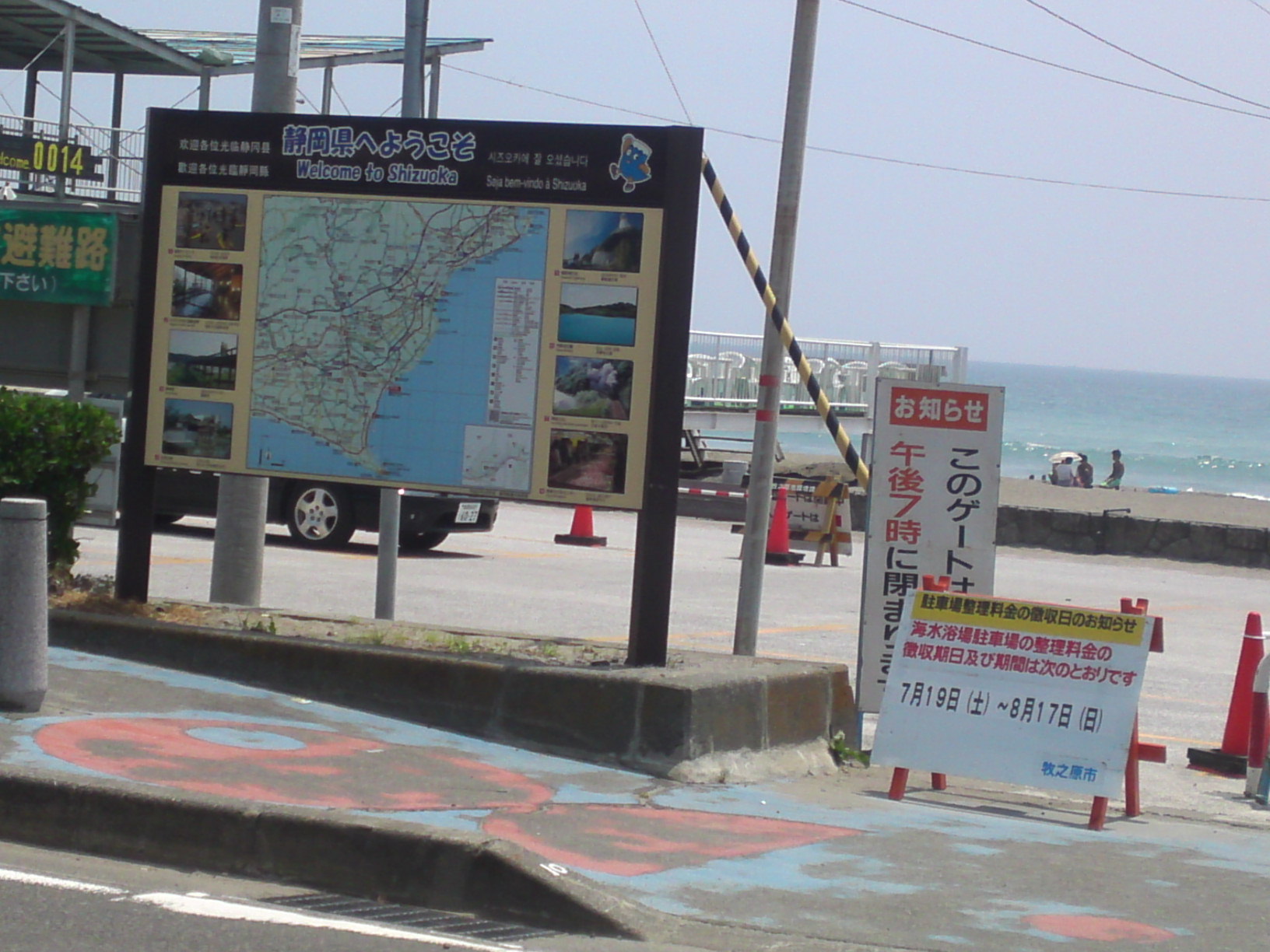
Useful map in four languages!

SN3O0037

If you go to the right along the unguarded part of the beach you will discover many wild oysters!

SN3O0038

Public bathing prohibited there!

SN3O0039

Walking back to the entrance!

SN3O0040

Good-bye, Shizunami!

SN3O0060

back to the bus terminal in Shizunami, I will next leave from this bus stop used by the bus running from Fujieda City/藤枝市 to Sagara/相良, also in Makinonara City/牧之原市!
The destination is Sagara Eigyoujyou/相良営業所!

SN3O0061

One bus every hour!

SN3O0062

Having reached my destination in Sagara I ascertained that I would have to leave from that particular bus stop to take the bus going back into the direction of Fujieda City!

SN3O0063

Of course I checked the timetable!
Plenty of time to visit the place!

SN3O0066

Let’s walk and find the beach first!

SN3O0067

Getting across the main thoroughfare (quite busy, actually!)!

SN3O0068

Turn left for the sun beach!

SN3O0069

This very part of the beach is very dangerous and closed to tourists!

SN3O0074

At last!
Sagara beach is a minor tourist attraction in Shizuoka prefecture, but this is a major fishing area!

SN3O0075

The facilities are a bit old, but the drinks and foos steeply priced!

SN3O0076

A few hardy bathers only!

SN3O0077

Deep sea and treacherous currents beyond the tetrapods!

SN3O0078

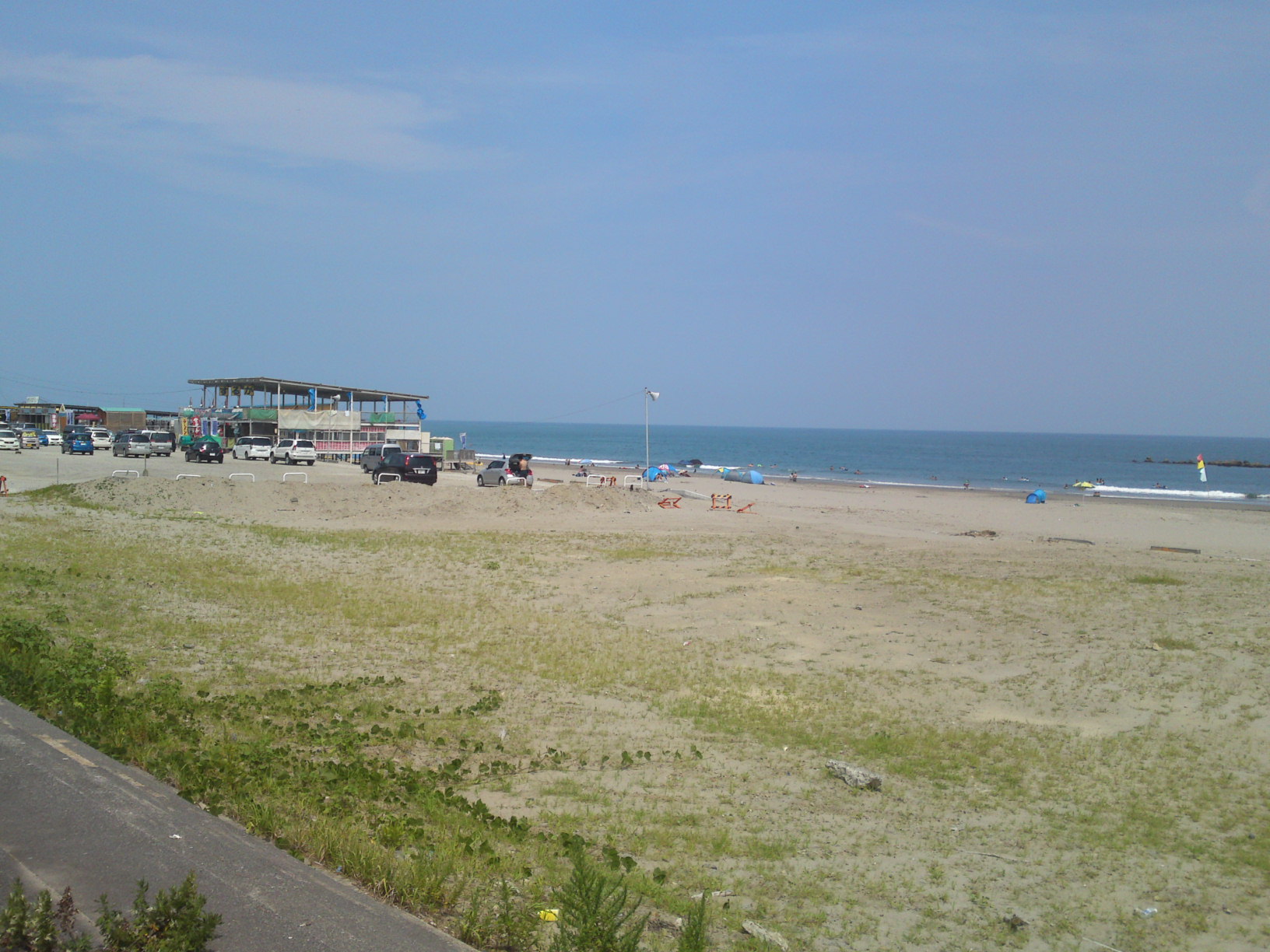
Vast beach!

SN3O0079

Pleasant enough sea for the kids!

SN3O0080

Good-bye Sagara Fun Beach!
I decided to have a look at the small town!

SN3O0084

Cheap local makuwa melons and Hime sakura watermelons!

SN3O0085

This area is famous for its vegetables, especially leaf ginger and mini melons (the latter mostly eaten pickled!)!

SN3O0091

Interesting touristic tile signs on the pavement!
Sagara is celebrated for its big kites!

SN3O0087

Unusual in Japan: an antique fire hydrant!
Still in use, apparently!

SN3O0081

Some rich ancient families still live there!

SN3O0095

On my way back from sagara into the direction of Fujieda I changed buses at a stop in front of Makinihara City Police Station to board the bus running back from Shizunami to Shimada City as I wanted to halt o the way in Sumiyoshi/住吉, Yoshida Cho,吉田町 to vist a great Shinto Shrine!

SN3O0112

Kataoka Shrine/片岡神社, dedicated to the Sumiyoshi God/住吉!

SN3O0122

This particular shrine was founded to protect local fishermen!

SN3O0128

At the back you will discover a beautiful wooden kura/Japanese warehouse!

SN3O0136

It is owned by the Oomura Soy sauce Company!

SN3O0150

A beautiful sunset greeted me back in Shimada City!

See you on the next trip!

RECOMMENDED RELATED WEBSITES

So Good Sushi Restaurant in Nice France
Navigating Nagoya by Paige, Shop with Intent by Debbie, BULA KANA in Fiji, Kraemer’s Culinary blog by Frank Kraemer in New York,Tokyo Food File by Robbie Swinnerton, Green Tea Club by Satoshi Nihonyanagi in Shizuoka!, Mind Some by Tina in Taiwan, Le Manger by Camille Oger (French), The Indian Tourist, Masala Herb by Helene Dsouza in Goa, India, Mummy I Can Cook! by Shu Han in London, Pie
rre.Cuisine
, Francescannotwrite, My White Kitchen, Foodhoe, Chucks Eats, Things that Fizz & Stuff, Five Euro Food by Charles,Red Shallot Kitchen by Priscilla,With a Glass, Nami | Just One Cookbook, Peach Farm Studio, Clumsyfingers by Xethia, PepperBento, Hapabento, Kitchen Cow, Lunch In A Box, Susan at Arkonlite, Vegan Lunch Box; Tokyo Tom Baker, Daily Food Porn/Osaka, Only Nature Food Porn, Happy Little Bento, J-Mama’s Kitchen, Cook, Eat, Play, Repeat, Bento Lunch Blog (German), Adventures In Bento, Anna The Red’s Bento Factory, Ohayo Bento,

Must-see tasting websites:

-Sake: Ichi For The Michi by Rebekah Wilson-Lye in Tokyo, Tokyo Through The Drinking Glass, Tokyo Foodcast, Urban Sake, Sake World
-Wine: Palate To Pen, Warren Bobrow, Cellar Tours, Ancient Fire Wines Blog
-Beer: Another Pint, Please!, Beering In Good Mind: All about Craft Beer in Kansai by Nevitt Reagan!
ABRACADABREW, Magical Craftbeer from Japan
-Whisky: Nonjatta: All about whisky in Japan by Stefan Van Eycken
-Japanese Pottery to enjoy your favourite drinks: Yellin Yakimono Gallery

Non gastronomy must-see sites by Shizuoka Residents

Kura: Traditional Japanese Warehouse in Shizuoka Prefecture 21: Oomura Soy Sauce Company Kura in Yoshida Cho!

“Kura” (in Japanese 蔵 or 倉) means “warehouse” or “Storehouse”.
In traditional Japan, especially during the Edo Era, as most of buildings and urba/village structures were made of wood, fires were the bane of society by and large.
However well-protected a fire would consume a house or buildings and all its properties within minutes.
Hence a special building or warehouse was needed to protect goods and properties against such a catastrophe.
But erecting a storehouse solely made of concrete, stones and some metal cost a vast amount of silver and gold and only rich merchants and nobility could afford them. Even castles could not be built entirely of stone then.

SN3O0129

The other as I was preparing to back to Shimada City from Sumiyoshi in Yoshida Cho, I noticed this beautiful wooden kura on the right of the Kataoka Sumiyoshi Shinto Shrine!

SN3O0134

the place was obviously in full use.
I decided to investigate!

SN3O0135

Oomuraya Soy sauce Company!

SN3O0130

I have interviewed soy sauce companies before but I couldn’t smell the typical flavors of soy sauce making in the air!

SN3O0136

That is when I met an employee who gracefully explained that the Company uses these premises as their business base, office and storeroom!

SN3O0138

The factory has been away!

SN3O0137

The same employee offered me to interview the owner who happened to be on the premises but I had to take my bus!

RECOMMENDED RELATED WEBSITES

So Good Sushi Restaurant in Nice France
Navigating Nagoya by Paige, Shop with Intent by Debbie, BULA KANA in Fiji, Kraemer’s Culinary blog by Frank Kraemer in New York,Tokyo Food File by Robbie Swinnerton, Green Tea Club by Satoshi Nihonyanagi in Shizuoka!, Mind Some by Tina in Taiwan, Le Manger by Camille Oger (French), The Indian Tourist, Masala Herb by Helene Dsouza in Goa, India, Mummy I Can Cook! by Shu Han in London, Pie
rre.Cuisine
, Francescannotwrite, My White Kitchen, Foodhoe, Chucks Eats, Things that Fizz & Stuff, Five Euro Food by Charles,Red Shallot Kitchen by Priscilla,With a Glass, Nami | Just One Cookbook, Peach Farm Studio, Clumsyfingers by Xethia, PepperBento, Hapabento, Kitchen Cow, Lunch In A Box, Susan at Arkonlite, Vegan Lunch Box; Tokyo Tom Baker, Daily Food Porn/Osaka, Only Nature Food Porn, Happy Little Bento, J-Mama’s Kitchen, Cook, Eat, Play, Repeat, Bento Lunch Blog (German), Adventures In Bento, Anna The Red’s Bento Factory, Ohayo Bento,

Must-see tasting websites:

-Sake: Ichi For The Michi by Rebekah Wilson-Lye in Tokyo, Tokyo Through The Drinking Glass, Tokyo Foodcast, Urban Sake, Sake World
-Wine: Palate To Pen, Warren Bobrow, Cellar Tours, Ancient Fire Wines Blog
-Beer: Another Pint, Please!, Beering In Good Mind: All about Craft Beer in Kansai by Nevitt Reagan!
ABRACADABREW, Magical Craftbeer from Japan
-Whisky: Nonjatta: All about whisky in Japan by Stefan Van Eycken
-Japanese Pottery to enjoy your favourite drinks: Yellin Yakimono Gallery

Non gastronomy must-see sites by Shizuoka Residents

Kura: Traditional Japanese Warehouse in Shizuoka Prefecture 20: Former Suzuki Honkei Sake Brewery Kura in Shimizu Ku, Shizuoka City!

“Kura” (in Japanese 蔵 or 倉) means “warehouse” or “Storehouse”.
In traditional Japan, especially during the Edo Era, as most of buildings and urba/village structures were made of wood, fires were the bane of society by and large.
However well-protected a fire would consume a house or buildings and all its properties within minutes.
Hence a special building or warehouse was needed to protect goods and properties against such a catastrophe.
But erecting a storehouse solely made of concrete, stones and some metal cost a vast amount of silver and gold and only rich merchants and nobility could afford them. Even castles could not be built entirely of stone then.

SN3O0050

Before it was merged with Shimizu Brewery into the present Sanwa Brewery in Shimizu Ku, Shizuoka City, Suzuki Honkei was active producing Japanese sake in Jirochou, Shimizu City before another kind of merger put the three of them into Shizuoka City!

SN3O0054

The Suzuki Family still lives there as was confirmed by the locals when I asked them during the Shimizu Harbor Festival!

SN3O0049

SN3O0051

The kura standing beside the main house is still in beautiful repair!

SN3O0052

Whatever angle you look at it from, it is really impressive!

SN3O0053

I wish they would still brew sake as I would visit it every day!

RECOMMENDED RELATED WEBSITES

So Good Sushi Restaurant in Nice France
Navigating Nagoya by Paige, Shop with Intent by Debbie, BULA KANA in Fiji, Kraemer’s Culinary blog by Frank Kraemer in New York,Tokyo Food File by Robbie Swinnerton, Green Tea Club by Satoshi Nihonyanagi in Shizuoka!, Mind Some by Tina in Taiwan, Le Manger by Camille Oger (French), The Indian Tourist, Masala Herb by Helene Dsouza in Goa, India, Mummy I Can Cook! by Shu Han in London, Pie
rre.Cuisine
, Francescannotwrite, My White Kitchen, Foodhoe, Chucks Eats, Things that Fizz & Stuff, Five Euro Food by Charles,Red Shallot Kitchen by Priscilla,With a Glass, Nami | Just One Cookbook, Peach Farm Studio, Clumsyfingers by Xethia, PepperBento, Hapabento, Kitchen Cow, Lunch In A Box, Susan at Arkonlite, Vegan Lunch Box; Tokyo Tom Baker, Daily Food Porn/Osaka, Only Nature Food Porn, Happy Little Bento, J-Mama’s Kitchen, Cook, Eat, Play, Repeat, Bento Lunch Blog (German), Adventures In Bento, Anna The Red’s Bento Factory, Ohayo Bento,

Must-see tasting websites:

-Sake: Ichi For The Michi by Rebekah Wilson-Lye in Tokyo, Tokyo Through The Drinking Glass, Tokyo Foodcast, Urban Sake, Sake World
-Wine: Palate To Pen, Warren Bobrow, Cellar Tours, Ancient Fire Wines Blog
-Beer: Another Pint, Please!, Beering In Good Mind: All about Craft Beer in Kansai by Nevitt Reagan!
ABRACADABREW, Magical Craftbeer from Japan
-Whisky: Nonjatta: All about whisky in Japan by Stefan Van Eycken
-Japanese Pottery to enjoy your favourite drinks: Yellin Yakimono Gallery

Non gastronomy must-see sites by Shizuoka Residents

Jirochyou O-Mikoshi Parade at Shimizu Harbor Festival!

One more attraction at the Shimizu Harbor Festival in Shimizu Ku, Shizuoka City was of course the O-Mikoshi Parade held in Jirochou Street, otherwise called “Jirochou Douchuu”!

SN3O0055

The O-Mikoshi arriving through Jirocho Bridge across the Tomoe River!

A mikoshi (神輿 or 御輿) is a divine palanquin (also translated as portable Shinto shrine). Shinto followers believe that it serves as the vehicle to transport a deity in Japan while moving between main shrine and temporary shrine during a festival or when moving to a new shrine. Often, the mikoshi resembles a miniature building, with pillars, walls, a roof, a veranda and a railing.

Roots:
The altar of the harvest festival carried out to the time which repeated migration by hunting and collection is the origin of a mikoshi.
Some theorize that “The origin of Japanese mikoshi is ancient Jewish tabernacle ark”.
Actually, mikoshi and the ark of the covenant do not have much in common. They differ in production and decoration (a phoenix or a crane being very different from cherubim.).

First use:
A mikoshi was believed to have been first used to transport Hachiman to Tōdai-ji temple from Usa Shrine 八幡宇佐宮御託宣集 in 749.

SN3O0056

Arriving to the sound of drums hit by children!

SN3O0057

Slowly moving across the bridge!

SN3O0059

Yo ei! Yo ei!

SN3O0064

Interesting pants!

SN3O0065

The drumming kids are all local!

SN3O0070

Many worshipers form other shrines have come to end a hand!

SN3O0071

The O-Mikoshi belongs to the Shimizu Harbor Association!

SN3O0072

A portable shrine in truth!

SN3O0073

Interesting faces!

SN3O0081

Smiles everywhere!

SN3O0060

Hard work!

SN3O0061

More hard work!

SN3O0062

Waiting for their turns!

SN3O0063

Great support from other shrines!

SN3O0066

Great control!

SN3O0067

First and third generations!

SN3O0068

More faces!

SN3O0069

No age limit!

SN3O0074

The phoenix!

SN3O0075

Beer-guzzling mothers?

SN3O0076

Having a closer look at the drums!

SN3O0077

Overlooking the event!

SN3O0078

Having a closer look at the shrine and its phoenix during a break!

SN3O0079

Great kid!

SN3O0080

Family power!

SN3O0082

Taking a break at Jirochou’s birthplace before starting all over again!

RECOMMENDED RELATED WEBSITES

So Good Sushi Restaurant in Nice France
Navigating Nagoya by Paige, Shop with Intent by Debbie, BULA KANA in Fiji, Kraemer’s Culinary blog by Frank Kraemer in New York,Tokyo Food File by Robbie Swinnerton, Green Tea Club by Satoshi Nihonyanagi in Shizuoka!, Mind Some by Tina in Taiwan, Le Manger by Camille Oger (French), The Indian Tourist, Masala Herb by Helene Dsouza in Goa, India, Mummy I Can Cook! by Shu Han in London, Pie
rre.Cuisine
, Francescannotwrite, My White Kitchen, Foodhoe, Chucks Eats, Things that Fizz & Stuff, Five Euro Food by Charles,Red Shallot Kitchen by Priscilla,With a Glass, Nami | Just One Cookbook, Peach Farm Studio, Clumsyfingers by Xethia, PepperBento, Hapabento, Kitchen Cow, Lunch In A Box, Susan at Arkonlite, Vegan Lunch Box; Tokyo Tom Baker, Daily Food Porn/Osaka, Only Nature Food Porn, Happy Little Bento, J-Mama’s Kitchen, Cook, Eat, Play, Repeat, Bento Lunch Blog (German), Adventures In Bento, Anna The Red’s Bento Factory, Ohayo Bento,

Must-see tasting websites:

-Sake: Ichi For The Michi by Rebekah Wilson-Lye in Tokyo, Tokyo Through The Drinking Glass, Tokyo Foodcast, Urban Sake, Sake World
-Wine: Palate To Pen, Warren Bobrow, Cellar Tours, Ancient Fire Wines Blog
-Beer: Another Pint, Please!, Beering In Good Mind: All about Craft Beer in Kansai by Nevitt Reagan!
ABRACADABREW, Magical Craftbeer from Japan
-Whisky: Nonjatta: All about whisky in Japan by Stefan Van Eycken
-Japanese Pottery to enjoy your favourite drinks: Yellin Yakimono Gallery

Non gastronomy must-see sites by Shizuoka Residents

Sushi: Japanese~English Lexicon (regularly amended)

I thought that such a lexicon would become handy both for English-speaking newcomers and long term residents!

I wrote the Japanese pronunciation first, the Chinese (Japanese kanji) characters and the English translations.

Bear in mind that many varieties of sushi have many names depending on the Japanese region. These are the common names.
If you have a question I will be glad to investigate!

By sushi I meant everything used in making it, be it omnivorous or vegetarian!
As for name of fish and seafood see separate articles!Sushi

———————————————–
Traditional Japanese Fish & Seafood Classification

Akami/赤身: red-fleshed fish (tuna, bonito, etc)
Ebi-Kani:海老・蟹: crustaceans (shrimps, crabs, etc)
Gyoran/魚卵: Fish roe (salmon roe, etc)
Hikarimono/光り物: “shining fish” (scabbard fish, etc.)
Ika-Tako/烏賊・鮹: Squids (cuttlefish) and octopuses
Kai/貝: shellfish
Nagamono/長もの: “long fish” (eels, etc.)
Others/その他: squilla and sea urchins, sea slug (sea cucumber),seaweed, tamagoyaki, vegetables, etc.
Saamon/サーモン: salmons
Shiromi/白身: white-fleshed fish (sole, etc.)

Sushi History

Although “sushi” is presently written “寿司”, it is only a modern way of writing it (“ateji/当て字”, onomatopoetic writing).
The real kanji caharacters for “sushi” are “鮓”, that is the combination of “sakana/魚/fish” and “su/酢/vinegar”.
One can also find “sushi” written as “鮨”, a combination of “sakana/魚/fish” and “abura/脂/animal fat”, but it is actually the original word for “shokara/塩辛/salted fish or squid
Sushi chronologically appeared as such:
Narezushi /熟れ鮨 (Nara and Heian Eras, 710~1185), Sushi (13th century), Namarezushi/なまれずし (Heian and Muromachi Eras: 13th~14th century), Sasamaki tenuke sushi/笹巻き手抜きすし (beginning of the 18th Century), Edomaezushi/Edomaenigirizushi/江戸前ずし・江戸前握りずし (around 1820)

Sushi presentations

Ankimo/安肝: frogfish/monkfish liver steamed in sake and served as firm paste. Also nicknamed “Japanese Foie gras”!
Bara sushi/ばら寿司(also called Gomoku sushi/五目寿司, Tekone zushi/手こね寿司): A simple form of Chirashi zushi
Battera Sushi/バッテラ寿司: from “bateira” in Portuguese.Traditional sushi made with spotted gizzard shad
Bougata/Bougata Sushi/棒型寿司 (also called Bou Suhi/棒寿司: Fish wholly placed onto a long rice ball or whole fish pressed over pressed rice/oshi zushi. Served whole or cut.
California Roll/カリフォルニアロル: Californian style sushi roll including at least some avocado. Can be presented rolled with the dry seaweed outside or inside (often sprinkled with roasted black sesame seeds in the latter case)
Chirashizushi/散らし寿司: “Decoration Sushi”. Usually home-made style sushi consisting of a large dish, wooden vessel filled with sushi rice and topped with all kinds of ingredients
Dashimaki/だし巻き: a variety of Japanese omelet served as a roll
Donburi/Sushi Donburi/丼, 丼寿司: Sushi served as bowl full of sushi rice topped with a single or many toppings
Edomaezushi/Edomaenigirizushi/江戸前ずし・江戸前握りずし: traditional Tokyo-style sushi which first appeared around 1820. The present form was born in 1947
Funa Zushi/鮒寿司: Pickled crucian carp sushi (one of the traditional Narezushi/熟れ鮨)
Futo Maki/Futo Maki Sushi/太巻, 太巻き寿司: Large sushi roll, traditionally including at least seven ingredients rolled inside. Served cut into thin slices.
Gomoku sushi/五目寿司 (also called Bara sushi/ばら寿司, Tekone zushi/手こね寿司): A simple form of Chirashi zushi
Gunkan/Gunkan Nigiri/Gunkan Nigiri Sushi/軍艦, 軍艦握り, 軍艦握り寿司: “mother Ship style sushi. The rice ball is wrapped with a narrow band of dry seaweed slightly higher than the rice ball to allow space for ingredients otherwise difficult to present as simple nigiri sushi.
Hanzushi/飯ずし: traditional sushi in Heian Era (794 to 1185 A.D)
Hoso maki/Hoso maki Sushi/細巻, 細巻き寿司: long and thin sushi roll, usually served cut, unless requested otherwise
Inari/Inari zushi/稲荷, 稲荷寿司: traditional sushi presentation where a pouch made of fried tofu is filled with sushi rice alone or mixed with finely cut ingredients to resemble a traditional rice pack
Kaburazusi/かぶらずし: Traditional sushi prepared in Ishikawa and Toyama Prefectures
Kaki no Ha Sushi/柿の葉寿司: traditional pressed sushi enveloped inside persimmon leaves
Kanpyou Maki/干瓢巻: traditional dry gourd shavings sushi roll
Kappa Maki/河童巻: cucumber sushi roll (Kappa/Water goblin are supposed to be fond of cucumbers!)
Ko Donburi/Sushi Ko Donburi/子丼, 寿司子丼: small donburi/sushi bowl, popular with ladies
Maki/maki Sushi/巻き, 巻き寿司: sushi roll
Matsumae Sushi/松前寿司: traditional mackerel sushi presented in Bogata style
Mehari sushi/めはり寿司: traditional sushi balls enveloped inside pickled leaves
Millefeuille/ミルフィーユ: A modern sushi style reminiscent of a French mllefeuille
Miso Shiru/味噌汁: miso soup
Namarezushi/なまれずし: traditional sushi form in from Heian and Muromachi Eras ( 13th~14th century)
Narezushi/熟れ鮨: Original form of sushi imported from South eastern Asia (710~). Pickled fish was wrapped around sushi rice for transport away from the sea.
Negitoro Maki/ネギトロ巻き: sushi roll containing grated tuna fat belly flesh
Nigiri/Nigiri sushi/握り, 握り寿司: sushi made with a hand-made ball of sushi rice topped with any ingredient
Oshi Sushi/押し寿司: type of sushi popular in the Kansai region where the sushi rice and toppings are tightly pressed inside a mold instead of being manually pressed rice balls.
Piri Kara Hotate Maki/ピリ辛ホタテ巻き: sushi roll containing scallops in a spicy mayonnaise
Sabanarezushi/鯖熟れ鮨: Pickled mackerel carp sushi (one of the traditional Narezushi/熟れ鮨)
Saimaki/最巻: a traditional presentation for shrimp sushi
Rainbow Maki/レーンボー巻: a modern form of Futo maki/太巻/large roll containing seven ingredients rolled inside. Served in slices.
Sake/shake hanzushi/鮭飯ずし: traditional salmon sushi made in Hokkaido
Sanma namarezushi/秋刀魚なまれずし: traditional sushi made with fermented mackerel pike im Mie and Wakayama Prefectures
Sasamaki tenuke sushi/笹巻き手抜きすし: traditional form of sushi dating back from the beginning of the 18th Century
Shiba ebi no suruimi ire tamagoyaki/芝海老のすり身入れたmご焼き:Japanese omelet containing striped shrimp paste
Shiyokara/塩辛: salted fish or squid
Tekka Maki/鉄火巻き: tuna sushi roll
Tekone zushi/手こね寿司 (also called Bara sushi/ばら寿司, Gomoku sushi/五目寿司): A simple form of Chirashi zushi
Te-Maki/Te-Maki sushi/手巻き, 手巻き寿司: hand-rolled sushi, usually in the shape of a cone
Te-mari Zushi/手毬寿司: Sushi presented in small round balls, especially popular with ladies
Tamagoyaki/卵焼き: traditional Japanese omelet

Sashimi presentations

Moriawase/盛り合わせ: large assortment
O-Makase/お任せ: Chef7s choice
O-Tsukuri/お作り: Sashimi plate
Sukeroku Zushi/助六寿司: traditional combination of Inari sushi and Futo maki
Tataki/叩き: 1) sashimi served finely cut like a tartar style
2) the fish fillet, especially bonito, is first seared over a charcoal or straw fire, then plunged into cold water before being served sliced

Ingredients (other than fish and seafood)

Baniku/馬肉 (also called Sakura/桜): horsemeat
Goma/胡麻: Sesame seeds, golden or black, both roasted
Gomatare/胡麻たれ/: sesame seeds dressing
Kanpyou/干瓢: died gourd shavings
Kome/米: rice
Momiji/紅葉(also called Shikaniku/鹿肉): venison
Miso/味噌: fermented soy bean paste
Niika/煎烏賊: simmered squid
Nori/海苔: seaweed, dry seaweed
Sakura/桜(also called Baniku/馬肉): horsemeat
Satou/砂糖: sugar
Shouyu/醤油: soy sauce
Shikaniku/鹿肉 (also called Momiji/紅葉): venison
Su/酢: vinegar: rice vinegar
Tamago/卵: egg
Uzura no tamago/鶉の卵: quail eggs
Yasai/野菜: vegetables (s)
Wagyu/和牛: wagyu beef
Wasabi/山葵

Technical terms

Bettarazuke/べったら漬: a traditional sweet pickled daikon
Dashi/出し: Japanese-style soupstock (also called dashi Jiru/だし汁)
Gari/ガリ: pickled ginger
Konbujime/昆布締め: raw fish pickled between fresh seaweed sheets
Neta/ネタ: sushi balls/nigiri toppings
Shari/シャリ: the ball of rice in a nigiri sushi
Zuke/漬け: pickled or marinated

Vegetarian Sushi/Vegan Sushi Ingredients ( also see “Algae/Seaweed” below!)

Daikon/大根: Japanese large radish
Gobou/牛蒡 (includes Yama Gobou/山牛蒡): burdock root
Goma/胡麻: sesame seeds
Goya/ゴーヤ (also called Niga uri/苦瓜 ): bitter gourd/ goya
Himesoba/姫蕎麦 (also called Soba no Me/蕎麦の芽): buckwheat sprouts
Kaiware daikon/カイワレ大根: daikon sprouts
Kanpyou/干瓢: dried gourd shavings
Kappa Maki/河童巻: cucumber sushi roll
Kinoko/茸:mushroom (s)
Kyuuri/胡瓜: cucumber
Matsutake/松茸: matsutake mushroom
Me/芽: Sprouts
Menegi/目ネギ: leek sprouts
Miso/味噌: fermented soy bean paste
Mitsuba/三つ葉: a trefoil
Myouga/茗荷: myoga ginger
Nameko: 滑子: nameko mushroom(s)
Nattou/納豆: fermented soy beans
Negi/葱: leek
Niga uri/苦瓜 (also called Goya/ゴーヤ): bitter gourd/ goya
Shiitake/椎茸: shiitake mushroom
Shyouga/生姜: ginger
Soba no Me/蕎麦の芽 (also called Himesoba/姫蕎麦): buckwheat sprouts
Takuan/沢庵: traditional pickled Japanese radish
Ume/梅: Japanese plum. Can be eaten only processed, not raw
Umeboshi/梅干: pickled (salt-pickled) Japanese plums
Ume Natto/梅納豆: a traditional combination of pickled Japanese plum and fermented soy beans
Wasabi/山葵
Yasai/野菜: vegetable(s)

Algae/Seaweed

BROWN ALGAE:
-Konbu/昆布, or Laminariaceae Bory (Latin), comprises many varieties, some of them regional: Makonbu or Saccharina japonica(真昆布), Onikonbu or Laminaria diabolica(羅臼昆布), Rishiri Konbu or Laminaria ochotensis(利尻昆布), Hosome Konbu or Laminaria religiosa(細目昆布), Hitaka or Mitsuishi Konbu or Laminaria angustata(日高昆布、三石昆布), Naga or Hamanaka Konbu or Laminaria longissima(長昆布、浜中昆布), and Kagome or Kjellmaniella crassifolia(籠目昆布).
-Hijiki or hiziki (ヒジキ, 鹿尾菜 or 羊栖菜, hijiki) (Sargassum fusiforme, or Hizikia fusiformis) is a brown sea vegetable growing wild on rocky coastlines around Japan, Korea, and China. Its two names mean deer-tail grass and sheep-nest grass respectively.
-Hibatama or Fucus, a genus of brown alga in the Class Phaeophyceae to be found in the intertidal zones of rocky seashores almost everywhere in the world.
-Hondawara or ホンダワラ(馬尾藻、神馬藻 (Sargassum fulvellum)
-Mozuku, or Cladosiphon okamuranus (水雲; 藻付; 海蘊; 海雲) , a type of edible seaweed in the genus Cladosiphon, naturally found in Okinawa, Japan. Most of the mozuku now is farmed by locals, and sold to processing factories. The main use of mozuku is as food, and as source of one type of sulfated polysaccharide called Fucoidan to be used in cancer treatment aid health supplements.
-Wakame (ワカメ), Undaria pinnatifida, a sea vegetable, or edible seaweed. In Japan it is most widely used in miso soup.

VIOLET ALGAE:
-Asakusa Nori, or アサクサノリ(浅草海苔 (Porphyra tenera).
-Tengusa/天草, which gives agar agar, a gelatinous substance. Historically and in a modern context, it is chiefly used as an ingredient in desserts throughout Japan, but also as solid jelly used as decoration in salads and others.
GREEN ALGAE:
-Aosa/碧草 or sea lettuce comprising comprise the genus Ulva, a group of edible green algae that are widely distributed along the coasts of the world’s oceans.
-Aonori /青海苔 ,アオノリ, “blue seaweed” or “green seaweed”), also known as green laver, a type of edible green seaweed, including species from the genera Monostroma and Enteromorpha of Ulvaceae. It is commercially cultivated in some bay areas in Japan, such as Ise Bay. It contains rich minerals such as calcium, magnesium, lithium, vitamins, and amino acids such as methionine.
-Umibudou/海葡萄: or sea grapes from Okinawa, a delicacy of its own!
———————————————-
RECOMMENDED RELATED WEBSITES

So Good Sushi Restaurant in Nice France
Navigating Nagoya by Paige, Shop with Intent by Debbie, BULA KANA in Fiji, Kraemer’s Culinary blog by Frank Kraemer in New York,Tokyo Food File by Robbie Swinnerton, Green Tea Club by Satoshi Nihonyanagi in Shizuoka!, Mind Some by Tina in Taiwan, Le Manger by Camille Oger (French), The Indian Tourist, Masala Herb by Helene Dsouza in Goa, India, Mummy I Can Cook! by Shu Han in London, Pie
rre.Cuisine
, Francescannotwrite, My White Kitchen, Foodhoe, Chucks Eats, Things that Fizz & Stuff, Five Euro Food by Charles,Red Shallot Kitchen by Priscilla,With a Glass, Nami | Just One Cookbook, Peach Farm Studio, Clumsyfingers by Xethia, PepperBento, Hapabento, Kitchen Cow, Lunch In A Box, Susan at Arkonlite, Vegan Lunch Box; Tokyo Tom Baker, Daily Food Porn/Osaka, Only Nature Food Porn, Happy Little Bento, J-Mama’s Kitchen, Cook, Eat, Play, Repeat, Bento Lunch Blog (German), Adventures In Bento, Anna The Red’s Bento Factory, Ohayo Bento,

Must-see tasting websites:

-Sake: Ichi For The Michi by Rebekah Wilson-Lye in Tokyo, Tokyo Through The Drinking Glass, Tokyo Foodcast, Urban Sake, Sake World
-Wine: Palate To Pen, Warren Bobrow, Cellar Tours, Ancient Fire Wines Blog
-Beer: Another Pint, Please!, Beering In Good Mind: All about Craft Beer in Kansai by Nevitt Reagan!
ABRACADABREW, Magical Craftbeer from Japan
-Whisky: Nonjatta: All about whisky in Japan by Stefan Van Eycken
-Japanese Pottery to enjoy your favourite drinks: Yellin Yakimono Gallery

Non gastronomy must-see sites by Shizuoka Residents
———————————————————————

Drummers at Shimizu Harbor Festival!

On the first week end of August every year a festival is held in Shimizu Harbor, Shimizu Ku (formerly Shimizu City), Shizuoka City.
I finally managed to visit it on its last yesterday and one of the events that particularly attracted me were the drums played by different local amateur groups!
SN3O0085

I cam early enough to witness the preparations!

SN3O0084

A lot of prep talk as ever!

SN3O0086

Each group brought their own drums!

SN3O0087

Heavy work!

SN3O0088

Getting slowly ready!

SN3O0089

Adjusting their costumes!

SN3O0090

Taking it easy before the action!

SN3O0091

Big smile!

SN3O0092

All set!

SN3O0093

Still smiling on the third day of the festival!

SN3O0095

Kids first!

SN3O0096

Very energetic!

SN3O0097

Bright future!

SN3O0098

The next group had an unusual technique!

SN3O0100

Drumming sideways?

SN3O0101

Back to a more traditional technique!

SN3O0102

Change of colors with the next group!

SN3O0103

Waiting for the signal!

SN3O0104

Age doesn’t matter!

SN3O0108

Cute!

SN3O0105

The men of the next group conferring!

SN3O0106

Smiling faces from the same group!

SN3O0107

Pose!

SN3O0109

The younger members in action first!

SN3O0110

Musical loop next!

SN3O0111

Woman power!

SN3O0112

Adults in action!

SN3O0113

Thank you all!

RECOMMENDED RELATED WEBSITES

So Good Sushi Restaurant in Nice France
Navigating Nagoya by Paige, Shop with Intent by Debbie, BULA KANA in Fiji, Kraemer’s Culinary blog by Frank Kraemer in New York,Tokyo Food File by Robbie Swinnerton, Green Tea Club by Satoshi Nihonyanagi in Shizuoka!, Mind Some by Tina in Taiwan, Le Manger by Camille Oger (French), The Indian Tourist, Masala Herb by Helene Dsouza in Goa, India, Mummy I Can Cook! by Shu Han in London, Pie
rre.Cuisine
, Francescannotwrite, My White Kitchen, Foodhoe, Chucks Eats, Things that Fizz & Stuff, Five Euro Food by Charles,Red Shallot Kitchen by Priscilla,With a Glass, Nami | Just One Cookbook, Peach Farm Studio, Clumsyfingers by Xethia, PepperBento, Hapabento, Kitchen Cow, Lunch In A Box, Susan at Arkonlite, Vegan Lunch Box; Tokyo Tom Baker, Daily Food Porn/Osaka, Only Nature Food Porn, Happy Little Bento, J-Mama’s Kitchen, Cook, Eat, Play, Repeat, Bento Lunch Blog (German), Adventures In Bento, Anna The Red’s Bento Factory, Ohayo Bento,

Must-see tasting websites:

-Sake: Ichi For The Michi by Rebekah Wilson-Lye in Tokyo, Tokyo Through The Drinking Glass, Tokyo Foodcast, Urban Sake, Sake World
-Wine: Palate To Pen, Warren Bobrow, Cellar Tours, Ancient Fire Wines Blog
-Beer: Another Pint, Please!, Beering In Good Mind: All about Craft Beer in Kansai by Nevitt Reagan!
ABRACADABREW, Magical Craftbeer from Japan
-Whisky: Nonjatta: All about whisky in Japan by Stefan Van Eycken
-Japanese Pottery to enjoy your favourite drinks: Yellin Yakimono Gallery

Non gastronomy must-see sites by Shizuoka Residents