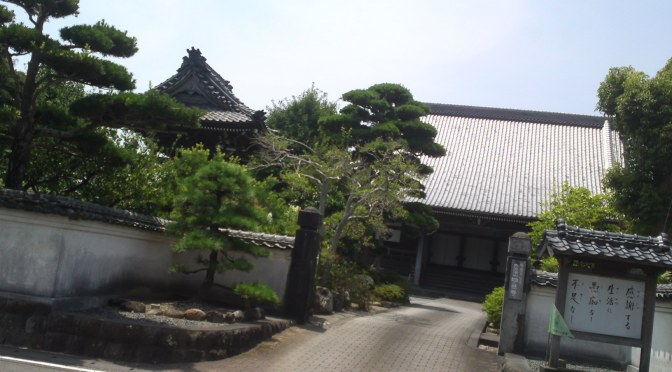
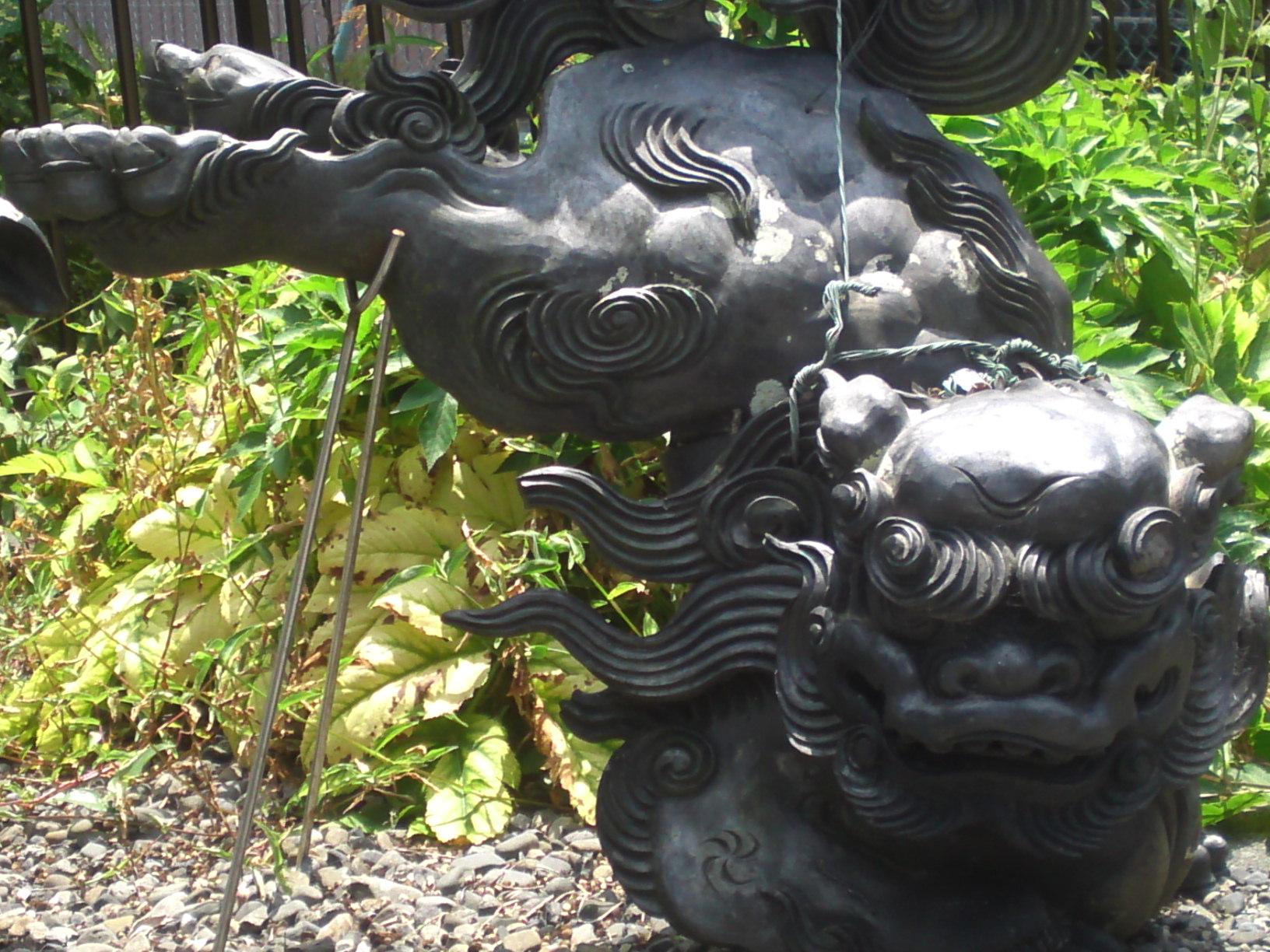
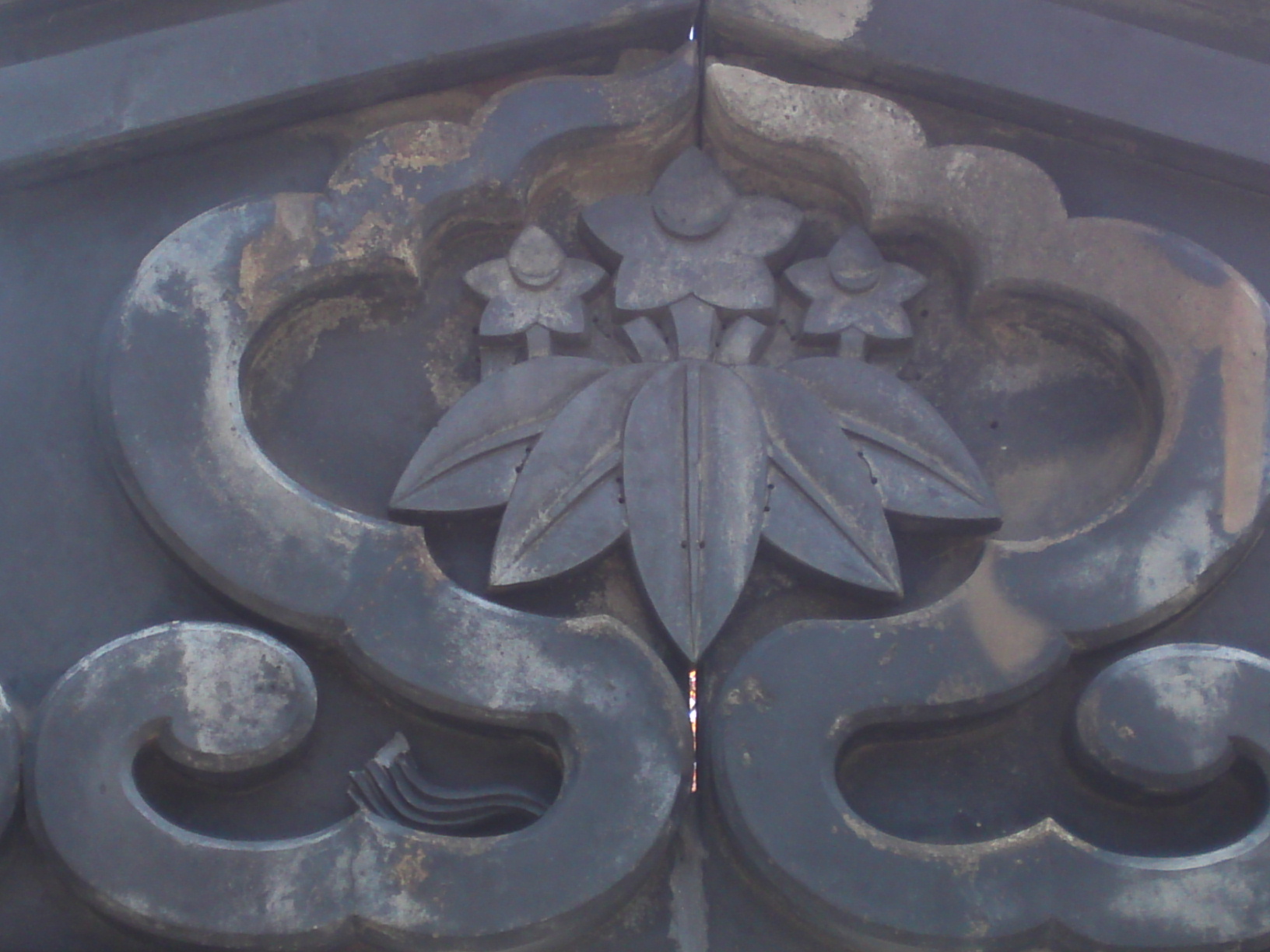
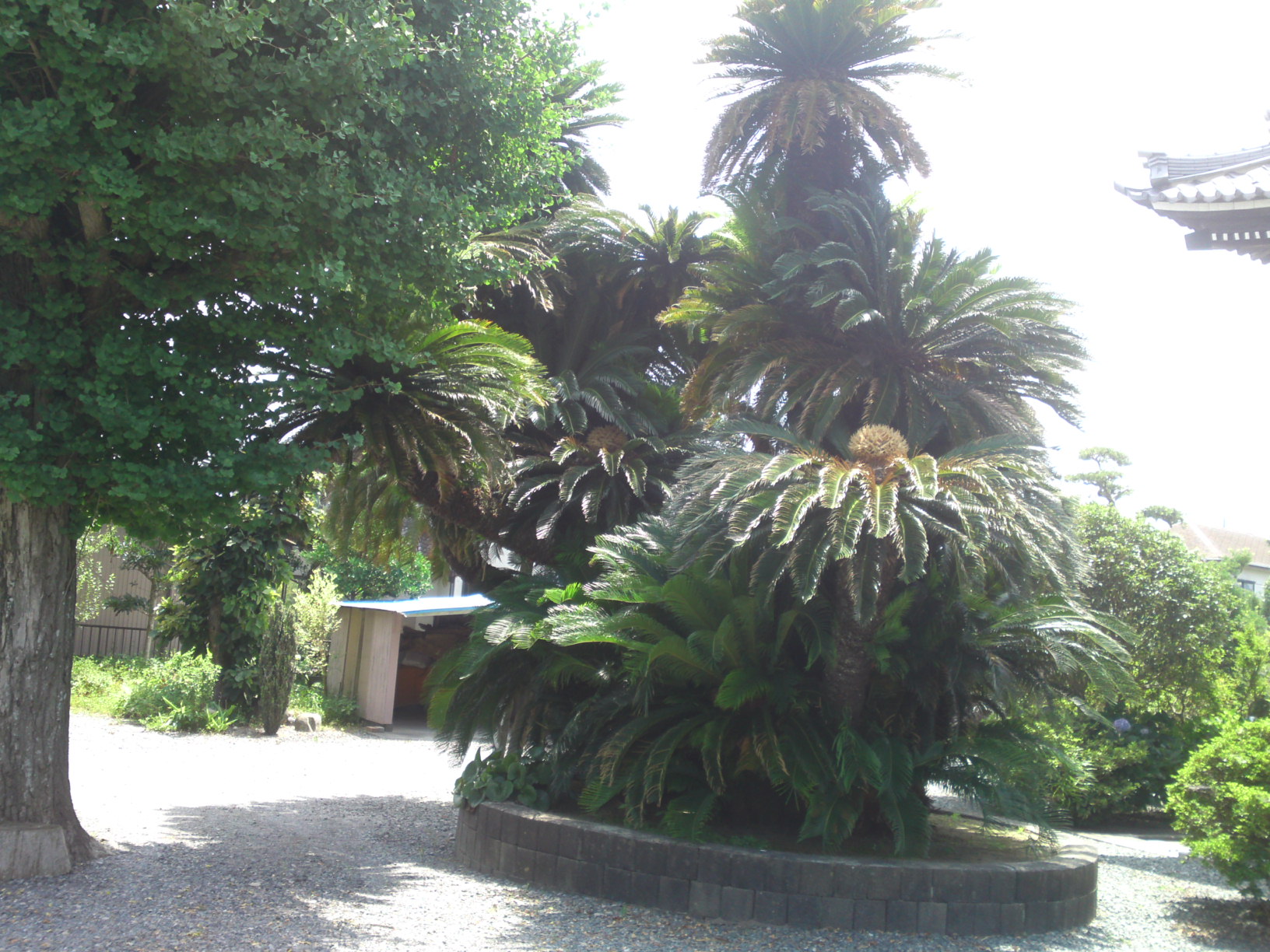
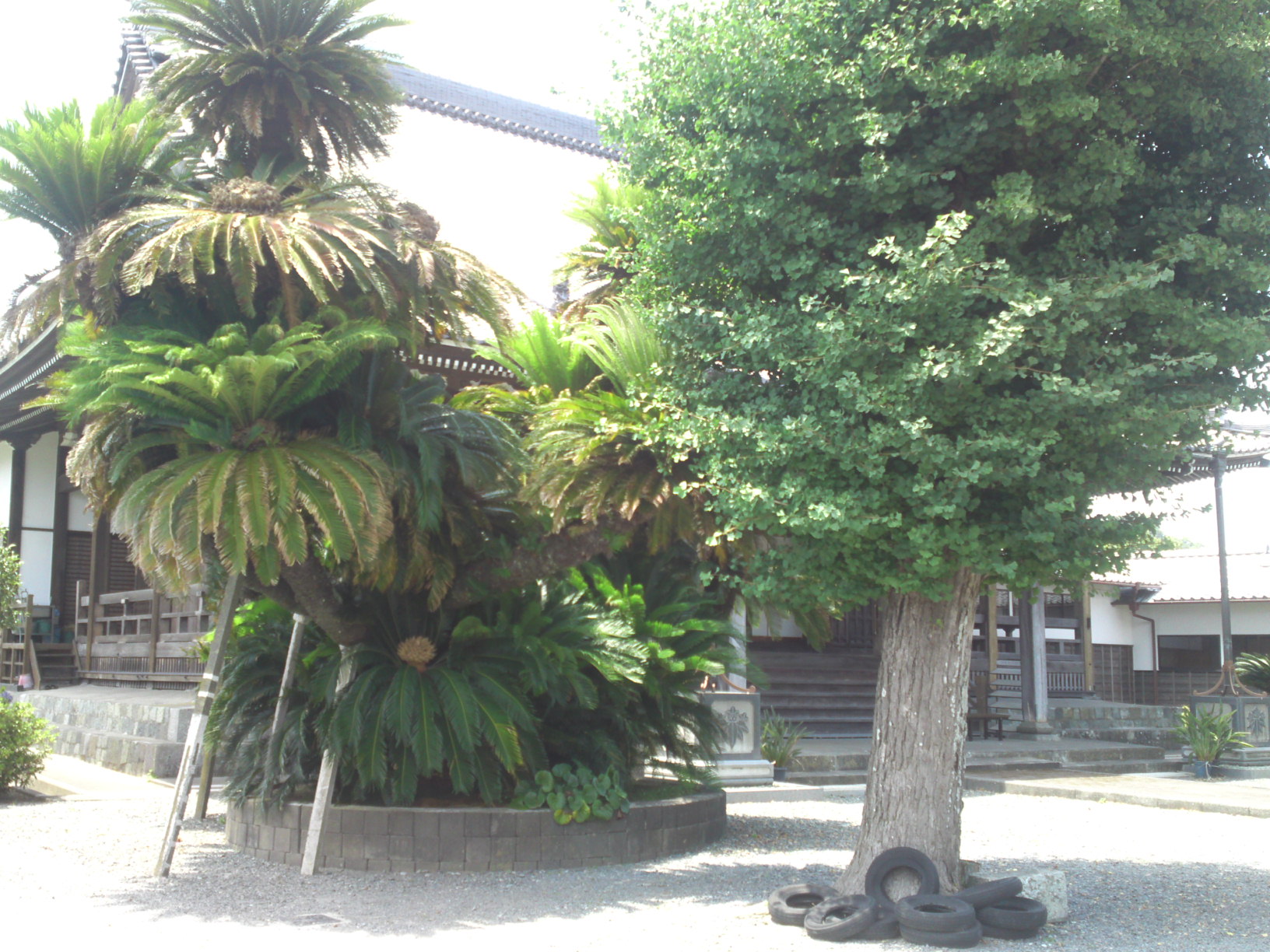
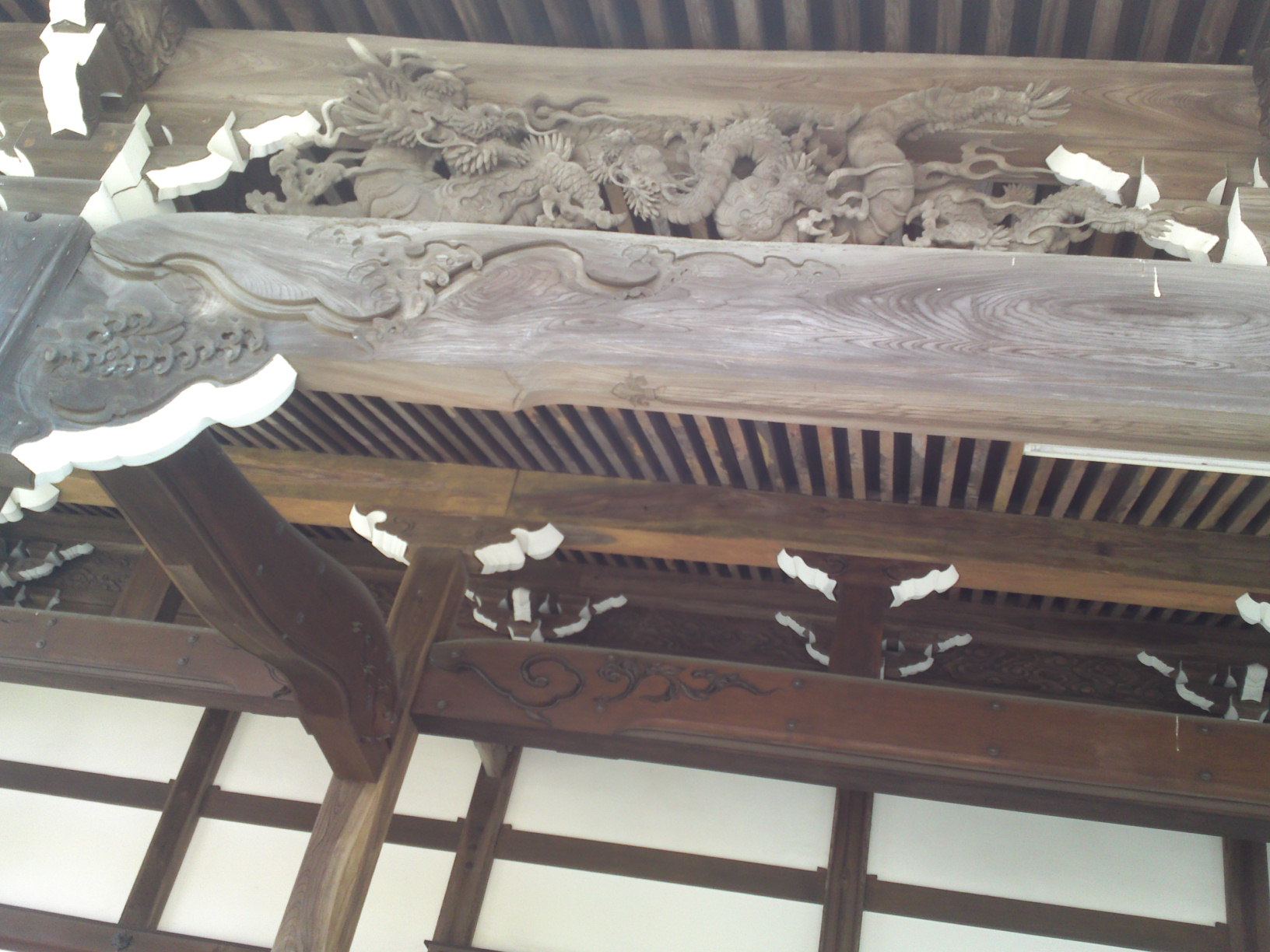
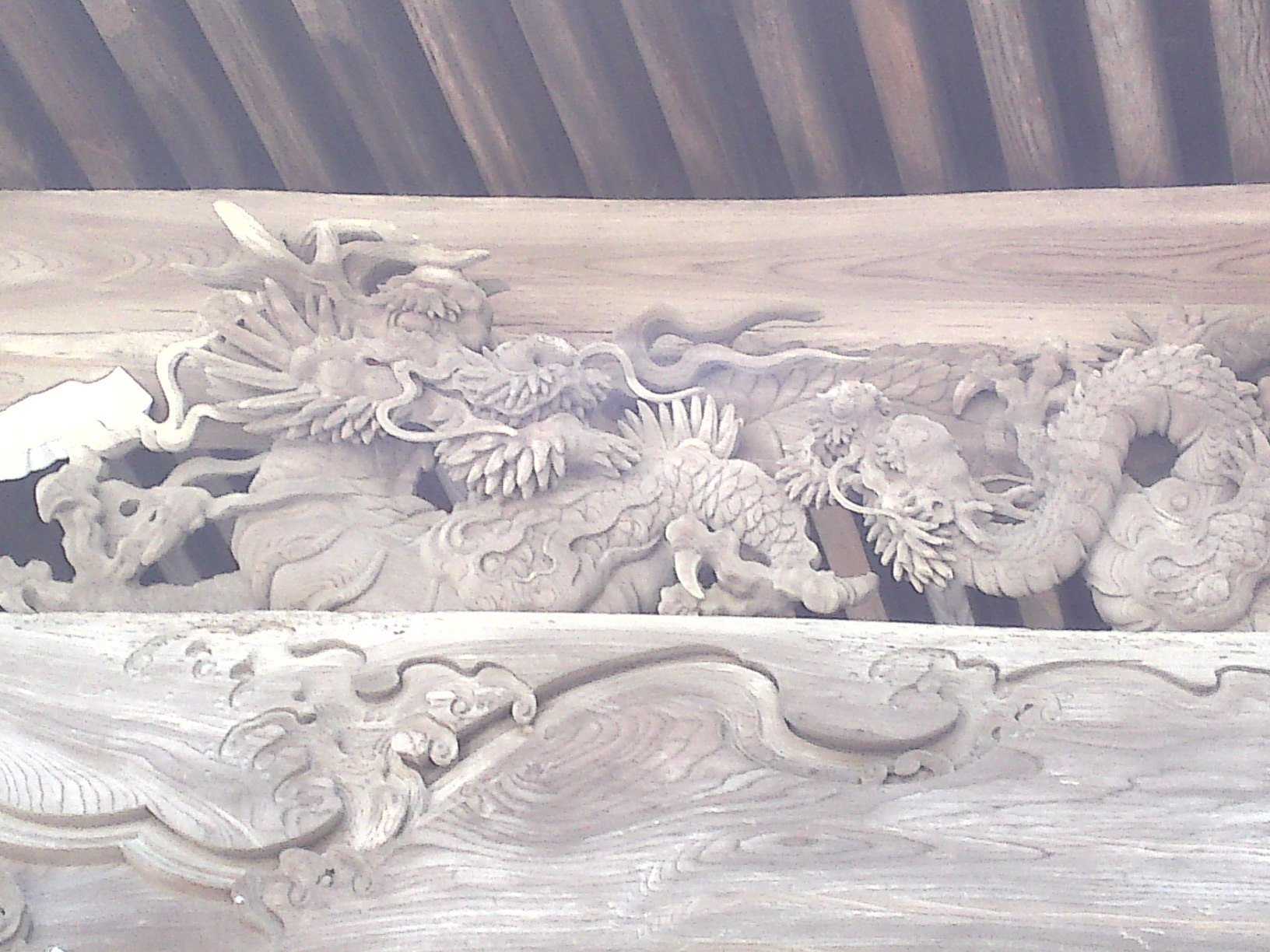
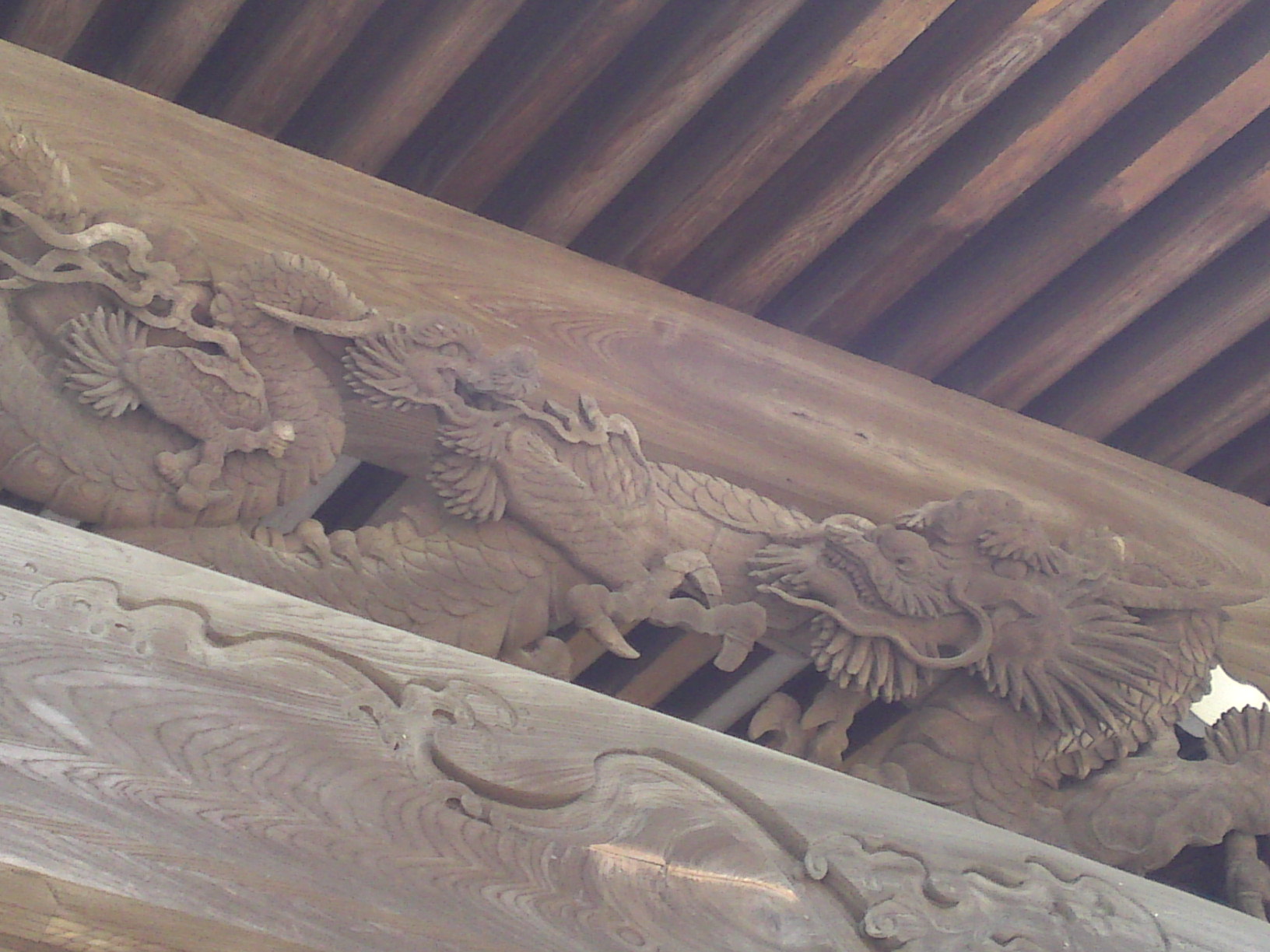
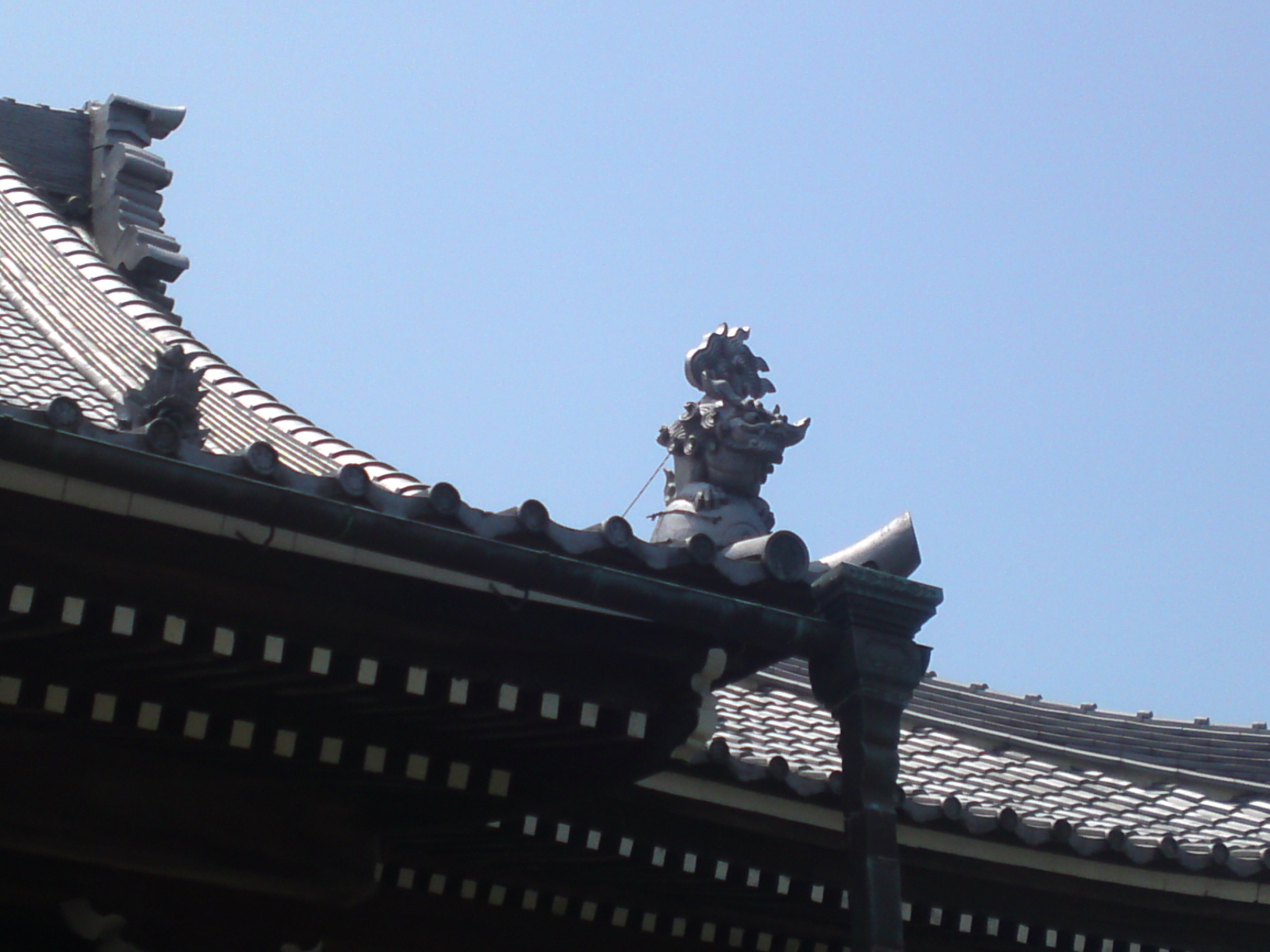
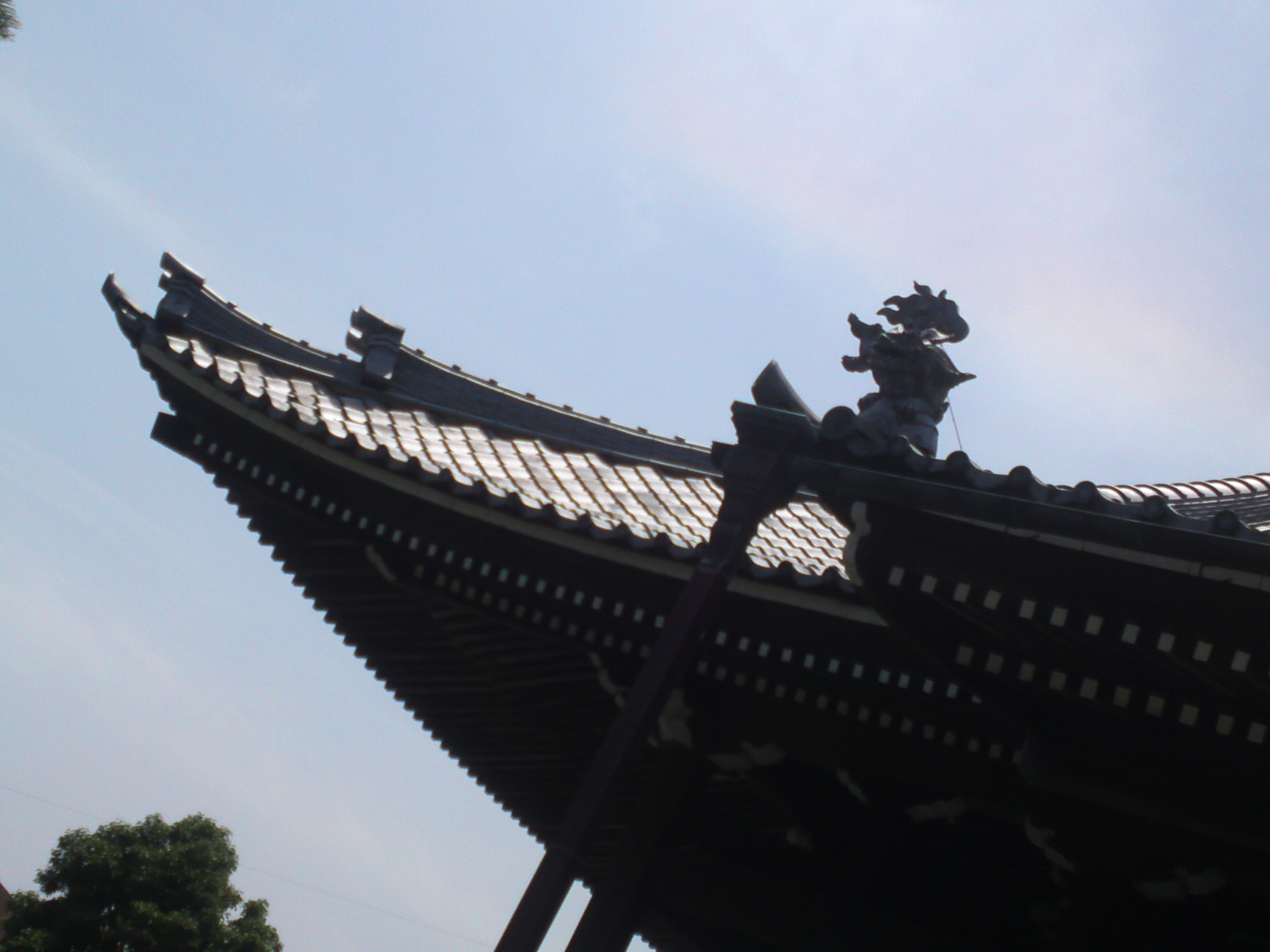
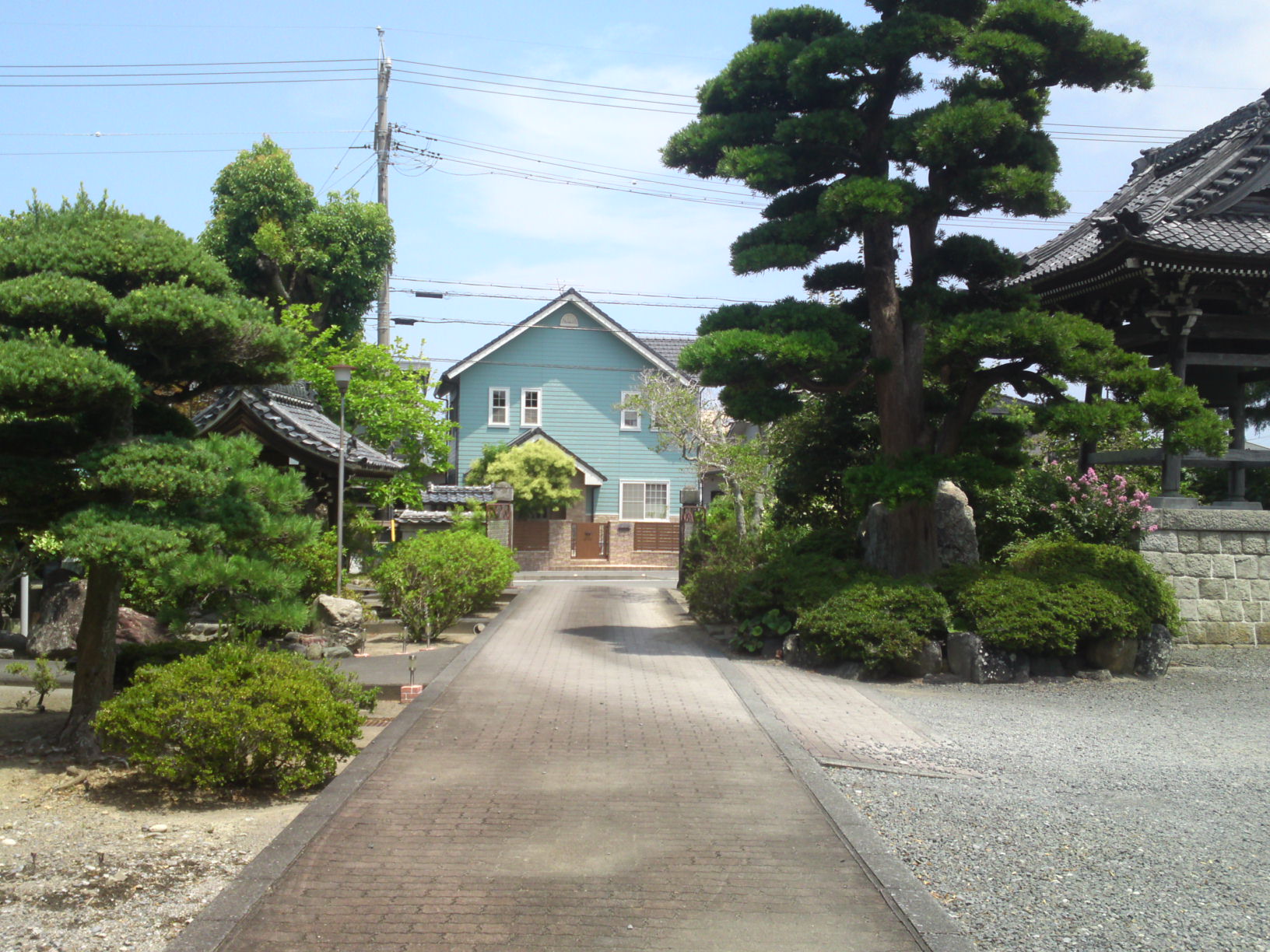
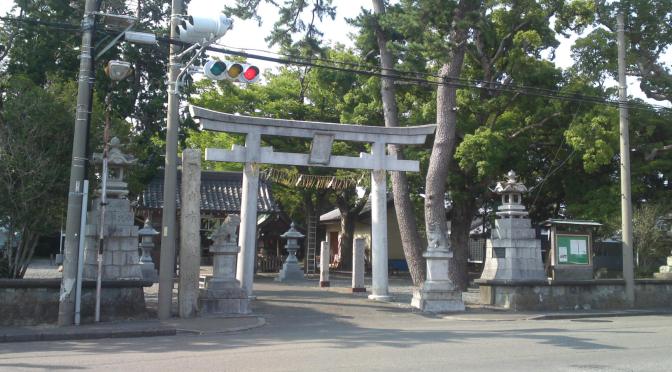
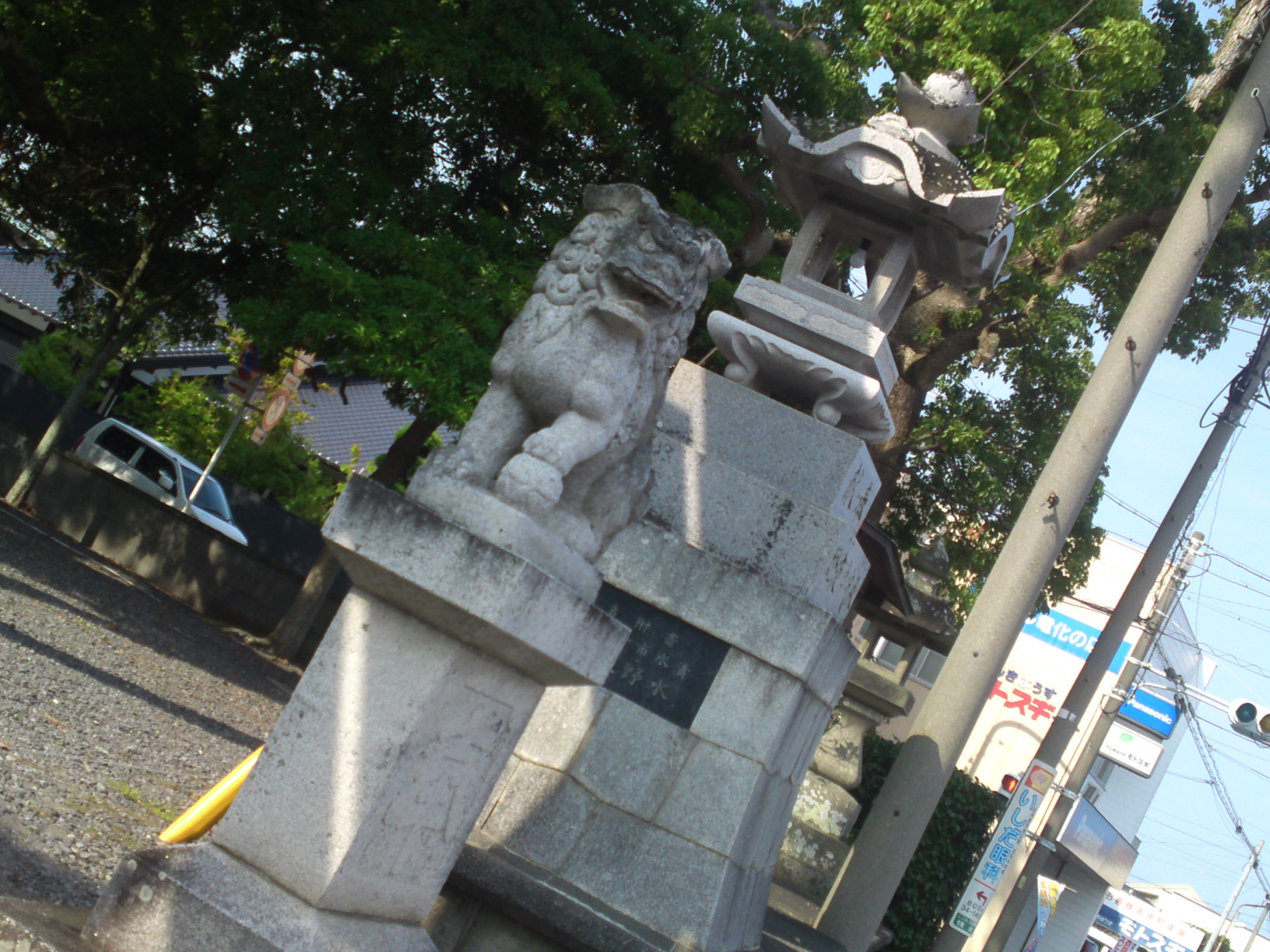
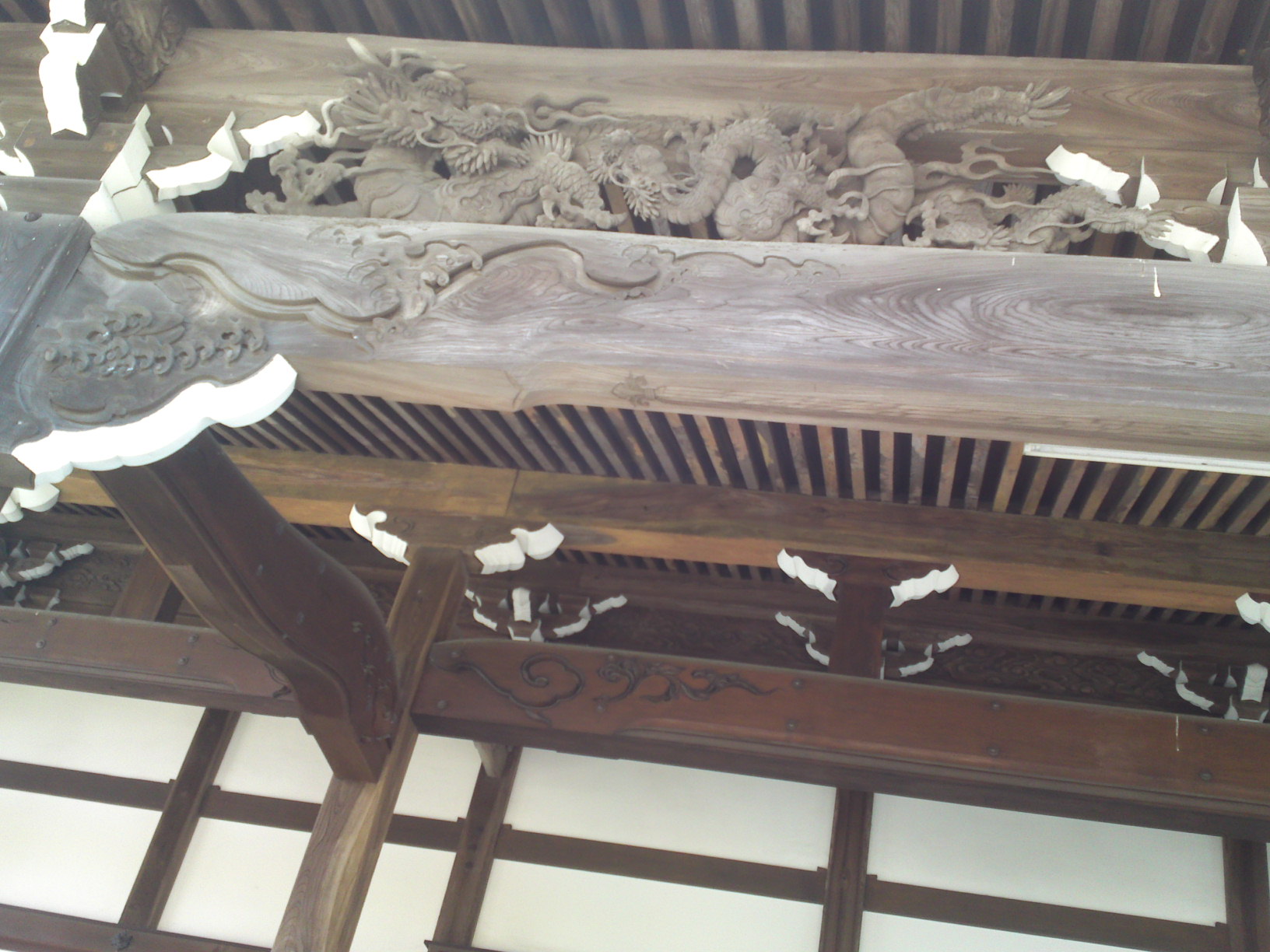
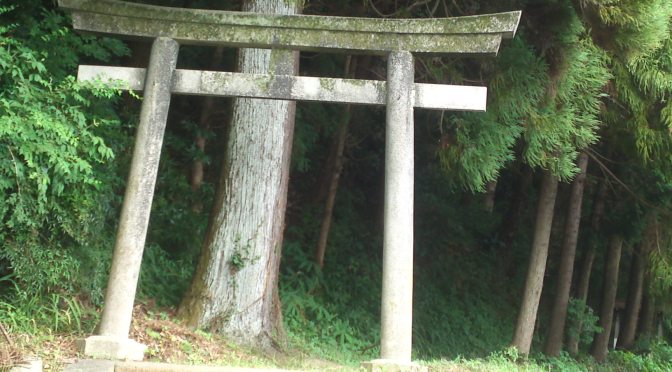
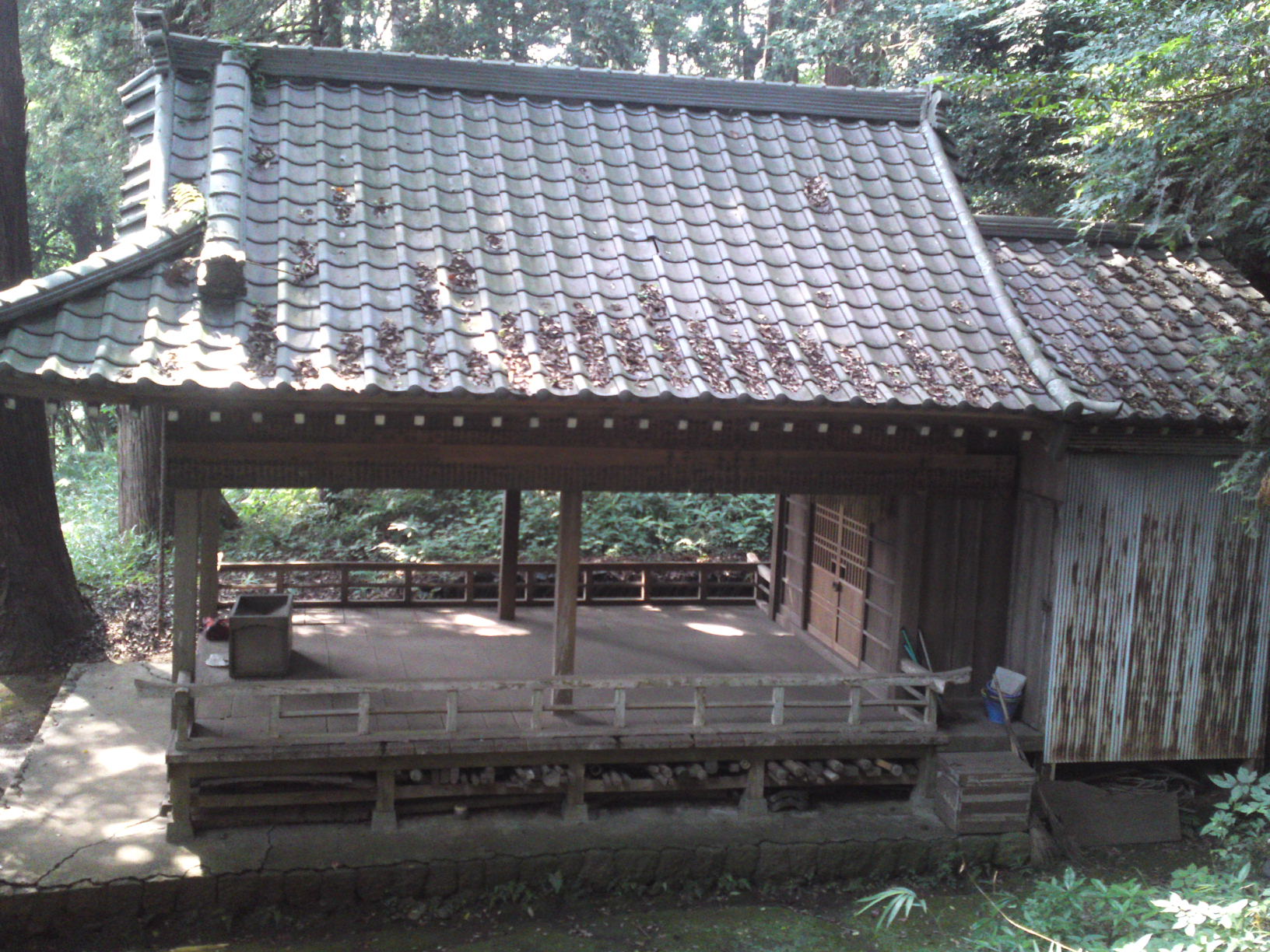
The other day as I walked towards Shizunami beach from Shizunami bus station I noticed this Buddhist Temple along the way.
As I had plenty of time on hand and I was looking for some momentary shade from the blazing sun i decided to have a look around!
Contrary to Shinto shrines Buddhist temples have long names!
Shinshuu Ootaniha Daishin Kaizan Myoushyouji Temple or 真宗大谷派大心海山明照寺!
In the countryside the difference between temples and shrines is tenuous in architecture and facilities.
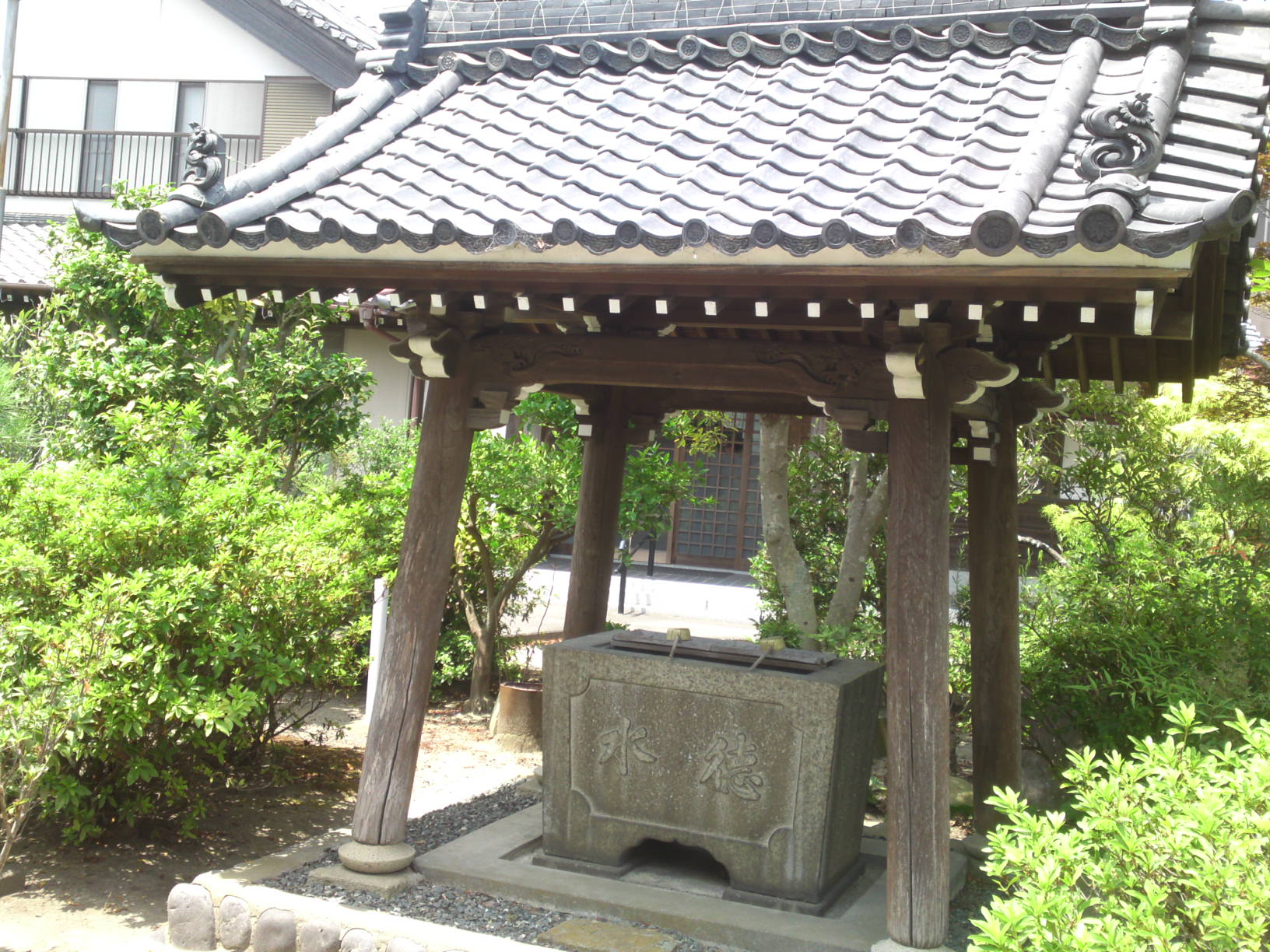
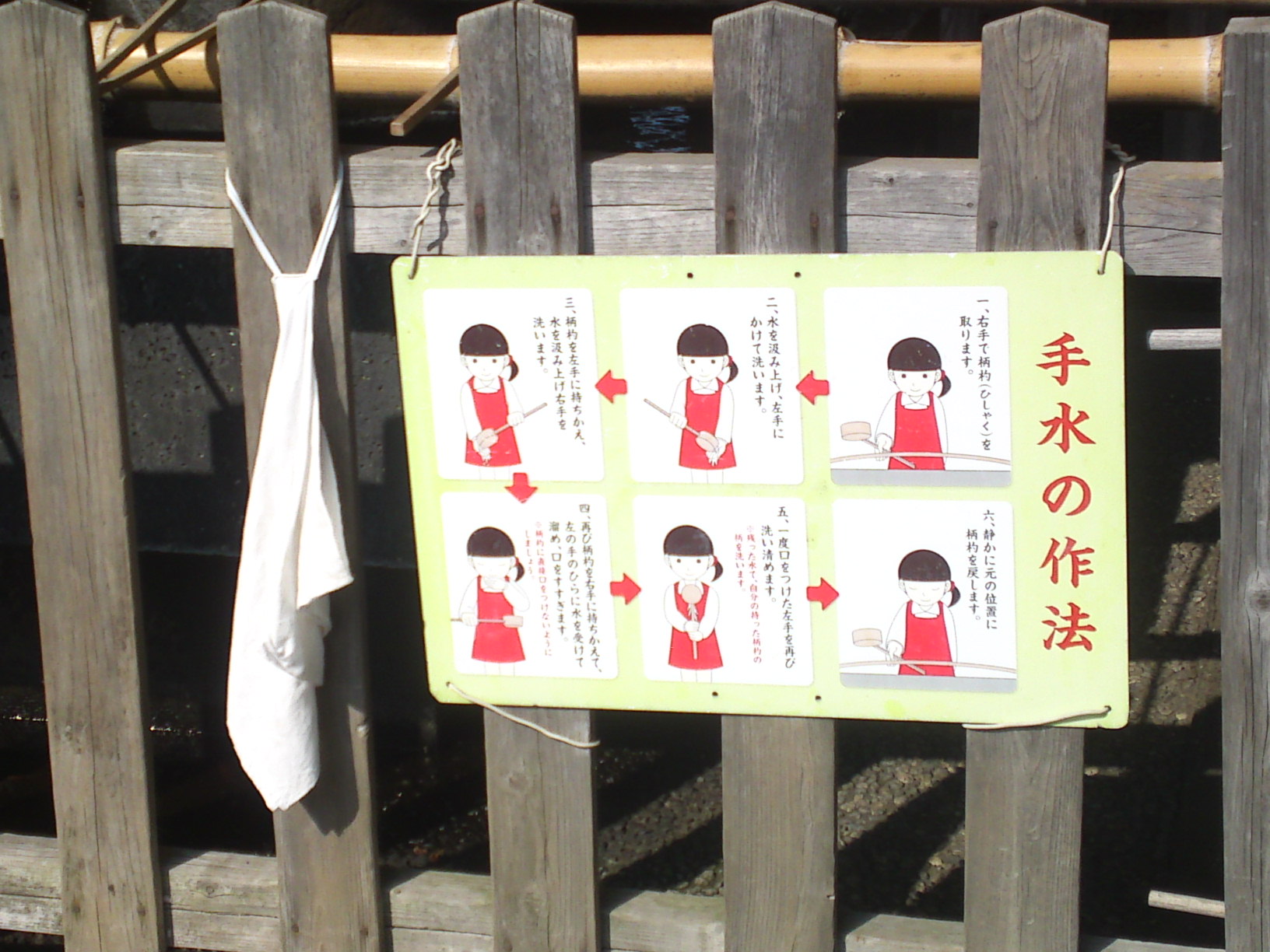
For example a hand washing stone basin is not that common in Buddhist Temples.
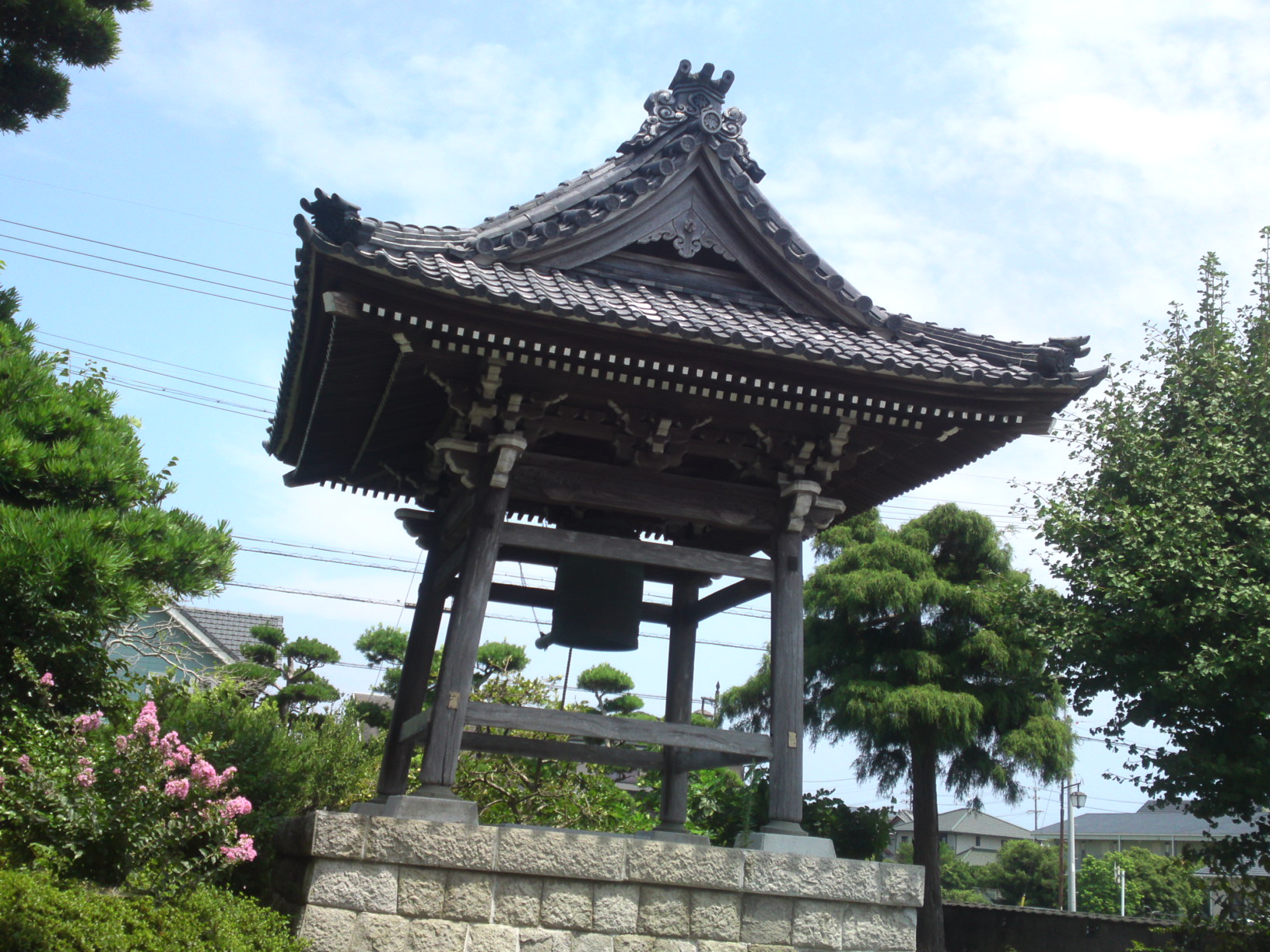
Now, this bell tower is typical of a Buddhist temple!
I thought that such a lexicon would become handy both for English-speaking newcomers and long term residents!
I wrote the Japanese pronunciation first, the Chinese (Japanese kanji) characters and the English translations.
Bear in mind that many seafood have many names depending on the Japanese region. These are the common names.
If you have a question I will be glad to investigate!
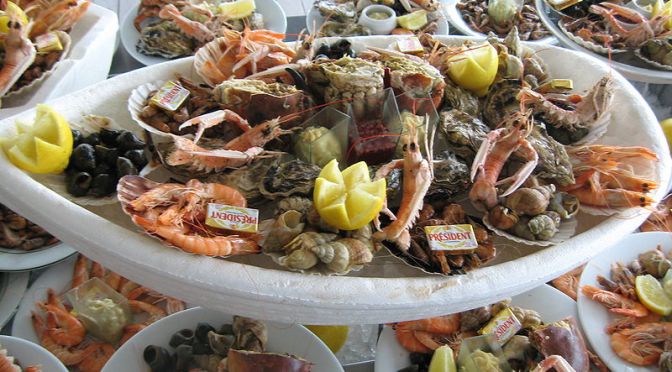
By seafood I meant everything used as food from the sea except fish which is treated in a separate article!
A separate lexicon is being prepared for sushi!
———————————————– CRABS
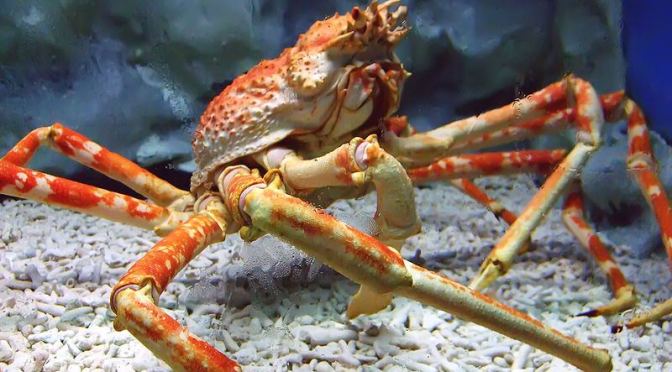
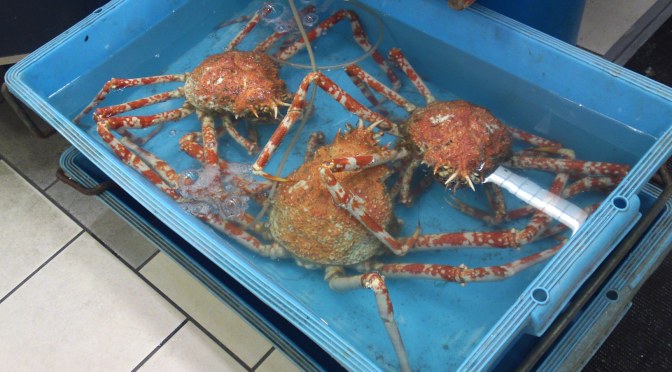
Takaashigani/高足蟹: Japanese spider crab, the largest crab in the world!
Aburagani/油蟹: blue king crab
Asahigani/旭蟹: frog crab, red frog crab
Benigani/紅蟹: another name for a Japanese variety of Zuwaigani/頭矮蟹: Snow crab
Gazami/蝤蛑(also called Wataraigani/渡り蟹): Swimming crab、Japanese blue crab
Kegani/毛蟹: Horsehair crab, Horse crab
Kurigani/栗蟹: Helmet Crab
Mozukugani/藻屑蟹: Japanese mitten crab
Taiwan gazami/台湾蝤蛑: Swimming blue crab, flower crab, blue crab, blue swimmer crab. blue manna crab
SN3O0199
Takaashigani/高足蟹: Japanese spider crab
Tarabagani/鱈場蟹: red king crab
Wataraigani/渡り蟹 (also called Gazami/蝤蛑): Swimming crab、Japanese blue crab
Zuwaigani/頭矮蟹: Snow crab
SHELLFISH
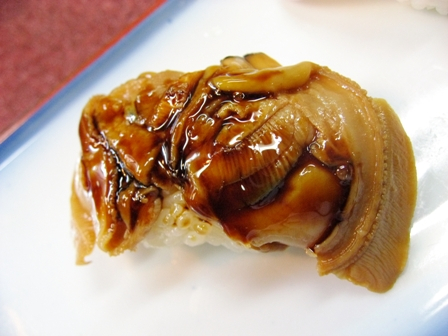
Hamaguri/蛤: Common orient clam as sushi!
Agemaki/揚巻: jack knife clam, sinonovacula constricta
Akaawabi/赤鮑 (also called Megaiawabi/目外鰒): a big variety of red abalone, haliotis (nordotis) gigantean Gmelin, 1791
Akagai/赤貝: Blood shellfish
Akanaeawabi/茜鮑: red abalone, Haliotis (Nordotis) rufescens Swainson
Aoyagi/青柳: Chinese mactra (also called Bakagai/破家蛤)
Atsuezobora/厚蝦夷法螺: a variety of buccinum whelk, neptunea helos (Gray, 1850)
Asari/浅利: Japanese littleneck, Manila clam
Awabi/鮑: abalone
Bai (or Baigai)/ 蛽、海蠃、海螄 : Japanese ivory shell, Japanese Babylon (also called Umi Tsubo/海つぼ)
Bakagai/破家蛤:Chinese mactra (also called Aoyagi/青柳)
Bateira/馬蹄螺: Top-shell (also called Isomono/いそもの)
Chigai/稚貝: small Scallops
Chiri awabi/チリ鮑: abalone imported from Chile
Ezo Awabi/蝦夷鰒: ezo abalone
Ezobai/蝦夷バイ: Small whelk variety Buccinum middendorff Verkruzen, 1882 (also called Iso Tsubugai/磯つぶ貝)
Hamaguri/蛤: Common orient clam
Himeshakogai/姫硨磲貝: a small Okinawan tridacninae, tridacna crocea
Hiougikai/緋扇貝: noble scallop
Hokkigai/北寄貝: Sakhalin surf clam (also called Ubagai/姥貝)
Honbinosugai/ホンビノスガイ: hard clam, Northern quahog
SN3O0012
Hotate/帆立: scallops
Ishigakigai/石垣貝: clinocardium californiense
Isomono/いそもの: Top-shell (also called Bateira/馬蹄螺)
Iso Tsubugai/磯つぶ貝: Small whelk variety Buccinum middendorff Verkruzen, 1882 (also called Ezobai/蝦夷バイ)
Kaki/牡蠣: oyster
Kuro awabi/黒鰒: black abalone
Madaka awabi/まだか鰒: madaka abalone
Mategai/馬刀貝: razor clam
Matsubu/真螺: whelk
Megai awabi/雌貝鰒 (also called Akaawabi/赤鮑): Megai abalone, a big variety of red abalone, haliotis (nordotis) gigantean Gmelin, 1791
Mirugai/海松貝: mirugai clam, (type of) horse clam, (type of) gaper clam (also called Mirukui/海松食、水松食)
Mirukui/海松食、水松食 8also called Shiromiru/白海松): mirugai clam, (type of) horse clam, (type of) gaper clam
Oomategai/大馬刀貝: larger razor clam
Oomizogai/大溝貝: siliqua alta
Rokogai/ロコ貝/ Baranacle Rock-shell, Concholepas concholepas (Bruguie, 1789)
Saragai/皿貝 (also called Shirogai/白貝): northern great tellin,megangulus venulosa (Schrenk)
Satougai/佐藤貝: bloody clam, Scapharca satowi (Dunker,1882)
Sazae/栄螺、拳螺: Horned Turban
Shirobai/白蛽、白海蠃、白海螄: white Japanese ivory shell, white Japanese babylon
Shirogai/白貝 (also called Saragai/皿貝): northern great tellin,megangulus venulosa (Schrenk)
Shiromiru/白海松 (also called Mirukui/海松食、水松食): mirugai clam, (type of) horse clam, (type of) gaper clam
Sudaregai/すだれ貝: Venus clam
Tairagai/平貝 (also called Tairagi/玉珧): pen shell
Tairagi/玉珧 (also called Tairagai/平貝): pen shell
Tokobushi/床臥, 常節: small ablone, Sulculus diversicolor supertexta
Torigai/鳥貝: Heart Clam、Japanese Cockle
Tsubugai/螺貝 (or Tsubu/螺): whelk
Ubagai/姥貝: Sakhalin surf clam (also called Hokkigai/北寄貝)
Umi Tsubo/海つぼ: Japanese ivory shell, Japanese Babylon(also called Bai (or Baigai)/ 蛽、海蠃、海螄 )
Yakougai/夜光貝: Great Green Turban
CRUSTACEANS
SN3O0290
Botan ebi/牡丹海老: Large Prawn
Aka ebi/赤海老: Red rice prawn, whiskered velvet shrimp
SN3O5189
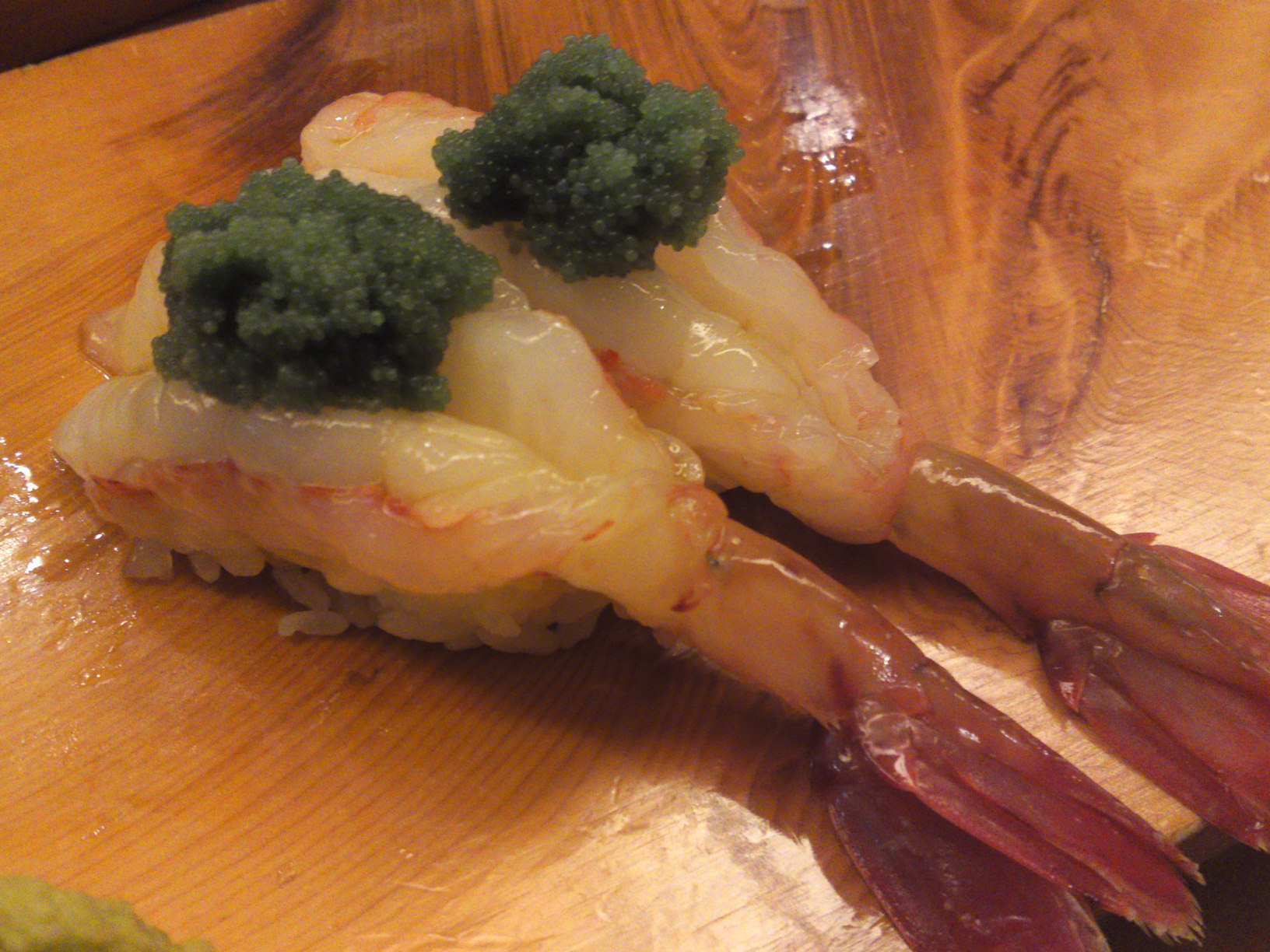
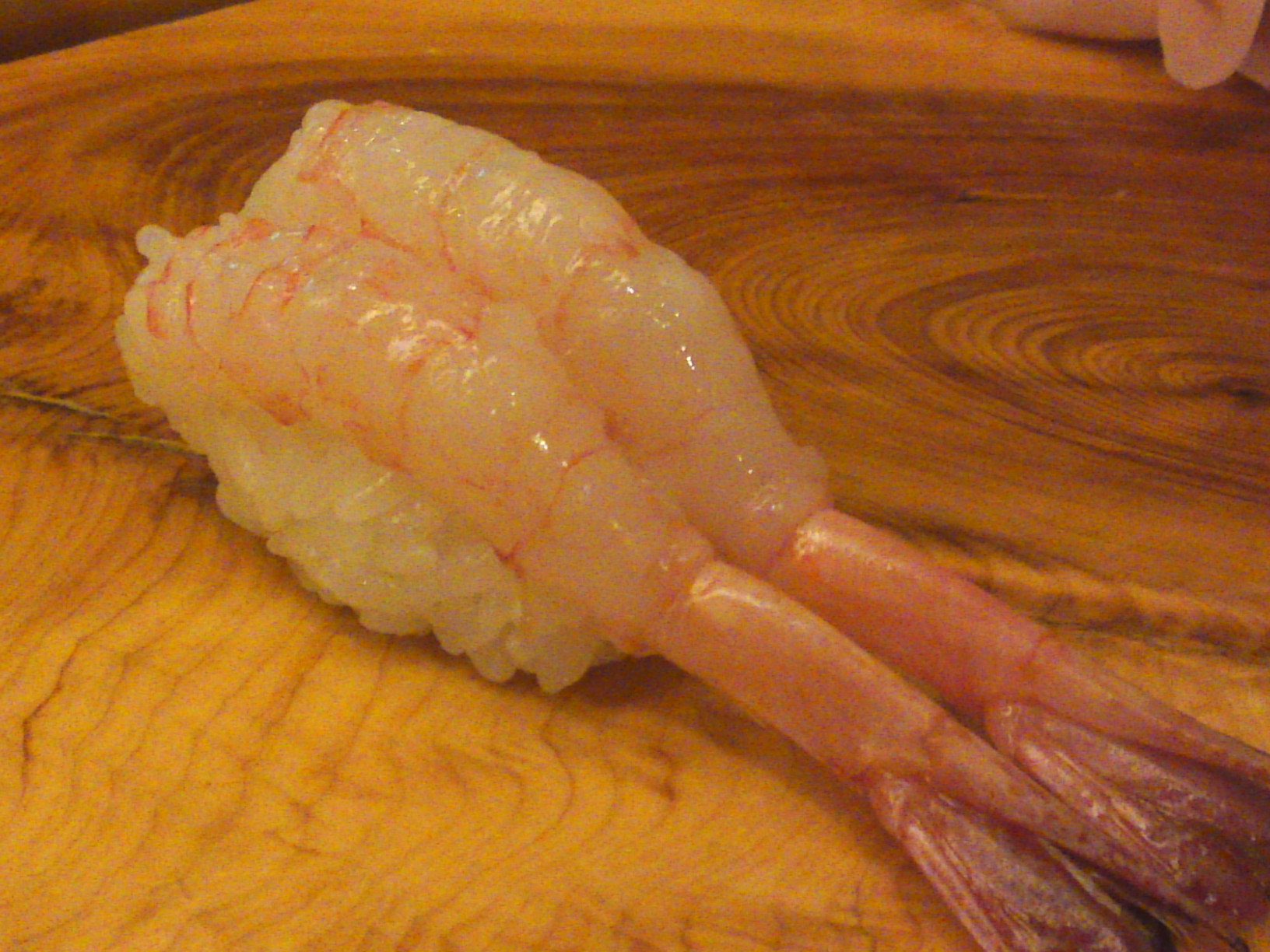
Ama ebi/甘海老: sweet shrimp
Ashiaka ebi/足赤 (also called Kuma ebi/クマエビ): Green tiger prawn, Penaeus (Penaeus) semisulcatus De.Haan.1844
Botan ebi/牡丹海老: Large Prawn
Budou ebi/葡萄海老: “Grape shrimp”, pandalopsis miyakei hayashi
Burakku Taigaa ebi/ブラックタイガー海老: black tiger prawn
Ebi/海老、蝦、鰕: prawn, shrimp
Hokkai ebi/北海海老 (also called Shima ebi/縞海老): hokkai shrimp
Ibaramo ebi/茨藻海老(also called Oni ebi/鬼海老):spiny lebbeid, Greenland lebbeid
Ise ebi/伊勢海老: spiny lobster
Kuma ebi/クマエビ(also called Ashiaka/足赤): Green tiger prawn, Penaeus (Penaeus) semisulcatus De.Haan.1844
Kuruma ebi/車海老 (also called Saimakiebi/才巻き海老): large prawn
Oni ebi/鬼海老 (also called Ibaramo ebi/茨藻海老):spiny lebbeid, Greenland lebbeid
Saimakiebi/才巻き海老 (also called Kuruma ebi/車海老): large prawn
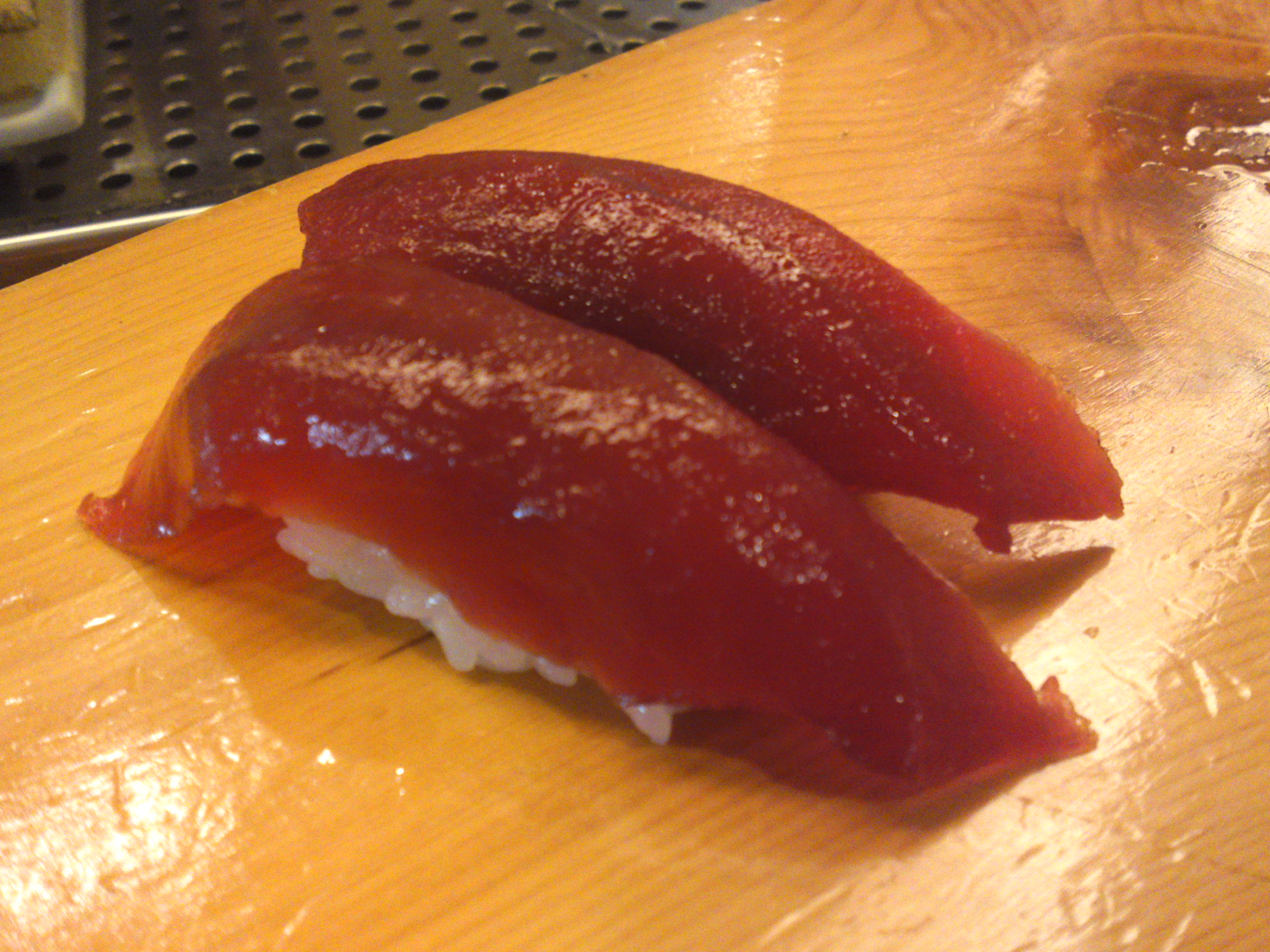
Akami/赤身: red lean part nigiri
Akami/赤身: red lean part
Chuutoro/中トロ:semi fat part
Chiai/血合い: the whole bloody central part of tuna, never used in sushi
Chiai gishi/血合いぎし: the bloody central part under the skin of tuna, never used in sushi
Engawa/縁側: border flesh of the fillets, especially with soles and flatfish
Fukahire/鱶ヒレ: shark fin
Ho/頬: “Cheek”, flesh near mouth (tuna in particular)
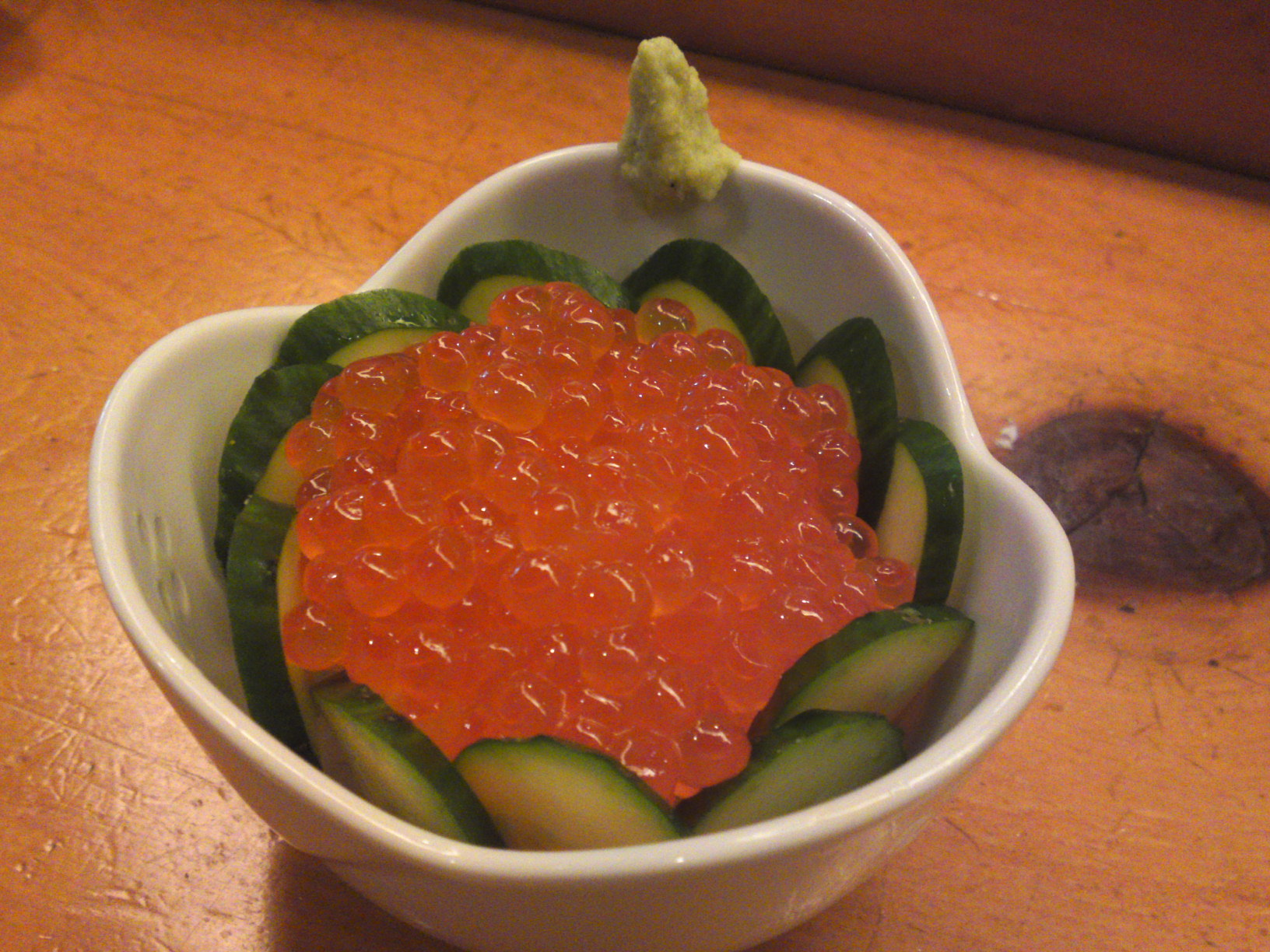
Ikura/いくら: salmon roe
Kama/かま: Flesh near the gills (tuna in particular)
Kami/上: part/flesh of a fish from the head (tuna in particular)
Kaperinko/カぺリン子: the eggs of a variety of Shishamo/柳葉魚: Shishamo (meaning willow leaf fish, a kind of Japanese smelt), Spirinchus lanceolatus
Kazunoko/数の子、鯑: herring roe
Madarako/真鱈子: Pacific cod roe
Mentaiko/明太子: spicy cod roe
Naka/中: central part/flesh of a fish (tuna in particular)
SN3O2973
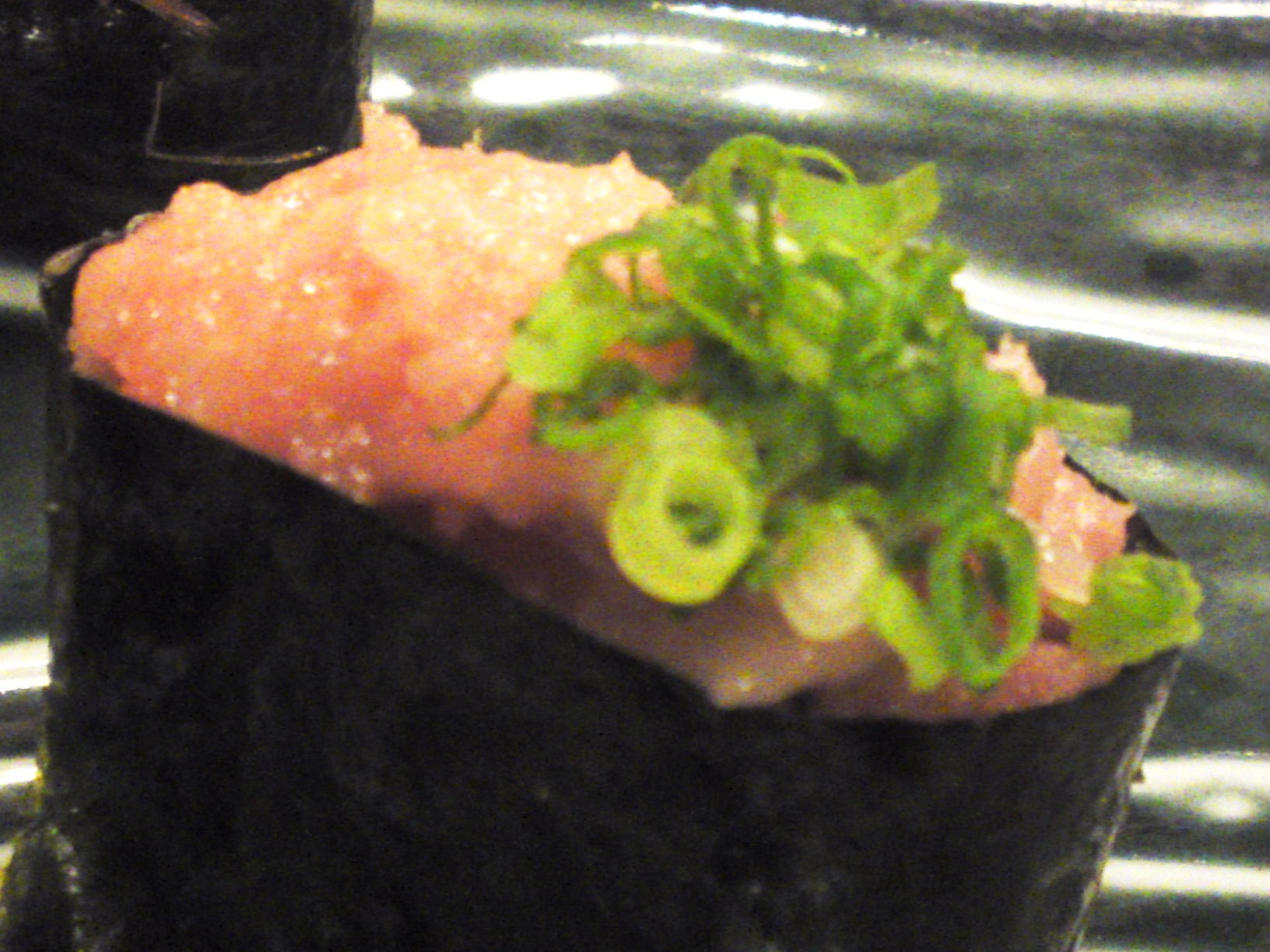
Negitoro/ネギトロ: scraped underbelly part gunkan nigiri
Negitoro/ネギトロ: scraped underbelly part
O-Toro/おトロ: fat part, belly part
Shimo/下: part/flesh of fish near the tail (tuna in particular)
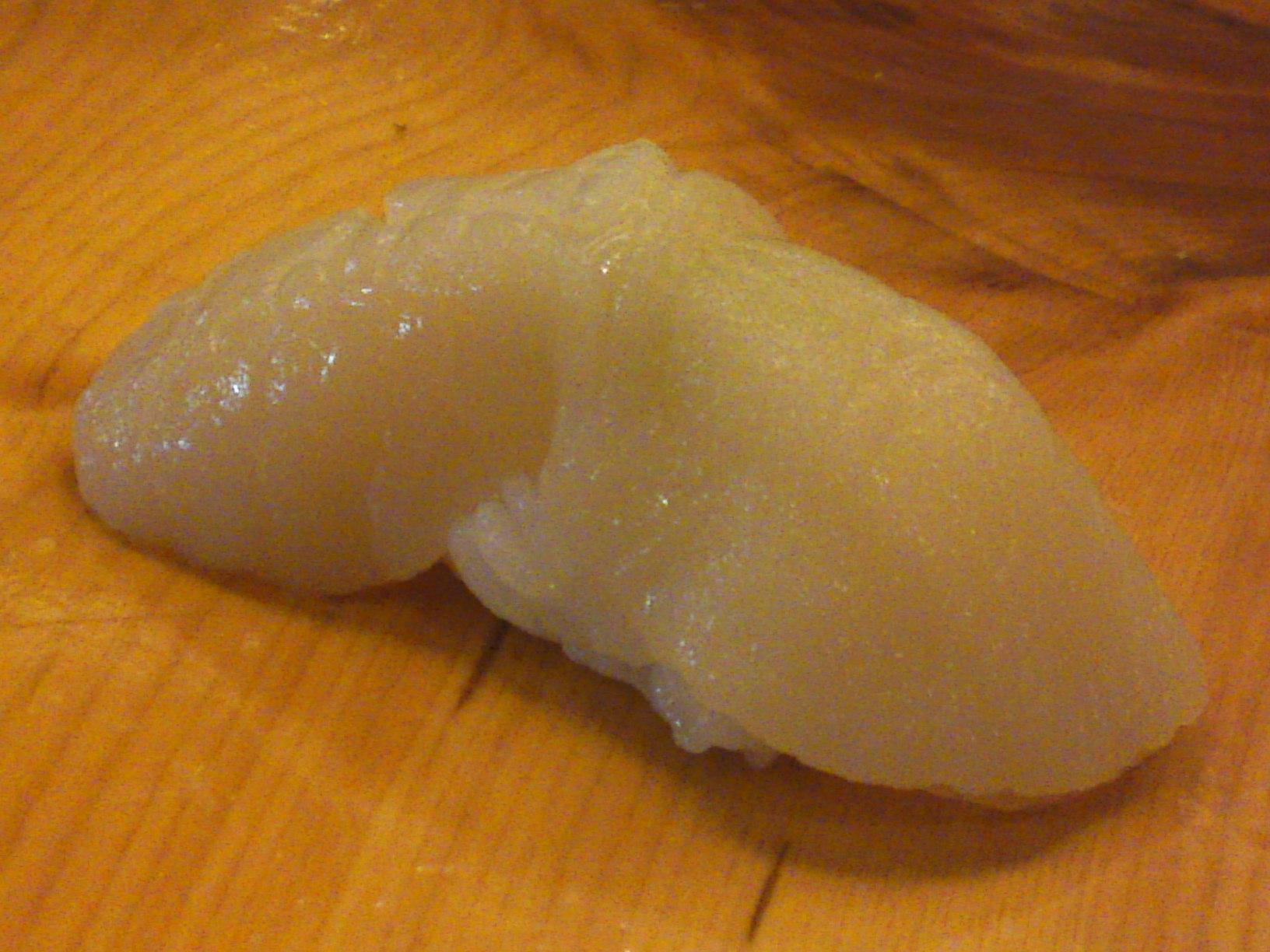
Sumiika/墨烏賊: Cuttlefish, Sepia (Platysepia) esculenta Hoyle,1885
Shimesaba/〆鯖: pickled mackerel, a popular way to serve it as sashimi or sushi
SN3O2974
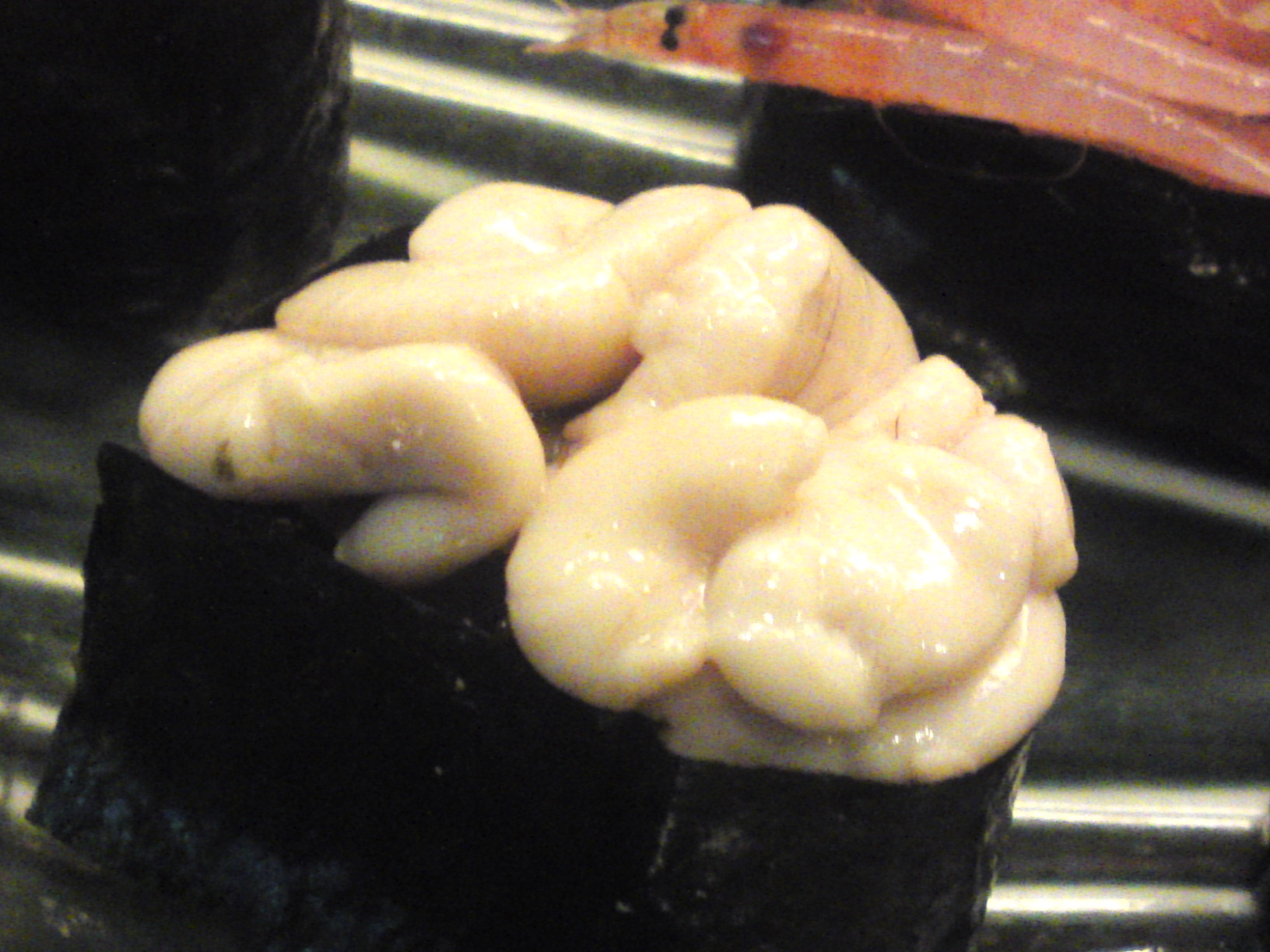
Tara Shirako/白子: Cod Male fish whiting, sperm sacs gunkan nigiri
Shirako/白子: Male fish whiting, sperm sacs
Tarako/鱈子: Cod roe
Tobiko/飛子: flying fish roe
SQUIDS/CUTTLEFISH
SN3O0375
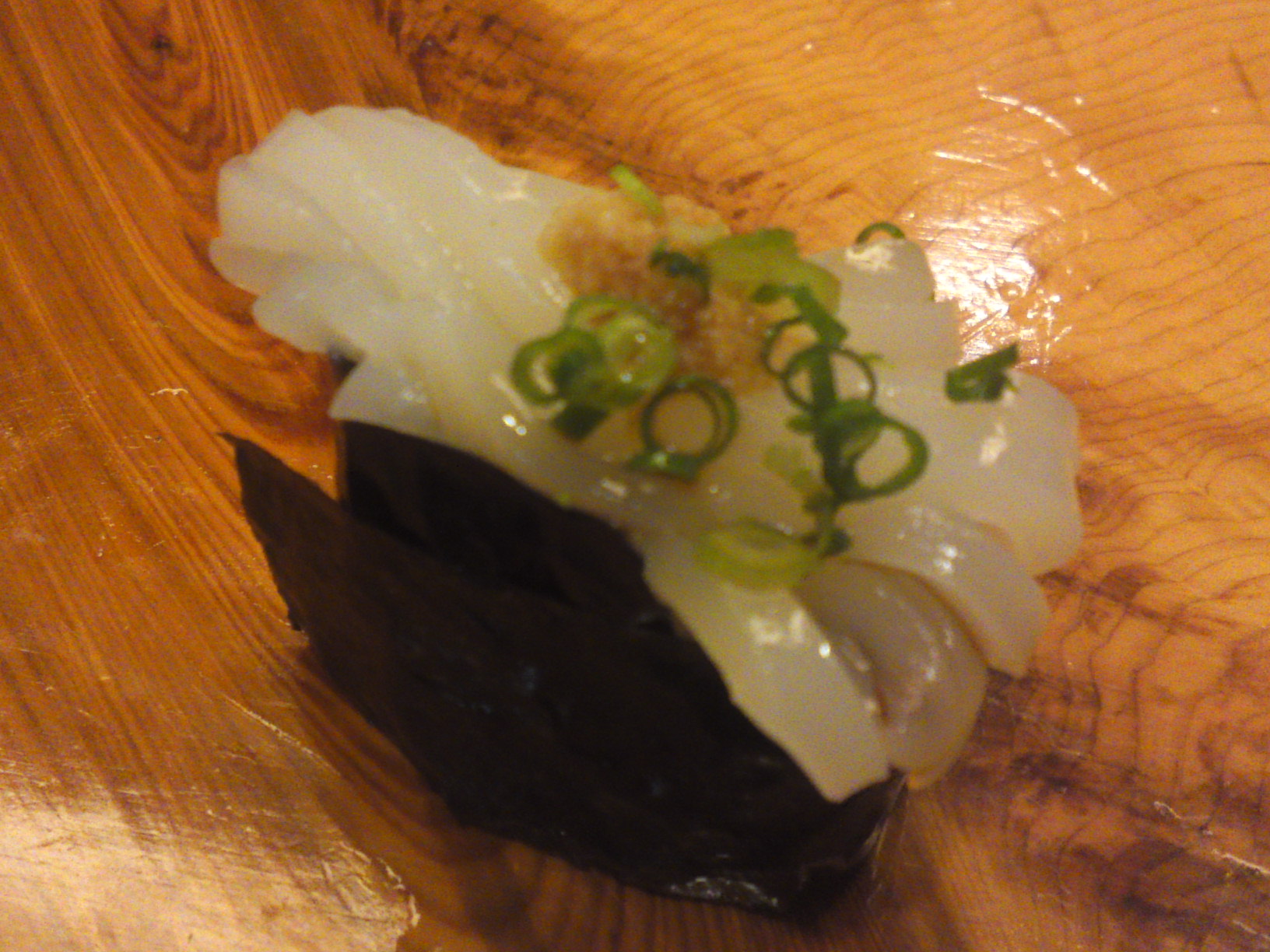
Aka Ika/赤烏賊: red spear squid gunkan nigiri
Aka Ika/赤烏賊: red spear squid
Aori ika/障泥烏賊 (also called Mizu ika/水烏賊): bigfin reef squid
Beika/米烏賊: a variety of spear squid loliolus (nipponololig) beka sasaki, 1929
Bozu ika/ボウズ烏賊: North Pacific bobtail, rossia (rossia) pacifica Berry, 1911
Budou ika/葡萄烏賊 (also called Kensaki ika/剣先烏賊: swordtip squid: “Grape squid”, Loligo (photololigo) forma budo Wakiya and Ishikawa, 1921
Ezohariika/蝦夷針烏賊: Andrea cuttlefish, Sepia (Doratosepion) andreana Steenstrup,1875
Hakutenkouika/泊天甲烏賊: Sepia (Doratosepion) aureomaculata Okutani & Horikawa, 1987
Hiika/
Himekouika/姫甲烏賊:Kobi cuttlefish, Sepia (Doratosepion) kobiensis Hoyle, 1885
Hotaru ika/蛍烏賊:
Hiika/ヒイカ( also called Shindo ika/深度烏賊: A variety of Sumiika/墨烏賊): Chinese ink cuttlefish, Sepia (Platysepia) esculenta Hoyle,1885
Ika/烏賊、魷: cuttlefish, squid
Kaminari ika/雷烏賊: Kisslip cuttlefish, Sepia (Acanthosepion) lycidas Gray, 1849
Kensaki ika/剣先烏賊: swordtip squid (also called Budou ika/葡萄烏賊: “Grape squid”), Loligo (photololigo) forma budo Wakiya and Ishikawa, 1921
Kou ika/子烏賊 (also called Mongouika/紋甲烏賊): Golden cuttlefish, Sepia (Platysepia) esculenta Hoyle, 1885
Mizu ika/水烏賊 (also called Aori ika/障泥烏賊): bigfin reef squid
Mongouika/紋甲烏賊 (also called Kou ika/子烏賊): Golden cuttlefish, Sepia (Platysepia) esculenta Hoyle, 1885
Shindo ika/深度烏賊: A variety of Sumiika/墨烏賊 (also called Hiika/ヒイカ): Chinese ink cuttlefish, Sepia (Platysepia) esculenta Hoyle,1885
Shiriyake ika/尻焼け烏賊: Japanese spineless cuttlefish, Sepiella japonica Sasaki, 1929
Sode ika/袖烏賊:Rhomboid squid, Thysanoteuthis rhombus Troschel, 1857
Suji ika/筋烏賊: Luminous flying squid, ucleoteuthis luminosa (Sasaki, 1915)
Sumiika/墨烏賊: Chinese ink cuttlefish, Sepia (Platysepia) esculenta Hoyle,1885
Surume/鯣: dried cuttlefish, squid
Surume ika/鯣烏賊: Japanese flying squid, Japanese common squid, Pacific flying squid
Usubeni ika/薄紅烏賊: “light red cuttlefish”
Yariika/槍烏賊: Spear Squid
Octopuses
Chiirodako/知色鮹: Chiiro octopus
Iidako/飯蛸: Ocellated octopus
Madago/真鮹: Common octopus
Mizudako/水鮹: North Pacific Giant Octopuss
Tako/蛸、鮹: octopus
I thought that such a lexicon would become handy both for English-speaking newcomers and long term residents!
I wrote the Japanese pronunciation first, the Chinese (Japanese kanji) characters and the English translations.
bear in mind that many fish have many names depending on the Japanese region. These are the common names.
If you have a question I will be glad to investigate!
A separate lexicon is being prepared for all other seafood!
——————————–
Traditional Japanese Fish Classification
Akami/赤身: red-fleshed fish (tuna, bonito, etc)
Amago/アマゴ: fresh water Red spotted masu trout, Satsukimasu salmon
Gyoran/魚卵: Fish roe (salmon roe, etc)
Hikarimono/光り物: “shining fish” (scabbard fis, etc.)
Nagamono/長もの: “long fish” (eels, etc.)
Saamon/サーモン: salmons
Shiromi/白身: white-fleshed fish (sole, etc.)
Fish varieties
Aburagarei/油鰈: a cheap variety of karei/鰈: righteye flounder, atheresthes evermanni Jordan and Starks
Aodai/青鯛: “blue snapper”, paracaesio caeruleus (Katayama)
Atorantikku saamon/アトランティックサーモン: Atlantic salmon
Ainame/鮎並、愛魚女: greenling
Akahata/赤羽太: an expensive variety of red grouper, epinephelus fasciatus
Aka isaki/赤伊佐木、赤伊佐幾、赤鶏魚/Red chicken grunt
Aka jinmiidai/赤仁羽鯛 (also called Sujiara/筋𩺊): Red-spotted rockcod, Blue spotted grouper
Akakamasu/赤梭魚、赤梭子魚、赤魳 (also called Honkamasu/本梭魚、本梭子魚、本魳): red barracuda, sphyraena pinguis Gunther
Aka kasago/赤笠子、赤瘡魚: rockfish, marbled rockfish, scorpionfish
Akamanbou/赤万包 (also called Mandai/万鯛): Opah,Moonfish
Aka mebaru/赤メバル: red Japanese sea perch-rockfish
Akamutsu/赤鱫、赤鯥 (also called Nodokuro/喉黒): rosy seabass, red gnomefish
Akou/茂魚,石茂魚 (also called kijihata/雉羽太): redspotted grouper
Akoudai/赤魚鯛: rose fish
Amadai/甘鯛: tilefish
Amenouo (Biwa masu)/岩魚, 鯇、天之魚(琵琶鱒): Biwa trout, Biwa salmon (fresh water), char
Aanago/穴子、海鰻: conger eel
Ankou/鮟鱇、鮟: frogfish, monkfish
Ara/𩺊: sawedged perch
Ayu/鮎、香魚: ayu, ayu fish (fresh water)
Bachimaguro/鉢鮪 ・撥鮪(also known as Mebachi/目鉢 。眼撥or as Mebachimaguro/目鉢鮪・眼撥鮪): big-eyed tuna
Bakemaguro/化け鮪(also called Koshinagamaguro/腰長鮪): longtail tuna, longtailed tuna, spot-side tuna (the smallest tuna in Japan)
Binchoumaguro/鬢長鮪 (also known as Binnaga/鬢長 and Tonbomaguro/蜻蛉鮪): Albacore
Binnaga/鬢長 (also known as Binchoumaguro/鬢長鮪 and Tonbomaguro/蜻蛉鮪): Albacore
Biwa masu (Amenouo)/ 琵琶鱒(岩魚, 鯇、天之魚): Biwa trout, Biwa salmon (fresh water), char
Bora/鯔: mullet
Bouzu Konnnyaku/坊主蒟蒻 (also called Chikodai/チコ鯛 or Chidai/血鯛, although misleading): Chunky fathead, cubiceps squmixeps
Budai/ブ鯛: white-spotted parrotfish, Japanese parrotfish
Buri/鰤: yellowtail
Chidai/血鯛: Crimson sea-bream,Porgy
Chouzame/蝶鮫、鱘: sturgeon
Dojyou/鰌:loach
Ebisudai/恵比寿鯛: Deepwater squirrelfish, Ebisu perch, Giant squirrelfish
Ebodai (also called Ibodai)/えぼ鯛(疣鯛): Japanese butterfish, Melon seed, Wart Perch
Fuedai/笛鯛: star snapper
Fugu/鰒、河豚: Globefish
Fuka/鱶: shark
Funa/鮒: crucian carp (fresh water)
Ginzake/銀鮭: coho salmon, silver salmon
Gomasaba/胡麻鯖: blue mackerel
Goten anago/御殿穴子: a cheap variety of Anago/穴子: conger eel, arisoma meeki (Jordan and Snyder)
Hagatsuo/歯鰹: striped bonito
Hakkaku (also called Tokubire)/八角 (トクビレ): a variety of poacher, Podothecus sachi
Hamadai/浜鯛 (also called Onaga/尾長): flame snapper, longtailed red snapper, Onaga
Hamafuefukidai/浜笛吹鯛: a cheap variety of snapper, lethrinus nebulosus (Forsskal)
Hamo/鱧: pike eel
Hata/羽太: grouper, the expensive variety
Hata hata/鰰: a sandfish
Haze/蝦虎魚、鯊: goby
Hedai/平鯛: goldlined seabream-tarwhine-stumpnose
Higetara/髭鱈: snubnose brotula
Himedai/姫鯛: Crimson snapper,Sea-perch,Snapper
Hirame/平目、鮃、比目魚: sole, flatfish
Hiramasa/平政: yellowtail amberjack
Hirasaba/平鯖: chub mackerel, Pacific mackerel, blue mackerel
Hirasoudagatsuo/平宗田鰹: auxis, variety of bonito, bullet tuna
Hirasuzuki/平鱸: a variety of sea blackbass
Hokke/𩸽: Okhotsk atka mackerel, Arabesque greenling
Honkamasu/本梭魚、本梭子魚、本魳 (also called Akakamasu/赤梭魚、赤梭子魚、赤魳): red barracuda, sphyraena pinguis Gunther
Honmaguro/本鮪 (also called Kuromaguro/黒鮪): bluefin tuna
Hoshigarei/星鰈: “Star Turbot”,verasper variegatus (Temmink and Schlegel)
Houbou/方々: red gurnard, red robin
Ibodai (also called Ebodai)/ 疣鯛(えぼ鯛): Japanese butterfish, Melon seed, Wart Perch
Ikanago/玉筋魚: Japanese sand lance
Indomaguro印度鮪 (also known as Minamimaguro/南鮪): Southern Bluefin tuna
Irako anago/伊良子穴子: a cheap variety of Anago/穴子: conger eel, synaphobranchus kaupii Johnson
Isaki/伊佐木、伊佐幾、鶏魚: chicken grunt
Ishidai/石鯛: striped beakfish, barred knifejaw
Ishigaki-Ishigakidai/石垣-石垣鯛: spotted knifejaw
Ishigarei/石喰霊: stone flounder
Ishimochi/石持: silver croaker, white croaker, silver jewfish
Iso kasago/磯笠子、磯瘡魚: a variety of rockfish
Iwana/岩魚、嘉魚、鮇: char, charr
Kaiwari/貝割: whitefin trevally
Kajikimaguro/梶木鮪・旗魚鮪 (also known as Makajiki/真梶木・真旗魚): spearfish (blue) marlin
Kagokakidai/駕籠担鯛: Stripey, Microcanthus strigatus (Cuvier)
Kamasu/魳、梭魚、梭子魚: barracuda
Kanpachi/間八、環八: greater amberjack, Japanese amberjack
Karasugarei/烏鰈: Greenland halibut, Mock halibut, Bastard halibut, Black halibut, Reinhardtius hippoglossoides (Walbaum)
Karei/鰈: righteye flounder
Kasago/笠子、瘡魚: False kelpfish, Marbled rockfish
Kasugo/春子鯛: young Madai/真鯛: Japanese seabream
Katsuo/鰹: bonito
Kawahagi/皮剥: filefish, leather jacket
Kibinago/黍女子、黍魚子、吉備女子、吉備奈仔: silver-stripe round herring,
Kibire/黄鰭: yellowback seabream
Kihadamaguro/黄肌鮪 (also known as Kiwada/キワダ(Tokyo, Wakayama), Gesunaga/ゲスナガ(Shizuoka), Mashipi/マシビ(Osaka, Kochi) and Kinhire/キンヒレ: yellowfin tuna
kijihata/雉羽太(also called Akou/茂魚,石茂魚): redspotted grouper
Kinki/金色魚: Thornhead, Idiot, Sebastolobus macrochir (Gunther)
Kinmedai/金目鯛: splendid alfonsino
Kintokidai/金時鯛: red bigeye
Kisu /鱚、鼠頭魚: sand boarer
Ko Aji/子鯵: very young horse mackerel (also called Mame aji/豆鯵)
Kochi/鯒、牛尾魚: flathead
Kohada (konoshiro)/小肌(鰶・鮗・鯯・鱅): dotted gizzard shad
Koi/鯉: carp (fresh water)
Konoshiro (kohada)/小肌(鰶・鮗・鯯・鱅): dotted gizzard shad
Korodai/胡蘆鯛: a cheap variety of snapper, diagramma pictum
Kose/コセ: A variety of Stripped jack, also called Shima aji/縞鯵!
Koshinagamaguro/腰長鮪 (also called Bakemaguro/化け鮪): longtail tuna, longtailed tuna, spot-side tuna (the smallest tuna in Japan)
Koshyo (Koshiodai)/胡椒鯛: crescent sweetlips
Kuchimidai/口美鯛 (also called Menada/目奈陀・目魚): haarder, redlip mullet, Liza haematocheila (Temminck and Schlegel)!
Other names I will have to add to the lexicon!
Kue/九絵、垢穢: longtooth grouper
Kurodai/黒鯛: Japanese black porgy
Kuromaguro/黒鮪(also called Honmaguro/本鮪): bluefin tuna
Kuro Mebaru/黒眼張、黒眼張魚、黒鮴/Black Japanese sea perch
Kuromutsu/黒鱫、黒鯥: Black gnomefish
Kuro shitabirame/黒舌平目: Black Sole
Kyuusen/九線・九仙 (also called Bera/ベラ): halichoeres poecilopterus (Temminck and Schlegel) a cheap variety of snapper in Eastern Japan, but an expensive one in Western Japan
Maaji/真鯵: Japanese jack mackerel
Ma anago/真穴子 (also called Maru anago/丸穴子): a cheap variety of Anago/穴子: conger eel, conger myriaster (Brevoort)
Madai/真鯛: Japanese seabream
Madara/真鱈: Pacific cod
Magarei/真鰈: flounder, yellow striped flounder, turbot, halibut
Maiwashi/真鰯: sardine
Makajiki/真梶木・真旗魚 (also known as Kajikimaguro/梶木鮪・旗魚鮪): spear fish (blue) marlin
Makubuu/マクブー (also called Shirokurabera/シロクラベラ): Okinawa Blackspot tuskfish, Choerodon shoenleinii (Valenciennes)
Mame aji/豆鯵: very young horse mackerel (also called Ko Aji/子鯵)
Managatsuo/真魚鰹: butterfish
Mandai/万鯛 (also called Akamanbou/赤万包): Opah,Moonfish
Maruaji/丸鯵: “round horse mackerel”, decpterus akaadsi Abe
Maru anago/丸穴子 (also called Ma anago/真穴子): a cheap variety of Anago/穴子: conger eel, conger myriaster (Brevoort)
Marusoudagatsuo/丸宗田鰹: auxis, variety of bonito, frigate tuna
Masu/鱒: trout
Masunosake/鱒の介: king salmon, chinok salmon
Matoudai/的鯛、馬頭鯛: John dory, St Peter’s fish
Matsukawagarei/松川鰈: An expensive variety of Japanese Karei/鰈: righteye flounder, verasper moseri Jordan and Gilbert
Mebachi/目鉢・眼撥 (also known as Mebachimaguro/目鉢鮪・眼撥鮪or as Bachimaguro/鉢鮪・撥鮪): big-eyed tuna
Mebachimaguro/目鉢鮪 ・眼撥鮪(also known as Mebachi/目鉢 。眼撥or as Bachimaguro/鉢鮪・撥鮪): big-eyed tuna
Mebaru/眼張、眼張魚、鮴: Japanese sea perch, Japanese rock fish
Medai/目鯛: an expensive variety of Japanese snapper, hyperoglyphe japonica
Meichidai/目一鯛: an expensive variety of Japanese snapper, Gymnocranius griseus
Meitagarei/目板鰈: Frog-flounder, Finespotted flounder, Seriola quinqueradiata Temminck and Schlegel
Mejina/眼仁奈: largescale blackfish
Mejiro/目白: young Buri/鰤: yellowtail
Mekajiki/眼梶木・眼旗魚: swordfish, broadbill
Menada/目奈陀・目魚 (also called Kuchimidai/口美鯛): haarder, redlip mullet, Liza haematocheila (Temminck and Schlegel)!
Menuke/目抜: a Japanese variety of rock fish/sea perch, “flame fish”, sebastes flammeus (Jordan and Starks)
Minaimaguro/ 南鮪 (also known as Indomaguro印度鮪): Southern Bluefin tuna
Mizukamasu/水魳、水梭魚、水梭子魚: a variety of Japanese barracuda
Mutsu/鱫、鯥: gnomefish
Namazu/鯰: catfish (fresh water)
Nanyoubudai/: blunt headed parrotfish, parrotfish, Chlorurus microrhinos (Bleeker)
Nishin/鯡・鰊: herring
Nodokuro/喉黒 (also called Akamutsu/赤鱫、赤鯥): Rosy seabass
Noresore/のれそれ: conger eel whiting
Oaka Aji/尾赤鯵:Red tail horse mackerel
Ohyou/大鮃: halibut
Okimebara/沖目張 (also called Usumebaru/薄目張): sebastes Thompson (Jordan and Hubbs): a variety of Japanese sea perch, Japanese rock fish
Okoze/虎魚、鰧: velvet fish
Onaga/尾長(also called Hamadai/浜鯛): flame snapper, longtailed red snapper, Onaga
Onigochi/鬼鯒、鬼牛尾魚/a variety of sand borer
Onikasago/鬼笠子、鬼瘡魚: Devil scorpion fish
Renkodai/連子鯛: Yellowback seabream
Saamon torauto/サーモントラウト: salmon trout
Sagoshi/サゴシ/Another name for Sawara/鰆/Japanese Spanish mackerel
Sake, Shake/鮭: salmon
Samegarei/鮫鰈: roughscale sole, clidoderma asperrimum (Temminck and schlegel)
Satsuki masu/皐月鱒: Red spotted masu trout, Satsukimasu salmon
Sakura masu/桜鱒: seema, cherry salmon, masu salmon
Same/鮫: shark
Sanma/秋刀魚、青串魚: mackerel pike
Sappa/鯥: Japanese shad
Sawara/鰆: Japanese Spanish mackerel
Sayori/細魚、針魚: halfbeak
Sennendai:千年鯛: Emperor red sanpper
Shiira/鱪、鱰: mahi mahi, dolphinfish
Shimaaji/縞鯵・島鯵: striped jack, white trevally
Shimanagatsuo/縞鰹: Striped butter fish (not to be confused with Suma/縞鰹: a variety of bonito found in South Japan/same kanji characters!)
Shinko/シンコ: young Kohada (konoshiro)/小肌(鰶・鮗・鯯・鱅): dotted gizzard shad
Shirauo/白魚: white bait
Shirasu/白子(Namasirasu/生白子 if raw): sardine whiting
Shirokurabera/シロクラベラ (also called Makubuu/マクブー): Okinawa Blackspot tuskfish, Choerodon shoenleinii (Valenciennes)
Shiro mebaru/白眼張、白眼張魚、白鮴: white Japanese sea perch-rockfish
Shirosaba Fugu/白鯖河豚: a variety of globefish/puffer fish, lagocephalus wheeleri abe, tabeta and kitahama
Shishamo/柳葉魚: Shishamo (meaning willow leaf fish, a kind of Japanese smelt), Spirinchus lanceolatus
Soi or Kurosoi/曽以, 黒曽以: a variety of black rockfish, sebastes schlegeli, 1880
Sujiara/筋𩺊 (also called Aka jinmiidai/赤仁羽鯛): red-spotted rockcod, blue spotted grouper, plectropomus leoparadus(Lacepède,1802)
Suma/縞鰹: a variety of bonito found in South Japan. Not to be confused with Shimanagatsuo/縞鰹(same kanji characters!): striped butter fish
Suzuki/鱸: Japanese seabass, Japanese dace
Tachiuo/太刀魚、魛: scabbard fish, cutlass fish
Tai/鯛: Seabream (in Japan, it means the best variety!), red snapper
Taiseiyoumaguro/大西洋鮪: Atlantic (including Mediterranean) bluefin tuna
Takabe/鰖: Yellowstriped Butterfish
Tara/鱈: cod
Tobiuo/飛魚: flying fish
Tonbomaguro/蜻蛉鮪(also known as Binchoumaguro/鬢長鮪 and Binnaga/鬢長): Albacore
Torafugu/虎河豚・虎鰒: globefish
Tsubodai/つぼ鯛: pentaceros japonicus Doderlein (seabream variety)
Ugui/鯎、石斑魚: a Japanese dace, fresh water minnow
Umazura/馬面 (also called Umazurahagi/馬面剥): black scraper, Filefish, Scraper, a large variety of filefish
Umazurahagi/馬面剥(also called Umazura/馬面): black scraper, Filefish, Scraper, a large variety of filefish
Unagi/鰻: eel (only cooked)
Urumeiwashi/うるめ鰯: round Herring
Usumebaru/薄目張 (also called Okimebara/沖目張): sebastes Thompson (Jordan and Hubbs): a variety of Japanese sea perch, Japanese rock fish
Utsubo/鱓: moray eel
Wakasagi/公魚、鰙、若鷺: pond melt, Japanese melt (fresh water)
Yagara/矢柄: trumpet fish
———————————————–
Sometimes you have to keep your eyes open!
I was riding the bus to Shizunami in Yoshida Cho and was nearing my destination when I noticed this shrine our of the window.
I noted the bus stop and on my way back I alighted to investigate!
It looked quite impressive for a “local” shrine!
Actually I had the luck to meet its resident “kanshi/priest” who provided me with many an interesting point.
In fact, they are going to hold their annual festival this Sunday, meaning a second trip there!
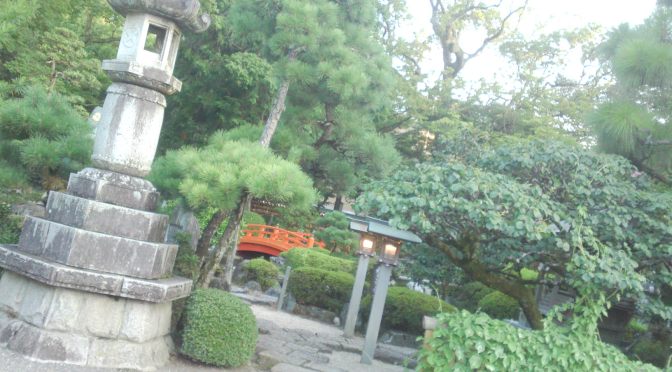
A beautiful stone lantern!
Unusual motif!
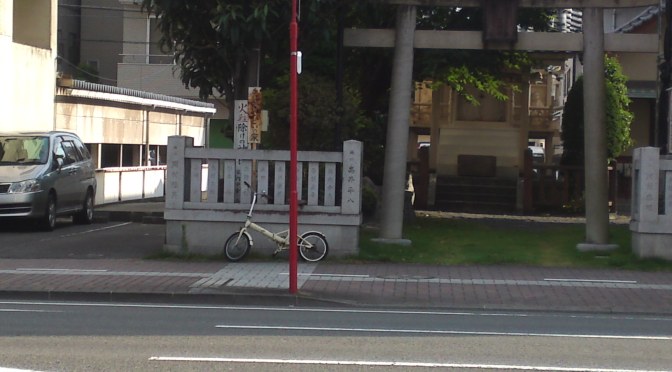
I was a bit confused at the different names of the shrine.
The name written on the torii gate, “Sumiyoshi” is actually the name of the god venerated there, whereas the name of the shrine is Kataoka!
I’ve been to other shrines also called Sumiyoshi, in shizuoka City in particular, and I started to understand because of similarities.
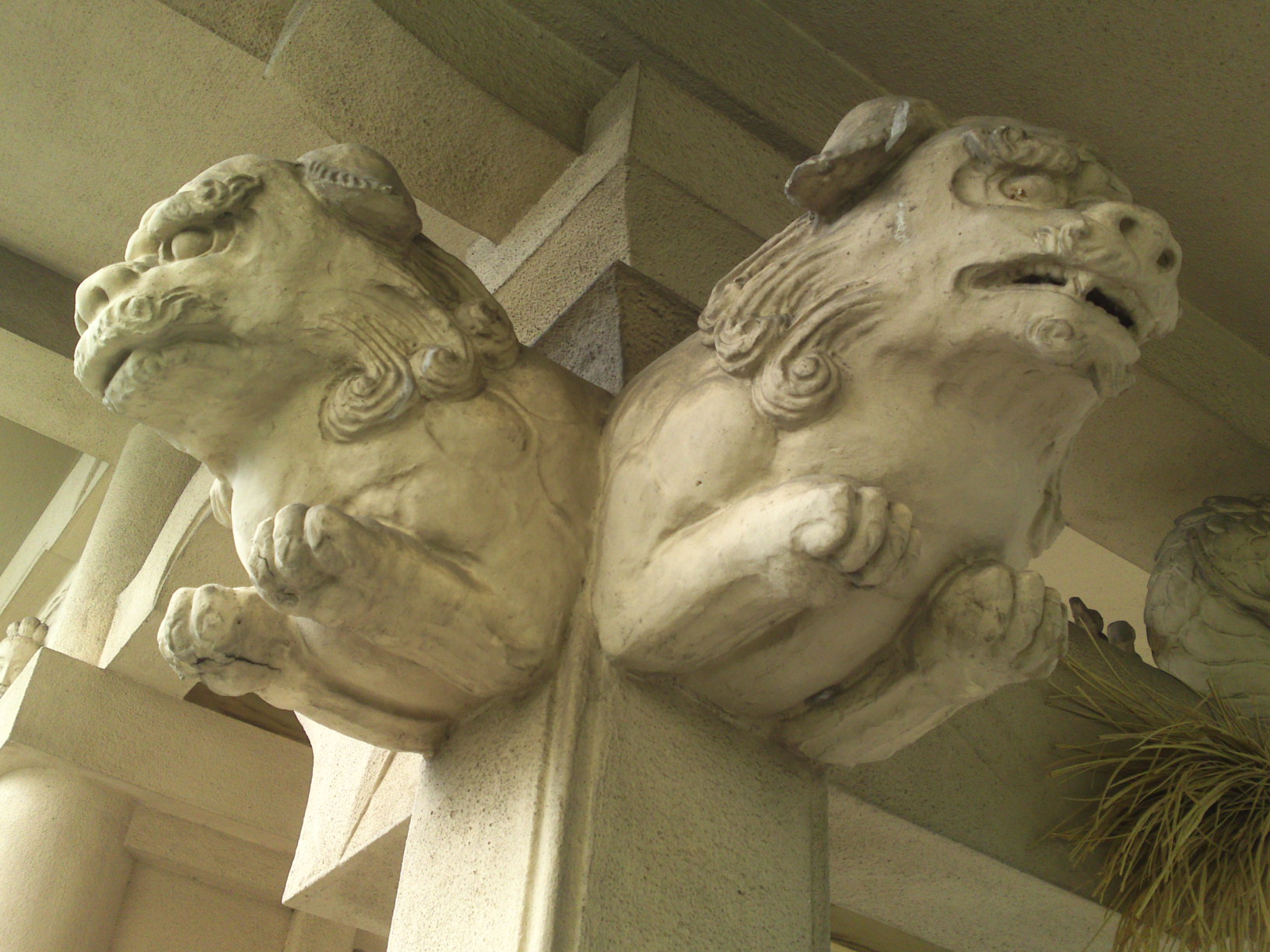
For example this guarding lion!
He has his paw resting on a smaller lion!
And the other guarding lion!
His paw is resting on a ball!
I was told that the main shrine was built 100 years or more ago, but some of the streets are found in records dating back to the 1640’s!
The shrine is definitely of importance as it includes a preliminary roofed gate with guarding lodges!
Getting nearer!
it clearly states the name of Kataoka Shrine!
The tiny right-hand side guard in its minuscule lodge!
His companion on the left!
The roofed hand washing stone basin!
The proper way to wash your hands!
A real boulder for a basin!
This shrine was erected mainly for the protection of local sailors and fishermen as demonstrated by this giant oyster!
The main shrine!
Beautiful urn!
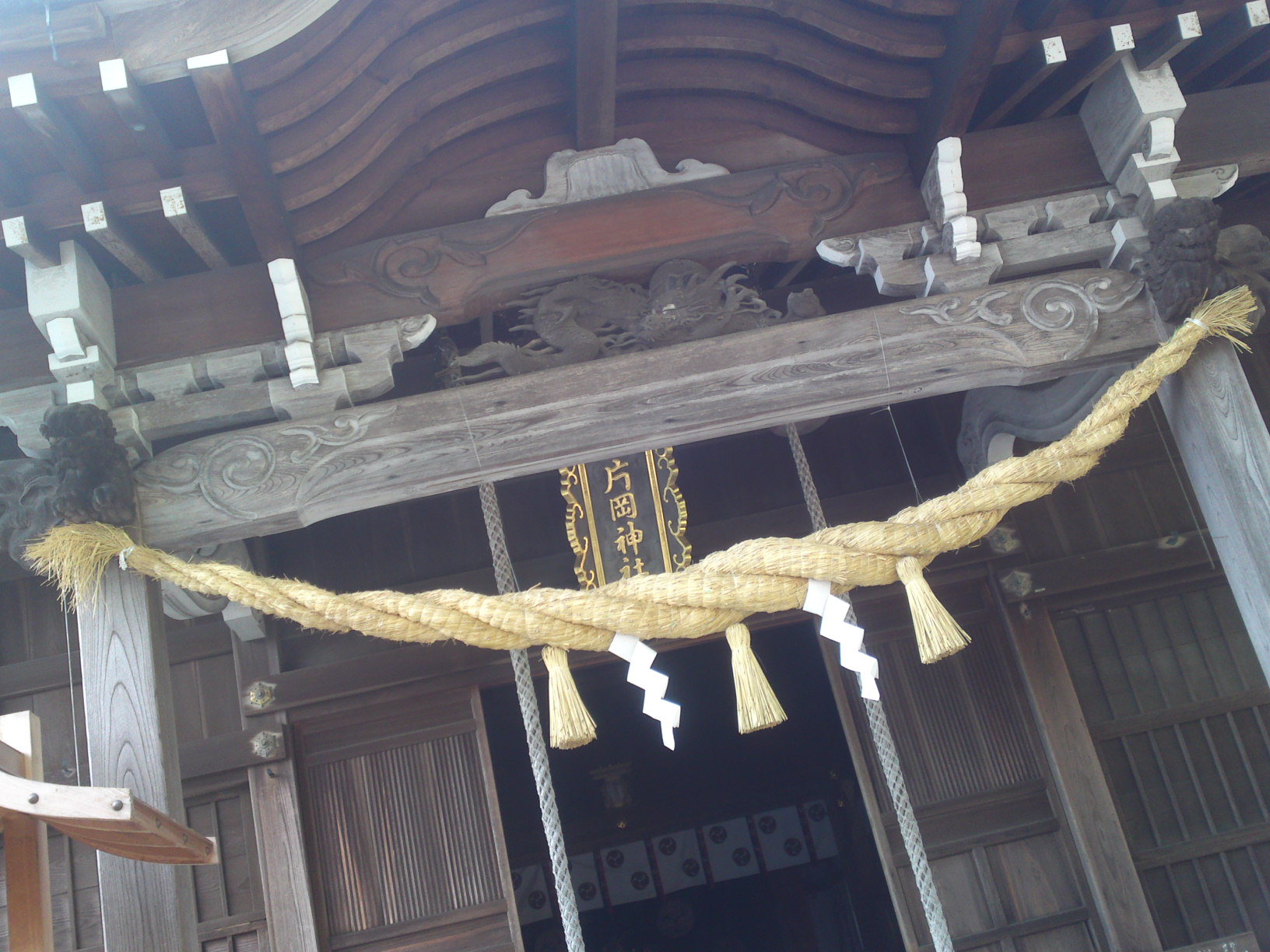
The rice straw garland has been replaced anew!
Lion and wild boar guard!
And a dragon giving a hand!
“Kataoka Shrine”!
The money offerings box!
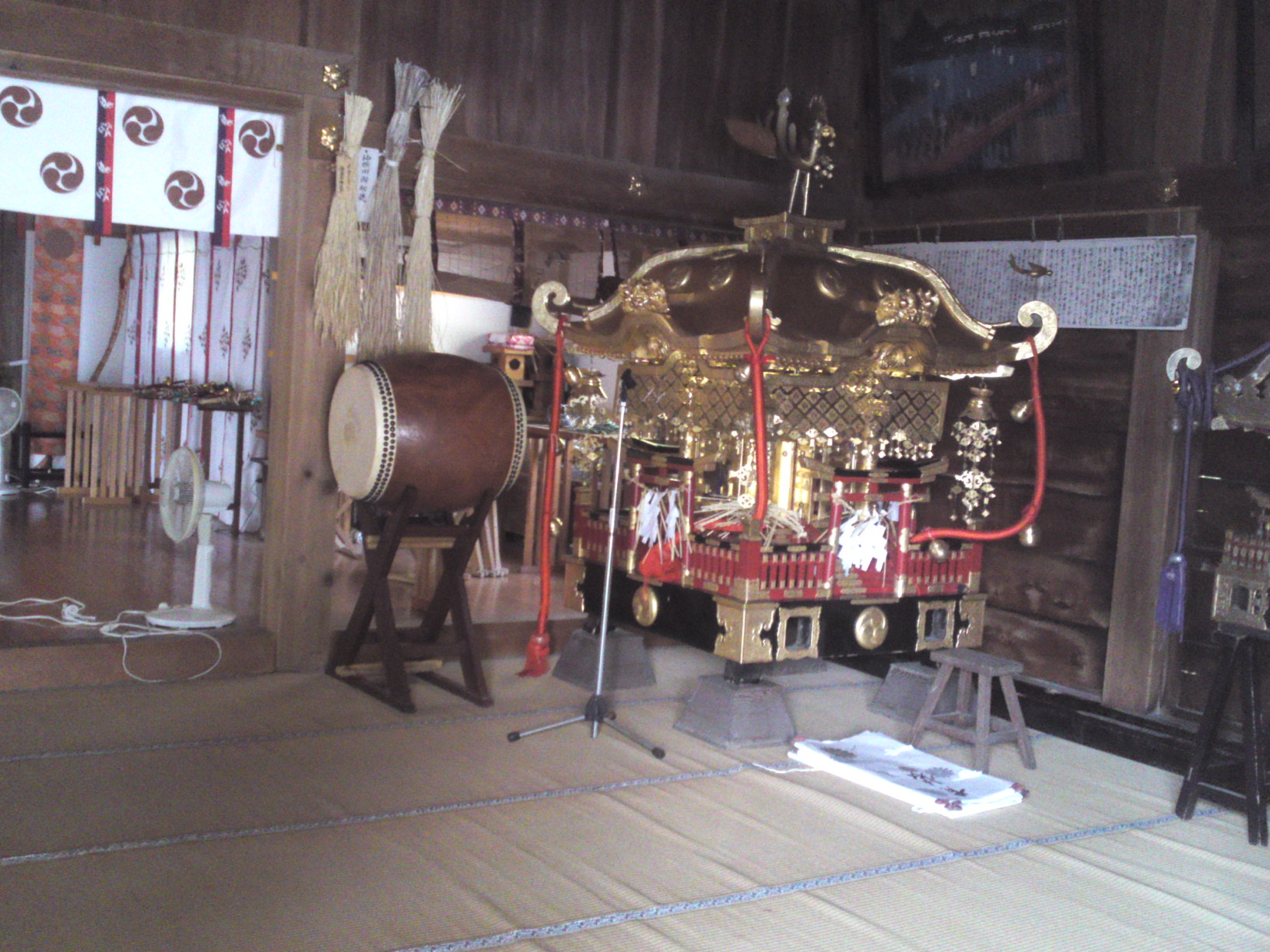
No less than three portable shrines being readied for the coming festival!
The festival drum!
Crested curtain!
This fishing boat was donated to the Shrine by the Fishing Companies Owners Association!
Bearing the name of “Sumiyoshi”!
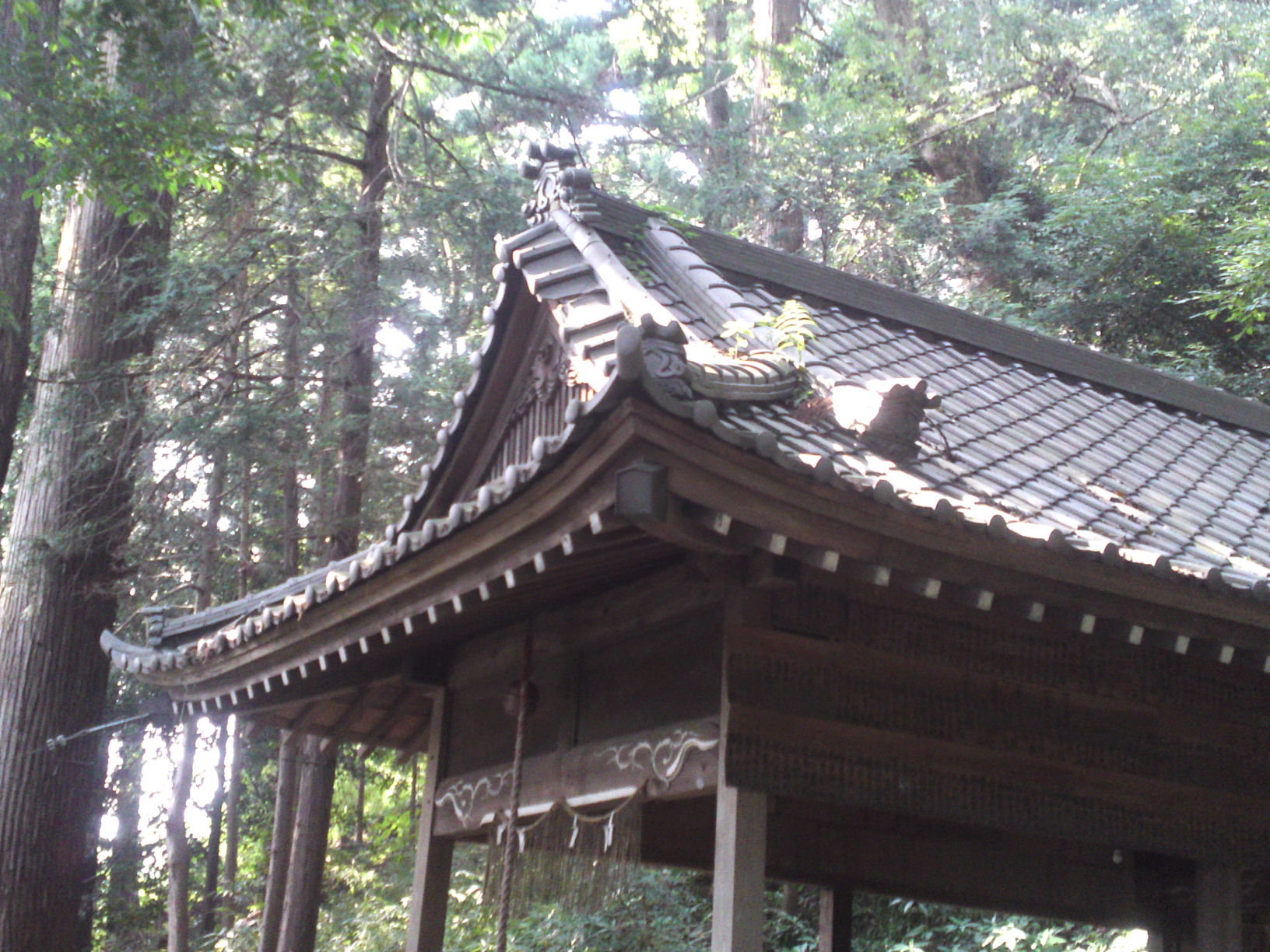
A last look at the roofing!
Making my way back home!
Actually the kanushi even offered me a drive!
Many cities in Japan use their pavement to promote their own tourism.
They usually do them on single tiles on various sizes, but in Sagara, a spot famous for its beaches and seafood, the local authorities have commandeered quadruple tile design you v\can find near the Sagara Eigyoujyou Bus Terminal!
The symbol tree of Sagara town is the pine, but it is the first time I see it represented with such big roots!
The mascot of the Town is “Cha Cha Maru Kun”!
“Cha cha” stands for “tea”, “Maru” is usually a name given to ships and “Kun” means is a young friend!
Sagara Town is famous for its Beach Kite Festival!
This particular character popular with kite designers is called “Okame”!
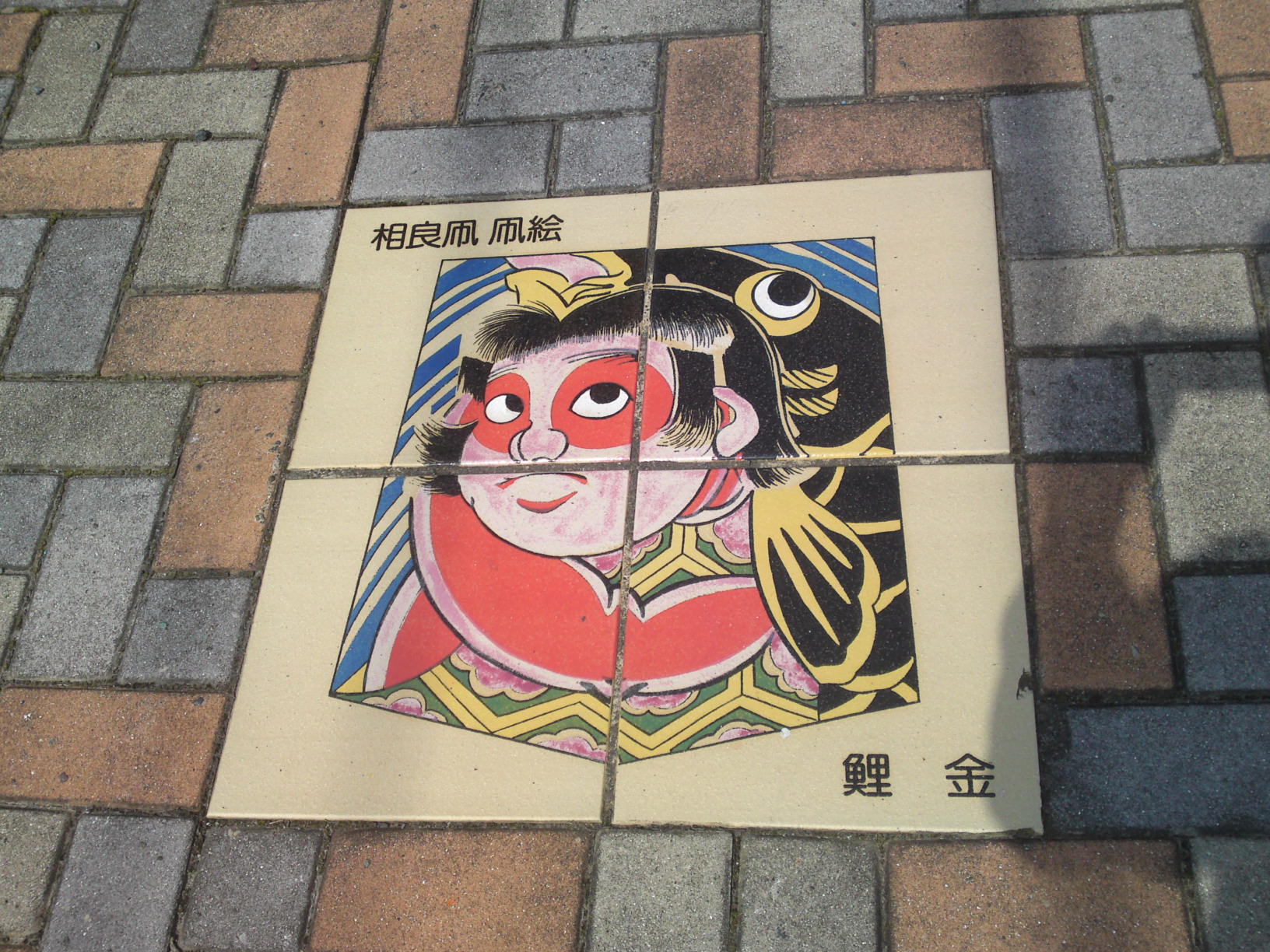
And this is its male counterpart called “Koi Kin”!
The symbol flower of Sagara town is the narcissus!
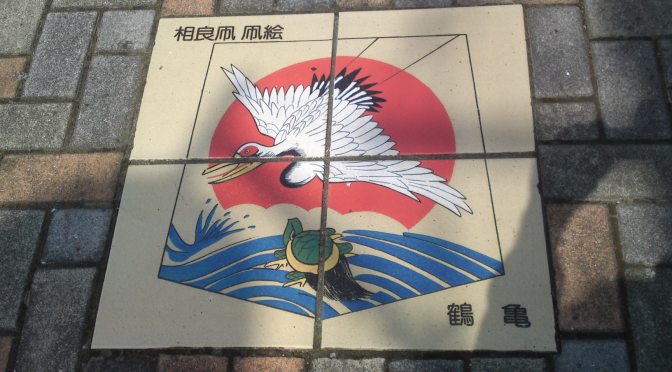
In Japan the Turtle and the Crane are the combined symbol of prosperity and good luck!
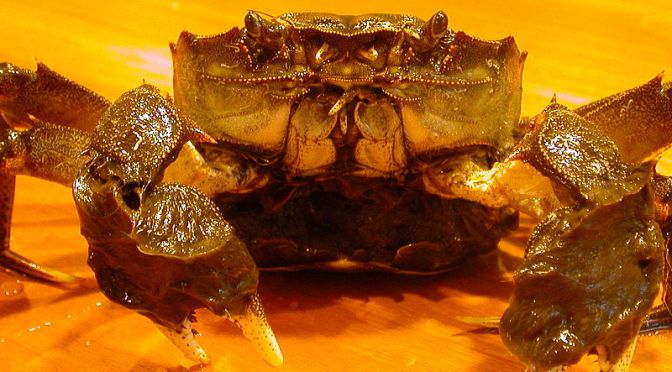
This crab goes by the latin name of Eriocheir japonica (De Haan, 1835). It was first recorded outside Japan by a Dutch researcher.
It also goes under the name of 上海蟹 (Chuugo mokuzugani/チュウゴクモクズガニ) although this can also be read as “Shanghai kani” because such specimen come from China. Not to be confused!
Japanese Mitten Crab or Mokuzugani in Japanese is also called Mokuzou, Zugani, Tsugani or Kegani.
It caught alsmost everywhere in Japan in Autumn and Winter.
In Autumn the females come to lay their eggs at river mouths.
Plenty are found along the Izu Peninsula in Shizuoka Prefecture.
They are caught in boxes baited with fish.
As for food, they can be eaten boiled in soups or crushed with their shell and cooked with miso. They could even be prepared as French bisque.
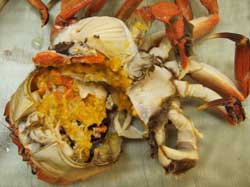
The female specimens are particularly appreciated for their egg sacs.
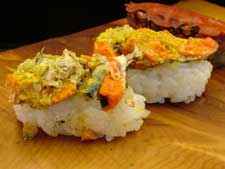
These boiled egg sacs with the meat make for delicious sushi nigiri or gunkan!
If you know where to look around you will find plenty looking after us in Shinto Shrines or looking at us in Parks or during festivals and where else!
They even lurk in Buddhist temples!
Shall we look for them (pun intended!)?
I found an old one almost invisible in Kataoka Sumiyoshi Shiren in Sumiyoshi, Yoshida Cho!
I know one thing for sure: he is 100 years old or a litlle more!
I discovered these two hiding inside Oi Shrine in Shimada City!
The water is not magical and good enough to drink!
Short horns!
Twinkling eye!
Maybe a little shy!
This one seems to go unnoticed in Okutsuhiko Shrine in Kuruma Cho, Aoi Ku, Shizuoka City!
Pert smile!
I was a bit nonplussed to find this one in a Buddhist temple called Rei Ei Ji in Aoi Ku, Shizuoka City!
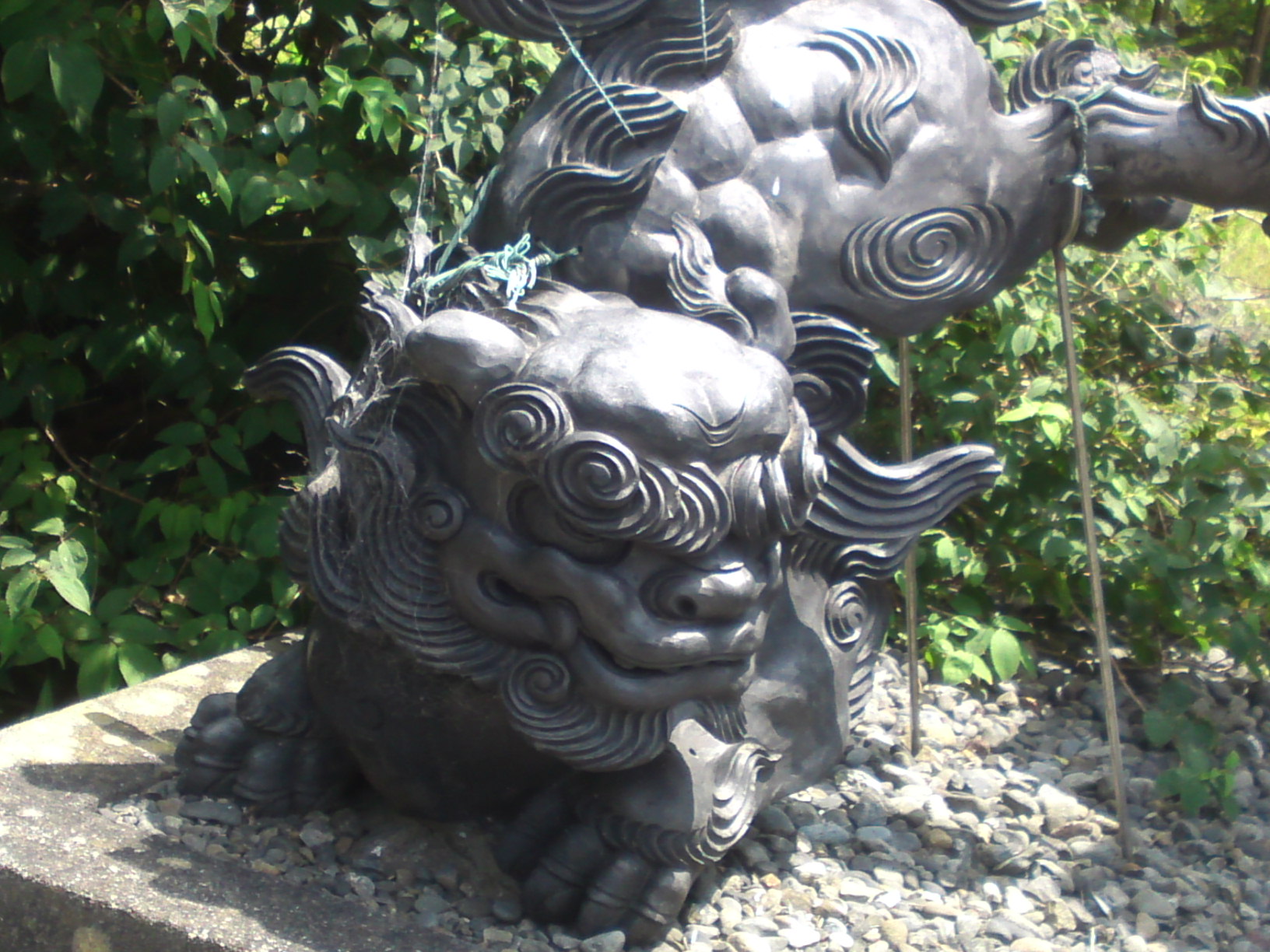
I made this discovery yesterday when I looked around in Shizunami, Mkainohara City in a Buddhist temple with an interminable name!
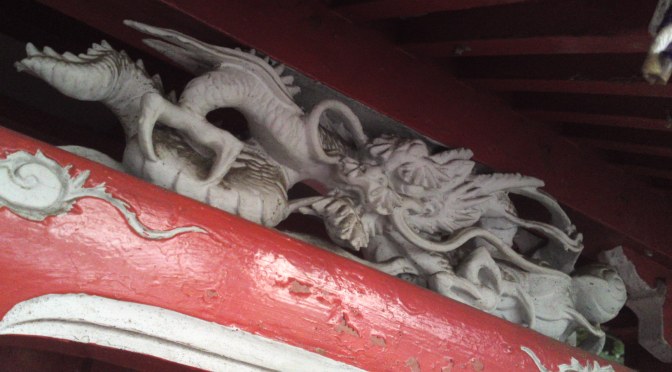
the name of the temple is Shinshuu Ootaniha Daishinkaizan Myoushouji !
It might be tempted to disappear before yu can say the name aloud!
Checking my archives I unearthed this wooden one ridden by a kappa/water goblin!
Practically the same on a scroll!
Both can be found in Hachan Kappa Museum in Yaizu City!
We will take our leave riding this minuscule one hidden in Ogushi Shrine in Aoi Ku, Shizuoka City!
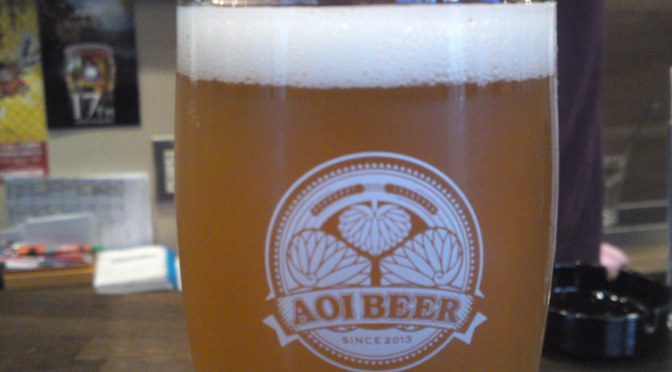
Yesterday I finally managed some free time to taste Aoi Brewing’s new beer at Aoi Beer Stand in Aoi Ku, Shizuoka City: Bitter Ale!
Bitter Ale is part of Aoi Brewing’s second batch which includes Summer Stout!
Incidentally we will be able to savor the third batch from mid-August with 4 types: Alt, Brown Ale, IPA and Stout!
Served on tap
Barley, barley hops, live yeast
Unfiltered
Alcohol: 4 degrees
Clarity: slightly smoky (normal considering live yeast and being unfiltered), very clean
Color: orange
Bubbles: very fine. Short head, white
Aroma: discreet and dry. Roasted oats.
Taste: Very refreshing and dry attack.
Roasted oats, bread, hints of oranges.
Pleasantly lingers for a while in back of the palate.
Later appearance of nuts.
Not really as its name would suggest, but dry with some gentle acidity.
Changes little with food but for stronger oranges.
Overall: Very refreshing beer, far better than owner Naoki Mando would admit.
Great thirst-quenching craft beer with a twist!
AOI BREWING
Temporary address:
AOI BEER STAND
Shizuoka City, Aoi Ku, Miyuki Cho, 4-6, Den bill, 1F
Tel.: 054-260-5203
Opening hours: 11:00~23:00
Credit cards OK
Aoi beer is also available at Aoi Brewery’s two more restaurants in Shizuoka City, namely
420-0852 Shizuoka City, Aoi Ku, Koyamachi Naka Building, 5F
Tel.: 054-293-9331
Opening hours: 17:00~25:00 (Mon.~Thurs.), 17:00~27:00 (Fri & Sat.), 17:00~24:00 (Sun.)
Parties welcome (reserve!)
Credit Cards OK
and Mando:
Mando, Neo Japanesque Bar
420-0031, Shizuoka Shi, Aoi Ku, Gofuku Cho, 2-4-6, Mori Blg, 1F
Tel/Fax: 054-221-5103
Business hours: 17:00~26:00
Parties possible on 2F
Credit cards OK
Oi Shrine (大井神社) in Shimada City is not only big but it is actually a whole collection of big and small shrines which accumulated there with times because of so many people having to stop there in Edo Times before crossing the very wide and dangerous Oi River.
As I visit Shimada City regularly, I think it is better to describe it in smaller articles in the near future than going into a unending story!
Let just me show what I took yesterday!
The famous statues of the Obi Festival which takes pplace every 3 years! The next one will be in 2016!
Japanese garden and river!
The entrance to the small bridge over the stream!
A large lantern!
One of the many hand washing basins!
The whole complex is surrounded with low stone walls and streams!
The following pictures were taken a little later just at dusk!
People tend to overlook Okitsuhiko Shrine (興津彦神社) in Kuruma Cho, Aoi Ku, Shizuoka City as it is overshadowed by the enormous torii gate leading to Sengen Shrine on the other side of the street!
It also tends to be dwarfed by company buildings on both sides and the big traffic running along!
But the plaque on the torii gate denotes the grand age of the site although it is in very good repair and regularly repainted!
Apparently it is a shrine dedicated to fire!
More history to study!
Some very old votive stones are still preserved on the site!
An unusual shape for a stone lantern!
I noticed that same cross pattern in Oi Shrine in Shimada City!
The shrine all made of stone and concrete!
I understand why it is dedicated to fir!
Impossible to burn down like so many other shrines!
The rice straw garland seems to regularly replaced!
An old friend seems to be guarding the place!
Laughing dragon!
Lion guards!
The phoenix is not unusual but the flying female deity is!
The left lion guard is found on the wall!
The right side lion guard is accompanied by a younger/smaller one as found in some other shrines!
There is a phoenix on three of the four walls!
Unusual sea waves!
The third phoenix!
The flying deity reminds so much of the sky spirit at the Matsubara Hagoromo site in Miho, Shimizu Ku!
Masaaki Koga, Director for the last 23 years of the Shizuoka Daidogei Street Performance Festival was celebrated in the local newspaper during his annual visit to the C”Chalon dans la rue” Street Performance Festival in Chalon Sur Saone, Bourgogne, France!
“Chalon dans la rue” Street Performances in Chalon sur Saone inspires Japan!
[For Masaaki Koga, Japanese director, “Chalon dans la rue” is a model of originality to import to Japan]
Sitting at a terrace with his team, Massaki Koga is debating which shows to watch on that day. Like many directors he comes to Chalon sur Saone to recruit among the performing troupes, with the difference that his work is comparatively more difficult.
He is the Director of the most important Street Performance Festival in Japan, namely the Shizuoka Daidogei World Cup in Shizuoka, a city of 750,000 souls, which attracts every year 1,500,000 spectators on average as well as 95 troupes, 25 of them international.
Impressive figures on paper they might seem but he is the first to say that street performance festivals and shows are under-developed in Japan. Chalon sur Saone attracts less spectators but for example this year has invited 178 troupes, 23 of them international. A creative pool difficult to imagine in Japan.
But in a norm-conscious Japanese society where the group regulates individuality in all aspects it is difficult to witness the unlimited individuality found in our streets. “To organize a dance show around a bus stop is for instance very complicated. It is a semi private space back home. Therefore you must obtain special authorizations and ensure a regulated distance. Everything is highly controlled by the authorities.” And if a spectator standing atop the bus stop shelter happens to fall down the festival will be held responsible, not the individual.
But Masaaki Koga who has been heading the Daidogei Festival for the last 23 years believes he can import some French cultural dynamism back home in Japan.
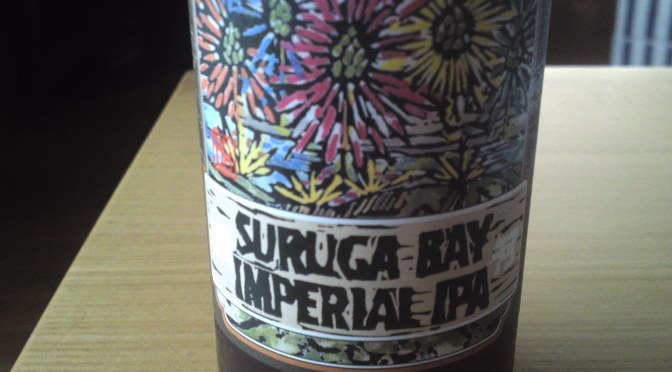
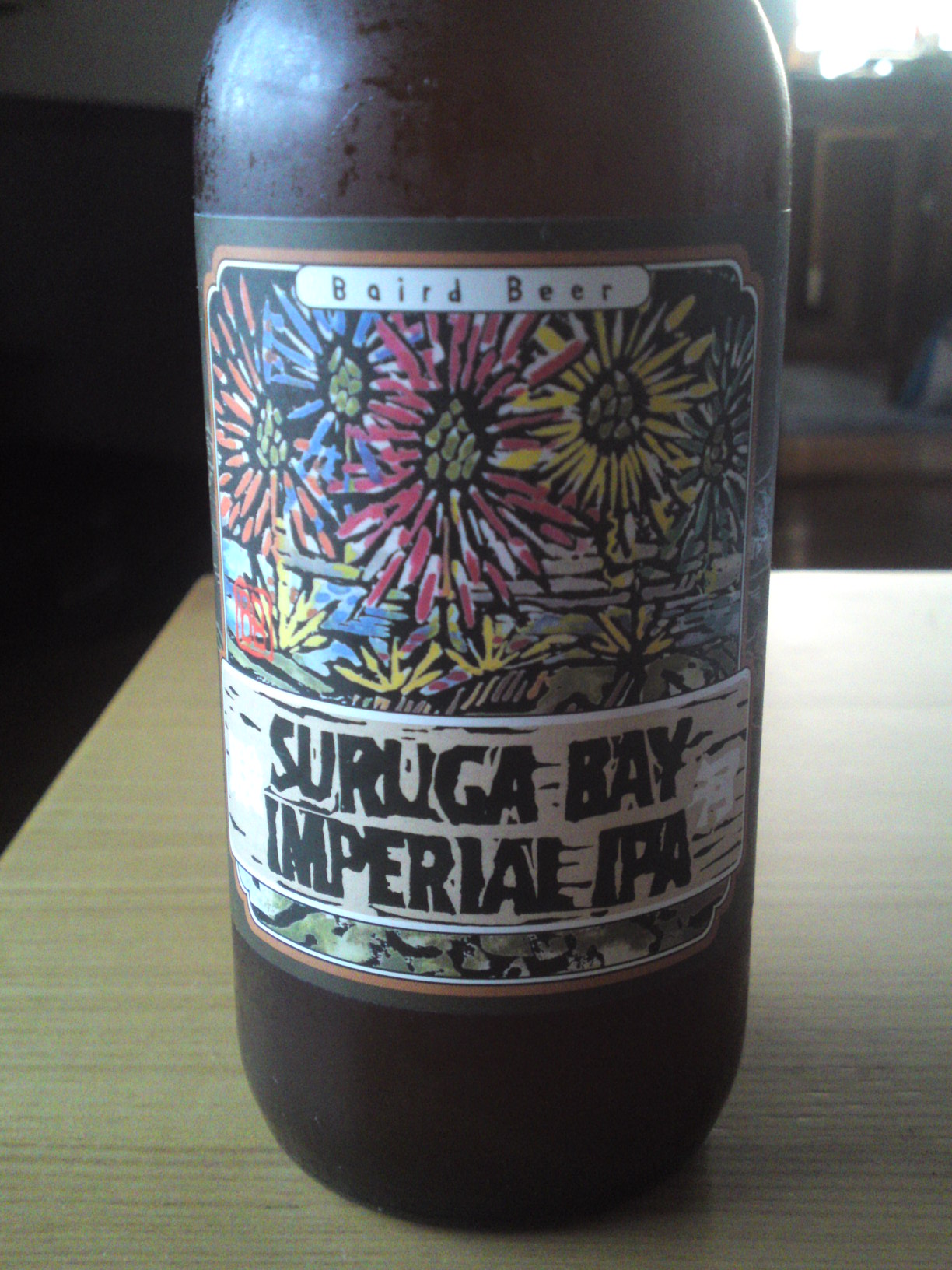
IPA is a classic name for a craft beer and Bryan Baird gave his creation a great name, “Suruga Bay, the very bay that bathes the center of Shizuoka Prefecture!
Did you know that Baird Beer labels have become classics available on the market?
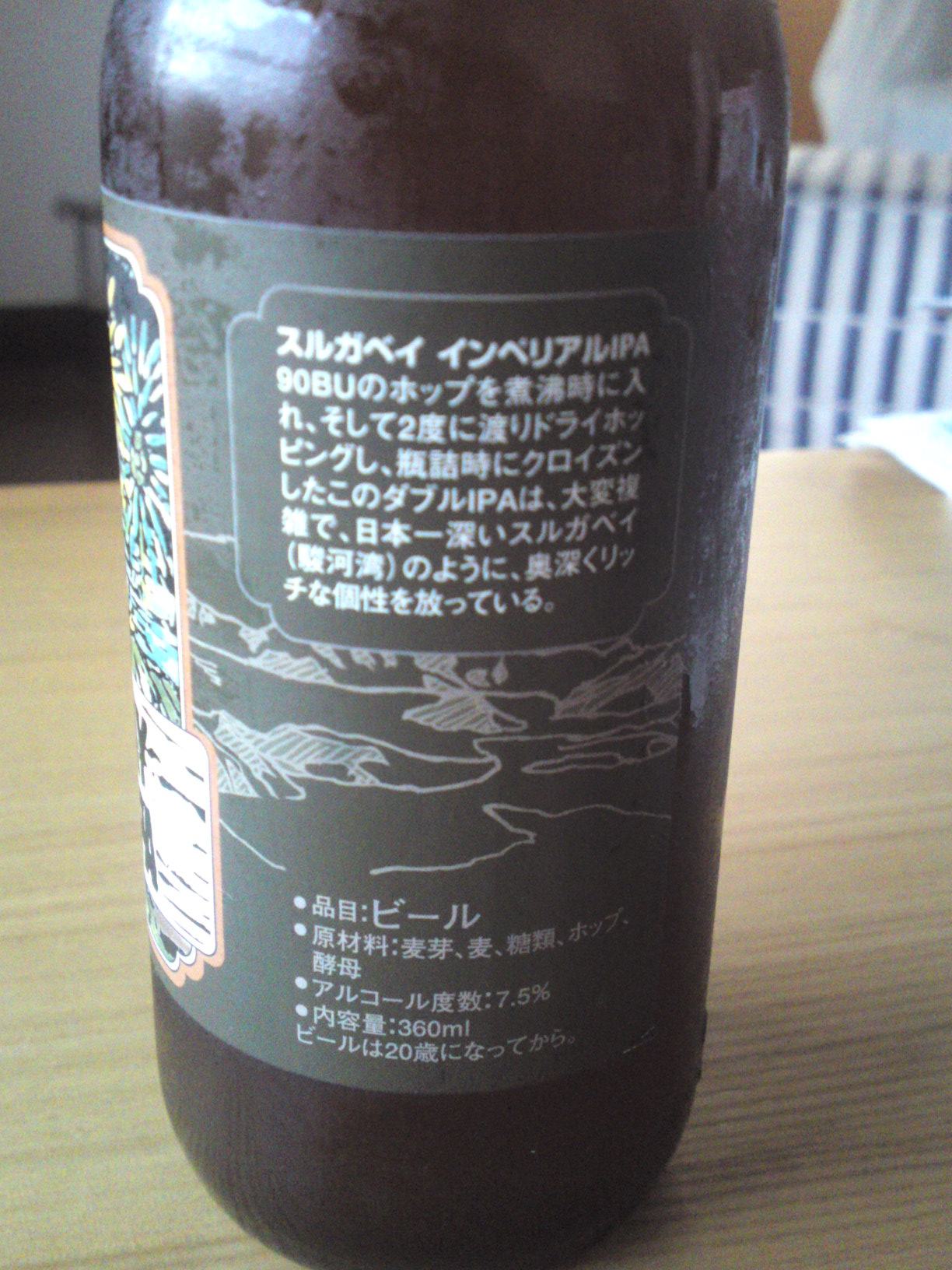
Product name: Baird Beer Suruga Bay Imperial IPA
Grain malt, grain, hops, sugars, live yeast
Unfiltered
Alcohol: 7.5 degrees
Contents: 360 ml
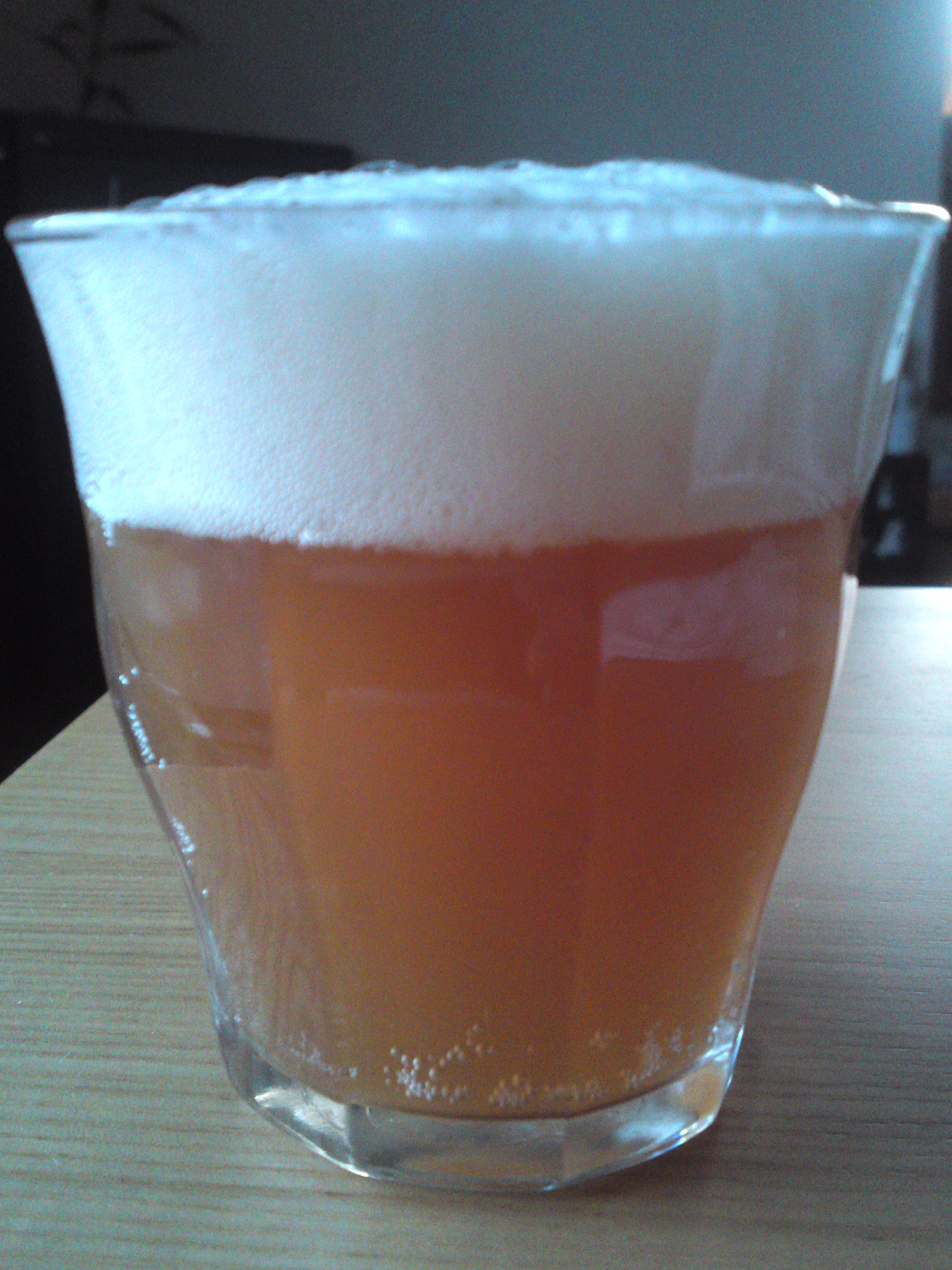
Clarity: slightly smoky (normal considering live yeast and being unfiltered), very clean
Color: persimmon color
Bubbles: very fine bubbles. longish head, white
Aroma: assertive and fruity. Dry. Oranges and citruses
Taste: very deep dry refreshing attack with great acidity.
Lingers on the palate with more acidity and citruses.
Very easy to drink in spite of its high alcohol contents.
Fruity. Oranges, bread.
Varies little with food.
Overall: Refreshing, solid and reliable craft beer for dry beer lovers.
Its welcome acidity makes it the perfect beer for a hot summer drink!
It is watermelon season in Shizuoka Prefecture and some people like to offer them in strange shapes, but it comes at a price!
Yesterday I noticed this strange combination at the basement supermarket of Cenova Department Store in Shizuoka City, Aoi Ku!!
fairly small and in the shape of a sweetheart!
I wonder what kind of plastic case it was allowed to grow!
Grown in Chiba Prefecture!
Sells for almost 70 US $!
This monster certainly deserves its Godzilla Egg name!
Grown in Hokkaido island, it fetches almost 100 US $!