Tag Archives: 美食

Gastronomic Destinations: Yakushima Island (1)

iwasaki-8
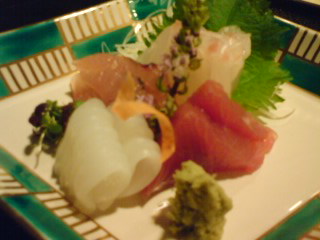
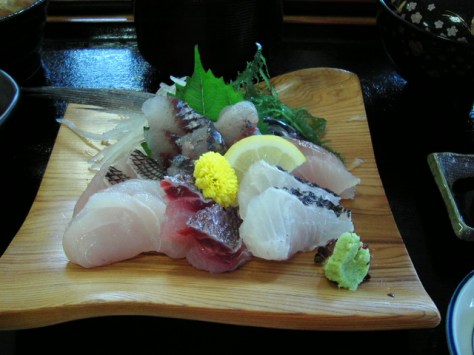
(Sashimi plate at Iwasaki Hotel)

Day 1: March 8th

Tokyo Haneda Airport, 10:30 = Kagoshima Airport, 11:30 = 12:45 – Yakushima Airport, 13:30

This was our second trip to Yakushima Island in 4 years. There are two ways to reach this Japanese World Nature Heritage: either you fly all the way (with a changeover at Kagoshima Airport), or top in Kagoshima City (Kyushu Island) before boarding on a three-hour voyage.
Both ways may become dodgy in bad weather as planes might easily be cancelled due to poor visibility, while the same could happen to the boats due to rough seas during the typhoon season. After all, the yearly rainfall (10,000 mm, yes you read it well!) is four times the average for the rest of Japan!
Our first hotel bus being scheduled at 15:30, we took the opportunity to take lunch at Il mare, an Italian restaurant conveniently located within 10 minutes walk from the very small airport.

yaku-mare-2
(Asahi Crab Linguine)

Il Mare relocated in 2006 to the present spot along a “busy” road running past the airport for the benefit of travellers.
The food is of a surprisingly good level for a tourist resort, with pasta and pizza all home-made!
The Missus opted for Asahi crab ( a local specialty) Linguine and seemed to be pretty satisfied with it.

yaku-mare-3

I, for once, chose a Quatro Formaggio Pizza, which I must admit was a lot better than some served in vaunted restaurants in some big cities!

yaku-mare-1yaku-mare-4yaku-mare-5

Actually, Il mare is a good proposition any time you want to treat yourself to a non-japanese meal as the restaurant is located in a small park with its own herb garden!

IL MARE
891-4207 Kagoshima Ken, Yakushima Cho, Oseda, 815-92
Tel & fax: 0997-43-5666
Opening hours: 11:30~15:00; 18:00~21:00
Closed on Thursdays
Homepage (Japanese)

Service: Polite and smiling
Facilities: Very clean, inside a forested park, small terrace.
Prices: Slightly expensive

——————–

iwasaki-1
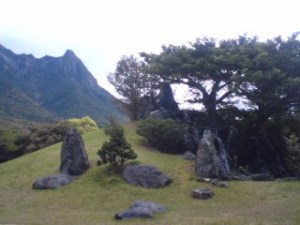
(View of the park and mountain at the back of Iwasaki Hotel)

IWASAKI HOTEL
891-4404 Kagoshima Ken, Kumamo Gun, Yakushima Cho, Onoaida
Tel.: 0997-47-3888
Fax: 0997-47-3788
Free Limousine service from and to Yakushima Airport
Homepage

-Service: Smiling, kind, attentive and knowledgeable
-Facilities: Above average for a resort hotel. Shop.
-Restaurant:
Breakfast: self-service. Both Japanese and Continental style. Good
Lunch-Dinner: set menus or a la carte. Good
Restaurant no-smoking-logofor breakfast and partly so for rest of the day.
-Strong points: One of the best hotel parks in Japan! Natural hotsprings (indoors and outdoors)

As this was our second trip we kept to proven values by stopping in the same hotels.
The Iwasaki Hotel is surrounded by a truly enormous forest/park stretching half way up the neighbouring mountains (over 900 m).

iwasaki-11iwasaki-2
iwasaki-6iwasaki-4
iwasaki-3iwasaki-5

A complete tour of the park will take you almost two hours includind a waterfall, oranges orchard, a small enclosure for deer, and thousands of trees, plants and flowers. Don’t forget your camera!
We were just left enough time until dark to take a good walk before we took a long dip in teir hotsprings baths (genders separated, sorry! LOL). The water directly comes from a subterranean volcanic waterbed. Its water is claimed to help alleviate nervous (physical) problems, painful joints and skin disorders.

Then, it was time for dinner:
Iwasaki Hotel proposes a seasonal menu and a la carte menu for dinner featuring local specialties such as “kuroge Buta/Black Hair Pork”
and seafod sashimi from fish caught in the waters surrounding the island.
Among the dishes we shared (portions are large enough) were:

iwasaki-71
White Flesh Fish Escabeche, first deep-fried,then marinated. A dish that should please Europeans/Americans!

iwasaki-81
The Sashimi Plate included (from left to right, bottom to top) Mizu-Ika (local name for Aori-Ika/Cuttle fish variety), Maguro, Tobiuo (Flying Fish), a specialty of the island and Tai/Snapper Seabream.

iwasaki-9
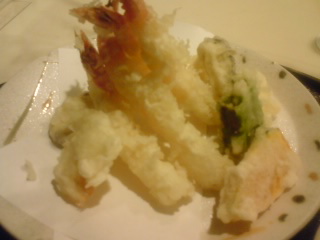
Tempura with plenty of large prawns!

iwasaki-10
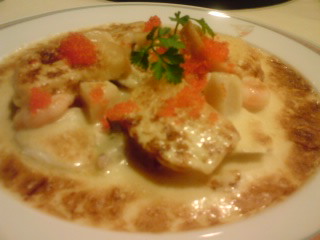
Finally, the seafood gratin was more of a French imspiration with a Japanese touch provided by the flying Fish Roe topping.

The real eating and drinking were scheduled on the next day for the Missus’ birthday!

To be continued.

Please check the new postings at:
sake, shochu and sushi

—————————————-
日本語のブログ
—————————————-

Yakushima Island: Coming posting!

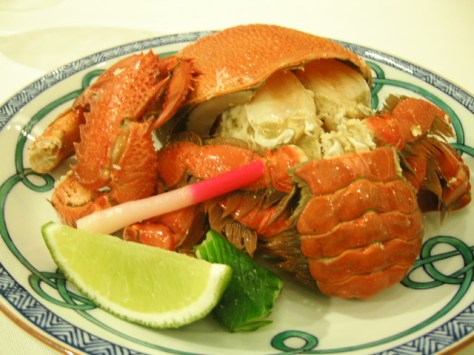
asahi-gani
(Asahigani/Asahi Crab at Iwasaki Hotel in Yakushima Island)

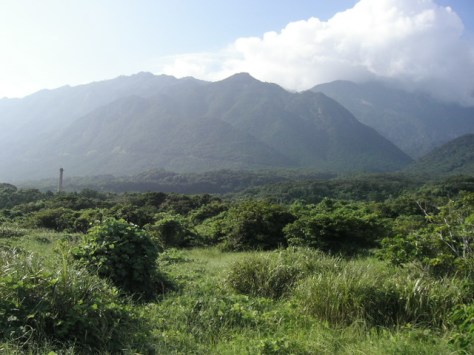
I’m going on a short trip to Yakushima Island between Kyushu Island and Okinawa. Yakushima Island is one of only three World Nature Heritages in Japan. Check this website!

yakushima-sashimi
(Sashimi from fish caught off Yakushima Island)

Some of the gastronomy there, especially fish, fruit and shochu is enough of a reason to visいt the place!

yakushima-1

In spite of a 20,000 + population, half of this island is wild.
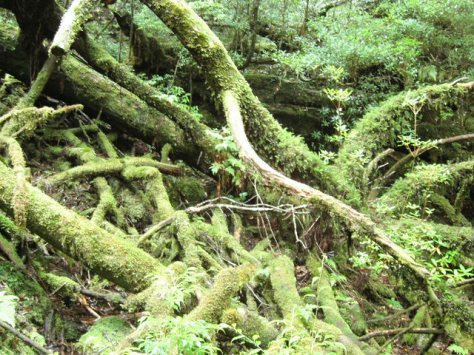
During the tourist season (luckily we are avoiding that!) thousands of tourists come to explore the untouched forests which have inspired many artists and film directors:

yakushima-2

The island is also blessed with some of the best water in Japan. Many breweries of all kinds from Kyushu and Honshu Islands come to collect their water there!

yakushima-3

Not to forget there are plenty of spots for bathing, rivers, lakes, beaches and hot springs spas!

yakushima-5

Looking forward to talk about it all soon!
Robert-Gilles

Please check the new postings at:
sake, shochu and sushi

—————————————-
日本語のブログ
—————————————-

Quick Snack: Cream Cheese Tomato Rolls for the Beer!

tomatospringroll

There are times, be it in Winter, Spring, Summer or Autumn, when you just don’t have the will to venture into another cooking expedition, but still want to offer and eat quick, simple and yummy food!

Here is suggestion that you can store inside the fridge just in case hungry friends barge in with some beer (or mineral water! LOL). It can be easily adapted for vegetarians!:

I don’t have to bother with quantities really.
Just know that you need an equal amount (in volume) of Philadelphia (for example) cream cheese and fresh cream lightly beaten to a semi-hard consistency.
In a bowl mix the cheese and cream well. Add a little salt, pepper, nutmeg and whatever spice you fancy. Add some finely chopped herbs!
As for the tomatoes, choose them as large as possible, but not too ripe to avoid them breaking away. Peel them first, by making a light cut near the stem and plunging them in hot water (or holding them over a flame). When the skin starts opening, take them out and plunge them in cold water. They should peel off very easily.
Cut them in half, empty them, “spread” (you might have to help with a few small cuts) them on a kitchen paper to sponge water off.

Note: do not salt the tomatoes, or they’ll give out gallons of water!

On a large enough piece of cellophane paper spread the tomato flesh, fill with an adequate amount of cream cheese mix, and make a roll closing the cellophane paper around. Twist the ends shut.
Leave in refrigearator until served.

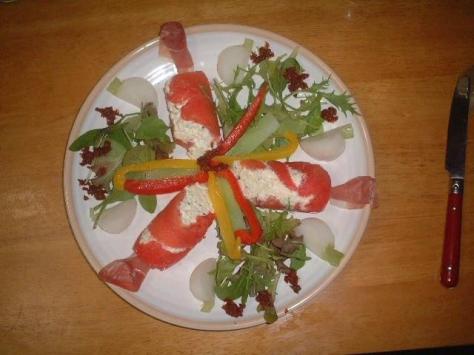
Simple presentation suggestion (look at pic!):
A three-piece presentation is easiest with cut sweet pimento and boiled broccoly stems (a good way to use them!).
Cut the tomato rolls half-way at a slant for better effect.
Add lightly boiled turnips, pieces of raw ham, and plenty of greens.
Serve with a pot of vinaigrette or dip sauce.

Simple and appetizing!
Good for hungry kids, too!

Please check the new postings at:
sake, shochu and sushi

—————————————-
日本語のブログ
—————————————-

Bryan Baird’s Newsletter (2009/6)

Baird Beer & Taproom Events Bulletin 2009 #5
bryan-sayuri.gif

Dear Taproom Friend & Baird Beer Enthusiast:

Today we are releasing for sale throughout Japan one of our annually crafted seasonal stouts: Midnight Oil Export Stout.

Midnight Oil Foreign Export Stout 2009 (ABV 6.3%):

Export stouts generally are rich and roasty in flavor, moderately high in alcoholic strength, and sporting some noticeable hop character (normally registering in terms of bitterness and flavor). Baird Midnight Oil Export Stout enjoys a complexly layered roasted malt character (in addition to roasted barely we add three roasted malts to the grist — chocolate, chocolate wheat and black) and a firm, straightforward hop flavor (bittering and flavor additions of Nugget and Fuggle, respectively). The color is midnight oil black, the mouthfeel is oily and unctuous. This stout will pick up your spirits amidst this dreary end to winter in Japan. In addition to the draught version, bottles (633 ml) also are available for purchase.

We also are pleased to release, today, two small-batch ales made for dispense as ‘real ale’ via the handpumps at our two Taproom pubs: Luck of the Irish Red Ale & Mama’s Milk Stout.

Luck of the Irish Red Ale (ABV 5.0%):

This is a toasty, biscuity red ale laced with subtly sweet notes of caramel. It is brewed in the Irish tradition: i.e. it is malty, moderate in alcohol, and quietly nuanced in hop character. The softness and roundness of this ale is enhanced by the low-carbonation, cellar-temperature dispense via handpumps.

Mama’s Milk Stout (ABV 4.4%):

Milk stouts get their name from additions of lactose either during kettle boil or at packaging or both. They fall under the general category of ‘sweet stouts,’ which tend to be characterized by dextrin-rich wort that is fermented to low attenuation and thus is moderate in alcoholic strength, rich in flavor and robust in mouthfeel. Mama’s Milk Stout is all of these things.

Both of these ‘real ales’ are available on handpump only at the Fishmarket and Nakameguro Taprooms.

Finally, please mark your calendar for our upcoming annual Lucky Seven Stout Week (Monday, March 16 – Sunday March, 22). This year the event will be held simultaneously at both the Fishmarket and Nakameguro Taprooms. The event coincides every year with St. Patrick’s Day (an Irish holiday celebrated on March 17), and gives us an excuse to celebrate a beer style category long associated with Ireland: Stout. In addition to our year-round Shimaguni Stout (which, stylistically, resembles an Irish dry stout), we will be dispensing seven special seasonal stouts:

(1) Midnight Oil Export Stout
(2) Mama’s Milk Stout
(3) Chocolate Malt Stout
(4) Great American Stout
(5) Morning Coffee Stout
(6) Dark Sky Imperial Stout 2009
(7) Barrel-Aged Dark Sky Imperial Stout 2008

Special food, stout cards and an end-of-the week raffle will all be part of the package. More details will be forthcoming shortly.

Cheers,
Bryan Baird

Baird Brewing Company
Numazu, Japan
HOMEPAGE


The Japan Blog List

Please check the new postings at:
sake, shochu and sushi

—————————————-
日本語のブログ
—————————————-

Herb-Roasted Quail & Ratatouille

quailratatouille

I did publish the pic of this dish I made for the Missus (Yes, Rowena, I do sometimes cook! LOL) some time ago, but never had the time to publish the recipe.
It is pretty simple and straightforward and has the advantage to look appetizing and satisfying! Even kids will love it!
Of course you can replace the quail with any fowl (have you ever tried guinea fowl?)
Natasha will certainly agree with me, if the ingredients are good, you cannot fail!

For 2 persons:

-2 large quails
-Filling:
Finely chopped onion: 2 large tablespoons
Finely chopped shallot or red onion: 1 large tablespoon
Finely chopped garlic: 2 cloves
Finely chopped herbs (of your choice/I usually include fresh Italian
parsley, rosemary, sweet basil and celery): 2 large tablespoons)
Whole pink pepper: 1 teaspoon
Breadcrumbs: 2 large tablespoons
salt, pepper, nutmeg to taste. You can add your favourite spices, of course!
Olive oil: 2 tablespoons

Fresh sprigs of thyme and rosemary: half a dozen each

Lightly seasonthe whole quail with a little salt and pepper.
Mix all the ingredients of the filling into a bowl and fill the quails with it.
Place the quails on an oiled oven plate. Place the thyme and rosemary sprigs on the quails. Pour a little olive over both quails and tp each with a dollop of butter.
Preheat the oven to 200 degrees Celsius/about 400F.
Cook the quail until you are satisfied (taste vastly differ with people).

Ratatouille
This can done the day before. Re-heated ratatouille is even better.
I will not bother with weights and measures as there are thousands of ways.
Just know that I use an equal quantity of egg-plants/aubergines, onion, and courgettes/zucchini.
First cut them to the same (important) wanted size (the smaller, the quicker the cooking). Heat olive oil in a large pan. Pour the lot into the pan and cook until onions have become translucent. Turn down the fir to low. Add chopped garlic, one lemon juice, a glass of white wine, plenty of roughly cut tomatoes. Season with Chopped fresh herbs (the more, the better!), salt (easy on that! You can rectify later!), pepper, nutmeg and others.
Cover and let cook until you are satisfied with taste and texture.

Service and presentation:

Take out quails.
Take out the filling and place on a side plate.
Open the quail and “flatten” them.
Serve the quails on a large plate. Top it with the filling and surround it with plenty of ratatouille.

Bon appetit!

Please check the new postings at:
sake, shochu and sushi

—————————————-
日本語のブログ
—————————————-

My Best Italian Food Of The Past Year!

aqua-09-63

I enjoy reminiscing about some of the best food I’ve ever had, especially in times I have to be craeful about my waistline! LOL
Today was such a day as I will go on a trip to Yakushima next week, and everyone knows it is never a good idea to board a plane with an unfit overfed body!
At the beginning of the year I found myself enjoying the memories of some sublime desserts. I don’t why, but today I feel like sharing my experiences about Italian food. My family and ancestors back in France will ask questions!
Shizuoka City has some top-class Italian restaurants serving very original gastronomy. Let’s see if you would be titillated by the following offerings!

aqua-j-09-6

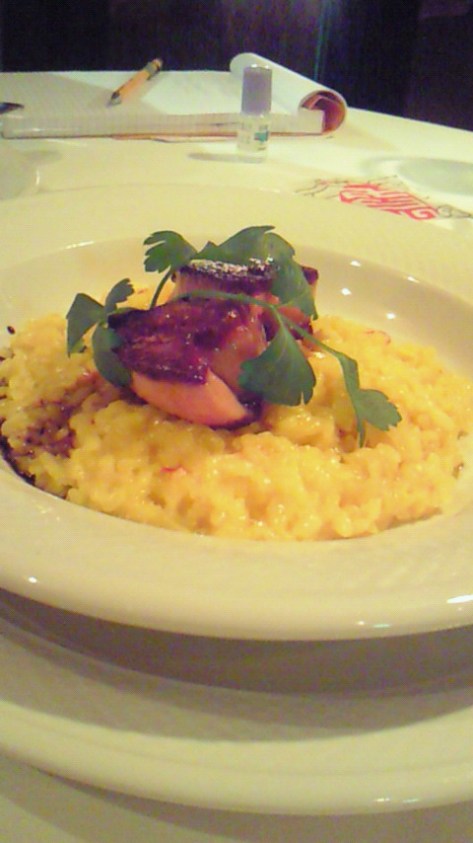
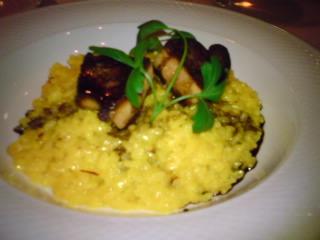
A decadent Saffran Risotto with Foie Gras in Balsamico sauce (same as pic above) as served at Aquavite.

italy-gnocchi

A very unusual plate of Spinach Gnocchi in Wild Boar sauce (Aquavite).

italy-hanadai

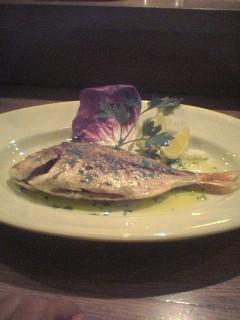
A charcoal-grilled “Hanadai Snapper” (caught off Shizuoka shore) with its herbs. One of my best fish dishes ever (Aquavite).

italy-lamb

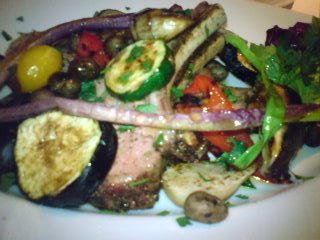
A Sicilian-style Baked Lamb Chops and its Vegetables Platter so reminiscent of country-style food (Il Paladino)

italy-ris2

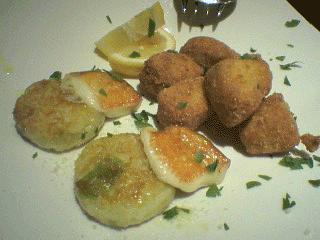
Deep-fried Veal Sweetbreads with Baked Risotto Balls. A discovery! (Via del Borgo)

italy-shirako

“Shirako/Cod Sperm Sacs” Gratin. Tasted like foi gras. Doubt you can enjoy that in Italy! (Il Paladino)

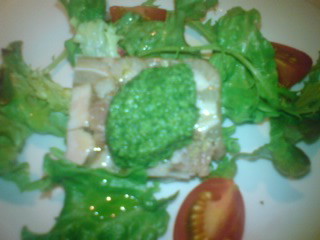
italy-terrine

Octopus and Vegetables Jelly Terrine. Such colours! (Via del Borgo)

italy-truffles-risotto1

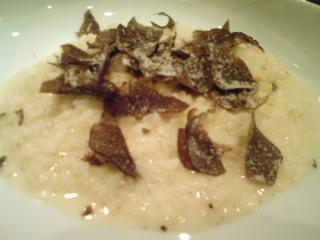
Another decadent Piemonte Truffles Risotto (Via del Borgo)!

italy-turbo

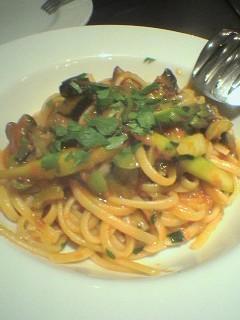
An original plate of “Sazae/Turbo Shellfish”, anchovy, green olives and Puttanesca Tomatoes Spaghetti! (Aquavite)

italy-venison

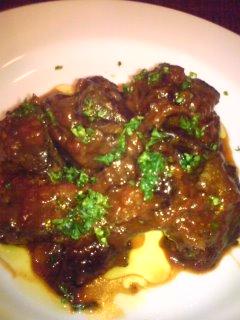
And finally such a heart-warming Venison stewed in red wine! (Latina)

What do you think?

Please check the new postings at:
sake, shochu and sushi

—————————————-
日本語のブログ
—————————————-

New Vegetable: Urui/Hosta Montana

urui-61

Last Sunday, while visiting my favourite supermarket inside the Shizuoka JR Station in search of unusual vegetables I had the pleasure to re-discover that increasingly popular Japanese vegetable, namely urui.
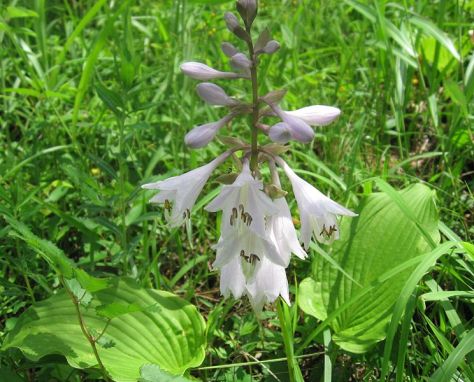
Its Latin name id Hosta Montana. If someone knows the English name, I would be very grateful to be enlightened!
Now, originally this vegetable was a “sansai/wild vegetable” until it has been successfully grown almost all over Japan.

urui-1

The real name of this mountain plant is Oobagibooshi, too long a name to be marketed, hence the “new” name “urui” for the cultivated species.
At full maturity it can reach imposing height and width.
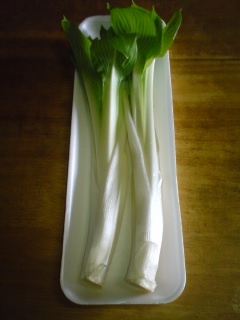
Like asparaguses, it is harvested early before it extends over a foot/30 cm height.

urui-2

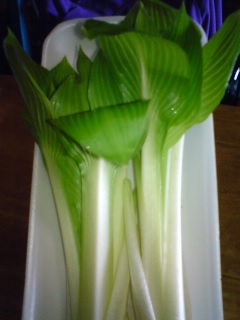
The leaves are still small, thin and tender then.
The whole plant, unless cooked as tenpura or fried, needs to be lightly boiled in lightly salted water beforehand.

urui-31

To prepare the plant for the evening snack I had in mind for the Missus (Natasha, Tangled Noodle, do you remember? LOL) I cut the plant into 3 equal lengths and boiled the two bottom ones first as they would take longer. Once boiled to satsifaction I took theme out and cooled them under cold water, cut them lengthwise to thin enough strips and laid them onto a sheet of kitchen paper.
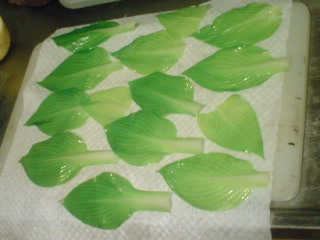
I boiled the leaves just long enough to make them tender, cooled them under cold water and spread them on a sheet of kitchen paper.

fine-ratatouille

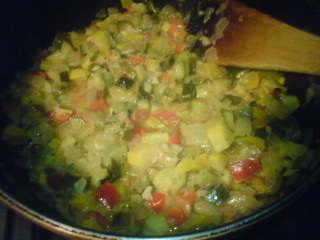
I had cooked a fine ratatouille beforehand, let it cool completely and added a dressing of my making with soft Dijon mustard, tarragon white wine vinegar, walnut oil, pepper and salt.
Now vegan and vegetarian friends should proceed directly to the dish I created as the rest ill not suit them!

seafood

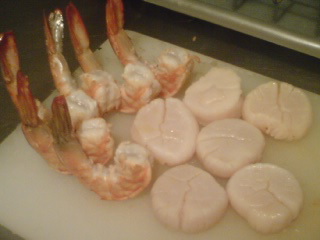
Next I lightly fried small scallops (after marinating then in lemon juice for a couple of minutes) just enough to keep them almost raw inside and put them aside to cool. I did the same, marinade included with some white shrimps.
Note: to attain their “standing shape” is very easy. First “peel” them leaving the tail ends for better “handling”, make a shallow cut along their back, take out the innards and fry just enough to cok both sides to a nice color and keep them almost hlf raw inside. This way they will be firm but extremely tender.

snack

As for the dish itself, vegan and vegetarian friends can forget the seafood and replace it with more ratatouille and edible flowers for example.
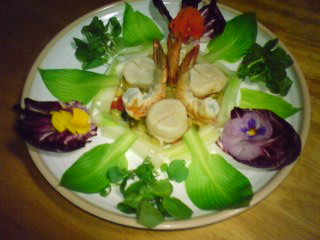
I built an “enclosure” with the cut urui stem, filled it with ratatouille. I placed the seafood geomatrically above the ratatouille. Around it I alternately placed urui leaves, trevise with edible flowers and watercress.
I made a point to take a pic before we sprinkled the lot with dressing (I leave the choice to you!)
Great with a Blanquette de Limoux sparkling wine!

Please check the new postings at:
sake, shochu and sushi

—————————————-
日本語のブログ
—————————————-

Vegetables Facts and Tips (7): Edible Flowers

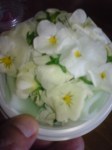
flowers-8
(5 edible flowers and water cress salad)

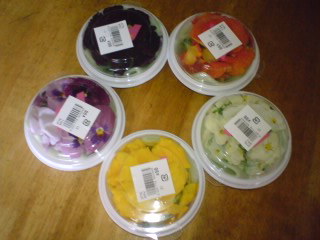
Yesterday, while I was shopping at the big supermarket at the Shizuoka JR Station I was reminded of a recent post by Natasha at 5 Star Foodie when I noticed edible flowers on sale.
Edible flowers have been on the Japanese markets for quite a few years already.
They tend to first appear in late winter, although it is only a question of time when they will be sold all year long!

flowers-1

flowers-2

They come in very cheap, at 98 yen a small box (1 US$), but they ought to be used as early as possible.
Aichi Prefecture, our neighbour Prefecture seems to have become the largest growing area in Japan.
Thai, Indian and Persian citizens, as far as I know, have been using flowers in food for quite some time. The Japanese have served mini-chrysanthemum and perilla flowers since immemorial times.

flowers-3 flowers-4 flowers-5 flowers-6 flowers-71

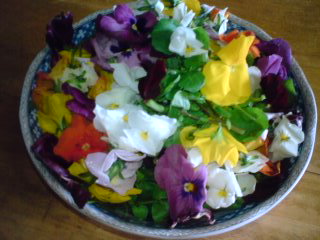
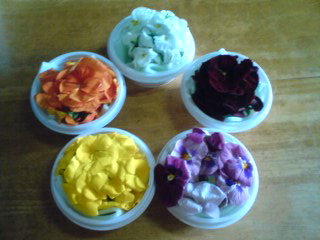
Most edible flowers are of the pansy, snapdragon, primura and so on varieties.
Do you recognize some of them above?

Now, the great news is that they contain an enormous amount of Vitamin A carotene:
1,100 to 9,400 micrograms per 100 grams as compared to 390 micrograms for tomatoes, 720 micrograms for broccoli and 3,100 micrograms for spinach.
as well as Vitamin C:
230 t0 650 mg per 100 grams as compared to 20 mg for tomatoes, 100 mg for spinach and 160 mg for broccoli!
The Japanes will use them either in flower or vegetable salads or on cakes.

One small advice for caution: don’t overeat them as they have purgative powers!

Please check the new postings at:
sake, shochu and sushi

—————————————-
日本語のブログ
—————————————-

Foodbuzz 24, 24, 24: 24 Sashimi & 24 Sushi in Wasabi Land!

24-24-24-131
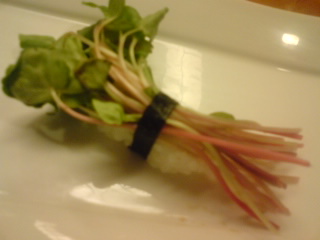
(Vegan Sushi: Soba no Shinme/Buckwheat Sprouts)

Wasabi has arguably become the most famous single Japanese condiment/spice in the World, but how many people know that it originated in Shizuoka Prefecture, which incidentally grows 80% of the total production in Japan?
(farmers have started growing it South Korea, Taiwan, Tasmania and elsewhere with various degrees of success)
It is mass-produced in the Izu Peninsula and at the foot of Mount Fuji, but the best wasabi is cultivated in altitude (500~1,000 meters) in Utougi, Shizuoka City, about 33 km up the Abe River.
An organic vegetable by definition, it requires a full two years to mature into constantly flowing pure water in comparatively cold environment.
img043
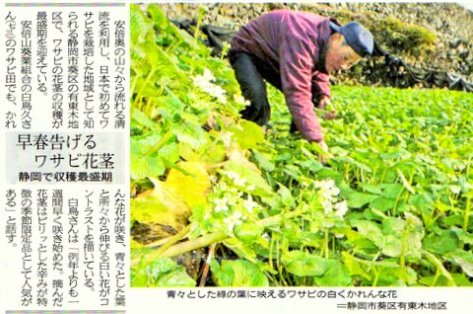
(Utougi/Courtesy of Shizuoka Shinbun, January 21st, 2009/Start of harvest season!)

Widely known in its wild form all over Japan, a resident in Utougi first successfully grew it in 1604. Tokugawa Ieyasu, the Shogun of Japan who had just retired in Sumpu (present Shizuoka City) after closing the doors of Japan, fell enamored with the condiment and actively promoted it.
The root is grated, preferably on a sharkskin grater, before being used, not only for sushi and sashimi, but also for raw or cooked meat, o-cha zuke (vegans, rejoice!) and almost any seafood.
dominique1
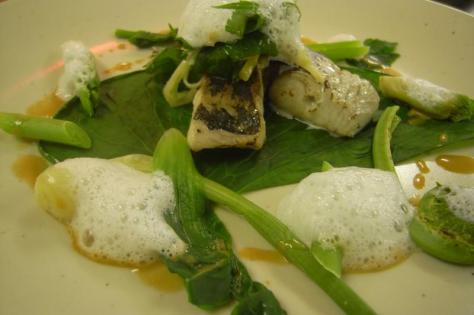
(Courtesy of Dominique Corby)

The stems and leaves are edible and a rare treat in their raw form in salads, in tempura, or steamed as demonstrated by Dominique Corby in his Osaka restaurant.
The stems and leaves (and flowers!) are also cut and pickled into sakekasu/sake white lees to become “wasabizuke”, another Shizuoka gastronomic specialty!
Tamaruya, the first shop to sell it at the beginning of the 17th Century, still exists in Shizuoka City, and even has a stand at Haneda Airport in Tokyo!
dominique2
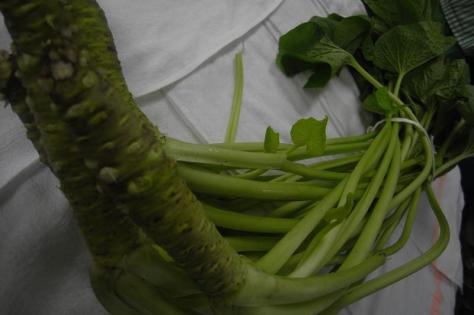
(Fresh whole wasabi fromUtogi sold at Shizuoka JR Station!)

The wasabi served and used in Shizuoka restaurants (and many homes) is naturally of the best quality. If you happen to stop over in Shizuoka City, make a point to visit Sunpu Raku Ichi shop inside the JR Station where the plant is sold fresh and whole for a ridiculous price!
Shizuoka Prefecture is not only blessed with wasabi (and green tea), but also prides itself in catching some of the best fish in Japan thanks to the rich waters of Suruga Bay and Peninsula. It is an open secret that most of it finds it way onto Tokyo restaurant tables!
As the icing on the cake, know that Shizuoka Prefecture has acquired national fame for providing some of the rarest and best sake thanks to the extravagant abundance of pure water flowing from the Southern Alps and Mount Fuji!

Which naturally leads me to the main theme of this posting, namely sashimi and sushi.
There is a widespread misconception that it is all about fish and meat.
Not true at all, as vegan and vegetarian friends will read in this account of the mission Foodbuzz had agreed to follow me on.
24-24-24-1a
(Vegan/Vegetarian Sashimi at Yasaitei)

There was no way I could fit everything into one dinner.
The obvious solution was to have two meals, lunch and dinner and a couple of friends to help me out!
Therefore, I booked lunch both at Yasatei and Sushi Ko in Shizuoka City. Neither place usually opens for lunch, buy I had enough reasons to persuade my good friends to indulge the old geezer!
Lunch was all about Sashimi:
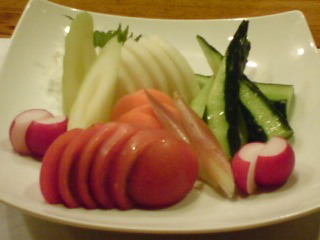
I ran first to Yasaitei to sample their vegetable sashimi of the day:
(See pic above, left to right, bottom to top)
Celery, Tomato (Ameera variety from Iwata City, as sweet as a fruit!), Organic Carrot from Chiba Prefecture, Myoga, Red Radish, Cucumber (su yoo/四葉/four leaves variety) and Daikon all grown organically (but for the carrot) in Shizuoka Prefecture. Shiso/perilla leaves and chopped white winter onion from Shizuoka, too.
24-24-24-1b1
As for their dressing, they were served with sesame oil, salt and miso mix.

Just took the time to call my good friend Mika and off we went to Sushi Ko, one of the best (and most reliable) sushi restaurants in town for all the other sushi promised!
24-24-24-21
Explaining the taste, texture and what else will make this blog too long (I promise to answer any queries!), so I shall keep to simple names and explanations:
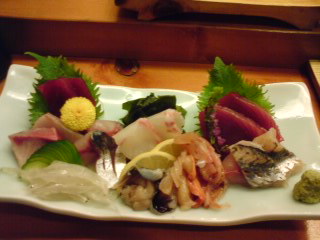
The first sashimi plate was:
(from right column to left column)
Shirauo/Japanese anchovy, Buri/Amberjack, Mebachi Maguro Akami/Big-eye Tuna Lean Part, Torigai/Surf Clam, Akagai/Blood Clam, Ishidai/Snapper variety, Aji/Saurel=Horse Mackerel, Katsuo/Bonito.
Served with shiso/perilla leaves and flowers, Wakame/Seaweed and edible Chrysanthemum/Kiku.
24-24-24-6
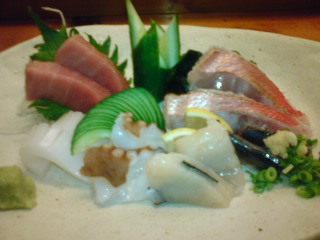
As for the second sashimi plate:
(front, then back)
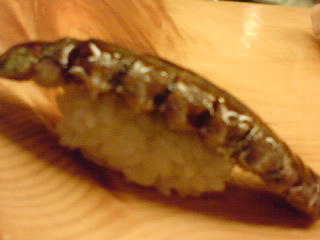
Mooko Ika/Cuttlefish variety, Matako/Octopus, Hotate/Scallops stuffed with nori/dry seaweed, Seguro Iwashi/Black-back Sardine.
Minami Maguro Chutoro/South Pacific Tuna semi-fat part, Kinmeidai/Snapper variety.
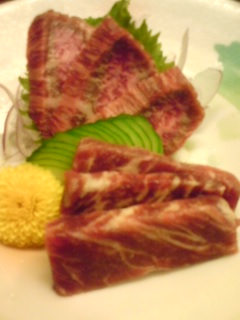
24-24-24-4a
The last sashimi are for the barbarian (I’m one of them) meat-eaters:
Gyusashi/Raw beef (above), Basashi/Raw horsemeat (below)
24-24-24-4b
Served with a mixture of soy sauce, raw quail egg, grated ginger and chopped thin leeks.

Well, I basically took care of all the sashimi, while my friend got herself lost in the following sushi:
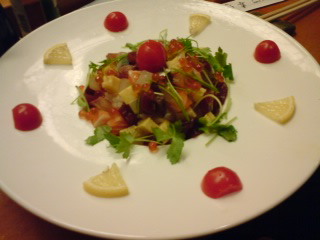
24-24-24-31
Chirashizuhi: Cubes of Tamagoyaki/Japanese omelette, Shake/Salmon, Amberjack (do you remember the Japanese word? LOL), Akami, Ikura/salmon roe, and mini tomatoes.
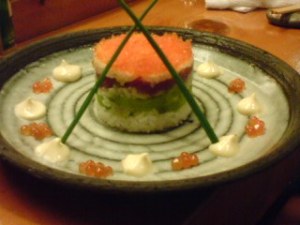
24-24-24-5
Millefueille Sushi:
Thin slices of cucumber, shari/sushi rice, avocado, shari, maguro akami, shari, tobikko/flying fish roe.
24-24-24-7
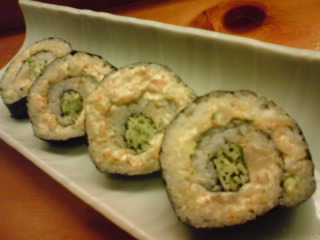
That is when Mika’s eyes got bigger than her stomach and asked for Sushi Ko’s special “Pirikara Hotate Maki/Spicy scalops Roll” consisting of finely chopped cucumber and a mixture of chopped scallops, mayonnaise, chili pepper, sesame oil, tobikko, wasabi and “tenkasu/fried tenpura batter crumbs”!
24-24-24-8
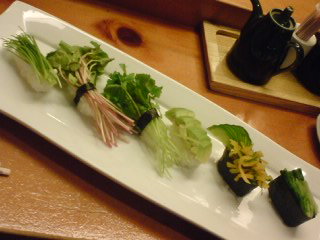
I was still hungry enough to ask for a set of 6 vegan/vegetarian sushi:
(from left to right)
Menegi/Leek Sprouts, Soba no Shinme/Buckwheat Sprouts, Mitsuba, avocado, Takuan/pickled Daiko and sSiso and Cucumber Gunkan, Mizuna Gunkan.

That was it for lunch!

——–

As for dinner, I asked Marcus, another foodbuzz member living in Shizuoka City to help me back at Sushi Ko as some serious drinking was involved,too!
We kept to sushi as the sashimi (24) had already been taken care of!

Her they are in the chronoligical order.
I found out later that some pics were a bit fuuzzy. I took all pictures with my mobile phone as a real camera would have bothered some of the customers in that very busy place. At least, they have the merit to be authentic!
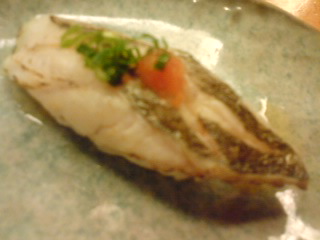
24-24-24-15
Tachiuo Aburi/Lightly grilled Scabbard Fish with ponzu, momioroshi and chopped thin leeks
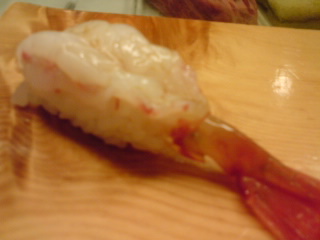
24-24-24-16
Botan ebi/large raw prawn (very sweet!)
24-24-24-17
Hirame/Sole (fuzzy pic/sorry!). Served with salt and lemon juice. No need for soy sauce!
24-24-24-18
Amaebi/Sweet shrimp

24-24-24-19
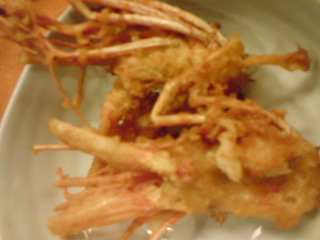
The deep-fried heads of the botan ebi. Tasted like rice crackers!
24-24-24-20
Maguro zuke/Marinated Tuna (my favourite!)
24-24-24-211
California roll/Japanese size!: boiled prawn, tamagoyaki, cucumber and black sesame.
24-24-24-22
Kani Tsume/Taraba Crab Pincers

24-24-24-23
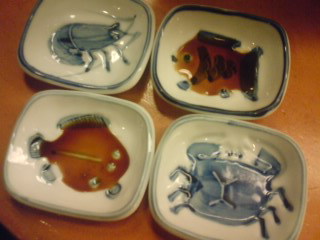
Cute soy soy sauce saucers, aren’t they? (inedible!)
24-24-24-24
Uni gunkan/Sea Urchin Gunkan

24-24-24-25
Shako/Mantis Shrimp. “Shako” also means “garage” in Japanese. Would you believe that a lot of Japanese customers actually say “Garage, kudasai!”?
24-24-24-26
Ikura gunkan/Salmon Roe Gunkan. Very generous serving!
24-24-24-27
Anago/Conger Eel. Traditionally cooked and served with sweet sauce.
24-24-24-28
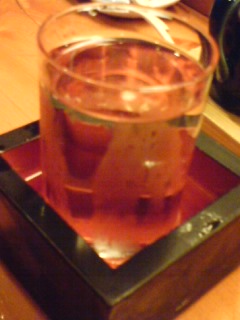
That’s the way they serve sake all over Japan!
24-24-24-291
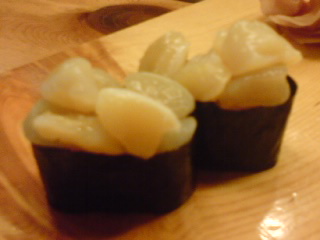
Kobashira/Round Clam Round Twin Muscles Gunkan.
24-24-24-30
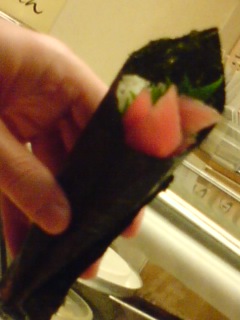
Maguro Te-Maki/Maguro Hand Roll.

24-24-24-311
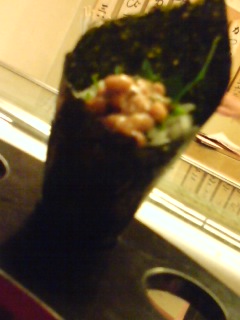
Vegan/vegetarian Te-Maki: natto, shiso, ume/Japanese pickled plum.
24-24-24-32
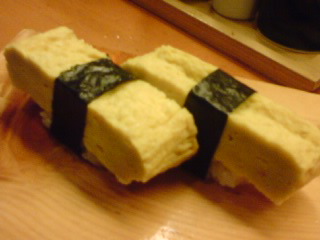
Tamagoyaki/Japanese Omelette sushi for first dessert.
24-24-24-33
Vegan/vegetarian Kanpyo-Maki/Dry Gourd Shavings (later cooked and marinated) roll for second dessert!

Now, I know I sampled exactly 24 sashimi, but I have the impression that I had more than 24 sushi!
Oh well, no worries!

I can send extra pics to anyone asking for them!

YASAITEI
Shizuoka City, Aoi Ku, Tokiwa-Cho, 1-6-2 Green Heights Wamon 1-C
Tel.: 054-2543277
Business hours: 17:30~22:00
Closed on Sundays
Reservations highly recommended
———–
SUSHI KO
shizuoka City, Aoi Ku, Ryogae-cho. 2-3-1 (Aoba Koen)
Tel.: 054-2512898
Business Hours: 17:00~25:00. 17:00~23:00 (Sundays)
Closed on Wednesdays
Reservations recommended
Credit cards OK
HOMEPAGE (Japanese)

Please check the new postings at:
sake, shochu and sushi
Mika could not help asking for the dessert-like Millefueille Ssushi made (from bottom to top) sliced cucumber, shari/sushi rice, avocado, shari, maguro akami, shari and tobikko/flying fish roe.

—————————————-
日本語のブログ
—————————————-
Vegan/vegetarian Japanese Dressing: Gomadare/Sesame Dressing

fig-sesame

Following a few queries about gomadare/sesame dressing I (and the Missus) use a lot, I felt a little information and a simple recipe would come in useful.

Gomadare is a great tasty dressing that can be used indifferently with cold dishes as a normal dressing, or in and with hot food, especially nabe/Japanese pot-au-feu, shabu-shabu and any meat or veg actually.
The problem that the gomadare sold over the counter is not vegan, or even vegetarian for that matter (it usually contains egg white and I don’t know what!)

Now, here is a simple recipe that will add that little zest and “consistency” to your favourite food:
Ingredients (for about 2 people):
white sesame seeds: 2 large tablespoons
soy milk: 4 large tablespoons
miso: 1 teaspoon
soy sauce: a little (up to taste)
sugar: a little
ground white sesame: a little

First ground together with a pestle the white sesame seeds, soy milk and miso until it has attained a nice smooth consistency.
If have difficulty mixing it, heat it a little.
Add soy sauce, sugar and ground white sesame to taste.
A little experimentation will work wonders.

Tip: my favourite dish is to peel ripe figs (see pic), cut them in quarters and pour a generous amount of gomadare over it!

Enjoy!

Please check the new postings at:
sake, shochu and sushi

—————————————-
日本語のブログ
—————————————-
Taky’s Classic Cakes (6): A Valence

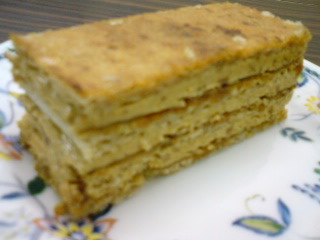
takys-09-02-13

Mr. Takuya Iwai, owner of Taky’s in Shizuoka City makes a point to travel every Sunday to Tokyo for further research and study for the benefit of his customers.

I have just had the occasion to sample his new creation, a French cake called “A Valence”. Valence is a city along the Rhone River in the Southern half a France, a region famous for its nougat.

This cake is of the Millefeuille variety with thin layers of biscuit lacquered with caramel between which a generous amount of very sweet cream is spread.
The cream is butter cream including ground hazelnuts, praline and nougat.
Simple in concept, a very fulfilling dessert for officionados with a sweet tooth!
To appreciated with a strong coffee!

TAKY’S
420-0839 Shizuoka City, Aoi Ku, Takajo, 1-11-10
Tel.: 054-255-2829
Opening hours: 11:00~22:00
Closed on Sundays

Please check the new postings at:
sake, shochu and sushi

—————————————-
日本語のブログ
—————————————-

Vegetables Facts and Tips (6): Asparaguses

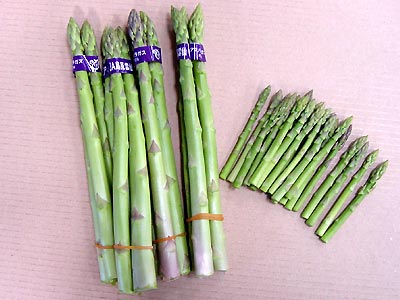
asparagus-varieties

Asparagus has been used from very early times as a vegetable and medicine, owing to its delicate flavour and diuretic properties. There is a recipe for cooking asparagus in the oldest surviving book of recipes, Apicius’s third century AD De re coquinaria, Book III. It is said that it was cultivated by the ancient Egyptians, Greeks and Romans, who ate it fresh when in season and dried the vegetable for use in winter.It lost its popularity in the Middle Ages but returned to favour in the seventeenth century.

Facts:
Season: They are at their best March~June in the Northern Hemisphere, but can be obtained all year round thanks to state-of-the-art greenhouse cultivation.
Beneficial elements: Carotene, Vitamin C and E, Vitmanins from the B group, Rutin, Vegetal fibers, Folic Acid, Potassium. The amino acid asparagine gets its name from the plant.
Asparagus rhizomes and root are used ethnomedically to treat urinary tract infections, as well as kidney and bladder stones.
Asparagus is also believed to have aphrodisiac properties (this belief is at least partially due to the phallic shape of the shoots).

Tips:
-Choose asparaguses with a clean cutting surface. No black spots should appear.
-The darker the colour, the better. As for white asparaguses, choses with a “wet cutting”
-When storing your asparaguses in the fridge, have them stand upright in a long narrow container with their foot wrapped in wet kitchen paper. Discard bent asparaguses on the supermarket stands.
-Choose green asparaguses with the smallest possible foliage along the stems and dark tips.
-When boiling them, either boil them stading upright inside a pasta mesh container, or absolutely flat in a sauce pan. Do not bend them.
-Asparaguses are best digested when lightly fried with oil.
-If Asparaguses cannot be obtained directly from the farmer, lightly peel but keep yop half as it is to preserve Vitamins.

Varieties:
Most popular varieties are shown in the picture above: White, Green and “wild-style” (apeelations vary!)

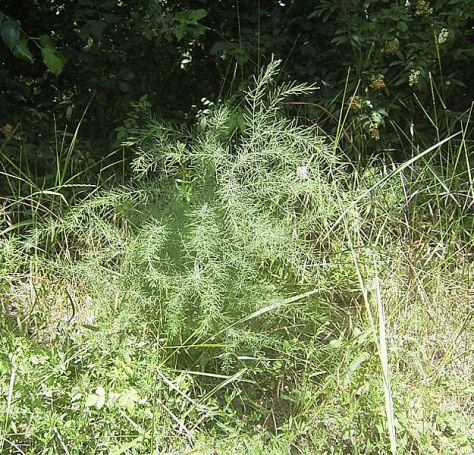
asparagus-wild

Asparaguses are abundant in the while, but they grow very quickly and get too hard for consumption.
The wild ones picked in their natural environment are my favourite as I fondly rememebr picking them up as a soldier in the South of France during our drills and cooking them in simple omelettes!

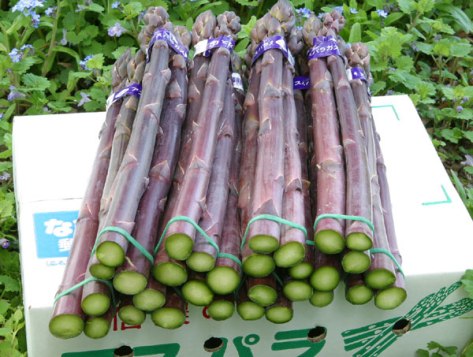
asparagus-violet

Violet asparaguse are very popular in any restaurants!

asparagus-mini

Mini-asparaguses are ever so popular in Japan thanks to their practical size.

uzu-41

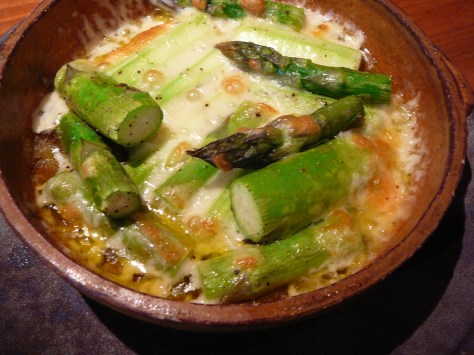
Recipes are endless, but my favourite is the large green asparaguses and mozzarella gratin as prepared and served at Uzu Izakaya in Shizuoka City!

Please check the new postings at:
sake, shochu and sushi

—————————————-
日本語のブログ
—————————————-

Japanese Fish Species: Bonito/Katsuo

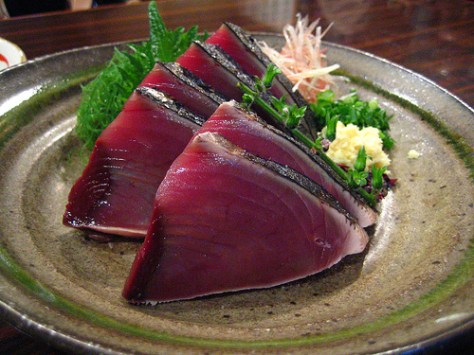
bonito-pic

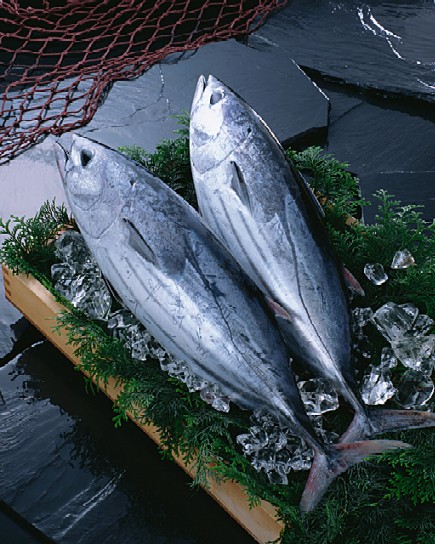
Bonito or “katsuo” in Japanese are extensively caught by fishermen from Numazu, Shimizu, Yaizu and Omaezaki Harbours. The main fishing areas are Shizuoka, Mie, Kochi & Miyazaki Prefectures.
It is also called “katsu” (Tohoku Region), “Honkatsuo” (Kyushu Island), “Magatsuo” (Shikoku and Kyushu Islands. N.B.: the same name designates another fish in other parts of Japan!), “Suji” (Yamaguchi & Wakayam Pref>).
It appears on the markets early Spring~Autumn as “sho gatsuo” (first bonito in Spring) and “modori gatsuo” (return bonito end of Autumn).
They are traditionally line-caught but nets have been used extensively in recent years.

bonito-sashimi

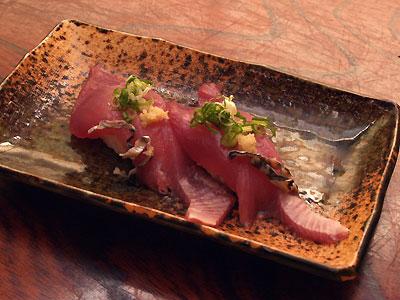
It can be appreciated raw, as sashimi with its skin or without it, preferably served with a saucer of soy sauce (shoyu) mixed with thin slices of fresh garlic, or with wasabi, a touch of lemon and shoyu,

bonito-3

or as nigiri topped with grated fresh ginger a thin slice of garlic, unless you prefer grated fresh ginger with chopped thin leeks.

bonito-tataki

Another very popular way to eat it that will please Europeans and North Americans alike, is “tataki”.

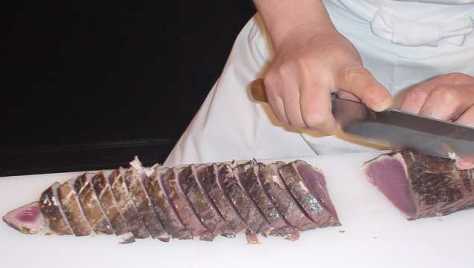
bonito-tataki-cut

The fish is first seared/grilled over charcoal until it is lightly cooked on the whole outside then plunged into ice water to stop it from cooking any longer. It is then cut into large slices and served with freshly chopped garlic and thin leeks, “shiso” leaves (perilla/beefsteak plant) and wasabi.

Note 1: in restaurants specify whether you want the skin or not when ordering sashimi.

Note 2: the same fish is a staple food in Sri LAnka where it is first smoked and then prepared as soup or curry!

Please check the new postings at:
sake, shochu and sushi

—————————————-
日本語のブログ
—————————————-

Cappuccino Art: Big Bad Wolf?

cappucino-wolf

I’ve been lazy today. I mean as far as blogging is concerned.
I just had too much on my agenda. I have to work sometimes! LOL

I was just having this “business meeting” at one of my favourite Cafettaria, namely CAFFETERIA IL CUORE in Shizuoka City, when I realized that the Cappucino I had asked was worth a second look.
Rowena will probably tell me this is run-of-the-mill in Italy, but in Japan, where people are in a hurry, taking the time to prepare an artful cup of coffee is almost a luxury.

Anyway, I think this wolf is a bad one. His face is just too sly! Okay, it might be a bear in disguise, too!LOL

CAFFETERIA IL CUORE
420-0035 Shizuoka City, Aoi Ku, Shichiken-cho, 13-20, Ishiwata Bldg. 1F
Tel. & fax: 054-2723737
Business hours: 11:30~23:00 (open every day)
Credit Cards OK

Please check the new postings at:
sake, shochu and sushi

—————————————-
日本語のブログ
—————————————-
Italian Restaurant: Trattoria . Il Paladino

paladino-14

Service: Excellent and very friendly
Facilities: great and very large washroom, great cleanliness overall
Prices: reasonable to expensive.
Specialty:Sicilian Cuisine. Top-class Italian wines and great collection of Grappa.
no-smoking-logo2 at tables.

The main difference between eating Italian food in Tokyo and away from that megalopolis in a “smaller” town like Shizuoka City is that in Tokyo, for all the superlative presentation and service, the food is designed to please Japanese palates first and foremost.
Now, in Shizuoka, chefs have a direct and private access to the local fishermen and farmers, enabling them to offer more authentc and adventurous Italian culinary delights.
Moreover, they all tend to specialize in one single region of the famous peninsula with extraordinary results and (comparatively) ridiculous prices.

Before opening his Trattoria late last year, Chef-owner Tetsuya Kokawa counts in his 17 years of experience 6 months spent travelling through Italy tasting and trying everything instead of the usual “study” at a particular Italian restaurant.
He specializes in Sicilian food whenever he can combining produce from Shizuoka Prefecture, Italy and France.
His sous-chef, Tsutomu Nakamura, with 10 years of experience and his wife Chieko Kokawa combine with him into a hard-working smiling team, always ready to chat with customers.

The present article is actually an anthology of one lunch and two dinners taken in quick succession. I will just keep to describing the food first and all the wines we tasted at the end:

paladino-1
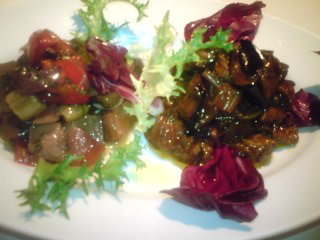
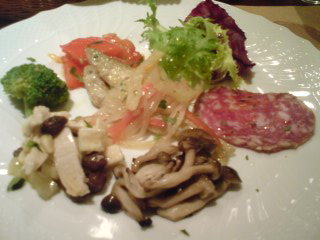
Antipasti misto 1

paladino-8
Antipasti misto 2

paladino-15
Antipasti misto 3

All mainly done with Shizuoka produce!

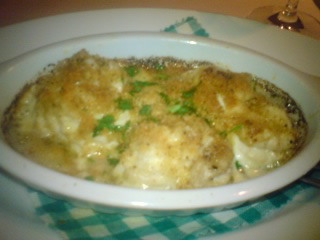
paladino-2
“Shirako/Cod Sperm Sacs” Gratin: a specialty in most Italian and French restaurants in Shizuoka City!

paladino-11
Pig Ears Jelly Terrine.

paladino-9
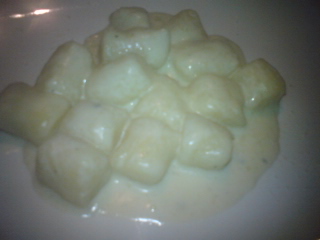
Gorgonzola Gnocchi. So simple and elegant!

paladino-3
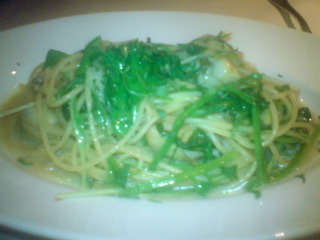
Shizuoka-grown Mizuna and cockles spaghetti.

paladino-16
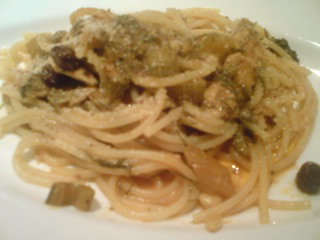
Sicilian sardines, raisins and pine nuts spaghetti.

paladino-4
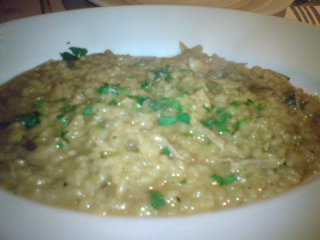
“Suwagani/Suwa Crab” and its “brains” Risotto.

paladino-5
Oven-Baked lamb chops with vegetables. So juicy!

paladino-17
Roasted soft pork from Shizuoka baked and fried with a sweet sauce (secret!)

paladino-12
Oven-baked “Shamo” Chicken with herbs. Again, so simple and tasty (and juicy!)

paladino-6
Raspberry Panacotta.

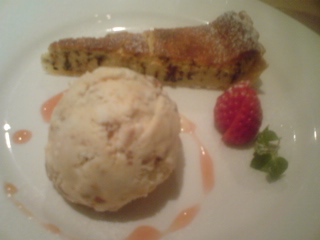
paladino-18
Tea and Mascarpone Tart and Sicilian-style crunchy ice-Cream.

And now, to the wines:

paladino-7

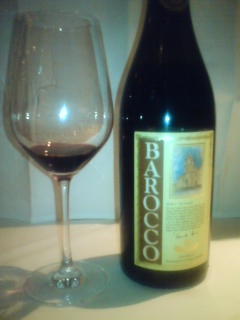
Barrocco 2001, Avide Co., Cerasuolo di Vittoria, Comiso, Sicilia, Red, Frappa + Calabrese grapes. 14 degrees. Bottled numbered
-Deep rich red
-Sweetish aroma. Flowers. Camelia. Raspberry. Getting stronger with time.
-Tastes like Sangiovese. Still young and tannic. Long tail.
Powerful and sharpish. Red fruits, sunlight (impression). Very Italian.
Opens slowly. Later makes a comeback with cherries.

paladino-10

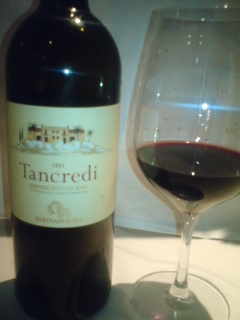
Tancredi 2005. Donnafugata Co. Sicilia. Cabernet Sauvignon (70%) + Nero d’Avola Grapes. 14 degrees.
-Very deep rich red
-Aroma: powerful, cassis, red fruits.
-Taste: powerful, well-rounded, full-bodied in spite of tannick attack. Still young. Shortish tail.
Red fruit appearing with second sip.

paladino-13

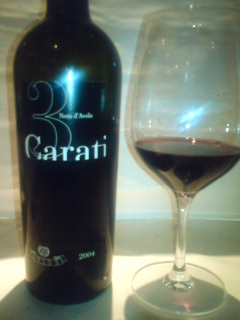
3.Carati, 2004, Sicilia, 100% Nero d’Avola Grapes.
-Deep red
-Aroma: Fruity and swetish: raspberry, blackberries, red fruit, green shrubs.
-Taste: Pine tree, very little tannin, soft. Short tail.
Coffee beans and bitter chocolate lingering in the back of the palate.

Alright, that’s about it (for this time!)!

Tratorria.Il Paladino
420-9839 Shizuoka City, Aoi-Ku, Takajo, 2-8-19
Tel.: 054-253-6537
Opening hours: 11:30~13:30, 17:00~22:00
Closed on Mondays
Credit cards OK (Dinner only)

Please check the new postings at:
sake, shochu and sushi

—————————————-
日本語のブログ
—————————————-