Tag Archives: Agricultural Products

Shizuoka Agriculture New Generation: Takeshi Ichikawa!

Takeshi Ichikawa/市川武史 (22 years old!)

The Western part of Shizuoka Prefecture is also called the greatest garden of Japan by many for good reasons.
Not so much for the quantity but for the extravagant quality and abundance of varieties!
A lot of devoted farmers and cooperating researchers from all fields have contributed to this amply justified reputation, but all this work would have come to nought without an emerging new generation, the more for it that the previous generation was practically lost to the lure of towns and desk jobs.

Takeshi Ichikawa and one of his clients, Chef Hiroyuki Adachi/足立久幸 at Harmony!

Fortunately times have changed, and with the advent of the Internet more young people are attracted to a healthier life, however physically strenuous it might prove.
That is why more and more young men and women like Takeshi Ichikawa, instead of wasting time at universities where students are increasingly losing their goals, prefer to learn and study through real experience and enjoy the joys of true social life with their peers and customers.

Takeshi Ichikawa ‘s outdoors corn fields!

Takeshi Ichikawa, after graduating from Iwata Prefceture Agriculture High School, decided neither to continue school or succeed to his father as a Nashi/Japanese pear producer, but to start his own corn and lettuce cultivation. At the age of 22 he already has 5 years of experience and is still learning fast!
It was never easy, especially considering the resistance of older generations to changes. He has been trying for some time to encourage young farmers like him to venture into new types of culture including poly-culture. He told me that still too few are allowed by their families to move that step forward…

That crow has become a real scarecrow!

But Takeshi has stayed humble all the time. He fully realizes he still has lots to learn. He couldn’t believe me when I told him crows are found all over the world!

These corn ears in the outdoors fields will soon be harvested!

Greenhouse corn

Takeshi grows two varieties of corn, kankan Musume and SKA 318, both Japanese hybrids, both in greenhouses and outdoors for a longer harvesting season.
This means very few holidays during the year. Fortunately for him his school sweetheart has become his wife and she has become the true half of their farming team.
I was invited inside their home and I can tell you these two are really young at heart and certainly more modern and world-conscious than many people of their age!

That is what I call real corn!

Takeshi is appalled at the idea that some people use gene-modified corn and will replant corn only from his own crop!
These kankan musume corn are a real beauty not only in shape and color but in taste.
I tasted them both raw (juicy and so sweet!) and cooked. No wonder they fetch a good price on the market!

Takeshi does not rest on his laurels and grows other vegetables like Qing geng cai (Green pak choi) to answer market demands and his own consumption.

They certainly look appetizing, but once again it looks like a lot of work!

His education at a top-class agricultural high school is paying off as he is conducting his own experiments on potential crops!

But this does not mean he is rejecting his own roots: he grows his own rice!

I told him it reminded me of an English lawn!

Now, Takeshi’s father is a renown grower of nashi/Japanese pears with fields dispersed all over the city!
A proof that his kosui/幸水 and hosui/豊水 are popular is that he sells them exclusively on a direct-sale basis!

These trees are 30 years old!

These fruits need constant pruning, a back-breaking and neck-twisting work if there is one!

These fruit will be ripe next August!
I do not need telling you when I’m paying my next visit to Takeshi! (and his father!)

Takeshi Ichikawa/Chouchou Farm
438-0804 Shizuoka Ken, Iwata Shi, Kamo, 200
静岡県磐田市加茂200
Tel/Fax: 0538-34-0629
Mobile: 080-1614-2271

Lettuce: October~April
Corn: June~July (May for greenhouse)
Japanese pears/nashi: August~September
Rice: Middle of September
Other vegetables (please call for more information!)
Private orders welcome!

RECOMMENDED RELATED SITES:
With a Glass,
Bread + Butter, Zoy Zhang, Hungry Neko, Think Twice, Frank Fariello, Mangantayon, Hapabento, Elinluv Tidbit Corner, Tokyo Terrace, Maison de Christina, Chrys Niles,Lexi, Culinary Musings, Wheeling Gourmet, Comestiblog, Chronicles Of A Curious Cook, Tokyo Through The Drinking Glass, Tokyo Foodcast, Palate To Pen, Yellin Yakimono Gallery, Tokyo Terrace, Hilah Cooking, More than a Mount Full, Arkonite Bento, Happy Little Bento; 5 Star Foodie; Jefferson’s Table; Oyster Culture; Gourmet Fury; Island Vittles; Good Beer & Country Boys; Rubber Slippers In Italy; Color Food daidokoro/Osaka;/a; The Witchy Kitchen; Citron Et Vanille, Lunsj Med Buffet/Estonian Gastronomy (English), Cook, Eat, Play, Repeat, Chrisoscope, Agrigraph, The Agriculture Portal to shizuoka!

Japanese Soy Sauce Varieties (updated)

SOY-2-KINDS
Japanese meal served with two kinds of soy sauce

To answer a query by my friend Sissi at With a Glass on tamari soy sauce, I thought that the best way to answer was to republish this old article of mine!

Almost everyone knows or has heard about soy sauce (or soya sauce in Europe).
It is even used in all kinds of cuisines in the world, be they vegetarian or not.

SOY-VATS
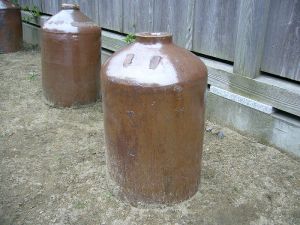
Ancient soy vats.

Authentic soy sauces are made by mixing the grain and/or soybeans with yeast or kōji (麹, the mold Aspergillus oryzae or A. sojae) and other related microorganisms. Traditionally soy sauces were fermented under natural conditions, such as in giant urns and under the sun, which was believed to contribute to additional flavours. Today, most of the commercially-produced counterparts are instead fermented under machine-controlled environments.

Although there are many types of soy sauce, all are salty and “earthy”-tasting brownish liquids used to season food while cooking or at the table. Soy sauce has a distinct basic taste called umami by the Japanese (旨味, literally “delicious taste”). Umami was first identified as a basic taste in 1908 by Kikunae Ikeda of the Tokyo Imperial University. The free glutamates which naturally occur in soy sauce are what give it this taste quality.

SOY-3-KINDS
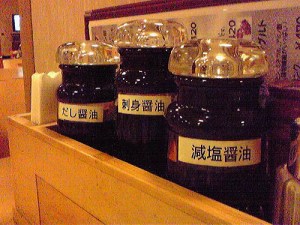
3 kinds of soy sauce as served in a Japanese izakaya: だし醤油/Dashi Soy Sauce, 刺身醤油/soy Sauce for sashimi, 減塩醤油/salt-reduced soy sauce

Artificially hydrolyzed Soy sauce
Many cheaper brands of soy sauces are made from hydrolyzed soy protein instead of brewed from natural bacterial and fungal cultures. These soy sauces do not have the natural color of authentic soy sauces and are typically colored with caramel coloring, and are popular in Southeast Asia and China, and are exported to Asian markets around the globe. They are derogatorily called Chemical Soy Sauce (“化學醬油” in Chinese), but despite this name are the most widely used type because they are cheap. Similar products are also sold as “liquid aminos” in the US and Canada.

Some artificial soy sauces pose potential health risks due to their content of the chloropropanols carcinogens 3-MCPD (3-chloro-1,2-propanediol) and all artificial soy sauces came under scrutiny for possible health risks due to the unregulated 1,3-DCP (1,3-dichloro-2-propanol) which are minor byproducts of the hydrochloric acid hydrolysis.

SOY-2-KINDSa
Difference in colour between 薄口醤油/light soy sauce and 濃口醤油/strong soy sauce

Japanese soy sauce varieties

Buddhist monks introduced soy sauce into Japan in the 7th century, where it is known as “shōyu”. The Japanese word “tamari” is derived from the verb “tamaru” that signifies “to accumulate”, referring to the fact that tamari was traditionally from the liquid byproduct produced during the fermentation of miso. Japan is the leading producer of tamari.

Japanese soy sauce or shō-yu (しょうゆ, or 醤油), is traditionally divided into 5 main categories depending on differences in their ingredients and method of production. Most but not all Japanese soy sauces include wheat as a primary ingredient, which tends to give them a slightly sweeter taste than their Chinese counterparts. They also tend towards an alcoholic sherry-like flavor, due to the addition of alcohol in the product. Not all soy sauces are interchangeable.

Koikuchi (濃口, “strong flavor”)
Originating in the Kantō region, its usage eventually spread all over Japan. Over 80% of the Japanese domestic soy sauce production is of koikuchi, and can be considered the typical Japanese soy sauce. It is produced from roughly equal quantities of soybean and wheat. This variety is also called kijōyu (生醤油) or namashōyu (生しょうゆ) when it is not pasteurized.
Usukuchi (淡口, “light flavor”)
Particularly popular in the Kansai region of Japan, it is both saltier and lighter in color than koikuchi. The lighter color arises from the usage of amazake, a sweet liquid made from fermented rice, that is used in its production.
Tamari (たまり)
Produced mainly in the Chūbu region of Japan, tamari is darker in appearance and richer in flavour than koikuchi. It contains little or no wheat; wheat-free tamari is popular among people eating a wheat free diet. It is the “original” Japanese soy sauce, as its recipe is closest to the soy sauce originally introduced to Japan from China. Technically, this variety is known as miso-damari (味噌溜り), as this is the liquid that runs off miso as it matures.
Shiro (白, “white”)
A very light colored soy sauce. In contrast to “tamari” soy sauce, “shiro” soy sauce uses mostly wheat and very little soybean, lending it a light appearance and sweet taste. It is more commonly used in the Kansai region to highlight the appearances of food, for example sashimi.
Saishikomi (再仕込, “twice-brewed”)
This variety substitutes previously-made koikuchi for the brine normally used in the process. Consequently, it is much darker and more strongly flavored. This type is also known as kanro shoyu (甘露醤油) or “sweet shoyu”.

Newer varieties of Japanese soy sauce include:

Gen’en (減塩, “reduced salt”)
Low-salt soy sauces also exist, but are not considered to be a separate variety of soy sauce, since the reduction in salt content is a process performed outside of the standard manufacture of soy sauce.
Amakuchi (甘口, “sweet flavor”)
Called “Hawaiian soy sauce” in those few parts of the US familiar with it, this is a variant of “koikuchi” soy sauce.

All of these varieties are sold in the marketplace in three different grades according to how they were produced:

Honjōzō hōshiki (本醸造 方式)
Contains 100% naturally fermented product.
Shinshiki hōshiki (新式 方式)
Contains 30-50% naturally fermented product.
Tennen jōzō (天然 醸造)
Means no added ingredients except alcohol.

All the varieties and grades may be sold according to three official levels of quality:

Hyōjun (標準)
Standard pasteurized.
Tokkyū (特級)
Special quality, not pasteurized.
Tokusen (特選)
Premium quality, usually implies limited quantity.

Other terms unrelated to the three official levels of quality:

Hatsuakane (初茜)
Refers to industrial grade used for flavoring, powder.
Chōtokusen (超特選)
Used by marketers to imply the best.

RECOMMENDED RELATED SITES:
With a Glass,
Bread + Butter, Zoy Zhang, Hungry Neko, Think Twice, Frank Fariello, Mangantayon, Hapabento, Elinluv Tidbit Corner, Tokyo Terrace, Maison de Christina, Chrys Niles,Lexi, Culinary Musings, Wheeling Gourmet, Comestiblog, Chronicles Of A Curious Cook, Tokyo Through The Drinking Glass, Tokyo Foodcast, Palate To Pen, Yellin Yakimono Gallery, Tokyo Terrace, Hilah Cooking, More than a Mount Full, Arkonite Bento, Happy Little Bento; 5 Star Foodie; Jefferson’s Table; Oyster Culture; Gourmet Fury; Island Vittles; Good Beer & Country Boys; Rubber Slippers In Italy; Color Food daidokoro/Osaka;/a; The Witchy Kitchen; Citron Et Vanille, Lunsj Med Buffet/Estonian Gastronomy (English), Cook, Eat, Play, Repeat, Chrisoscope, Agrigraph, The Agriculture Portal to shizuoka!
2nd Great Shizuoka Local Food Meet by Nagashima Liquor Shop!

Shizen No Chikara Organic Farm was participating!

A great consciousness of the merits, both gastronomic and healthy, of locally produced foods, drinks and processed foods has developed into a veritable revolution in Shizuoka Prefecture.
Uncountable events are organized and eagerly participated to all over the Prefecture, and one such event of note is the “Chisan Chishou.Shindofuji-Umai Mon Kai
./地産地消.身土不二・旨いもん会/ Locally produced and Consumed. Good Food Slogan and Association organized on May 29th by Nagashima Liquor Shop (Shizuoka City) at Fugetsuro/浮月楼, the former last residence of the Tokugawa Shogun Family.
Shindofuji/身土不二 was a slogan created in 1907 to exhort citizens to produce and eat local food!

Nagashima Liquor Shop was also contributing part of the fees paid by guests to help the victims of the recent terrible earthquake and tsunami in the north east of Japan!

As usual I came a bit early to check the preparations and take pictures of all participants before the guests would be in the way!

Amano Shoyu/a producer of great soy sauce made with the water of Mount Fuji in Gotenba City!

Local processed foods by Suzuyo Stores from Hamamatsu City!

Naturally the sake from Shizuoka Prefecture were well represented:
Shidaizumi Brewery in Fujieda City!

Fuji Takasago Brewery in Fujinomiya City!

Eikun Brewery from Yui, Shimizu Ku, Shizuoka City!

Sanwa Brewery from Shimizu Ku, Shizuoka City!

Kanzawagawa Brewery from Yui, Shimizu Ku, Shizuoka City!

Suruga Brewery from Suruga Ku, Shizuoka City!

Isojiman Brewery in Yaizu City!

Hatsukame Brewery from Okabe, Fujieda City!

Oumuraya Brewery in Shimada City!

Morimoto Brewery from Kikugawa City!

Hana No Mai Brewery from Nishi Ku, Hamamatsu City!

Aoshima Brewery from Fujieda Citry!

Sugii Brewery from Fujieda City!

Sorry, but I did not have the time to take a picture of Takashima Brewery, Numazu City!

Shizuoka wine was also represented by Naka Izu Winery all the way from the Izu Peninsula!

Wines from Yamanashi Prefecture were represented by three guest wineries!

Superlative organic vegetables from Shizuoka Prefecture were introduced by Shizen No Chikara farm!

All the food, cold and hot, was prepared by Fugetsurou!

Roast beef salad!

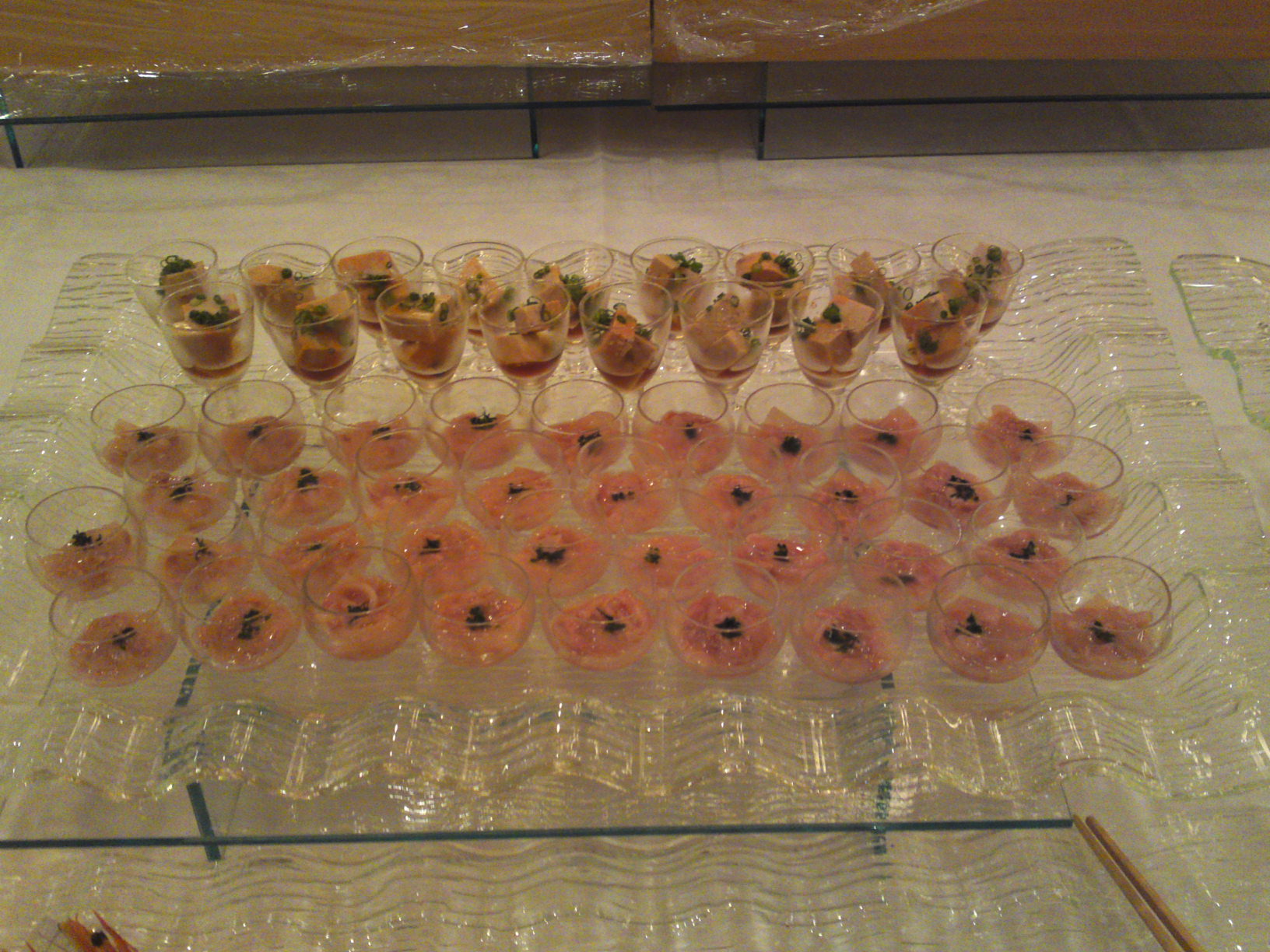
Japanese appetizers!

More Japanese appetizers!

And more Japanese appetizers!

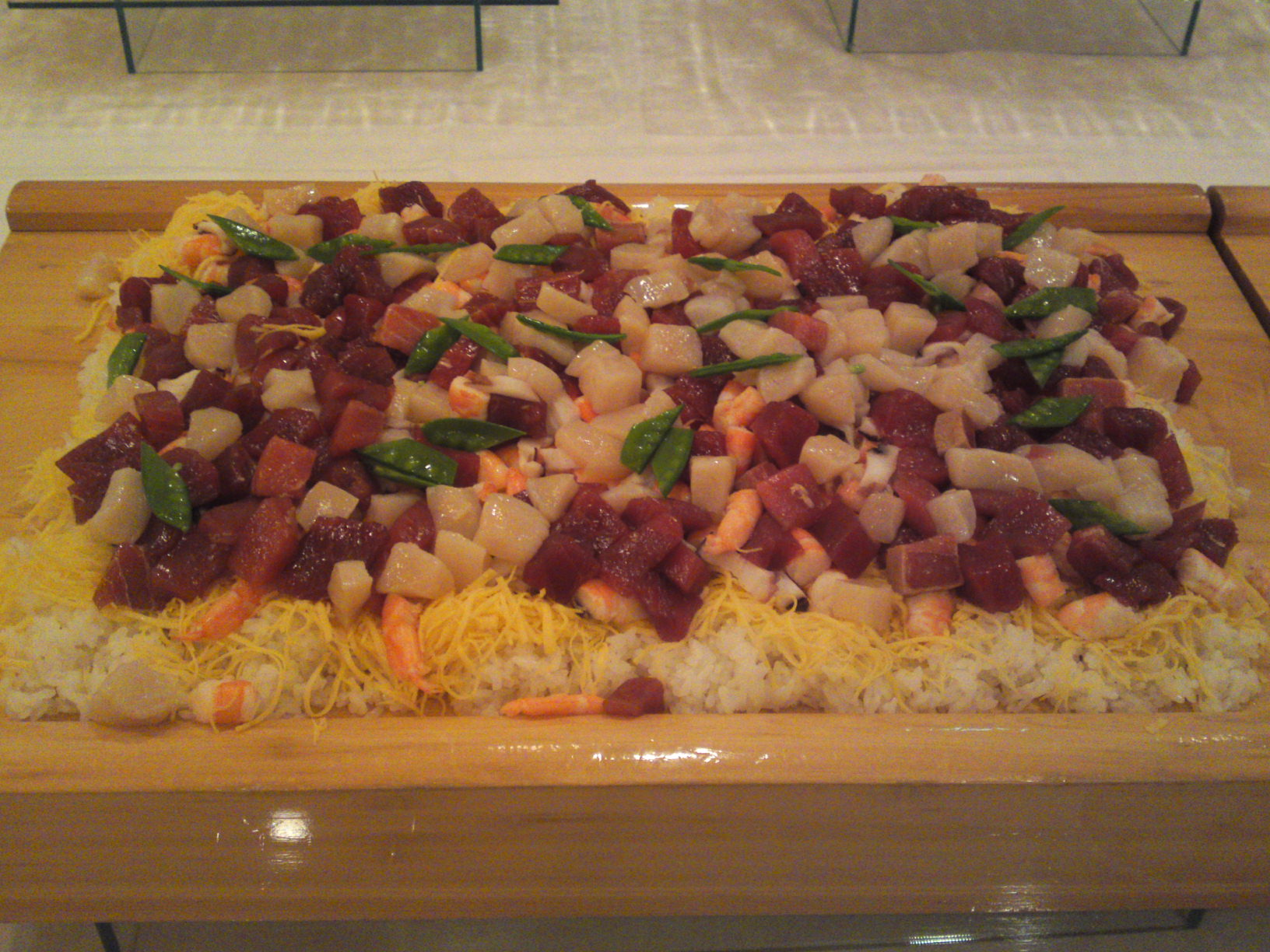
Chirashi Sushi!

I finished my round of pictures just in time before the guests made their entrance!

The place was soon crowded with more than 120 guests!

Some well-known faces!

Well, after that I was very busy for the next two hours tasting, eating, chatting and introducing many friends to each other.

At the end of the party Nagashima Liquor Shop and Kasai Izakaya expressed their sincere thanks to all the guests for a very successful party again!
More of the same is planned in the very near future, I can tell you!
Anyway this will lead to many interviews in the near future!

Nagashima Liquor Shop/長嶋酒店
420-0804, Shizuoka City, Aoi Ku, Ryuunan, 1-12-7
Tel.: 054-245-9260
Fax: 054-245-9252
BLOG (Japanese)

RECOMMENDED RELATED SITES:
With a Glass,
Bread + Butter, Zoy Zhang, Hungry Neko, Think Twice, Frank Fariello, Mangantayon, Hapabento, Elinluv Tidbit Corner, Tokyo Terrace, Maison de Christina, Chrys Niles,Lexi, Culinary Musings, Wheeling Gourmet, Comestiblog, Chronicles Of A Curious Cook, Tokyo Through The Drinking Glass, Tokyo Foodcast, Palate To Pen, Yellin Yakimono Gallery, Tokyo Terrace, Hilah Cooking, More than a Mount Full, Arkonite Bento, Happy Little Bento; 5 Star Foodie; Jefferson’s Table; Oyster Culture; Gourmet Fury; Island Vittles; Good Beer & Country Boys; Rubber Slippers In Italy; Color Food daidokoro/Osaka;/a; The Witchy Kitchen; Citron Et Vanille, Lunsj Med Buffet/Estonian Gastronomy (English), Cook, Eat, Play, Repeat, Chrisoscope, Agrigraph, The Agriculture Portal to shizuoka!

Shizuoka Vegetables: Shizen No Chikara Garden Party at Aquavite!

Service: Excellent and very friendly
Facilities: great and very large washroom, great cleanliness overall
Prices: reasonable to expensive. Top-class Italian wines. Private room for~8 people.
no-smoking-logo1 Non-smoking at counter! Private room can be made non-smoking, too!

Yesterday a party for 23 happy guests was organized by Shizen no Chikara Garden (“The Power of Nature”) at Aquavite with the help of Chef Masaru Aoki/青木勝!

A printed menu had been prepared for everyone for easy comprehension (if you asked for the translation in Italian, anyone would have understood! LOL)

I usually make a point to come a bit early at such parties “to take the temperature”!
The place was used to full capacity on that day!

The preparations started as early as the day before!
Incidentally I was sitting at the middle of the counter away from the crowd!

Real battle in the kitchen!

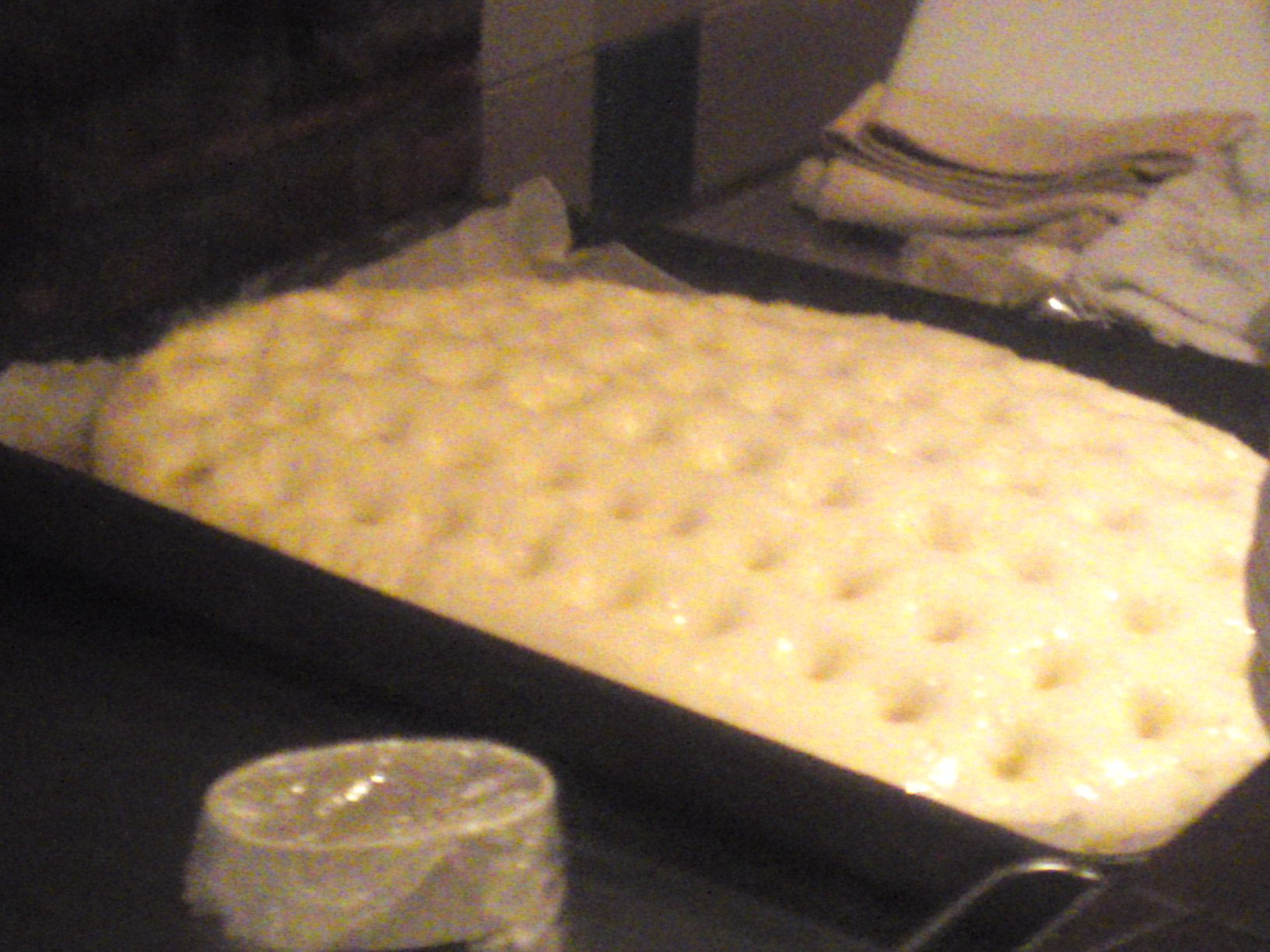
The Focaccia before being baked!

Out of the oven!

On the plate!

Organic vegetable directly from Shizen No Chikara Garden!

The first appetizer!
Can you guess what these green leaves are?
Green tea!

Second appetizer. Remember that all the vegetables are organic from the same Garden!

Cute little Spring onion!

Aquavite-style Barniacauda!

From another angle!
Such fun and pleasure dipping first-class vegetables into sophisticated dip!

Aiko pearl tomato spaghetti!

Unlike the other guests, I had the pleasure to witness their creation in front of my very eyes!

Involtini: broad beans and ricotta paste-filled Asahi Chicken roll!

.

From another angle!

Baked risotto!

The Involtini!

It was such a pleasure to break it up!

Making desserts from vegetables for such a big party is just unpractical, so Chef Aoki came with his own!

Sherbet created with musk melon from Fukuroi City!

Chef Aoki’s (very) special Tiramisu!

A big thanks to chef Aoki for a true pro’s work!

AQUAVITE
Address: 420-0034 Shizuoka Shi, Tokiwa-cho, 1-2-7, Tomii Bldg. 3F
Tel. & fax: 054-2740777
Opening hours: 11:30~14:00 18:00~22:00
Closed on Sundays
Homepage (Japanese)
Credit Cards OK

RECOMMENDED RELATED SITES:
With a Glass,
Bread + Butter, Zoy Zhang, Hungry Neko, Think Twice, Frank Fariello, Mangantayon, Hapabento, Elinluv Tidbit Corner, Tokyo Terrace, Maison de Christina, Chrys Niles,Lexi, Culinary Musings, Wheeling Gourmet, Comestiblog, Chronicles Of A Curious Cook, Tokyo Through The Drinking Glass, Tokyo Foodcast, Palate To Pen, Yellin Yakimono Gallery, Tokyo Terrace, Hilah Cooking, More than a Mount Full, Arkonite Bento, Happy Little Bento; 5 Star Foodie; Jefferson’s Table; Oyster Culture; Gourmet Fury; Island Vittles; Good Beer & Country Boys; Rubber Slippers In Italy; Color Food daidokoro/Osaka;/a; The Witchy Kitchen; Citron Et Vanille, Lunsj Med Buffet/Estonian Gastronomy (English), Cook, Eat, Play, Repeat, Chrisoscope, Agrigraph, The Agriculture Portal to shizuoka!

Japanese Vegetables: Potatoes (updated)

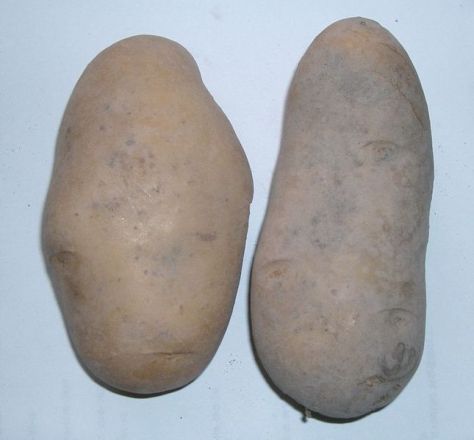
potatoes

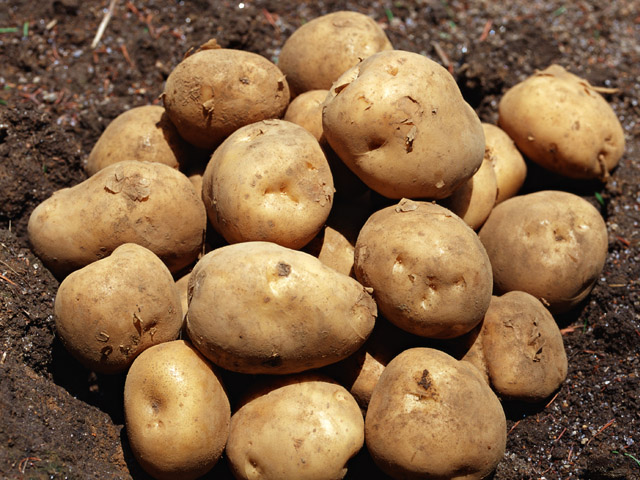
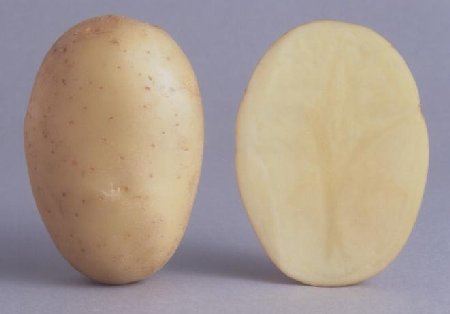
Potatoes were first introduced to Japan in 1910 by Baron Kawata from Great Britain/Ireland giving the name of “Danshaku/Baron” to the most commonly used potato in Japan, especially in croquettes and salads.
The biggest potato exporters to Japan are China and India, although more and more are grown locally.
Over the years Japanese famers have greatly expanded the number of varieties, and it has became an embarrassment of choices.

FACTS:

Potatoes are available all year round, but are at their peak from May to July in Japan when new potatoes can be eaten whole!
New potatoes can be found from Februray to June.

-Analytic data (as per 100g):
Energy: 76 kcal
Water: 79.8 g
Carbohydrates: 17.6 g
Proteins: 1.6 g
Inorganic qualities:
Potassium: 410 mg
Magnesium: 20 mg
Phosphorus: 40 mg
Iron: 0.4 mg
Zinc: 0.2 mg
Manganese: 0.11 mg
Vitamins:
B1: 0.09mg
B2: 0.03 mg
B6: 0.18 mg
C: 35 mg
Dietary fibers: 1.3 g

TIPS:

-Preservation: Wrap potatoes inside newspaper and keep them in a dark, well-ventilated place away from the sunlight.

-Choose specimens well-rounded and with healthy skin. Avoid specimens with buds or of greenish colour (risks of diarrhea). Cut out all “dark spots”!
-Preserve them together with apples to prevent buds from coming out!
-To avoid a change of colour, wash potatoes in water after peeling or cutting.
-If you want to keep your potatoes for a while after boiling them, plunge them in (change it as many times as necessary) cold water until completely cooled down. They will not break or crumble when used later.
-After boiling cut potatoes, throw away water and keep heating them until they have lost a great part of their moisture. They will attain a crispy enough nature without resorting to deep-frying!

HEALTH FACTS:

-Combined with kiwi fruit or cucumber, or green tea, or mayonnaise, they help combat cancer, high blood pressure and ageing.
-Combined with Chinese cabbage, or peach, or banana, or honey, they help combat digestive disorders.
-Combined with lemon, or strawberries, or spinach, or broccoli, they help combat stress, constipation and cancer.
-Combined with vinegar, or chicken, or bonito (katsuo), or oysters, they provide extra body stamina.

VARIETIES

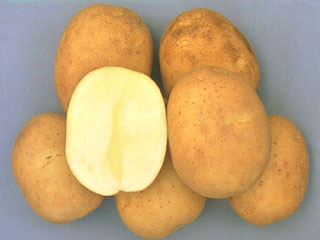
danshaku-potato

“Danshaku”

kitaakari-potato
“Kita Akari” used for mashed potatoes and croquettes,

mayqueen-potato
“May Queen” used in stews,

toyoshiro-potato
“Toyoshishiro” used for fried potatoes,

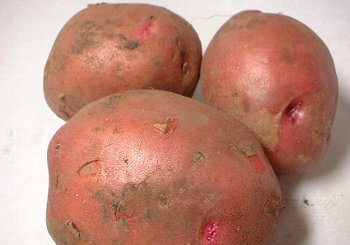
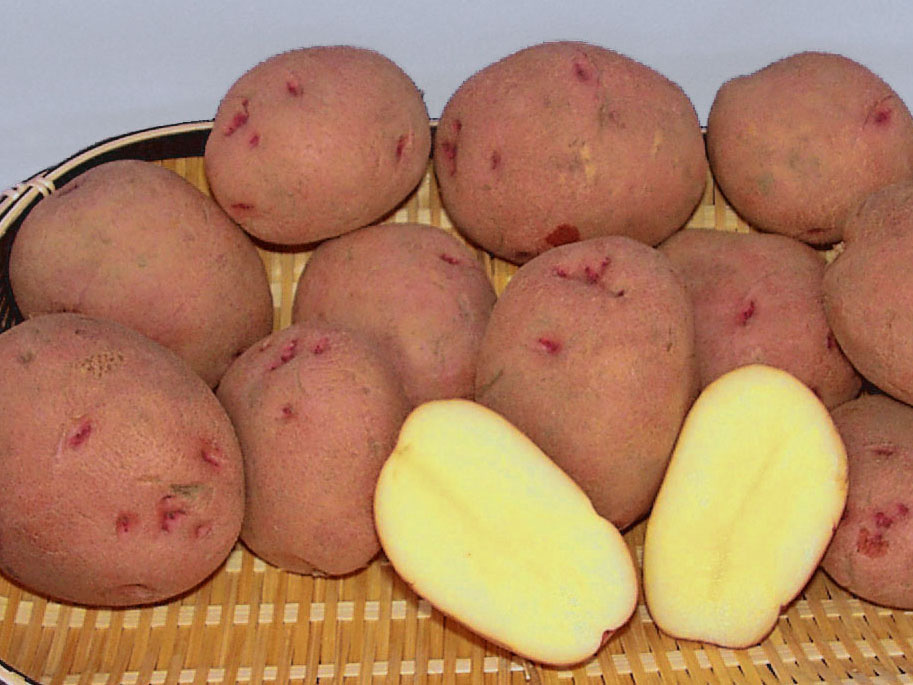
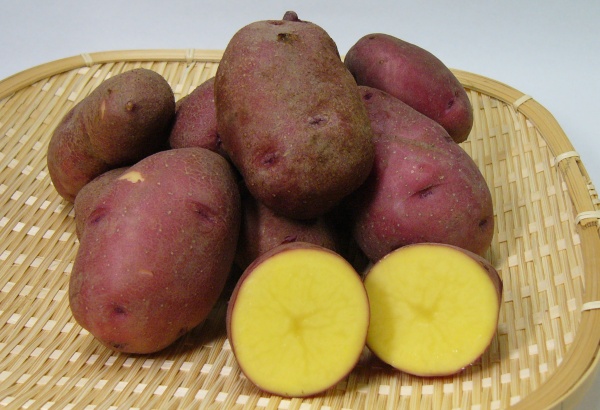
redandespotato
“Red Andes” used for croquettes and Pot au feu,

incanomezame-potato
“Inca No Mezame” used for stews.

“Inca No Hitomi”. Also called “Inca no Mezame”, they are popular for their nutty taste.

“Hokkai Kogane”. Grown mainly in Hokkaido Island, they have the particularity to oxydize and change colour a lot later than other potatoes.

“Tokachi Kogane”. Can be stocked and preserved a long time. Make for great fried potato chips!

“Mathilda”. Fine-grained and usually vey regular-shaped, theycan be presented whole for good effect.

“Touya”. Very good for long cooking as they don’t break away easily.

“Star Ruby”. A relatively new viety very apt for stews.

“Cynthia”. Recently imported vaiety from France. Very fine grain. Does break up even after being cooked long time.

“Kita Murasaki”. Very unusual potato with skin and flesh of the same colour. Better fried than boiled as wate will get couloured.

“Red Moon”. Also called “Red May Queen”, great for stews.

RECOMMENDED RELATED SITES:
With a Glass,
Bread + Butter, Zoy Zhang, Hungry Neko, Think Twice, Frank Fariello, Mangantayon, Hapabento, Elinluv Tidbit Corner, Tokyo Terrace, Maison de Christina, Chrys Niles,Lexi, Culinary Musings, Wheeling Gourmet, Comestiblog, Chronicles Of A Curious Cook, Tokyo Through The Drinking Glass, Tokyo Foodcast, Palate To Pen, Yellin Yakimono Gallery, Tokyo Terrace, Hilah Cooking, More than a Mount Full, Arkonite Bento, Happy Little Bento; 5 Star Foodie; Jefferson’s Table; Oyster Culture; Gourmet Fury; Island Vittles; Good Beer & Country Boys; Rubber Slippers In Italy; Color Food daidokoro/Osaka;/a; The Witchy Kitchen; Citron Et Vanille, Lunsj Med Buffet/Estonian Gastronomy (English), Cook, Eat, Play, Repeat, Chrisoscope, Agrigraph, The Agriculture Portal to shizuoka!

Shizuoka Sake Tasting: Doi Brewery-Hana no Ka Homare Fuji Rice Junmai Ginjyo Nama Genshu

Doi Brewery has been already been producing this Hana no Ka/華の香 for the past few years according to old traditional methods
This particular brew was concocted with Homare Fuji Sake Rice grown in Shizuoka Prefecture and is the untouched product as it is nama (no sterilizing) Junmai (no alcohol added) muroka/unfiltered, a true connoisseur’s delight!

It also comes with plenty of comments: kasumi ka kumo ka nigori zake/霞か雲かにごり酒/A sake like a haze or a cloud? (referring to the presence of sakekasu/white lees!

Rice: Homare Fuji (100% Shizuoka-grown)
Rice milled down to 55%
Yeast: Shizuoka Yeast
Alcohol: 17 degrees
Bottled in March 2011

Clarity: very clear when at rest, slightly smoky when stirred
Color: Faint golden hue
Aroma: Pleasant. Alcohol. Fruity. Pineapple.
Body: fluid and siruppy
Taste: Strong alcohol and junmai petillant attack which quickly disappears.
Fruity: pineapple, custard, almonds.
Makes a complete turn from sweetish to dryish, a telltale mark of sakekasu/white lees
Lingers for a while with alcohol leaving a somewhat marked impression.
Marries and changes little with food.

Overall: A sake obviously devised for food in spite of its ginjyo status.
A sake for the connoisseurs as it is absolutely left untouched.
Great for a Japanese izakaya-style party!

Must-see tasting websites:
-Sake: Tokyo Through The Drinking Glass, Tokyo Foodcast, Urban Sake, Sake World
-Wine: Palate To Pen, Warren Bobrow, Cellar Tours, Ancient Fire Wines Blog
-Beer: Good Beer & Country Boys, Another Pint, Please!
-Japanese Pottery to enjoy your favourite drinks: Yellin Yakimono Gallery

Shizuoka Sake Tasting: Fuji-Takasago Brewery-Homare Fuji Rice Junmai Nama Genshu

Fuji Takasago Brewery in Fujinomiya City, in spite of the strong earthquake in March is actively producing all kinds of sake (and shochu) brews!

They are also one of the 19 (out of 28) Shizuoka Breweries experimenting with Shizuoka-grown Homare Fuji Sake Rice (“sakamai”)!
This particular brew is a nama genshu junmai, meaning it is the very original product with no addition or alteration!

This time I had the perfect snack to enjoy the tasting!

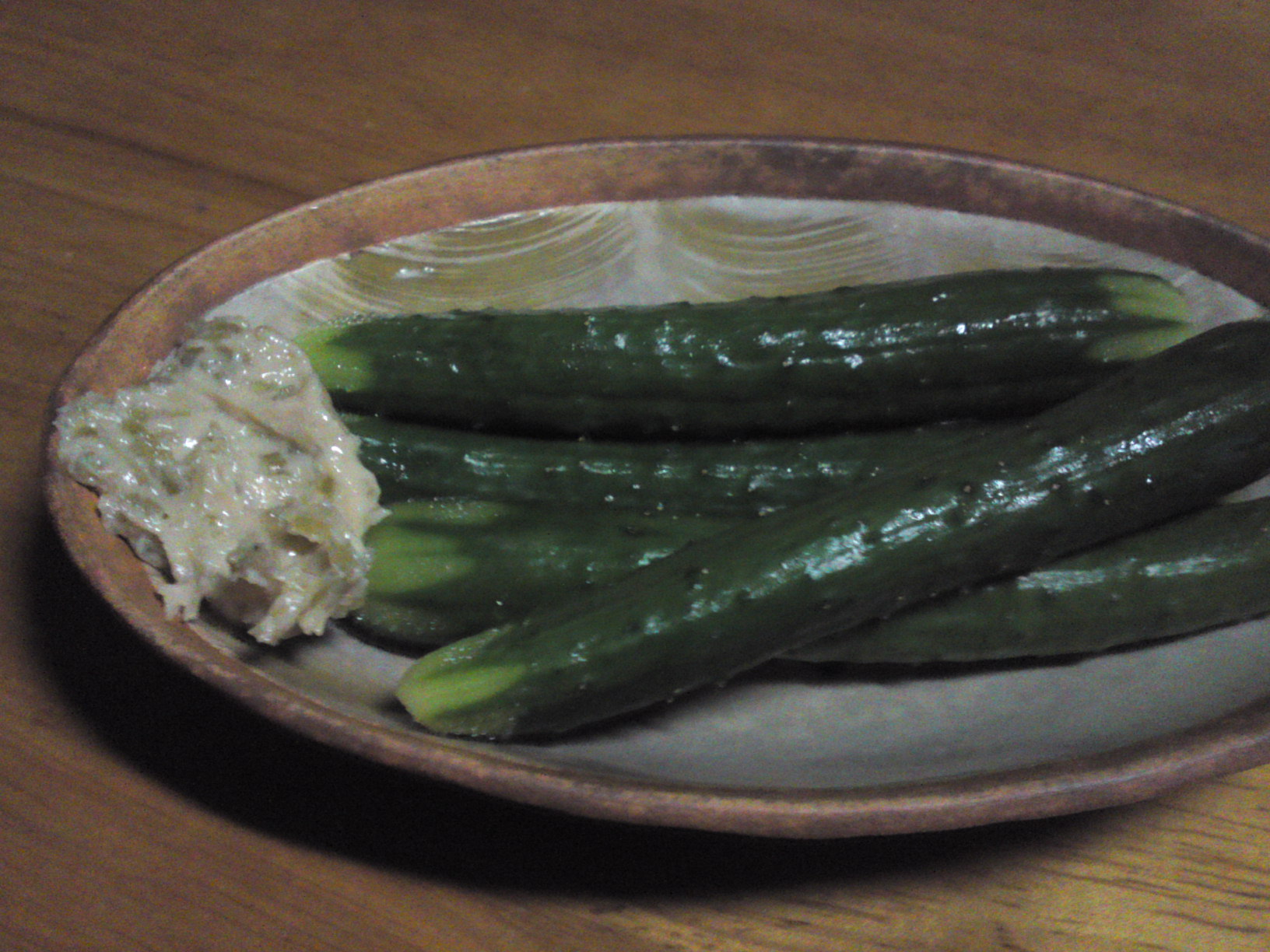
Shizuoka-grown crispy small cucumbers with wasabizuke/wasabi stems and leaves pickled in sake white lees/sake kasu!

Fuji-Takasago Brewery-Homare Fuji Rice Junmai Nama Genshu

Rice: Homare Fuji (100%)
Rice milled down to 60%
Alcohol: 17~18 degrees
Bottled in March 2011

Clarity: Very Clear
Color: Faint golden hue
Aroma: Light and fruity. Complex. Pineapple
Body: fluid
Taste: Strong dry attack with marked junmai petillant and nama genshu punch combining for a marked first impression.
Complex. Pineapple with hints of caramel and apricots
For all its strength, disappears fairly quickly with dry pineapple spreading over the palate with notes of almonds and apricot.
Changes little with food.

Overall: Intereting strong sake designed for food.
The dryish overall taste combines well with izakaya food.
Noteworthy sake for strong sake officionados!

Must-see tasting websites:
-Sake: Tokyo Through The Drinking Glass, Tokyo Foodcast, Urban Sake, Sake World
-Wine: Palate To Pen, Warren Bobrow, Cellar Tours, Ancient Fire Wines Blog
-Beer: Good Beer & Country Boys, Another Pint, Please!
-Japanese Pottery to enjoy your favourite drinks: Yellin Yakimono Gallery

Shizuoka Sake Tasting: Sugii Brewery-Yaoyorazu Yamahai Junmai/Homarefuji Rice

There are now 19 out of 28 breweries in Shizuoka Prefecture producing brews made with locally-grown sakamai/sake rice.
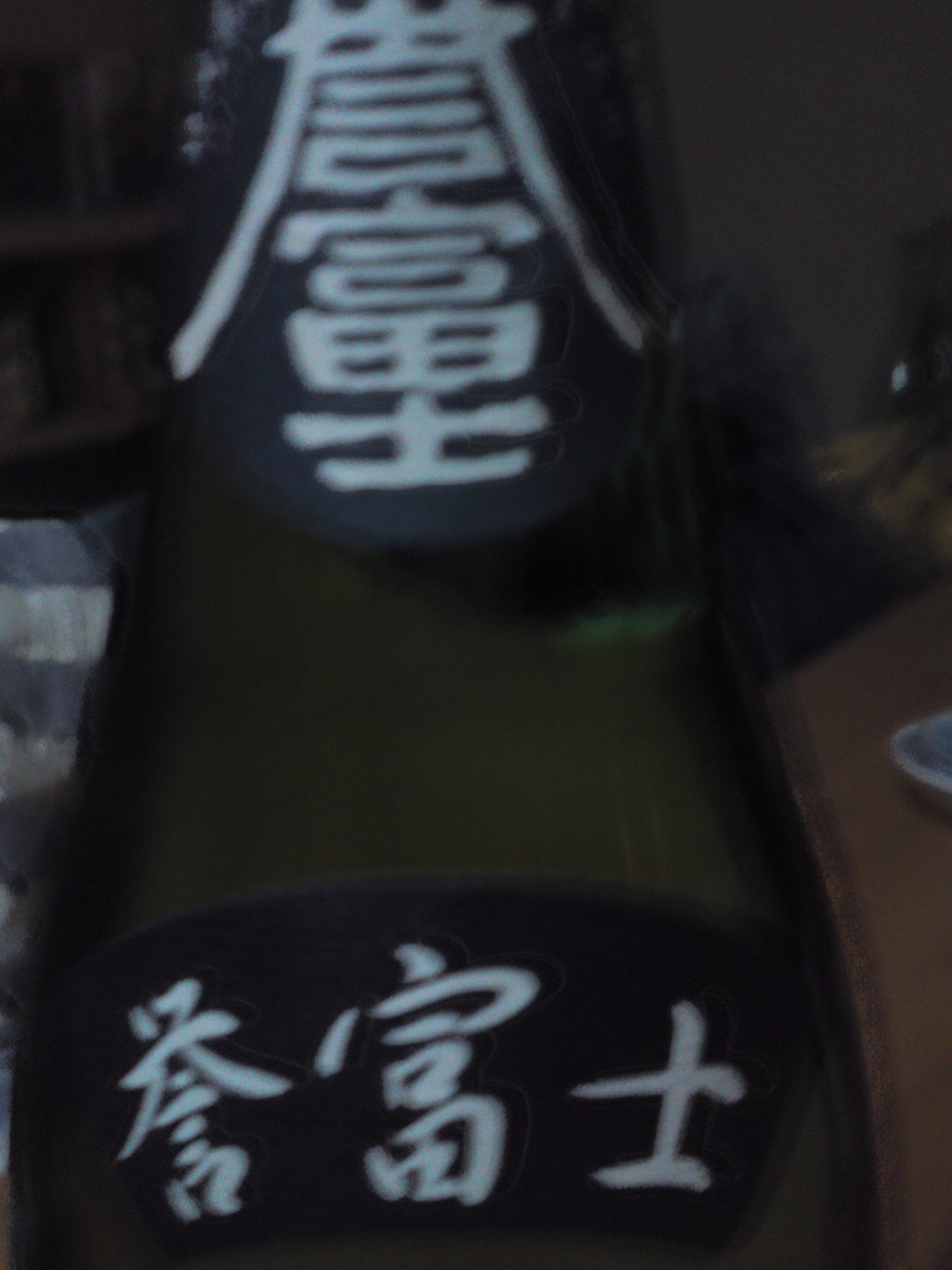
Sugii Brewery in Fujieda City has been experimenting with Shizuoka-grown Homarefuji/誉富士 rice right from the very beginning.
Now, they have come up for the last couple of years with a traditional brew that a lot of other breweries avoid because of its difficulty: Yamahai/山廃!

It does have a peculiar name: Yaorazu/八百萬 that even Japanese have a hard time to read! It is an allusion to a Shinto Shrine whose history dates back to the 8th Century!

Sugii Brewery: Yaoyorazu Yamahai Junmai Homarefuji Rice/杉井酒造ー八百萬山廃純米誉富士

Rice: Homare Fuji (Shizuoka-grown)
Rice milled down to 70%
Dryness: +6
Acidity: 2.3 (vry high for Shizuoka!)
Alcohol: 15~16 degrees
Bottled in Novemwber 2010

Clarity: Very clear
Color: faint yellow hue (normal for Yamahai)
Aroma: Light, sweetish. Custard, banana, macadamia nuts
Body: Fluid
Taste: Very dry attack.
Complex: dry oranges, almonds.
Turns a little sweetish later to make a quick dry comeback.
Disappears quickly for a yamahai.
Alcohol pepping up later.
Changes little with food.

Overall: More distinguished than expected for a yamahai.
A sake designed for food? Very probably as I found it in many izakayas in Fujieda City.
Strong and solid sake.
Perfect for food, especially that in izakaya.
Can be enjoyed slowly at home with a snack!

Must-see tasting websites:
-Sake: Tokyo Through The Drinking Glass, Tokyo Foodcast, Urban Sake, Sake World
-Wine: Palate To Pen, Warren Bobrow, Cellar Tours, Ancient Fire Wines Blog
-Beer: Good Beer & Country Boys, Another Pint, Please!
-Japanese Pottery to enjoy your favourite drinks: Yellin Yakimono Gallery

Shizuoka Sake Tasting: Takashima Brewery-Hakuin Masamune, Fujisan No Hi

The actual and very long name for their sake is:
Takashima Brewery, Hakuin Masamune, Heisei Nijusannen (2011), Fujisan No Hi (Mount Fuji Day), Asashibori (pressed in the morning), Homare Fuji (rice variety), Junmai (no alcohol added), Genshu (no water added), Origarami (natural pressing)!

Takashima Brewery has always been keen to create limited brews for local events and this particular one was not only made with Shizuoka-grown sake rice but also for Mount Fuji Day!

Rice: Homare Fuji 100%
Rice milled down to 60%
Alcohol: 17~18 degrees
Pressed on February 23rd, 2011

Clarity: very clear
Color: Transparent if not stirred as it contains white lees
Aroma: Sweetish, custard, banana. Very pleasant
Body: fluid, light
Taste: Sweetish attack. Complex. Welcome alcohol. Turns dry later.
Lighter but deeper than expected.
Pineapple, macadamia nuts, custard, dry almonds.
Lingers only a little with a very dry note.
Changes little with food. Especially great with fresh vegetables.
Junmai and white lees (sake kasu) very present for some extra impressions.

Overall: A very interesting sake with a more complex taste than expected.
Light enough in spite of its high alcohol content.
A sake that should please true sake lovers in search of unusual brews!

Must-see tasting websites:
-Sake: Tokyo Through The Drinking Glass, Tokyo Foodcast, Urban Sake, Sake World
-Wine: Palate To Pen, Warren Bobrow, Cellar Tours, Ancient Fire Wines Blog
-Beer: Good Beer & Country Boys, Another Pint, Please!
-Japanese Pottery to enjoy your favourite drinks: Yellin Yakimono Gallery
——————————–
Please check the new postings at:
sake, shochu and sushi

—————————————-
日本語のブログ
—————————————-

Shizuoka Sake Tasting: Fujinishiki Brewery-Fujinishiki Junmai Homarefuji Rice

There are presently 19 out of a total of 28 (active) Shizuoka prefecture breweries producing some of their sake made with Shizuoka-grown Homarefuji sake rice.
This rice is a hybrid developed from Yamada Nishiki sake rice.
We are certainly bound to see more of it with other Shizuoka-grown rice, not only from the taste and the economical point of views, but also because sake rice “imported” from the north of Japan might become scarce!

Rice: Homarefuji
Rice milled down to 60%
Dryness: +3
Acidity: 1.6
Alcohol: 16.5 degrees (genshu)
Bottled in March 2011

Clarity: very clear
Color: transparent
Aroma: fleeting, greens
Body: fluid
Taste: sweetish attack, turns quickly dry with almonds.
Junmai petillant.
Welcome alcohol.
Almonds combined with macadamia nuts and dry walnuts. persimmon.
Lingers on with a very dry note.
Changes little with food, but combines very well with any kind.

Overall: A straightforward sake with a “macho” character.
Strong, solid, but not overwhelming.
Probably best appreciated with food because of its high alcohol content.

Must-see tasting websites:
-Sake: Tokyo Through The Drinking Glass, Tokyo Foodcast, Urban Sake, Sake World
-Wine: Palate To Pen, Warren Bobrow, Cellar Tours, Ancient Fire Wines Blog
-Beer: Good Beer & Country Boys, Another Pint, Please!
-Japanese Pottery to enjoy your favourite drinks: Yellin Yakimono Gallery
——————————–
Please check the new postings at:
sake, shochu and sushi

—————————————-
日本語のブログ
—————————————-

Shizuoka Sake Tasting: Oumuraya Brewery-Jyuube Junmai/Shimada City Gohyakumangoku Rice

Oumuraya Brewery in Shimada City has encouraged local farmers for a long time.
They have been recently brewing sake with sakamai/酒米/sake rice by local farmers.

I’ve just found this bottle called Jyuube/重兵衛 at (Farmers Market) Japan Bazaar in Shimada City.
The rice grown is of the Hyakumangoku variety.
They went as far as decorating the bottle with pictures of the very farmers!
How about that for traceability!

Rice: Hyakumangoku (100%)
Alcohol: 15~16 degrees

Clarity: Very clear
Color: Transparent
Aroma: Strong and fruity: custard, vanilla
Body: Fluid
Taste: Strong and drier than expected attack.
Fruity: Custard, bananas. Junmai petillant.
Disappears quickly with dry almonds.
Light and dry, almost discreet with food.
Dry pineapple appearing later.

Overall: A straightforward sake.
Very pleasant, fruity with a dry note.
Accompanies food well.
Very pleasurable on its own or with food.
A sake for all seasons!

Must-see tasting websites:
-Sake: Tokyo Through The Drinking Glass, Tokyo Foodcast, Urban Sake, Sake World
-Wine: Palate To Pen, Warren Bobrow, Cellar Tours, Ancient Fire Wines Blog
-Beer: Good Beer & Country Boys, Another Pint, Please!
-Japanese Pottery to enjoy your favourite drinks: Yellin Yakimono Gallery
——————————–
Please check the new postings at:
sake, shochu and sushi

—————————————-
日本語のブログ
—————————————-

Shizuoka Agricultural Products: Japan Bazaar Supermarket in Shimada City

Aki Suzuki/鈴木朋 doing her Sunday shopping at Japan Bazaar!

Contrary to other Prefectures, Shizuoka Prefecture does not so much grow in large mass-producing farms but more in a myriad of highly specialized agricultural ventures.
Which means a lot of cooperation needed for marketing.
The good side of it all is that buyers can visit the supermarkets selling the products of so many small farmers in one single place for the pleasure and convenience of all, especially restaurateurs.

Such a place (there are many others of course!) is “Japan Bazaar” in Shimada City!
My good friend, Ms. Aki Suzuki, Chef at my favorite vegetables restaurant Yasaitei, regularly (that is, on Sundays) drives all the way from Shizuoka City to buy her ingredients there. A must destination for her when you realize they retail the products of more than 260 local farmers!

They even sell wooden fence poles and shiitake wood logs!

It is actually located in the middle of a very scenic spot in Shimada City next to immense tea fields and not far from the Oi River.
Now, let me show what they were selling on a Sunday at around lunch time (yesterday):

Flowers in pots.

Cut flowers for ikebana/flower arrangements.

Flowers is actually a major business in our Prefecture and all year round at that!

Leeks!

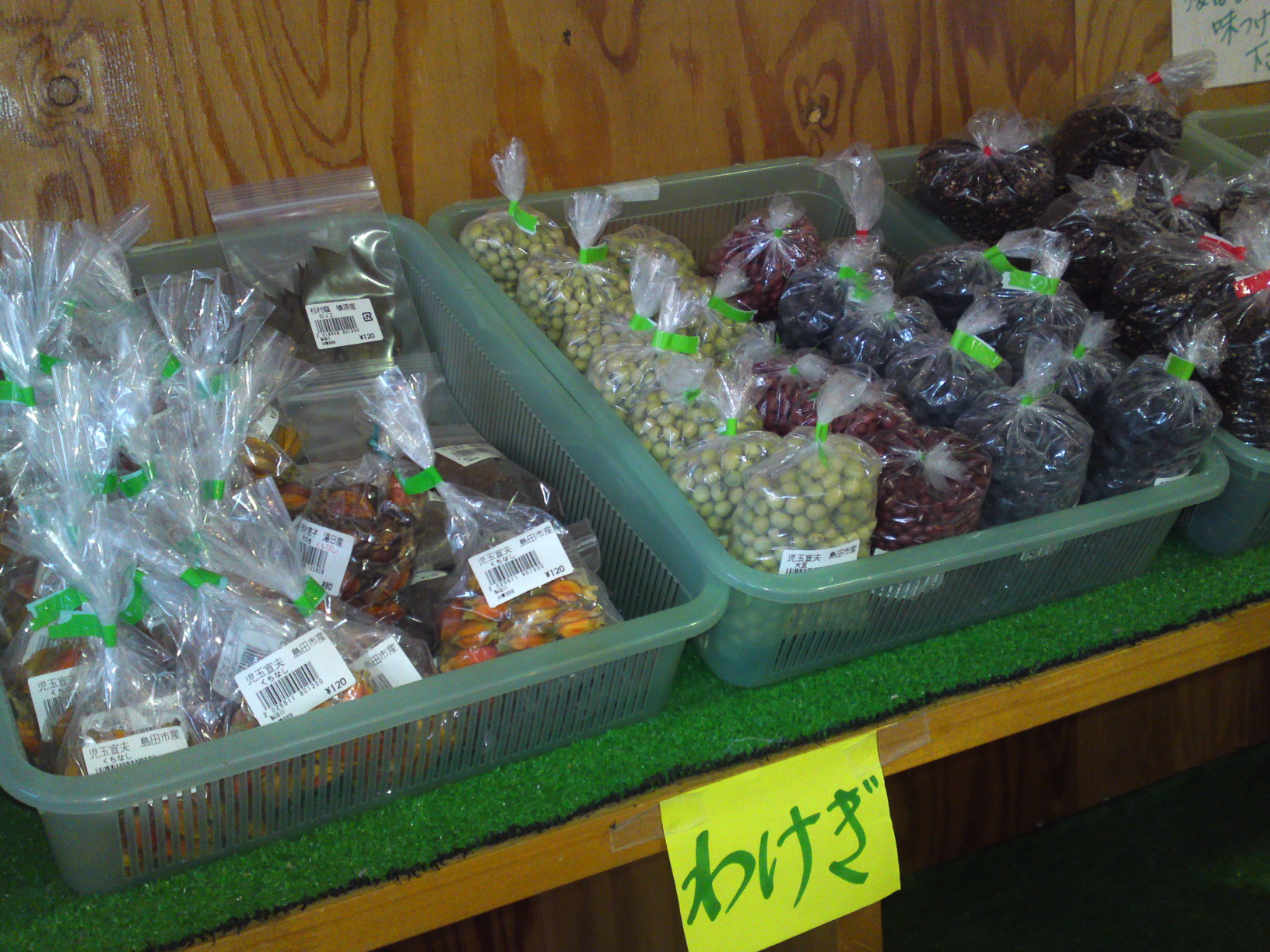
These little seeds on the left are actually gardenia/kuchinashi/梔子 seeds, mainly used as natural colorant!

Broccoli!

Winter/Spring onions, tender and juicy!

Shiitake mushrooms.

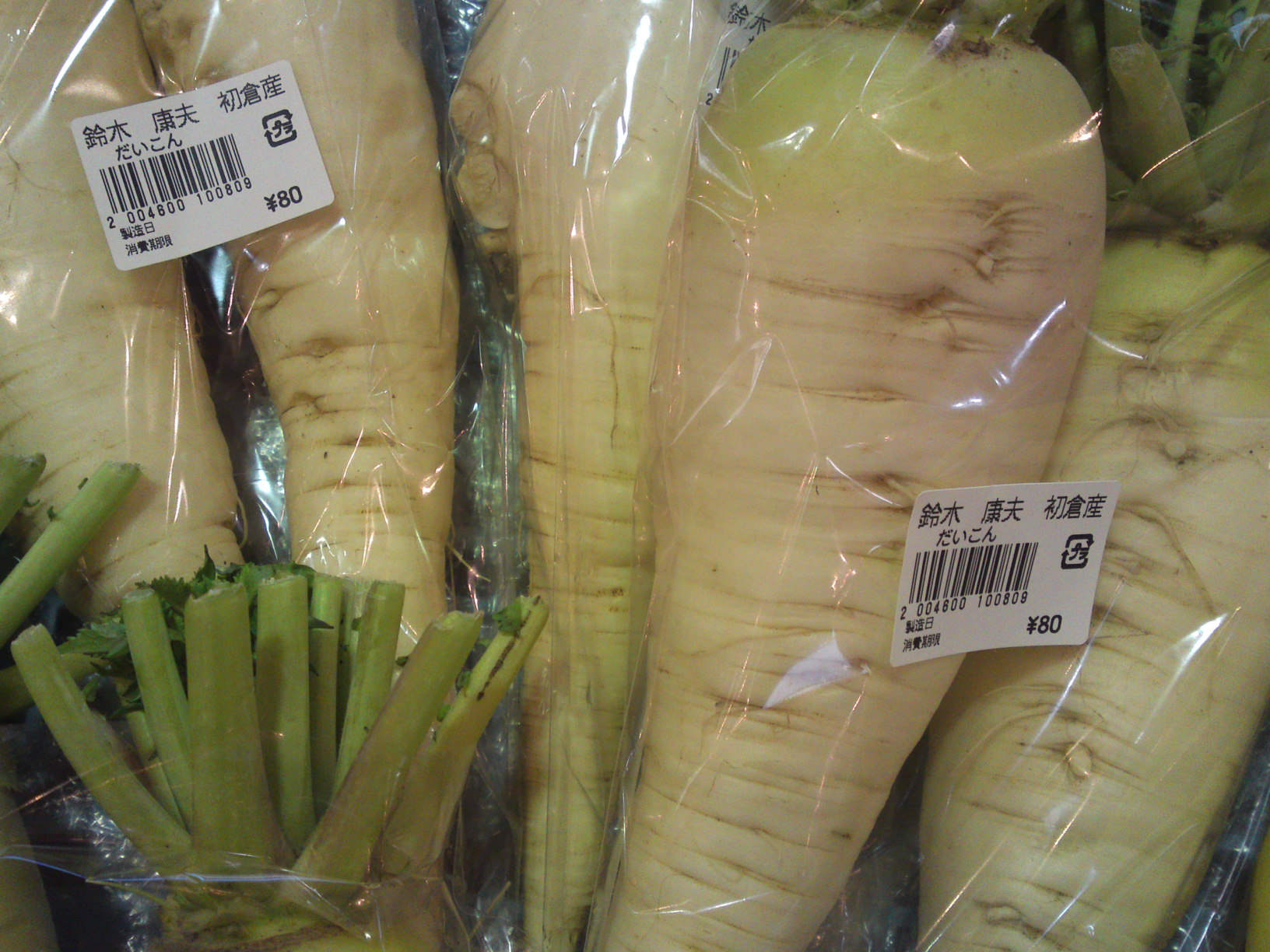
Daikon. I just couldn’t help taking a pic of that strange one!

These are daikon, too!

Great traceability!

Mini tomatoes.

Great eggs from Kikugawa City. Aki would come for them only!

Organic eggs from the same producer!

Shizuoka is strawberry country!

Potatoes.

Amanatsu/甘夏 oranges.

Pampeyu! The largest citrus in the world?

Suruga Elegant oranges.

Kintsuba/sword guard cakes.

Home-made bentos!

More of them!

Shizuoka Prefecture is growing more and more of its own rice!

Great traceability again!

Rice powder/Komeko/米粉, great for wheat allergics!

Home-made soap (not for eating!).

Home-made jams!

Tokoroten/Agar agar jelly and konnyaku jelly!

Shimada beef and pork!

Aki’s basket!

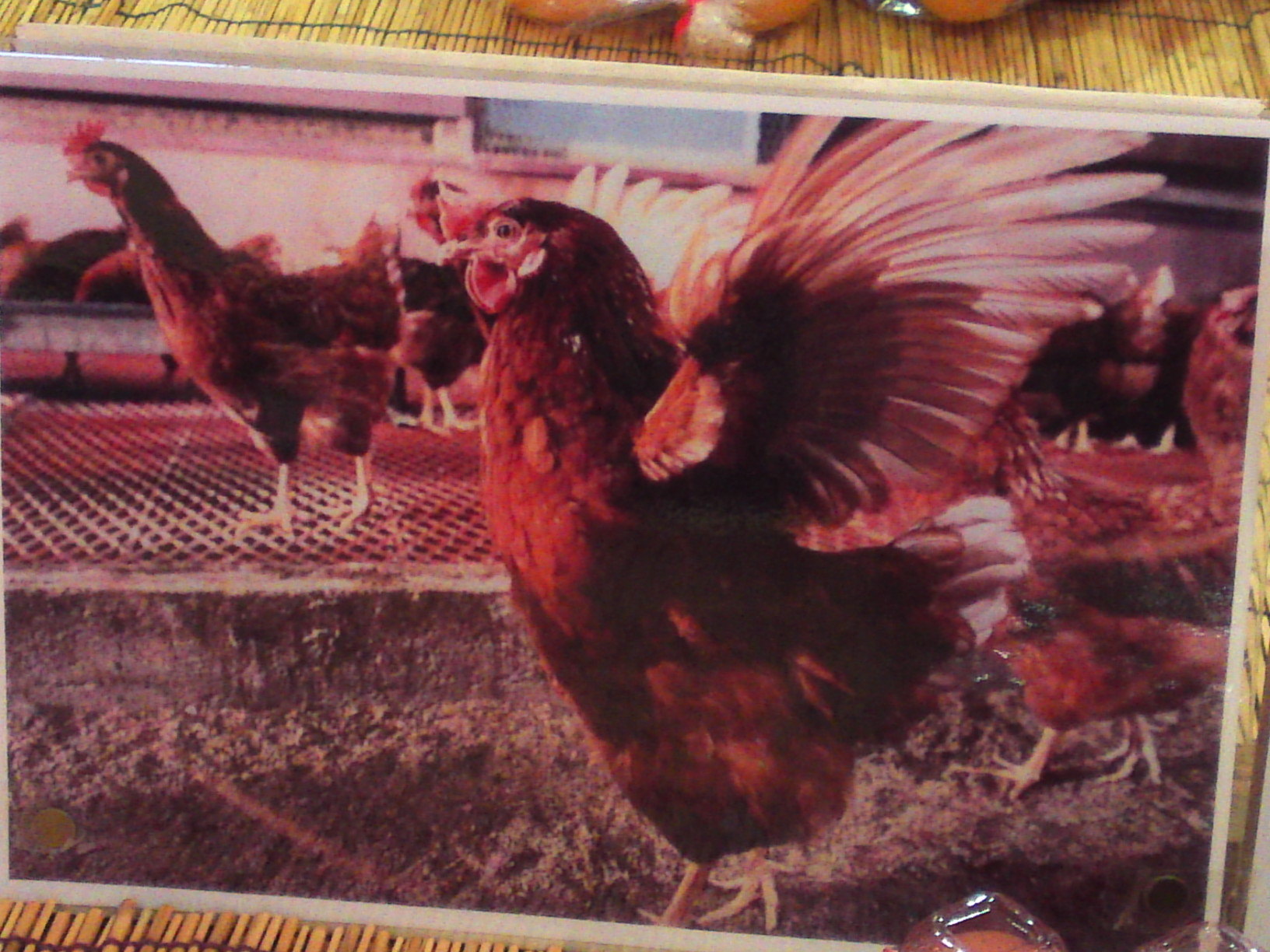
Traceability again: the hens that lay the eggs on sale!

Sake made with sake rice (gohyakumangoku) grown in Shimada City and brewed by Oomuraya Brewery (next article!)

(Farmers Market) Japan Bazaar
427-0111 Shizuoka ken, Shimada Shi, Sakamoto, 4245-3
Tel.: 0547-5505
Fax: 0547-38-5507
Business hours: 09:00~17:30
50-car park
Closed on New Year only

RECOMMENDED RELATED SITES:
Warren Bobrow, Bread + Butter, Zoy Zhang, Hungry Neko, Think Twice, Frank Fariello, Mangantayon, Hapabento, Elinluv Tidbit Corner, Tokyo Terrace, Maison de Christina, Chrys Niles,Lexi, Culinary Musings, Wheeling Gourmet, Comestiblog, Chronicles Of A Curious Cook, Tokyo Through The Drinking Glass, Tokyo Foodcast, Palate To Pen, Yellin Yakimono Gallery, Tokyo Terrace, Hilah Cooking, More than a Mount Full, Arkonite Bento, Happy Little Bento; 5 Star Foodie; Jefferson’s Table; Oyster Culture; Gourmet Fury; Island Vittles; Good Beer & Country Boys; Rubber Slippers In Italy; Color Food daidokoro/Osaka;/a; The Witchy Kitchen; Citron Et Vanille, Lunsj Med Buffet/Estonian Gastronomy (English), Cook, Eat, Play, Repeat, Chrisoscope, Agrigraph, The Agriculture Portal to shizuoka!

Please check the new postings at:
sake, shochu and sushi

Shizuoka Agricultural Products: Stick Ginger at Hatada Garden

Toshikatsu Hatada/畑田敏克, the 7th generation of the Hatada Family!

With Chiba and Inbaraki Prefectures, stick ginger (or leaf ginger/ha shyouga/葉生姜 in Japanese) is a specialty of Shizuoka Prefecture, and the best are said to be cultivated in Kunou/久能, Suruga Ku, Shizuoka City near the sea where the sandy soil is most propitious!

Yesterday morning I found the whole family and their employees hard at work cleaning, sorting, cutting and packaging the leaf ginger harvested that morning.
Father, Mother, son and 4 staff, including a full time are not too many to harvest the vegetable grown on 1,500 tsubo/4,000 square meters in greenhouses.

Toshikatsu’s fater hard at work!
Toshikatsu’s grandfather first grew leaf ginger 34 years ago!

Ready for packaging. Beautiful, aren’t they?

For a closer look!

The root extremity will be snapped off (not cut!).

The snapped off extremities will not be thrown away. They are just too good! Their filaments and other unwanted parts can easily be pared off before the pieces of fresh ginger can be served in many ways, cooked or raw.
Toshikatsu recommend them fried rolled into tasty bacon!

Toshikatsu makes his own jam with the snapped off extremities of the fresh ginger and honey only. A true health food!

Or pickle them in amazu/sweet vinegar! I was offered that lot! a beauty!

The leaf ginger are carefully selected before delivery.

They usually harvest enough to prepare 100 boxes daily, but they have been asked to limit their delivery to forty daily boxes by their Association due to the recent earthquakes in north east Japan.

Half the boxes will be delivered immediately to Tokyo and the other half to various parts of Shizuoka Prefecture.

The inside of the leaf house greenhouses are hot!
I was advised to take off as many clothes as possible before entering.
40 degrees Celsius! No wonder!
The temperature is controlled by automatic ventilators, but Toshikatsu has to visit the greenhouses every morning and lift the second vinyl sheets where, if one is not careful, the temperature might go into the 70’s!

As for fertilizers, Toshikatsu uses only organic fertilizer, liquid or solid.
Pesticides will be spread at the the bare minimum only once a year.

The care for the health and quality of the vegetables will mean an unavoidable number of them rotting away that have to be taken out at once.

Toshikatsu does not market the rhyzomes (roots) that are found in markets all over the world, but use them for planting.

Choosing the right rhyzomes requires a lot of experience, good eyes, nose and ears (the snap sound is the best indictaion of their health!)!
The ryzhomes will be divided and planted from January to April to produce crops from March to July.
I can assure that the planting alone is back-breaking work!

Toshikatsu and his family grow “leafy” leeks between July and December inside the same greenhouses.
They also grow all year round tomatoes on 300 tsubo/1,000 square meters inside green huses, maily Momotaro and Chuudama varieties.
I certainly intend to come back soon to have a close look at those tomatoes!

Now, I took two batches of those freh leaf ginger with me to introduce them to restaurants of my own choosing. Two gastronomic articles are coming very soon!

Toshikatsu Hatada/畑田敏克
Hatada Garden/畑田農園
422-8015 Shizuoka Shi, Suruga Ku, Naka Hiramatsu, 212/静岡市駿河区中平松212
Tel/Fax: 054-238-3484
Mobile Phone: 09014137499
Corporate and individual orders accepted!

RECOMMENDED RELATED SITES:
Warren Bobrow, Bread + Butter, Zoy Zhang, Hungry Neko, Think Twice, Frank Fariello, Mangantayon, Hapabento, Elinluv Tidbit Corner, Tokyo Terrace, Maison de Christina, Chrys Niles,Lexi, Culinary Musings, Wheeling Gourmet, Comestiblog, Chronicles Of A Curious Cook, Tokyo Through The Drinking Glass, Tokyo Foodcast, Palate To Pen, Yellin Yakimono Gallery, Tokyo Terrace, Hilah Cooking, More than a Mount Full, Arkonite Bento, Happy Little Bento; 5 Star Foodie; Jefferson’s Table; Oyster Culture; Gourmet Fury; Island Vittles; Good Beer & Country Boys; Rubber Slippers In Italy; Color Food daidokoro/Osaka;/a; The Witchy Kitchen; Citron Et Vanille, Lunsj Med Buffet/Estonian Gastronomy (English), Cook, Eat, Play, Repeat, Chrisoscope, Agrigraph, The Agriculture Portal to shizuoka!

Please check the new postings at:
sake, shochu and sushi

Shizuoka Agriculture Portal: Agrigraph

AgriGraph Japan is an enterprise commissioned by Shizuoka Prefecture.
It is a project aiming at making the agriculture (and also tourism, esppecially green tourism) in Shizuoka Prefecture known to the whole world in real time through IT-related tools.

Shizuoka Prefecture is a region blessed with nature thanks to its famous mountains such as Mount Fuji and the Southern Alps to the north, its rich sea to the south, and also with a great economy due to its privileged location along the east-west axis from Tokyo to Nagoya and Osaka.

Therefore, no less than five reporters will scour the whole Prefecture every day in an endeavor to help everyone discover the agriculture and rural villages of this rich “Fuji no Kuni Shizuoka/Shizuoka, the Land of Mount Fuji” through live blogs posted through iPhone in Japanese and immediately delivered in English, Chinese, Korean, French and Portuguese by qualified native staff translators to convey the true meaning and nuances of the reports. No automatic translation whatsoever!

If you wish to promote your own agriculture and farm(s) and create a new relation with other producers abroad, do please join us through our interactive blogs as guest participants. All blogs about agriculture from any country are most welcome!

Check the following links:

AGRIGRAPH (Entry Homepage with acces to all articles and languages)

AGRIGRAPH ENGLISH BLOG

AGRIGRAPGH FRENCH BLOG (FRANÇAIS)

AGRIGRAPH PORTUGUESE BLOG (PORTUGUÊS)

AGRIGRAPH KOREAN (관하여)

AGRIGRAPH CHINESE (中文)

RECOMMENDED RELATED SITES:
Warren Bobrow, Bread + Butter, Zoy Zhang, Hungry Neko, Think Twice, Frank Fariello, Mangantayon, Hapabento, Elinluv Tidbit Corner, Tokyo Terrace, Maison de Christina, Chrys Niles,Lexi, Culinary Musings, Wheeling Gourmet, Comestiblog, Chronicles Of A Curious Cook, Tokyo Through The Drinking Glass, Tokyo Foodcast, Palate To Pen, Yellin Yakimono Gallery, Tokyo Terrace, Hilah Cooking, More than a Mount Full, Arkonite Bento, Happy Little Bento; 5 Star Foodie; Jefferson’s Table; Oyster Culture; Gourmet Fury; Island Vittles; Good Beer & Country Boys; Rubber Slippers In Italy; Color Food daidokoro/Osaka;/a; The Witchy Kitchen; Citron Et Vanille, Lunsj Med Buffet/Estonian Gastronomy (English), Cook, Eat, Play, Repeat, Chrisoscope

Please check the new postings at:
sake, shochu and sushi

Vegan Tea Buckwheat Noodles: “Tya-soba”

cha-soba1.jpg

Shizuoka Prefecture is celebrated for its green tea all the World.
I had the pleasure to taste something of value for many recently.
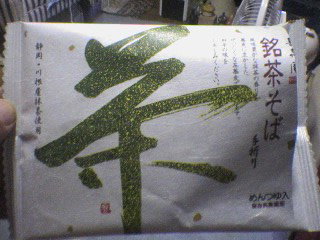
Vegeterians (and vegans!), rejoice! A company called Ikejima Foods in Hamakita Ku, Hamamatsu City has come up with Tea Buckwheat Noodles/Tya-soba!.
Tea comes from the Kawane area which produces some of the best tea in the Prefecture.
The noodles contain no preservatives and neither the noodles, nor the tsuyu/soup contains any animal extracts whatsoever (no milk or egg products).
One pack contains enough for 4 small or 2 medium portions.

cha-soba2.jpg

As for cooking, here are simple instructions:
Cold Noodles style:
Dilute tsuyu/soup in 100 ml of clean water.
In one big pan heat 2 litres of water. Bring to boiling point. Drop in noodles. Lower fire to samll. Stir with long chopsticks. The noodles are ready when they readily come to the surface. Wash them rapidly under running cold water inside a “zaru”/small basket or inside a bowl full of cold water until noodles are cool enough. Drain water and place on a flat dish over a bamboo net if possible. Eat noodles by dipping them in tsuyu/soup to which you can add freshly cut raw leeks and wasabi (or any spices you fancy!)

Hot noodles style:
Dilute tsuyu/soup into 230 ml of hot water.
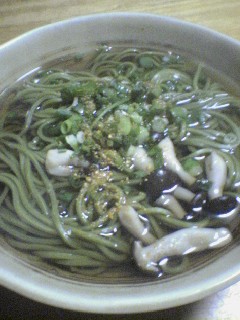
Cook noodles as for cold style. Drain and drop into bowl full of tsuyu/soup. Add vegetables, freshly cut raw leeks and spices to taste.

“Meicha Soba”
Ikejima Foods
Hamamatsu City, Hamakita Ku, Terajima, 2351
Tel.: 053-587-1025

RECOMMENDED RELATED SITES:
Warren Bobrow
Bread + Butter
5 Star Foodie
Frank Fariello
Elinluv Tidbit Corner
Tokyo Terrace
Maison de Christina
Chrys Niles
Comestilblog
Greedy Girl
Bouchon For 2

Please check the new postings at:
sake, shochu and sushi

—————————————-
日本語のブログ
—————————————-