Tag Archives: Japanese Gastronomy

Vegan Japanese Cuisine: Daikon Chrysanthemums

Here is a simple and “artistic” recipe using daikon and yuzu/lime.
It’s called 菊花大根/Kikuhana Daikon which can be translated as Chrysanthemum Daikon.
You don’t need Chrysanthemums, but only cut the daikon into the shape of the flower!

INGREDIENTS:

-Daikon: Roughly a quarter.
-Lime: 1
-Salt: a little
-Sugar: 3 tablespoons

RECIPE:

-Cut the daikon into slices you will then trim into the shape of flowers with a knife or a mold. As for the trimmings you may add them to the whole marinade and serve them with another salad or side dish.

-Sprinkle the daikon flowers with a little salt and let them marinate for 10~15 minutes.

-Peel the lime and cut the skin/zest into thin strips.

-In a bowl, press out the lime juice. If you don’t get enough, add rice vinegar to it until you obtain the equivalent of 3 tablespoons of “juice”. Add the sugar and lime zest strips and mix well.

-Drain the daikon flowers (and trimmings if included). No need to press them hard. Add them to the marinade. Cover with cellophane paper and let marinate inside the fridge for a whole day.

-Serve it in a nice “artistic” fashion!

RECOMMENDED RELATED SITES:
Warren Bobrow, Bread + Butter, Zoy Zhang, Hungry Neko, Think Twice, Frank Fariello, Mangantayon, Hapabento, Elinluv Tidbit Corner, Tokyo Terrace, Maison de Christina, Chrys Niles,Lexi, Culinary Musings, Wheeling Gourmet, Comestiblog, Chronicles Of A Curious Cook, Tokyo Through The Drinking Glass, Tokyo Foodcast, Urban Sake, Sake World, Palate To Pen, Good Beer & Country Boys, Another Pint, Please!, Yellin Yakimono Gallery, Tokyo Terrace, Hilah Cooking

Please check the new postings at:
sake, shochu and sushi

—————————————-
日本語のブログ
—————————————-

Jouren/常連/Regular Customers: A Japanese Tradition

At Yasaitei,….

The Japanese are in perpetual search for harmony.
This constant pursuit of “wa/和” preoccupies them not only at the office with their fellow workers, at home with their family, but also, and probably most, when taking a pleasurable respite at the table or counter of their favorite restaurant or bar.

Whereas in many other countries patronizing the same establishment on a regular basis might be considered at best as an ostentatious show, and a disreputable habit at worst, eating and drinking out in Japan is a sine qua non prerequisite to a successful life, both professional and social.

“Jouren” can be loosely translated as “regular customer”, although the term does not give justice to its real meaning.
The jouren is an essential feature at any establishment worth its salt. He will usually sit quietly at the end of the counter if he is the only one present at the time, or next to another regular.
Now, if you observe him carefully (unobtrusively) you will notice that he is served food and drinks without orders or enquiries. There is a clear reason to that: the oyakata/chef or ofukuro/lady owner knows what the jouren likes to eat and drink within a tacitly agreed budget.
The jouren is not necessarily a well-off person, but he is a vital actor in the gastronomic theater because he will occasionally come out of his reserve to gently recommend a dish or concoction when he notices a new customer experiencing some difficulty in choosing from an unknown menu. Very often a Japanese client will (politely) ask the local jouren for advice and enquire on the very food he is eating or on the best drink available.

At Tomii,…

Another peculiarity you will not fail to mark is that the jouren usually takes his leave without paying. He simply has a bill in the books that he will pay at a more or less determined date away from the inquisitive eyes of other diners and drinkers. This last arrangement is more practical for the owner’s accounts and tax returns. You will know that you have become a jouren the day or night the owner tells you to pay later, which of course means that he/she expects you to grace the place again soon!

Be it a posh kaiseki restaurant, an expensive sushi bar, a simple but popular izakaya, or a late night cocktail lounge, the “rules” are the same.
The jouren possesses an unfailing instinct as to the timing of his visits. He will avoid the really busy period of the evening, and will retreat with a smile and wave when his favorite haunt is unseasonably busy. He will also take leave when other customers start flowing in. On the other hand, a jouren will get full satisfaction and no questions asked if he requests a few seats for a party or some friends. Simply put, he is priority.

Jouren usually has his/her “bottle keep”, or own bottle of favourite spirits in situ, although the notion can be double-edged. Some izakayas or Japanese restaurants and bars make it rule for all customers, regular or not to acquire their own bottle with the attached condition that it must be consumed within a certain time limit. But a real jouren at an establishment worthy of its salt will probably keep a hard to find whisky or an extravagant shochu for his/her sole usage. On the other hand, if the jouren kindly offers you a glass of his/her own nectar, you may assume you will be part of the selected clientele very soon!

At Ekimae matsuno Sushi,…

Japanese owners value their jouren very much for another reason.
In a tightly preordained world where the customer and the owner/chef are literally sitting on either side of a rigid fence, the jouren becomes an indispensable interlocutor you can talk shop with or even ask for advice. Japanese chefs have very little free time to spend outside work and take the pulse of their society to keep in touch with the prevalent trends of their fellow citizens. The jouren will bring in the news and information on any subject and the answers to questions that the chef will not hesitate to ask.
It works both ways: high-class geishas in Kyoto, who are not mere entertainers, do make a point to read at least two or three daily newspapers every morning, including one financial tabloid to ensure they can not only follow their clients’ conversations but give their own advice when solicited.

The nationality of a jouren is of little importance. Being a Japanese fluent foreigner is actually an advantage as some social restrictions inherent to the Japanese society can easily be done without.
As a case in point a great majority of celebrated resident foreign chefs spend most of their free time patronizing local sushi and kaiseki restaurants for the dual purpose of relaxation and study in great company!

As a final word do not think jouren are exclusively male clients. There are certainly many ladies among them, although they will generally patronize a different type of establishment. But the same “rules” and traditions apply!

RECOMMENDED RELATED SITES:
Warren Bobrow, Bread + Butter, Zoy Zhang, Hungry Neko, Think Twice, Frank Fariello, Mangantayon, Hapabento, Elinluv Tidbit Corner, Tokyo Terrace, Maison de Christina, Chrys Niles,Lexi, Culinary Musings, Wheeling Gourmet, Comestiblog, Chronicles Of A Curious Cook, Tokyo Through The Drinking Glass, Tokyo Foodcast, Urban Sake, Sake World, Palate To Pen, Good Beer & Country Boys, Another Pint, Please!, Yellin Yakimono Gallery, Tokyo Terrace, Hilah Cooking

Please check the new postings at:
sake, shochu and sushi

—————————————-
日本語のブログ
—————————————-

Noren/暖簾/Shop Curtains: A Japanese Tradition 2

A very traditional style for a oden-ya!

When visiting Japan, have you ever noticed those unusual “curtains” hanging outside the main entrance of traditional shops, izakayas and sometimes of private homes?
They are called “noren”.

Noren (暖簾) are traditional Japanese fabric dividers, hung between rooms, on walls, in doorways, or in windows. They usually have one or more vertical slits cut from the bottom to nearly the top of the fabric, allowing for easier passage or viewing. Noren are rectangular (but not always a rule) and come in many different materials, sizes, colors, and patterns.

Noren are traditionally used by shops and restaurants as a means of protection from sun, wind, and dust, and for advertising space. Sentō (commercial bathhouses) also place noren across their entrances, typically blue in color for men and red for women with the kanji 湯 (yu, litterally hot water) or the corresponding hiragana ゆ. They are also hung in the front entrance to a shop to signify that the establishment is open for business, and they are always taken down at the end of the business day.

There are still many left in Shizuoka City and Prefecture in spite of all that modernizing and I do meet a lot of them along my bicycle wanderings. It would be a pity not to share their sight, as it would make for beautiful souvenirs to take back home next time you visit Japan!

Accordingly here is the second of hopefully many postings on those little beauties!

A large noren for a large izakaya, Taihei!

A double entrance for that izakaya with the noren inside a torii gate!

Elegant rabbit!

Great calligraphy!

Very modern approach by this cheaper kind of izakaya!

A traditional matsuri/festival “flag”!

More coming soon!

RECOMMENDED RELATED SITES:
Warren Bobrow, Bread + Butter, Zoy Zhang, Hungry Neko, Think Twice, Frank Fariello, Mangantayon, Hapabento, Elinluv Tidbit Corner, Tokyo Terrace, Maison de Christina, Chrys Niles,Lexi, Culinary Musings, Wheeling Gourmet, Comestiblog, Chronicles Of A Curious Cook, Tokyo Through The Drinking Glass, Tokyo Foodcast, Urban Sake, Sake World, Palate To Pen, Good Beer & Country Boys, Another Pint, Please!, Yellin Yakimono Gallery, Tokyo Terrace, Hilah Cooking

Please check the new postings at:
sake, shochu and sushi

—————————————-
日本語のブログ
—————————————-

Oden at Yasaitei

Service: Excellent and very friendly
Facilities: very clean
Prices: reasonable
Specialty: Vegan and vegetarian Cuisine, Izakaya gastronomy, local products, oden.

I’ve already extensively written about oden the Japanese comfort food, but it is always a pleasure to introduce restaurants and izakayas awhich serve the higher quality.
Yasaitei has been introduced in this blog for its vegan delights many a time, but it also serves very extravagant oden I might need a couple articles on that single subject!).

But let’s start from the beginning!

Like in most izakayas, a o-toshi/snack will come with the first drink (bear in mind that you ususally have to pay for it!). Teh quality of that very snack is good indication of the level attained by the establishment!

“Shugijku no goma ae”: Edible Spring Chrysanthemum leaves (lightly boiled) and thinly cut (and fried) aburaage (deep-fried tofu sheets) seasoned with a sesame dressing.

In Yasaitei, I usually order shochu as they have a few from Shizuoka Prefecture on hand.
This particular one is a favourite of mine. It is a kome shochu/rice shochu called Doman, the name of a rare crab found in Hamana lakein the Western part of Shizuoka Prefecture. The shochu is distilled by Tenjingura-Hamamatsu Brewery.

As for the oden served in Yasaitei they are Kansai/Western Japan style, that is they are stewed in very clear broth with an accent on light flavours. Yasaitei will serve the combination of your choice with a small piece of yuzu lime in the broth, plenty of finely chopped scallions and some yuzu koshio/lime and pepper seasoning mixture.

There is no way I could order all the varieties in one serving, so I decided for 5 of them and will taste the others next time!
Looking from the left, you will noticethe little piece of yuzu floating. Just touching the lime pice is a “ganmo”, a light variety of deep-fried tofu, very fluffy and containg little bits of vegetables and seaweed.
The egg itself has been boiled and then slowly stewed in the broth.
The two balls skered on a stick are “shinjyo age”, fish paste which had been deep-fried first. The two grayish slices in front are “Suji” made of sardine and other fish paste. Not to be confused with the eponymous “suji”, meaning beef tendons, which are also a popular oden morsel. The tube on the right is “chikuwa”, made from fish paste like kamaboko, then stuck around a stick and grilled.
All ingredients have simmered in the broth (around 80 degrees Ceksus) for some time, although not as long as Typical Shizuoka oden.

For a closer view.
It is very healthy food, although packed with good calories!

For a side view. The spoon is lacquered, very soft on the tongue!

YASAITEI
Shizuoka City, Aoi Ku, Tokiwa-Cho, 1-6-2 Green Heights Wamon 1-C
Tel.: 054-2543277
Business hours: 17:30~22:00
Closed on Sundays
Reservations highly recommended
Seating: 6 at counter + 20 at tables
Set Courses: 3,000, 4,000, 5,000 yen
HOMEPAGE (Japanese)

RECOMMENDED RELATED SITES:
Warren Bobrow, Bread + Butter, Zoy Zhang, Hungry Neko, Think Twice, Frank Fariello, Mangantayon, Hapabento, Elinluv Tidbit Corner, Tokyo Terrace, Maison de Christina, Chrys Niles,Lexi, Culinary Musings, Wheeling Gourmet, Comestiblog, Chronicles Of A Curious Cook, Tokyo Through The Drinking Glass, Tokyo Foodcast, Urban Sake, Sake World, Palate To Pen, Good Beer & Country Boys, Another Pint, Please!, Yellin Yakimono Gallery, Tokyo Terrace, Hilah Cooking

Please check the new postings at:
sake, shochu and sushi

—————————————-
日本語のブログ
—————————————-

Noren/暖簾/Shop Curtains: A Japanese Tradition 1

A beautiful turnip noren at Tomii, Shizuoka City!

When visiting Japan, have you ever noticed those unusual “curtains” hanging outside the main entrance of traditional shops, izakayas and sometimes of private homes?
They are called “noren”.

Noren (暖簾) are traditional Japanese fabric dividers, hung between rooms, on walls, in doorways, or in windows. They usually have one or more vertical slits cut from the bottom to nearly the top of the fabric, allowing for easier passage or viewing. Noren are rectangular (but not always a rule) and come in many different materials, sizes, colors, and patterns.

Noren are traditionally used by shops and restaurants as a means of protection from sun, wind, and dust, and for advertising space. Sentō (commercial bathhouses) also place noren across their entrances, typically blue in color for men and red for women with the kanji 湯 (yu, litterally hot water) or the corresponding hiragana ゆ. They are also hung in the front entrance to a shop to signify that the establishment is open for business, and they are always taken down at the end of the business day.

There are still many left in Shizuoka City and Prefecture in spite of all that modernizing and I do meet a lot of them along my bicycle wanderings. It would be a pity not to share their sight, as it would make for beautiful souvenirs to take back home next time you visit Japan!

Accordingly here is the first of hopefully many postings on those little beauties!

A long, sober and narrow one. Pristine white!

For the night owls!

Chibariyo, an Okinawa restaurant.

Izakaya noren: Kurumaya.

Another izakaya nore, very feminine?

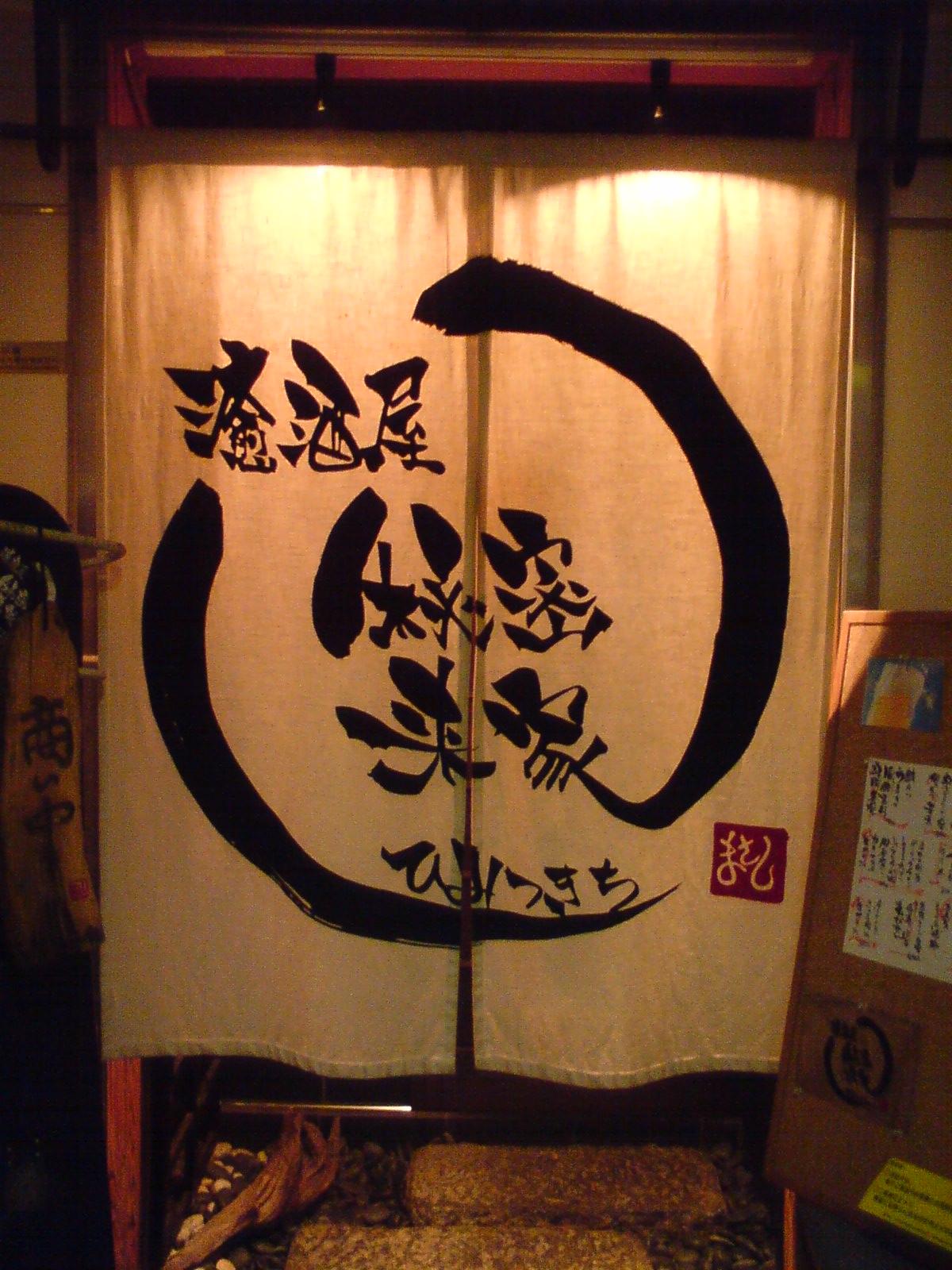
Simple design and pretty complicated characters!

Mishimaya, a Soba Restaurant. Very basic and simple.

Masa Sushi Restaurant. Another basic and simple Noren.

More colourful ones coming soon!

RECOMMENDED RELATED SITES:
Warren Bobrow, Bread + Butter, Zoy Zhang, Hungry Neko, Think Twice, Frank Fariello, Mangantayon, Hapabento, Elinluv Tidbit Corner, Tokyo Terrace, Maison de Christina, Chrys Niles,Lexi, Culinary Musings, Wheeling Gourmet, Comestiblog, Chronicles Of A Curious Cook, Tokyo Through The Drinking Glass, Tokyo Foodcast, Urban Sake, Sake World, Palate To Pen, Good Beer & Country Boys, Another Pint, Please!, Yellin Yakimono Gallery, Tokyo Terrace, Hilah Cooking

Please check the new postings at:
sake, shochu and sushi

—————————————-
日本語のブログ
—————————————-

Sushi & Sashimi: The Basics 4/5: Sushi Presentations-Te-Maki Zushi/Cone Sushi

Te-Maki Zushi/手巻き寿司, Hand-rolled sushi or more appropriately said “Cone Sushi). like Te-mari sushi that I introduced yeaterady, are the perfect way of making your own sushi at great informal sushi parties!

I know that Jenn , Debbie, and Melody are going to get some great ideas from that notion!LOL

Now, if you decide to organize a Te-Maki Sushi Party, make sure that you have plenty of “neta”/fillings ready for your guests to easily choose from.
Bear in ind the priorities of your guests. Vegan and vegatarian sushi are very easy to provide for. If need be prepare different plates of ingredients.

Next you need nori/海苔/ dried sheets of seaweed. Cut to the size most appropriate to your te-maki. keep in mind the appetite of ypur guests. Some might want them small, others large. Do experiment!

Prepare enough sushi rice for all to fill their te-maki with.
I would suggets you make at least 3 large bowls of them:
One seasoned with sesame seeds like the Missus does all the time, one plain, and another one seasoned with an ingredient of your choice: finely chopped pickle, chopped cooked shiitake, and so on.

TECHNIQUES:

The above te-maki includes three ingredients: avocado, katsuo/bonito and fresh salmon sashimi.

Spread a triangle of sushi rice on the left half of the nori/dry seaweed.
The seaweed sheets ought to be cut in half along their length first.

Place the ingredients over the rice as shown in picture.

Start rolling from the left.

Keep turning until you have completed the cone!

FILLINGS SUGGESTIONS:

Hera is a group of four different te-maki as a combination suggestion with ingredients that should please both Japanese and non-Japanese.
Do experiment!

Kimchi, tuna flakes, mayonnaise and sesame seeds!

Crab meat and mayonnaise. You could add some green leaf vegetables, too!

Asparaguses (boiled), tuna flakes and mayonnaise. You could include some curry powder in the mayonnaise!

Salmon roe. Season the roe with a little soy sauce first! Some wasabi would be welcome, too!

SAMPLES:

Here are more samples to help your imagination:

Chili sauce shrimps and kawaire daikon sprouts.

Tuna, shiso and ikura/salmon roe.

Roast beef, omelette and vegetables!

Lettuce, surimi, omelette and cucumber.

Fried pork, shiso and kawaire daikon sprouts.

Nato and hijiki seaweed for vegans!

All vegetables again!

I’m going to Sushi Ko with the Missus tomorrow. I will ask Mr. Oda to think of something!LOL

RECOMMENDED RELATED SITES:
Warren Bobrow, Bread + Butter, Zoy Zhang, Hungry Neko, Think Twice, Frank Fariello, Mangantayon, Hapabento, Elinluv Tidbit Corner, Tokyo Terrace, Maison de Christina, Chrys Niles,Lexi, Culinary Musings, Wheeling Gourmet, Comestiblog, Chronicles Of A Curious Cook

Please check the new postings at:
sake, shochu and sushi

—————————————-
日本語のブログ
—————————————-

Sushi & Sashimi: The Basics 4/4: Sushi Presentations-Te-Mari Zushi

Te-Mari Sushi made by the Missus for my bento!

A comment by my friend Jennifer Razon just reminded me I hadn’t explained the technique behind a very enjoyable form of sushi, namely Te-Mari Sushi/手まり寿司!

Te-Mari Sushi was apparently made poular in Kyoto first where gastronomy is more “feminine” than in any other part of Japan. It is very easy to make, present and carry.
It is more welcome when you realize people in Kyoto have more socializing to do than anywhere else, including eating and drinking. Making portions smaller and more artistic are a necessity there!
Actually Te-Mari Sushi can be made in any size and include any ingredients, be it for omnivores, adults, ladies, children, vegetarian or vegans!

TECHNIQUE:

The technique is simple enough: having prepared the sushi rice, take a piece of cellophane paper and first put the tane/topping outer surface down, then place some rice over it. Close the cellphane paper by twisting it and press the sushi into a ball (mari) in your hand (te)! Unwrap it, place it on a plate, tray or in a box and add some more topping if neceassary!

Look at the demonstration pics below for better understanding!
In that case the rice ball is made first inside a piece of cellophane and wrapped again with the toppings!

Tai/Seabream

Ebi/boiled shrimp

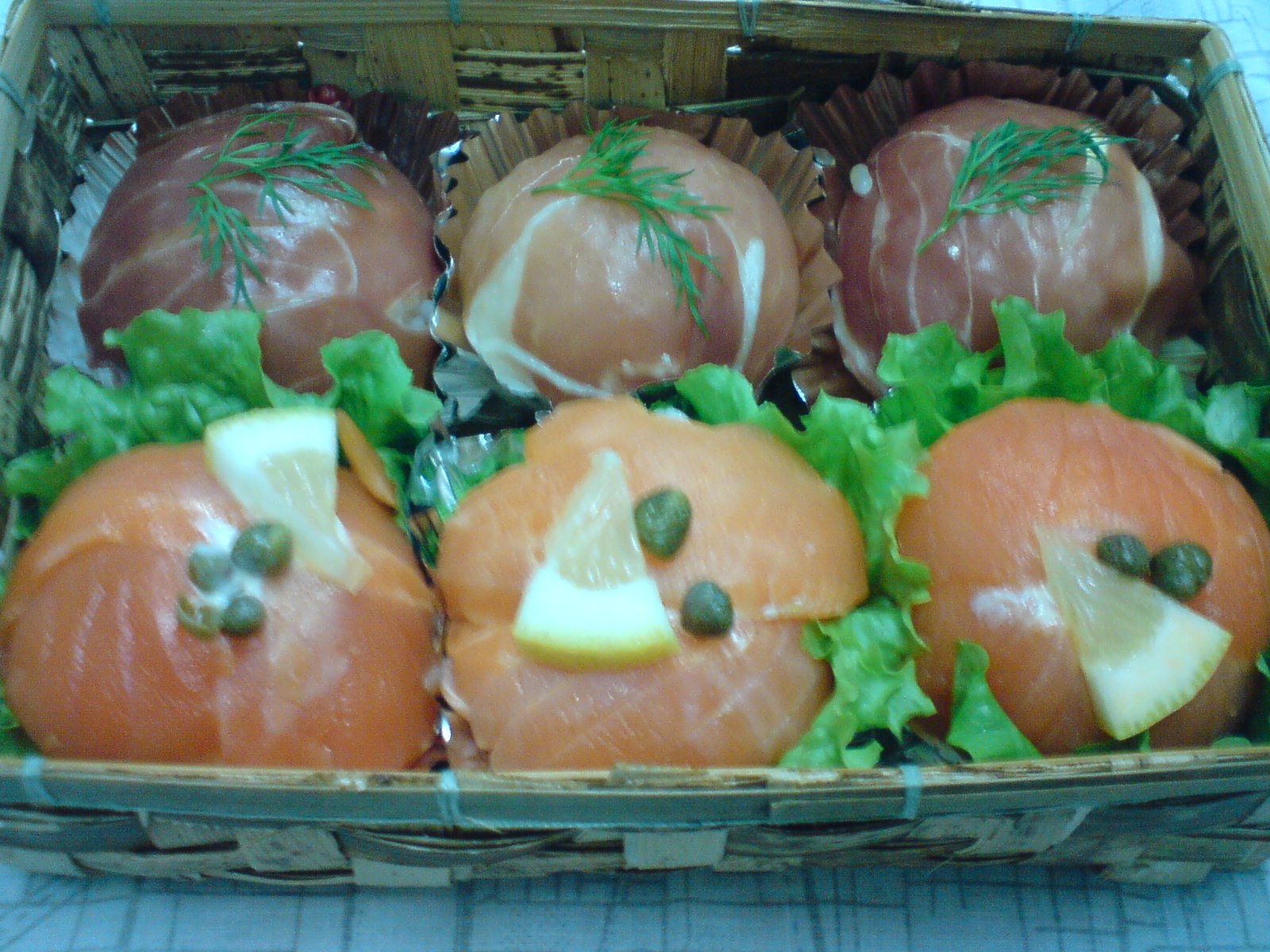
Smoked Salmon

Pickled fish

SUGGESTIONS & SAMPLES:

Below are suggestions and samples for Te-Mari Sushi.
Frankly speaking, varaiations are endless. Have good fun!

For a tea party?

For a lady’s bento?

For a gentleman’s bento?

For a special occasion?

For a European/American style party?

For ladies only?

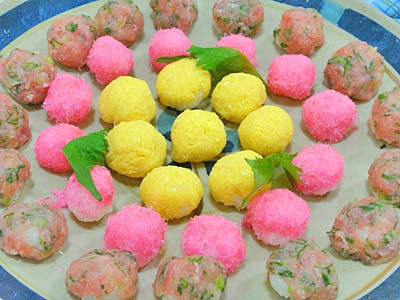
Sweet te-mari for Children!

RECOMMENDED RELATED SITES:
Warren Bobrow, Bread + Butter, Zoy Zhang, Hungry Neko, Think Twice, Frank Fariello, Mangantayon, Hapabento, Elinluv Tidbit Corner, Tokyo Terrace, Maison de Christina, Chrys Niles,Lexi, Culinary Musings, Wheeling Gourmet, Comestiblog, Chronicles Of A Curious Cook

Please check the new postings at:
sake, shochu and sushi

—————————————-
日本語のブログ
—————————————-

New Vegetable: Tsubomina/蕾菜

Picture taken at Parche Supermarket on March 1st, 2010

Earlier in the day, I mentioned a new vegetable that the Missus included in my bento: Tsubomina or 蕾菜 in Japanese.
The first Kanji character is made up of made up of the character meaning “plant” or “grass” at the top over another character meaning “thunder”. The second kanji means “plant”.

Stir-fried Tsubomina in my bento.

Tsubomina sold in Hakata, Fukuoka, Kysushu island.

Tsubomina sprouts

Tsubomina belongs to the same group of plants as Brussels sprouts, Chinese Cabbage, Komatsuna/leaf Mustard, Broccoli, Daikon, turnips and so on, that is Brassicaceae. It is actually a variety of Leaf Mustard. The latter is a plant introduced in Japan from China.

Picture taken at Parche Supermarket on March 1st, 2010

Although it had been grown since 2005 with various results, JA/Japan Agriculture (Association) officially put it on the markets in Hakata, Fukuoka City in Kyushu island in February 2009.
Due to a certain weakness to insects, it is harvested in Februaray and March only.
Growers started “exporting” it through Japan, altough it is available only in Nagoya, Tokyo and Shizuoka for the moment being. But it is only a question of time before it is sold all over the nation.

Picture taken at Parche Supermarket on March 1st, 2010

Actually the competition is starting heating up for the good of the consumers.
Tsubomina was sold 300~350 yen for 3 small specimens last year. It is already sold for only 250 yen for 3 large specimens since yesterday in Shizuoka City!

Picture taken at Parche Supermarket on March 1st, 2010

Copy of the advertisement appearing in local magazines in Fukuoka where many restaurants serve it in Japanese, Chinese and other foods.

Picture taken at Parche Supermarket on March 1st, 2010

It can be served raw in salads. I tasted it this morning raw. It is crunchy, almost sweet, without any acidity, and eminently eatable.
moreover the high contrast in white and green colours make for a very decorative item.
It can be cooked in almost any kind of Asian gastronomic manner: fried, stir-fried, nabe/pot-au-feu, etc. Vegetarians and vegans should appreciate it as it combines a goog bite, a great taste and plenty of nutrients!

RECOMMENDED RELATED SITES:
Warren Bobrow, Bread + Butter, Zoy Zhang, Hungry Neko, Think Twice, Frank Fariello, Mangantayon, Hapabento, Elinluv Tidbit Corner, Tokyo Terrace, Maison de Christina, Chrys Niles,Lexi, Culinary Musings, Wheeling Gourmet, Comestiblog

Please check the new postings at:
sake, shochu and sushi

—————————————-
日本語のブログ
—————————————-

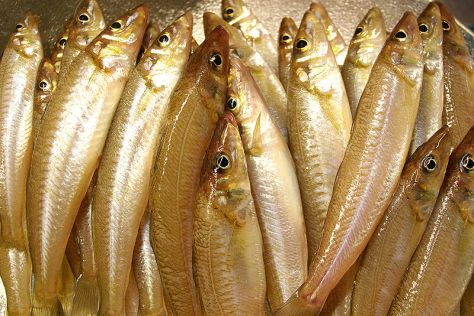
Japanese Seasonal Fish: Kisu/Shirogisu-Sillago

SILLAGO-SHIROGISU

Shirogisu, or Sillago in English probably has as many Japanese names as English names.
The Sillago found along the Japanese shores is also called sillago japonica, Whiting or Smelt-Whiting in english, Shirogisu, Kisu, Magisu and Kisugo in Japanese.

The best specimen in Japan are caught in Fukuoka (Kyushu) and Ehime (Shikoku) prefectures from Spring to Summer.
It is also a sport angler’s favourite as they come in all sizes, although the everage will not measure much more than 10 cm.

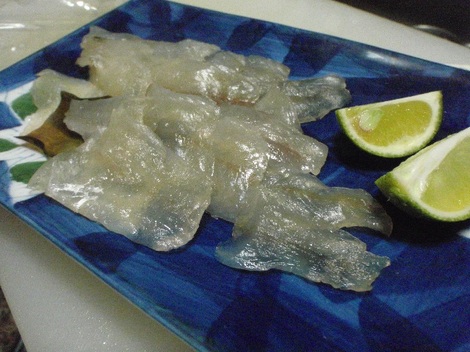
Standard Shirogisu Sashimi

As a sahimi/raw fish it van be prepared in many manners:
Standard sashimi as above.

Shirogisu Konbujime Sashimi.
As konbujime, it will be matured between two sheets of wet konbu/seaweed to attain a sweet taste.

Shirogisu Aburi Sashimi

As aburi/lightly seared, one can enjoy two different textures and tastes at the same time.
Mind you, it is not easy to sear properly as the fillets are very thin!

The greatest part of the sillago catch comes from Indonesia, Korea, Thailand, China and other Asian countries.
Fortunately, here in Shizuoka, we do catch a sizeable amount in Suruga Bay guaranting freshness in season.

Shirogisu Sushi Nigiri.

If absolutely fresh, shirohisu/sillago makes for an interesting morsel, the more for it as it is quite rare in this sushi nigiri form.

Anglers will certainly appreciate it grilled on the stick at a BBQ on the beach with a nice pint of beer!

But the most popular way of savouring it is arguably as tempura or breaded and deep-fried, although the fish taste will vary greatly with freshness!
But if absolutely fresh, don’t forget to deep-fry its bones and head!

RECOMMENDED RELATED SITES:
Warren Bobrow, Bread + Butter, Zoy Zhang, Hungry Neko, Think Twice, Frank Fariello, Mangantayon, Elinluv Tidbit Corner, Maison de Christina, Chrys Niles,Lexi, Culinary Musings, Wheeling Gourmet, Social Culinaire, Sushi Nomads, Cook, Eat & Share, Gourmet Fury, 5 Star Foodie, Easy Does It Recipes, Oyster Culture, Once A Chef, All In Good Food, Cooking Stuff, Cheese Monger, Palate To Pen, Tokyo Through The Drinking Glass, Tokyo Foodcast, Citron Et Vanille

Please check the new postings at:
sake, shochu and sushi

—————————————-
日本語のブログ
—————————————-

Vegan Caprese-Style Tomato & Tofu Salad

I’ve already introduced vegan tofu salads for my friends.
This is another one with a lttle twist!

INGREDIENTS: For 1~2 persons

-Tofu (kinu tofu): 1/2 block: 200g
-Tomato: a large whole one
-Basil leaves: 10 (large and fresh!)

Dressing:
-Wine vinegar: 1/4 cup: 50 cc/ml
-Salt: 1/3 teaspoon
-Whole black peppers: 3 seeds, ground (use a bottle!)
-Garlic: 1/2 clove (fresh!)
-Red chili pepper: 1/2 (fresh if possible) (Chopped finely)
-Olive oil (EV): 1.1/4~ tablespoon
-Onion: 15 g (Fresh and new if possible!)

RECIPE:

-Cut the tofu in 1 cm-thick slices.

-Cut out the stem end off the tomato and cut into half-moon slices.

-Crush the garlic and throw it into a small pan with the wine vinegar, Salt, black pepper, and red chili pepper and heat it until reduced to half.

-Transfer the dressing into a bowl floating on a larger bowl half-filled with water and ice and leave until chilled.

-Take out unsightly pieces out of the dressing. Grate the onion over it and mix. Add the oil oil and mix.

-On a serving dish place the slices of tofu and tomatoes and the basil leaves alternatively as shown on picture above. Season with dressing and serve!

-Very low in calories!

RECOMMENDED RELATED SITES
Not-Just-Recipes, Bengal cuisine, Cooking Vegetarian, Frank Fariello, Gluten-free Vegan Family, Meatless Mama, Warren Bobrow, Wheeling Gourmet, Le Petit Cuisinier, Vegan Epicurean, Miss V’s Vegan Cookbook, Comestiblog, To Cheese or not To Cheese, The Lacquer Spoon, Russell 3, Octopuspie, Bread + Butter, Pegasus Legend, Think Twice, The French Market Maven

Please check the new postings at:
sake, shochu and sushi

—————————————-
日本語のブログ
—————————————-

Vegan Japanese Cuisine: New Lotus Roots & Umeboshi

Lotus roots, when new and fresh, should be prized for their great natural taste. They can even be eaten almost raw after a little marinating. The Japanese have a simple and delicate way to prepare them with umeboshi/Japanese pickled plums, which should please vegans and vegetarians (and omnivores). It certainly makes for a great snack with Japanese sake or shochu!

INGREDIENTS:

-Lotus root: 1 piece, 10 cm long. Choose it absolutely fresh and comparatively slender.
-Umeboshi: 2
-Shiso/perilla leaves: 2
-Japanese sake: according to taste and preferences.
-Soy sauce: according to taste and preferences.
-Rice vinegar: according to taste and preferences.

RECIPE:

-Peel and cut the lotus root into hin slices. Wash them 2 or 3 times in cold clean water.

-In a pan heat some water to just before boiling point. Add some rice vinegar and cook the lotus roots in eat until they become translucent.
Do not overcook them. Drain them thoroughly and put aside.

-Take the seeds out of the umebshi and sieve the meat into a bowl. Add Japanese sake (or cooking sake) to make it into a thin liquid paste. add a few drops of soy sauce for seasoning. Taste. If it is too sour to your liking add some mirin/sweet Japanese sake.

-Add the umeboshi to the lotus roots slices and mix well so as to cover all the lotus root slices surface.

-Cut the shiso/perilla leaves in 3 first, then chopp them fine across.

-Serve as in the picture, lotus root sliced mounted on top of each other and topped with chopped shiso leaves.

RECOMMENDED RELATED SITES
Not-Just-Recipes, Bengal cuisine, Cooking Vegetarian, Frank Fariello, Gluten-free Vegan Family, Meatless Mama, Warren Bobrow, Wheeling Gourmet, Le Petit Cuisinier, Vegan Epicurean, Miss V’s Vegan Cookbook, Comestiblog, To Cheese or not To Cheese, The Lacquer Spoon, Russell 3, Octopuspie, Bread + Butter, Pegasus Legend, Think Twice, The French Market Maven

Please check the new postings at:
sake, shochu and sushi

—————————————-
日本語のブログ
—————————————-

Vegetables facts & Tips 19: Yama Imo/Yama No Imo/Japanese Yam

Yama no Imo Plant

Yama Imo or Yama no Imo/山芋 is the Japanese name for Japanese Yam.
It has been picked in its natural form and cultivated for eons in Japan where it comes into many recipes, either as a vegetable of its own or as an additive to Japanese recipes as a liaising ingredient.
It is also extensively used in vegetarian (vegan) cuisine in this country.
It is also very much valued for its stamina and medicinal properties.

FACTS:

-Contains a high amount of potassium, calcium, magnesium, natrium and other minerals.
Rich in Vitamin B1, B2, B6 and C and vegetal fibers.

-Easy to digest and eat either raw or cooked.

VARIETIES:

There are quite a few varieties and can be all used in the same way:

Yama no imo: Nagaimo/長い芋

Shizenjyo is the natural and highly priced Japanese Yam!

Ichyo Imo

Tsukune Imo

Mukago

Mukago is actually the aerial seed and can be eaten. Slightly expensive considering the size, but great taste, boiled or deep-fried.

TIPS:

-Choose a specimen that shows a uniform colour without blemishes.

-Some people’skin might get irritated when cutting the yama Imo. In this case deep-freeze it first and cut it as it is.

-Preserve as a whole wrapped into newspaper inside the fridge.

-Preserve it cut inside an airtight vinyl bag in the freezer.

COOKING:

It is greatly appreciated just cut in thin slices/sticks with a little ponzu, shiso and ponzu!

It is often served as a component of an array of dishes into a full Japanese meal. Grated into paste, it is called “tororo”.

It can be sauteed/fried with olive oil, sesame oil or butter!

Grated, it can combined with tofu,

or into okonmiyaki!

It can also become a great appetizer when combined with agar agar!

Europeans and Americans will appreciate it as a gratin!

HEALTH FACTS:

-Combined with daikon, or turnips, or Chinese cabbage, or chili peppers, helps reinforce the digestive system and appetite.

-Combined with okra, or lotus roots, or nameko mushrooms, helps lower blood cholesterol and provides additional stamina.

-Combined with soy beans, or pomegranate, or myoga ginger, helps balance hormones and blood circulation.

-Combined with cabbage, or potatoes, or broccoli, or Chinese cabbage, helps combat cancer and ageing.

RECOMMENDED RELATED SITES:
Warren Bobrow, Bread + Butter, Zoy Zhang, Hungry Neko, Think Twice, Frank Fariello, Mangantayon, Hapabento, Elinluv Tidbit Corner, Tokyo Terrace, Maison de Christina, Chrys Niles,Lexi, Culinary Musings, Wheeling Gourmet, Social Culinaire, Sushi Nomads, Cook, Eat & Share, Gourmet Fury, 5 Star Foodie

Please check the new postings at:
sake, shochu and sushi

—————————————-
日本語のブログ
—————————————-

Vegan Treats at Yasaitei

Once I explained the notion of “Jooren” or “regular customer” in Japan.
Whereas in many other countries patronizing the same establishment on a regular basis might be considered at best as an ostentatious show, and a disreputable habit at worst, eating and drinking out in Japan is a sine qua non prerequisite to a successful life, both professional and social. Therefore it always is a good idea to ptronize a few etablishments even if it is for a quick drink or snack.
It also makes conversation so much easier and the visits more welcome as it provides a pleasant break from the usual coded life of the Japanese.

good Japanese chefs will always tackle the challenge to satisfy culinary priorities, including vegetarianism and veganism. After all, most omnivores’ food is over 80% vegetarian. Don’t be afraid to ask for precise explanations of your food!

This “o-toshi”/snack served with first drink consists of komatsuna/Japanese Mustard Spinach, enoki mushrooms, mitsuba/trefoil and nameko mushrooms prepared in o-hitashi style/slightly boiled and cooled down before being served in their own juices.

As for drinks, do not worry as Japanese sake and shochu are vegan.
This particular shochu is a bit extravagant. It was distilled by Takashima Brewery in Numazu City, Shizuoka, from the white lees of supelative sake before being matured for a couple of years in sherry barrels imported from Sapin!
Tastes like a soft flowery whisky!

vegerables are plentuful in Japan, and especially in Shizuoka.
They make for beautiful presentation with a minimum of care and improvisation.
Back home, first choose a nice tray to present to your friend or family!
The concept is almost like a flower arrangement!

The best “sauce” for such a vegan sashimi is a mixture (according to your preferences) of sesame oil, sea salt and dark miso!

Wherever you are, I’m sure you will find plenty of vegetables to work with:
In our case,we have form the left: Myoga ginger sprouts, Ice plant, Ameera/very sweet tomato and young ginger roots. It is the season for the laterr and they are so tender that they make a very tasty, crucnhy, raw treat!

Daikon (choose the upper part, as the pointed end is a bit too strong!) on a leaf of shiso/perilla and thinly sliced Spring onions from Shizuoka, radish, kiirokyo ninjin/Yellow Kyoto carrot and those crunchy Japanese cucumbers!

A “side view” to help you understand the presentation!

And another one from the other end!

I sincerely hope this will have given you a few ideas!

YASAITEI
Shizuoka City, Aoi Ku, Tokiwa-Cho, 1-6-2 Green Heights Wamon 1-C
Tel.: 054-2543277
Business hours: 17:30~22:00
Closed on Sundays
Reservations highly recommended
Seating: 6 at counter + 20 at tables
Set Courses: 3,000, 4,000, 5,000 yen
HOMEPAGE (Japanese)

RECOMMENDED RELATED SITES
Not-Just-Recipes, Bengal cuisine, Cooking Vegetarian, Frank Fariello, Gluten-free Vegan Family, Meatless Mama, Warren Bobrow, Wheeling Gourmet, Le Petit Cuisinier, Vegan Epicurean, Miss V’s Vegan Cookbook, Comestiblog, To Cheese or not To Cheese, The Lacquer Spoon, Russell 3, Octopuspie, Bread + Butter, Pegasus Legend, Think Twice, The French Market Maven

Please check the new postings at:
sake, shochu and sushi

—————————————-
日本語のブログ
—————————————-

Vegetables Facts & Tips 9/1: Shiitake Mushrooms (Amended & expanded)

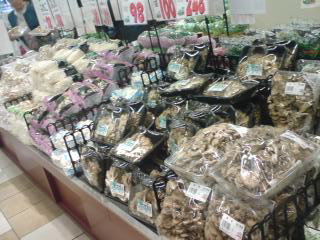
mushrooms-market
(Mushrooms at at a Shizuoka Supermarket)

I don’t intend to talk about wild mushrooms here as I would need a very thick book to post!
Japan is arguably the country cultivating the greatest number of varieties (new ones appear and disappear every year!), so I will limit myself to give information on at least some of them and furthermore introduce most varieties I have found in Japanese supermarkets (most of them should be available in many countries).

SHIITAKE
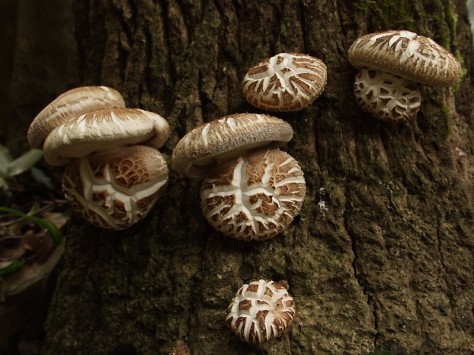
efbd93efbd88efbd89efbd89efbd94efbd81efbd8befbd85

FACTS:
Shiitake/Lentinula Edodes (Black Forest Mushrooms) are native to China but have been grown in both Japan and China since prehistoric times[2]. They have been cultivated for over 1000 years; the first written record of shiitake cultivation can be traced to Wu Sang Kwuang, born during the Song Dynasty (AD 960–1127). However, some documents record the uncultivated mushroom being eaten as early as AD 199.
Fresh and dried shiitake have many uses in the cuisines of East Asia. In Chinese cuisine, they are often sauteed in vegetarian dishes such as Buddha’s delight. In Japan, they are served in miso soup, used as the basis for a kind of vegetarian dashi, and also as an ingredient in many steamed and simmered dishes. In Korean cuisine, they are commonly used in dishes such as bulgogi (marinated grilled beef), jjigae (stews), and namul (sauteed vegetable dishes). In Thailand, they may be served either fried or steamed.

Shiitake are often dried and sold as preserved food in packages. These must be rehydrated by soaking in water before using. Many people prefer dried shiitake to fresh, considering that the sun-drying process draws out the umami flavour from the dried mushrooms by breaking down proteins into amino acids and transforms ergosterol to vitamin D. The stems of shiitake are rarely used in Japanese and other cuisines, primarily because the stems are harder and take longer to cook than the soft fleshy caps. The highest grade of shiitake are called donko in Japanese.
Extracts from shiitake mushrooms (such as ichtyol) have also been researched for many other immunological benefits, ranging from anti-viral properties to possible treatments for severe allergies, as well as arthritis.
The Japanese actually consume them from their raw form more than in any other country.

FACTS:

-Season: best in October~March for outdoors cultivation

-Main beneficial ingredients: Vitamin B1, B2, B6, c, N6, Ergosterol, Lentinan, Fibers, Potassium, Magensium, Phosphorus.

TIPS:

-Loosely wrap them in clean Newspaper or Kitchen Paper and store them in fridge away from the light.

-Choose specimens with unbroken “umbrella” and no black marks under.

-Fresh Shiitake are best enjoyed for their taste by keeping their cooking simple such as fry them over a grill with a dash of soy sauce and sake!

-If you want to dry them, do so under sunlight for best taste!

-Preserve dried shiitake in fridge to avoid mold and insects!

HEALTH FACTS:

-Dried shiitake contain more Vitamnin D!

-Combined with burdock root, or broccoli, or carrot, or asparaguses, helps combat cancer and helps with skin rejuvenation.

-Combined with konbu/seaweed, or spinach, or sardines, or sesame, helps combat bone diseases, activates blood circulation, helps combat nervous problems and rheumatism.

-Combined with sesame, or walnuts, or kabocha, or mayonnaise, helps combat ageing.

-Combined with celery, or cuttle fish/squid, or octopus, or mackerel, helps reinforce liver, combats high blood pressure, heart diseases and artery hardening.

RECOMMENDED RELATED SITES:
Warren Bobrow, Bread + Butter, Zoy Zhang, Hungry Neko, Think Twice, Frank Fariello, Mangantayon, Hapabento, Elinluv Tidbit Corner, Tokyo Terrace, Maison de Christina, Chrys Niles,Lexi, Culinary Musings, Wheeling Gourmet, Social Culinaire, Sushi Nomads, Cook, Eat & Share, Gourmet Fury, 5 Star Foodie

Please check the new postings at:
sake, shochu and sushi

—————————————-
日本語のブログ
—————————————-

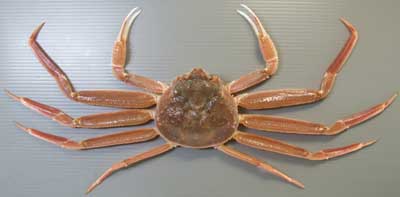
Crab Species 1: Snow Crab/Sawagani (amended & expanded)

Snow Crabs, or Zuwagani in Japanese are very popular not only in Japan, but also in Russia, Canada and many other countries.

In Japan, they are also known under the following names: Matsubagani, Echizengani and Yoshigani.
The females are also called Seikogani, Megani or Koubakogani.
They are caught mainly in Autumn and Winter.
Their number have decreased in the Japan seas down to a yearly catch of 5,000 tonnes while 60,000 tonnes are imported from Russia and Canada.

ZUWAGANI-MALE-1

(Male Snow Crab)

ZUWAGANI-FEMALE-1

(Female snow Crab)

Male and female snow crabs are equally succulent, but the males contain more flesh and are accordingly more expensive.

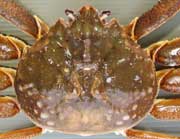
ZUWAGANI-MALE-2
The “thorns” of a male snow crab are bigger.

ZUWAGANI-MALE-3
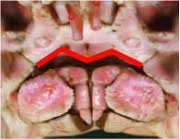
The “teeth” of a male snow crab are triangular in a seesaw shape.
The female “teeth” are in a straight line.

ZUWAGANI-FEMALE-2
The underbelly of a female snow crabis flatish.

ZUWAGANI-FEMALE-3

When buying a female (10 tmes as cheap) snow crab, choose a specimen with as few eggs as possible. Above speciman just has too many!

ZUWAGANI-FEMALE-4

A female snow crab should contain plenty of succulent orange egg sacs (the eggs not yet “born”). Otherwise, there is very little reason to buy any!

Crabs can be eaten in many ways, even raw, but my favourites are on sushi!

ZUWAGANI-SUSHIZUWAGANI-FEMALE-SUSHI

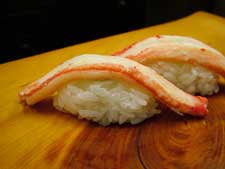
Male Snow crab leg Sushi Nigiri and Female snow crab Sushi Nigiri and its egg sacs!

Suwagani/Snow Crab legs, when lightly boiled can make for beautiful sushi nigiri.

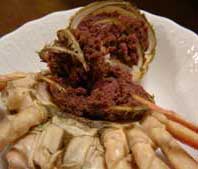
Cheaper varieties can still make fr some remarkable gunkan sushi combining the boiled white flesh and “miso”/brains!

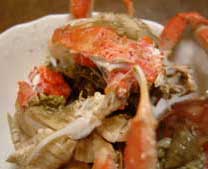
If the Japanese can get their hands on the whole crab, will simply boil it and eat the meat directly out of the shell with a sweet vinegar dressing.
As for the “miso”/brains they will be served in the shell heated again with a big helping of Japanese sake!

Now, live snow crabs make for extravagant sashimi!

The same can savoured in shabu-shabu!

Italian restaurants in Japan regularly serve it in pasta!

RECOMMENDED RELATED SITES:
Warren Bobrow, Bread + Butter, Zoy Zhang, Hungry Neko, Think Twice, Frank Fariello, Mangantayon, Hapabento, Elinluv Tidbit Corner, Tokyo Terrace, Maison de Christina, Chrys Niles,Lexi, Culinary Musings, Wheeling Gourmet, Social Culinaire, Sushi Nomads, Cook, Eat & Share, Gourmet Fury, 5 Star Foodie

Please check the new postings at:
sake, shochu and sushi

—————————————-
日本語のブログ
—————————————-