Tag Archives: Vegan

Vegetables Facts & Tips 17: Peppers & Paprika

Bell pepper or sweet pepper is a cultivar group of the species Capsicum annuum (chili pepper). Cultivars of the plant produce fruits in different colors, including red, yellow, green and orange. Bell peppers are sometimes grouped with less pungent pepper varieties as “sweet peppers”. Peppers are native to Mexico, Central America and Northern South America. Pepper seeds were later carried to Spain in 1493 and from there spread to other European, African and Asian countries. Today, Mexico remains one of the major pepper producers in the world.

The misleading name “pepper” (pimiento in Spanish) was given by Christopher Columbus upon bringing the plant back to Europe. At that time peppercorns, the fruit of Piper nigrum, an unrelated plant originating from India, were a highly prized condiment; the name “pepper” was at that time applied in Europe to all known spices with a hot and pungent taste and so naturally extended to the newly discovered Capsicum family. The most commonly used alternative name of the plant family, “chili”, is of Central American origin. Bell peppers are botanically fruits, but are generally considered in culinary contexts to be vegetables. When cut off, the top of the bell pepper is referred to as a “pepper pan”.

Paprika

The term “bell pepper” or “pepper” or “capsicum” is often used for any of the large bell shaped capsicum fruits, regardless of their color. In British English, the fruit is simply referred to as a “pepper”, or additionally by colour (as in the term “green pepper”, for example), whereas in many Commonwealth of Nations countries, such as Australia, India, Malaysia and New Zealand, they are called “capsicum”. Across Europe, the term “paprika”, which has its roots in the word for pepper, is used—sometimes referred to by their color (e.g., “groene paprika”, “gele paprika”, in Dutch, which are green and yellow, respectively). Paprika also refers to the powdered spice made from the same fruit. In France it is called “poivron”, with the same root as “poivre” (meaning “pepper”), or “piment”. In Japan, the word ピーマン (“pîman” from the French) refers only to green bell peppers, whereas パプリカ (“papurika” from paprika) refers to bell peppers of other colors.

In the United States and Canada, in addition to the terms “bell pepper” and “sweet pepper,” the fruit is often referred to simply as a “pepper” or referred to by color (e.g. “red pepper”, “green pepper”), although the more specific term “bell pepper” is understood in most regions. In parts of Indiana, Ohio, and Pennsylvania, the fruit is called a “mango”. The origin of this use is in the use of the term “mango” or “mangoed” to refer to pickled fruits. At a certain time, mangoes were available in the United States only in pickled form. Later, it became common in these regions to use bell peppers in pickled form, thus the term “mangoed peppers” or “mango peppers,” later shortened to “mangoes.”

In Russia it is commonly called болгарский перец (bolgarskiy perets), meaning Bulgarian pepper. In Denmark the bell pepper is referred to as “peberfrugt”, meaning pepper-fruit. In Germany, Finland, Norway, Sweden, former Yugoslavia, the Netherlands and Belgium it is known as “paprika”.

In Brazil it is commonly called Pimentão, meaning Big pepper. It’s widely used in a variety of dishes, like pasta, rice and other dishes from Cuisine of Brazil.

In Argentina it is called “Morrón”. Green and red bell peppers are usually found in small grocery stores; the yellow ones tend to be in the supermarket. Grilled, they may form part of the traditional barbecue of this country, called “Asado” (Castilian Spanish for ‘roasted’ or ‘grilled’).

In Costa Rica it is called “chile dulce” or sweet chili and many typical dishes include it as part of the ingredients.

In India, it is commonly called “capsicum” in English, in addition to native terms such as “Simla mirch” (“Simla chili”).

In Nepal it is called “bhede khursani”. It is eaten with fried noodles, and is cooked and eaten with any vegetable, but bhede khursani is never eaten raw.

In Sri Lanka it is called “Maalu Miris” in Sinhalese and used in “curries” as a vegetable. “Miris” is Chilli, the hotter variety which is used as a hot spice, and “Maalu” means Vegetable; hence, “Maalu Miris” indicates the less spicy version, which is suitable for cooking as a vegetable, instead of using as a spice. With the similar meaning, bell pepper is called “kaRi miLakaay” (கறிமிளகாய்) in Tamil language.

In Egypt it is commonly called “filfil akhdar”, where “filfil” means pepper and “akhdar” means green. It is eaten as a raw snack, in salads, in various soups and stews, and is also cooked stuffed with a rice and beef filling.

In South Korea, the peppers that are green in color, are the only ones that are called “pimang” (피망). All other colors of bell peppers are referred to as “paprika” (파프리카).

In China, peppers that are green in color, including green bell peppers and hot peppers, are called 青椒 (pinyin: qīngjiāo), meaning “green pepper”. All colors of bell peppers can also be referred to as 柿子椒 (pinyin: shìzǐjiāo).

That is for the excellent information found on Wkipedia!

The color can be green, red, yellow, orange and more rarely, white and purple, depending on when they are harvested and the specific cultivar. Green peppers are less sweet and slightly more bitter than red, yellow or orange peppers. The taste of ripe peppers can also vary with growing conditions and post-harvest storage treatment; the sweetest are fruit allowed to ripen fully on the plant in full sunshine, while fruit harvested green and after-ripened in storage are less sweet.

Here are the most common varieties foun in Japan:

From top to bottom and left to right:
Green, red and yellow peppers (bell peppers)
Paprika and Jumbo Piman/Pepper

Red peppers are ripe green peppers, while the jumbo pepper is valued for its size.

“Tongari Piman/Pepper”
Valued for its shape and fewer seeds.

“Ama-Kara/Sweet and hot”
Also called banana peppers when ripe.

Banana Pepper

Valued for its mild taste, making it popular to a larger audience.

More colour varieties!

Anastasha Paprikas

These are becoming increasingly popular in Japan and come in red, almost black and yellow.

FACTS:

-Season: from June to October, although available on the markets all year round.

-Main Beneficial ingredients: Carotens, Vitamins B1, B2, B6, C, K, Vegetal fibers, Potaasium, Magnesium, and Phosphourous.

-Greatly beneficial to skin when fried!

-Should be combined with oil (fried, vinaigrette) whwnever possible for better absorption by human bodies. Are generally beneficial against high blood pressure and helps recovery from fatigue.

TIPS:

-Choose specimens with unblemished stem cuts. The older, the more change in colour there.

-They are best stored inside a vinyl pouch in the refrigerator.
Old specimens will show blemishes and black spots.

HEALTH FACTS:

-Pepper bells combined with whole rice, or yam, or scallops, or oysters, will help combat diabetes and obesity, and revitalize digestive system.

-Pepper bells combined with onion, or konnayaku, or celery, will help combat high blood pressure and artery ageing.

-Pepper bells combined with shiso/perilla, or turnips, or leeks, or chili peppers, will prevent digestive system illnesses and help blood circulation.

-Pepper bells combined Chinese chives, or shiitake mushrooms, or egg plant/aubergine, will help combat cancer, will provide stamina, help combat general ageing and help skin.

-Paprika combined with olive oil, will help combine stress and skin.

-Parika combined with turnips, or leeks will hep blood circulation and combat digestive system illnesses.

RECOMMENDED RELATED SITES
Not-Just-Recipes, Bengal cuisine, Cooking Vegetarian, Frank Fariello, Gluten-free Vegan Family, Meatless Mama, Warren Bobrow, Wheeling Gourmet, Le Petit Cuisinier, Vegan Epicurean, Miss V’s Vegan Cookbook, Comestiblog, To Cheese or not To Cheese, The Lacquer Spoon, Russell 3, Octopuspie, Bread + Butter, Pegasus Legend, Think Twice, The French Market Maven, Fuji Mama, Great Teacher Sato, Peas Love Carrots

Please check the new postings at:
sake, shochu and sushi

—————————————-
日本語のブログ
—————————————-
Vegetables Facts & Tips 14: String Beans, French Beans and Common Beans (amended & expanded)

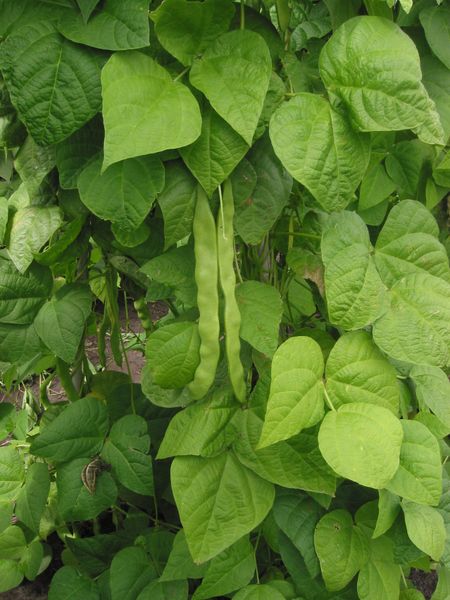
STRING-BEANS-PLANT

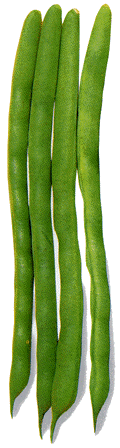
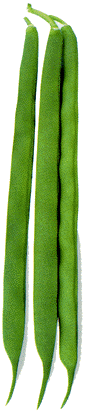
Common beans, when green and immature are either called String Beans or French Beans when they don’t have a string.
When reaching maturity they gave way to all kinds of beans.
They were first discovered in Central and South America in the 16th Century and were later introduced in Europe, then China. The French first planted the beans in Japan in rhe second half of the 19th Century.

90% of the crop is harvested three times a year in Hokkaido Island in Japan.

Ther are two main varieties in this country:

STRING-BEANS-DOJYOINGEN
“Dojyo-Ingen”, also called “Kentucky Wonder”. Slightly soft variety.

STRING-BEANS-SAABERUINGEN
“Saaber-Ingen”, thinner and rounder than above without strings.

The Japanese usually boil them lightly or just just cut them in trunks about 5 cm long and add them to all kinds of dishes from clear soups to sauteed food.

OTHER VARIETIES

Mokko Ingen

This variety is gaining popularity for its large size.
Recently found in French and Italian restaurants.
Make for great decoration onthe plate and are succulent lightly steamed, fried or stewed. Can reach 20 cm.

Juroku Sasage

Very thin and long (30 m), grown in Aichi Prefecture. Soft and easy to cook and eat. They are called because they contain 16 (juroku) seeds each.

Kintoki Mame

More widely known for producing azuki bean varieties.
Can be eaten young and greenlike string beans.

Akishima Sasage

Popular for their varying colors. Grown in geenhouses in Gifu Prefecture.
The beans are delicious when stewed.

FACTS:
-Season: June~September
-Main beneficial elements: Protein, Carotene, Vitamin B1 nad Bz, Vitamin C, Vitamin K, Calcium, Calcium, Magnesium and vegetal fibers.
-Eaten with other food high in protein, their Vitamin C are easily ingested by human bodies.
Cooked with oil, their carotene will be easily assimilated by human bodies.

TIPS:
-Just after boiling drain them and let cool inside a sieve. They will be tastier for it.
-If you have plenty, first boil them before storing them in the refrigerator.
-Peel strings away before cooking.
-Choose firm and straight specimens.

HEALTH FACTS:

-Combined with Judas Ear mushrooms, or Konnyaku, or Bamboo shoots, help combat large intestine cancer and obesity.

-Combined with Yoghurt, or natto, or Spinach, or hijiki/sweet seaweed, helps combat intestines poisoning and constipation.

-Combined with Agar agar or onion, help reduce blood cholesterol and high blood pressure.

-Combined with Broccoli, or rape blossoms, or kabocha, or tomato, helps prevent cancer, helps skin rejuvenation and recovery from illness.

RECOMMENDED RELATED SITES
Not-Just-Recipes, Bengal cuisine, Cooking Vegetarian, Frank Fariello, Gluten-free Vegan Family, Meatless Mama, Warren Bobrow, Wheeling Gourmet, Le Petit Cuisinier, Vegan Epicurean, Miss V’s Vegan Cookbook, Comestiblog, To Cheese or not To Cheese, The Lacquer Spoon, Russell 3, Octopuspie, Bread + Butter, Pegasus Legend, Think Twice, The French Market Maven, Fuji Mama, Great Teacher Sato, Peas Love Carrots

Please check the new postings at:
sake, shochu and sushi

—————————————-
日本語のブログ
—————————————-
Vegan Sushi Suggestions 3: Veggie Sushi Tray, Box & Plate Presentations

Veggie Sushi Box for bento/Lunch box!

SYNOPSIS:

I already have introduced Vegan and Vegetarian Sushi, but following further requests and questions by my vegan (I’m not!) friends, I decided to contribute a small series of postings to give them more detailed suggestions and ideas!

Now, please check sushi rice recipe HERE to make things more practical!

————————————

This particular posting is designed to help you with designing Veggetables sushi tray, box or plate presentations!

Asaparaguses, Kabocha and Okra Sushi Nigiri.

Mushroom, maountai Vegetable, Myoga Ginger, Bamboo Shoots, and Leek sprouts Sushi nigiri.

White leek, Sprouts and yam,fresh or seared (repeated) Sushi Gunkan.

White asparaguses, myoga ginger, corn (gunkan) and tomato sushi nigiri.

Sorry, the pic is small, but the tray isquite sophisiticated:

Top: tomato. Second row (from top down): Rice ball wrapped in shiso/perilla leaf, pickled aubergines and myoga ginger. Third row: Tomato and kawaire daikon sprouts. Fourth row: Rice ball wrapped in shiso/perilla leaf, pickled aubergines and myoga ginger. Fifth row: bamboo shoots.

Here the rice is white and violet rices mixed.
Shhitake mushroom, broccoli, pickled yam and fuki.

Small pic again, sorry.
Goya, daikon pickled in sweet vinegar, okra, bamboo shoots and chopped mountain vegetables.

Pickled aubergine, Okra, Myoga Ginger, Plain rice, Burdock root and pickled aubergine.

Ice plant, Avocado and radish, Leek shoots, Myoga Ginger and Shiitake Mushroom.

Leaf sprouts, pickled aubergine, yam and red sweet pimento cubes, green aspargus tips and seared eringe mushroom.

From top:
Ippon Shimeji mushroom (grilled), Myoga Ginger, Pickled celery, Tomato gunkan with cucumber instead of seaweed/nori and Leek sprouts.

Sorry for the fuzzy picture:
From top: orange and its peel marinated in sweet vinegar, Tomato, Onion marinated in sweet vinegar, Kawaire daikon sprouts (lightly boiled), Tomato and okra gunkan and pickled cucumber.

From left: green leaves gunkan, Chinese cabbage (boiled and topped with grated ginger), red seet pimento (lightly grilled), Na no han/rape blossoms (boiled), Bambooo shoot (boiled), and trefoil (lightly boiled).

Okra, celery, myoga ginger and three different pimento.

Green pimento (lightly grilled), na no hana/rape blossom (boiled) and pickled aubergine.

From bootom upwards:
Leek sprouts, bamboo shoots, Myoga ginger and na no hana/rape blossoms!

Still looking around and ordering!

RECOMMENDED RELATED SITES
Not-Just-Recipes, Bengal cuisine, Cooking Vegetarian, Frank Fariello, Gluten-free Vegan Family, Meatless Mama, Warren Bobrow, Wheeling Gourmet, Le Petit Cuisinier, Vegan Epicurean, Miss V’s Vegan Cookbook, Comestiblog, To Cheese or not To Cheese, The Lacquer Spoon, Russell 3, Octopuspie, Bread + Butter, Pegasus Legend, Think Twice, The French Market Maven, Fuji Mama, Great Teacher Sato, Peas Love Carrots

Please check the new postings at:
sake, shochu and sushi

—————————————-
日本語のブログ
—————————————-
Vegetables Fact & Tips 11: Renkon/Lotus Root (amended and expanded)

lotus-root1

In Japan we are near the end of Lotus Roots season, but eat them all year round!
Lotus roots come from a plant called Nelumbo nucifera, also known by a number of names including Indian lotus, sacred lotus, bean of India, or simply lotus. This plant is an aquatic perennial. Under favorable circumstances its seeds may remain viable for many years.
A common misconception is referring to the lotus as a water-lily (Nymphaea), an entirely different plant.

Native to Greater India and commonly cultivated in water gardens, the lotus is the national flower of India and Vietnam.

The flowers, seeds, young leaves, and “roots” (rhizomes) are all edible. In Asia, the petals are used sometimes for garnish, while the large leaves are used as a wrap for food. In Korea, the leaves and petals are used as a tisane. Yeonkkotcha (연꽃차) is made with dried petals of white lotus and yeonipcha (연잎차) is made with the leaves. The rhizome (called ǒu (藕) in pinyin Chinese, ngau in Cantonese, bhe in Hindi, renkon (レンコン, 蓮根 in Japanese), yeongeun (연근) in Korean is used as a vegetable in soups, deep-fried, stir-fried and braised dishes. Petals, leaves, and rhizome can also all be eaten raw, but there is a risk of parasite transmission (e.g., Fasciolopsis buski): it is therefore recommended that they be cooked before eating.

FACTS:
-Season: September~December in Japan.
-Beneficial elements:
Lotus roots have been found to be rich in dietary fiber, vitamin C, potassium, thiamin, riboflavin, vitamin B1 & B6, phosphorus, copper, iron and manganese, while very low in saturated fat.
Various parts of the lotus are also used in traditional Asian herbal medicine.

TIPS:

-Choose specimens with a clear white cut section. There should not be any black spots.
-Use large specimen as they are easier to cut and use.
-To prevent oxydising, warp cut specimen into wet kitchen paper.
-Add vinegar to water when boling them to keep them white.
-The easiest way to peel them is to use a potato peeler!

COOKING:

The stamens can be dried and made into a fragrant herbal tea called liánhuā cha (蓮花茶) in Chinese, or (particularly in Vietnam) used to impart a scent to tea leaves. The lotus seeds or nuts (called liánzĭ, 蓮子; or xian liánzĭ, 鲜莲子, in Chinese) are quite versatile, and can be eaten raw or dried and popped like popcorn, phool makhana. They can also be boiled until soft and made into a paste, or boiled with dried longans and rock sugar to make a tong sui (sweet soup). Combined with sugar, lotus seed paste becomes one of the most common ingredient used in pastries such as mooncakes, daifuku, and rice flour pudding.

Japanese popular Renkon dishes:

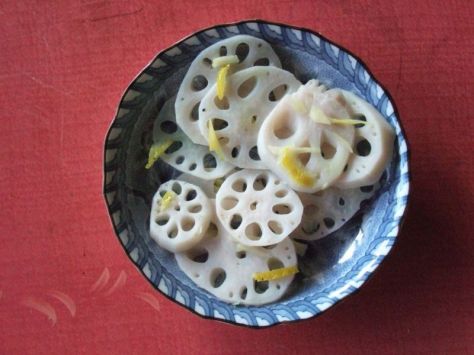
lotus-root-nimono

“NIMONO”

lotus-root-sumono

“SUMONO”

lotus-root-kimpira

“KIMPIRA”

“STUFFED LOTUS ROOTS”

“DEEP-FRIED LOTUS ROOT SANDWICH”

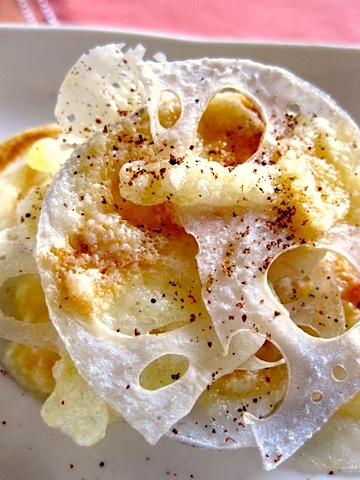
lotus-roots-chips

“CHIPS”

HEALTH FACTS:

-Combined with liver, or beef, or pork, or chicken, helps revitalize human blood and organs.

-Combined with turnips, or daikon, or beansprouts, or trefoil, helps digestion and bowels.

-Combined with leafy vegetables, or potato, or apples, helps combat cancer and obesity.

-Combined with konnyaku, or celery, or lettuce, or green peppers, helps lower blood cholesterol. helps combat artery hardening and prevent heart diseases.

RECOMMENDED RELATED SITES
Not-Just-Recipes, Bengal cuisine, Cooking Vegetarian, Frank Fariello, Gluten-free Vegan Family, Meatless Mama, Warren Bobrow, Wheeling Gourmet, Le Petit Cuisinier, Vegan Epicurean, Miss V’s Vegan Cookbook, Comestiblog, To Cheese or not To Cheese, The Lacquer Spoon, Russell 3, Octopuspie, Bread + Butter, Pegasus Legend, Think Twice, The French Market Maven, Fuji Mama, Great Teacher Sato, Peas Love Carrots

Please check the new postings at:
sake, shochu and sushi

—————————————-
日本語のブログ
—————————————-

Vegetables Facts & Tips 10: Egg Plants/Aubergines (amended & expanded)

aubergines-1

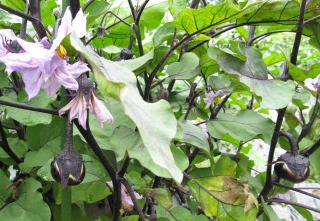
The eggplant, aubergine, or brinjal (Solanum melongena) is a plant of the family Solanaceae (also known as the nightshades) and genus Solanum. It bears a fruit of the same name, commonly used as a vegetable in cooking. As a nightshade, it is closely related to the tomato and potato and is native to India and Sri Lanka.

That for the Wikipedia definition. The word Aubergine is mainly used in Europe. It comes in many shapes, sizes and even colours, but they share the same facts.

FACTS:
-Season: June to September in the Northern Hemisphere, but are available all year round thanks to greenhouse cultivation.
-Main beneficial elements: Potassium, Calcium, Magnesium, Vitamin C and B1, B2
-90% is water, but the skin contains a lot of polyphenols so useful against ageing and arteries cleaning!
It is also of a great help to fight diabetes.

VARIETIES:

As mentioned above, aubergines come in many varieties, but I am introducing here only the varieties and hybrids grown in Japan.

The first one I would to make known is particular to this country:

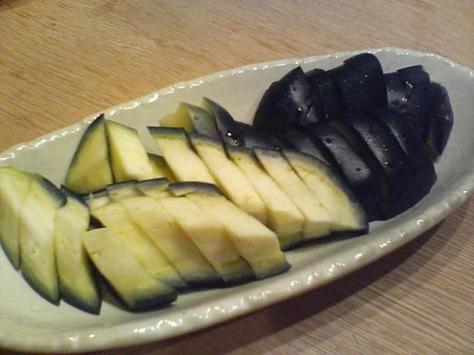
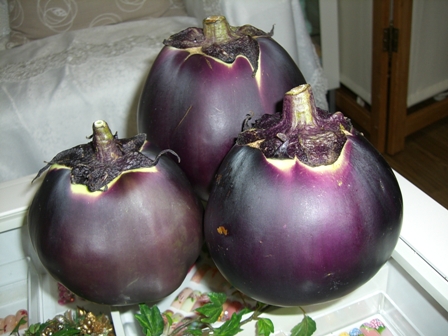
aubergines-mizu

“Mizu Nasu”, litterally “Water Aubergine”
It has the particularity that it can be eaten raw cut and served like sashimi! With miso, pickled plum flesh, wasabi or soy sauce, it opens all kinds of possibilities fro vegans, vegetarians and raw food lovers!

“Bei Nasu”
An American hybrid popular for its large round size.

“Ao nasu”, or green aubergine
Also called “Midori Nasu”. The skin is hard but will soften quickly upon cooking. Appreciated grilled.

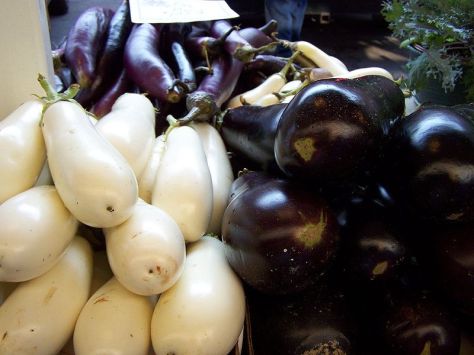
“Shiro Nasu”, or white aubergines.
The white colour is due to the absence of Nathnin.
Will get very soft upon cooking.

“Naga Nasu”, or litterally “Long Aubergine”.
Can grow up 30 cm long. Soft flesh, it is most popular grilled.

“Kamo Nasu”
A typical variety originally grown in Kyoto. Small and round with a finely-grained texture. Very popular in higher class gastronomy.

“Zebra Nasu”
Also called Italian Aubergine. Valued for its colourand designs.
Appropriate for slow cooking as hard.

“Tozen Nasu”
Small variety.

The small size of Tozen Nasu Aubergines makes it popular for pickles inparticular.

“Batten Nasu”
From Kumamamoto Prefecture. Sweet and containing a lot of water. Can be eaten raw.

“Okita Nasu”
Another small variety.

Okita Nasu are minuscule, making them very popular for pickles!

“Aka Nasu”, or red aubergine.
Large and beautiful, with little acidity, it is one of the most popular varieties in this country, especially grilled.

“Ko Nasu”, or litterally small aubergine.
Sweet, soft skin, almost containing no seeds, it is popular for pickles. Also exist round.

“Stick Taste”
A new variety, about 10 cm long and svelte. Popular stir-fried. Will keep its colour and design even cooked.

“Thai Nasu”
Small, roundish. Hard variety with a lot of seeds. Slow cooked in curries.

TIPS:

-Choose specimens with a deep colour, bright appearance and comparatively light weight.
-To preserve them, wrap them individually in cellophane paper before storing them in the refrigerator.
-Before cooking them, cut them and leave them in clear water util usage to prevent oxydizing.
If you want to fry them, cut them first and rub them with a lttle salt to take excess water out of them.

HEALTH FACTS:

-Combined with konnyaku/Devil’s Tongue Tuber/Elephant Foot Tuber, or okra, or enoki mushrooms, or burdock root, helps combat artery hardening, cancer and high blood pressure.

-Combined wiyh carrot, or kabocha, or spinach, or pink grapefruit, helps combat cancer and colds, helps skin rejuvenation.

-Combined with wax gourd, or tomato, or cockles, or small clams, helps combat diabetes, cancer and obesity.

-Combined with miso or enoki mushrooms, helps combat cancer, helps lower blood cholesterol and stimulates blood flow.

RECOMMENDED RELATED SITES
Not-Just-Recipes, Bengal cuisine, Cooking Vegetarian, Frank Fariello, Gluten-free Vegan Family, Meatless Mama, Warren Bobrow, Wheeling Gourmet, Le Petit Cuisinier, Vegan Epicurean, Miss V’s Vegan Cookbook, Comestiblog, To Cheese or not To Cheese, The Lacquer Spoon, Russell 3, Octopuspie, Bread + Butter, Pegasus Legend, Think Twice, The French Market Maven, Fuji Mama, Great Teacher Sato, Peas Love Carrots

Please check the new postings at:
sake, shochu and sushi

—————————————-
日本語のブログ
—————————————-

Vegan Japanese Dessert: Sweet Potato, Apple & Gardenia Seeds Kinton

It is always a bit complicated for vegans and vegetarians alike to create desserts without using eggs or dairy products, unlessyou start using derivatives and susbstitues, which is not always a good idea.
The Japanese must be, without knowing it, the greatest creators of vegan desserts thanks to such techniques as found in the making of wagashi!

One variety of wagashi is called Kinton.
Kinton, or きんとんin Japanese is a Japanese tradtional dessert made with chestnuts/kuri/栗 and sugar.
Originally created in Gifu in the late 1870’s it is now found and available almost everywhere in Japan for the pleasure of all, vegans and vegetarians included.

Kuchinashi (Japanese) or Gardenia jasminoides (also known as Gardenia augusta) is a fragrant flowering evergreen tropical plant, a favorite in gardens worldwide. It originated in Asia and is most commonly found growing in Vietnam, Southern China, Taiwan and Japan.
The fruit is used as a yellow dye, which is used for clothes and food (including the Korean mung bean jelly called hwangpomuk).
Medicinal uses:
Gardenia jasminoides fructus (fruit) is used within Traditional Chinese Medicine to “drain fire” and thereby treat certain febrile conditions.

Kuchinashi no Mi/Gardenia fruit.

Kuchinashi no mi/Gardenia fruit, dried as found in Japanese stores.

I took the precaution to go through these preliminary explantaions before introducing the following dessert:

Sweet Potato, Apple & Gardenia Seeds Kinton!

INGREDIENTS:

-Apple: 1 large
-Sweet Potato/Satsuma Imo: 1 medium
-Lemon juice: 1/4
-Sugar: 1 tablespoon
-Gardenia seed/Kuchinashi no Mi: 1

RECIPE:

-Peel the sweet potato, cut in four legthwise and across again every 2 cm. Leave aside in clear cold water.

-Peel the apple, cut into 8 wedges and slice again every 5 mm. Drop in a stainless pot. Add lemon and sugar. Cover with lid and simmer on a low fire until softened.

-Cut the kuchinashi no mi/Gardenia seed in two and insert it in a small cooking bag (gauze as for bouquet garni).

-In a different pan, drop the sweet potato with ebnough water to boil them. Add teh kuchunashi no mi/gardenia seed. Boil until the sweet potato is soft enough to be easily skewered with a bamboo/wooden toothpick.

-Throw the water of the sweet potato out. Keep cooking the sweet potato to let their water evaporate.

-Add 1/3 of the apple to the sweet potato and mix well.

-Serve the sweet potato topped with the cooked apple.

NOTES:

-Roast some some walnuts and top the dessert with them!

RECOMMENDED RELATED SITES
Not-Just-Recipes, Bengal cuisine, Cooking Vegetarian, Frank Fariello, Gluten-free Vegan Family, Meatless Mama, Warren Bobrow, Wheeling Gourmet, Le Petit Cuisinier, Vegan Epicurean, Miss V’s Vegan Cookbook, Comestiblog, To Cheese or not To Cheese, The Lacquer Spoon, Russell 3, Octopuspie, Bread + Butter, Pegasus Legend, Think Twice, The French Market Maven, Fuji Mama, Great Teacher Sato, Peas Love Carrots

Please check the new postings at:
sake, shochu and sushi

—————————————-
日本語のブログ
—————————————-

Vegan Japanese Cuisine: Bamboo Shoots Tips & Umeboshi

Here is anothe Japanese vegan recipe for bamboo, especially young new bamboo shoots which are around the corner.

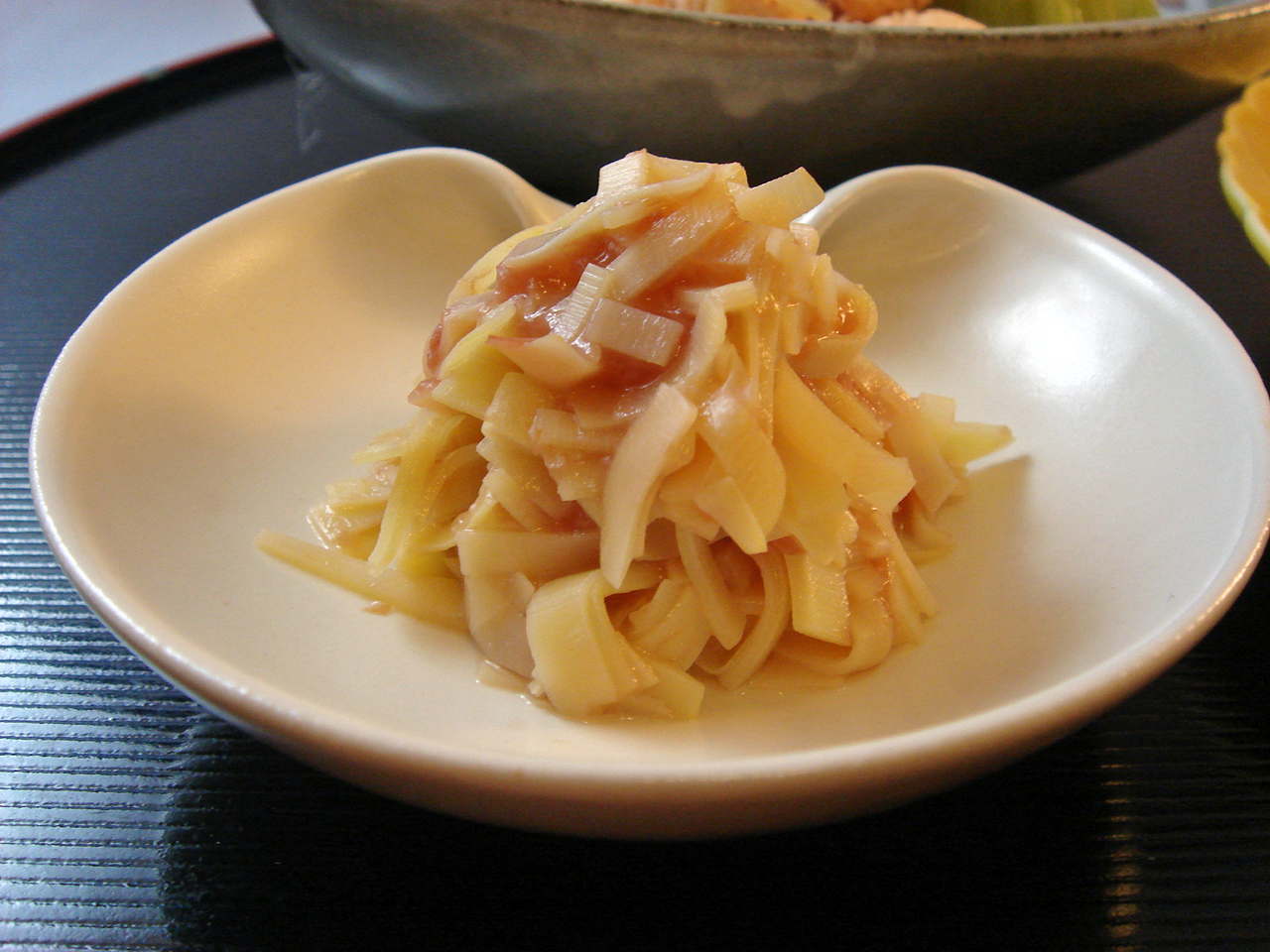
This particular recipe is called 筍の姫皮の梅肉和え/Takenoko no Himekawa no Umeniku Shitae.

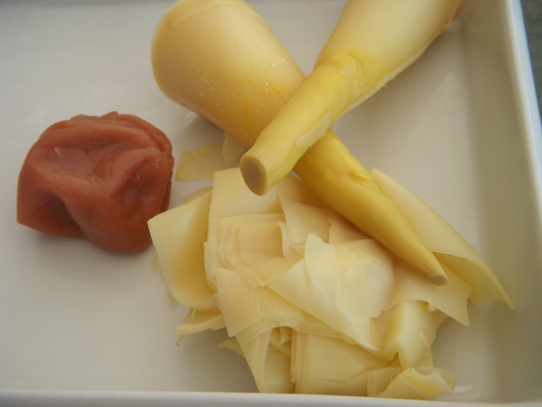
Himekawa are the very tip of young bamboo shoot, not the bamboo shoot which is found in tinned bamboo shoots, but actually the inner soft part of “leafy end” of the shoot. If you have the fresh bamboo shoot, you may of course add the tip of the bamboo shoot itself.

As for umeniku, it means the “flesh” (not the seed!) of a Japanese pickled plum.
Chose large plums. I fancy the honey pickled ones for their small amount of salt!

INGREDIENTS:

-Himekawa/Bamboo shoot inner tips
-Honey pickled umeboshi (low salt content)
-Cooking Japanese sake
-Soft taste soy sauce
-Dashi: (Check HERE for Vegan Recipe!)

All ingredient quantities are up to you! Do experiment!

RECIPE:

-Cut the tip of the bamboo shoot. Discard any leafy, hairy, hard or dark part.

-Cut the bamboo tips in short strips.

-Boil the bamboo tips in dashi and soy sauce just enough to soften them a bit more and season them.

-Mash the umeboshi/Japanese pickled plum with a knife.
Season the drainedbamboo tips with the umeboshi, cooking Japanese sake and a little soy sauce in a bowl and mix.

Serve in individual plates.
This can also be served as part of a salad or a side dish. Decorate with green shoots for better impression.
You may add spices, but you will have to be careful when experimenting!

RECOMMENDED RELATED SITES
Not-Just-Recipes, Bengal cuisine, Cooking Vegetarian, Frank Fariello, Gluten-free Vegan Family, Meatless Mama, Warren Bobrow, Wheeling Gourmet, Le Petit Cuisinier, Vegan Epicurean, Miss V’s Vegan Cookbook, Comestiblog, To Cheese or not To Cheese, The Lacquer Spoon, Russell 3, Octopuspie, Bread + Butter, Pegasus Legend, Think Twice, The French Market Maven, Fuji Mama, Great Teacher Sato

Please check the new postings at:
sake, shochu and sushi

—————————————-
日本語のブログ
—————————————-

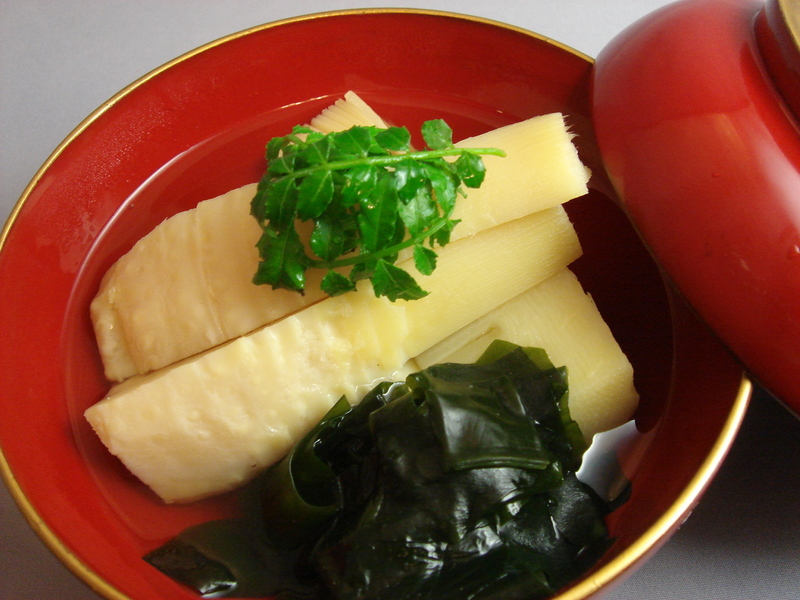
Vegan Japanese Cuisine: Simmered Bamboo Shoots

In Japan, and in Shizuoka in particular, the bamboo shoots season is about to come.
Fresh, they are so tender and provide a good bite sensation for people with vegan and vegetarian priorities.
Naturally you can buy them tinned all year round, but the quality just does not compare!
The Japanese are very found of new shoots grilled with their “skin” around them to later peel and eat them almost like corn ears!
By the way, did you know that bamboo is not a tree, but a grass?

Here is a simple vegan Japanese recipe. All ingredients hopefully can be found in Asian markets abroad:

Simmered Bamboo Shoots/Waka Take Ni/若竹煮!

INGREDIENTS:

-Bamboo shoots: 2 small, fresh if possible
-Wakame: as appropriate (can be boughtin Asian Markets in sachet/bags. Wash their salt off first and soften them if necessary)


-Ki no Me (see above): Ki no me is also also called Sansho or Japanese pepper, especially when fresh and in leaves. It is called Shishuan pepper when dried: as appropriate. If unavailable, use leafy greens or fresh spouts of any kind!

-Dashi: 2 cups/400 cc/ml (Check HERE for Vegan Recipe!)

-Salt: 1/2~teaspoon
-Soft taste soy sauce: 2 tablespoons
-Japanese sake: 1 tablepoon (if unavailable, experiment with white wine!)
-Mirin/sweet sake: 50 cc/ml

RECIPE:

-Peel bamboo shoots if necessary. Cut them along their lengths into 6 radial trips.

-Wash wakame in clear cold water and cut into bite size.

-Pour the dashi, soy sauce, sake, salt and mirin in a pan. Simmer the bamboo shoots and wakame in the mixture for 20 minutes on a medium fire, taking care not to overboil it.

-Serve hot or chilled with its soup decorated with some frsh ki no me or other greens

NOTES:

This is the “soft style” recipe. You may vary the amount of salt and add spices.

RECOMMENDED RELATED SITES
Not-Just-Recipes, Bengal cuisine, Cooking Vegetarian, Frank Fariello, Gluten-free Vegan Family, Meatless Mama, Warren Bobrow, Wheeling Gourmet, Le Petit Cuisinier, Vegan Epicurean, Miss V’s Vegan Cookbook, Comestiblog, To Cheese or not To Cheese, The Lacquer Spoon, Russell 3, Octopuspie, Bread + Butter, Pegasus Legend, Think Twice, The French Market Maven

Please check the new postings at:
sake, shochu and sushi

—————————————-
日本語のブログ
—————————————-

Vegan Japanese Cuisine: New Cabbage In Sweet Vinegar Marinade

New cabbages are coming to the markets in Shizuoka!
They are both juicy and crunchy and are just great raw!

Here is a simple recipe for vegans to enjoy:

New Cabbage in Sweet Vinegar Marinade!

INGREDIENTS:

-New Cabbage: 4~5 leaves
-Graound sesame seeds: 2 tablespoons
-Sugar: 1 tablespoon
-Rice vinegar: 1+1/2 tablespoons
-Light taste soy sauce: 1/2 tablespoon

RECIPE:

-Cut the cabbage leaves in 4 cm square pieces.

-Heat salted water in a pan to boiling point.

-Throw in the cabbage.

-Take cabbage out just before boiling point and set aside.

-In a large bowl, mix ll ingredients with cabbage while they are still hot.

-Let it cool down completely.

It can actually be savoured warm, lukearm or chilled, although the quicker you eat it, the better!

Add some leafy greens or sprouts for decoration!

Simple again, ain’t it? (I tend to repeat myself! LOL)

RECOMMENDED RELATED SITES
Not-Just-Recipes, Bengal cuisine, Cooking Vegetarian, Frank Fariello, Gluten-free Vegan Family, Meatless Mama, Warren Bobrow, Wheeling Gourmet, Le Petit Cuisinier, Vegan Epicurean, Miss V’s Vegan Cookbook, Comestiblog, To Cheese or not To Cheese, The Lacquer Spoon, Russell 3, Octopuspie, Bread + Butter, Pegasus Legend, Think Twice, The French Market Maven

Please check the new postings at:
sake, shochu and sushi

—————————————-
日本語のブログ
—————————————-

Vegan Japanese Cuisine: Tomatoes marinated in Sweet Vinegar

Like the Aubergines/Eggplants, Tomatoes are available all year round!

Here is a very simple and healthy recipe that anyone can use and eat at will!

Tomato No Amazu tsuke/Tomeatoes marinated in sweet vinegar!

INGREDIENTS:

-Tomato: 250 g
-Onuon: 15 g (finealy chopped)
-Celery: 10 g (finely chopped)
-Coriander: to taste (fresh and finely chopped

Marinade:
-Sugar: 2,1/2 tablespoons
-Rice vinegar: 50 ml/cc
-Water: 100 ml/cc

RECIPE:

-Pour allthe marinade ingredients in a saucepan and heat until just before boiling point. Switch off fire, let cool completely and chill.
Chill chopped onion, celery and coriander inside the fridge.

-Plunge the tomatoes in hot water, then ice-cold water and peel.
Cut into small enough pieces and add them to the marinade. Chill inside fridge.

-Serve tomatoes with chopped vegetables on topas shown in above picture.

You may add optional chopped vegetables and leaves.
As for salt ot spices I would experiment very carefully!

RECOMMENDED RELATED SITES
Not-Just-Recipes, Bengal cuisine, Cooking Vegetarian, Frank Fariello, Gluten-free Vegan Family, Meatless Mama, Warren Bobrow, Wheeling Gourmet, Le Petit Cuisinier, Vegan Epicurean, Miss V’s Vegan Cookbook, Comestiblog, To Cheese or not To Cheese, The Lacquer Spoon, Russell 3, Octopuspie, Bread + Butter, Pegasus Legend, Think Twice, The French Market Maven

Please check the new postings at:
sake, shochu and sushi

—————————————-
日本語のブログ
—————————————-

Vegan Japanese Cuisine: Marinated Aubergines/Egg Plants

Aubergines/egg plants are available all year round and are so versatile.

Here is a simple recipe for vegans and vegetarians to expand on:
Marinated Aubergines!

INGREDIENTS: for 2~3 persons

-Aubergines/egg plants: 3
-Garlic: 1 clove (thinly sliced)
-Capsicum/red chili pepper: 1 (Cut into thin rings)
-Wine vinegar: 1 tablespoon
-Olive Oil (EV): 3 tablespoons
-Mint leaves

RECIPE:

Cut the aubergines into 5 mm thick slices.
line them in a dish with salt.
After 15 minutes, the aubergines should have expelled enough water.
Wipe the aubergine slices with some kitchenpaper.
Sprinkle with salt and deep-fry.

-In a dish spread the aubergines on top of each other. Place the thin garlic slices over the top layer. Place the thin rings of capsicum over the garlic. Sprinkle the whole with wine vineagar and olive oil. Place plenty of mint leaves over the top.
Chill thoroughly inside the refrigerator.
Mint leaves might change colour with the wine vinegar. You may add them last when you serve the aubergines.

You may add more garlic slices in between the aubergines layers for stronger taste.

Serve as shown in above picture.

Easy again, isn’t it?
Great with beer!

RECOMMENDED RELATED SITES
Not-Just-Recipes, Bengal cuisine, Cooking Vegetarian, Frank Fariello, Gluten-free Vegan Family, Meatless Mama, Warren Bobrow, Wheeling Gourmet, Le Petit Cuisinier, Vegan Epicurean, Miss V’s Vegan Cookbook, Comestiblog, To Cheese or not To Cheese, The Lacquer Spoon, Russell 3, Octopuspie, Bread + Butter, Pegasus Legend, Think Twice, The French Market Maven

Please check the new postings at:
sake, shochu and sushi

—————————————-
日本語のブログ
—————————————-

Vegan Japanese Cuisine: Taro in Sesame and Miso sauce

Here is another vegan recipe that is not only healthy and easy to pprepare but will also give you plenty of satisfaction:
Taro In sesame and Miso sauce!

INGREDIENTS: For 3~4 people

-Taro/sato imo: 3 medium to large
-Miso: 1 tablespoon
-Sugar: 1 tablespoon
-Mirin/Sweet sake: 1/2 tablepoon
-Ground sesame seeds: 1/2 tablespoon

RECIPE:

1- Wash the taro/sato imo and wrap as they are in cellophan paper. Cook them in a microwave oven at 600W for 7 minutes. Turn them over halfway.

2-Take them out and peel them. Shi\ould be easy by hand.. Cut them into pieces of your preference.

3-Mix the miso, sugar, mirin and ground sesame and season the taro/sato imo with them.
Serve in individual or large plate.
Add some freshly chopped greens or sprouts.

Bear in mind that depending on the size of the taro/sato imo, you might have to amend the cooking time.
Don’t forget to turn them over once halfway.
You can also vary the quantity of ground sesame!

Easy again, ain’t it?

RECOMMENDED RELATED SITES
Not-Just-Recipes, Bengal cuisine, Cooking Vegetarian, Frank Fariello, Gluten-free Vegan Family, Meatless Mama, Warren Bobrow, Wheeling Gourmet, Le Petit Cuisinier, Vegan Epicurean, Miss V’s Vegan Cookbook, Comestiblog, To Cheese or not To Cheese, The Lacquer Spoon, Russell 3, Octopuspie, Bread + Butter, Pegasus Legend, Think Twice, The French Market Maven

Please check the new postings at:
sake, shochu and sushi

—————————————-
日本語のブログ
—————————————-

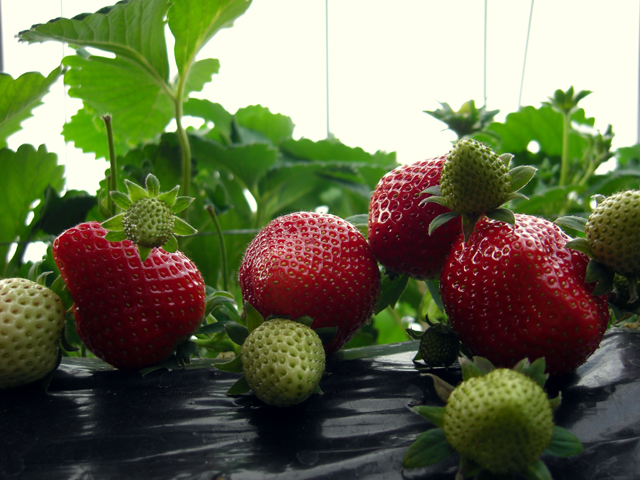
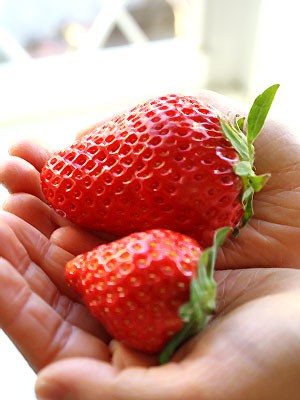
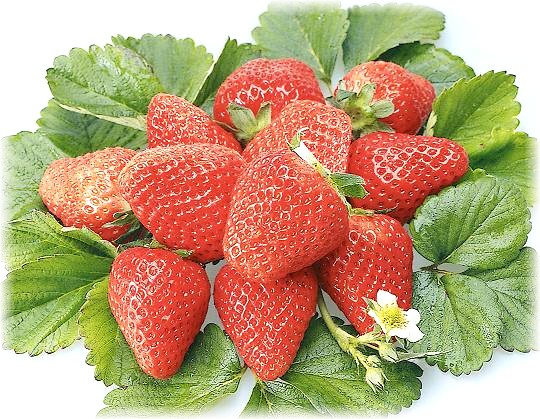
Strawberries: Facts & Tips

I was going to start an information series on Fruits like I’m doing for vegetables, but after realizing the enormous task I decided to limit myself to the fruits popular and grown in Japan.
Believe there are enough!

Why do I start with strawberries?
Can you guess?
Shizuoka Prefecture with more 1,500 strawberry commercial growers officially registered is called “Ichigo no Ookoku/Strawberry Kigdom” in Japan!

The garden strawberry is a common plant of the genus Fragaria which is cultivated worldwide for its fruit, the (common) strawberry. The fruit is widely appreciated, mainly for its characteristic aroma but also for its bright red color, and it is consumed in large quantities — either fresh, or in prepared foods such as preserves, fruit juice, pies, ice creams, milk shake, etc..

The garden strawberry was first bred in Bretagne/Brittany, France in 1740 via a cross of Fragaria virginiana from eastern North America , which was noted for its flavor, and Fragaria chiloensis from Chile and Argentina brought by Amédée-François Frézier, which was noted for its large size.

Cultivars of Fragaria × ananassa have replaced, in commercial production, the woodland strawberry, which was the first strawberry species cultivated in the early 17th century.

TIPS:

-Best season for natural Strawberries is May~June
For green house-cultivated, hydroponically or not, specimens the season is from December to April.

-To preserve them, don’t wash them, cover themlightly with cellophane paper and keep them inthe vegetable compartment of your refrigerator.
If you want to freeze them, get them rid of their leaves and stem first, then wash them and drain them thoroughly.

-if you wish to wash them, leave them in clear cold water for 5 minutes. If you take the leaves and stem out before washing them, they will lose a lot of their vitamin C.

-Wherever possible, don’t take the leaves and stem out before eating them. Strawberries in decoration cakes have lost large amounts of tehir beneficial elements!

-Eat strawberries after drinking alcohol or when stressed! You will be surprised how much they help!

VARIETIES:

Although Japan was late in starting growing strawberries, they probably have the largest number of varieties!

“Benihoppe/Red Cheeks”
A recent cultivar developped in Shizuoka Prefecture!
Really sweet, but with a striking balance with just enough acidity.
Most of them go to Tokyo!

“Amaou/Sweet, Round & Big”
From Fukuoka Prefecture. Sweet and a little acidity.

“Nyohou”
From Tochigi Prefecture. Juicy. Cultivation has recently decreased.

“Tochiotome”
From Tochigi Prefecture. The most common in Japan. Very sweet.

“Moikko/One More Please”
From Miyagi Prefecture. Round and refreshingly sweet.

“Sagahonaka”
From Saga Prefecture. Extensively sold in Western Japan. Very sweet.

“Hatsukoi no kaori/the Scent of First Love!”
Developped in 2006. Probably the most expensive strawberry in the world.

Its flesh is completely white while the skin is ivory with red seeds. It is not an albino strawberry!
But the taste is somewhat average.

“Aiberi/Love Berry”
From Aichi Prefecture. High qaulity and expensive. Great balance. Red flesh.

“Toyohime”
Very popular with “strawberry picking tours”. Very sweet.

“Sachinoka”
High in sugar. Popular for its high sun resistance.

“Yayoihime”
From Gunma Prefecture. Ver sweet. Especially available in December (in time for the celebrations!).

“Hinoshizuku”
From Kumamoto Prefecture. High in sugar, low acidity. Available from December, too!

“Yumenoka”
From Aichi Prefecture. Very juicy and great balance.

FACTS:

Strawberries contain a great amount of Vitamin C and flavonoids.
7 medium-sized strawberries contain enough Vitamin C for a whole day for an adult human!
Thy also contain Vitamin B1, B2.and B6, Potassium, Calcium and Magnesium and a little iron.

They also contain a lot of digestible vegetal fibers, helping digestion a lot.
They also contain a lot of collagen, helping skin against blemishes!

HEALTH FACTS:

-Combined with yams, or yoghurt, or chickory, or shiso/perilla, helps strengthen the stomach, helps combat cancer and ageing.

-Combined with broccoli, or pink gapefruit, or tomato, or red carrot, helps combat cancer, stress, and helps the skin and stimulates brain activity.

-Combined with wakame seaweed, or onion, Judas’ era mushroom, or peanuts, helps prevent high blood pressure, heart diseases and blood vessels hardening.

-Combined with oyters, or kiwi fruit, or lemon, helps the skin and combats stress (and over-drinking!)

RECOMMENDED RELATED SITES:
Bread + Butter, Comestilblog, Greedy Girl, Bouchon For 2, Zoy Zhang, Hungry Neko, Mangantayon, Elinluv Tidbit Corner, Maison de Christina, Chrys Niles, Lexi, Culinary Musings, Eats and Everything, Bite Me New England, Heather Sweet, Warren Bobrow, 5 Star Foodie, Frank Fariello, Oyster Culture, Ramendo, Alchemist Chef, Ochikeron, Mrs. Lavendula, The Gipsy Chef, Spirited Miu Flavor, Wheeling Gourmet, Chef de Plunge, Sushi Nomads, Island Vittles, Jefferson’s Table

Please check the new postings at:
sake, shochu and sushi,
—————————————-
日本語のブログ
—————————————-

Vegetables facts & Tips 8: Leeks (Expanded and amended)

negi-1

Leeks, or “negi” in Japanese, are an almost universal vegetable.
It is used in cuisine at restaurants and homes on all continents and have been recognized for ages as very beneficial plant.

Recent research has demonstrated that They are an effective cure against colds in particular, not only for humans, but for many animals, too.
Some people do not appreciate them because of their pungent smell and taste, but this can be taken care of with a couple of simple steps.

Back home in France, we boil the central part of fat leeks and eat them under the name of “poor man’s asparaguses”!

FACTS:
-Season: leeks can be bought all year round, but the best season is from November to February in the Northern Hemisphere.

-Main beneficial elements: Carotene (green part), Vitamin C (white part), Calcium, Vitamin B1 (beneficial for blood circulation), B2, B8, Potassium, Calcium (in big amounts!), Iron, Manganese, vegetal fibers.

TIPS:
-Fatter specimens will have more taste.
-Choose specimens with a “wet” bottom cut.
-If you use large specimens raw in salads, first cut 5~8 cm long sections, then cut them thin lengthwise and leave them some time in clean cold water. The pungency will greatly diminish.
-To chop leeks for cooking, cut them first in 5~10 cm sections, then cut them thin lengthwise, and only then, chop them crosswise.

VARIETIES:
There are innemurable varieties in the World, but I will introduce here the main varieties encountered in Japan:

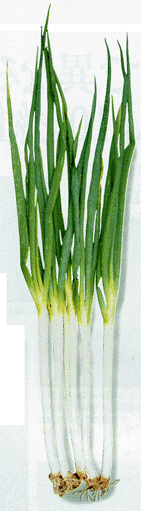
negi-senju
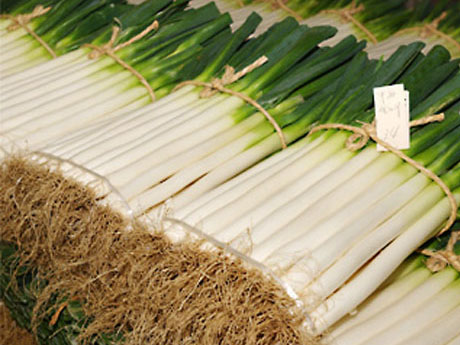
“Senju”
The most common and popular variety

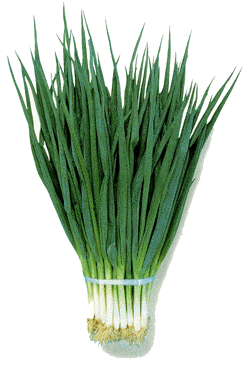
negi-hakata-manno-negi
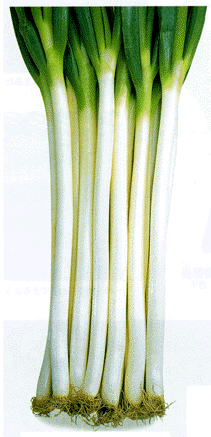
“Hakata Manno”:
A choice specimen raised in Kyushu Island

negi-hime
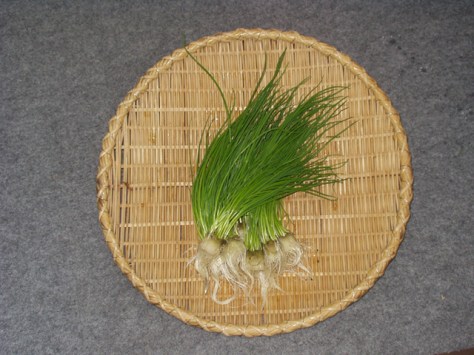
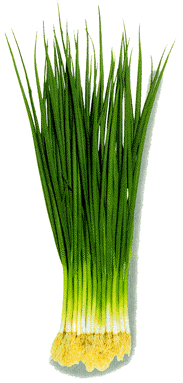
“Me” or “Hime”:
Could be called leek sprouts,too.
Eaten raw in salads, sushi, finger foods.

negi-ito-negi
“Ito” or Thread Leek, used in the same way as “Me/Hime”.

negi-kositsu-negi
“Koshizu”, another common and popular variety.

negi-kujo-futo-negi
“Kujo-Futo”:
A choice specimen originting from Kyoto.

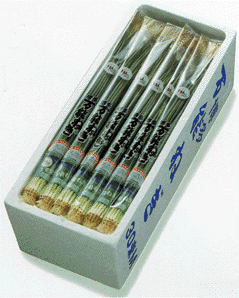
negi-kujo-hoso1
“Kujo Hoso”. Same as above, but a lot thinner.

negi-riiki
“Riiki”
A short fat specimen popular for “nabe” and soups.

negi-shimonita-negi
“Shimonita”.
A fat variety with a short stem and long leaves. Popular with soups and “nabe” (Japanese-style pot-au-feu)


“Aka Negi”
Red Leeks in Japanese, soft with little pungency. Considered as a delicacy.

HEALTH FACTS:

-Combined with Juda Ear Mushrooms, or sardine, or mackerel, or seaweed, heolps lower blood cholesterol and high blood pressure, and prevents blood vessels hardening.

-Combined with umeboshi/Japanese pickled plums, or Japanese sake, or ginger, or shiso/perilla, helps prevent and cure colds, combats ageing and helps recovery from diseases.

-Combined with onion, or cucumber, or garlic, or Judas’ Ear mushrooms, helps blood flow and combats blood clotting.

-Combined with seaweed/wakame, or sweet potato, or lotus root, helps combat constipation and obesity.

RECOMMENDED RELATED SITES
Not-Just-Recipes, Bengal cuisine, Cooking Vegetarian, Frank Fariello, Gluten-free Vegan Family, Meatless Mama, Warren Bobrow, Wheeling Gourmet, Le Petit Cuisinier, Vegan Epicurean, Miss V’s Vegan Cookbook, Comestiblog, To Cheese or not To Cheese, The Lacquer Spoon, Russell 3, Octopuspie, Bread + Butter, Pegasus Legend, Think Twice, The French Market Maven

Please check the new postings at:
sake, shochu and sushi

—————————————-
日本語のブログ
—————————————-

Vegan Japanese Cuisine: Grilled Aubergines-Egg Plants and Garlic Chives Dressing

Looking through my notes I found another easy vegan Japanese recipe with aubergines/egg plants that requires only little work and provides plenty of beneficial elements!

Chinese Chives, or Garlic Chives (English), Ciboule de Chine (France), or Nira/韮 in Japanese have a dintinct taste and are widely used in Japanese cuisine for fried foods.
Both leaves and the stalks of the flowers are used as a flavoring similarly to chives, green onions or garlic and are used as a stir fry ingredient.

Garlic Chives and tofu.

The flowers may also be used as a spice. In Vietnam, the leaves of garlic chives are cut up into short pieces and used as the only vegetable in a soup of broth.

Grilled Aubergines/Egg Plants and Chinese Chives Dressing!

INGREDIENTS: For 3~4 people

-Aubergines/Egg plants: 3
-Garlic Chives/Nira: 1 bunch
-Soy sauce: 1.5 tablespoons
-Rice vinegar: 1 tablespoon
-Sugar: 1/2 tablespoons
-Sesame oil: 1/2 tab;espoon
-White sesame seeds: 1 tablespoon

RECIPE:

-Chopp the garlic chives finely. Drop tthm in saucepan with the soy sauce, rice vinegar, sugar, sesame oil and sesame seeds. Mix well. Let marinate for 15 minutes, stirring form time to time.

-Cut the stem end of the aubergines./ egg plants
Grill the egg plants/aubergines directly over the flame on a grill.
Doing it in the oven is fine, too.

-Once the the egg plants/aubergines have been evenly grilled and become soft inside, peel them completely.

-Cut the aubergines/egg plants into bite-sized pieces and serve topped with plenty of garlic chives dresing.

-Can be savoured hot, lukewarm or chilled!

RECOMMENDED RELATED SITES
Not-Just-Recipes, Bengal cuisine, Cooking Vegetarian, Frank Fariello, Gluten-free Vegan Family, Meatless Mama, Warren Bobrow, Wheeling Gourmet, Le Petit Cuisinier, Vegan Epicurean, Miss V’s Vegan Cookbook, Comestiblog, To Cheese or not To Cheese, The Lacquer Spoon, Russell 3, Octopuspie, Bread + Butter, Pegasus Legend, Think Twice, The French Market Maven

Please check the new postings at:
sake, shochu and sushi

—————————————-

日本語のブログ
—————————————-