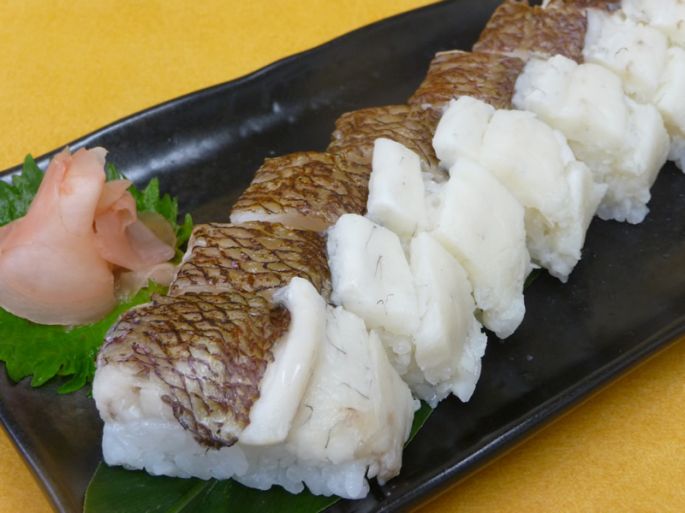
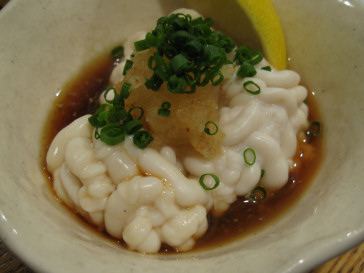
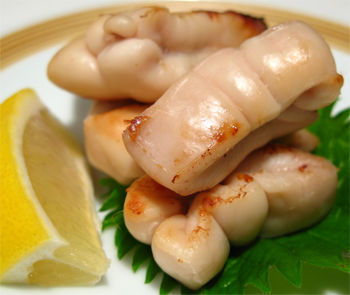
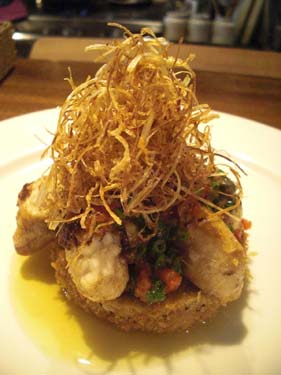
Category Archives: 魚

Food & Drink Bloggers in Japan (May 2012)

The number of foreigners and Japanese nationals who write about the food and drinks in Japan in English (or at least answer comments in English) has remarkably increased lately.
I thought it was about time to start some kind of round-up to help people discover these deserving foodies and their blogs!The list below is far from exhaustive, but I’m planning to update and announce it regularly!
Of course if you know more foodies residing in Japan, do please direct them to me and I will introduce them gladly!

HOKKAIDO TRIBE
(Hokkaido Island)
Meishu no Yutaka by Carlin

TOHOKU TRIBE
(Northeastern Japan: Aomori, Iwate, Miyagi, Akita, Yamagata, Fukushima)
Cooking with Mama Miyuki in Sendai
Slow Food From Japan by Nigel Fodgen in Miyagi Prefecture.

KANTO TRIBE
(Eastern Japan: Ibaraki, Tochigi, Gunma, Saitama, Chiba, Tokyo, Kanagawa)
Japan Eat’s Videos
Tokyo Food File by Robbie Swinnerton
Watch Japan in Tokyo
Little Japan Mama in Tokyo
Japan Eats (featured on request)
47 Japanese Farms Through The Eyes of Its Rural Communities By Sara and Roshni in Tokyo
Eating Out in Tokyo with DominicTokyo Through The Drinking Glass by Melinda Joe in Tokyo
Tokyo Foodcast by Etsuko Nakamura in Tokyo
Sake World by John Gauntner in Tokyo: The inernational Reference for Japanese Sake!
Tokyo Terrace by Rachael in Tokyo
Gaijin Tonic in Tokyo and Kanagawa Prefecture
Nonjatta by Chris Bunting in Tokyo
The Soul Of Japan in Kanagawa Prefecture
Sake, kimono and Tabi In Tokyo
Tokyo Kawai, Etc… in Tokyo
Blue Lotus in Tokyo
The Japanese Food Report by Harris Salat in Tokyo
The Sake Chronicles in Tokyo
Watashi to Tokyo by Mari Kanazawa in Tokyo
Japanese Food-Food Lover’s Guide by Yukari Yamamoto in Tokyo
Gaijin Life by a Canadian gentleman in Tokyo
Leo’s Japan Food Blog in Tokyo
Eating Out In Tokyo With Jon
Fugu Tabetai in Tokyo
Japan Style in Tokyo
COCO’s Oriental Kitchen by angela Cooper in Tokyo
Free Online Japanese Food Recipes in Tokyo
Reminiscenec in Tokyo
Cooking Japanese Style By Naoko, in Tokyo

CHUBU TRIBE
(Central Japan: Niigata, Toyama, Ishikawa, Fukui, Yamanashi, Nagano, Gifu, Shizuoka, Aichi)
Good Beer & Country Boys in Aichi Prefecture
Green Tea Club by Satoshi Nihonbayashi in Shizuoka City!
Damonde Life by Matt Ryan in Hamamatsu & Enshu, shizuoka Prefecture
Mangantayon in Shizuoka Prefecture
Shizuoka Gourmet, Shizuoka Sake, Shizuoka Sushi, Shizuoka Shochu in Shizuoka Prefecture
Bryan Baird’s Beer & Brewery in Numazu in Shizuoka Prefecture
A Modern Girl from Niigata and all over Japan!

KANSAI TRIBE
(Western Japan: Mie, Shiga, Kyoto, Osaka, Hyogo, Nara, Kyoto, Wakayama)
Beering In Good Mind: All about Craft Beer in kanzai by Nevitt Reagan!
Yellin Yakimono Gallery by Robert Yellin in Shizuoka Prefecture, just moved to Kyoto!
Colorfood Daidokoro in Osaka (Englis & French)
Dominique Corby In Osaka (in French, but can answer and read in English)
Nagaijin in Osaka
Kyoto Foodie in Kyoto
Our Adventures in Japan by K and S Minoo in Osaka
Japan Food Addict by Mai in Kyoto

CHUGOKU
(“Central Country”: Tottori, Shimane, Okayama, Hiroshima, Yamaguchi)
“Made in Matsue” in Shimane prefecture
Get Hiroshima Blog in Hiroshima
The Wide Island Review, The JET Programme Webzine Of Hiroshima Prefecture (includes food & drink articles)

SHIKOKU
(Shikoku Island: Kagawa, Kochi, Ehime, Tokushima)
Obachan’s Kitchen & Garden Balcony in Kochi Prefecture
Still Clumsy With Chopsticks in Kochi Prfecture (Continuation of Obachan’s Kitchen & Garden Balcony)
Rocking in Hakata by Deas Richardson

KYUSHU
(Kyushu Island: Fukuoka, Nagasaki, Saga, Kumamoto, Miyazaki, Kagoshima)
Finding Fukuoka
Food from Fukuoka, Kyushu and Japan by Fumiko Soda
Fukuoka Sake Guide by Daisuke Ito
Quixotidienne in Kagoshima Prefecture

OKINAWA
(Okinawa Archipelago)
HWN Pake in Okinawa in Chatan, Okinawa
I’m sorry to say that Nate has just passed away and that his blog has disappeared, but I’ll keep it there as it is in his memory!
Dojo Bar in Naha
Eating Okinawa
Okinawa Hai!
Total Okinawa

RECOMMENDED RELATED WEBSITES

Green Tea Club by Satoshi Nihonyanagi in Shizuoka!, Mind Some by Tina in Taiwan, Le Manger by Camille Oger (French), The Indian Tourist, Masala Herb by Helene Dsouza in Goa, India, Mummy I Can Cook! by Shu Han in London, Pierre.Cuisine, Francescannotwrite, My White Kitchen, 47 Japanese Farms Through The Eyes of Its Rural Communities, Foodhoe, Chucks Eats, Things that Fizz & Stuff, Five Euro Food by Charles,Red Shallot Kitchen by Priscilla,With a Glass, Nami | Just One Cookbook, Peach Farm Studio, Clumsyfingers by Xethia, PepperBento,Adventures in Bento Making, American Bent, Beanbento, Bento No, Bento Wo Tsukurimashou, Cooking Cute, Eula, Hapabento , Happy Bento, Jacki’s Bento Blog, Kitchen Cow, Leggo My Obento, Le Petit Journal Bento & CO (French), Lunch In A Box,
Susan at Arkonlite, Vegan Lunch Box; Tokyo Tom Baker, Daily Food Porn/Osaka, Only Nature Food Porn, Happy Little Bento, The Herbed Kitchen, J-Mama’s Kitchen, Cook, Eat, Play, Repeat, Bento Lunch Blog (German), Adventures In Bento, Anna The Red’s Bento Factory, Cooking Cute, Timeless Gourmet, Bento Bug, Ideal Meal, Bentosaurus, Mr. Foodie (London/UK), Ohayo Bento,

Must-see tasting websites:

-Sake: Tokyo Through The Drinking Glass, Tokyo Foodcast, Urban Sake, Sake World
-Wine: Palate To Pen, Warren Bobrow, Cellar Tours, Ancient Fire Wines Blog
-Beer: Good Beer & Country Boys, Another Pint, Please!, Beering In Good Mind: All about Craft Beer in kanzai by Nevitt Reagan!
-Japanese Pottery to enjoy your favourite drinks: Yellin Yakimono Gallery

Japanese Fish Species 22: Cornet Fish-Yagara-矢柄

The cornetfishes or “Yagara/矢柄/Arrow Shape” in Japanese, are a small family Fistulariidae of extremely elongated fishes in the order Syngnathiformes. The family consists of just a single genus Fistularia with four species, found worldwide in tropical and subtropical marine environments.

Ranging up to 200 centimetres (6.6 ft) in length, cornetfishes are as thin and elongate as many eels, but are distinguished by a very long snout, distinct dorsal and anal fins, and a forked caudal fin whose center rays form a lengthy filament. The lateral line is well-developed and extends onto the caudal filament.

They generally live in coastal waters or on coral reefs, where they feed on small fishes, crustaceans and other invertebrates.

They are often confused with Trumpet Fish which are different and a lot smaller.

yagara-1

Yagara is also a fish often caught in the Suruga Bay in Shizuoka Prefecture!
I ventured inside the great Supermarket inside Shizuoka City JR Station as they are bound, especially in the seafood department, to exhibit some interesting specimens.
I certainly was not disappointed!

yagara-2

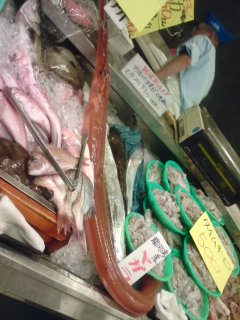
Here is another picture to give you an idea of the size!

Trumpet Fishes come in “blue” and “red” varieties.
This red (“aka”) Trumpet Fish is more common in our Prefecture.
A bit of a monster, it was a good 1,5 meter (five feet) long and weighed over 5 kg.
I was told 3 meters (10 feet) long specimens are regularly caught in Suruga Bay, the main Bay of Shizuoka Prefecture!

I knew that my friends at Tomii Restaurant would be interested.
I called them on my mobile.
They replied they definitely were!
I bought the fish on their behalf. At 130 US$, it was cheap (I actually bargained a bit!), considering what customers would pay for this delicate fish, either as sublime sashimi or delicious “nabe”!

Yagara sashimi Plate!

“Shioyaki/Salt-grilled Yagara”!

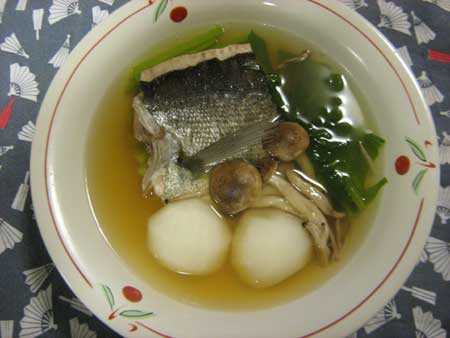
Japanese-style Yagara soup!

Steamed yagara!

RECOMMENDED RELATED WEBSITES

Green Tea Club by Satoshi Nihonyanagi in Shizuoka!, Mind Some by Tina in Taiwan, Le Manger by Camille Oger (French), The Indian Tourist, Masala Herb by Helene Dsouza in Goa, India, Mummy I Can Cook! by Shu Han in London, Pierre.Cuisine, Francescannotwrite, My White Kitchen, 47 Japanese Farms Through The Eyes of Its Rural Communities, Foodhoe, Chucks Eats, Things that Fizz & Stuff, Five Euro Food by Charles,Red Shallot Kitchen by Priscilla,With a Glass, Nami | Just One Cookbook, Peach Farm Studio, Clumsyfingers by Xethia, PepperBento,Adventures in Bento Making, American Bent, Beanbento, Bento No, Bento Wo Tsukurimashou, Cooking Cute, Eula, Hapabento , Happy Bento, Jacki’s Bento Blog, Kitchen Cow, Leggo My Obento, Le Petit Journal Bento & CO (French), Lunch In A Box,
Susan at Arkonlite, Vegan Lunch Box; Tokyo Tom Baker, Daily Food Porn/Osaka, Only Nature Food Porn, Happy Little Bento, The Herbed Kitchen, J-Mama’s Kitchen, Cook, Eat, Play, Repeat, Bento Lunch Blog (German), Adventures In Bento, Anna The Red’s Bento Factory, Cooking Cute, Timeless Gourmet, Bento Bug, Ideal Meal, Bentosaurus, Mr. Foodie (London/UK), Ohayo Bento,

Must-see tasting websites:

-Sake: Tokyo Through The Drinking Glass, Tokyo Foodcast, Urban Sake, Sake World
-Wine: Palate To Pen, Warren Bobrow, Cellar Tours, Ancient Fire Wines Blog
-Beer: Good Beer & Country Boys, Another Pint, Please!
-Japanese Pottery to enjoy your favourite drinks: Yellin Yakimono Gallery
Japanese Gastronomy: Simmered Bonito-Katsuo no Kakuni-Recipe

Bonito or Katsuo/鰹 is a very popular in Japan, especially in Shizuoka Prefecture where it is mainly brough to fishing harbours such as Numazu and Yaizu!
There are many ways to prepare it and kakuni/角煮 must be one of the most popular techniques!

Fresh bonito fillets

INGREDIENTS: For 4 people

-Bonito: half a fish
-Fresh Ginger root: 1 cube (5x5x5 cm)
-Dashi/Japanese soup stock: 1/2 cup (100 cc)
-Japanese sake: 2 tablespoons
-Soy sauce: 3 tablespoons
-Mirin/Sweet Japanese sake: 3 tablespoons
-Sugar: 3 tablespoons

RECIPE:

Cut the fish in adequate pieces.
Pour boiling water over cut fish or boil them for a short time.

Transfer the fish into a saucepan.
Add the sake and dashi/soupstock.
Cook over a weak fire for 2 minutes.

Add the sugar and continue to simmer.

Skim off the scum/unwanted matter regularly.

Add the soy sauce.
As there is little water in the pan, beware not to lose it.
Add the thinly sliced raw ginger root.
Once you have obtained a light brown color, add the mirin. It will give gloss to the whole.

Once the liquid has become sirupy serve as above!
Can be kept in a dish and re-heated.
Can be used cold in bento!
Use some nice greens for a beautiful contrast!

More katuso recipes coming!

RECOMMENDED RELATED WEBSITES

Green Tea Club by Satoshi Nihonyanagi in Shizuoka!, Mind Some by Tina in Taiwan, Le Manger by Camille Oger (French), The Indian Tourist, Masala Herb by Helene Dsouza in Goa, India, Mummy I Can Cook! by Shu Han in London, Pierre.Cuisine, Francescannotwrite, My White Kitchen, 47 Japanese Farms Through The Eyes of Its Rural Communities, Foodhoe, Chucks Eats, Things that Fizz & Stuff, Five Euro Food by Charles,Red Shallot Kitchen by Priscilla,With a Glass, Nami | Just One Cookbook, Peach Farm Studio, Clumsyfingers by Xethia, PepperBento,Adventures in Bento Making, American Bent, Beanbento, Bento No, Bento Wo Tsukurimashou, Cooking Cute, Eula, Hapabento , Happy Bento, Jacki’s Bento Blog, Kitchen Cow, Leggo My Obento, Le Petit Journal Bento & CO (French), Lunch In A Box,
Susan at Arkonlite, Vegan Lunch Box; Tokyo Tom Baker, Daily Food Porn/Osaka, Only Nature Food Porn, Happy Little Bento, The Herbed Kitchen, J-Mama’s Kitchen, Cook, Eat, Play, Repeat, Bento Lunch Blog (German), Adventures In Bento, Anna The Red’s Bento Factory, Cooking Cute, Timeless Gourmet, Bento Bug, Ideal Meal, Bentosaurus, Mr. Foodie (London/UK), Ohayo Bento,

Must-see tasting websites:

-Sake: Tokyo Through The Drinking Glass, Tokyo Foodcast, Urban Sake, Sake World
-Wine: Palate To Pen, Warren Bobrow, Cellar Tours, Ancient Fire Wines Blog
-Beer: Good Beer & Country Boys, Another Pint, Please!
-Japanese Pottery to enjoy your favourite drinks: Yellin Yakimono Gallery

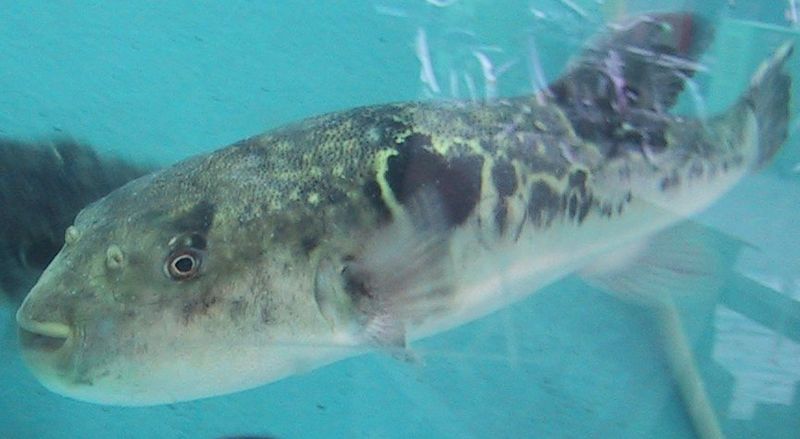
Japanese Fish Species 21: Tiger Puffer-Torafugu-虎河豚

Torafugu/虎河豚 or Tiger Puffer is one of more than a 100 hundred varieties of edible Puffer Fish or Globe Fish, but Tiger Puffer is by a great distance the most popular variety in Japan!

It is also known in Japanese as Honfugu/本河豚 or Oofugu/大河豚.
The main season is Winter and a little later for other regions.
It is caught on both sides of Japan especially in Central and East Japan.
It is a specialty in Hamamatsu City in our Shizuoka Prefecture.

11,000 tonnes are caught yearly around Japan.
It is bred in Japan to the tune of 4,700 tonnes.
13,000 tonnes are mainly imported from China and South Korea.

In Japan, although it can be bought already dressed, one needs a special license to cut it, serve it, or sell it as the innards contain a violently lethal poison, although cheap fugu (not torafugu) does not always contain such toxin!

Cheap fugu can be eaten raw as sashimi all over Japan.

But more expensive torafugu sashimi is served as a piece of art!

As sashimi, it is best avoured with leeks, lemon, momijioroshi/grated daikon with chili pepper and ponzu!

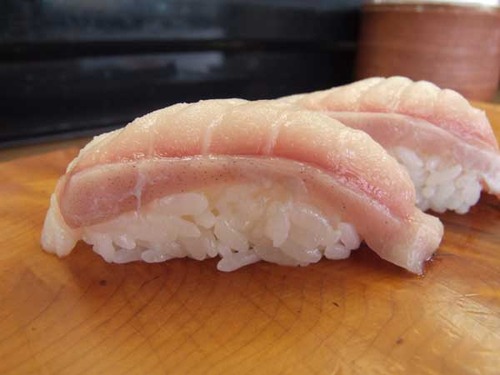
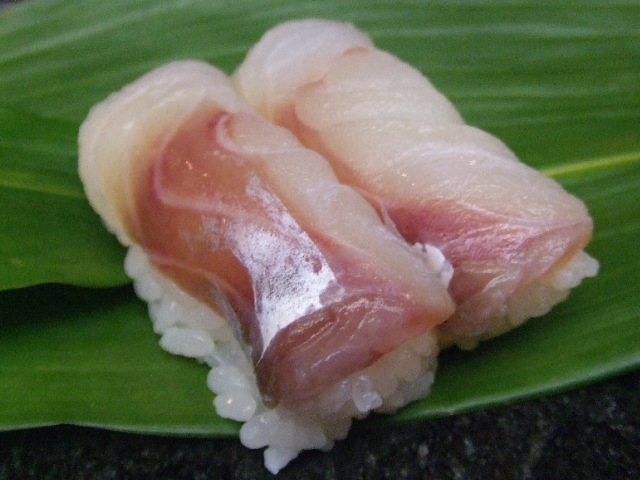
As sushi, it can be served fairly plain.

Or aburi/炙り, lightly seared on one side!

Or more artistically with sansho and herbs!

Or even with its skin as the latter is edible!

It can also be served as gunkan seasoned with its own liver: a true delicacy!

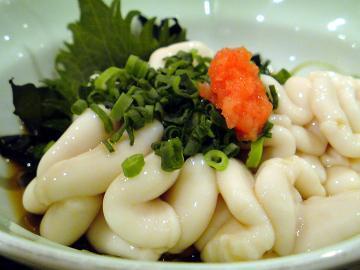
Shirako/白子 or male spem sacs are also a delicay!

Torafugu can anturally be cooked, especially the bony parts full of meat but difficult to cut. My favourite is karaage/唐揚, deep-fried!

It is also very popular in cold weather a nabe/鍋 in Japan,

and in South Korea!

RECOMMENDED RELATED WEBSITES

Green Tea Club by Satoshi Nihonyanagi in Shizuoka!, Mind Some by Tina in Taiwan, Le Manger by Camille Oger (French), The Indian Tourist, Masala Herb by Helene Dsouza in Goa, India, Mummy I Can Cook! by Shu Han in London, Pierre.Cuisine, Francescannotwrite, My White Kitchen, 47 Japanese Farms Through The Eyes of Its Rural Communities, Foodhoe, Chucks Eats, Things that Fizz & Stuff, Five Euro Food by Charles,Red Shallot Kitchen by Priscilla,With a Glass, Nami | Just One Cookbook, Peach Farm Studio, Clumsyfingers by Xethia, PepperBento,Adventures in Bento Making, American Bent, Beanbento, Bento No, Bento Wo Tsukurimashou, Cooking Cute, Eula, Hapabento , Happy Bento, Jacki’s Bento Blog, Kitchen Cow, Leggo My Obento, Le Petit Journal Bento & CO (French), Lunch In A Box,
Susan at Arkonlite, Vegan Lunch Box; Tokyo Tom Baker, Daily Food Porn/Osaka, Only Nature Food Porn, Happy Little Bento, The Herbed Kitchen, J-Mama’s Kitchen, Cook, Eat, Play, Repeat, Bento Lunch Blog (German), Adventures In Bento, Anna The Red’s Bento Factory, Cooking Cute, Timeless Gourmet, Bento Bug, Ideal Meal, Bentosaurus, Mr. Foodie (London/UK), Ohayo Bento,

Must-see tasting websites:

-Sake: Tokyo Through The Drinking Glass, Tokyo Foodcast, Urban Sake, Sake World
-Wine: Palate To Pen, Warren Bobrow, Cellar Tours, Ancient Fire Wines Blog
-Beer: Good Beer & Country Boys, Another Pint, Please!
-Japanese Pottery to enjoy your favourite drinks: Yellin Yakimono Gallery

Japanese Fish Species 20: Cod-tara-鱈

Cod, or “Tara/鱈” in Japanese reads a the “Snow Fish”. Unlike in many countries in Europe and North America, the fish is eaten fresh, raw or cooked in Japan, but practically never salted.
Only the Norwegians can boast a difference as they eat the tongue of the fish as soon as they catch it!

As other fish in Japan, it is called different names: Ibodara, Maidara (Toyama Prefecture), Ara (Nagasaki Prefecture) as far as “Madara” or “True Cod” is concerned.
There are other varieties as is shown below in sushi pictures.

It is mainly caught in the Sea of Okhotsk in Winter.
The average total Cod catch is 437,000 tonnes, 55.000 of which is “True Cod”. Imports average annualy 152,000 tonnes mainly from the US and Russia.

Cod sashimi with its male sperm sacs/Shirako

It makes for great sashimi.

But it is also equally appreciated cooked, especially grilled or in “Nabe/Japanese-style pot au feu”.

Gintara/銀鱈 Cod variety as sushi nigiri.

Higetara/髭鱈 Cod variety as sushi nigiri.

Madara/真鱈 Cod as sushi nigiri.

As shown above, many varieties of tara are greatly appreciated as sushi, especially nigiri.

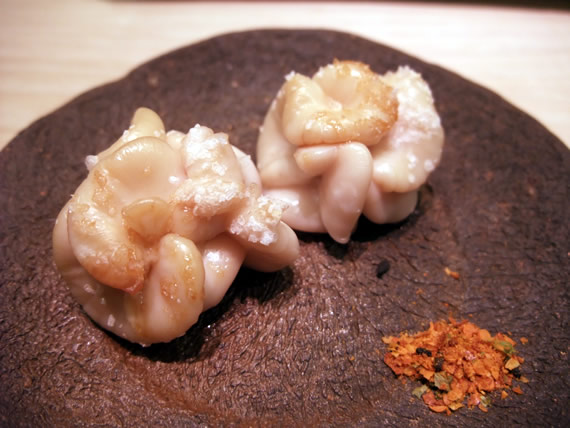
Shirako/白子, or the sperm sacs of the male fish, is an extremely popular delicay in Japan.
It is either served raw or lightly boiled as in above picture with ponzu, chopped leeks and momijioroshi/grated daikon with chili pepper.

Shirako is also very popular served as sushi in gunkan shape as above.

It becomes another delicacy when grilled.
French and Italian Restaurants in Japan also extensively use it sauteed or in gratin!

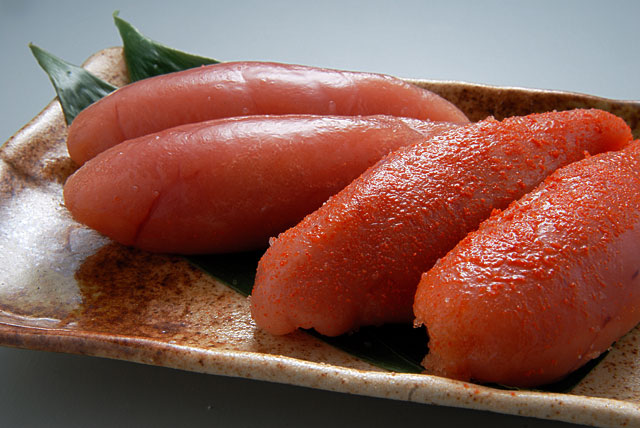
The roe sacs of the female fish is also a very popular (and expensive) delicacy especially when preserved in chili pepper (as above) and sold as Mentaiko/明太子!

The same roe is also served as “Tarako/鱈子”, especially in the sushi gunkan form!

RECOMMENDED RELATED WEBSITES

Green Tea Club by Satoshi Nihonyanagi in Shizuoka!, Mind Some by Tina in Taiwan, Le Manger by Camille Oger (French), The Indian Tourist, Masala Herb by Helene Dsouza in Goa, India, Mummy I Can Cook! by Shu Han in London, Pierre.Cuisine, Francescannotwrite, My White Kitchen, 47 Japanese Farms Through The Eyes of Its Rural Communities, Foodhoe, Chucks Eats, Things that Fizz & Stuff, Five Euro Food by Charles,Red Shallot Kitchen by Priscilla,With a Glass, Nami | Just One Cookbook, Peach Farm Studio, Clumsyfingers by Xethia, PepperBento,Adventures in Bento Making, American Bent, Beanbento, Bento No, Bento Wo Tsukurimashou, Cooking Cute, Eula, Hapabento , Happy Bento, Jacki’s Bento Blog, Kitchen Cow, Leggo My Obento, Le Petit Journal Bento & CO (French), Lunch In A Box,
Susan at Arkonlite, Vegan Lunch Box; Tokyo Tom Baker, Daily Food Porn/Osaka, Only Nature Food Porn, Happy Little Bento, The Herbed Kitchen, J-Mama’s Kitchen, Cook, Eat, Play, Repeat, Bento Lunch Blog (German), Adventures In Bento, Anna The Red’s Bento Factory, Cooking Cute, Timeless Gourmet, Bento Bug, Ideal Meal, Bentosaurus, Mr. Foodie (London/UK), Ohayo Bento,

Must-see tasting websites:

-Sake: Tokyo Through The Drinking Glass, Tokyo Foodcast, Urban Sake, Sake World
-Wine: Palate To Pen, Warren Bobrow, Cellar Tours, Ancient Fire Wines Blog
-Beer: Good Beer & Country Boys, Another Pint, Please!
-Japanese Pottery to enjoy your favourite drinks: Yellin Yakimono Gallery

French Gastronomy Design by Touru Arima at Pissenlit in Shizuoka City (May 2012)

Service: Excellent and very friendly.
Facilities: Great cleanliness overall. Superb washroom (mouthwash and toothpicks provided!)!
Prices: Reasonable to slightly expensive, very good value.
Strong points: Interesting wine list. Great use of local products, especially organic vegetables and Shizuoka-bred meat.

The other day, the Missus wanted to pay a belated (for her) visit to our favorite French Restaurant in Shizuoka City, namely Pissenlit, where Chef Touru Arima/有馬亨さん is busier than ever, what with creating a whole new range of organic jams with local produce and promoting good food at all levels in our Prefecture!
I have always been struck by the seemingly simple presentation of his dishes and I would like to share my views in this particular article!
Now, what did we have?

There were oysters on the menu!
When we debated how many we would order, we were told that one each would be more than enough, so we ordered one poelee and one in gratin!
The first one served poelee on a bed of local organic broccoli was truly enormous. I’m not lying, it was as big as the Missus’ palm!

Viewed from the other side!

You needed to cut it at least three times with fork and knife!
Absolutely succulent, a steak of the ocean?

The other served as gratin will give you an idea of the size with the very deep shell!
The sauce under the gratinee surface is ore a Mornay sauce than a Bechamel, a lot lighter and more delicate in flavors!

A view from a different angle will give you a little idea of the light and unctuous/creamy Mornay sauce!
The colors alone will have you tremble with impatience!

A true dish from Shizuoka Prefecture!

Touru calls it a warm carpaccio of bonito/katsuo topped with local organic greens.

The first picture was actually a back view. This is the front view!

A side view with the lovely mayonnaise to fully appreciate the incredbly tender bonito which had been lightly seared!

You can always expect Touru to come up with rarities!
Tablier du Sapeur!

The “sapeur” in French means a member of a special military engineer corps originally created by Napoleon who tended to copy anything Roman for his Legions.
These sapeurs used to wear a thick apron/tablier as part of their parade uniform!

They consist of veal stomach/tripes first separately cooked and then paneed in breadcrumbs!
Even the Missus who cares little for offal appreciated it!
I just loved it!

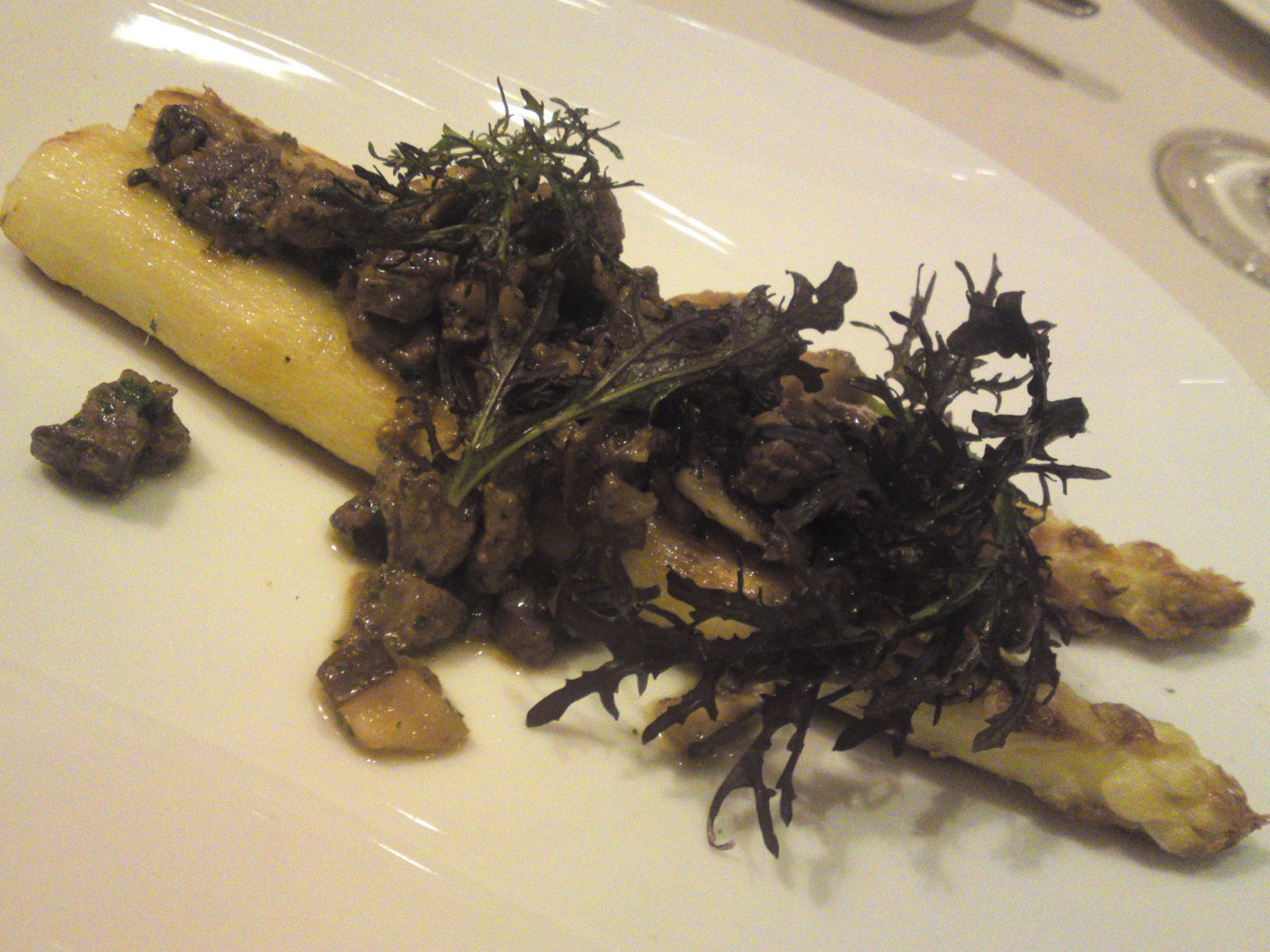
Here is another fine example of creating a superlative dish with offal: White asparaguses with Suruga Shamo Chicken livers and gizzards!

The raw and fresh enormous asparaguses were first poele before the offal was added to the same frypan!

Suruga Shamo is one of those extravagant shamo/軍鶏/fighting chickens/cocks raised in our Prefecture.
The offal was accompanied with some local bacon and organic greens for a last touch!

A true Shizuoka dessert?
Creme Brulee concocted with Shizuoka City Hon-Yama tea!
The strawberry and edible flowers are all organic from Shizen No Chikara Farm!

Another Green Fairy?
Certainly a dessert that JRR Tolkien and his Hobbits would have loved to sample!

Going for the kill! In my case!
An Italian grappa by Poli, a Marc de Bourgogne 1976 by Bernard Roy, a Vieille Fine de la Marne (Marc de Champagne) or a 15 year-old Cognac by Paul Giraud?
Well, I was born in Bourgogne, so you must have guessed!

To be continued…

PISSENLIT
420-0839 Shizuoka City, Aoi Ku, Takajo, 2-3-4
Tel.: 054-270-8768
Fax: 054-627-3868
Business hours: 11:30~14:30; 17:00~22:00
Closed on Tuesdays and Sunday evening
HOMEPAGE (Japanese)
Credit Cards OK
Entirely non-smoking!

RECOMMENDED RELATED WEBSITES

Green Tea Club by Satoshi Nihonyanagi in Shizuoka!, Mind Some by Tina in Taiwan, Le Manger by Camille Oger (French), The Indian Tourist, Masala Herb by Helene Dsouza in Goa, India, Mummy I Can Cook! by Shu Han in London, Pierre.Cuisine, Francescannotwrite, My White Kitchen, 47 Japanese Farms Through The Eyes of Its Rural Communities, Foodhoe, Chucks Eats, Things that Fizz & Stuff, Five Euro Food by Charles,Red Shallot Kitchen by Priscilla,With a Glass, Nami | Just One Cookbook, Peach Farm Studio, Clumsyfingers by Xethia, PepperBento,Adventures in Bento Making, American Bent, Beanbento, Bento No, Bento Wo Tsukurimashou, Cooking Cute, Eula, Hapabento , Happy Bento, Jacki’s Bento Blog, Kitchen Cow, Leggo My Obento, Le Petit Journal Bento & CO (French), Lunch In A Box,
Susan at Arkonlite, Vegan Lunch Box; Tokyo Tom Baker, Daily Food Porn/Osaka, Only Nature Food Porn, Happy Little Bento, The Herbed Kitchen, J-Mama’s Kitchen, Cook, Eat, Play, Repeat, Bento Lunch Blog (German), Adventures In Bento, Anna The Red’s Bento Factory, Cooking Cute, Timeless Gourmet, Bento Bug, Ideal Meal, Bentosaurus, Mr. Foodie (London/UK), Ohayo Bento,

Must-see tasting websites:

-Sake: Tokyo Through The Drinking Glass, Tokyo Foodcast, Urban Sake, Sake World
-Wine: Palate To Pen, Warren Bobrow, Cellar Tours, Ancient Fire Wines Blog
-Beer: Good Beer & Country Boys, Another Pint, Please!
-Japanese Pottery to enjoy your favourite drinks: Yellin Yakimono Gallery

Japanese Fish Species 19: Seabream-True Seabream-Tai-Madai-鯛-真鯛

There are many varieties of Seabream/Snappers/Tai/鯛in Japan:
Batodai, Hanadai, Ishidai, Kinmeidai, Mekkidai, etc., but the most popular variety is called Madai/真鯛, or True Seabream.

Even Madai/True Seabream is called different names depending upon the region: Oodai or Hondai.
The best season streches from Winter to Spring.
It is extensively raised by humans in Ehime, Mie and Saga Prefectures.
Wild specimen are mainly caught off the shores of Nagasaki, Fukuok, Kumamoto, and Yamaguchi Prefectures. Not so many Madai are caught in Shizuoka but other varieties are abundant especially around Izu Penisula.

Human-raised amount to over 80,000 tonnes a year wild ones are caught at a rate inferior to 15,000 tonnes a year.
Imports are relatively and account for only about 6.500 tonnes a year.

Madai is widely appreciated raw as sashimi in the Japanese style (above),

in carpaccio, Italian-style sashimi!

The Japanese also love them grilled or steamed.

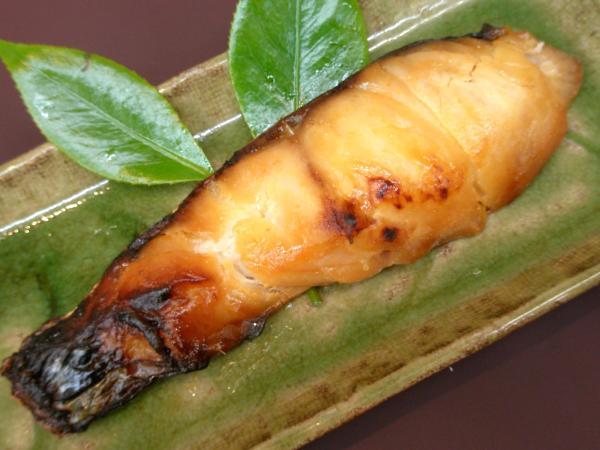
The Japanese since immemorial times have preserved the raw fish in rice miso, mirin/sweet sake and konbu/seaweed, but this has become quite an expensive morsel these days!

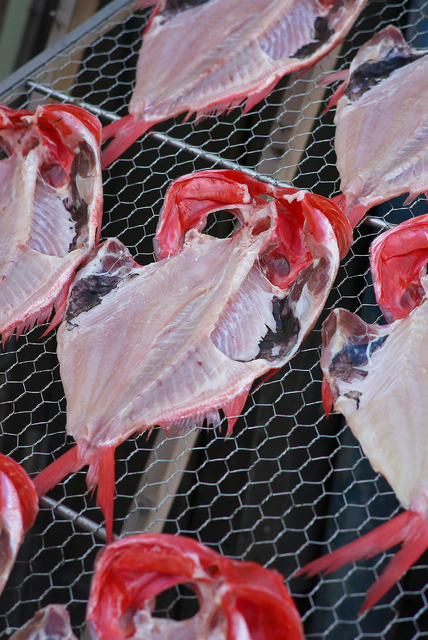
(Only relatively) lesser varieties, like Kinmedai, are appreciated as Himono/干物/naturally dried fish, a specialty of Shizuoka Prefecture which produces no less half of all naturally dried fish in Japan! Actually they come almost as expensive!

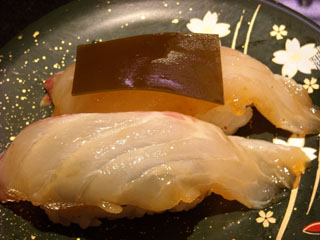
Konbujime/marinated in seaweed nigiri sushi

As sushi, madai (and other seabreams) are very versatile.
You will encounter them, depending on the region as konbujime/marinated in seaweed (above),

simple, straight nigiri sushi,

oshizushi/pressed sushi,

or zuke/marinated in ponzu, sake, mirin, etc.,

Seabream certainly looks great as temarizushi/Kyoto-style small round sushi nigiri!

Tai Shirako

Like tara/cod, their sperm sacs of the male specimens are highly appreciated and even more expensive than those of cods.

You can have served raw/slightly boiled or grilled as above,

meuniere-style as in French or Italian cuisine,

or on gunkan sushi nigiri!

RECOMMENDED RELATED WEBSITES

Green Tea Club by Satoshi Nihonyanagi in Shizuoka!, Mind Some by Tina in Taiwan, Le Manger by Camille Oger (French), The Indian Tourist, Masala Herb by Helene Dsouza in Goa, India, Mummy I Can Cook! by Shu Han in London, Pierre.Cuisine, Francescannotwrite, My White Kitchen, 47 Japanese Farms Through The Eyes of Its Rural Communities, Foodhoe, Chucks Eats, Things that Fizz & Stuff, Five Euro Food by Charles,Red Shallot Kitchen by Priscilla,With a Glass, Nami | Just One Cookbook, Peach Farm Studio, Clumsyfingers by Xethia, PepperBento,Adventures in Bento Making, American Bent, Beanbento, Bento No, Bento Wo Tsukurimashou, Cooking Cute, Eula, Hapabento , Happy Bento, Jacki’s Bento Blog, Kitchen Cow, Leggo My Obento, Le Petit Journal Bento & CO (French), Lunch In A Box,
Susan at Arkonlite, Vegan Lunch Box; Tokyo Tom Baker, Daily Food Porn/Osaka, Only Nature Food Porn, Happy Little Bento, The Herbed Kitchen, J-Mama’s Kitchen, Cook, Eat, Play, Repeat, Bento Lunch Blog (German), Adventures In Bento, Anna The Red’s Bento Factory, Cooking Cute, Timeless Gourmet, Bento Bug, Ideal Meal, Bentosaurus, Mr. Foodie (London/UK), Ohayo Bento,

Must-see tasting websites:

-Sake: Tokyo Through The Drinking Glass, Tokyo Foodcast, Urban Sake, Sake World
-Wine: Palate To Pen, Warren Bobrow, Cellar Tours, Ancient Fire Wines Blog
-Beer: Good Beer & Country Boys, Another Pint, Please!
-Japanese Pottery to enjoy your favourite drinks: Yellin Yakimono Gallery

Japanese Fish Species 18: Scabbard Fish-Tachiuo-太刀魚

Scabbard Fish or “Tachiuo” is a summer fish very popular in Japan in spite of its great length.
Tachiuo in Japanese, 太刀魚, means “Great Sword Fish”, not the scabbard!
The Suruga Bay being warmer than the rest of Japan, we have scabbard fish in the dead of winter.
Like other fish it owns other names: Tachi (not in Hokkaido, where the word means ” Cod sperm sacs”!), Shirada and Tachinouo.
It is mainly caught off Wakayama, Ehime and Oita Prefectures.
In Shizuoka it is both caught by line or net.
In 1999, 37,000 tonnes were caught in the whole of Japan, but it fell to 23,000 tonnes in 2000.
It is also imported from Korea and China, although the fish is slightly different from the Japanese variety. More than half of imported fish are eaten west of Kansai.

Scabbard Fish Sashimi Plate

Tachiuo is both popular raw and cooked.
Raw, it is usually served with ponzu instead of soy suce and topped with momijioroshi/grated daikon mixed with chili pepper.

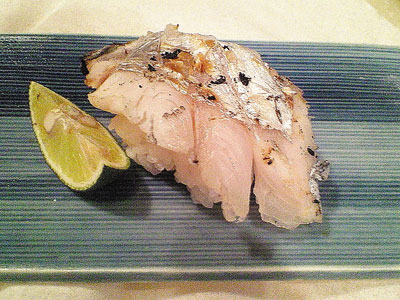
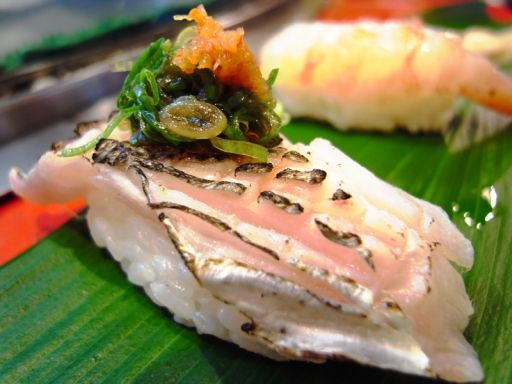
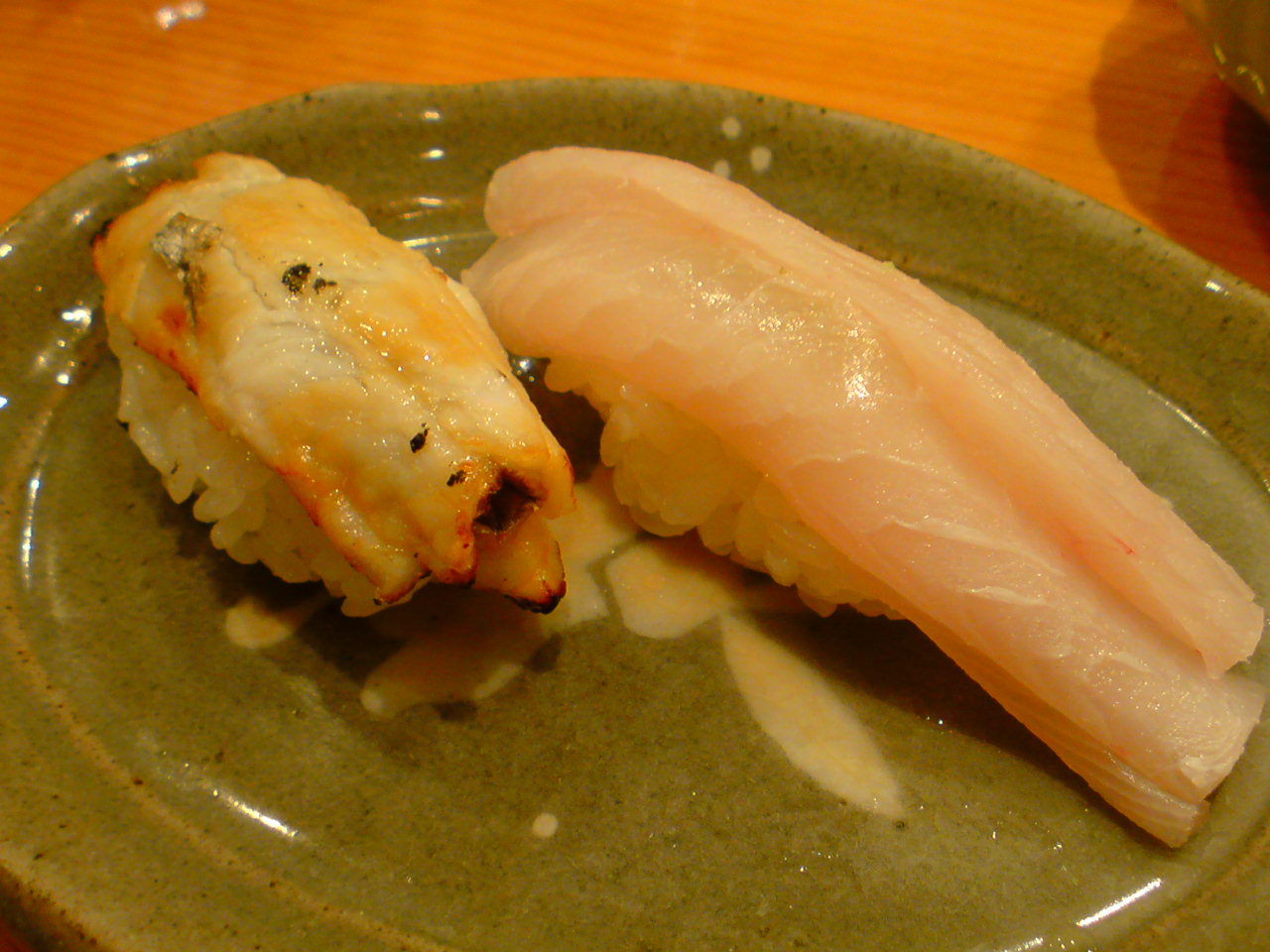
Raw, it is of course popular as sushi nigiri,

cut into fine strips and served as gunkan.

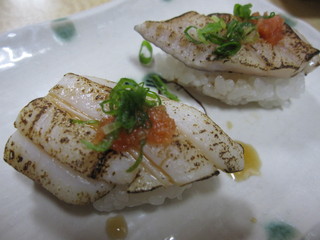
As sashimi I personally prefer it “aburi” (slightly grilled/seared) with a dash of ponzu and some momijioroshi (grated daikon with chili pepper), or with some finely cut vegetables.

The same applies for sushi nigiri as I like my scabbard fish a little grilled first.

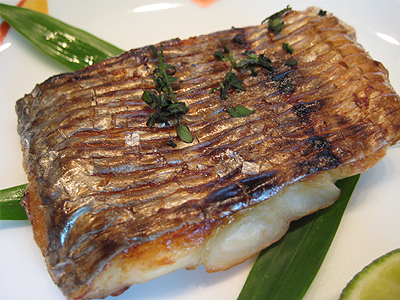
Making incisions into the fish before grilling it will make for another prsentation!

It does not have to be complicated to be yummy!

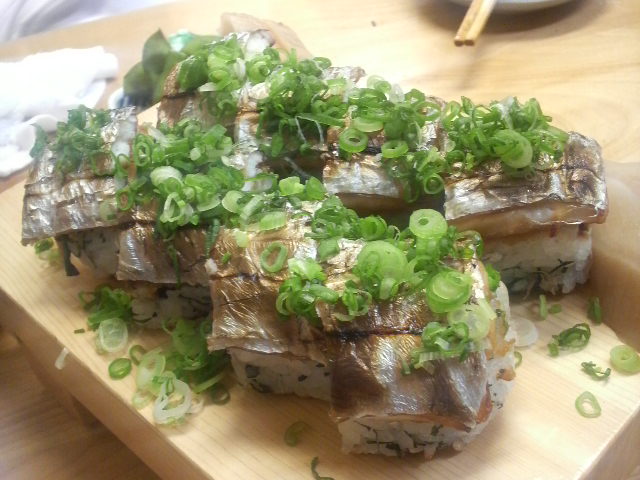
In the Kansai/western Japan region it is very popular in oshizushi/pressed sushi thanks to its flat and long shape.

How about a combination of both raw and aburi style sushi nigiri?

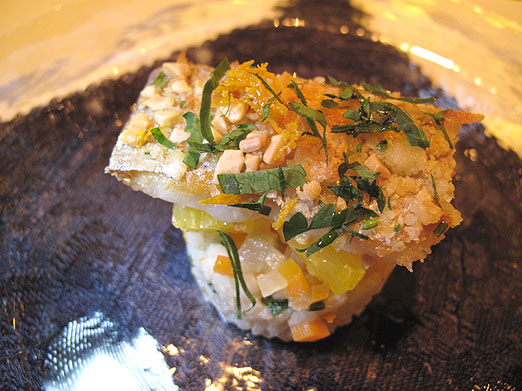
How about an Italian-style sushi nigiri?

As for the cooked scabbard fish, grilling is the most commoon way here in Japan where it is served as simple and healthy food at many meals.

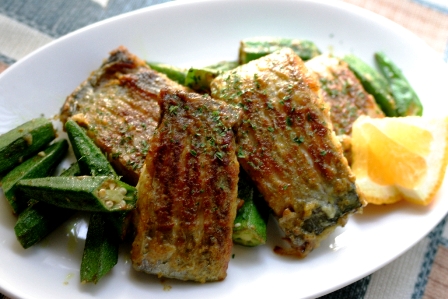
Sauteed with colourful vegetables (okra) it makes for great presentation in spite of the simplicity of the dish!

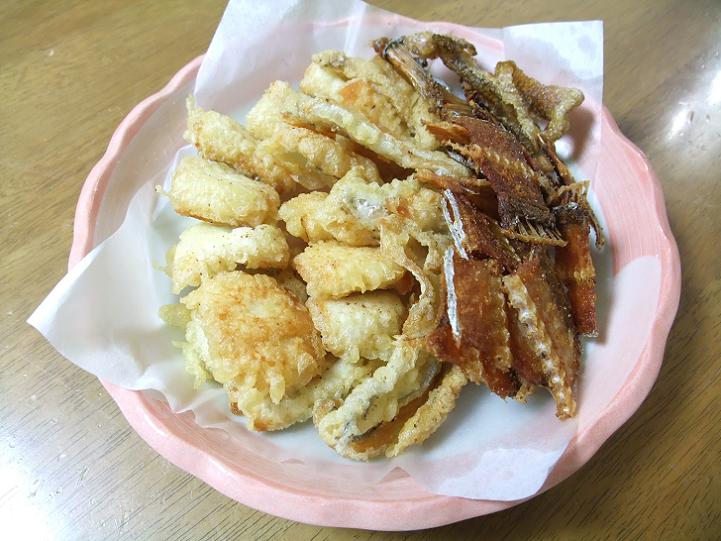
Deep-frying is also very popular especially with its bones when it is very fresh. Such deep-fried bones make for one vital source of calcium for the Japanese.

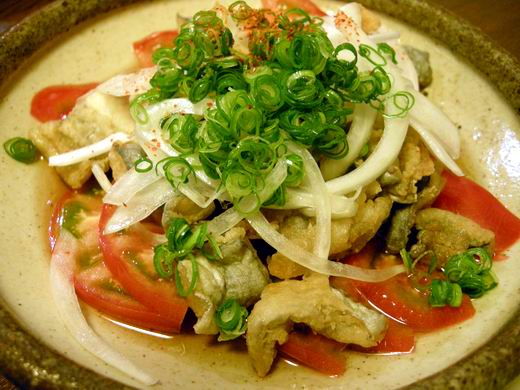
Fried scabbard fish salad.

Cooked, it is a very versatile fish and easy to prepare!

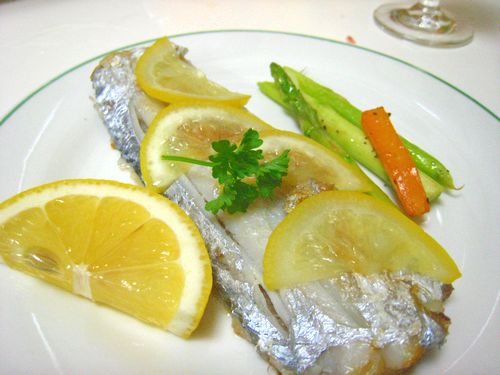
Grilled with lemon!

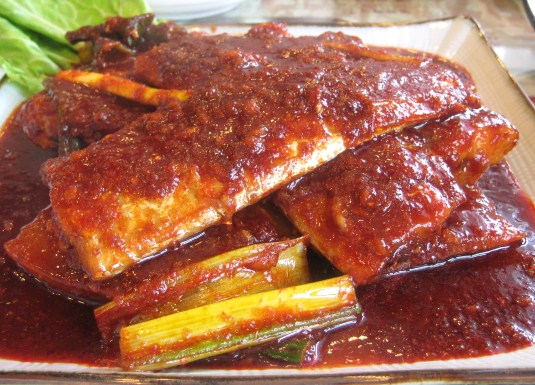
Cooked with chili peppers and miso paste, it makes for an intriguing sweet and hot combination!

RECOMMENDED RELATED WEBSITES

Green Tea Club by Satoshi Nihonyanagi in Shizuoka!, Mind Some by Tina in Taiwan, Le Manger by Camille Oger (French), The Indian Tourist, Masala Herb by Helene Dsouza in Goa, India, Mummy I Can Cook! by Shu Han in London, Pierre.Cuisine, Francescannotwrite, My White Kitchen, 47 Japanese Farms Through The Eyes of Its Rural Communities, Foodhoe, Chucks Eats, Things that Fizz & Stuff, Five Euro Food by Charles,Red Shallot Kitchen by Priscilla,With a Glass, Nami | Just One Cookbook, Peach Farm Studio, Clumsyfingers by Xethia, PepperBento,Adventures in Bento Making, American Bent, Beanbento, Bento No, Bento Wo Tsukurimashou, Cooking Cute, Eula, Hapabento , Happy Bento, Jacki’s Bento Blog, Kitchen Cow, Leggo My Obento, Le Petit Journal Bento & CO (French), Lunch In A Box,
Susan at Arkonlite, Vegan Lunch Box; Tokyo Tom Baker, Daily Food Porn/Osaka, Only Nature Food Porn, Happy Little Bento, The Herbed Kitchen, J-Mama’s Kitchen, Cook, Eat, Play, Repeat, Bento Lunch Blog (German), Adventures In Bento, Anna The Red’s Bento Factory, Cooking Cute, Timeless Gourmet, Bento Bug, Ideal Meal, Bentosaurus, Mr. Foodie (London/UK), Ohayo Bento,

Must-see tasting websites:

-Sake: Tokyo Through The Drinking Glass, Tokyo Foodcast, Urban Sake, Sake World
-Wine: Palate To Pen, Warren Bobrow, Cellar Tours, Ancient Fire Wines Blog
-Beer: Good Beer & Country Boys, Another Pint, Please!
-Japanese Pottery to enjoy your favourite drinks: Yellin Yakimono Gallery

Japanese Fish Species 17: Seaqbass-Suzuki-鱸

Suzuki/鱸 or seabass is a fish so popular with anglers all over the world that a lot of people forget it is also an extremely popular fish for sashimi and sushi in Japan.

“Simple” Sashimi Plate

Here the seabass was first seared before before being sliced for sashimi!

Like any other fish, it bears many names: Madaka, Hakura, Shiibasu.

In the Kanto (Eastern Japan) area, including Shizuoka Prefecture, it is called Seigo when under 25cm. At 3 years of age, when it has attained a length near 60cm, it is called Fukko or Suzuki.
In Kansai (Western Japan) it is called Seigo, Hane, and Suzuki.

A summer fish par excellence, it is caught mainly in Central and western Japan. But it is also caught in winter in Shizuoka waters.

The bigger and the older the fish, the better it is considered. After a decline in the 1980’s, catches have increased recently, reaching more than 9,300 tonnes after 2000.
It has been raised succesfully, thus replenishing stocks.
170.000 seabasses were raised in 1992!

Great as a sushi and appreciated for it natural taste. A little salt and lemon juice are enough.

As a sashimi it can be declined in many ways such as carpaccio!

Raw, it can be combined as a simple and sublime salad with octopus for example.

Italian-style as fritters combined with a salad!

Of course it is a very versatile fish you can appreciate cooked, simmered, or grilled, although it becomes fragile upon being cooked.

Grilled, Japanese-style, with a aonori/seaweed coating!

Fried on its skin and served French-style!

And why not eat it simply as steamed fish?

RECOMMENDED RELATED WEBSITES

Green Tea Club by Satoshi Nihonyanagi in Shizuoka!, Mind Some by Tina in Taiwan, Le Manger by Camille Oger (French), The Indian Tourist, Masala Herb by Helene Dsouza in Goa, India, Mummy I Can Cook! by Shu Han in London, Pierre.Cuisine, Francescannotwrite, My White Kitchen, 47 Japanese Farms Through The Eyes of Its Rural Communities, Foodhoe, Chucks Eats, Things that Fizz & Stuff, Five Euro Food by Charles,Red Shallot Kitchen by Priscilla,With a Glass, Nami | Just One Cookbook, Peach Farm Studio, Clumsyfingers by Xethia, PepperBento,Adventures in Bento Making, American Bent, Beanbento, Bento No, Bento Wo Tsukurimashou, Cooking Cute, Eula, Hapabento , Happy Bento, Jacki’s Bento Blog, Kitchen Cow, Leggo My Obento, Le Petit Journal Bento & CO (French), Lunch In A Box,
Susan at Arkonlite, Vegan Lunch Box; Tokyo Tom Baker, Daily Food Porn/Osaka, Only Nature Food Porn, Happy Little Bento, The Herbed Kitchen, J-Mama’s Kitchen, Cook, Eat, Play, Repeat, Bento Lunch Blog (German), Adventures In Bento, Anna The Red’s Bento Factory, Cooking Cute, Timeless Gourmet, Bento Bug, Ideal Meal, Bentosaurus, Mr. Foodie (London/UK), Ohayo Bento,

Must-see tasting websites:

-Sake: Tokyo Through The Drinking Glass, Tokyo Foodcast, Urban Sake, Sake World
-Wine: Palate To Pen, Warren Bobrow, Cellar Tours, Ancient Fire Wines Blog
-Beer: Good Beer & Country Boys, Another Pint, Please!
-Japanese Pottery to enjoy your favourite drinks: Yellin Yakimono Gallery

Japanese Fish Species 16: Sillago-Shirogiau-白鱚

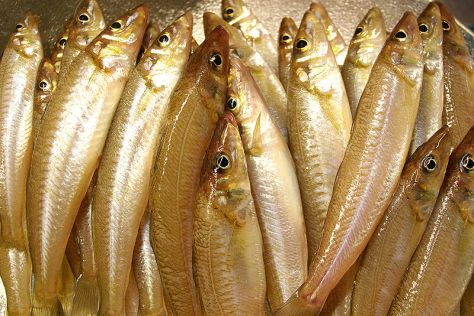
SILLAGO-SHIROGISU

Shirogisu/白鱚, or Sillago in English probably has as many Japanese names as English names.
The Sillago found along the Japanese shores is also called sillago japonica, Whiting or Smelt-Whiting in english, Shirogisu, Kisu, Magisu and Kisugo in Japanese.

The best specimen in Japan are caught in Fukuoka (Kyushu) and Ehime (Shikoku) prefectures from Spring to Summer.
It is also a sport angler’s favourite as they come in all sizes, although the everage will not measure much more than 10 cm. The specimen found in Shizuoka are fairly small and comprise many varieties including deep-sea fish.

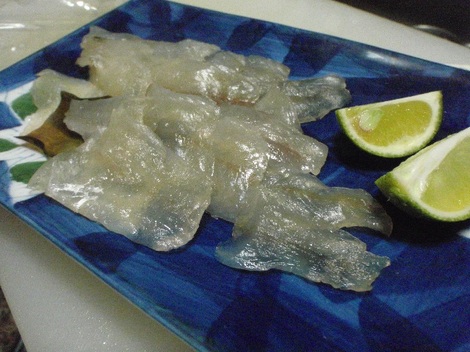
Standard Shirogisu Sashimi

As a sahimi/raw fish it can be prepared in many manners:
Standard sashimi as above.

Shirogisu Konbujime Sashimi.

As konbujime, it will be matured between two sheets of wet konbu/seaweed to attain a sweet taste.

Shirogisu Aburi Sashimi

As aburi/lightly seared, one can enjoy two different textures and tastes at the same time.
Mind you, it is not easy to sear properly as the fillets are very thin!

The greatest part of the sillago catch comes from Indonesia, Korea, Thailand, China and other Asian countries.
Fortunately, here in Shizuoka, we do catch a sizeable amount in Suruga Bay guaranting freshness in season.

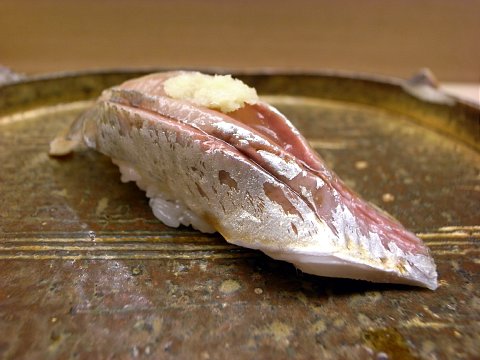
Shirogisu Sushi Nigiri.

If absolutely fresh, shirohisu/sillago makes for an interesting morsel, the more for it as it is quite rare in this sushi nigiri form.

Anglers will certainly appreciate it grilled on the stick at a BBQ on the beach with a nice pint of beer!

But the most popular way of savouring it is arguably as tempura or breaded and deep-fried, although the fish taste will vary greatly with freshness!
But if absolutely fresh, don’t forget to deep-fry its bones and head!

RECOMMENDED RELATED WEBSITES

Green Tea Club by Satoshi Nihonyanagi in Shizuoka!, Mind Some by Tina in Taiwan, Le Manger by Camille Oger (French), The Indian Tourist, Masala Herb by Helene Dsouza in Goa, India, Mummy I Can Cook! by Shu Han in London, Pierre.Cuisine, Francescannotwrite, My White Kitchen, 47 Japanese Farms Through The Eyes of Its Rural Communities, Foodhoe, Chucks Eats, Things that Fizz & Stuff, Five Euro Food by Charles,Red Shallot Kitchen by Priscilla,With a Glass, Nami | Just One Cookbook, Peach Farm Studio, Clumsyfingers by Xethia, PepperBento,Adventures in Bento Making, American Bent, Beanbento, Bento No, Bento Wo Tsukurimashou, Cooking Cute, Eula, Hapabento , Happy Bento, Jacki’s Bento Blog, Kitchen Cow, Leggo My Obento, Le Petit Journal Bento & CO (French), Lunch In A Box,
Susan at Arkonlite, Vegan Lunch Box; Tokyo Tom Baker, Daily Food Porn/Osaka, Only Nature Food Porn, Happy Little Bento, The Herbed Kitchen, J-Mama’s Kitchen, Cook, Eat, Play, Repeat, Bento Lunch Blog (German), Adventures In Bento, Anna The Red’s Bento Factory, Cooking Cute, Timeless Gourmet, Bento Bug, Ideal Meal, Bentosaurus, Mr. Foodie (London/UK), Ohayo Bento,

Must-see tasting websites:

-Sake: Tokyo Through The Drinking Glass, Tokyo Foodcast, Urban Sake, Sake World
-Wine: Palate To Pen, Warren Bobrow, Cellar Tours, Ancient Fire Wines Blog
-Beer: Good Beer & Country Boys, Another Pint, Please!
-Japanese Pottery to enjoy your favourite drinks: Yellin Yakimono Gallery

Japanese Fish Species 16: Striped Horse Mackerel-Shima Aji-㠀縞鯵

Shimaaji/縞鯵, or Striped Horse Mackerel is one variety of Aji/鯵, Horse Mackerel-Saurel.
Although the season is said to be in Summer, the taste varies little with the time of the year.
Striped Horse Mackerel caught by anglers off the Izu Peninsula in Shizuoka Prefecture are said to be the best in Japan.
It is known under the other names of Ookami, Kose and Katsuoaji.

In English it called Striped Horse Mackerel, Saurel or White Trevally.
White Trevally, Pseudocaranx dentex, is a jack of the family Carangidae widespread in tropical and warm temperate areas between 40°N and 47°S, in the Atlantic, Mediterranean, Indian and Pacific Oceans. It has a deep body, and a greenish colour with metallic overtones and a dark spot above the gills. The fins are yellow.
In New Zealand, this Trevally is known by the Māori as Araara, and is generally confined to waters north of Cook Strait, although it sometimes reaches as far south as Otago in the summer.

It is a great fish to serve as sashimi, either in simple slices as above,

Or the whole fish as Tataki/tartare!

In Shizuoka, where the fish is usually served still alive, the bone and heads will be served later deep-fried. Superb snack!

The fish is easy to manipulate to make beautiful maki with daikon as above!

The sushi nigiri will have photograpers on constant alert!

See what I mean?

Of course, Aji can be enjoyed grilled with a simple seasoning of soy sauce or ponzu!

Like most white-fleshed fish it can be deep-fried in batter and breadcrumbs at home!

RECOMMENDED RELATED WEBSITES

Green Tea Club by Satoshi Nihonyanagi in Shizuoka!, Mind Some by Tina in Taiwan, Le Manger by Camille Oger (French), The Indian Tourist, Masala Herb by Helene Dsouza in Goa, India, Mummy I Can Cook! by Shu Han in London, Pierre.Cuisine, Francescannotwrite, My White Kitchen, 47 Japanese Farms Through The Eyes of Its Rural Communities, Foodhoe, Chucks Eats, Things that Fizz & Stuff, Five Euro Food by Charles,Red Shallot Kitchen by Priscilla,With a Glass, Nami | Just One Cookbook, Peach Farm Studio, Clumsyfingers by Xethia, PepperBento,Adventures in Bento Making, American Bent, Beanbento, Bento No, Bento Wo Tsukurimashou, Cooking Cute, Eula, Hapabento , Happy Bento, Jacki’s Bento Blog, Kitchen Cow, Leggo My Obento, Le Petit Journal Bento & CO (French), Lunch In A Box,
Susan at Arkonlite, Vegan Lunch Box; Tokyo Tom Baker, Daily Food Porn/Osaka, Only Nature Food Porn, Happy Little Bento, The Herbed Kitchen, J-Mama’s Kitchen, Cook, Eat, Play, Repeat, Bento Lunch Blog (German), Adventures In Bento, Anna The Red’s Bento Factory, Cooking Cute, Timeless Gourmet, Bento Bug, Ideal Meal, Bentosaurus, Mr. Foodie (London/UK), Ohayo Bento,

Must-see tasting websites:

-Sake: Tokyo Through The Drinking Glass, Tokyo Foodcast, Urban Sake, Sake World
-Wine: Palate To Pen, Warren Bobrow, Cellar Tours, Ancient Fire Wines Blog
-Beer: Good Beer & Country Boys, Another Pint, Please!
-Japanese Pottery to enjoy your favourite drinks: Yellin Yakimono Gallery

Japanese Fish Species 15: Japanese Halfbeak-Sayori-鱵, 細魚, 針魚

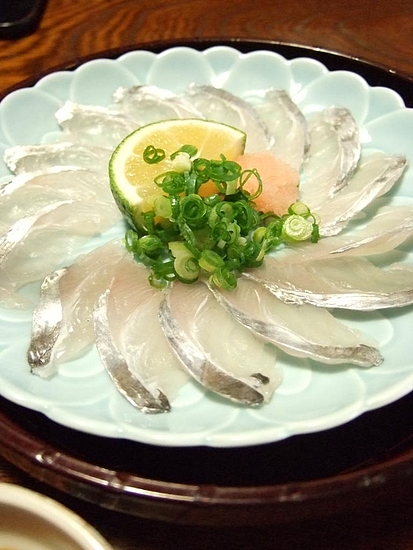
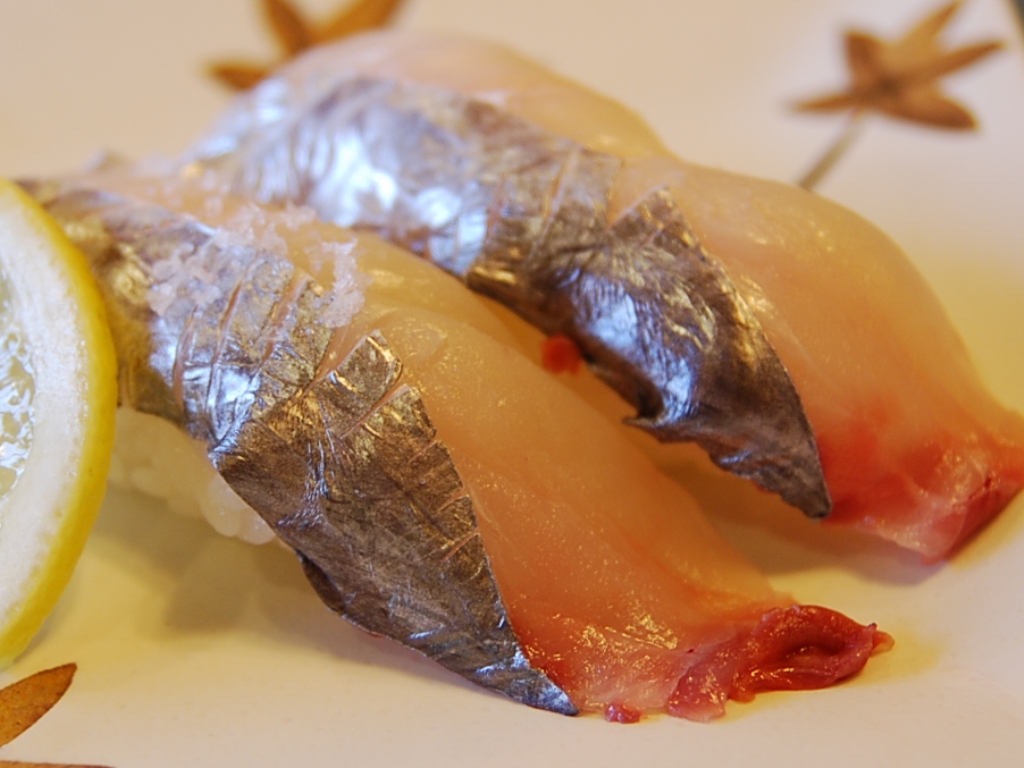
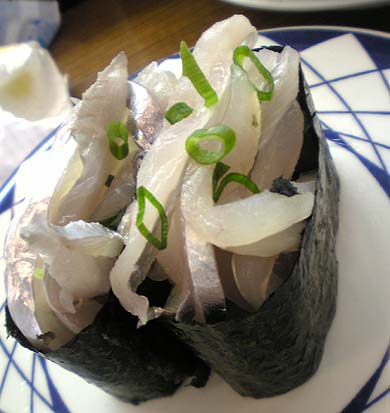
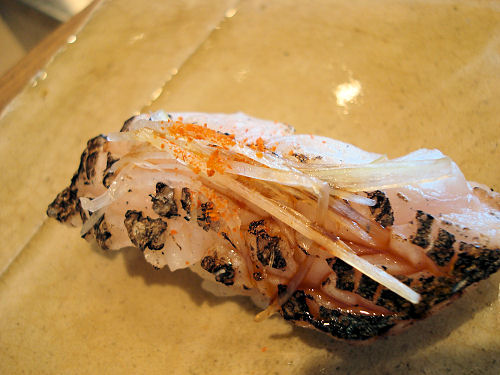
The Japanese Half Beak or “Sayori” is a very popular fish in Japan as sashimi or sushi because it black-striped flesh does make for some spectacular design in spite of the difficulty to take its skin off cleanly!
The word “sayori” can be written in three difeerent kanji: 鱵, 細魚 (“Thin Fish”, 針魚 (“Pin Fish”).

It is also known unde the names of “Hariuo”, “Kannuki”. The latter name is used for large sprcimen sold in the Tokyo area which can reach up to 40 cm.
It is mainly caught between Winter and Summer, but the best specimens are before and after the spawning season in April~June.
The Japanese sayori mainly come from the shores of Mie, Hyogo, Ishikawa, Hiroshima and Wakayama Prefectures.
We are lucky to catch our own in Suruga Bay off Shizuoka and savor them so fresh!
It is also imported from China, Korea and Australia.

You can easily buy the sashimi cut at supermarkets and re-arrange it at home!

In my own personal opinion it makes for some of the most elegant sushi nigir! Very popular with ladies!

Grilled or as himono/dried, it is the perfect snack I would love anytime with a great beer or sake!

But all said, you can beat such a lovely sushi nigiri!

RECOMMENDED RELATED WEBSITES

Green Tea Club by Satoshi Nihonyanagi in Shizuoka!, Mind Some by Tina in Taiwan, Le Manger by Camille Oger (French), The Indian Tourist, Masala Herb by Helene Dsouza in Goa, India, Mummy I Can Cook! by Shu Han in London, Pierre.Cuisine, Francescannotwrite, My White Kitchen, 47 Japanese Farms Through The Eyes of Its Rural Communities, Foodhoe, Chucks Eats, Things that Fizz & Stuff, Five Euro Food by Charles,Red Shallot Kitchen by Priscilla,With a Glass, Nami | Just One Cookbook, Peach Farm Studio, Clumsyfingers by Xethia, PepperBento,Adventures in Bento Making, American Bent, Beanbento, Bento No, Bento Wo Tsukurimashou, Cooking Cute, Eula, Hapabento , Happy Bento, Jacki’s Bento Blog, Kitchen Cow, Leggo My Obento, Le Petit Journal Bento & CO (French), Lunch In A Box,
Susan at Arkonlite, Vegan Lunch Box; Tokyo Tom Baker, Daily Food Porn/Osaka, Only Nature Food Porn, Happy Little Bento, The Herbed Kitchen, J-Mama’s Kitchen, Cook, Eat, Play, Repeat, Bento Lunch Blog (German), Adventures In Bento, Anna The Red’s Bento Factory, Cooking Cute, Timeless Gourmet, Bento Bug, Ideal Meal, Bentosaurus, Mr. Foodie (London/UK), Ohayo Bento,

Must-see tasting websites:

-Sake: Tokyo Through The Drinking Glass, Tokyo Foodcast, Urban Sake, Sake World
-Wine: Palate To Pen, Warren Bobrow, Cellar Tours, Ancient Fire Wines Blog
-Beer: Good Beer & Country Boys, Another Pint, Please!
-Japanese Pottery to enjoy your favourite drinks: Yellin Yakimono Gallery

Japanese Fish Species 14: Spanish Mackerel-Sawara-鰆

SAWARA-1

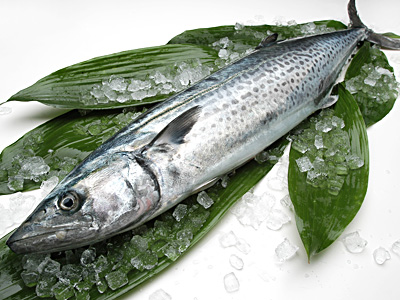
Sawara/鰆 or Spanish Mackerel is considered as the best kind of Mackerel in Japan. Not only it is a big variety, but its comparatively white flesh is succulent in almost any kind of cooking!

It is known under different names such as Sagoshi and Sagochi when young and Yanagi when mature.
It is basically caught by trawling, but can be fished by line. It is, unlike other mackerels, a pretty solitary fish.

It is caught widely around Japan, off Russia, China and Korea.
The total catch has varied in recent years, but thanks to import, including 21.000 tonnes from China, it has become a feature in season from late Autumn to end of Spring.

UZU-2

(Kan-Sawara at Uzu, Shizuoka City)

In Winter, it is called Kan Sawara/寒鰆 (寒stands for cold, 鰆 stands for Sawara/Spring Fish) and is a sought after morsel. In Shizuoka it is sometimes caught then in Suruga Bay, and I can tell you it disappears quickly from the table!

UZU-09-05-29-5

(Sawara at Uzu, Shizuoka City)

Later in Spring, it is just called Sawara and is leaner.

SAWARA-2

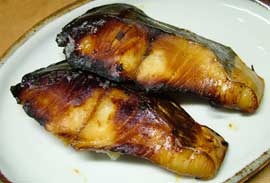
It can be cooked in many ways: broiled as above.

SAWARA-4

Or grilled.

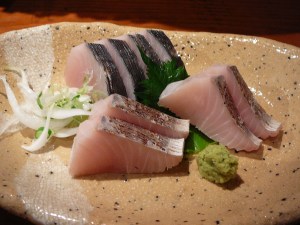
Of Course, as sushi nigiri! Especially Kan Sawara!

Very interesting, seared and with tare on nigiri!

RECOMMENDED RELATED WEBSITES

Green Tea Club by Satoshi Nihonyanagi in Shizuoka!, Mind Some by Tina in Taiwan, Le Manger by Camille Oger (French), The Indian Tourist, Masala Herb by Helene Dsouza in Goa, India, Mummy I Can Cook! by Shu Han in London, Pierre.Cuisine, Francescannotwrite, My White Kitchen, 47 Japanese Farms Through The Eyes of Its Rural Communities, Foodhoe, Chucks Eats, Things that Fizz & Stuff, Five Euro Food by Charles,Red Shallot Kitchen by Priscilla,With a Glass, Nami | Just One Cookbook, Peach Farm Studio, Clumsyfingers by Xethia, PepperBento,Adventures in Bento Making, American Bent, Beanbento, Bento No, Bento Wo Tsukurimashou, Cooking Cute, Eula, Hapabento , Happy Bento, Jacki’s Bento Blog, Kitchen Cow, Leggo My Obento, Le Petit Journal Bento & CO (French), Lunch In A Box,
Susan at Arkonlite, Vegan Lunch Box; Tokyo Tom Baker, Daily Food Porn/Osaka, Only Nature Food Porn, Happy Little Bento, The Herbed Kitchen, J-Mama’s Kitchen, Cook, Eat, Play, Repeat, Bento Lunch Blog (German), Adventures In Bento, Anna The Red’s Bento Factory, Cooking Cute, Timeless Gourmet, Bento Bug, Ideal Meal, Bentosaurus, Mr. Foodie (London/UK), Ohayo Bento,

Must-see tasting websites:

-Sake: Tokyo Through The Drinking Glass, Tokyo Foodcast, Urban Sake, Sake World
-Wine: Palate To Pen, Warren Bobrow, Cellar Tours, Ancient Fire Wines Blog
-Beer: Good Beer & Country Boys, Another Pint, Please!
-Japanese Pottery to enjoy your favourite drinks: Yellin Yakimono Gallery

Japanese Fish Species 14: Salmon-Sake/Shake-鮭

SAKE-1

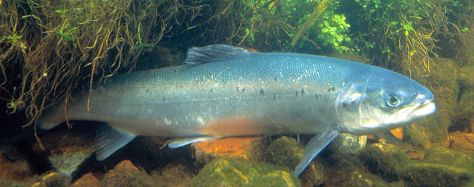
Salmon is a favourite almost everywhere on the Globe, but it is in Japan that you can enjoy it in the most numerous manners!

Like every other fish it has many names according to season and place:
Shirozake/White Salmon, Akiaji or Akizake for Autumn Salmon, Shake in Tokyo.
In Spring it is called Tokishirazu.
I don’t have to tell you there are many, many names for it all over the world!

SAKE-SUJIKO

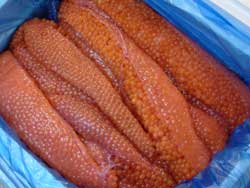
Its roe, before processing, is called Sujiko/筋子 in Japanese, whereas the salmon roe, once treated, is called Ikura/イクラ.

SAKE-ROE-SUSHI

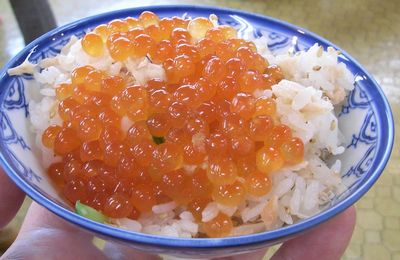
Many Japanese appreciate the roe untreated, but more people enjoy it on top of rice as it is with some soy sauce and grated wasabi.

SAKE-SUSHI

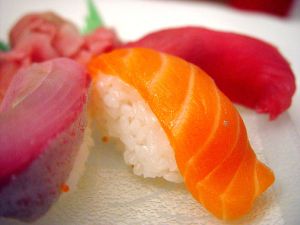
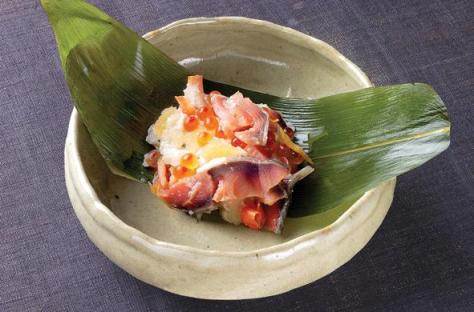
It also makes for some splendid colourful creation on a plate of sushi!

SAKE-SUSHI-2

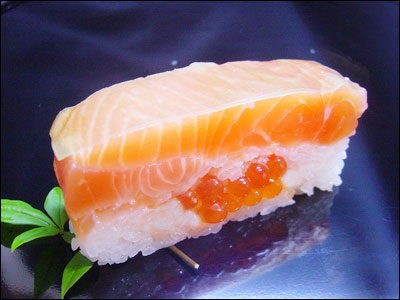
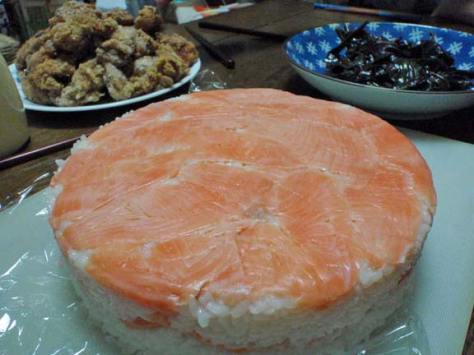
As oshizushi/pressed sushi, it can make some very interesting combinations with the salmon flesh and roe.

SAKE-GOHAN

Have you ever tasted Sake Gohan/Salmon Rice?

SAKE-OSHIZUSHI

Slightly smoked the Japanese way, It is extensively used in the making of bentoes!

RECOMMENDED RELATED WEBSITES

Green Tea Club by Satoshi Nihonyanagi in Shizuoka!, Mind Some by Tina in Taiwan, Le Manger by Camille Oger (French), The Indian Tourist, Masala Herb by Helene Dsouza in Goa, India, Mummy I Can Cook! by Shu Han in London, Pierre.Cuisine, Francescannotwrite, My White Kitchen, 47 Japanese Farms Through The Eyes of Its Rural Communities, Foodhoe, Chucks Eats, Things that Fizz & Stuff, Five Euro Food by Charles,Red Shallot Kitchen by Priscilla,With a Glass, Nami | Just One Cookbook, Peach Farm Studio, Clumsyfingers by Xethia, PepperBento,Adventures in Bento Making, American Bent, Beanbento, Bento No, Bento Wo Tsukurimashou, Cooking Cute, Eula, Hapabento , Happy Bento, Jacki’s Bento Blog, Kitchen Cow, Leggo My Obento, Le Petit Journal Bento & CO (French), Lunch In A Box,
Susan at Arkonlite, Vegan Lunch Box; Tokyo Tom Baker, Daily Food Porn/Osaka, Only Nature Food Porn, Happy Little Bento, The Herbed Kitchen, J-Mama’s Kitchen, Cook, Eat, Play, Repeat, Bento Lunch Blog (German), Adventures In Bento, Anna The Red’s Bento Factory, Cooking Cute, Timeless Gourmet, Bento Bug, Ideal Meal, Bentosaurus, Mr. Foodie (London/UK), Ohayo Bento,

Must-see tasting websites:

-Sake: Tokyo Through The Drinking Glass, Tokyo Foodcast, Urban Sake, Sake World
-Wine: Palate To Pen, Warren Bobrow, Cellar Tours, Ancient Fire Wines Blog
-Beer: Good Beer & Country Boys, Another Pint, Please!
-Japanese Pottery to enjoy your favourite drinks: Yellin Yakimono Gallery

Japanese Fish Species 13: Mackerel-Saba-鯖

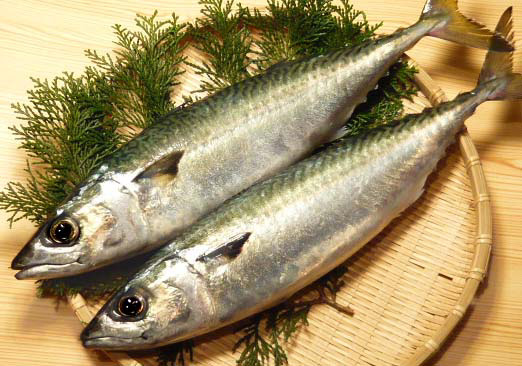
Mackerel or saba is a fish eaten over the whole Northern Hemisphere and does come under many varieties and names.
In Japan it is mainly called “Saba”, “Masaba” or “Sekisaba”.
In this country it is mainly caught off Oita, Saga Prefecture, although quite a few are caught off our coasts in Shizuoka Prefecture, especially off Yaizu.
They feed on plankton mainly.

They are prepared and cooked in many guises. In France, my birthplace, they are steamed and then pickled in white wine and spices before being canned.

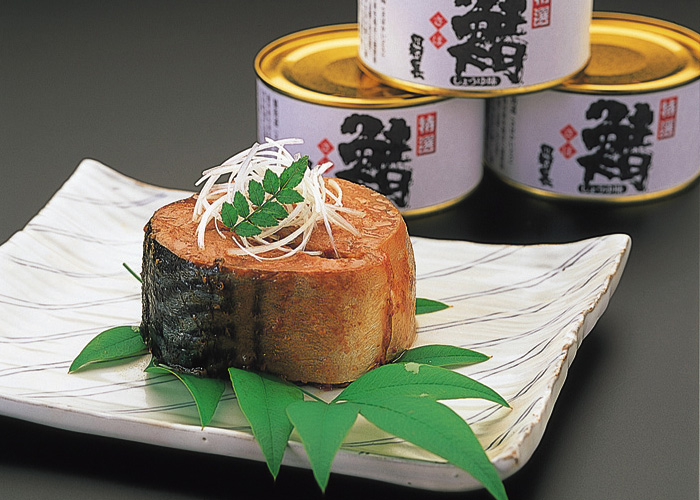
Naturally tinned mackerel is available in Japan,too!

In Northern Europe they are also eaten half raw as smorgasbrod and pickled fish.

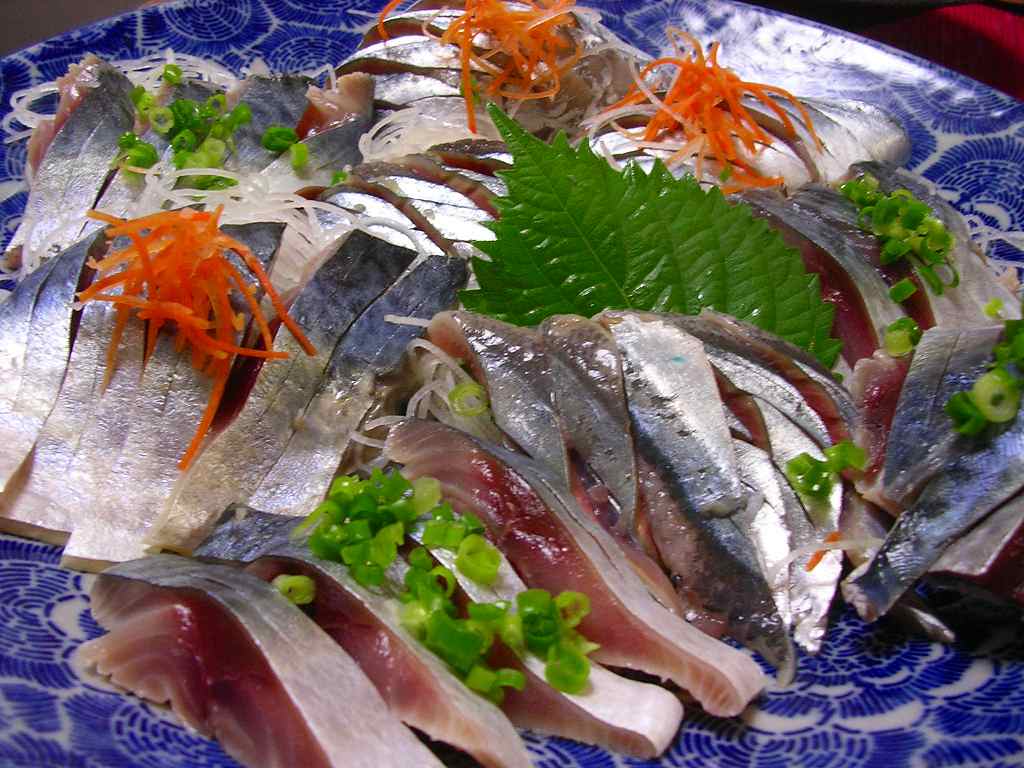
It can be appreciated as sashimi, but it must be absolutely fresh and is best served with grated fresh ginger and lemon.
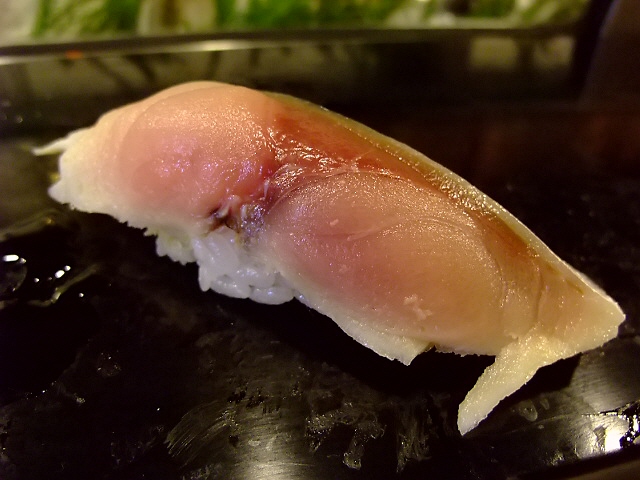
As far as sushi is concerned, “masaba” variety is best

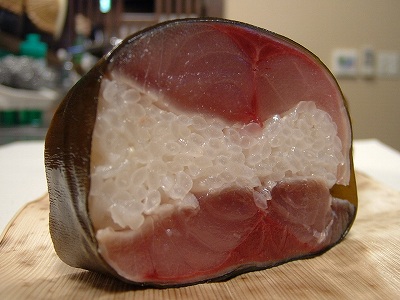
Saba Konbujime nigiri.

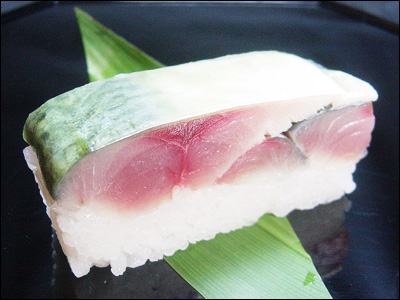
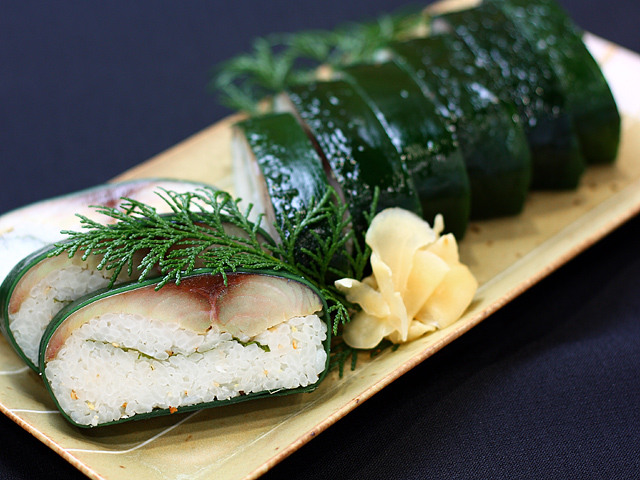
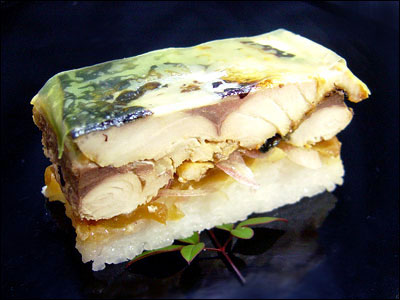
It is especially popular as “oshizushi” (pressed sushi).

Double oshizushi!

My preference goes for Saba konbujime.

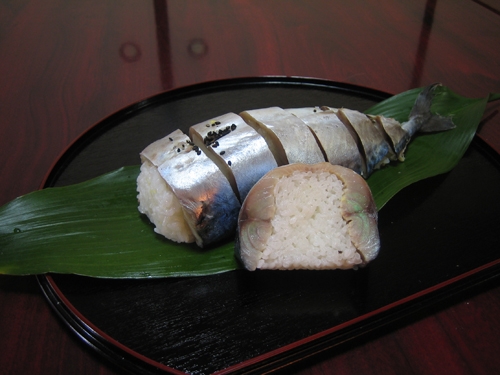
Saba Bogata

The mackerel is kept inside a variety of wet seaweed for an hour or so before put whole on top of a long “bar” of rice, then cut to size.

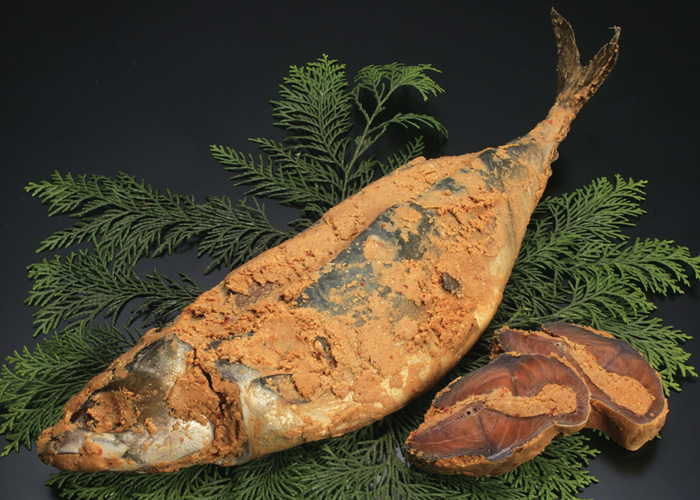
Saba Heshiko Zuke.
Saba/Mackerel has been a staple fish in Japan since immemorial times.
One way to conserve it for better transport away from the shores was “Saba Heshiko Zuke”, that is, pickled in miso and sake white lees.

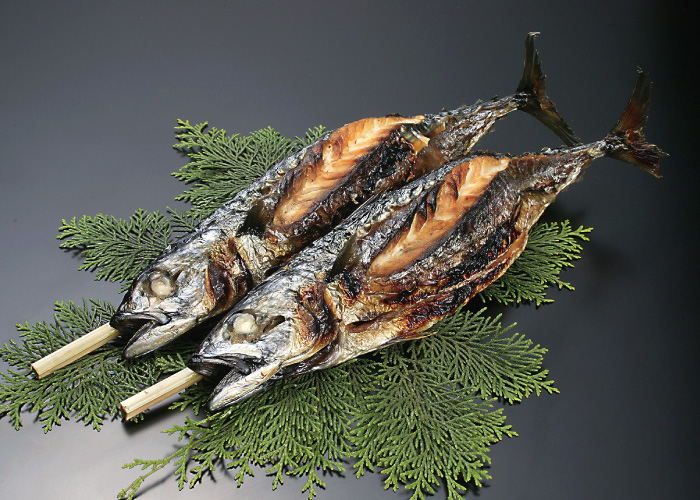
Saba/mackerel is easily grilled, either on the stick as above,

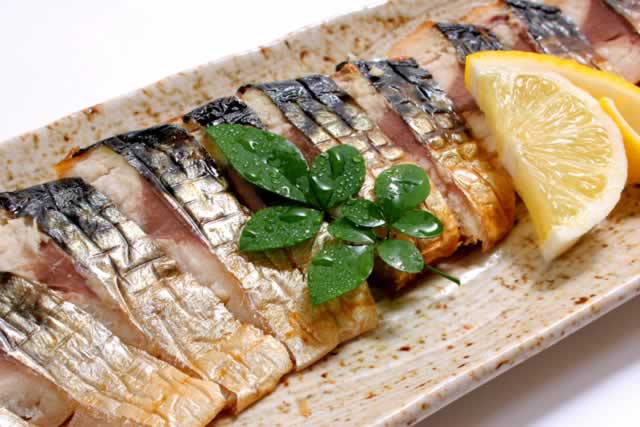
or grilled and served cut in slices.

The same grilled saba can be served as oshizushi/presed sushi!

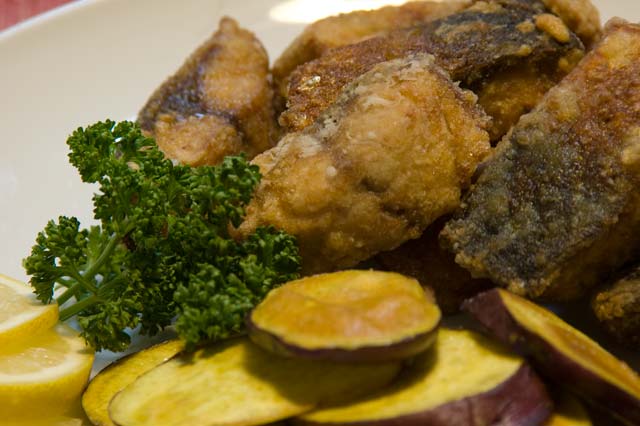
Saba can be also served to a tasty crispiness by deep-frying it!

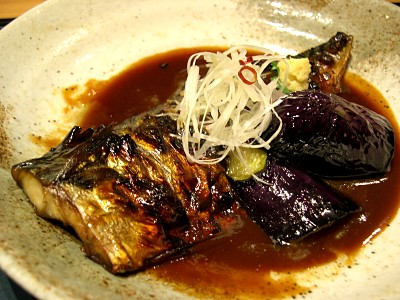
Or simmered the Japanese way with miso, sake, soy sauce, ginger and mirin!

A very versatile fish!
RECOMMENDED RELATED WEBSITES

Green Tea Club by Satoshi Nihonyanagi in Shizuoka!, Mind Some by Tina in Taiwan, Le Manger by Camille Oger (French), The Indian Tourist, Masala Herb by Helene Dsouza in Goa, India, Mummy I Can Cook! by Shu Han in London, Pierre.Cuisine, Francescannotwrite, My White Kitchen, 47 Japanese Farms Through The Eyes of Its Rural Communities, Foodhoe, Chucks Eats, Things that Fizz & Stuff, Five Euro Food by Charles,Red Shallot Kitchen by Priscilla,With a Glass, Nami | Just One Cookbook, Peach Farm Studio, Clumsyfingers by Xethia, PepperBento,Adventures in Bento Making, American Bent, Beanbento, Bento No, Bento Wo Tsukurimashou, Cooking Cute, Eula, Hapabento , Happy Bento, Jacki’s Bento Blog, Kitchen Cow, Leggo My Obento, Le Petit Journal Bento & CO (French), Lunch In A Box,
Susan at Arkonlite, Vegan Lunch Box; Tokyo Tom Baker, Daily Food Porn/Osaka, Only Nature Food Porn, Happy Little Bento, The Herbed Kitchen, J-Mama’s Kitchen, Cook, Eat, Play, Repeat, Bento Lunch Blog (German), Adventures In Bento, Anna The Red’s Bento Factory, Cooking Cute, Timeless Gourmet, Bento Bug, Ideal Meal, Bentosaurus, Mr. Foodie (London/UK), Ohayo Bento,

Must-see tasting websites:

-Sake: Tokyo Through The Drinking Glass, Tokyo Foodcast, Urban Sake, Sake World
-Wine: Palate To Pen, Warren Bobrow, Cellar Tours, Ancient Fire Wines Blog
-Beer: Good Beer & Country Boys, Another Pint, Please!
-Japanese Pottery to enjoy your favourite drinks: Yellin Yakimono Gallery