Tag Archives: Japanese Gastronomy

French Cuisine: Shizuoka Products at SUGIMOTO TETSUYA-Part 1(Appetizer)

Ranking
Service: Highly professional and friendly
Equipment: Great overall cleanliness. Beautiful washroom

Prices:~

Strong points:Freshest produce and ingredients only, mainly from Shizuoka Prfecture. Organic vegetables. Seasonal food only

Map (Japanese)
Entirely non-smoking1

If you happen to visit Shizuoka City, you will find many restaurants and izakayas serving and mainly using produce/products and ingredients from Shizuoka Prefecture. There are many treasures to be discovered in this hoard!
one of them is the French restaurant going by the name of Sugimoto Tetsuya!

If you can read Japanese you will know what is waiting for you inside!
A gstronomic paradise in Shizuoka Prefecture!

Lunch and

dinner can chosen from the chef recommendation menus or a la carte. A la carte means that you can agree on a budget and an individual meal making it fun for both the diner and the chef!

Mr. Sugimoto does everything by himself: chef, waiter and entertainer! This is real slow food in its true and best meaning!

Almost all ingredients are from Shizuoka Prefecture, be they vegetables, fruit, meat or fish!
But his specialty is organic vegetables from Shizuoka Prefecture!
I requested that this menu feature only produce for Shizuoka Prefecture only.
Since it has turned into a fairly long meal to explain I will go about it dish by dish. This time we shall talk about the appetizer!

The fish is rainbow trout rasied by Mr. Kukuri in Fujinomiya City at the foot of Mout Fuji! It was first marinated and then brushed with delicious (secret) dressing.
The fish was then monted on aubergines/egg plants and mini tomatoes grown by b Mr. Kaneko in Hamamatsu City. The aubergines had been first grilled, then peeled and marinated before being cut in large pieces. More dressing was added with fresh chopped green leaves.
The rainbow trout and aubergines made for a sublimely simple (in concept) and sophisticated (in taste) combination inside the palate!

Organic vegetables dish next time!

Tetsuya SUGIMOTO
420-0038 Shizuoka City, Aoi Ku, Umeya,, 2-13,1F
Tel./Fax: 054-251-3051
Opening hours:11:30~14:30,17:30~21:30
Holidays: undecided
Cedit cards OK
HOMEPAGE

RECOMMENDED RELATED SITES:
Warren Bobrow, Bread + Butter, Zoy Zhang, Hungry Neko, Think Twice, Frank Fariello, Mangantayon, Hapabento, Elinluv Tidbit Corner, Tokyo Terrace, Maison de Christina, Chrys Niles,Lexi, Culinary Musings, Wheeling Gourmet, Comestiblog, Chronicles Of A Curious Cook, Tokyo Through The Drinking Glass, Tokyo Foodcast, Palate To Pen, Yellin Yakimono Gallery, Tokyo Terrace, Hilah Cooking, More than a Mount Full, Arkonite Bento, Happy Little Bento; 5 Star Foodie; Jefferson’s Table; Oyster Culture; Gourmet Fury; Island Vittles; Good Beer & Country Boys; Rubber Slippers In Italy; Color Food daidokoro/Osaka;/a; The Witchy Kitchen; Citron Et Vanille, Lunsj Med Buffet/Estonian Gastronomy (English), Cook, Eat, Play, Repeat

Please check the new postings at:
sake, shochu and sushi

Shizuoka Agricultural Products: The Mochizukis’ Garden in Yuyama

Yuyama district lies along the western bank of the Abe River in Shizuoka City.
There is barely enough land to cultivate under the steep slopes of the surrounding mountains, but it means plenty of good water all day long whatever the weather.

All this water still needs to be funneled into the right patterns between the many plots, regularly maintained and re-inforced with stone and concrete, otherwise the water will turn into a plague in rainy weather carrying off everything on its way to the Abe River.

Once again my good friend Mrs. Natsuko Koyanagi was on hand to help me talk with shy farmers. Whereas an unknown foreign would have some difficulty engaging in a conversation on his own with locals, a local celebrity makes things a lot easier!

Looking forward to the next cucumber crop!

Mr. Toshihiro Mochizuki and his wife, Akiko, are the 4th generation looking after this garden spreading over 200 tsubo (multiply by 2.3 to convert into square metres!).

Red shiso! Love their juices!

Unfortunately, it could be the end of that particular line because their children are not tempted to follow their vocation in spite of their parents’ enthusiasm.

Now, what might be these?

Myoga ginger! No way I could have guessed they were hidden under all these leaves!

It is a pity that these farmers (many in the region are in the same predicament) cannot convince (they even discourage their siblings in many cases) their children to take on farming and agriculture.
The local government have finally understood the situation and are taking measures to attract young people back to farming.

Green asparaguses, but not edible any more!

The Mochizukis were formerly growing rice and green tea only. Now they grow more than 20 varieties of vegetables (10% are ending on their own table) atop of rice. They stopped growing green tea which is strenuous business on slopes that are almost vertical.

Now, what can be this vegetable/tuber? I forgot to ask, silly me! Anyone knows?

Like many farmers, they buy their fertilizers from the local Farmers Association Cooperative and sell most of their produce at the Miwa Agriroad (JA) Market nearby (Abeguchi) that I have already mentioned.

Corn! Love these!

I personally enjoy talking and learning from these people of the land. You never know. What would happen if we suddenly all had to grow our food?

I forgot to ask about these, too! Please help me!LOL

Have you ever heard of Ry Cooder’s Taxes On The Farmer Feeds Us All?
….The farmer is the man who feeds us all…
A case in point!

Mochizukis’ Garden & Farm
Shizuoka City, Aoi Ku, Yuyama, 826
Te.: 054-294-0416
RECOMMENDED RELATED SITES:
Warren Bobrow, Bread + Butter, Zoy Zhang, Hungry Neko, Think Twice, Frank Fariello, Mangantayon, Hapabento, Elinluv Tidbit Corner, Tokyo Terrace, Maison de Christina, Chrys Niles,Lexi, Culinary Musings, Wheeling Gourmet, Comestiblog, Chronicles Of A Curious Cook, Tokyo Through The Drinking Glass, Tokyo Foodcast, Palate To Pen, Yellin Yakimono Gallery, Tokyo Terrace, Hilah Cooking, More than a Mount Full, Arkonite Bento, Happy Little Bento; 5 Star Foodie; Jefferson’s Table; Oyster Culture; Gourmet Fury; Island Vittles; Good Beer & Country Boys; Rubber Slippers In Italy; Color Food daidokoro/Osaka;/a; The Witchy Kitchen; Citron Et Vanille, Lunsj Med Buffet/Estonian Gastronomy (English), Cook, Eat, Play, Repeat, Chrisoscope

Please check the new postings at:
sake, shochu and sushi

Shizuoka Agricultural Products: Aoi Farm

Asabata District in Shizuoka City has been long known as a farming community area. It used to be mostly marshlands in the very far past but is now almost exclusively farmland.

I just cannot count the times I have leisurely cycled through that area. Even so I still make a lot of discoveries.
The other Sunday, as I had little to do, I thought of cycling again through that particular area.
That is when I found Aoi Farm just in front of a rehabilitation hospital.

There are many almost identical farms in the vicinity. But this one looked a bit different.

It was bleeding hot and the sharp sun prevented me from taking good shots.

“Please visit freely”, the sign said. I gladly obliged.
A lady was watering the fruit trees there.
“Good afternoon! May I take some pictures please?” I asked somewhat impertinently
“Please, do as you like!”
“Thank you so much!”

It was not all fruit trees but also flowers and all kind of decorative trees. All could be bought right away. Cypresses, Japanese maples and many trees I just was ignorant of their names.

What kind of pine is that…?

That’s a blueberry tree? No way! But that’s what the name tag says!
About time I politely introduced myself!
I returned to the lady and explained the “real reason” I came here. She was certainly caught by surprise and replied I’d better talk to her husband.
(Tell the truth I prefer interviewing ladies to gentlemen, whatever their age! LOL)

Let’s take a pic of those roses on the way…

Her husband went by the name of Takao Inaba.
A bit shy, he was nonetheless very kind and patient with me!
At the age of 62 he retired in 2007 from his “usual” farming job (that is, growing rice) and has been working on his orchard for 3 years now.

These big fruits are blueberries? Well, I didn’t want look stupid with more foolish questions, so I refrained from asking (LOL).

These look like blueberries!

Blueberries are the main culture, no less than 90 varieties.
-Really?
-Sure! But since our customers wouldn’t know even a few of them, I just strive on cultivating delicious ones…

Since this is a blueberry farm, let’s take more pics!

-What is the total area?
-900 tsubo (multiply this by 2.3 to convert into square metres)
-What kind of fertilizers do you use?
-That depends on the season, but I get all of them directly from the farmers’ Cooperative!

-Apart of blueberries, what do you mainly grow?
-Citrus varieties, especially mikan (mandarines).

More blueberries?

-Recently the weather has been quite unpredictable. Any problems?
-Plenty! The weather has indeed gone mad!

Blueberries as big as my thumb nail!

-Do you have any children?
-Sure, I do!
-Are they farming, too?
-No way! Impossible!
-Why is that?
-I would be able to pay tem only 200 yen (2 US$) an hour!

These blueberry trees are not for sale. Their fruit are sold at the Farmers’ Cooperative.

Takao Inaba, in spite of retiring, apparently had to continue working and I can guarantee you that at the age of 65 he is fighting hard!
He told me that he was feeling his age, but he was certainly far healthier than a lot of people of his age that I know! Life as a farmer might be tough, but it is healthy!

Are these dwarf apples?
I’ll have to ask during my next visit!

Aoi Farm
Shizuoka City, Aoi Ku, Asabata, Akamatsu, 7
Business hours09:00~17:00
Holidays: Mondays & Tuesdays
Tel. 054-2459380(Home)

RECOMMENDED RELATED WEBSITES:
-Sake: Tokyo Through The Drinking Glass, Tokyo Foodcast, Urban Sake, Sake World
-Wine: Palate To Pen, Ancient Fire Wines Blog
-Beer: Good Beer & Country Boys, Another Pint, Please!
-Japanese Pottery to enjoy your favourite drinks: Yellin Yakimono Gallery
-Drink Lovers of The World:
5 Star Foodie Culinary Adventures; Warren Bobrow; Tokyo Terrace; Chez What?
Pran Gravy Kadai Curry; My Kitchen Treasures; Indulge Inspire Imbibe; Simple Math Bakery; Cheap Ethnic Eatz; Taste With The Eyes; Jacob’s Kitchen; The Pink Apron; Kopiatse…To Greek Hospitality; Zomppa; The Baking Barrister; The Witchy Kitchen; What’s Cooking Italian Style Cuisine; Nirmala’s Cooking Corner; Ancient Fire Wines; The Ardent Epicure

————————-
英語を読めれば次のブログを是非ご覧になって下い!
Shizuoka Sake
Shizuoka Shochu
Shizuoka Sushi
Shizuoka Gourmet

Cheese Tray at Gentil (2010/07/09)

Ranking:
Service: Very Professional
Facilities: Perfect allaround. Beautiful washroom
Prices: ~
Strong points: Best cheese tray in Japan! Great wines

It was about grand time that I visited Gentil Restaurant in Shizuoka City again with my cheese-lover friends!.
Gentil is renown all over Japan for the best cheese trays (within reasonability in a restaurant! Naturally one could always offer a mountain of cheese at ridiculous prices!) served at a restaurant.

I made a point this time to take picture of all individual cheeses for everyone’s references!

These were the 8 cheese presently served (there are more in store at the restaurants but all are served when perfectly ripened!).
Let’s have a look at each of them!

Vieille Mimolette, Cow’s Milk, 18-month old, Northern France. Very soft and elegant in spite of its venerable age!

Blue Stilton, Cow’s Milk, England. A rare combination of softness and pungency!

Langres, Cow’s Milk, Bourgogne & Champagne, France. My home’s cheese! Do I need to comment?

Gorgonzola Dolce, Cow’s Milk, Italy. Vey soft and elegant!

Petit Plaisir, Cow’s Milk, Hokkaido, Japan. It has recently been elected as the best cheese in Japan! A discovery! Remiscent of a beautiful Saint-Marcellin!

Chevre Noir, Goat’s Milk, Canada, 2-year old. Another discovery! very soft for an old goat’s cheese!

Malvaux, Goat’s Milk, Deux-Sevres (Western Loire), France. It is covered with spices like a Corsican Maquis! So many tastes exploding on your palate!

Talegio, Cow’s Milk, Italy. Both elegant and strong!

The tray as served for 3 guests! A work of art, indeed!

Restaurant Gentil
420-0031 Shizuoka Shi, Gofuku-Cho, 2-9-1. Genan Kairaku Buiilding 2F
Tel.: 054-2547655 (Reservations advisable)
Fax: 054-2210509
Opening hours: 12:00~14:00, 18:00~last orders for meals at 21:30. Bar time 18:00~23:30. Closed on Mondays.
Credit cards OK
Homepage (Japanese)

RECOMMENDED RELATED SITES:
Warren Bobrow, Think Twice, Frank Fariello, Tokyo Terrace, Wheeling Gourmet, Comestiblog, Tokyo Through The Drinking Glass, Tokyo Foodcast, Palate To Pen, Yellin Yakimono Gallery, Tokyo Terrace, Hilah Cooking, 5 Star Foodie; Jefferson’s Table; Oyster Culture; Good Beer & Country Boys; Rubber Slippers In Italy; Color Food daidokoro/Osaka;/a; The Witchy Kitchen; Citron Et Vanille, More Than A Mountfull; Cheesemonger Recipes; Cheese Chronicles; Cheese Crave;

Please check the new postings at:
sake, shochu and sushi

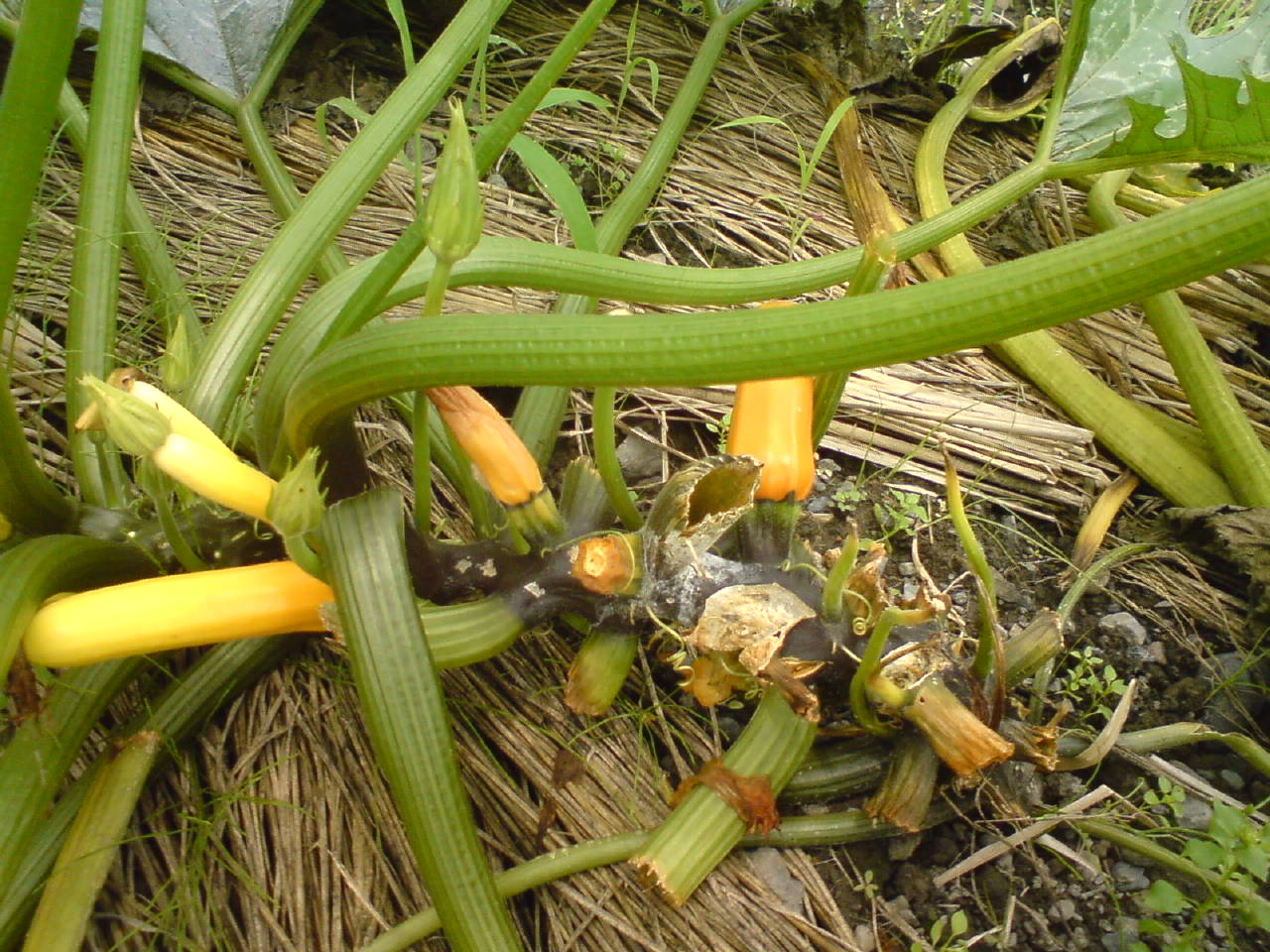
Shizuoka Agricultural Products: Mrs. Jitsuko Ishihara’s Zucchini!

In Japan, like in any country worth its salt and name, you always need a little help from your friends. And when that applies to agriculture and farmers, it is simply vital!

Luckily enough, I’m blessed with this tireless lady friend, namely Mrs. Natsuko Koyanagi, the recognized leader of all those farmer housewives selling their produce at Agriroad in Shizuoka City!
When you realize that the community accounts for more than a hundred members, interviewing simply becomes a pleasure!

Last year she introduced me to this sweet ladyfarmer, Mrs. Jitsuko Ishihara who has a special fondness for zucchini, especially of the colourful round kind!
Sorry for the small pic, but it was taken last year, as the lady was busy up in the mountain harvesting tea with her husband tis morning!

But in the Shizuoka (and elsewhere in Japan) countryside you don’t need a key to open a fence. Natsuko gave her a call to inform her that that strange foreigner (-“You know, the Frenchman who loved your zucchini last year?”) wanted to have another look at those beautiful vegetables. -“Is it ok for us to visit your field/garden?”
-“No problem, you know the place! Thanks for taking hime around!”
Simple as that!

Since I have started writing these local agriculture articles for the prefectural government I intend to conduct a full interview of Mrs. Ishihara very soon!
Natsuko, having given me a ride to Yuyama, along the Abe River (a good 5 minutes ride. For once, I was happy to leave my bicycle!) we were soon trampling Mrs. Ishihara’s domain and taking pics.

Not a really easy task as you have to delve deep under those large leaves with insects buzzing in your eyes (we are in the middle of the reason!)
There was no way I could leave the place without a hoard of those little treasures…

-“Natsuko, could you please ask Mr. Ishihara if I can have some of these?”
Natsuko was soon talking over her mobile phone (at least one reason to welcome IT in farms, thus cutting distances to zero!”)
-“She says she’ll be glad to let you pick one of your choice back home!” (Sweet lady!)
-“No, I mean to buy 3 or 4 of them! Ask her if I may, and how much she wants for them!”
-“……………

-“She says you can take 3 or 4 of them at 100 yen a piece (just over 1 US$)!”
-“But that’s ridiculously cheap (they would fetch 4 times as much in a supermarket) for a zucchini I need two hands to wrap them completely, and moreover fresh and of such a quality!”

Well, I did go away with my 4 beauties for a grand total of 400 yen! I tried to explain they would be served tonight at a friend’s izakaya who would be ready to the real price, but to no avail!

I will make sure my friends at Yasaitei in Shizuoka City know where these zucchini come from and answer their guests’ queries!
Do visit this great place, an institution here in Shizuoka Prefecture!
They will prepare and serve these zucchini according to your preferences, probably as tempura, steamed or fried with superb olive oil!

Can you see them?

YASAITEI
Shizuoka City, Aoi Ku, Tokiwa-Cho, 1-6-2 Green Heights Wamon 1-C
Tel.: 054-2543277
Business hours: 17:30~22:00
Closed on Sundays
Reservations highly recommended
Seating: 6 at counter + 20 at tables
Set Courses: 3,000, 4,000, 5,000 yen
HOMEPAGE (Japanese)

RECOMMENDED RELATED SITES:
Warren Bobrow, Bread + Butter, Zoy Zhang, Hungry Neko, Think Twice, Frank Fariello, Mangantayon, Hapabento, Elinluv Tidbit Corner, Tokyo Terrace, Maison de Christina, Chrys Niles,Lexi, Culinary Musings, Wheeling Gourmet, Comestiblog, Chronicles Of A Curious Cook, Tokyo Through The Drinking Glass, Tokyo Foodcast, Palate To Pen, Yellin Yakimono Gallery, Tokyo Terrace, Hilah Cooking, More than a Mount Full, Arkonite Bento, Happy Little Bento; 5 Star Foodie; Jefferson’s Table; Oyster Culture; Gourmet Fury; Island Vittles; Good Beer & Country Boys; Rubber Slippers In Italy; Color Food daidokoro/Osaka;/a; The Witchy Kitchen; Citron Et Vanille, Lunsj Med Buffet/Estonian Gastronomy (English), Cook, Eat, Play, Repeat

Please check the new postings at:
sake, shochu and sushi

Japanese Bamboo Handcraft for your Dining-Room and Home

Bamboo has been used from times immemorial. It is very sturdy and does not spoil easily, even in the most severe conditions or environments.
People tend to forget it is not a tree, but a grass. It can grow in inclement climates and withstand frost and snow, although severe droughts will kill it.
It flowers only once in its long (60 to 120 years) life before suddenly dying away.

Bamboos (there are many varieties) are also the fastest growing woody plants in the world. They are capable of growing up to 60 cm (24 in.) or more a day due to a unique rhyzome-dependent system. However, this astounding growth rate is highly dependent on local soil and climatic conditions. But the same growth rate can make it an environmental hazard in some regions where it supplants real trees.
Bamboos are of notable economic and cultural significance in Japan (and Asia) where the stems and even the leaves are extensively used in everyday life as building materials and as a highly versatile raw product, and the shoots as a food source.
Bamboo, when used for construction or utensil-making purpose must be harvested when the culms reach their greatest strength and when sugar levels in the sap are at heir lowest, as high sugar content increases the ease and rate of pest infestation.

Bamboo is extensively used as a food, medicine and construction material.
It also contributes to the manufacture of everyday utensils from chopsticks to baskets, from textiles to musical instruments, and even in water processing and transportation (bamboo bicycles!).
Now, because of its comparatively mild and wet climate, Shizuoka Prefecture has been the home of bamboo handcraft for a long time.
Its major guild, called Suruga Takesen Sujizaiku/駿河竹千筋細工 (literally, Suruga Bay Bamboo Thousand Lines Thin Works) or “Suruga Zaiku” for short, has been in existence since 1620 and quickly achieved fame thanks to the Shogunate and the Old Tokaido Route.
At first craftsmen concentrated on the manufacture of utilitarian objects from baskets to small boxes and trays actively sought by the travelers for their own use or as valuable souvenirs and tradable artifacts.
Their products achieved international first in Austria in 1873 where they were exhibited at the Wien International Exposition. Since then the craft has witnessed lows and highs, but in this present world of cheap plastic and metal utilities, bamboo has increasingly achieved a deserved status of artistic value and even that of a politically correct environment-friendly material.

At present the Guild accounts for 14 craftsmen and craftswomen of all ages specializing in some form of the handicraft. The next generation is well provided for and collectors and buyers can be assured of a continuous, if limited because of the sheer hard work and artistry, supply.
There is an almost unending line of products available depending on your needs:
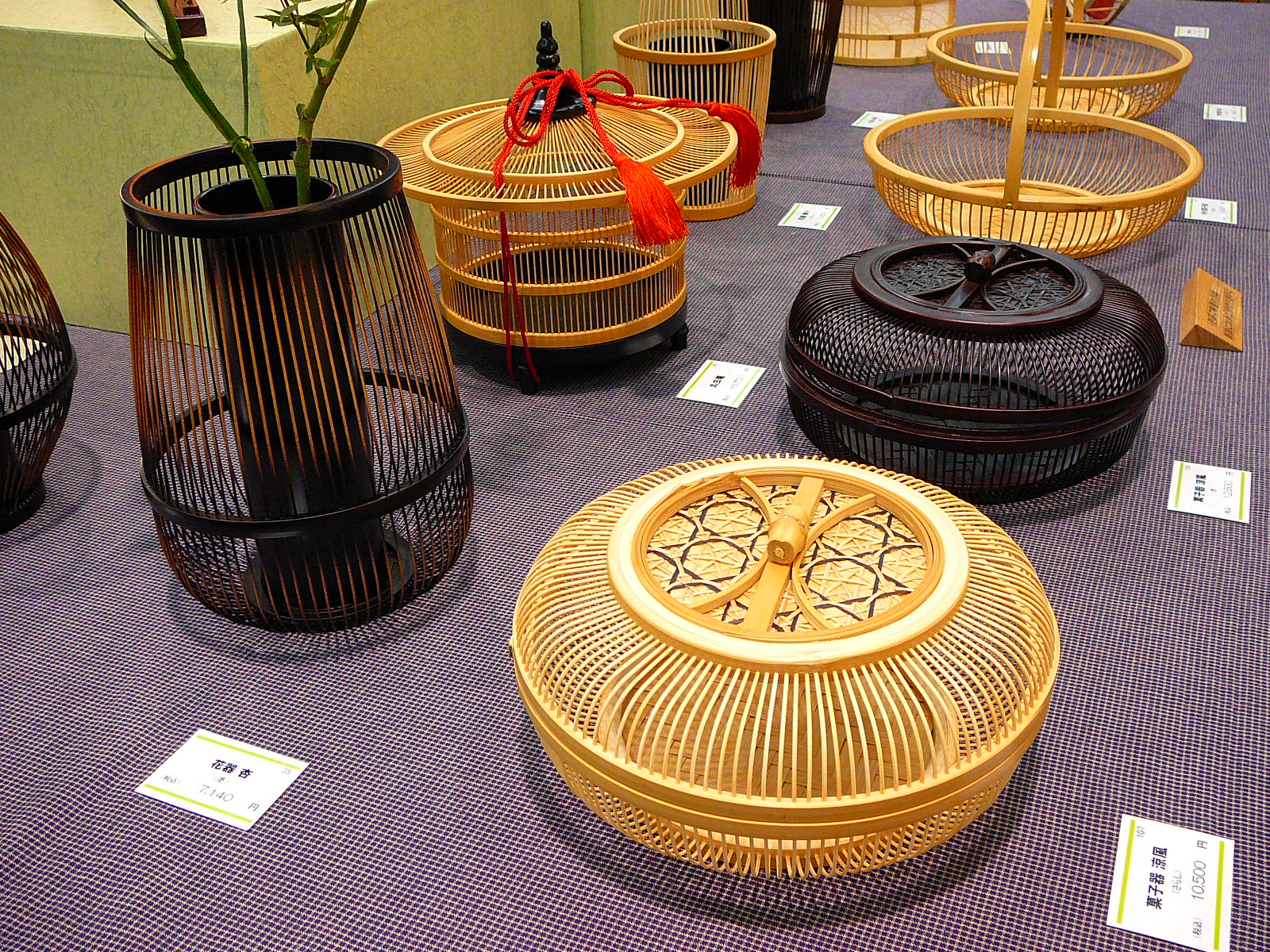
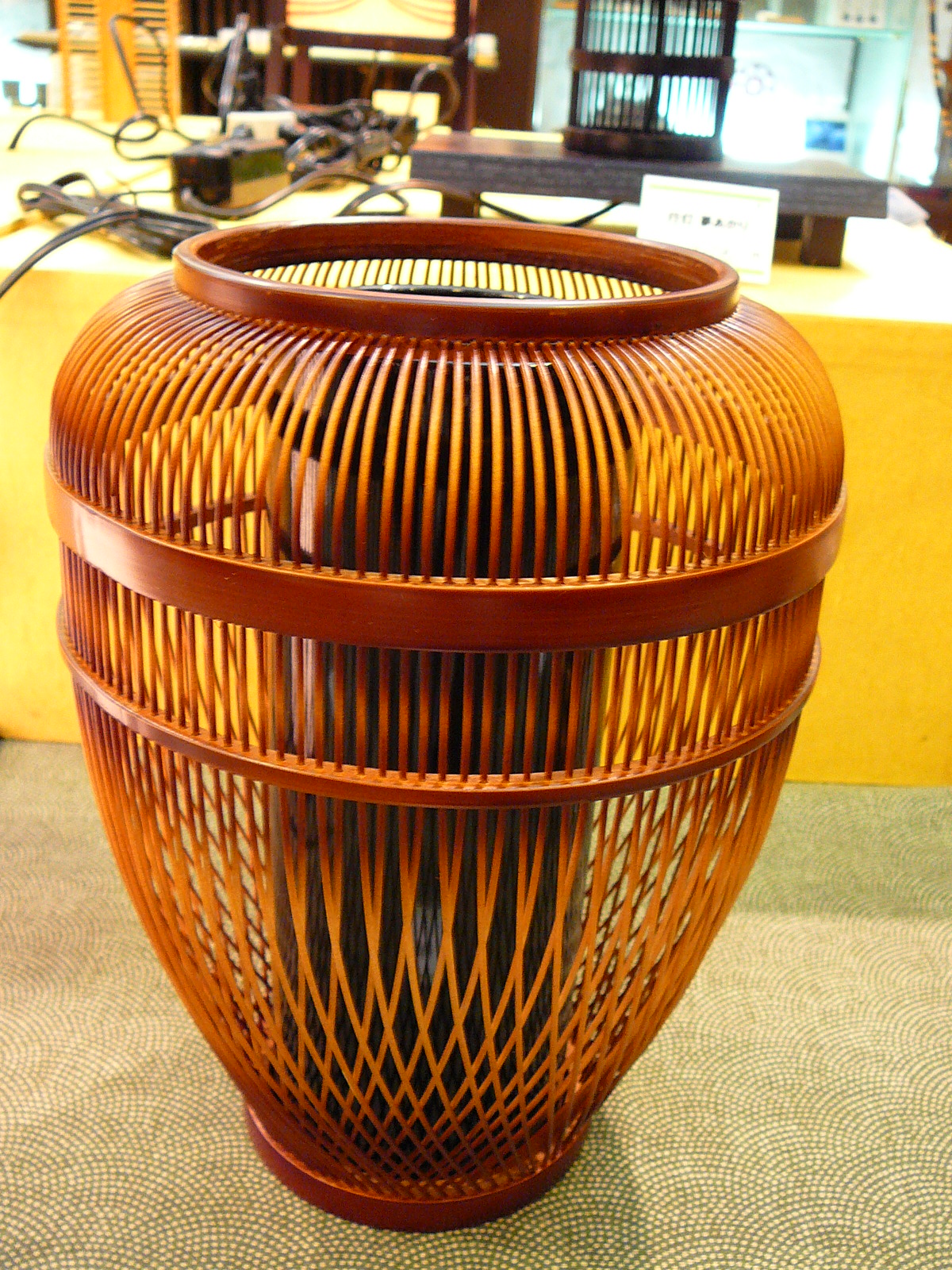
Vase baskets to hold or carry pottery or glass vases, protecting and adding to the aesthetic value of their contents. There are some 80 models of them that can be laid on tables or tokonomas or hung on walls and pillars.
Many exquisite “kaze suzu/風鈴”, or “wind bells” resonating inside very fine bamboo lined balls.
More than 20 cake boxes and trays to serve or preserve Japanese cakes/wagashi.
Beautiful “handbags” lined with hand-dyed cloth.

Insect collectors, especially “suzu mushi/鈴虫/ring-bell cricket” beloved by the Japanese during the hot season, can choose among more than 20 delicately built cages where they can keep and feed their little pets.
Lamp shades (more than 25 of them) can not only make for very utilitarian devices, but also for lovable souvenirs to bring back home as the oriental note in your western abodes.
But my favorite, if I may be allowed a personal comment, are the trays, either made of bent bamboo lines or interwoven bamboo fibers!

Consult their homepage (Japanese) for the entire array and direct purchase at:
http://www/takesensuji.jp/
Visit their guild in Shizuoka City if you wish to be directly introduced to the artists at work:
Shizuoka Takesen Kougei Kyodokumiai, 420-0078, Shizuoka Shi, Aoi Ku, Hachi Bancho, 7-1
Tel.: 054-252-4924
Fax: 054-273-2679

Or if you happen to stop at Shizuoka Station, spare a minute to admire all the art works at Sumpu Raku Ichi Shop!

Adventures in Bento Making, American Bento, Beanbento, Bento No1, Bento Wo Tsukurimashou, Cooking Cute, Eula, Hapabento , Happy Bento, Jacki’s Bento Blog, Kitchen Cow, Leggo My Obento, Le Petit Journal Bento & CO (French), Lunch In A Box, My Bento Box, Vegan Lunch Box; Tokyo Tom Baker, Daily Food Porn/Osaka, Only Nature Food Porn, Happy Little Bento, The Herbed Kitchen, J-Mama’s Kitchen, Cook, Eat, Play, Repeat

Please check the new postings at:
sake, shochu and sushi

—————————————-
日本語のブログ
—————————————-

Shizuoka Bars/Pubs: Grow Stock

Service: very lively and friendly.
Facilities: great cleanliness overall.
Prices: reasonable, good value.
Strong points: Beer from all over the world. Outside terrace. Local microbrewery beer available in some quantities.

Grow Stck is the second establishement of the company running Mando tapas Bar and Cherry Beans diner in Shizuoka City.
It was open in March 2009 and has since become one of the most popular bars ofits kind in town

Although the place can be really crowded at times, it is not that easy to find if it is your first visit in town. Located on the 5th floor of Koyama Naka Building in Koyamachi, one of the drinking areas in Shizuoka City, it is worth exploring the vicinity as they have the advantage of offering a real otdoors terrace:

I took the pic in day time and it does really does it justice. It is a great site to lounge around in the summer (not on rainy or cold days, mind you as it is not covered!) in happy company!

Check the board at the entrance for events and good deals.
Although it is written in Japanese, the Manager, Mr. Ryousuku Ono and his staff will be only too happy to oblige and answer your queries!
The clientele is a good mix of Japanese, young to old, local foreigners who know their beer and guests from both genders who want to enjoy themselves!

As its name clearly indicates, it is a place to savour beer.
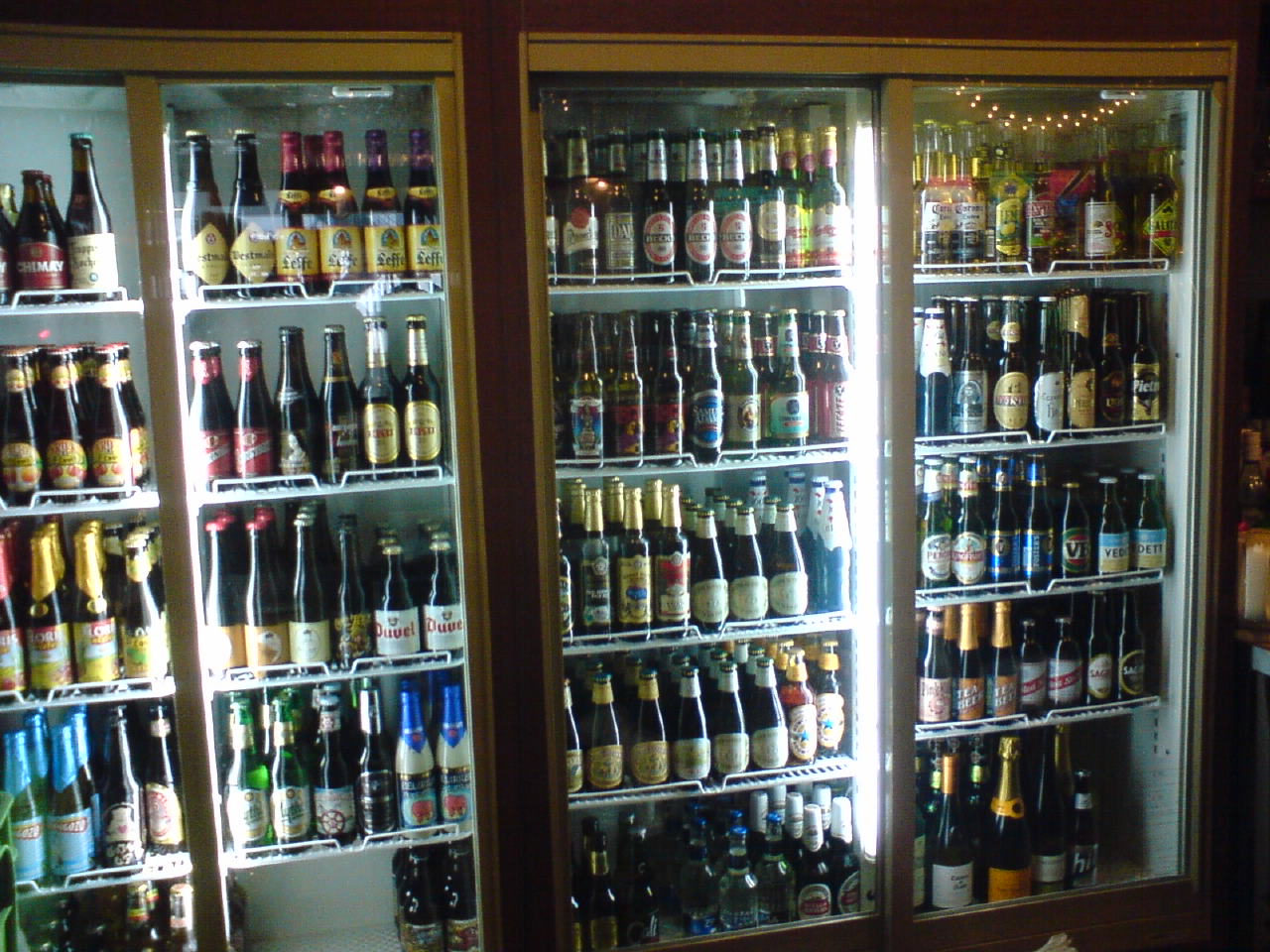
And they have loads of it:
More than a 100 from all over the world in bottles.
7 draft beers.
Local microbrewery beers! Bryan Baird from Numazu City, and as guests (depends on your lucky day!) draft beer from Bayern Meister in Fujinomiya City, Hansharo Beer from Hirayama in Izu Peninsula and Kaze no Tani/Windy Valley by Oratche in Kannami (Misj\hima City)!

Baird Beer come in bottles!

But there is plenty of other drinks for everyone from Scotch/Bourbon, wine/Jizake (Kikuyoi from Fujieda City!) to cocktails and soft drinks!

Sit at the counter and try to recognize the beers!

That is unless you want to hang onto the draft beer handles!

Peruse through the beer book! They even have Pietra beer from French Corsica!

As for the food, no worries whatsoever!
You can either choose it a la carte such as the fish and chips above or as a course.
Apart of the fish and chips, they serve interesting Belgian mussles steamed in Beer, Beef Carbonade, German Pork and Buffalo Chicken Wings.
Check the pasta, pizza and paella of the day.
Vegetarians can order vegetarian salads!

The place can also be parially or completely reserved for parties as it can provide for up to 100 guests! And TV screens will show big events if you are short of reasons to patronize the establishment!

GROW STOCK
420-0852 Shizuoka City, Aoi Ku, Koyamachi Naka Building, 5F
Tel.: 054-293-9331
Opening hours: 17:00~25:00 (Mon.~Thurs.), 17:00~27:00 (Fri & Sat.), 17:00~24:00 (Sun.)
Parties welcome (reserve!)
Credit Cards OK
HOMEPAGE (Japanese)

RECOMMENDED RELATED SITES:
Warren Bobrow, Bread + Butter, Zoy Zhang, Hungry Neko, Think Twice, Frank Fariello, Mangantayon, Hapabento, Elinluv Tidbit Corner, Tokyo Terrace, Maison de Christina, Chrys Niles,Lexi, Culinary Musings, Wheeling Gourmet, Comestiblog, Chronicles Of A Curious Cook, Tokyo Through The Drinking Glass, Tokyo Foodcast, Palate To Pen, Yellin Yakimono Gallery, Tokyo Terrace, Hilah Cooking, More than a Mount Full, Arkonite Bento, Happy Little Bento; 5 Star Foodie; Jefferson’s Table; Oyster Culture; Gourmet Fury; Island Vittles; Good Beer & Country Boys; Rubber Slippers In Italy; Color Food daidokoro/Osaka;/a; The Witchy Kitchen; Citron Et Vanille, Lunsj Med Buffet/Estonian Gastronomy (English), Cook, Eat, Play, Repeat

Please check the new postings at:
sake, shochu and sushi

Vegan Natto Imperial Rolls

You happen to some steamed (cold) rice leftovers?
Great! You just need (made from rice rice powder or wheat flour) imperial roll wrappers, some natto, thi leeks and soy sauce to make a satisfying and crunchy vegan meal!

Vegan Natto Imperial Rolls!

INGREDIENTS: for 10 rolls

-Imperial roll wrappers: 10 sheets
-Natto: 3 standard packs
-Cold steamed rice (leftovers): 1 large bowl (standard rice ball/experiment!)
-Thin leeks (chopped): 3 tablespoons
-Soy sauce: 1 large spoon

Optional: mustard, hot sesame oil, tare, etc…

RECIPE:

-That’s all you need!

-Mix all ingredients well!

-Place an equal amount of the natto-rice mixture in/on themiddle of an imperial wrapper/sheet and roll.
You know how to do it?
Don’t forget to prepare a little cornstarch dissoled in lukewarm water to seal the rolls!

-Deep-fry in good oil!

Simple again!

RECOMMENDED RELATED SITES:
Warren Bobrow, Bread + Butter, Zoy Zhang, Hungry Neko, Think Twice, Frank Fariello, Mangantayon, Hapabento, Elinluv Tidbit Corner, Tokyo Terrace, Maison de Christina, Chrys Niles,Lexi, Culinary Musings, Wheeling Gourmet, Comestiblog, Chronicles Of A Curious Cook, Tokyo Through The Drinking Glass, Tokyo Foodcast, Palate To Pen, Yellin Yakimono Gallery, Tokyo Terrace, Hilah Cooking, More than a Mount Full, Arkonite Bento, Happy Little Bento; 5 Star Foodie; Jefferson’s Table; Oyster Culture; Gourmet Fury; Island Vittles; Good Beer & Country Boys; Rubber Slippers In Italy; Color Food daidokoro/Osaka;/a; The Witchy Kitchen; Citron Et Vanille, Lunsj Med Buffet/Estonian Gastronomy (English), Cook, Eat, Play, Repeat

Please check the new postings at:
sake, shochu and sushi

Vegan Yuzu Sherbet

In these hot days of summer, yuzu are abundant and make for simple and great desserts.
Here is a very simple recipe that should please vegans and friends with special needs!

Vegan Yuzu Sherbet!

INGREDIENTS:

-Yuzu: 2 small
-Sufar: 80 g
-Lemon juice: a little
-Warm water: 1 cup/200 cc/ml

RECIPE:

-Grate the skin/zest of the first yuzu. Peel just enough of the skin/zest of the second yuzu and cut into thin thin strips (for decoration).
Press the juice off both yuzu.

-Dissolve the sugar completely in the warm water. Add yuzu juice and a little lemomn juice.

-Let cool completely. Pour ininside a Tupperware and leave inside the freezer for 2 hours. Take out 2~3 times and break and mix around with a spoon.

-When it has reached the wanted state, serve it in a bowl of your choice with yuzu peel and some fresh mint for decoration!

Easy, ain’t it?

RECOMMENDED RELATED SITES:
Warren Bobrow, Bread + Butter, Zoy Zhang, Hungry Neko, Think Twice, Frank Fariello, Mangantayon, Hapabento, Elinluv Tidbit Corner, Tokyo Terrace, Maison de Christina, Chrys Niles,Lexi, Culinary Musings, Wheeling Gourmet, Comestiblog, Chronicles Of A Curious Cook, Tokyo Through The Drinking Glass, Tokyo Foodcast, Palate To Pen, Yellin Yakimono Gallery, Tokyo Terrace, Hilah Cooking, More than a Mount Full, Arkonite Bento, Happy Little Bento; 5 Star Foodie; Jefferson’s Table; Oyster Culture; Gourmet Fury; Island Vittles; Good Beer & Country Boys; Rubber Slippers In Italy; Color Food daidokoro/Osaka;/a; The Witchy Kitchen; Citron Et Vanille, Lunsj Med Buffet/Estonian Gastronomy (English), Cook, Eat, Play, Repeat

Please check the new postings at:
sake, shochu and sushi

Walking to the Izakaya the Japanese Way: Geta/Japanese Clogs

Not so long ago, the sound of wooden clogs (geta/下駄 in Japanese) could still be heard at any time of the day and night in any season in cities as well as in the countryside.
This is still mentioned as one of the sounds that older Japanese miss most in modern life. A traditional saying in Japanese says that “You do not know until you have worn geta.” meaning that you cannot tell the results until the game is over.
Chefs were wearing them at work inside izakayas and sushi restaurants. Now they wear graceless white vinyl boots.
Interestingly enough, by ignoring geta in favor of Western footwear, the Japanese are not doing a favour to their own health. Instead of being constricted inside shoes with the consequent skin problems during the rainy season and sweaty socks to wear with them, geta allow free movement of the feet in the most natural environment. Contrary to belief, walking with the skin in direct contact with a wooden or lacquered surface does keep the feet at a comfortable temperature, even in the snow.
Moreover, good Japanese-made geta cost an average of 5~6,000 yen (50~60 US dollars), which make them cheaper and far more durable than Western shoes! They can be easily worn day in day out for up to 10 years according to traditional makers in Shizuoka Prefecture!
The great majority of modern geta are made abroad, especially in China these days but traditional manufacture still survives in Japan.
The City of Fukuyama in Hiroshima Prefecture produces 60% of the national output. Hida City in Oita Prefecture is also a major producer.
Traditional and high quality geta are especially made in Fukushima, Nagano, Niigata, Akita and Shizuoka Prefectures.

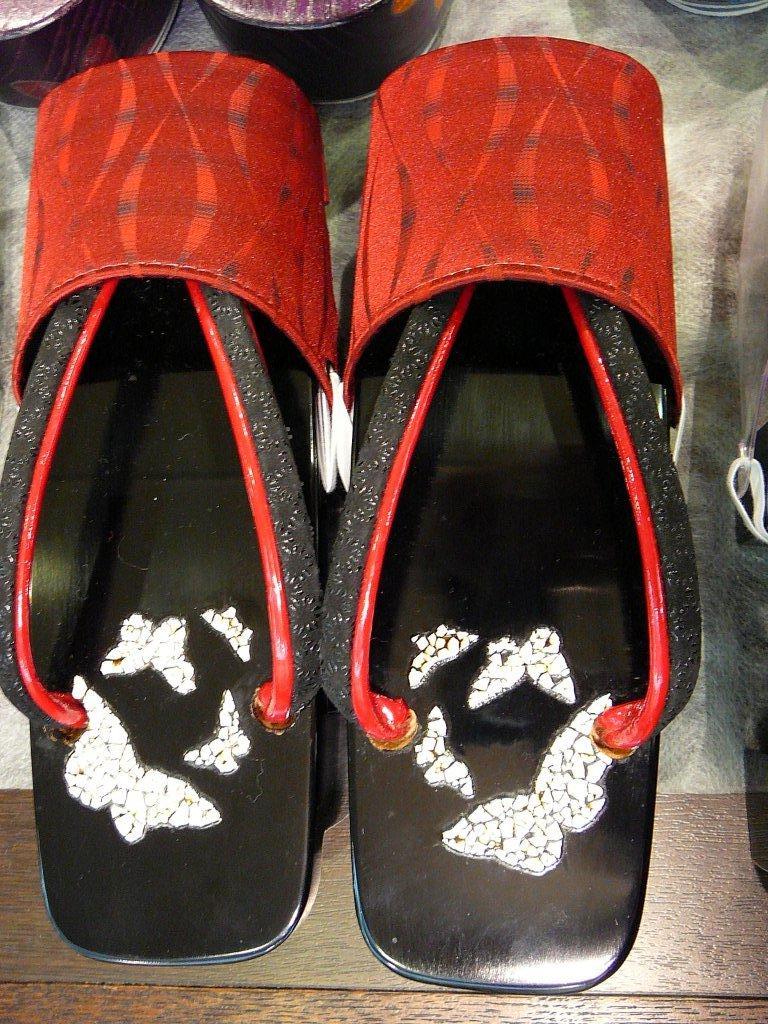
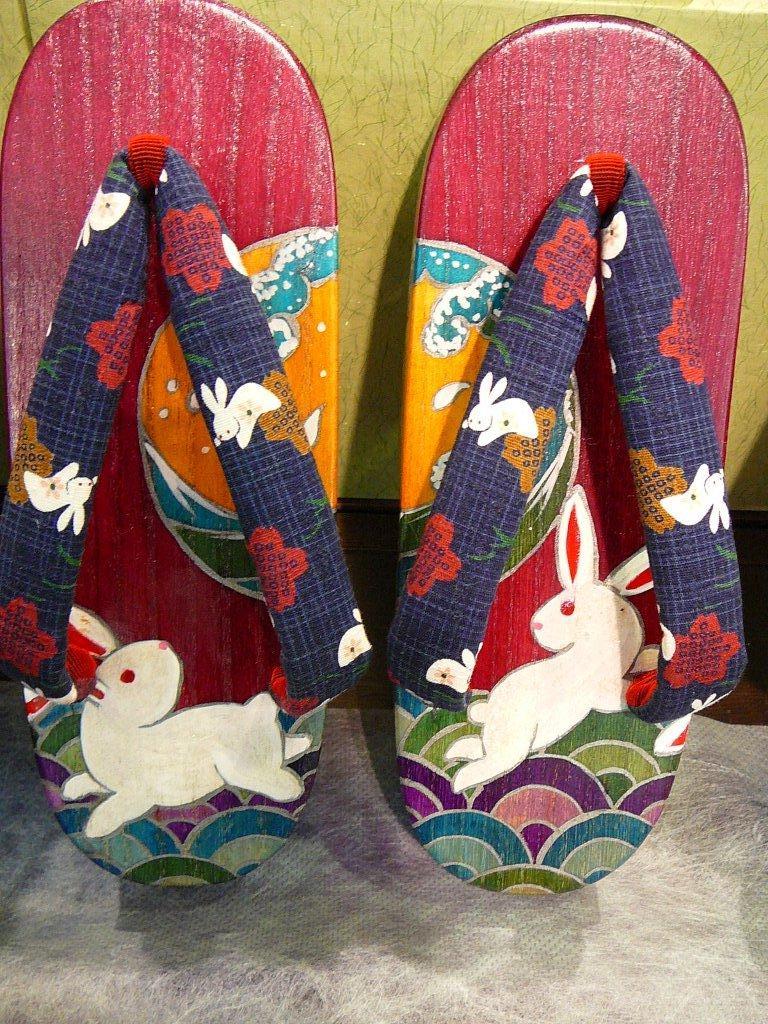
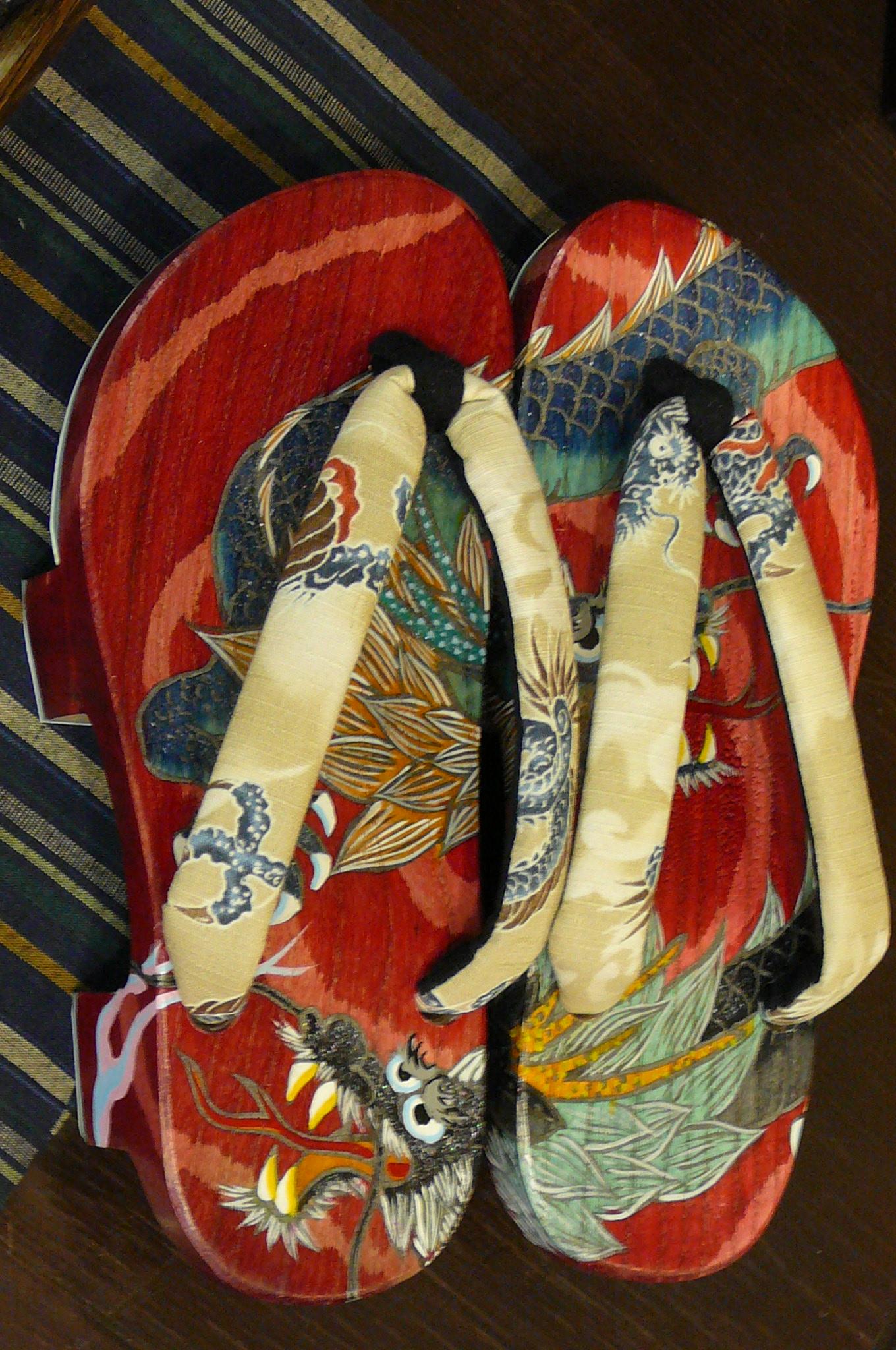
Geta are sometimes called wooden clogs in English because of their resemblance wit clogs and flip-flops. One could describe them as a kind of elevated wooden base held onto the foot with a fabric thong to keep well above the ground. They are worn with traditional Japanese clothing such as kimono or yukata but (in Japan) also with Western clothing during the summer months. One can still see people wearing them in rain or snow to keep the feet dry, dur to their extra height and impermeability compared to other shoes such as zori.
There are several styles of geta. The most familiar style in the West consists of unfinished wooden board called a dai (台, stand) that the the foot is set upon, with a cloth thong (鼻緒, hanao) that passes between the big toe and second toe. Although there is no need to wear socks, apprentice geisha (also called “maiko”) wear their special geta with tabi (Japanese socks) to accommodate the hanao.

Ladies will often add a protective cap called tsumakawa (爪掛) to protect their toes from the rain or mud in inclement weather.
The supporting pieces below the base board, called teeth (歯, ha), are also made of wood. Cheap clogs are made with cedar wood (杉, sugi), whereas high-quality geta are made of very light-weight paulownia (桐, kiri) imported from Northern Japan.
The teeth are usually made separately and fixed to the base board later (Funageta/船下駄), whereas more valuable geta will be carved out of a single block called (Okaku/大角).
Although great craftsmen are becoming scarce (there are only five recognized in Shizuoka Prefecture in spite of their fame), geta can and usually are suggested to be made on order, so as to perfectly “fit the feet” of its wearer.
Such footwear is becoming increasingly popular abroad where more and more people have recognized not only their practical, health and ecological values, but also for their decorative and fashion merits.

The dai may vary in shape: oval and narow for ladies to rectangular and wide for men as well as in color: natural (harigeta/張下駄), lacquered (nurigeta/塗り下駄) or stained.
The teeth of any geta may have harder wood drilled into the bottom to avoid splitting, and the soles of modern clogs of the teeth may have rubber soles glued to them.
The hanao can be wide and padded, or narrow and hard, and it can be made with many fabrics Printed cotton with traditional Japanese motifs is popular. Inside the hanao is a cord (recently synthetic, but traditionally hemp) which is knotted in a special way to the three holes of the dai. The hanao are replaceable, although breaking the thong of one’s geta is considered very unlucky!
Maiko in Kyoto wear distinctive tall geta called okobo. Also very young girls wear “okobo”, also called “pokkuri” and “koppori”, that have a small bell inside a cavity in the thick “sole”/dai. These geta have no teeth but are formed of one piece of wood. They are carved in such a way as to accommodate for walking.
Japanese professional sumo wrestlers in the lowest wo divisions of Jonokuchi and Jonidan must wear geat with their yukata at all times!

Various types of geta for the true collectors! (this list is far from exhaustive!):
-Sokugeta/足駄: real antiques as these were worn between the Heian Era and Edo Era! They became the symbolic footwear of students in meiji Era
-Yama Geta/山下駄: Square mountain Clogs made of paulownia wood and worn at the beginning of Edo Era. When made with cedar pine wood, they are called Yoshiwara geta/吉原下駄 as revellers in the Yaoshiwara Distritc used them on rainy days.
-Pokkuri Geta/ぽっくり下駄 worn by maiko, geisha and young girls, generally higher and decorated with golden motifs.
-Robou/露卯, Yanagi Geta柳下駄 worn in the early Edo Era.
-Uma Geta/馬下駄, square and made of cedar pine wood. “Horse Clogs”, called so because they sound like horse’s hooves on paved streets.
-Koma Geta/駒下駄, most common all-weather clogs until before the Meiji Era.
-Kiri Geta/桐下駄, high-quality expensive clogs made of paulownia wood. Originally finished with black lacquer.
-Odawara Geta/小田原下駄, very popular among harbor workers and fishermen in the 18th Century in spite of their high price.
-Ippon Geta/一本下駄 or Tengu Geta/天狗下駄, a clog with only one ha/歯/”tooth”. Both worn by kids and adults.
-Taka Geta/高下駄, very high clogs
-Bankara/バンカラ/Narrow clogs with high teeth, popular with older time students.

Recommended manufacture/display center:
Suruga Nuri Geta (駿河塗下駄) (designated by the Shizuoka Prefecture Government)
420-0047, Shizuoka City, Aoi Ku, Seikancho, 9-22
Tel. & fax: 054-253-4917
Homepage: http://www.shizuoka-kougei.jp/009.html (Japanese)

RECOMMENDED RELATED SITES:
Warren Bobrow, Bread + Butter, Zoy Zhang, Hungry Neko, Think Twice, Frank Fariello, Mangantayon, Hapabento, Elinluv Tidbit Corner, Tokyo Terrace, Maison de Christina, Chrys Niles,Lexi, Culinary Musings, Wheeling Gourmet, Comestiblog, Chronicles Of A Curious Cook, Tokyo Through The Drinking Glass, Tokyo Foodcast, Palate To Pen, Yellin Yakimono Gallery, Tokyo Terrace, Hilah Cooking, More than a Mount Full, Arkonite Bento, Happy Little Bento; 5 Star Foodie; Jefferson’s Table; Oyster Culture; Gourmet Fury; Island Vittles; Good Beer & Country Boys; Rubber Slippers In Italy; Color Food daidokoro/Osaka;/a; The Witchy Kitchen; Citron Et Vanille, Lunsj Med Buffet/Estonian Gastronomy (English), Cook, Eat, Play, Repeat

Please check the new postings at:
sake, shochu and sushi

Shizuoka Agricultural Products: Shizuoka Miwa Agriroad (revisited)

As I’m starting writing articles on farming for the local government who have recently decided to promote farming on a grand scale, I thought it was about time to have a deeper look at Agriroad, one of the many local markets run by local farmers associations, notably farmers’ wives.

It is not big by any standards, but the local know you will find products of great quality and freshness as they start queuing up well before 9:30 a.m. when the market opens!

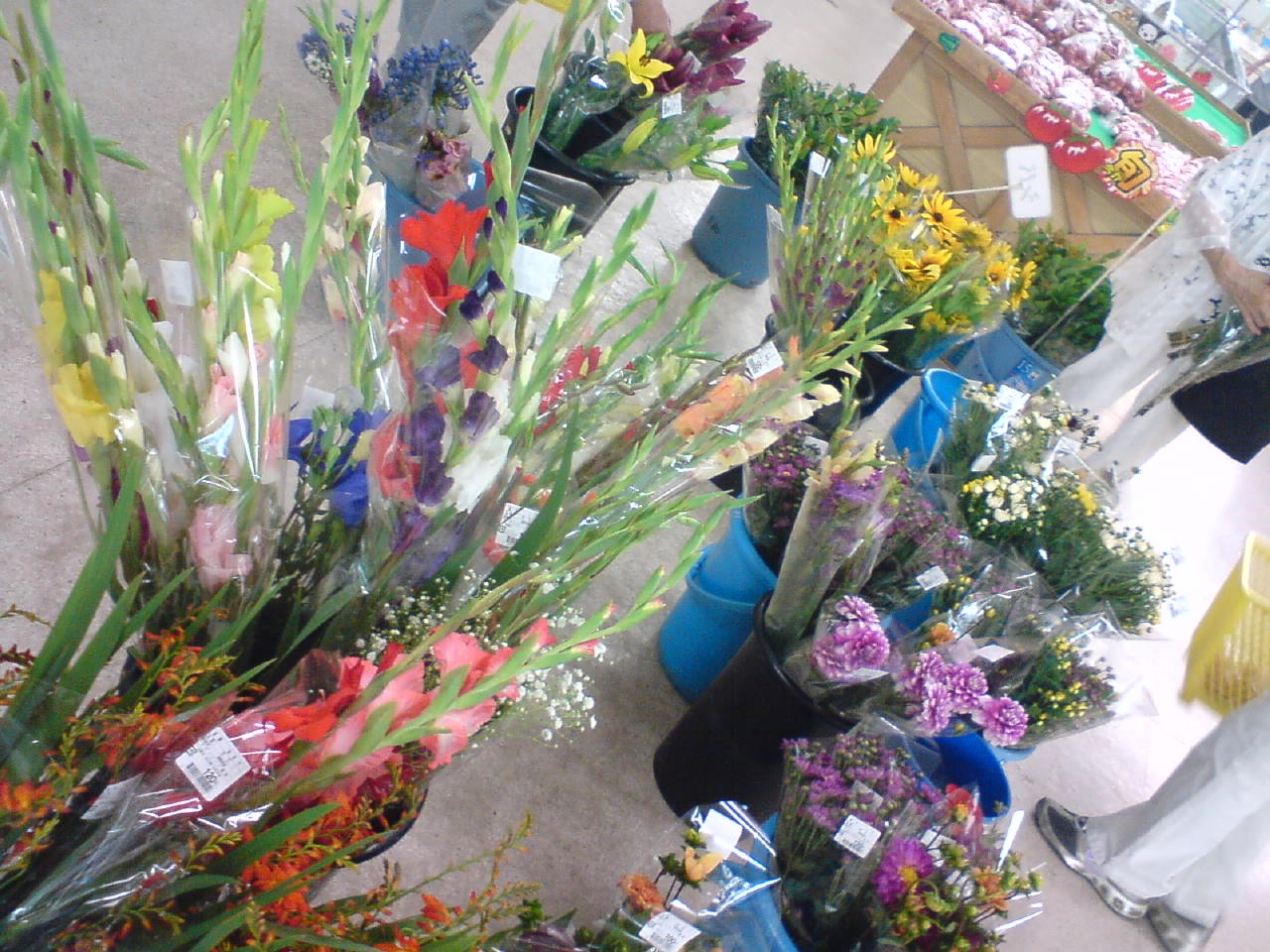
It is not all about food! And I can assure all those beautiful flowers, cut moments before, disappear very quickly!

First things first. I know that I will have a few minutes to spare before all the best morsels vanish from view!
Basket in hand I hunt along the venerable ladies and gentlemen sent by their families to grab food for their home pots! I can talk to peple and take photographs later!
Those round yellow zucchini were soon hidden at the bottom of my basket.

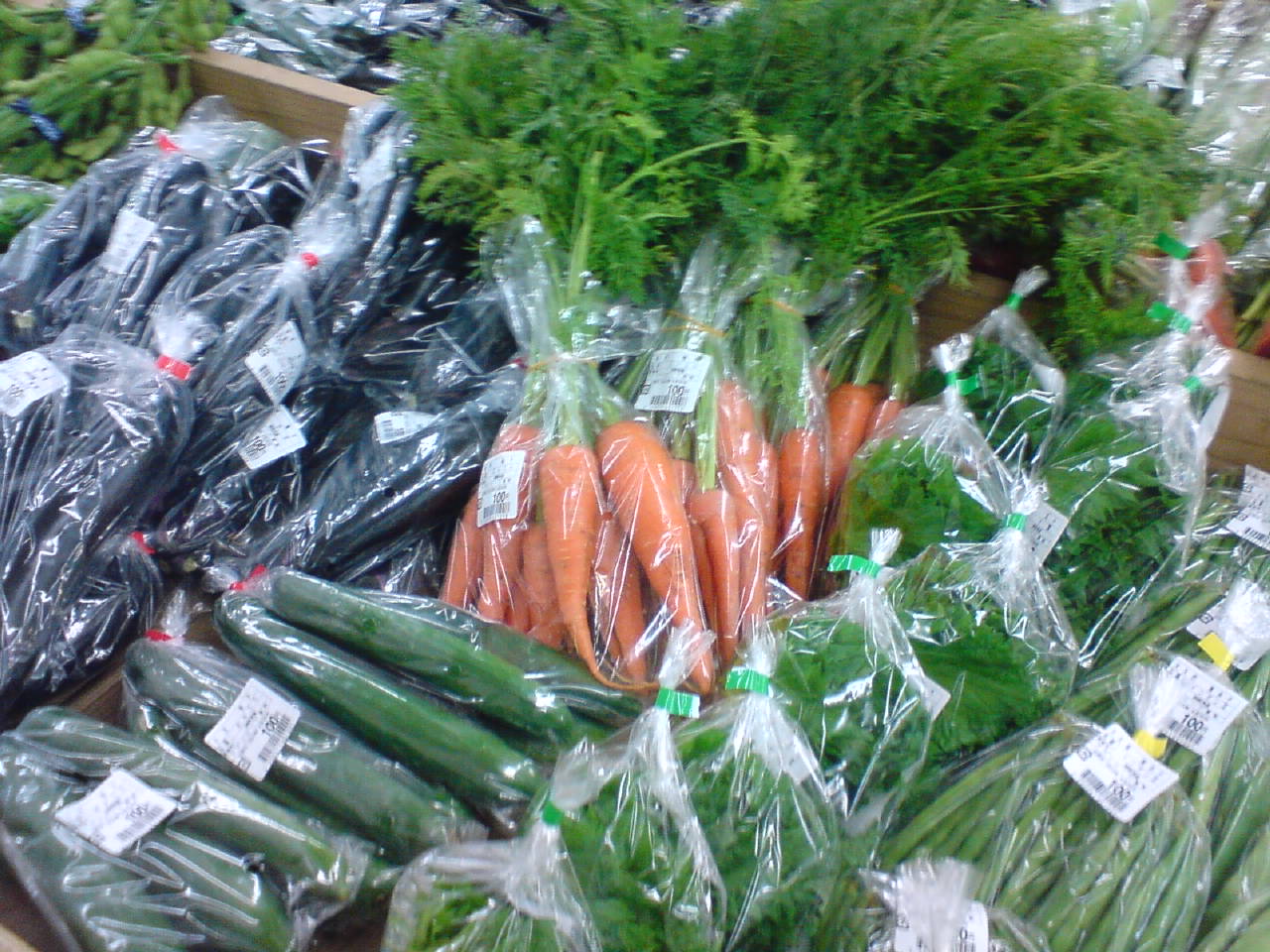
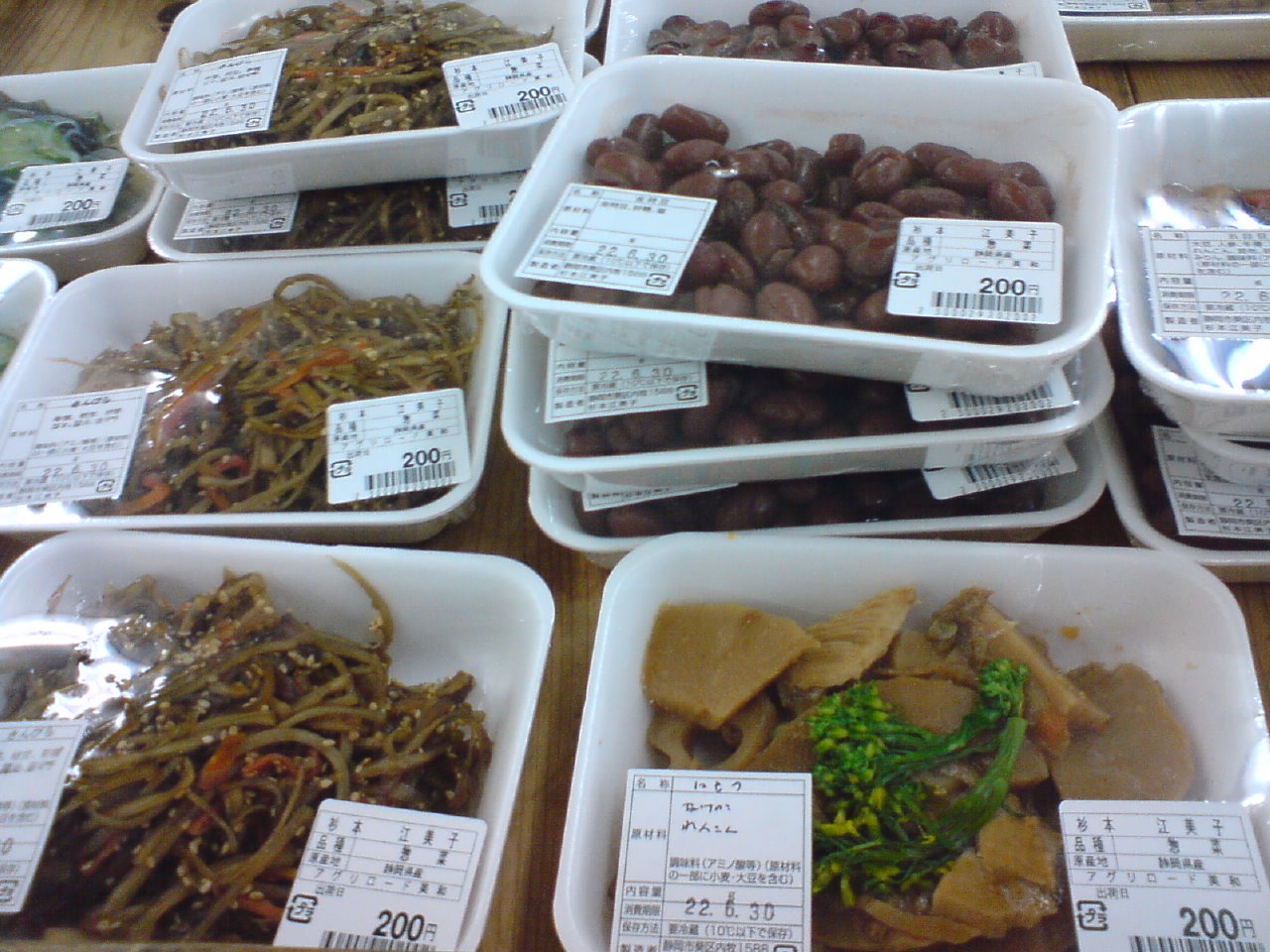
All vegetables bear the name of their grower and the sale date limit and (ridiculously) cheap prices! Most are organic, too!

Benihoppe/red cheeks strawberries, a strain first grown in Shizuoka in 2002!

Italians are welcome with all these sweet tomatoes!

My good friend, Mres. Natsuko Koyanagi, preparing Yomogu Kintsuba cakes, a vegan treat!

My students took care of these later!

Traditional Japanese sugar cakes (vegan!) prepared by some of the 100+ members!

Great jams made with local fruit and no additives or preservatives!

Japanese home-made cheese cakes!

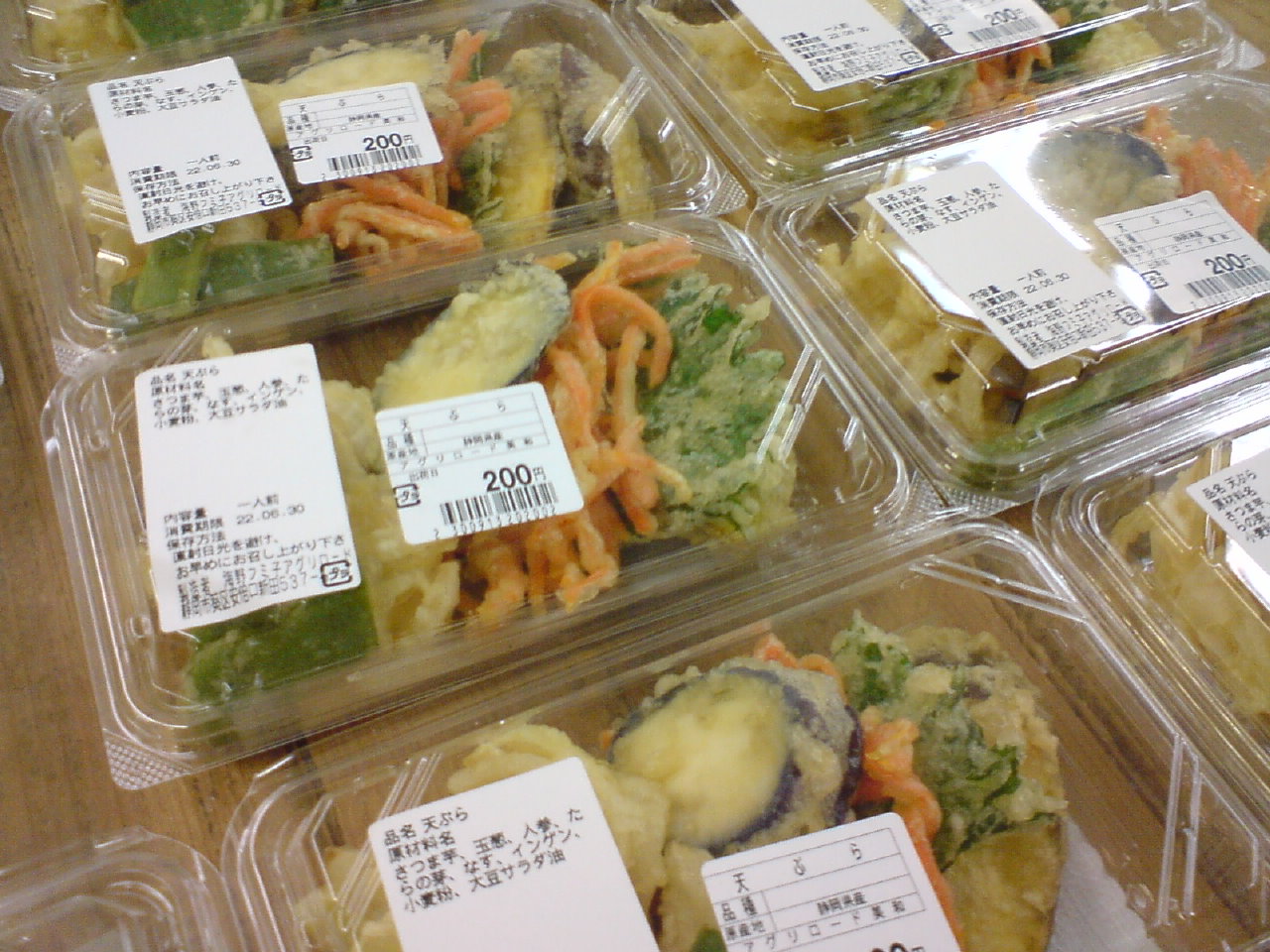
No need to cook at home. Take these yummy tempura back home! All labelled with the name of their creator and all ingredients used!

More food for vegans!

Would you believe that these tradtional Japanese desserts qualify as vegan!

These are the vegetables I bought for an izakaya owner friend of mine:
3 yellow round zucchini, 1 bunch of fresh young carrots, 2 bunches of Hatsuka Daikon (“Twenty Days Daikon), 1 bunch of gobo/burdock root, all organic.

How much?
4 US $!

Shizuoka Miwa Agriroad (JA)
〒421-2114 Shizuoka Shi, Aoi Ku, Abeguchishinden, 537-1.
Tel.: 054-296-7878.
Fax: 054-296-7878
Business hours: 09:30~15:30 (from 08:30 on Saturday, Sunday and Holidays)

RECOMMENDED RELATED SITES:
Warren Bobrow, Bread + Butter, Zoy Zhang, Hungry Neko, Think Twice, Frank Fariello, Mangantayon, Hapabento, Elinluv Tidbit Corner, Tokyo Terrace, Maison de Christina, Chrys Niles,Lexi, Culinary Musings, Wheeling Gourmet, Comestiblog, Chronicles Of A Curious Cook, Tokyo Through The Drinking Glass, Tokyo Foodcast, Palate To Pen, Yellin Yakimono Gallery, Tokyo Terrace, Hilah Cooking, More than a Mount Full, Arkonite Bento, Happy Little Bento; 5 Star Foodie; Jefferson’s Table; Oyster Culture; Gourmet Fury; Island Vittles; Good Beer & Country Boys; Rubber Slippers In Italy; Color Food daidokoro/Osaka;/a; The Witchy Kitchen; Citron Et Vanille, Lunsj Med Buffet/Estonian Gastronomy (English), Cook, Eat, Play, Repeat

Please check the new postings at:
sake, shochu and sushi

Vegan Sashimi at Yasaitei (2010/06/30)

Service: Excellent and very friendly
Facilities: very clean
Prices: reasonable
Specialty: Vegan and vegetarian Cuisine, Izakaya gastronomy, local products, oden.

The summer has come to Shizuoka with a vengeance after an unseasonably cool period. One has problems making and devising food and meals for such a period. It is when you have to think of a higher fluid/water and vitamin intake to complement your “usual” diet/eating prctices.

This is when fresh vegetables are vital!
Luckily enough, Shizuoka Prefecture is the most blessed region in Japan when it comes to varieties and quality.

Just go arond the innumerable small markets in town and suburbs and you will rediscover the riot of colours at Yasaitei, which almost exclusively serve local produce!

Do not forget that mushrooms can play a vital role in your diet!

One knows very quickly where all these beauties come from: Green asparaguses from Hokkaido!

I had a long day both indoors and outdoors yesterday, and I was literally dehydrated when I entered my favourite izakaya.
The fresh colours of yuba/tofu sheets served with grated Shizuoka wasabi and thinly shredded leek were a balm on my eyes and body.
With a glass of Doman rice shochu from Tenjigura-Hamamatsu Brewery, I could patiently wait for my vegetable sashimi order!

Just a little soy sauce with it, nothing else!

A side view of the picture at the top of this posting.

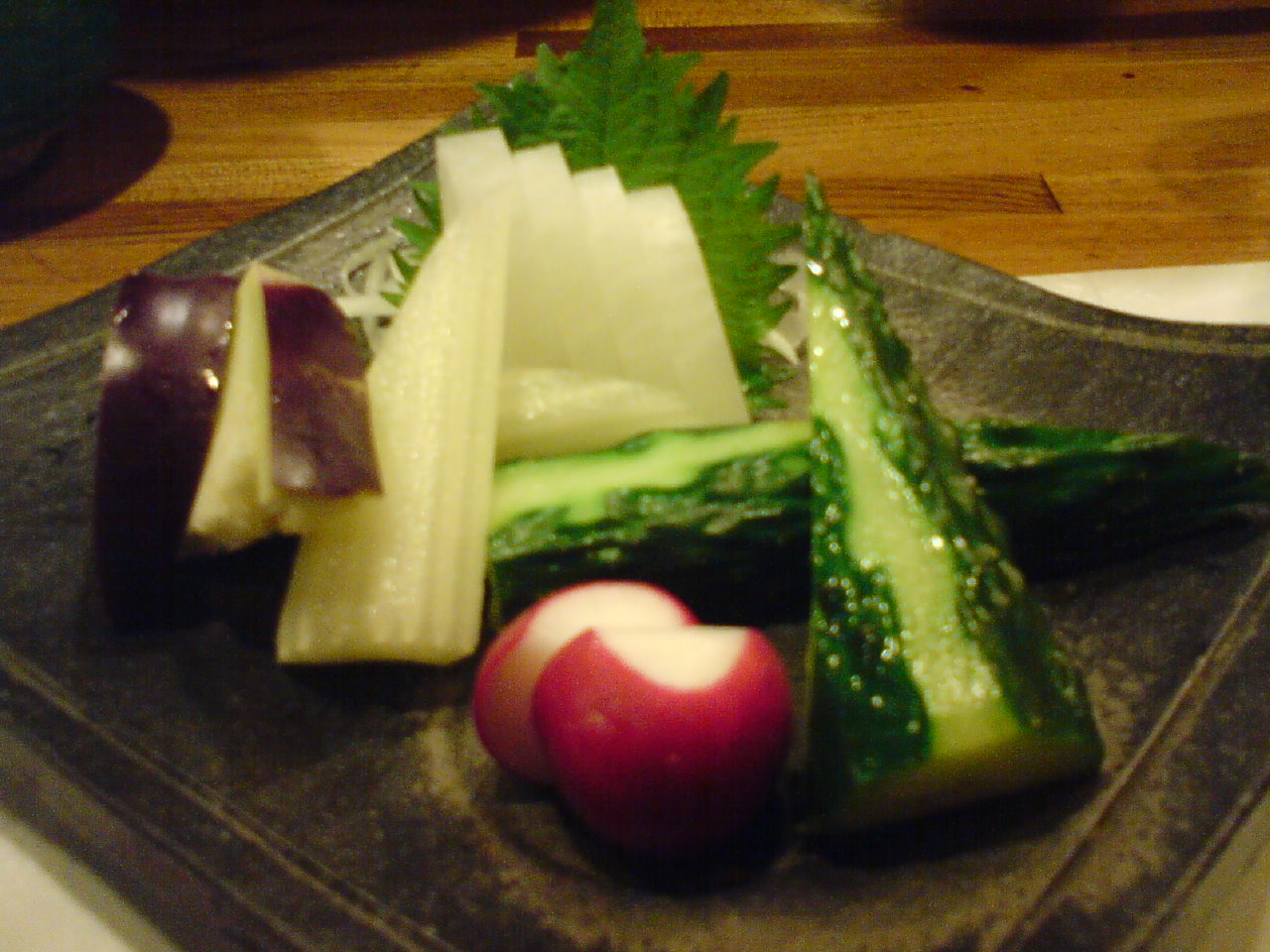
A slanted view to show the mizu nasu/water egg plant, a Japanese variety that is best eaten raw, cruchy celery, crunchy (and so juicy) daikon on shiso, perilla leaf atop chopped onions, crunchy and juicy (again) cucumber and small radish!
The dressing/dip consisted as usual of fine salt, miso paste and sesame oil!

I finish my quick snack/meal with a corn cream and fresh carrot combination. Does not qualify as vegan, but certainly does as vegetarian!

YASAITEI
Shizuoka City, Aoi Ku, Tokiwa-Cho, 1-6-2 Green Heights Wamon 1-C
Tel.: 054-2543277
Business hours: 17:30~22:00
Closed on Sundays
Reservations highly recommended
Seating: 6 at counter + 20 at tables
Set Courses: 3,000, 4,000, 5,000 yen
HOMEPAGE (Japanese)

RECOMMENDED RELATED SITES:
Warren Bobrow, Bread + Butter, Zoy Zhang, Hungry Neko, Think Twice, Frank Fariello, Mangantayon, Hapabento, Elinluv Tidbit Corner, Tokyo Terrace, Maison de Christina, Chrys Niles,Lexi, Culinary Musings, Wheeling Gourmet, Comestiblog, Chronicles Of A Curious Cook, Tokyo Through The Drinking Glass, Tokyo Foodcast, Palate To Pen, Yellin Yakimono Gallery, Tokyo Terrace, Hilah Cooking, More than a Mount Full, Arkonite Bento, Happy Little Bento; 5 Star Foodie; Jefferson’s Table; Oyster Culture; Gourmet Fury; Island Vittles; Good Beer & Country Boys; Rubber Slippers In Italy; Color Food daidokoro/Osaka;/a; The Witchy Kitchen; Citron Et Vanille, Lunsj Med Buffet/Estonian Gastronomy (English), Cook, Eat, Play, Repeat

Please check the new postings at:
sake, shochu and sushi

Vegan Japanese Dessert: Yomogi Kintsuba/”Mugwort Sabre Guard”

I visited JA (Japan Agriculture) Agriroad Supermarket in Miwa, Aoi Ku, Shizuoka City this morning. Good exercise, as it is a 40-minute bicycle ride from my home up along the Abe River!

I had the pleasure to meet an old acquaintance, Mrs. Natsuko Koyanagi who works there on Wednesdays.
Actually she is one of the 15 out of a total of over 100 members of Agri Road working in shifts at the JA Agriroad Supermarket. All members are local farmer housewives who decided to form this association with subsidies from the Japan Agriculture Ministry as a “side business” to contribute to their husbands’ earnings. They grow their own food, flowers and cook take-away meals all sold at that supermarket. There are quite a few more in this city, all with a different name, but sharing the same purpose.

her specialty is making “Yomogi kin Tsuba” every Wednesday morning.
And I can tell you these do not stay long as they are freshly made in fornt of the customers who very often make personal orders through the phone early in the morning when she is prparing the batter and the sweetmeats!

Yomogi is mugwort.
Not to be confused with tujone, which was used to make the “Green Fairy”, aka Absinthe, which is now prohibited in its origanl form.
Mugwort grows almost everywhere in Japan and has been used as food and medicinal herb since immemrial times.
It is particularly rich in palmitic acid, oleic acid, linoleic acid, Vitamin A, B1 and B2!
It is particularly popular as tempura and cakes.
It is first crushed and worked into a paste before being mixed with water and flour.
Now, Mrs. Koyanagi uses only “Chikona wheat flour”, that is flour from wheat only grown and ground locally ensuring for the best quality and back tracing.
Moreover, she makes her own anko/sweetmeats with strictly locally-grown azuki beans and sugar.
Nothing else! I can assure you that vegans couls feed on them all day!LOL

Now, why the name “kintsuba”?
Kintsuba means sword guard. It has three openings, the middle one for the blade, the other two for the pins to secure the same blade and guard together.

As explained above, Mrs. Koyanagi prepares her own batter to a sticky paste, solid enough to be able to wrap it around a ball of anko.
She will then drop the cake on a hot plate (coated with a little oil) and press it with her three middle fingers so as to attain the shape of a sword guard!
Important note: Mrs. Koyanagai wears medical gloves during the whole operation.
Actually, one more reason she makes these cakes is because she receives the visit of many Nepalese through her charity work abroad. As her Asian friends are most of the time strict vegetarians, it becomes a double pleasure for her to feed them!

Incidentally, yomogi kintsuba was a very popular cake with the samurais of old times!

RECOMMENDED RELATED SITES:
Warren Bobrow, Bread + Butter, Zoy Zhang, Hungry Neko, Think Twice, Frank Fariello, Mangantayon, Hapabento, Elinluv Tidbit Corner, Tokyo Terrace, Maison de Christina, Chrys Niles,Lexi, Culinary Musings, Wheeling Gourmet, Comestiblog, Chronicles Of A Curious Cook, Tokyo Through The Drinking Glass, Tokyo Foodcast, Palate To Pen, Yellin Yakimono Gallery, Tokyo Terrace, Hilah Cooking, More than a Mount Full, Arkonite Bento, Happy Little Bento; 5 Star Foodie; Jefferson’s Table; Oyster Culture; Gourmet Fury; Island Vittles; Good Beer & Country Boys; Rubber Slippers In Italy; Color Food daidokoro/Osaka;/a; The Witchy Kitchen; Citron Et Vanille, Lunsj Med Buffet/Estonian Gastronomy (English), Cook, Eat, Play, Repeat

Please check the new postings at:
sake, shochu and sushi

French Cuisine: Lunch at Tetsuya Sugimoto (new formula)

Service: personal and very friendly
Facilities: great washroom, great cleanliness overall
Prices: reasonable, good value.
Strong points: Very fresh local ingredients extensively used. Seasonal ingredients of the best quality only.
no-smoking-logoentirely non-smoking!

Since the beginning of June, Tetsuya Sugimoto has re-started with the formula he had so much success with in his former restaurant: a one-man (solo) show!
Tell the truth, he was more or less forced to do it, but he admits that he is quite happy as things are now. After all, his clients are slow food fans in the broadest sense!

On the blackboard outside the prices have been done without. Only the new arrivals of the day are featured: Vegetables from Mr. Yano (Hamamatsu City), Bio Farm Satsuki (Fujinomiya City), Mikatahara Kaneko (Hamamatsu City), Suzuki Noen (Hamamatsu City), Milk Lamb from Iida Bokujyo (Hamamatsu City),….

The Menu has also dispensed with set menus and the like,
Actually, the best way to order your repast is to consult Mr. Sugimoto and either give him a budget to work with, or ask him to arrange this and that. The guests and the chef devise the meal together, a rarity in Japan!

As for the seating the 7 tables seating two each can be arranged in any pattern thanks to white partitions ensuring privacy if needed. The latter can be taken out quickly in case of a party.

5 can sit at the counter, my favourite place when coming alone.
It allows me to stand up any time and chat with the chef while he is cooking!

Although Mr. Sugimoto is a bit shy, he will gladly let you take pictures if you ask nicely!

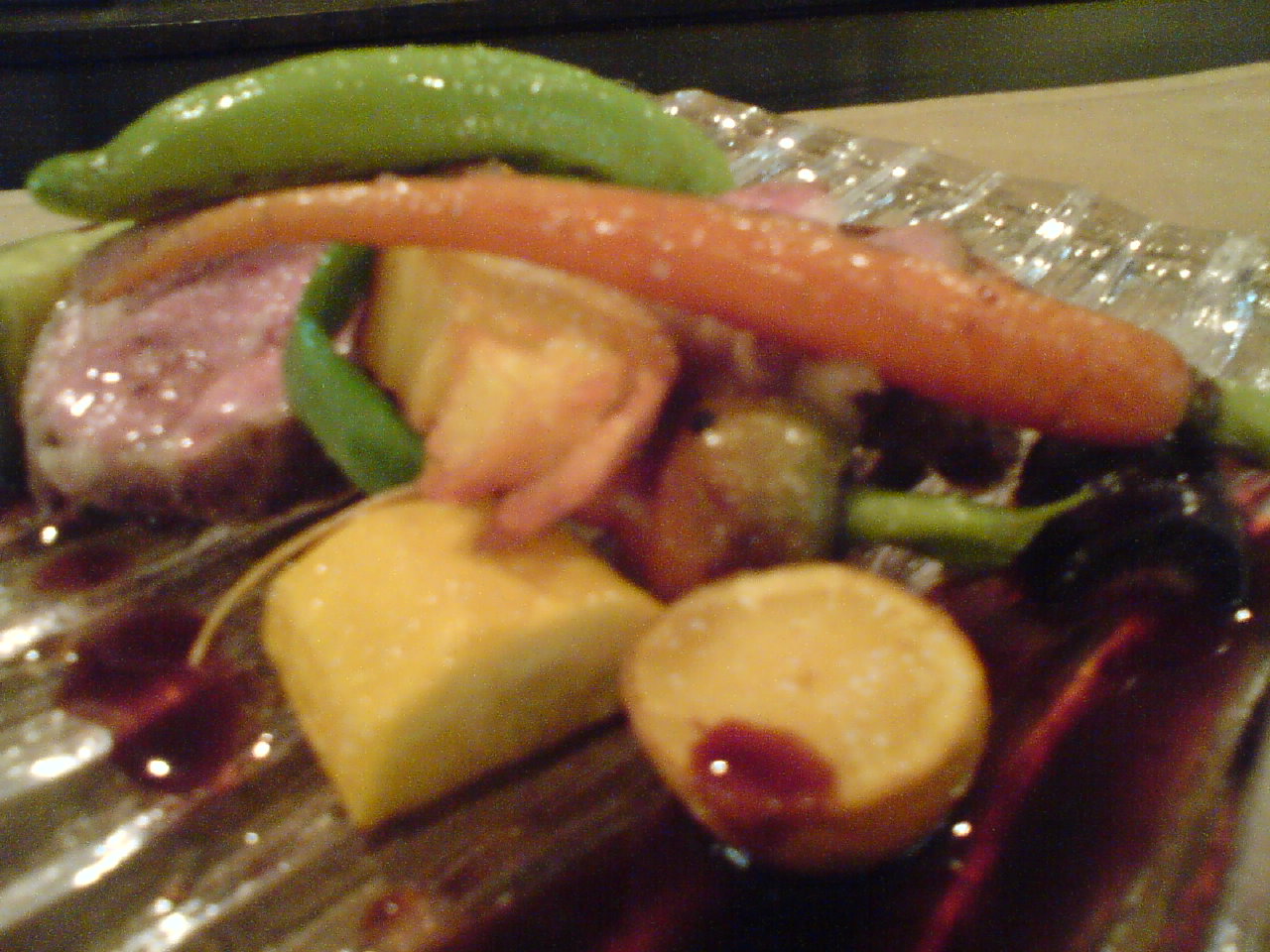
Here are the vegetables we had agreed on to go with the meat.
All are from Shizuoka Prefecture, except the dark carrots from Hokkaido.

The meat was shoulder from a 3-month old lamb.

The appetizer was fish rillettes prepared with Cognac, Pernod, Fresh cream and white miso!

The second appetizer was white asparaguses from Hokkaido.

Boiled to perfection and served with a light sauce made with pheasant bouillon and Japanese fermented butter.

Be it daytime or night time, a couple of glasses of wine are always in order!

Les Airs, Cotes du Rhone red 2007, unfiltered by Les Vignerons d’Estezargues, 14.5 degrees proof of alcohol. Very solid, fruity, rustic wine with big notes of red fruit and cassis in aroma,soft on the palate in spite of its obvious strength, welcome acidity, lingers long enough to be fully appreciated. Well-chosen, if not famous, wine!

Now, for the main dish!

The lamb was cooked rare, barel seasoned and served with Madeira sauce.

The vegetables were slightly boiled before being fried or deep-fried to preserve their crunchiness and flavors.
Eating them one at a time is a true gastronomic experience even for an omnivore.

Desserts are a must at Tetsuya Sugimoto!
Light and full of flavours, they will actually benifit your health!
Creme d’ange made with Hokkaido Fromage Blanc (Hokkaido No Kyodo Gakusha) with vincoto sauce and rhubarb puree and Hon Yama Seicha Mousse made with green tea from Shizuoka!

Great coffee and amuse-bouches to top it all!

Had it not been lunch, I would have ordered a digestif or a glass of Shizuoka Sake that the chef always keeps handy!

Tetsuya SUGIMOTO
420-0038 Shizuoka Shi, Aoi Ku, Umeya, 2-13, 1F
Tel./Fax: 054-251-3051
Opening hours: 11:30~13:30 (last orders), 18:00~21:00 (last prders)
Day off: varying, please phone beforehand.
Reservations strongly recommended.
Vegetarian or vegan meals on request.
Private parties possible.
Credit Cards OK

RECOMMENDED RELATED SITES:
Warren Bobrow, Bread + Butter, Zoy Zhang, Hungry Neko, Think Twice, Frank Fariello, Mangantayon, Hapabento, Elinluv Tidbit Corner, Tokyo Terrace, Maison de Christina, Chrys Niles,Lexi, Culinary Musings, Wheeling Gourmet, Comestiblog, Chronicles Of A Curious Cook, Tokyo Through The Drinking Glass, Tokyo Foodcast, Palate To Pen, Yellin Yakimono Gallery, Tokyo Terrace, Hilah Cooking, More than a Mount Full, Arkonite Bento, Happy Little Bento; 5 Star Foodie; Jefferson’s Table; Oyster Culture; Gourmet Fury; Island Vittles; Good Beer & Country Boys; Rubber Slippers In Italy; Color Food daidokoro/Osaka;/a; The Witchy Kitchen; Citron Et Vanille, Lunsj Med Buffet/Estonian Gastronomy (English), Cook, Eat, Play, Repeat, Chrisoscope

Please check the new postings at:
sake, shochu and sushi

Vegan Japanese Yama Imo Salad

Yama Imo is Yam in English.
As said many a time before, it is a very healthy vegetable.
The Japanese often eat it raw in salads or as an appetizer.
Here is a very simple suggestion for vegans, vegetarians and omnivores alike!
Great with beer or Japanese sake!

INGREDIENTS:

-Yama Imo/Yam: 1/4
-Ooba/Large shiso/perilla leaves (if not available, use perilla leaves): 3~4
-Soy sauce: of your choice and as appropriate. (can be replaced with ponzu)
-Wasabi: grated as appropriate.

RECIPE:

-Peel yama imo.
Cut it in 5~7 cm-long and 1/2cm wide strips/sticks.
If you find cutting it raw diificult, freeze it first, then cut. It will re-attain its original state very quickly.

-On a serving dish, make a bed of leaves.
Place yama imo sticks as shown on pics.

-For the sauce, you can either mix the soy sauce (or ponzu) with the grated wasabi and serve it in small dish for dipping if you use chopsticks.
If you use a fork, pour the sauce over the yam imo.

Note: I use sprinkle the yama imo with plenty of roasted sesame seeds for extra taste and crunch!

RECOMMENDED RELATED SITES:
Warren Bobrow, Bread + Butter, Zoy Zhang, Hungry Neko, Think Twice, Frank Fariello, Mangantayon, Hapabento, Elinluv Tidbit Corner, Tokyo Terrace, Maison de Christina, Chrys Niles,Lexi, Culinary Musings, Wheeling Gourmet, Comestiblog, Chronicles Of A Curious Cook, Tokyo Through The Drinking Glass, Tokyo Foodcast, Palate To Pen, Yellin Yakimono Gallery, Tokyo Terrace, Hilah Cooking, More than a Mount Full, Arkonite Bento, Happy Little Bento; 5 Star Foodie; Jefferson’s Table; Oyster Culture; Gourmet Fury; Island Vittles; Good Beer & Country Boys; Rubber Slippers In Italy; Color Food daidokoro/Osaka;/a; The Witchy Kitchen; Citron Et Vanille, Lunsj Med Buffet/Estonian Gastronomy (English), Cook, Eat, Play, Repeat

Please check the new postings at:
sake, shochu and sushi