Tag Archives: Shizuoka City

Gastronomic Dilemma: Can a vegetarian and an omnivore strike a durable relation?

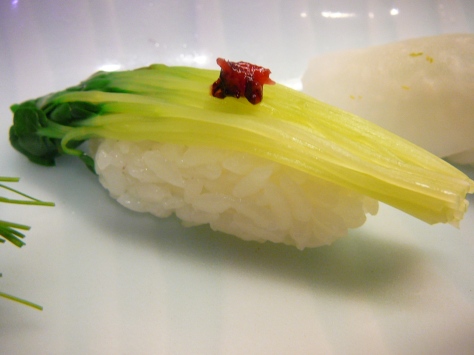
SUSHIK-09-08-31-14
Vegetarian Sushi

Some time ago a friend asked me a thorny question:
“Is my relation with my new vegetarian boyfriend doomed because I’m an omnivore?”

My personal reply would be that there is little reason for her relation to fail. But I sometimes tend to be a bit too simplistic, so I thought this was a good opportunity to delve on an ever growing issue.
I do not pretend to know all the solutions/answers, and I would be honored if anyone could offer her/his opinions on that matter!

I think that the key is to be positive about this gastronomic divergence.
Instead of considering it a matter of contention, it should be taken as a chance to expand one’s horizons.
I know of many vegans who cook for their omnivore halves. The opposite should hold true.
As long as it is not a religious issue (I’m agnostic), I see it as a source of daily joy and contentment.

I also see it as household cooperation.
If you decide to live together, why not have one take care of all the food (and washing the dishes!), and the other take care of all the house chores regardless of his/her gender? You can’t start to imagine how much time you would have left to enjoy each other’s company!
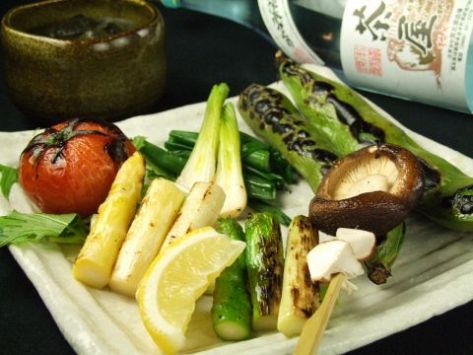
KUSHIYAKI-YASAI-1

Yasai Kushiyaki/Vegetables brochettes.

Having two different culinary priorities can become a lot of fun at parties:
You’re planning a BBQ? No problem!
Prepare two plates/grills over the same fire.
Hamburgers: meat ones on one side, tofu vegetables patties on the other one.
Yakitori/brochettes: meat ones one side, yasai kushiyaki/vegetables brochettes on the other.
Even vegetarian sausages exist!
You can always have two sets of sauces to make everyone happy!
And so on!
Even if your vegetarian half is strict, eating no eggs should not be much of a hindrance.
Use your imagination and ask around!
Tempura can be made without the egg white for example (use cornstarch)!

You are going to a restaurant?
In this case, try to find a restaurant which serves both cuisines.
Any good restaurant should be willing and able to tackle the challenge.
After all, one should go to a restaurant to learn and enjoy food. If you can make it at home, go to the market and spend a bit more money of your food. Remember that the more you pay on good food, the less you will pay a doctor!

As for restaurants, in my own city, Shizuoka, I know at least two French, one Italian, one Japanese, two izakaya and one sushi restaurant capable of devising a vegetarian meal in a pinch. And of course I do not include the vegetarian cuisine par excellence that Indian gastronomy is!
Even if you live in meat-eating Texas, there should not be a problem!

Do not forget that as an omnivore (which I am), you will have one day to reduce your meat consumption and eat more vegetables to hold in check your cholesterol, fat and blood pressure (come to Japan! LOL), whereas vegetarians will need to limit their sugar intake with all those cakes.

Great team work, no?

Looking forward to debating this (very tasty) issue!

RECOMMENDED RELATED WEBSITES

Mummy I Can Cook! by Shu Han in London
Pierre.Cuisine, Francescannotwrite, My White Kitchen, 47 Japanese Farms Through The Eyes of Its Rural Communities, Foodhoe, Chucks Eats, Things that Fizz & Stuff, Five Euro Food by Charles,Red Shallot Kitchen by Priscilla,With a Glass, Nami | Just One Cookbook, Peach Farm Studio, Clumsyfingers by Xethia, PepperBento,Adventures in Bento Making, American Bent, Beanbento, Bento No, Bento Wo Tsukurimashou, Cooking Cute, Eula, Hapabento , Happy Bento, Jacki’s Bento Blog, Kitchen Cow, Leggo My Obento, Le Petit Journal Bento & CO (French), Lunch In A Box,
Susan at Arkonlite, Vegan Lunch Box; Tokyo Tom Baker, Daily Food Porn/Osaka, Only Nature Food Porn, Happy Little Bento, The Herbed Kitchen, J-Mama’s Kitchen, Cook, Eat, Play, Repeat, Bento Lunch Blog (German), Adventures In Bento, Anna The Red’s Bento Factory, Cooking Cute, Timeless Gourmet, Bento Bug, Ideal Meal, Bentosaurus, Mr. Foodie (London/UK), Ohayo Bento,

Must-see tasting websites:

-Sake: Tokyo Through The Drinking Glass, Tokyo Foodcast, Urban Sake, Sake World
-Wine: Palate To Pen, Warren Bobrow, Cellar Tours, Ancient Fire Wines Blog
-Beer: Good Beer & Country Boys, Another Pint, Please!
-Japanese Pottery to enjoy your favourite drinks: Yellin Yakimono Gallery

Japanese Gastronomy: Chicken Bones Soup Stock: Tori Gara Soup-Basic Recipe

Quite a few friends, especially the ones who like ramen and any soup staock, have been asking me to re-pi\ublish the basic recipe for a very popular soup stock: Chicken Bones Soup Stock or Tori Gara Soup in Japanese!

It is called “Tori-gara soup”/鶏がらスープ in Japanese, as it means “Chicken carcass soup”.

The following recipe is basic and can be expanded and amended at will. It has also the merit to be useful for any kind of gastronomy, be it Asian, American, European, or African soups or sauces!

INGREDIENTS: As for quantities, do experiment!

-Chicken carcass and bones
-Long leeks
-Garlic
-Ginger (fresh if possible)
-Laurel (fried leaves)
-Black pepper (coarsely ground)
-Japanese sake (if you don’t have any, white wine should be ok)
-Fruit (apples are best)
Soy sauce

RECIPE:

Chicken carcass:
This is cheap and can be bought whole, unless you buy a whole chicken, dress it for another recipe and keep the bones and carcass. The latter can be deep-frozen, so don’t throw them away!

Break the bones roughly as the soup ingredients come from their insides. Clean then in running cold water. Drain them and leave them exposed in a recipient in the refrigerator for a whole night.

Leeks:
You will need a large pot to make your soup.
Use long leeks of the variety above if you can get them. Actually any leeks should do. Cut them in practical pieces.

Ginger:
If possible get it fresh. If slightly dried up as found in Asian markets abroad, no problem.
A piece 5×5 cm (2×2 inches) should be enough.
Peel it and cut into rough slices.

Garlic:
Use it as fresh as possible.
Take out their core out as it is almost indigestible.
One clove should be enough. Slice it roughly after crushing it.

Laurel:
2 dried leaves are enough.

Black pepper:
Grind it over the soup. Quantity is much up to preferences.

Japanese sake:
Use real sake or cooking sake.
You definitely need it.
If unavailable, use dry white wine.

Soy sauce:
Here too, quantity is much up to your preferences.

Fruit:
Fruit will provide you the right balance.
Apples are best.
Cut them in small pieces beforehand.

Fill the pan with water.
Drop in the whole carcass and bones.
Bring to boil.
Switch off fire.
Throw all the water away and refill with clean water. This is an important point. It might be troublesome, but if you don’t proceed accordingly the soup will be a failure!
Throw in all the ingredients cited above and stew over a low fire, scooping out unwanted matters and scum regularly.

After 3~4 hours, taste the soup, which should have become whitish and slightly opaque with bone fat floating on top. If it is still too bland, continue stewing.

Strain the soup into a clean pan.
The soup, whenever reheated, should be done so without a lid.

Having strained the soup, you will find there is still plenty of meat left on the bones.
It would be a shame to throw it away!
Just taste it and you will understand!

Pick the bones out carefully and throw away the rest.
The meat should come off easily enough to be done by hand.

Do be careful though when you do so as the meat will contain hidden bones piece, which are sharp!

I’m sure you can use all that meat for another succulent recipe!

RECOMMENDED RELATED WEBSITES

Mummy I Can Cook! by Shu Han in London
Pierre.Cuisine, Francescannotwrite, My White Kitchen, 47 Japanese Farms Through The Eyes of Its Rural Communities, Foodhoe, Chucks Eats, Things that Fizz & Stuff, Five Euro Food by Charles,Red Shallot Kitchen by Priscilla,With a Glass, Nami | Just One Cookbook, Peach Farm Studio, Clumsyfingers by Xethia, PepperBento,Adventures in Bento Making, American Bent, Beanbento, Bento No, Bento Wo Tsukurimashou, Cooking Cute, Eula, Hapabento , Happy Bento, Jacki’s Bento Blog, Kitchen Cow, Leggo My Obento, Le Petit Journal Bento & CO (French), Lunch In A Box,
Susan at Arkonlite, Vegan Lunch Box; Tokyo Tom Baker, Daily Food Porn/Osaka, Only Nature Food Porn, Happy Little Bento, The Herbed Kitchen, J-Mama’s Kitchen, Cook, Eat, Play, Repeat, Bento Lunch Blog (German), Adventures In Bento, Anna The Red’s Bento Factory, Cooking Cute, Timeless Gourmet, Bento Bug, Ideal Meal, Bentosaurus, Mr. Foodie (London/UK), Ohayo Bento,

Must-see tasting websites:

-Sake: Tokyo Through The Drinking Glass, Tokyo Foodcast, Urban Sake, Sake World
-Wine: Palate To Pen, Warren Bobrow, Cellar Tours, Ancient Fire Wines Blog
-Beer: Good Beer & Country Boys, Another Pint, Please!
-Japanese Pottery to enjoy your favourite drinks: Yellin Yakimono Gallery

Non Smoking Rules on Railway Platforms in Japan and Shizuoka City

The smoking and non smoking issue on railway platforms and trains in Japan has been a long saga.
Some time agao the local trains on the Tokaidou Line running through Shizuoka have been made completely non-smoking, but the Shinkasen bullet trains on the same line serviced by the JR Tokai Co. still allows at least two smoking carriages in every train whereas many other companies (they are all regional since the were privatized some time ago) have completely banished smoking from their Shinkansen trains!
Smells/stinks like some Tokyo politicians have a hand into that…
Even the platforms for the Shinkasen have “smoking corners”!

The photo above was taken two days ago in Shizuoka City JR Railway Station before boarding a local train down to Kikugawa City!
Less than a minute later I had to give a big mouthful (in Japanese) to an old guy who was smoking in the next queue!
He did carefully extinguish his cigarette on the platform but placed it back in his mouth with a deregatory wave in my direction…

Mind you, for all this sheer stupidity and unconcern of a single individual, over 99% of the Japanese comply to the rules without a grumble…

RECOMMENDED RELATED WEBSITES

Mummy I Can Cook! by Shu Han in London
Pierre.Cuisine, Francescannotwrite, My White Kitchen, 47 Japanese Farms Through The Eyes of Its Rural Communities, Foodhoe, Chucks Eats, Things that Fizz & Stuff, Five Euro Food by Charles,Red Shallot Kitchen by Priscilla,With a Glass, Nami | Just One Cookbook, Peach Farm Studio, Clumsyfingers by Xethia, PepperBento,Adventures in Bento Making, American Bent, Beanbento, Bento No, Bento Wo Tsukurimashou, Cooking Cute, Eula, Hapabento , Happy Bento, Jacki’s Bento Blog, Kitchen Cow, Leggo My Obento, Le Petit Journal Bento & CO (French), Lunch In A Box,
Susan at Arkonlite, Vegan Lunch Box; Tokyo Tom Baker, Daily Food Porn/Osaka, Only Nature Food Porn, Happy Little Bento, The Herbed Kitchen, J-Mama’s Kitchen, Cook, Eat, Play, Repeat, Bento Lunch Blog (German), Adventures In Bento, Anna The Red’s Bento Factory, Cooking Cute, Timeless Gourmet, Bento Bug, Ideal Meal, Bentosaurus, Mr. Foodie (London/UK), Ohayo Bento,

Must-see tasting websites:

-Sake: Tokyo Through The Drinking Glass, Tokyo Foodcast, Urban Sake, Sake World
-Wine: Palate To Pen, Warren Bobrow, Cellar Tours, Ancient Fire Wines Blog
-Beer: Good Beer & Country Boys, Another Pint, Please!
-Japanese Pottery to enjoy your favourite drinks: Yellin Yakimono Gallery

Sushi: Kawahagi-Filefish Sashimi & Sushi at Sushi Ko in Shizuoka City!

Service: Very friendly and always accommodating
Facilities: Great overall cleanliness. Superb washroom
Prices: Reasonable
Strong points: Great use of local seafood. Will try hard to accommodate any requests!

Kawahagi, or Filefish or Leather jacket in the Land of Oz, must be one of the most underrated fish in the World!
Some people go as far as to say that penny for penny it is worth more than overpriced globefish/fugu!

As we sat at Sushi Ko, our favorite Sushi Restaurant in Shizuoka City we noticed “Kawahagi Tsukuri”/カワハギ造り/Filefish sashimi Plate written on the small board featuring the “specials” of the day!

The live filefish taken out of the tank by the chef!
The fish had been caught off Sagara in Shizuoka Prefecture!

Sushi Ko has a great list of local sake, but I had to order one from Masu Ichi Brewery in Shizuoka City as this might well be the last bottle as the brewery closed down following the untimely death of its owner/master brewer. An incredible loss for the Shizuoka Sake World!

Tuna Tartare as the snack for the first drink!

The filefish sashimi plate!

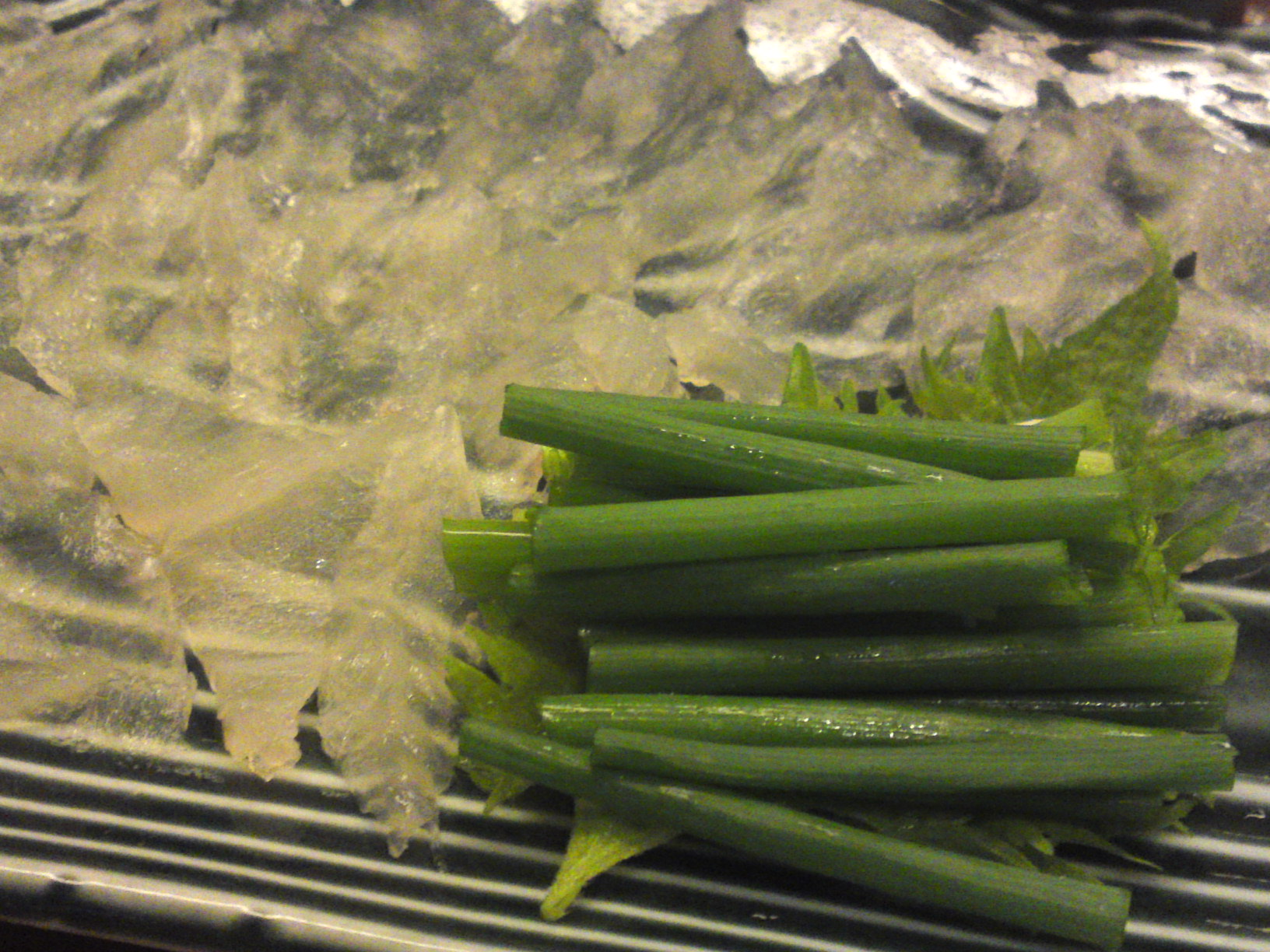
You roll the fine slices of filefish around some thin leeks before dipping it in its sauce!

The dip sauce!
It was made with the fresh raw liver of the filefish finely chopped and mixed with ponzu!
A true delicacy!

The chef had kept apart a little sashimi and liver for two more morsels!

A nigiri with chopped thin leeks under the fish topped with its liver!

A gunkan/”mother ship” with the sashimi topped with its liver and chopped thin leeks!

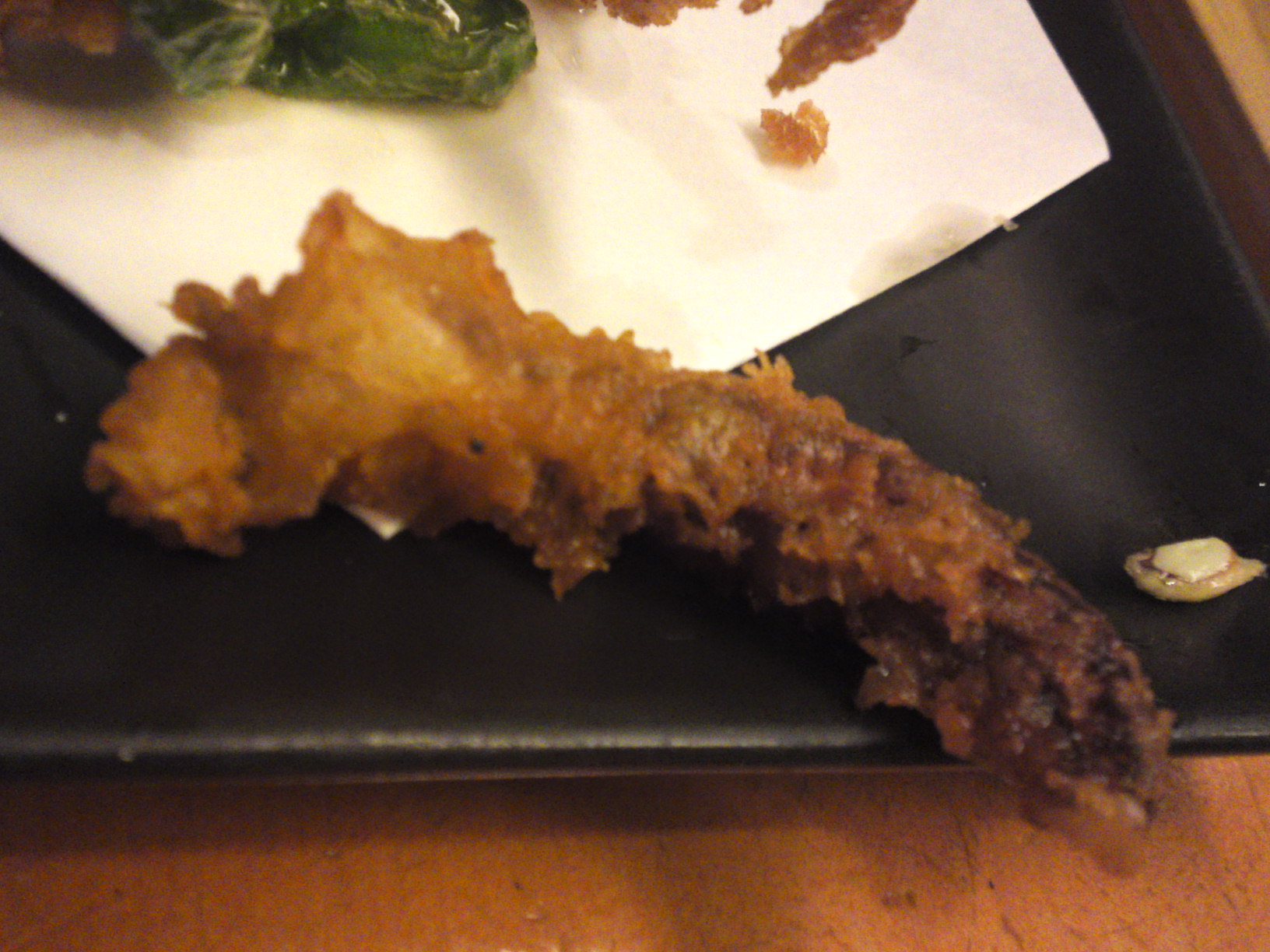
And the deep-fried jowls of the fish you eat with your fingers (that you lick later!) to cap it all!
Have I convinced you to look for that fish next time you see it on a market?

“Pon kara maguro”/deep-fried tuna cubes with grated daikon seasoned with chili pepper!

Of course the filefish was only the beginning of our dinner.
So for the record here we go including the above picture!

Maguro Zuke/Marinated lean part of tuna!

Hotate/Scallops!

Amaebi/Sweet shrimps!
(sorry for the fuzzy pic, as my mind was getting a bit fuzzy with all the sake!)

Geso karaage/Deep-fried squid tentacles!

The same, to eat with your fingers!

Ankimo/Frogfish liver or “Japanese foie gras”!

Anago to kyuri maki/Broiled Conger eel and cucumber roll!

Ika shiso to mentaiko maki/Squid, perilla leaf and cod roe pickled in chili pepper roll!

Shirako yaki/Baked cod sperm sacs!

Rainbow California Roll!

Containing: avocado, tamagoyaki/Japanese omelet, salmon, salmon roe, prawn, cucumber and akami/lean tuna! Seven of them of course!

Kanpyou maki, the roll for the vegetarians and vegans!
Kanpyou is made with the shavings of a gourd, first dried and then marinated in sweet sauce!

Asari miso shiru/Miso soup with cockles!

To be continued…

SUSHI KO
Shizuoka City, Aoi Ku, Ryogae-cho. 2-3-1 (Aoba Koen)
Tel.: 054-2512898
Business Hours: 17:00~25:00. 17:00~23:00 (Sundays)
Closed on Wednesdays
Reservations recommended
Credit cards OK
HOMEPAGE (Japanese)

RECOMMENDED RELATED WEBSITES

Mummy I Can Cook! by Shu Han in London
Pierre.Cuisine, Francescannotwrite, My White Kitchen, 47 Japanese Farms Through The Eyes of Its Rural Communities, Foodhoe, Chucks Eats, Things that Fizz & Stuff, Five Euro Food by Charles,Red Shallot Kitchen by Priscilla,With a Glass, Nami | Just One Cookbook, Peach Farm Studio, Clumsyfingers by Xethia, PepperBento,Adventures in Bento Making, American Bent, Beanbento, Bento No, Bento Wo Tsukurimashou, Cooking Cute, Eula, Hapabento , Happy Bento, Jacki’s Bento Blog, Kitchen Cow, Leggo My Obento, Le Petit Journal Bento & CO (French), Lunch In A Box,
Susan at Arkonlite, Vegan Lunch Box; Tokyo Tom Baker, Daily Food Porn/Osaka, Only Nature Food Porn, Happy Little Bento, The Herbed Kitchen, J-Mama’s Kitchen, Cook, Eat, Play, Repeat, Bento Lunch Blog (German), Adventures In Bento, Anna The Red’s Bento Factory, Cooking Cute, Timeless Gourmet, Bento Bug, Ideal Meal, Bentosaurus, Mr. Foodie (London/UK), Ohayo Bento,

Must-see tasting websites:

-Sake: Tokyo Through The Drinking Glass, Tokyo Foodcast, Urban Sake, Sake World
-Wine: Palate To Pen, Warren Bobrow, Cellar Tours, Ancient Fire Wines Blog
-Beer: Good Beer & Country Boys, Another Pint, Please!
-Japanese Pottery to enjoy your favourite drinks: Yellin Yakimono Gallery

Spanish Wine Bar Hagu in Shizuoka City!

Service: Friendly and easy-going
Equipment: Very clean overall. Superb washroom
Prices: Reasonable
Strong points: Great use of local products, vegetables, meat and fish in Japanese and foreign cuisines.

For the pleasure of the denizens of Shizuoka City the present trend seems to be in favor of wine bars!
I totally agree with it because, although I love my Japanese sake, I do also appreciate wine (normal since I hail from Bourgogne!)!

TAITA CORPORATION, already owning such establishments as Budo no Oka Restaurants, opened this new wine bar/bistro on January 17th and it is already pretty much crowded!

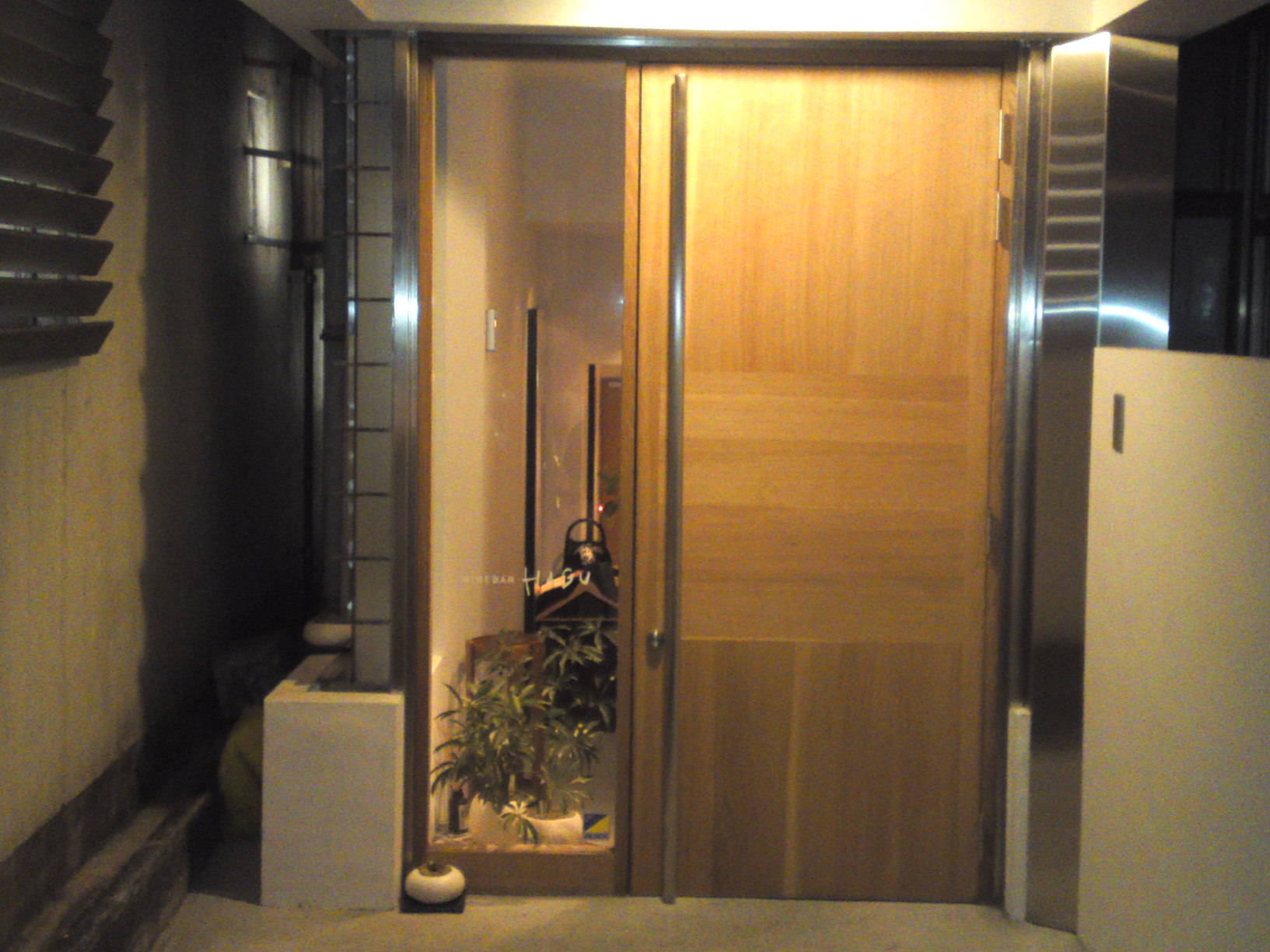
The concept is quite interesting with a relatively discreet entrance I discovered when I visited it for the first time in the company of a group of chefs and producers!

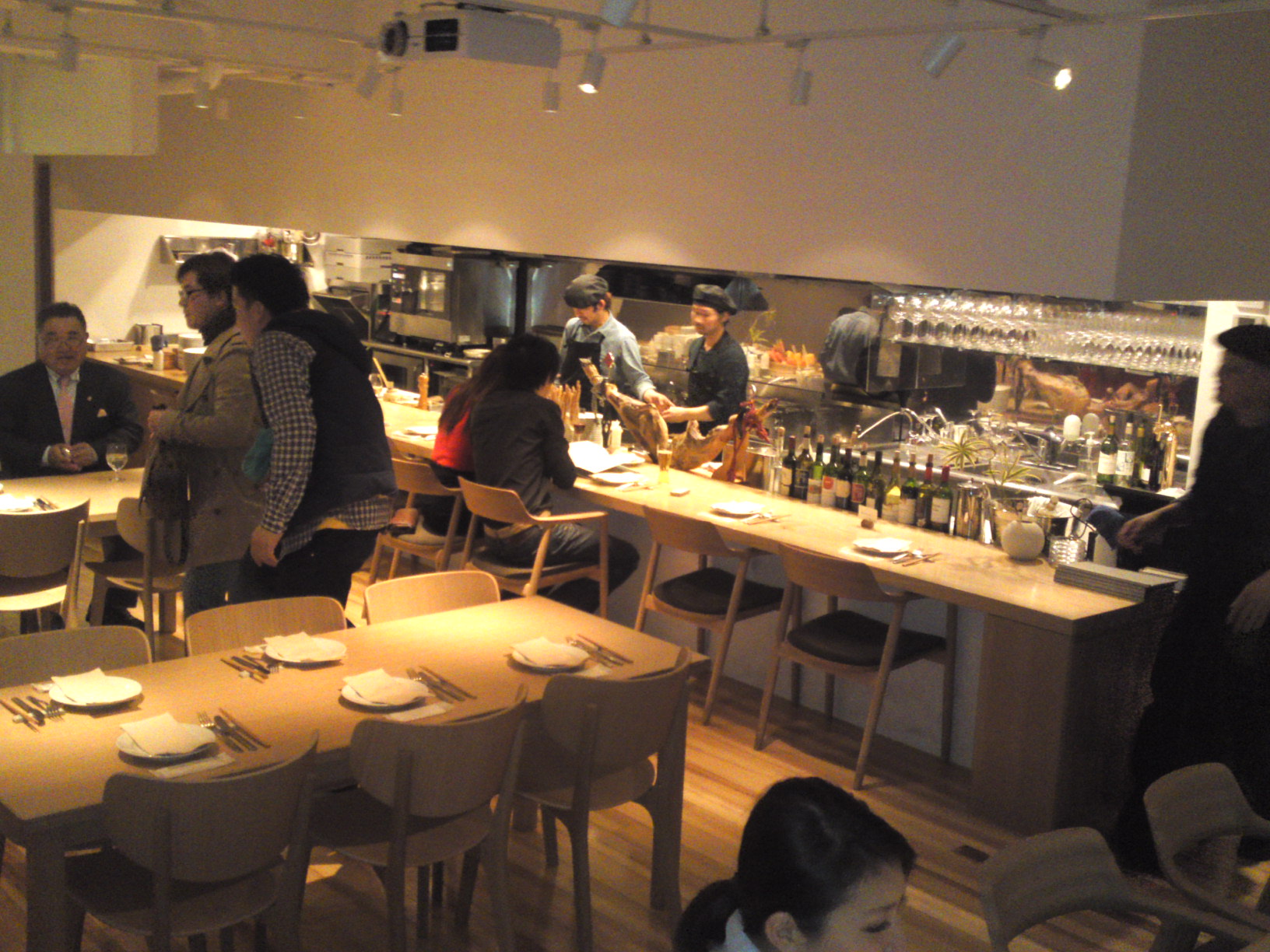
The atmosphere is very reminiscent of a cellar bar/restaurant in southern Europe!

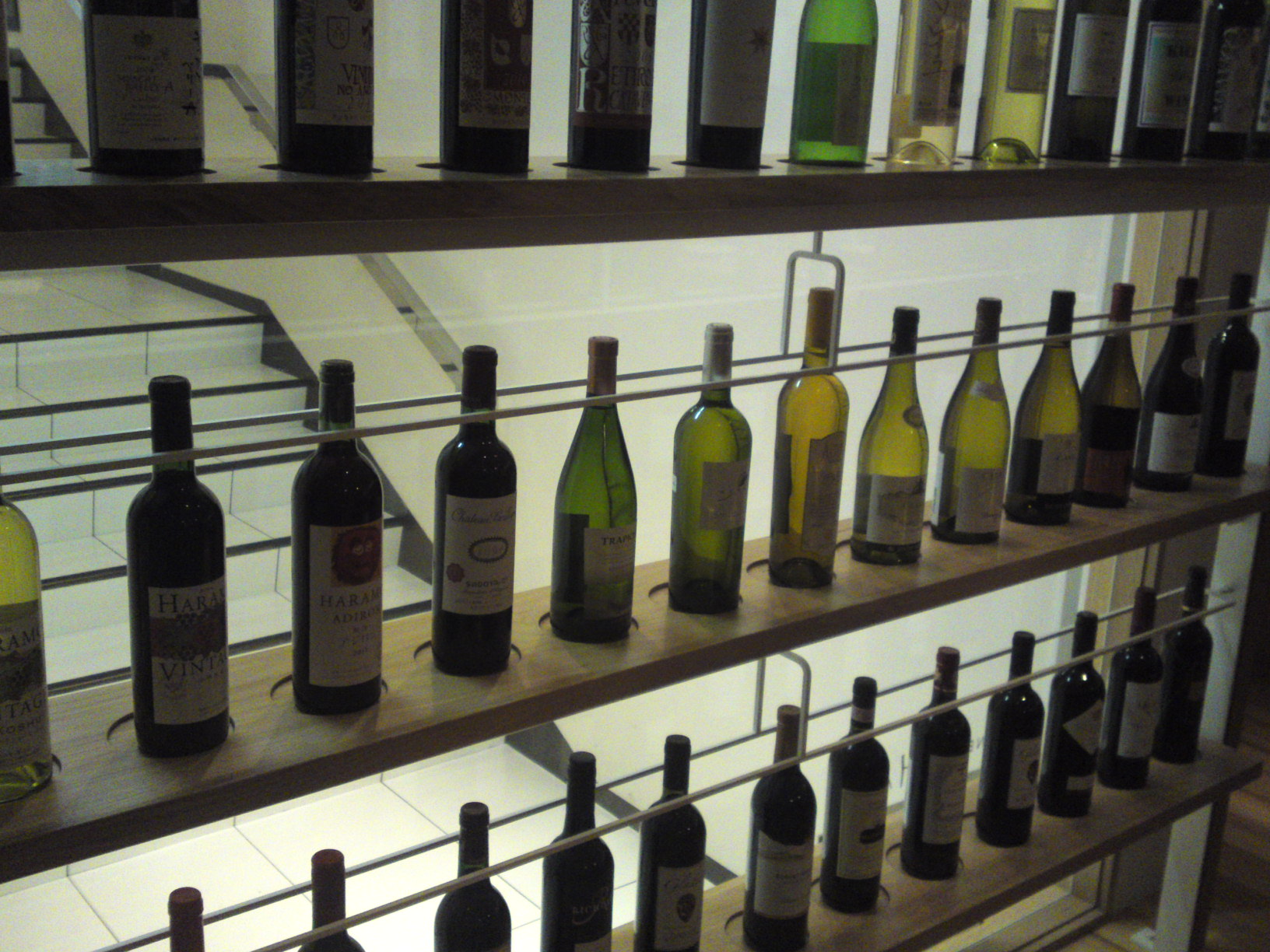
Naturally, plenty of wines, Japanese and foreign at reasonable prices!

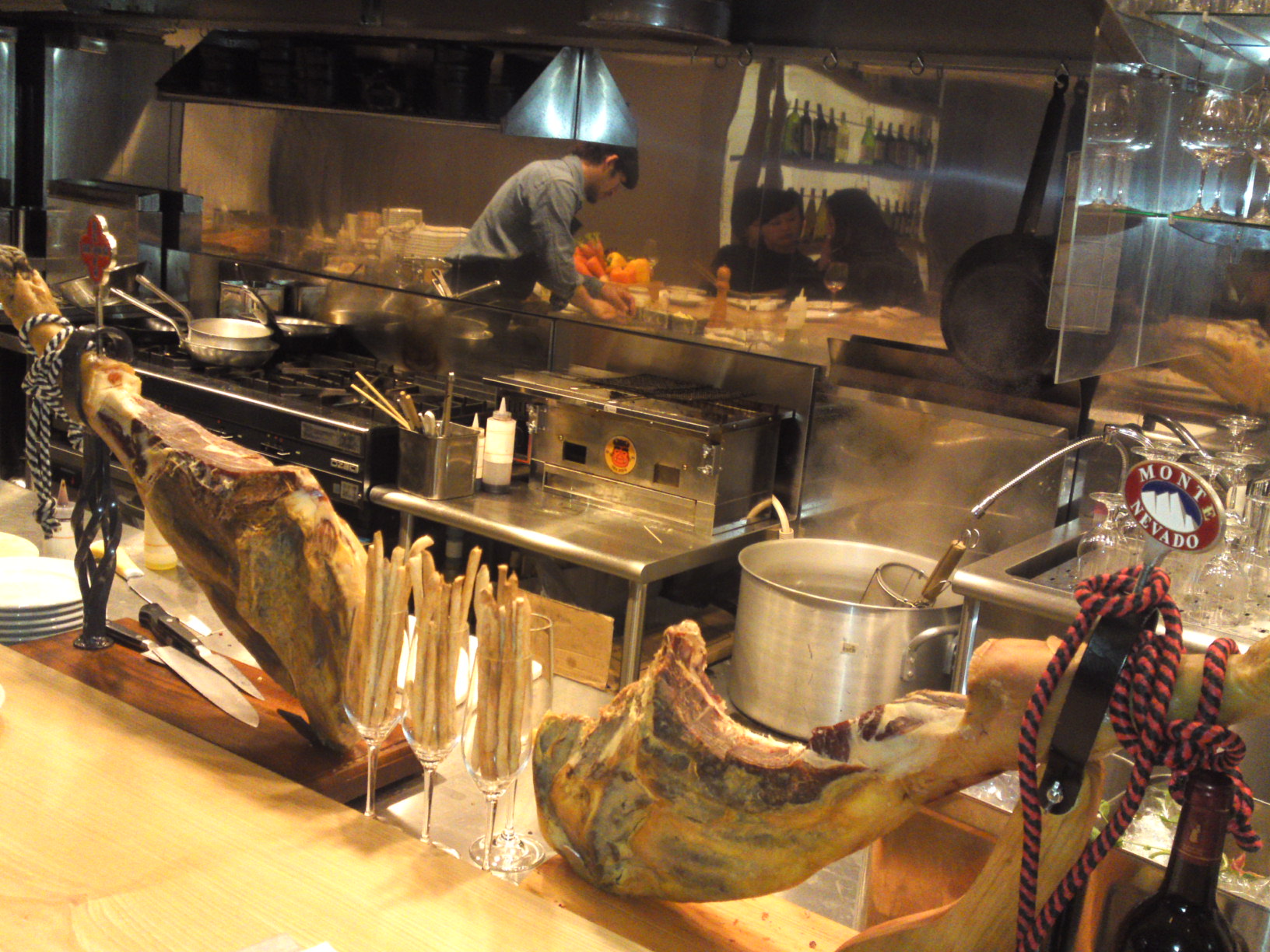
Superb raw hams from Spain!

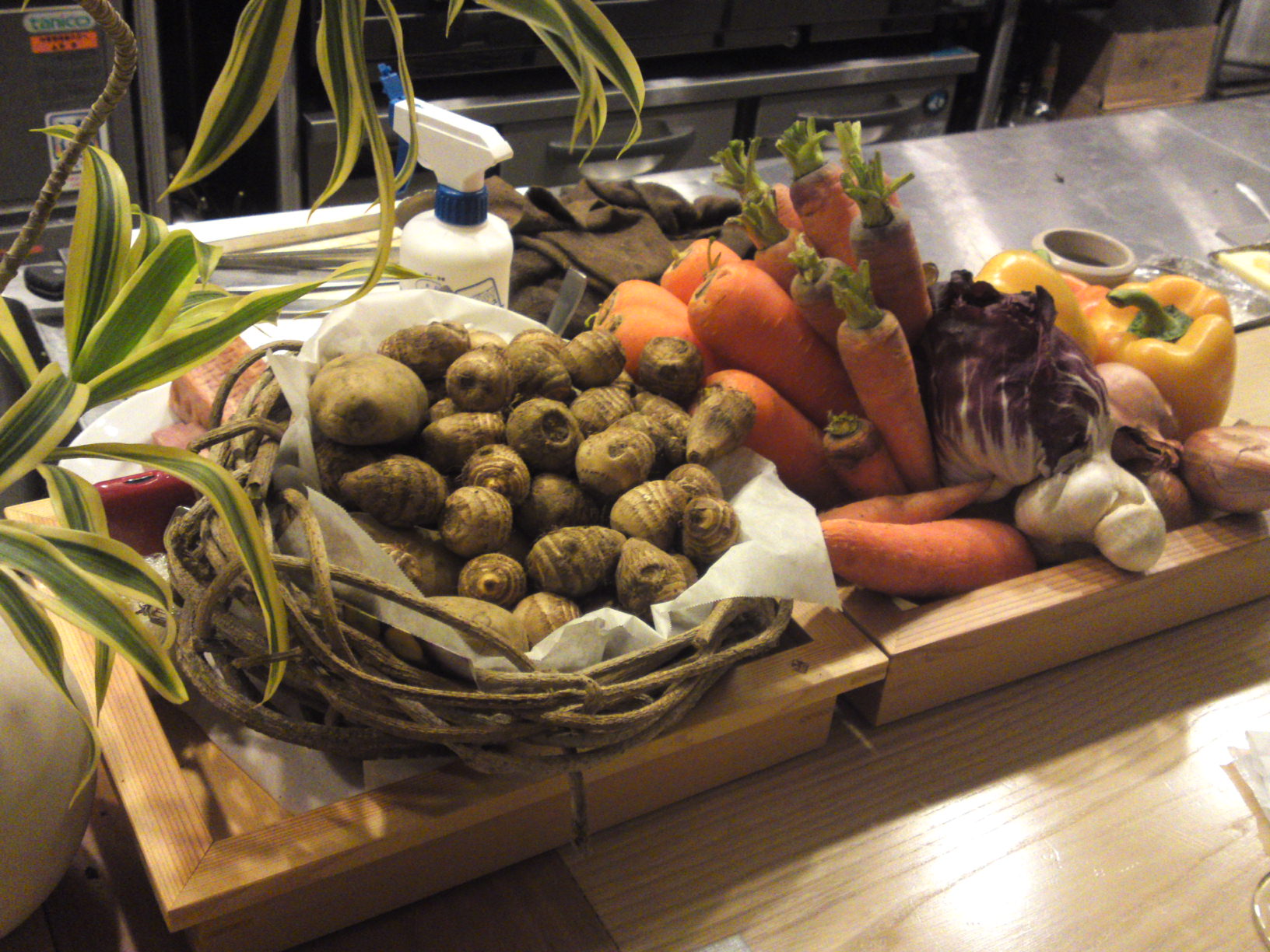
Plenty of local vegetables, quite a few of them organic!

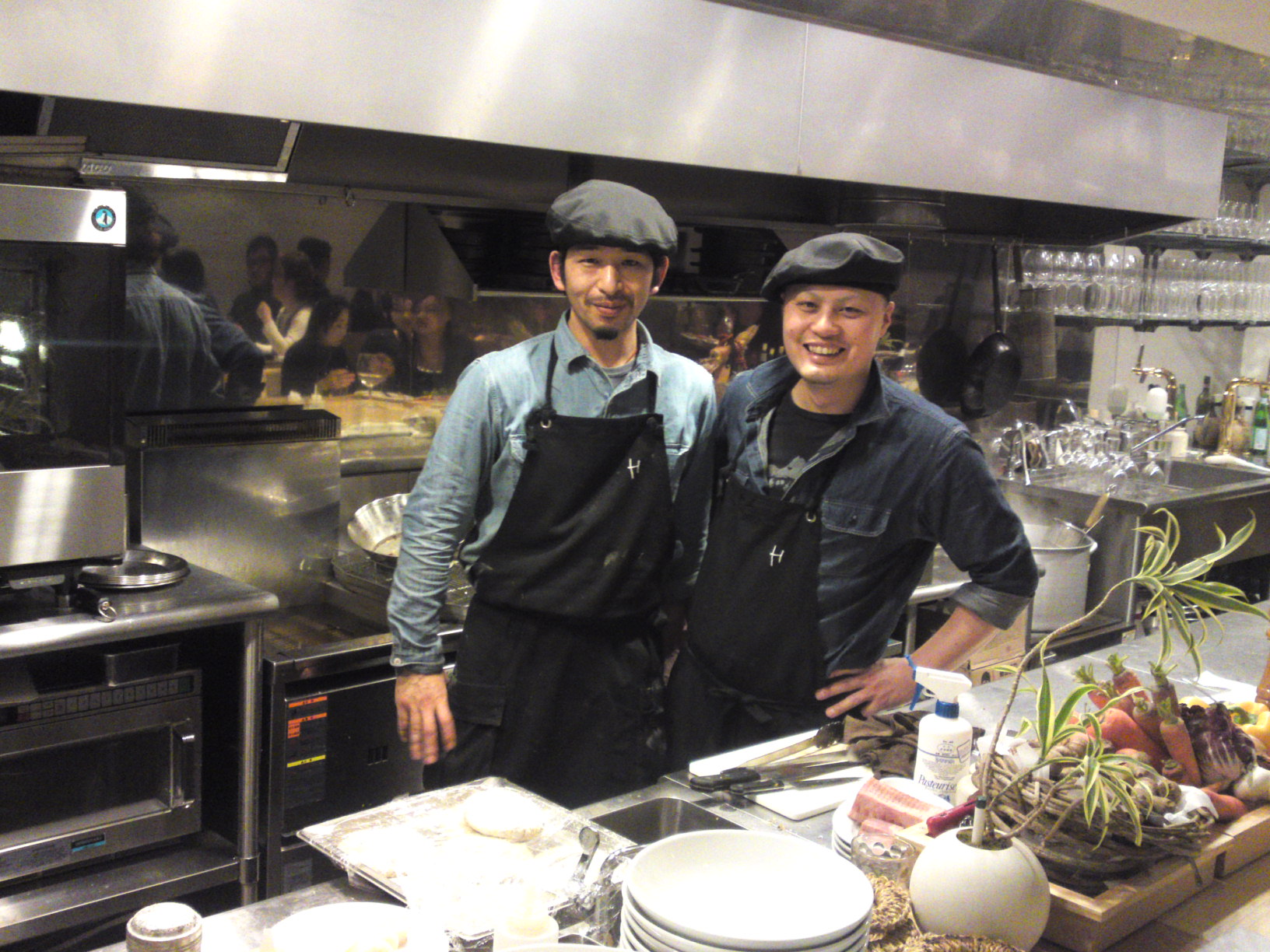
Chef Koushin Saita/才田享辰 and Manager Yusuke Kondo/近藤雄介!

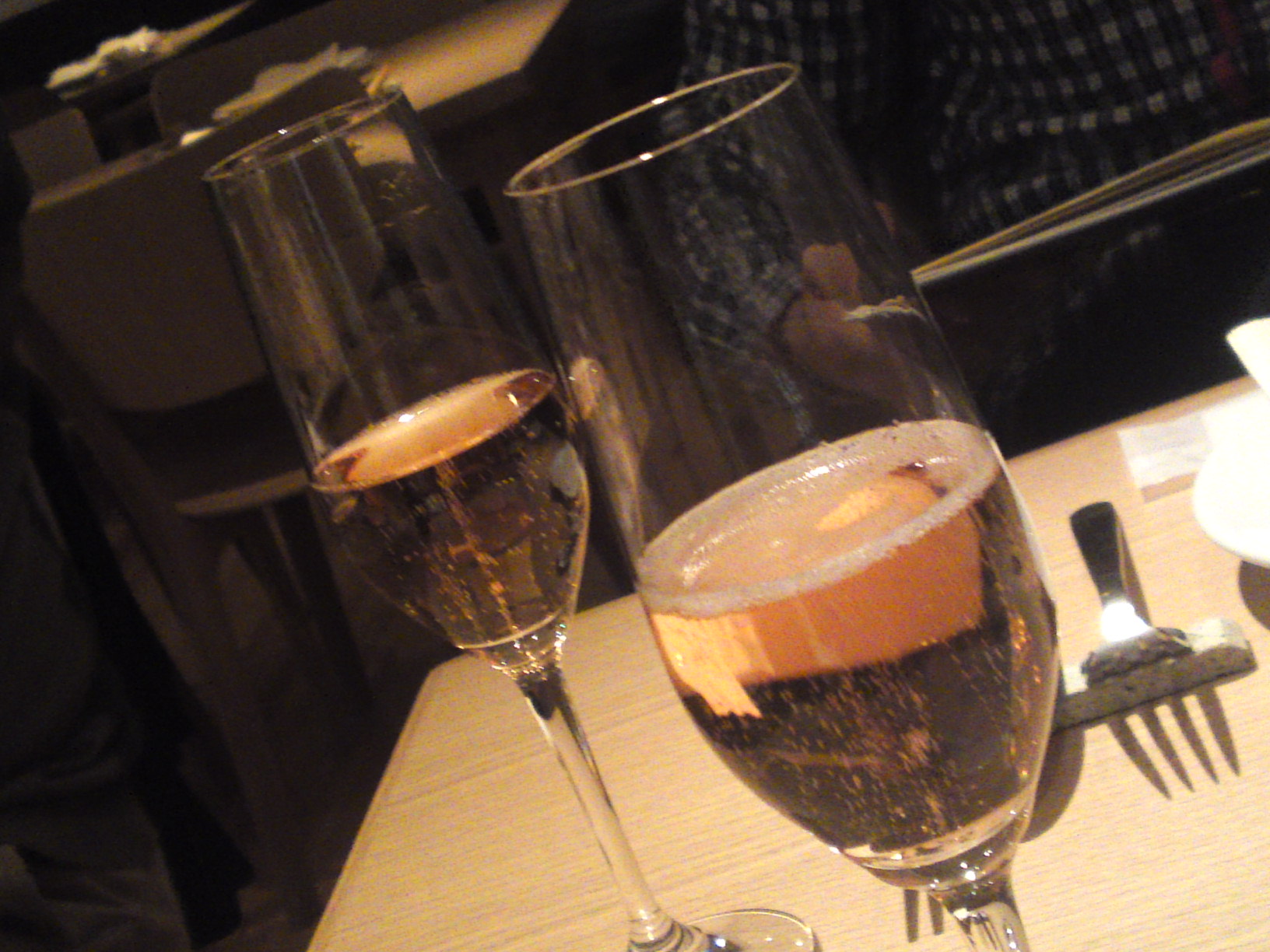
Japanese pink Cremant!

Now, what did our merry band sample on that day?
Plenty of wines which I hope to describe in another blog!

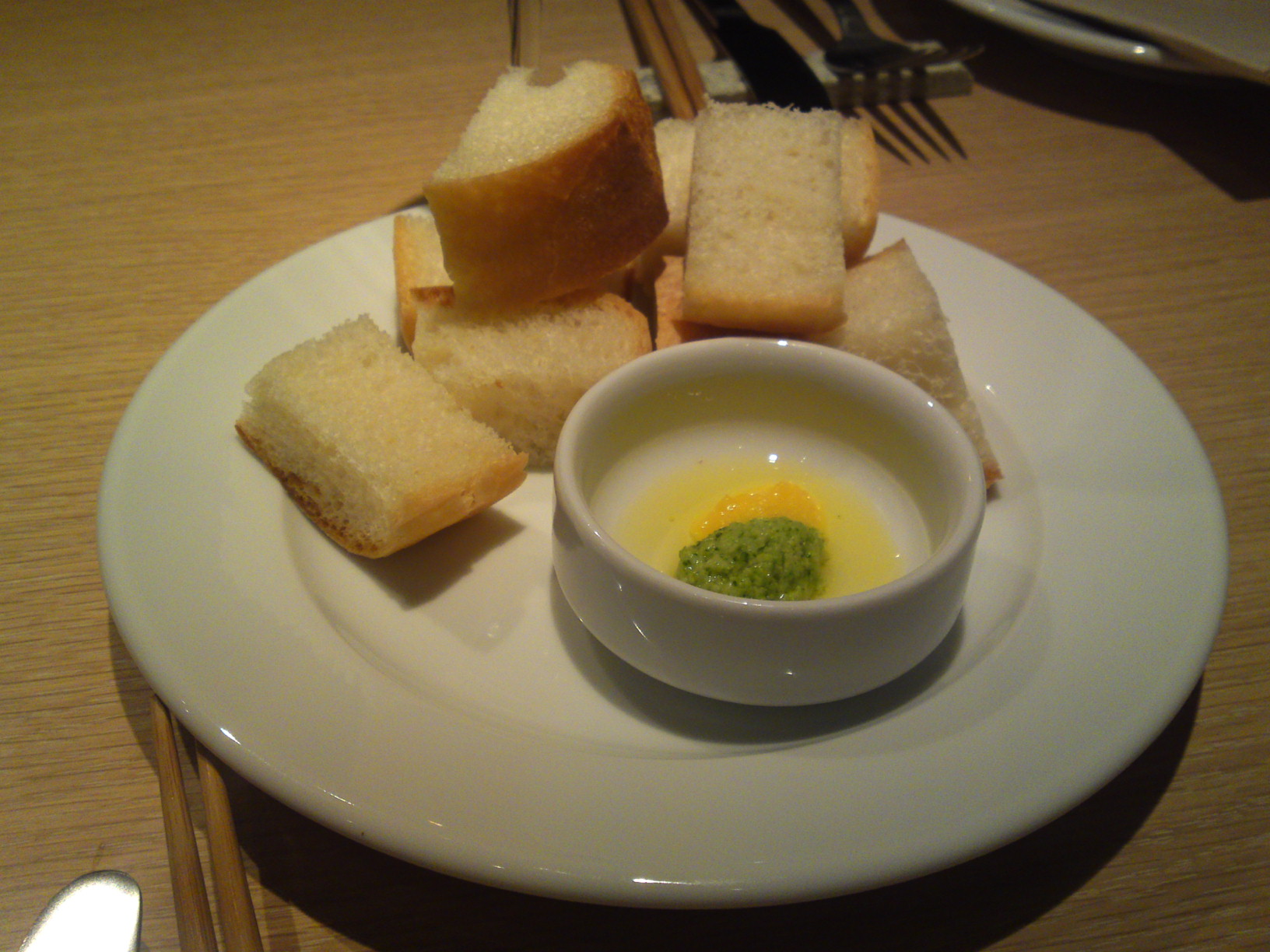
Broccoli and carrot mousse in olive oil to help us wait for the first dish!

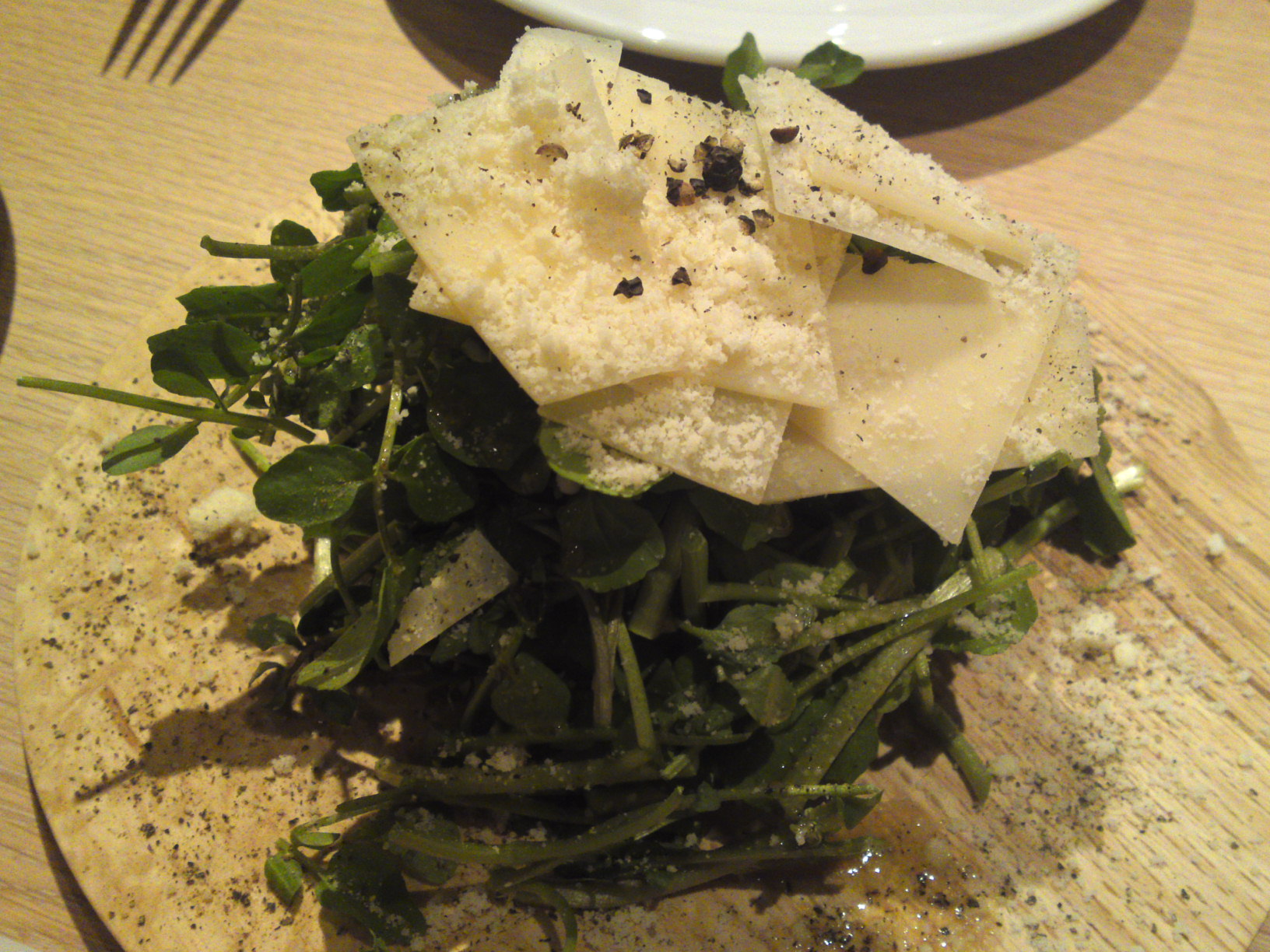
Parmegiano cheese on fresh cress!

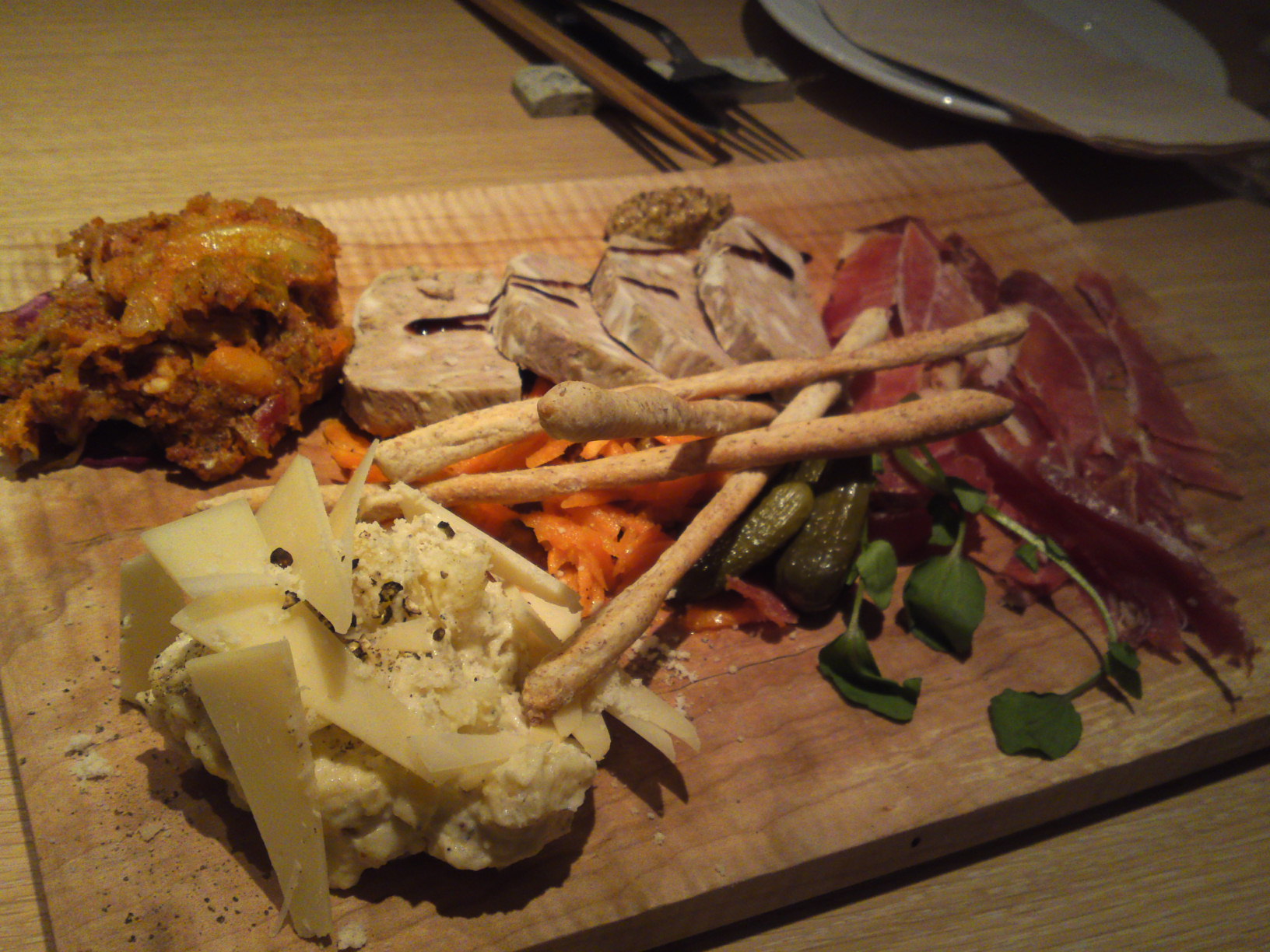
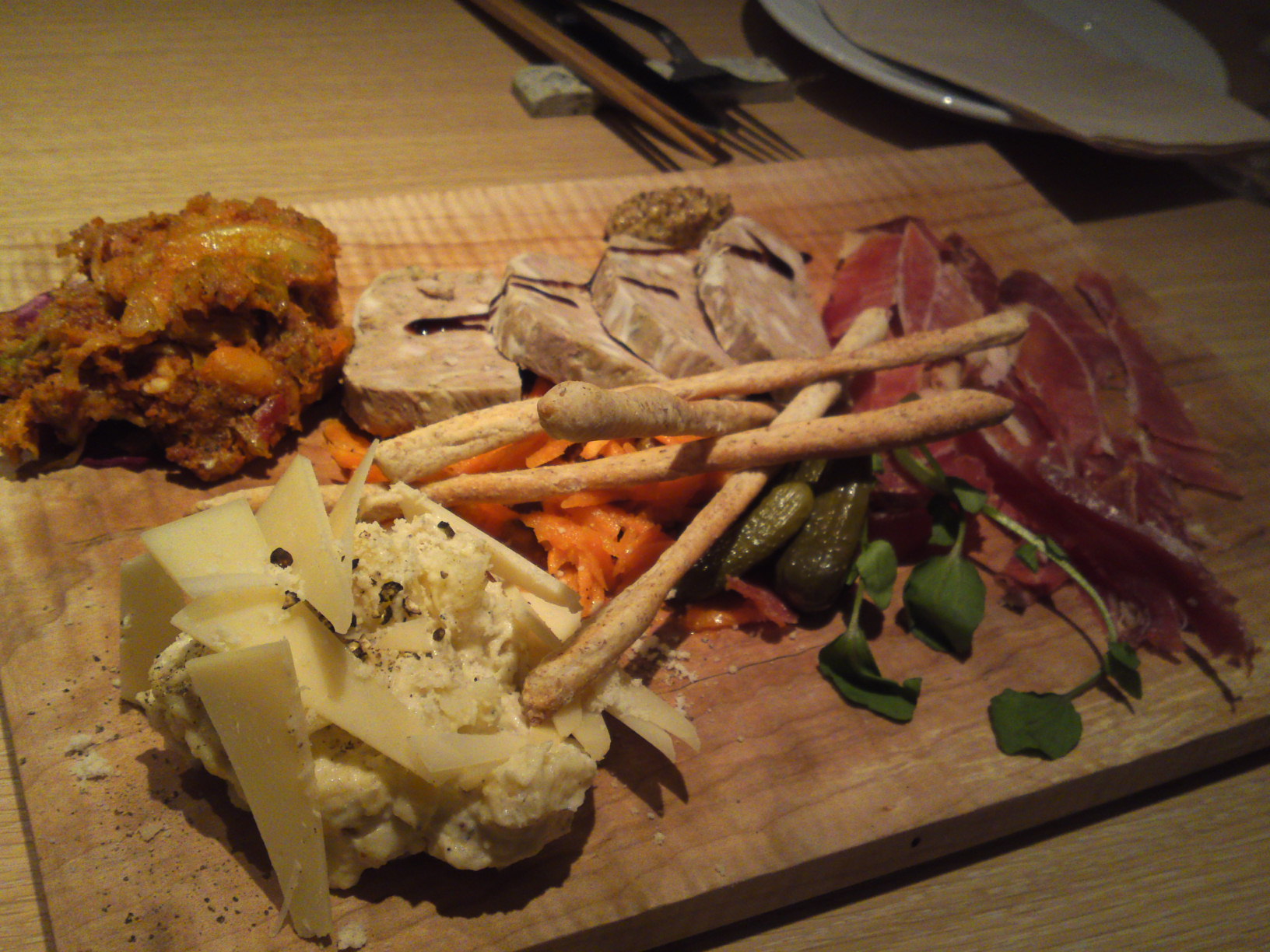
Mixed starters including Spanish raw ham, French-style terrine de campagne and various salads!

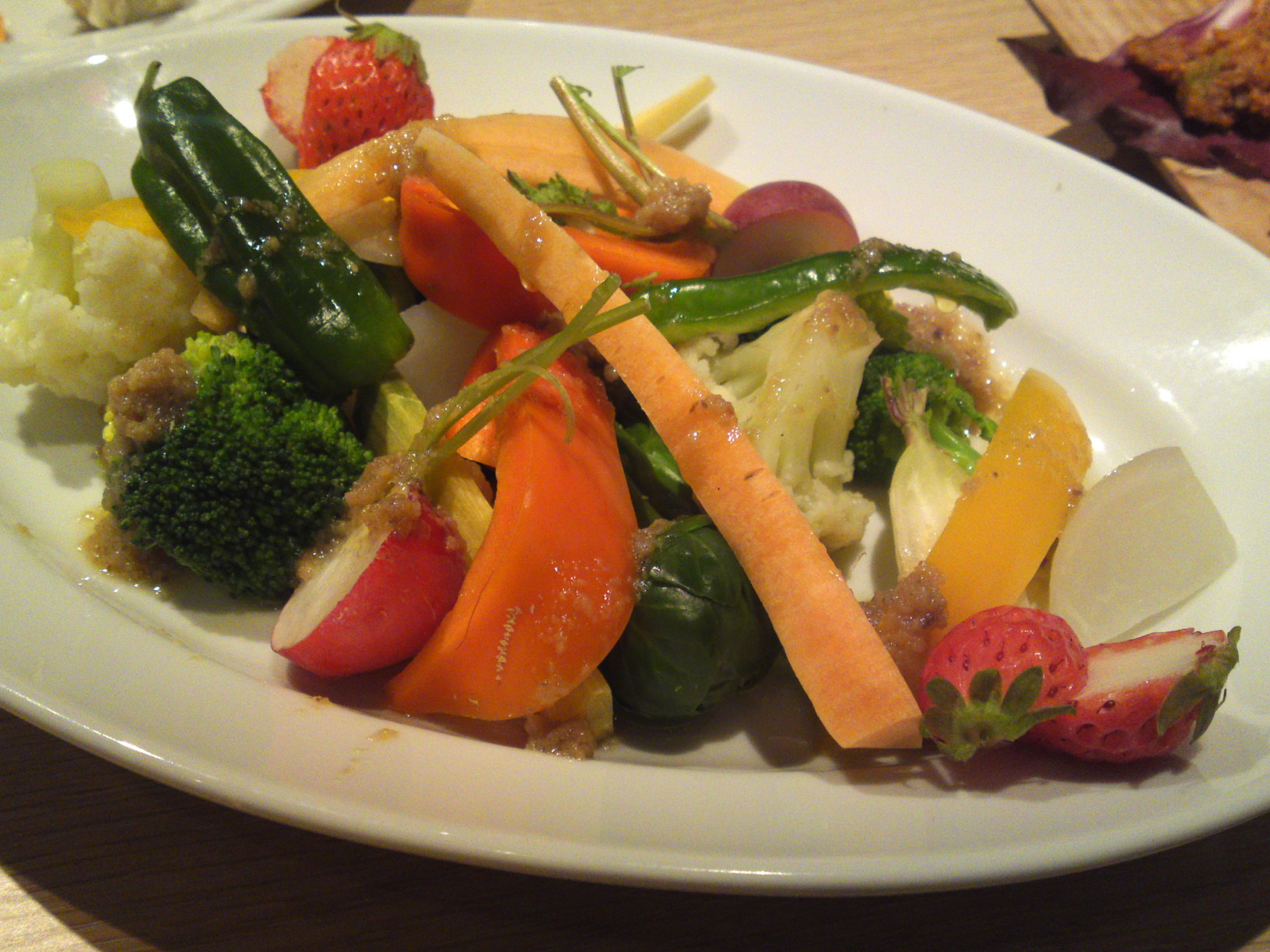
Organic vegetables (the strawberries are also organic, all from Shizen no Chikara Farm in Shizuoka City!) served with a banya cauda dressing!

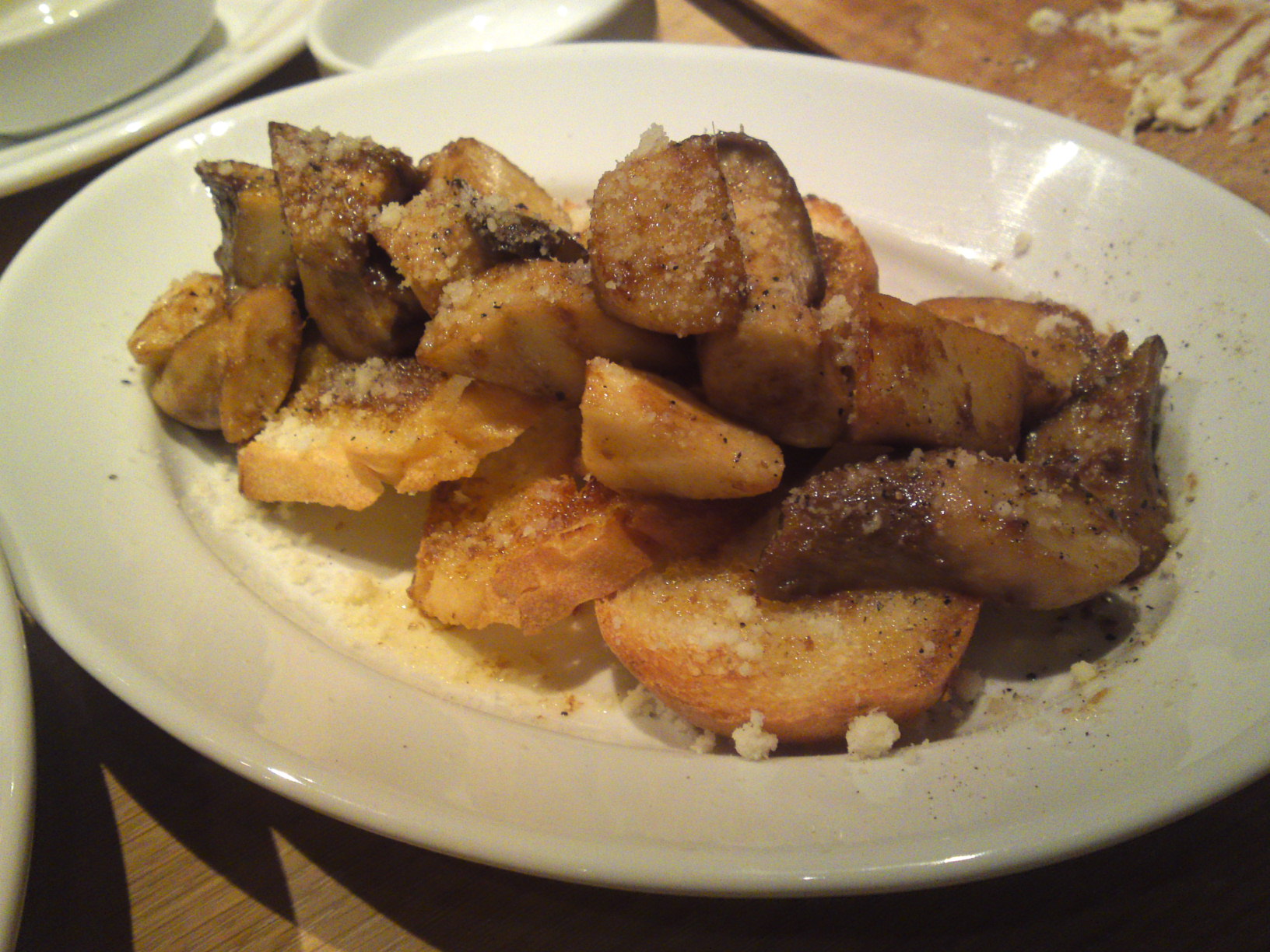
Sauteed mushrooms on savory toasts!

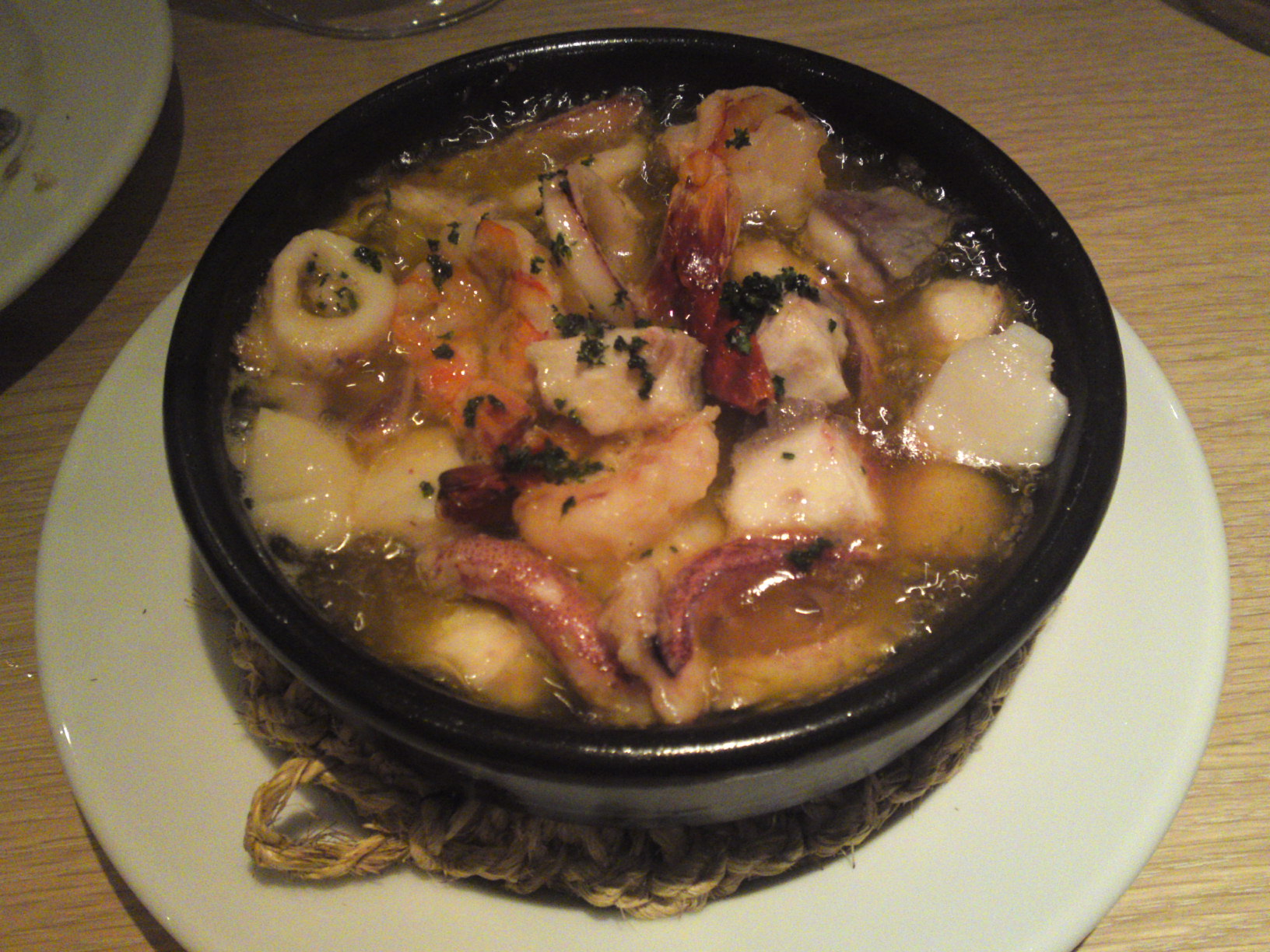
Spanish-style seafood hotpot!

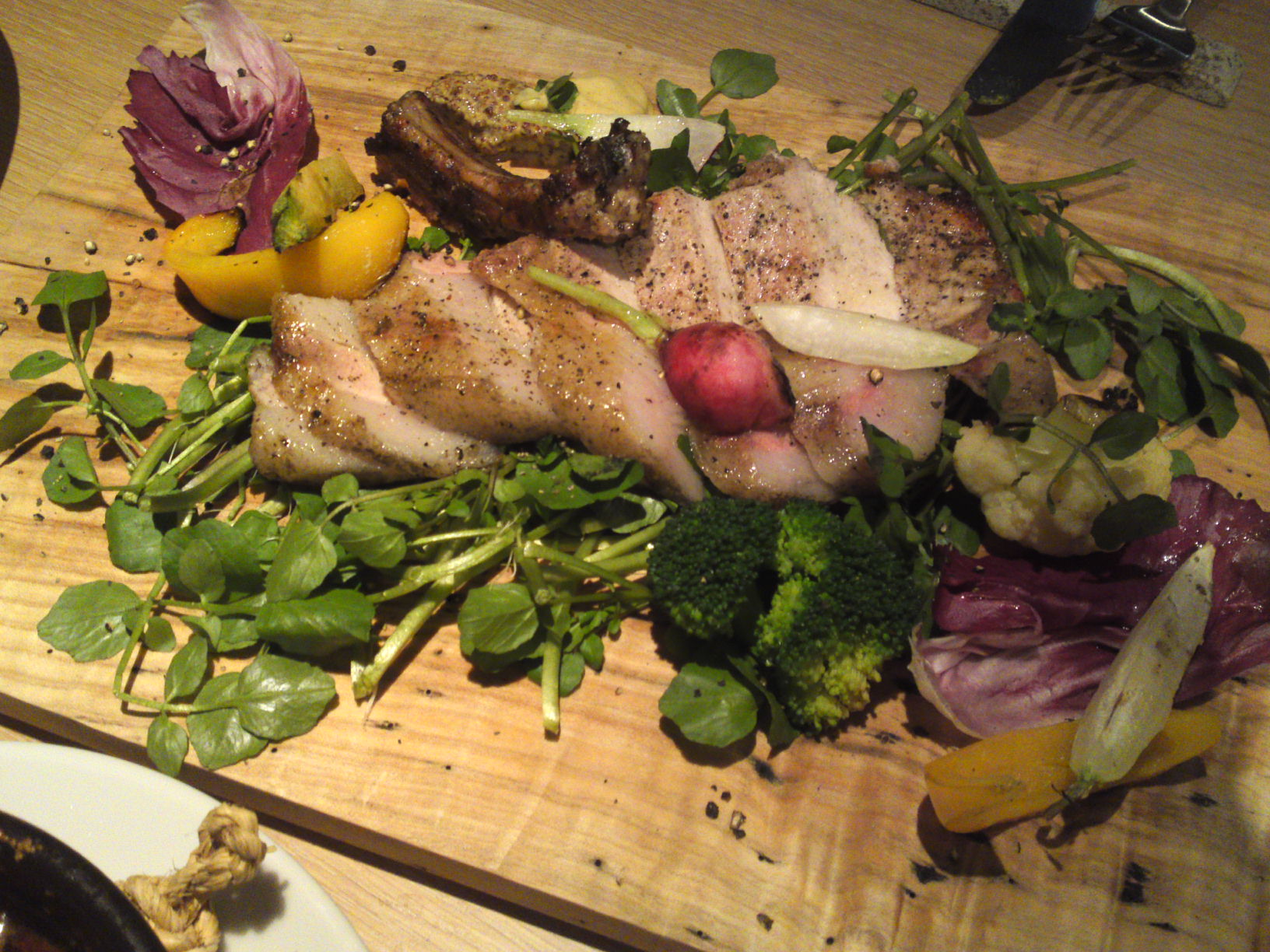
Grilled Mangenton Pork on a beautiful bed of fresh vegetables!

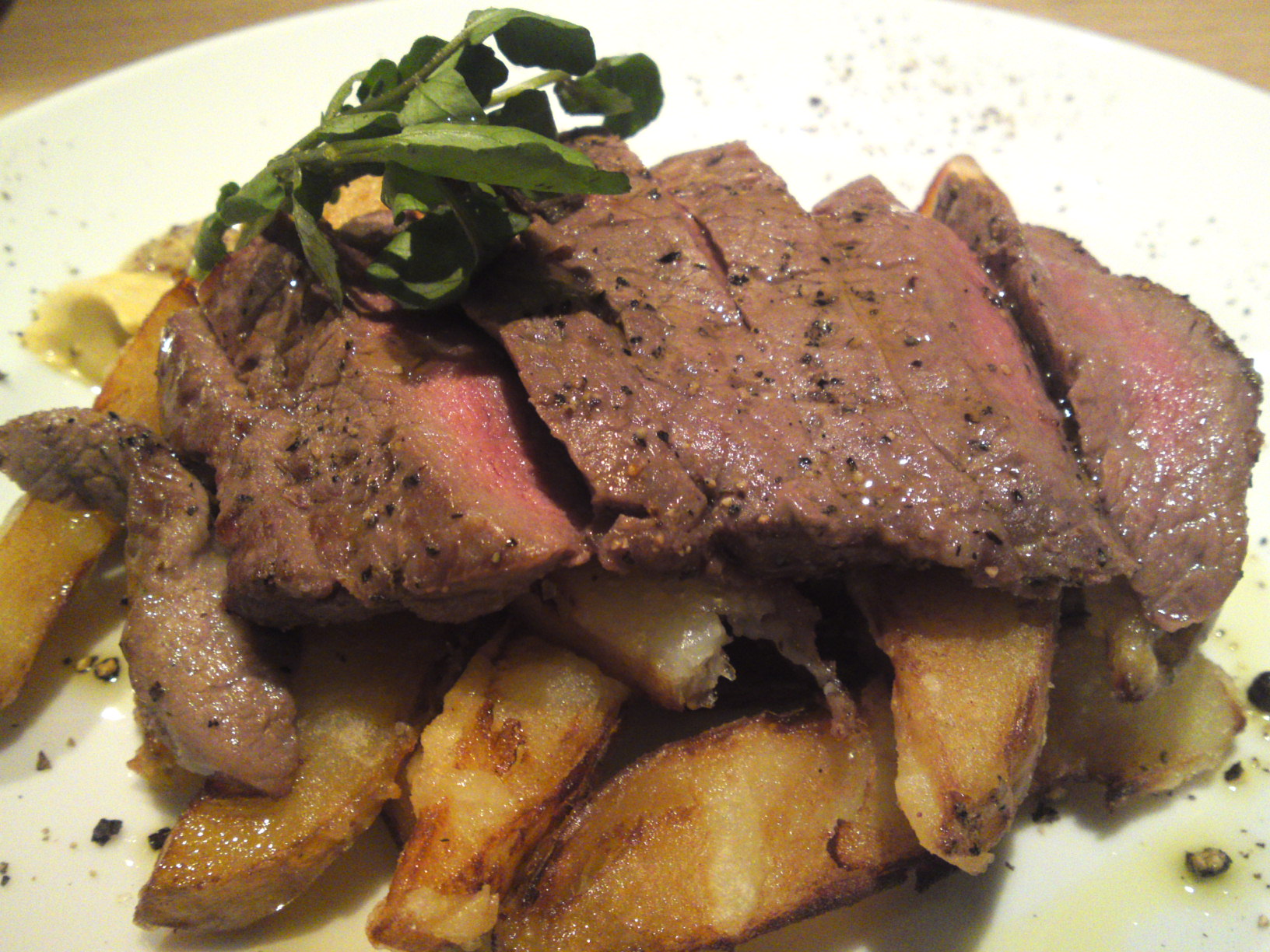
Great grilled beef atop savory fried potaoes!
I must give a special mark to those fried potatoes!

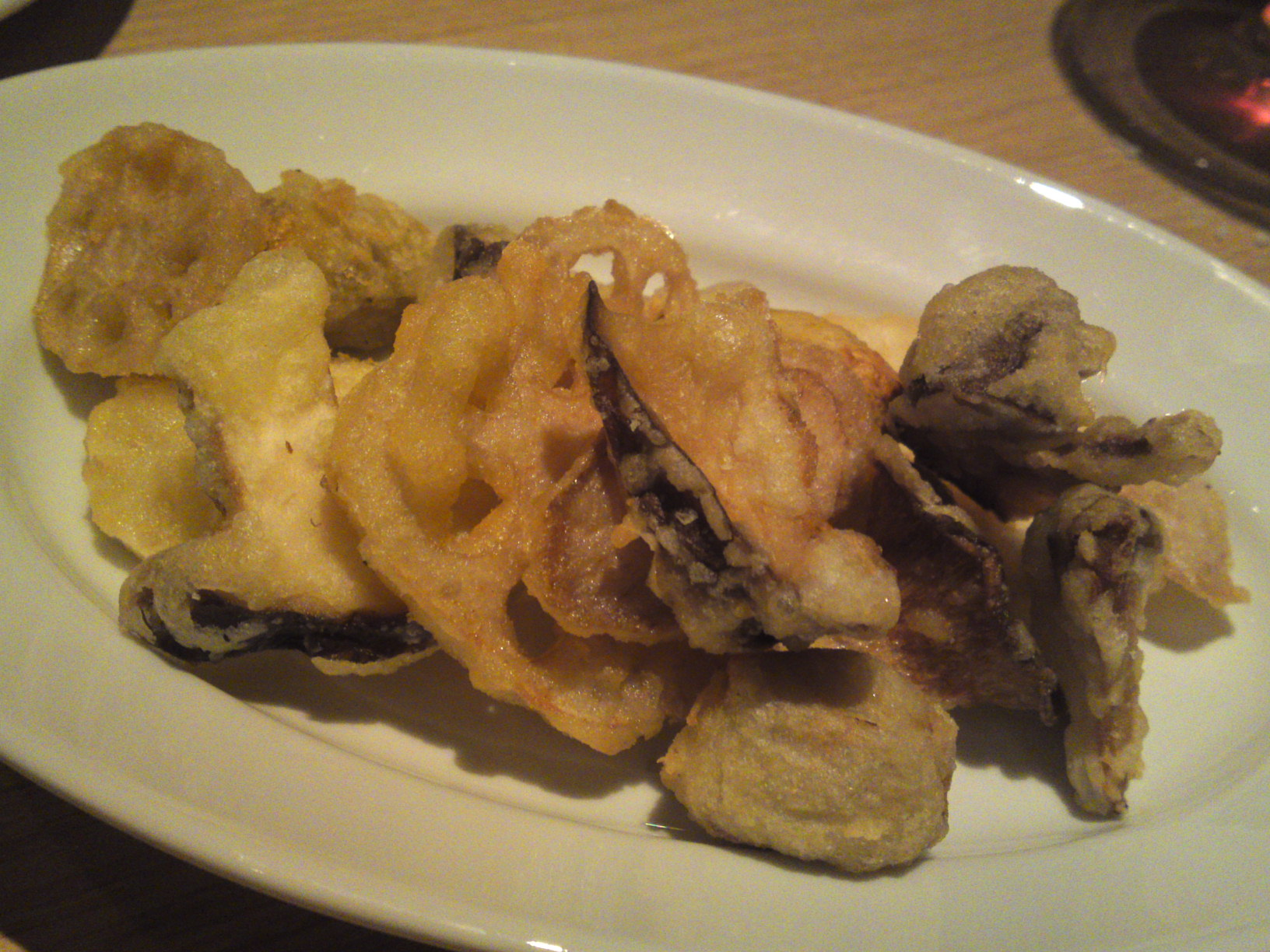
Vegetables fritters/tempura to finish!

We just didn’t have any space left for desserts (I will check that next time!)!

To be continued…

WINE BAR HAGU
420-0031 Shizuok City, Aoi Ku, Gofuku-Cho, 2-8-9, Across Tsujihara Bldg, B1F
Tel.: 054-260-5253
Opening hours: 17:30~24:00
Cards OK
HOMEPAGE (Japanese)

RECOMMENDED RELATED WEBSITES

Mummy I Can Cook! by Shu Han in London
Pierre.Cuisine, Francescannotwrite, My White Kitchen, 47 Japanese Farms Through The Eyes of Its Rural Communities, Foodhoe, Chucks Eats, Things that Fizz & Stuff, Five Euro Food by Charles,Red Shallot Kitchen by Priscilla,With a Glass, Nami | Just One Cookbook, Peach Farm Studio, Clumsyfingers by Xethia, PepperBento,Adventures in Bento Making, American Bent, Beanbento, Bento No, Bento Wo Tsukurimashou, Cooking Cute, Eula, Hapabento , Happy Bento, Jacki’s Bento Blog, Kitchen Cow, Leggo My Obento, Le Petit Journal Bento & CO (French), Lunch In A Box,
Susan at Arkonlite, Vegan Lunch Box; Tokyo Tom Baker, Daily Food Porn/Osaka, Only Nature Food Porn, Happy Little Bento, The Herbed Kitchen, J-Mama’s Kitchen, Cook, Eat, Play, Repeat, Bento Lunch Blog (German), Adventures In Bento, Anna The Red’s Bento Factory, Cooking Cute, Timeless Gourmet, Bento Bug, Ideal Meal, Bentosaurus, Mr. Foodie (London/UK), Ohayo Bento,

Must-see tasting websites:

-Sake: Tokyo Through The Drinking Glass, Tokyo Foodcast, Urban Sake, Sake World
-Wine: Palate To Pen, Warren Bobrow, Cellar Tours, Ancient Fire Wines Blog
-Beer: Good Beer & Country Boys, Another Pint, Please!
-Japanese Pottery to enjoy your favourite drinks: Yellin Yakimono Gallery

Japanese Gastronomy: Kakuni (角煮) & Recipes!

KAKUNI-1

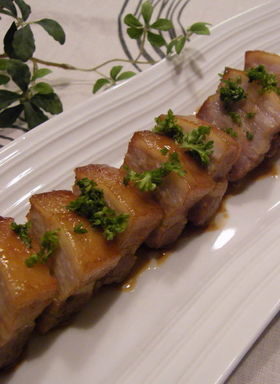
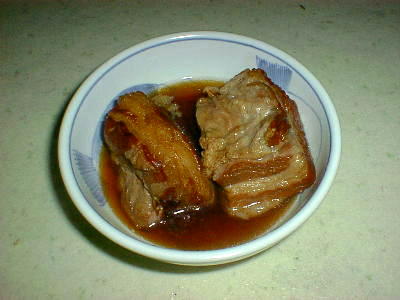
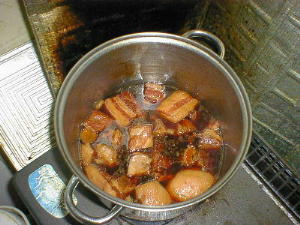
Kakuni (角煮) is a Japanese braised pork dish which literally means “square simmered”.

Kakuni is a meibutsu (名物/famous regional product) of Nagasaki Prefecture.
Actually this is not a strictly traditional Japanese dish as its most likely Chinese, similar to Dongpo’s pork, though not as heavy in sauce.

KAKUNI-2
Kakuni as served in some restaurants cut and cold

During the Ming Dynasty and Song Dynasty, the main Sino-Japanese trading route existed between Hangzhou and Kyūshū. Many Chinese lived in major Kyūshū port cities, such as Nagasaki and Japanese in Hangzhou. Therefore pork, was popularized in major Kyūshū cities.
These days kakuni is popular all over Japan with very many varieties depending on the region, climate and prevailing tastes.

KAKUNI-RAFTI

Okinawa, probably the region in Japan consuming the largest quantity of pork in Japan has its own recipe called “Rafti”!

PREPARATION:
Kakuni is made of thick cubes of pork belly simmered in dashi, soy sauce, mirin, sugar and sake. By cooking it for a long time over a low temperature the collagen breaks-down into gelatin keeping the meat moist while becoming extremely tender allowing it to be consumed with chopsticks easily. The dish is often served with scallions, daikon and karashi/Japanese hot mustard.

——————————————

DONG PO ROU

KAKUNI-DONGPO

For the record, as it is the origin of Kakuni, Dongpo’s pork is a famous Hangzhou dish which is made by pan-frying and then red cooking pork belly. The pork is cut to around 2 inches square in dimensions, consisting of half fat and half lean meat. The mouth feel is oily but not greasy, with the fragrance of wine.

ORIGINS:
Legend has it that while Su Dongpo was banished to Huangzhou, in a life of poverty, he made an improvement of the traditional process. He first braised the pork, added Chinese fermented wine and made red-braised pork, then slowly stewed it on a low heat. This dish was first launched in Huangzhou, then spread to Hangzhou, the capital of the Southern Song Dynasty, flourished, and then became one of Hangzhou’s most famous dishes.

——————————
KAKUNI RECIPES

1) BASIC RECIPE

KAKUNI-RECIPE-1-a

Here the first of a series of 3 recipes for Kakuni, that is, a very basic one!

INGREDIENTS:

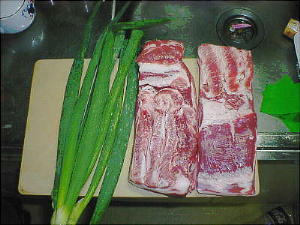
-Large raw pork belly lumps: 1 or 2 (depending on thickness and width)
-Fresh ginger: 1 or 2 pieces (5×5 cm)
-White leek: 1
-Rice vinegar: 50 ml
Soy sauce: 50 ml
-Sweet sake/mirin: 50 ml
-Honey: 1 tablespoon
-Water: 400~500 ml

RECIPE:

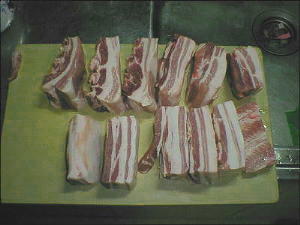
-Thinly slice the fresh ginger. Cut the leeks into small trunks. Punch holes in the pork with a fork to help “taste going inside”.

KAKUNI-RECIPE-1-b

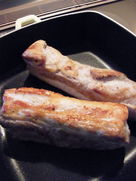
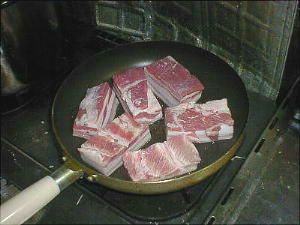
-Fry pork on a frypan on all sides on a strong fire until all colour has completely changed and fat has changed colour.

KAKUNI-RECIPE-1-c

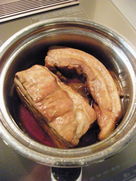
-In a large pot, drop/pour all ingredients, add pork, cover with lid and simmer over low medium fire for 60 minutes.
If meat does not cook as quickle as wanted, raise fire after 30 minutes.
Simmer until juices have reduced as low as on pic.

-Cut the pork into large size bites and simmer again for 5 minutes.

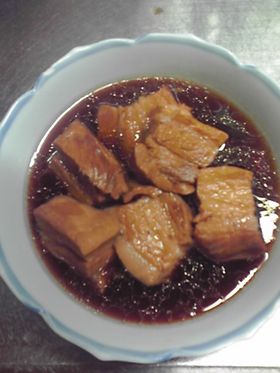
-Place on a serving meat cuts on a serving dish. Pour juices/sauce all over and add some chopped thin leeks.

———————–
2) SIMPLE RECIPE

KAKUNI-RECIPE-2-a

Here the second of a series of 3 recipes for Kakuni, a bit more sophisticated than the first one, but still very easy!

INGREDIENTS: For 4 people

-Large raw pork belly lumps: 1 kg
-Fresh ginger: choose a root (or part of), about 5cm long and 2 cm thick/Sliced
-Brown sugar: 50 g
-Honey: 50 ml (liquid)
-Japanese sake: 60 ml
-Soy sauce: 120 ml
-Water: 600 ml
-Star anise: 1

RECIPE:

KAKUNI-RECIPE-2-b

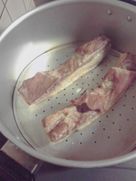
-Steam pork in steamer on a low fire for 2 hours.

KAKUNI-RECIPE-2-c

-Cool down pork completely. This is important as this will help tenderize the meat!
Cut in bite size.
Put all the pork in deep pan. Add water, Japanese sake, sliced ginger, brown sugar and honey.

KAKUNI-RECIPE-2-d

-Add soy sauce and star anise. Simmer on a low fire for 30 minutes. Keep taking out the foam to remove harshness.

KAKUNI-RECIPE-2-e

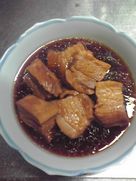
-When ready serve with its juices/soup and strong mustard.

NOTE:
Do not add star anise at once as the taste might become overwhelming for some people.
Of course, this recipe is adapatble.
You may add chili pepper and other spices of your preferences, or even Chinese ingredients!
————————–
3) PROFESSIONAL RECIPE

KAKUNI-RECIPE-3-m

This is the third of a series of 3 recipes for preparing Kakuni.
This particular recipe can be considered as the basic “professional” one, altough it is open to variations as far as spices and presentations are concerned!

INGREDIENTS;

-Large raw pork belly lumps: 1 kg
-Fresh ginger, finely chopped, 1~2 tablespoons
-Japanese sake: 2 cups
-Soy sauce: 2 cups
-Sugar: 2 large tablespoons
-Salt: 2 pinches

NOTE:
One can and ought (according to prefences) to add mirin/sweet sake, star anise, lemon zest, green parts of leeks and so on!

RECIPE:

KAKUNI-RECIPE-3-a

-Get everything prepared first!

KAKUNI-RECIPE-3-b

-Cut the pork into about 6cm wide slices.

KAKUNI-RECIPE-3-c

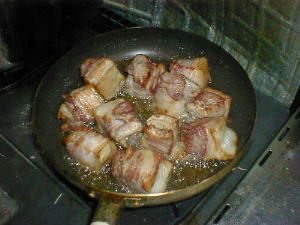
-Fry pork on both sides first. This will help the meat suck in the “juices”!

KAKUNI-RECIPE-3-d

-Fry until the colour above is reached.

KAKUNI-RECIPE-3-e

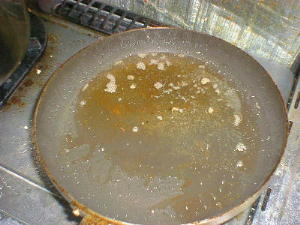
-Scoop out the excess fat, taking care not to run it over the meat.
The picture above shows how much fat can scooped out!
If you use a non-stick frypan, there is no need to add oil before frying the pork, meaning less fat to scoop out!

KAKUNI-RECIPE-3-f

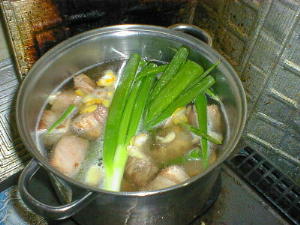
-In a large and deep pan, drop in the meat. Add water just to cover meat. Switch on the fire. You can add water later litle by little to keep it above the meat.
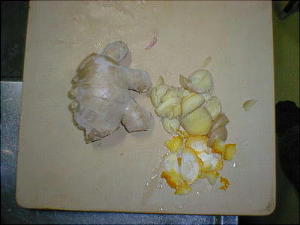
Add ginger, leeks (green part), lemon zest (whole or minced) and star anise.
If you want to make it sweet, add a whole sliced onion!

KAKUNI-RECIPE-3-g

-Make sure that all ingredients are clean. Check that the lemons are not waxed (in that case clean it out!)!

KAKUNI-RECIPE-3-h

-Once brought to a boil, add soy sauce, Japanese sake, mirin/sweet sake and sugar.
Last, add salt (important!).

KAKUNI-RECIPE-3-i

-Lower fire to low and continue scooping out any scum.

KAKUNI-RECIPE-3-j

-When no more scum appears, cover with lid or a large piece of foil paper and simmer for a whole hour.
Check from time to time if there is enough soup in the pan. If the soup level goes under that of top of the meat, the taste will become too strong. Add water and Japanese sake until the soup reaches the meat level.

KAKUNI-RECIPE-3-k

-Above picture shows starting point of the simmering process.

KAKUNI-RECIPE-3-l

-Above picture shows the finished product inside the deep pan!
Check if the meat is well cooked. A pointed (Japanese-style) chopstick should easily go through the meat all the way.
But this does not mean you can eat it at once.
It is best to switch off the fire, let the cover on, and let it cool completely. Only then, the meat will be fully impregnated with the taste!
It will taste a lot better re-heated before serving it!

RECOMMENDED RELATED WEBSITES

Mummy I Can Cook! by Shu Han in London
Pierre.Cuisine, Francescannotwrite, My White Kitchen, 47 Japanese Farms Through The Eyes of Its Rural Communities, Foodhoe, Chucks Eats, Things that Fizz & Stuff, Five Euro Food by Charles,Red Shallot Kitchen by Priscilla,With a Glass, Nami | Just One Cookbook, Peach Farm Studio, Clumsyfingers by Xethia, PepperBento,Adventures in Bento Making, American Bent, Beanbento, Bento No, Bento Wo Tsukurimashou, Cooking Cute, Eula, Hapabento , Happy Bento, Jacki’s Bento Blog, Kitchen Cow, Leggo My Obento, Le Petit Journal Bento & CO (French), Lunch In A Box,
Susan at Arkonlite, Vegan Lunch Box; Tokyo Tom Baker, Daily Food Porn/Osaka, Only Nature Food Porn, Happy Little Bento, The Herbed Kitchen, J-Mama’s Kitchen, Cook, Eat, Play, Repeat, Bento Lunch Blog (German), Adventures In Bento, Anna The Red’s Bento Factory, Cooking Cute, Timeless Gourmet, Bento Bug, Ideal Meal, Bentosaurus, Mr. Foodie (London/UK), Ohayo Bento,

Must-see tasting websites:

-Sake: Tokyo Through The Drinking Glass, Tokyo Foodcast, Urban Sake, Sake World
-Wine: Palate To Pen, Warren Bobrow, Cellar Tours, Ancient Fire Wines Blog
-Beer: Good Beer & Country Boys, Another Pint, Please!
-Japanese Pottery to enjoy your favourite drinks: Yellin Yakimono Gallery

Japanese Gastronomy: Taberu Rayu/Okinawa Chili Oil. Home-made Recipe!

Chili oil (also called hot chili oil or hot oil) is a condiment made from vegetable oil that has been infused with dried chili peppers and sometimes also additional ingredients. It is commonly used in Chinese cuisine, East and Southeast Asia and elsewhere. Particularly popular in Sichuan cuisine, it is used as an ingredient in cooked dishes as well as a condiment. It is sometimes used as a dipping sauce for meat and dim sum. It is also employed in the Korean Chinese noodle soup dish jjamppong.

The Japanese variety of Chinese chili oil is known as rāyu (ラー油 or 辣油), used in Japan as a cooking ingredient or as a condiment. The default kind is typically a clear, chili-infused sesame oil, and the chopped chili pepper used is typically red, imparting a reddish tint to the oil. Other ingredients used may include soy oil, corn oil, dried aloe, ginger, guava leaves, leek leaves, paprika, and turmeric.

Beginning in 2009, a new type of product originating from Ishigaki Island, Okinawa, known as taberu rāyu (食べるラー油 or 辣油, literally, “rāyu for eating”) became a trend in 2010. This variety is known for reduced spiciness, and in addition to the usual oil, chunks of food are included such as fried garlic and fried onion. However, the variety that includes food in the chili oil, as noted above, has existed in China since ancient times.

Here is a recipe to prepare it at home!

INGREDIENTS:

-Salad oil: 100 ml
Sesame oil: 50 ml
-Dried chili pepper: 1
-Fresh ginger: as appropriate (pieces)
-Fresh thin leek: 1 10-cm long piece
Dried shrimps: 10 g
-White sesame seeds: 10 g
-Korean chili powder (or chili powder): 15 g
-Gochujang: 20 g (See recipe for gochujang here)
-Soy sauce: 2 teaspoons
-Sugar: 1 teaspoon
-Fried garlic: 10 g
Fried onion: 10 g

RECIPE:

in a large bowl drop dried shrimps (chop them beforehand), chili powder, sesame oil (1 tablespoon out of the 50 ml needed) and white sesame seeds.
Mix well.

In a fry pan, pour the salad oil, the remaining sesame oil, and add the dried chili pepper, thin leek (cut) and ginger.
Fry over a light fire for 2 minutes to perfume the oil.

Take chili pepper, leek and ginger out before they get burned.
Heat the oil over a strong fire until its starts smoking.
Take off fire at once.

Add hot oil in two or three steps into the bowl containing mixed shrimps, chili powder, seasmes seeds and sesame oil.
The whole should hiss when you add the oil!

Add all the other remaining ingredients and mix well.

Once cooled down you can preserve it in a sealed jar for up to a month at room temperature.

Note: If you cannot find dried garlic or onion cut some in slices and dry-fry them!

RECOMMENDED RELATED WEBSITES

Mummy I Can Cook! by Shu Han in London
Pierre.Cuisine, Francescannotwrite, My White Kitchen, 47 Japanese Farms Through The Eyes of Its Rural Communities, Foodhoe, Chucks Eats, Things that Fizz & Stuff, Five Euro Food by Charles,Red Shallot Kitchen by Priscilla,With a Glass, Nami | Just One Cookbook, Peach Farm Studio, Clumsyfingers by Xethia, PepperBento,Adventures in Bento Making, American Bent, Beanbento, Bento No, Bento Wo Tsukurimashou, Cooking Cute, Eula, Hapabento , Happy Bento, Jacki’s Bento Blog, Kitchen Cow, Leggo My Obento, Le Petit Journal Bento & CO (French), Lunch In A Box,
Susan at Arkonlite, Vegan Lunch Box; Tokyo Tom Baker, Daily Food Porn/Osaka, Only Nature Food Porn, Happy Little Bento, The Herbed Kitchen, J-Mama’s Kitchen, Cook, Eat, Play, Repeat, Bento Lunch Blog (German), Adventures In Bento, Anna The Red’s Bento Factory, Cooking Cute, Timeless Gourmet, Bento Bug, Ideal Meal, Bentosaurus, Mr. Foodie (London/UK), Ohayo Bento,

Must-see tasting websites:

-Sake: Tokyo Through The Drinking Glass, Tokyo Foodcast, Urban Sake, Sake World
-Wine: Palate To Pen, Warren Bobrow, Cellar Tours, Ancient Fire Wines Blog
-Beer: Good Beer & Country Boys, Another Pint, Please!
-Japanese Pottery to enjoy your favourite drinks: Yellin Yakimono Gallery

Korean Gastronomy: Home-Made Gochujang

GOCHUSHANG

I decided to re-publish this particular recipe in preparation for another recipe to come soon!

Gochujang is a savory and pungent fermented Korean condiment. Traditionally, it has been naturally fermented over years in large earthen pots outdoors, more often on an elevated stone platform, called jangdokdae (장독대) in the backyard.
It has been made at home in Korea since the 16th century, after chili peppers were first introduced. The making of gochujang at home began tapering off when commercial production started in the early 1970s and came into the mass market. Now, homemade gochujang can hardly be found.

Not only the Koreans, but the Japanese use it a lot when they make their own-style Korean food!

Here is a simple home-made recipe that should help everyone control the ingredients.
And it has the merit to be vegan/vegetarian!

INGREDIENTS:

-Water: 270 ml/cc
-Brown sugar/cane sugar: 250 g
-Miso: 300 g (try use more than 1 kind!)
-Korean Chili pepper powder: 100 g
-Salt: 1 tablespoon
-Japanese sake or Korean soju: 1 teaspoon
-Rice vinegar: 1 teaspoon

RECIPE:

-Pour water in a large enough pan. Add sugar. Heat until all brown sugar is dissolved.

-Add miso. try and use a combination of a few miso pastes. It will add to the taste. Keep heating, stirring with a wooden spatula all the time until mixture is smooth.

-Once most of the water has disappeared, add Korean Chili pepper powder. Mix well. Keep heating and slowly stirring untl water has disappeared and big bubbles start bursting at the surface.

-Switch off fire. Let cool until about 25~30 degrees Celsius temperature (your own skin temperature!). Add salt, sake/soju and rice vinegar. Stir well. This last step at this temperature will insure that all yeasts are killed and will prevent further fermentation.

-Secure inside a vessel and leave inside the fridge. Can be kept for a whole year inside the fridge.

USAGE SUGGESTION:

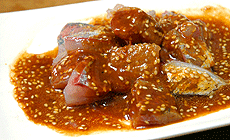
Korean-Style Fish Carpaccio

Mix some gochujang with red miso, rice vinegar, sugar, soy sauce, Japanese sake or Korean soju and sesame oil. Stir the lot well and pour over a plate of sliced fish such as pike mackerel/saurel!

RECOMMENDED RELATED WEBSITES

Pierre.Cuisine, Francescannotwrite, My White Kitchen, 47 Japanese Farms Through The Eyes of Its Rural Communities, Foodhoe, Chucks Eats, Things that Fizz & Stuff, Five Euro Food by Charles,Red Shallot Kitchen by Priscilla,With a Glass, Nami | Just One Cookbook, Peach Farm Studio, Clumsyfingers by Xethia, PepperBento,Adventures in Bento Making, American Bent, Beanbento, Bento No, Bento Wo Tsukurimashou, Cooking Cute, Eula, Hapabento , Happy Bento, Jacki’s Bento Blog, Kitchen Cow, Leggo My Obento, Le Petit Journal Bento & CO (French), Lunch In A Box,
Susan at Arkonlite, Vegan Lunch Box; Tokyo Tom Baker, Daily Food Porn/Osaka, Only Nature Food Porn, Happy Little Bento, The Herbed Kitchen, J-Mama’s Kitchen, Cook, Eat, Play, Repeat, Bento Lunch Blog (German), Adventures In Bento, Anna The Red’s Bento Factory, Cooking Cute, Timeless Gourmet, Bento Bug, Ideal Meal, Bentosaurus, Mr. Foodie (London/UK), Ohayo Bento,

Must-see tasting websites:

-Sake: Tokyo Through The Drinking Glass, Tokyo Foodcast, Urban Sake, Sake World
-Wine: Palate To Pen, Warren Bobrow, Cellar Tours, Ancient Fire Wines Blog
-Beer: Good Beer & Country Boys, Another Pint, Please!
-Japanese Pottery to enjoy your favourite drinks: Yellin Yakimono Gallery

Rainbow Charity Cocktail Rally 2012 in Shizuoka City March 11th~April 11th!

The BCS/Bartender’s Club Shizuoka will organize a Cocktail Rally from March 11th to April 11th to raise some money for the victims of the earthquake and tsunami which devastated the north east of Japan last year on March 11th!

The method is very simple:
Tickets for 3,500 yen are on sale at the 7 different bars of the Association or on the telephone or through friends. Check the bars information at the end of this posting!

The ticket includes a map for better orienteering!
Keep it with you at all times!

The ticket includes 7 coupons, one for each bar.
Each coupon can be used only once at the bar indicated on it.
It will entitle you to one original cocktail.
Note that the bars also charge a 500 yen cover charge. At about 1,000 yen for the first drink, it a great bargain!
500 yen for each whole ticket will go to charity!
No better way to get acquainted with the best cocktail bars in Shizuoka City!

Bartender’s Club Shizuoka, the 7 Samurais!

JUILLET
Shizuoka City, Aoi Ku, Takajo, 2-10-8
Tel.: 054-273-5755
Opening hours: 12:00~24:00
Closed on Wednesdays

BAR BOTANICAL
Shizuoka City, Aoi Ku, Ryogae Cho, 1-6-13, Shade Bldg, 1F
Tel.: 054-221-8686
Opening hours: 18:00~02:00
Closed on Mondays

BAR ALCHEMIST
Shizuoka City, Aoi Ku, Tenma Cho, 22-1
Tel.: 054-251-7356
Opening hours: 16:00~24:00
Closed on Sundays and National Holidays

BAR LE REFUGE
Shizuoka City, Aoi Ku, Tenma Cho, 9-15, Liberte Hirano Bldg, 1F-B
Tel.: 054-221-0339
Opening hours: 18:00~02:00
Closed on Sundays

BAR NO’AGE
Shizuoka City, Aoi Ku, Shichiken Cho, 8-6, ACT7 Bldg., 2f
Tel.: 054-253-6615
Opening hours: 17:00~01:00 (16:00~24:00 on Sundays)
Closed on Tuesdays

BAR-CODE
Shizuoka City, Aoi Ku, Tokiwa Cho, 1-2-1, Friend Kuki Bldg., 1F
Tel.: 054-221-1999
Opening hours: 18:00~03:00 (18:00~05:00 on Fridays & Saturdays)
Closed on Sundays

BAR SHAMROCK
Shizuoka City, Aoi Ku, Shichiken-Cho, 8-6, ACT7 Bldg., 1F
tel.: 054-252-1600
Opening hours: 18:00~03:00

RECOMMENDED RELATED WEBSITES

Pierre.Cuisine, Francescannotwrite, My White Kitchen, 47 Japanese Farms Through The Eyes of Its Rural Communities, Foodhoe, Chucks Eats, Things that Fizz & Stuff, Five Euro Food by Charles,Red Shallot Kitchen by Priscilla,With a Glass, Nami | Just One Cookbook, Peach Farm Studio, Clumsyfingers by Xethia, PepperBento,Adventures in Bento Making, American Bent, Beanbento, Bento No, Bento Wo Tsukurimashou, Cooking Cute, Eula, Hapabento , Happy Bento, Jacki’s Bento Blog, Kitchen Cow, Leggo My Obento, Le Petit Journal Bento & CO (French), Lunch In A Box,
Susan at Arkonlite, Vegan Lunch Box; Tokyo Tom Baker, Daily Food Porn/Osaka, Only Nature Food Porn, Happy Little Bento, The Herbed Kitchen, J-Mama’s Kitchen, Cook, Eat, Play, Repeat, Bento Lunch Blog (German), Adventures In Bento, Anna The Red’s Bento Factory, Cooking Cute, Timeless Gourmet, Bento Bug, Ideal Meal, Bentosaurus, Mr. Foodie (London/UK), Ohayo Bento,

Must-see tasting websites:

-Sake: Tokyo Through The Drinking Glass, Tokyo Foodcast, Urban Sake, Sake World
-Wine: Palate To Pen, Warren Bobrow, Cellar Tours, Ancient Fire Wines Blog
-Beer: Good Beer & Country Boys, Another Pint, Please!
-Japanese Pottery to enjoy your favourite drinks: Yellin Yakimono Gallery

Japanese Gastronomy: Tamago Miso Tsuke:Miso-pickled Egg Yolk

TAMAGO-MISO-1

Charles at Five Euro Food has just reminded me of an old post of mine when he wrote about his 5-hour egg!

Eggs are the one single ingredient used all over the World (except for the glacial caps maybe!), and people have come up with infinite ways of preserving them.
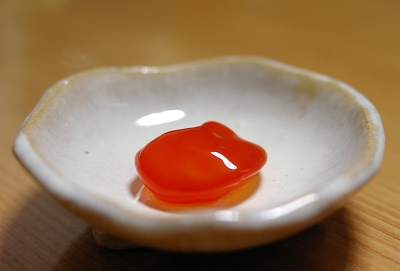
Tamago Miso Tsuke/卵黄味噌漬け is a popular way in Japan to preserve egg yolk in miso.
This very simple recipe could become useful for a tasty decoration!

INGREDIENTS:

-Raw eggs: 2
-Japanese sake: half a tablespoon
-Miso: 50 g
-Sugar: half a tablespoon

RECIPE:

TAMAGO-MISO-2

-Mix miso, Japanese sake and sugar well.

TAMAGO-MISO-3

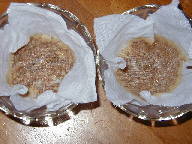
-Line two cups (narrow bottom and wide top) with gauze cloth (first clean it in cold clean water and press out all water). Pour half of the miso mix on each.

TAMAGO-MISO-4

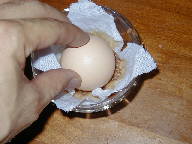
-Wash the egg and wipe it clean of water. Use it to fashion a “bed” inside the miso.

TAMAGO-MISO-5

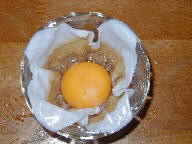
-Break the egg and separate yolk from white. Drop the egg yolk (only!) inside the miso bed. Cover with cellophane paper and leave inside the refrigeartor for 2 days.

TAMAGO-MISO-6

-After the first two days take the cup out and turn the egg yolk over delicately with a spoon. Leave in the fridge for three~four more days.
It should be ready by then!
It can be safely preserved inside a tightly closed tupperware inside the fridge for up to ten days!

RECOMMENDED RELATED WEBSITES

Pierre.Cuisine, Francescannotwrite, My White Kitchen, 47 Japanese Farms Through The Eyes of Its Rural Communities, Foodhoe, Chucks Eats, Things that Fizz & Stuff, Five Euro Food by Charles,Red Shallot Kitchen by Priscilla,With a Glass, Nami | Just One Cookbook, Peach Farm Studio, Clumsyfingers by Xethia, PepperBento,Adventures in Bento Making, American Bent, Beanbento, Bento No, Bento Wo Tsukurimashou, Cooking Cute, Eula, Hapabento , Happy Bento, Jacki’s Bento Blog, Kitchen Cow, Leggo My Obento, Le Petit Journal Bento & CO (French), Lunch In A Box,
Susan at Arkonlite, Vegan Lunch Box; Tokyo Tom Baker, Daily Food Porn/Osaka, Only Nature Food Porn, Happy Little Bento, The Herbed Kitchen, J-Mama’s Kitchen, Cook, Eat, Play, Repeat, Bento Lunch Blog (German), Adventures In Bento, Anna The Red’s Bento Factory, Cooking Cute, Timeless Gourmet, Bento Bug, Ideal Meal, Bentosaurus, Mr. Foodie (London/UK), Ohayo Bento,

Must-see tasting websites:

-Sake: Tokyo Through The Drinking Glass, Tokyo Foodcast, Urban Sake, Sake World
-Wine: Palate To Pen, Warren Bobrow, Cellar Tours, Ancient Fire Wines Blog
-Beer: Good Beer & Country Boys, Another Pint, Please!
-Japanese Pottery to enjoy your favourite drinks: Yellin Yakimono Gallery

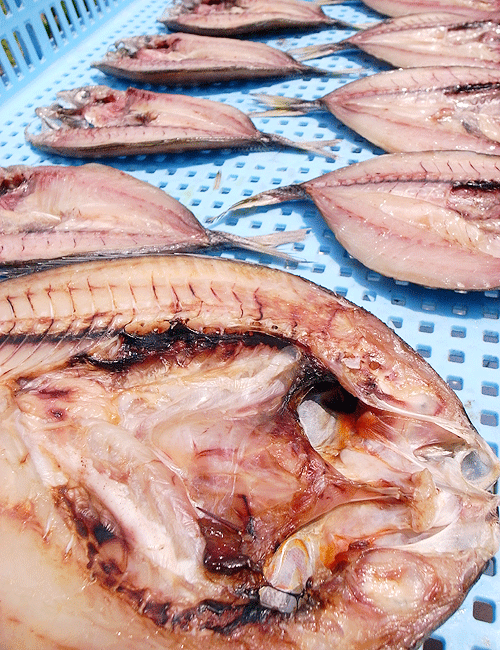
Japanese Gastronomy: Himono/干物-Dried Fish

How many people outside Shizuoka Prefecture know that half (yes, half!) of all dried fish are caught and processed in our Prefecture, notably along the shores of the Izu Peninsula?
When will i convince everyone that Shizuoka Prefecture is THE true gastronomic region of Japan? LOL
To those guys living in Tokyo, may I remind them that Mount Fuji, Izu Peninsula and wasabi are all in Shizuoka Prefecture? Please someone stop me! (Would you belive I have been challenged on the veracity of the last?)

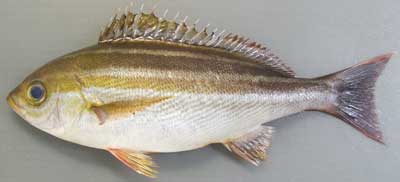
I chose a fish called “isaki” or “Chicken Grunt” (who came up with that English name?) that is quite common on our shores.
The recipe naturally applies to loads of fish!

CLEANING THE FISH:

Using a strong short sharp knife (the Japanese use the same knife to cut and gut medium size fish), first get rid of the scales as much as possible.
Wash once under running clear cold water.
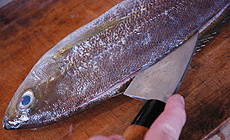
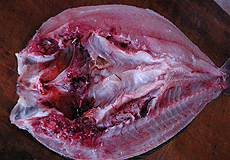
Cut along the back (not the belly! very important) from the tail to the head as shown on above picture deeply enough to reach the main bone.

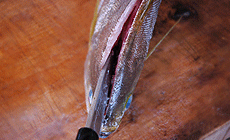
Once the knife has cut all along the back and reached the head, cut the head in half along the same cutting line.
The head of a isaki being small it is quite easy. It might require some strength for bigger head fish like seabreams. Call the MOTH then! (not the moths, the “Man”! LOL).

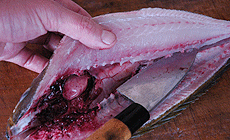
Open the fish and continue cutting in half all the way through.

Take out all innards carefully so as not having them getting in contact with the flesh!
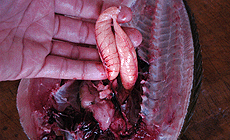
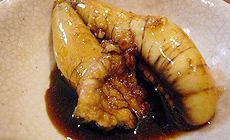
Depending upon the season, you might be lucky to get male sperm sacks (shirako). Don’t throw that away. They are great simmered with soy sauce, mirin/sweet sake, japanese sake and chili pepper! (see pic below).

Open the fish and clean it under running clear cold water.
Take water off with some kitchen paper or a clean piece of cloth.
Sprinkle with salt and dry outside under the sun until it has reached a nice aspect. You could also smoke it.
It can be preserved inside an airtight plastic bag and frozen, although eaten quickly it will taste so much better!

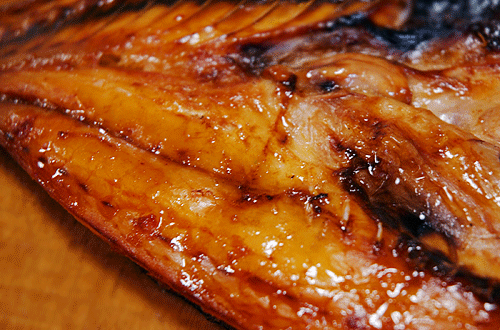
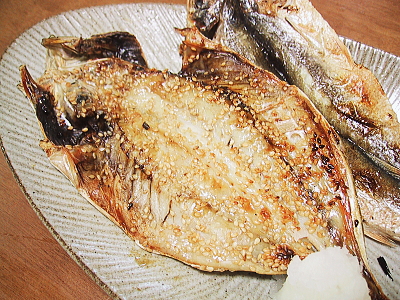
The Japanese grill their himono/dried fish pasted with a little soy sauce or tare. Beautiful with beer!

Great also grilled with a little salt!

If grilled with salt don’t forget the freshly grated daikon (and lemon juice, and soy sauce…)

The male sperm sacs (shirako) make for a great snack with your beer or sake once simmered in soy sauce, mirin/sweet sake and Japanese sake (and a little chili pepper)!

RECOMMENDED RELATED WEBSITES

Pierre.Cuisine, Francescannotwrite, My White Kitchen, 47 Japanese Farms Through The Eyes of Its Rural Communities, Foodhoe, Chucks Eats, Things that Fizz & Stuff, Five Euro Food by Charles,Red Shallot Kitchen by Priscilla,With a Glass, Nami | Just One Cookbook, Peach Farm Studio, Clumsyfingers by Xethia, PepperBento,Adventures in Bento Making, American Bent, Beanbento, Bento No, Bento Wo Tsukurimashou, Cooking Cute, Eula, Hapabento , Happy Bento, Jacki’s Bento Blog, Kitchen Cow, Leggo My Obento, Le Petit Journal Bento & CO (French), Lunch In A Box,
Susan at Arkonlite, Vegan Lunch Box; Tokyo Tom Baker, Daily Food Porn/Osaka, Only Nature Food Porn, Happy Little Bento, The Herbed Kitchen, J-Mama’s Kitchen, Cook, Eat, Play, Repeat, Bento Lunch Blog (German), Adventures In Bento, Anna The Red’s Bento Factory, Cooking Cute, Timeless Gourmet, Bento Bug, Ideal Meal, Bentosaurus, Mr. Foodie (London/UK), Ohayo Bento,

Must-see tasting websites:

-Sake: Tokyo Through The Drinking Glass, Tokyo Foodcast, Urban Sake, Sake World
-Wine: Palate To Pen, Warren Bobrow, Cellar Tours, Ancient Fire Wines Blog
-Beer: Good Beer & Country Boys, Another Pint, Please!
-Japanese Pottery to enjoy your favourite drinks: Yellin Yakimono Gallery

Japanese Gastronomy: Ebi Furai/Deep-fried Prawns

The Japanese love to deep-fry their food to the point that many izakaya propose full deep-fried food sets and menus including vegetables and seafood, and the ubiquitous prawns.
The Japanese will usually utilize kuruma ebi/Imperial prawns or Black Tiger variety for the latter.
There is nothing complicated about preparing deep-fried prawns. The key is to use fresh ingredients and serve everything as soon as ready.

INGREDIENTS:

-Imperial Prawns/Black Tiger Prawns
-Salt and pepper: to taste
-All-purpose flour
-Egg (s)
-Breadcrumbs or panko (the rough style). Real fresh breadcrumbs are the best.
-Tartare sauce for serving. or tare/bulldog sauce and mustard.

RECIPE:

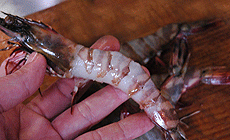
If the prawn is absolutely fresh take the shell off leaving the head and tail on. Note that the shell can be deep-fried for a crunchy snack!
If not, take the head off but leave the point of the the tail on for “handling” when eating it.

Take off the innards with a toothpick by inserting it under the blackish thread and pulling it out. Don’t worry about “breaking the back” of the prawn. Actually this is the trick which prevents the prawn from bending upon frying!

Actually, continue with the trick by making a few shallow cuts acrosss the back of the prawn to make sure it will not bend at all!
Sprinkle with salt (a little only!) and pepper to taste.

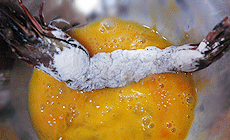
Roll prawns in flour.

Then in the beaten eggs.

Apply plenty of breadcrumbs/panko all over the prawns, head and tail included. Pat them lightly between you palms to help breadcrumbs to adhere.

Heat the oil at 170 degrees (less is unsuitable, 180 degrees is the very maximum). Drop the prawns gently into the oil head first.
Avoid manipulating them while frying.
Don’t fry too many at one time as the temperature of the oil will suddenly decrease.
Take them out with chopsticks. Place them on a grill for a few seconds to get rid of excess oil.
Serve with sauce and eat at once!

RECOMMENDED RELATED WEBSITES

Pierre.Cuisine, Francescannotwrite, My White Kitchen, 47 Japanese Farms Through The Eyes of Its Rural Communities, Foodhoe, Chucks Eats, Things that Fizz & Stuff, Five Euro Food by Charles,Red Shallot Kitchen by Priscilla,With a Glass, Nami | Just One Cookbook, Peach Farm Studio, Clumsyfingers by Xethia, PepperBento,Adventures in Bento Making, American Bent, Beanbento, Bento No, Bento Wo Tsukurimashou, Cooking Cute, Eula, Hapabento , Happy Bento, Jacki’s Bento Blog, Kitchen Cow, Leggo My Obento, Le Petit Journal Bento & CO (French), Lunch In A Box,
Susan at Arkonlite, Vegan Lunch Box; Tokyo Tom Baker, Daily Food Porn/Osaka, Only Nature Food Porn, Happy Little Bento, The Herbed Kitchen, J-Mama’s Kitchen, Cook, Eat, Play, Repeat, Bento Lunch Blog (German), Adventures In Bento, Anna The Red’s Bento Factory, Cooking Cute, Timeless Gourmet, Bento Bug, Ideal Meal, Bentosaurus, Mr. Foodie (London/UK), Ohayo Bento,

Must-see tasting websites:

-Sake: Tokyo Through The Drinking Glass, Tokyo Foodcast, Urban Sake, Sake World
-Wine: Palate To Pen, Warren Bobrow, Cellar Tours, Ancient Fire Wines Blog
-Beer: Good Beer & Country Boys, Another Pint, Please!
-Japanese Pottery to enjoy your favourite drinks: Yellin Yakimono Gallery

Japanese Gastronomy: Korokke-Croquettes/Introduction & Basic Recipe!

KOROKKE-1

Korokke (Japanese: コロッケ) is the Japanese name for a deep fried dish originally related to a French dish, the croquette. It is also said that it comes from the Dutch, Kroket.
It was introduced in the early 1900s. This dish is also popular in South Korea where it is typically sold in bakeries.

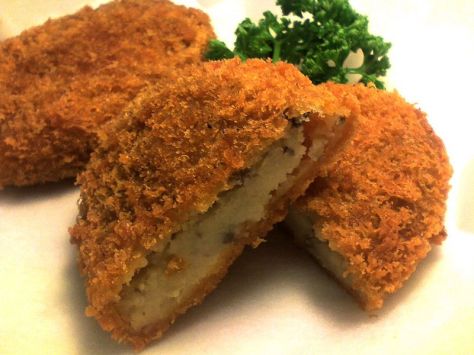
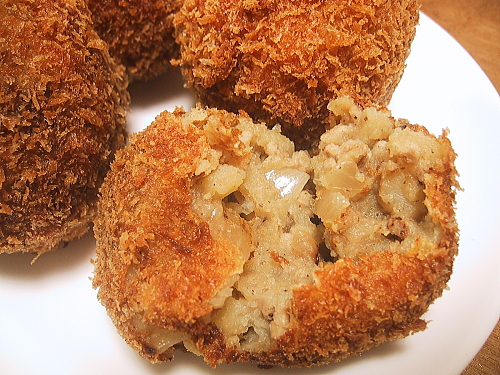
Korokke is made by mixing cooked chopped meat or seafood, vegetables with mashed potato or white sauce, or both, rolling it in wheat flour, eggs, and breadcrumbs/panko, then deep frying this until brown (fox colour in Japanese!) on the outside.
Korokke are usually shaped like flat patties. They are generally called “ingredient + Korokke”. For example, those using beef would be called “beef (gyu) korokke”, those using shrimp, “ebi korokke“, etc.. Those using white sauce may also be called “Cream Korokke”.

KOROKKE-2

Korokke are often served with Worcestershire sauce and shredded cabbage.

Korokke can be eaten as is, and are sometimes sold wrapped in paper at stalls. They may also be used as a topping for other dishes. When sandwiched between a piece of bread, they are be called “Korokke pan” (“pan” being bread in Japanese).

Korrokke was the most sold single frozen food in 2007 and has been among the top three ever since.

——————————–

BASIC RECIPE

Here is the basic recipe prevalent in restaurants and homesteads.
Naturally, it can be expanded and modified at will.
I will not bother you with measurements as the method is the point of this posting!

1) INGREDIENTS:

-Potatoes (you will have to decide which variety! In Japan, “Danshaku” are best!)
-Onion
-Minced meat (of your choice!)
-Salt and pepper
-Flour (of your choice)
-Egg
-Milk
-Breadcrumbs (fresh if possible)
-Oil
-Lard (skip that if you don’t like it, but it would be a pity!)

2) RECIPE:

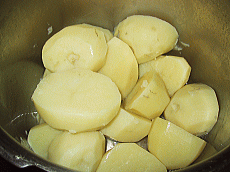
-Boil the potatoes with their skins.
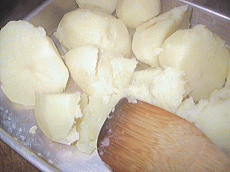
Peel the skins off just out of the water when very hot. This way, the potatoes will not be too wet.

-Mash the potatoes roughly with a wooden spoon/spatula. Add salt and pepper and mix roughly. Cover with cellophane paper to keep the potatoes warm as long as possible.

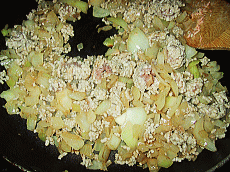
-Chop the onions finely and fry in lard if possible for better taste. If you don’t like lard, use oil. You could add chopped garlic and small pieces of bacon.
Add minced meat of your choice. Season with a little salt, pepper, sugar and soy sauce according to you preferences. Fry until the minced meat is cooked.

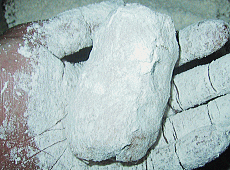
-Add the mashed potatoes. Mixing them all atogether at the same time fry until potatoes have become dry enough.
Let cool completely and transfer to a storage dish. Cover with cellophane paper and leave overnight in the refrigerator to allow taste to permeate the potatoes. This is an important point as not only it will enhance the taste but also make the croquettes easier to shape.

-Spread a little oil over your palms and shape croquettes into you prefered size.

-Roll in flour and “shake” croquettes so that not too much flour adheres to them.

-Prepare (you might better do that first, LOL) the croquettes egg dip by mixing beaten egg, flour and milk to your preference.
Dip the croquettes in the batter completely.

-Roll the croquettes in the breadcrumbs.
One way to make breadcrumbs is to use real bread which had turned completely solid, soften it in milk, let it dry again and crush it into powder!

-Deep-fry croquettes at 170 degrees Celsius until they have reached a color of your liking.
As everything is already cooked inside, don’t worry whether they are cooked enough or not.
Point: add a little sesame oil to your frying oil for extra taste.

There are all kinds of sauce and decoration you cane serve croquettes with, unless you like them plain with a little mustard for example.

Here is a little suggestion for good taste and appetizing presentation:
Prepare a light white sauce/bechamel in the aurora style sauce with plenty of white pepper and boiled green peas.

Don’t they look nice like that!

RECOMMENDED RELATED WEBSITES

Pierre.Cuisine, Francescannotwrite, My White Kitchen, 47 Japanese Farms Through The Eyes of Its Rural Communities, Foodhoe, Chucks Eats, Things that Fizz & Stuff, Five Euro Food by Charles,Red Shallot Kitchen by Priscilla,With a Glass, Nami | Just One Cookbook, Peach Farm Studio, Clumsyfingers by Xethia, PepperBento,Adventures in Bento Making, American Bent, Beanbento, Bento No, Bento Wo Tsukurimashou, Cooking Cute, Eula, Hapabento , Happy Bento, Jacki’s Bento Blog, Kitchen Cow, Leggo My Obento, Le Petit Journal Bento & CO (French), Lunch In A Box,
Susan at Arkonlite, Vegan Lunch Box; Tokyo Tom Baker, Daily Food Porn/Osaka, Only Nature Food Porn, Happy Little Bento, The Herbed Kitchen, J-Mama’s Kitchen, Cook, Eat, Play, Repeat, Bento Lunch Blog (German), Adventures In Bento, Anna The Red’s Bento Factory, Cooking Cute, Timeless Gourmet, Bento Bug, Ideal Meal, Bentosaurus, Mr. Foodie (London/UK), Ohayo Bento,

Must-see tasting websites:

-Sake: Tokyo Through The Drinking Glass, Tokyo Foodcast, Urban Sake, Sake World
-Wine: Palate To Pen, Warren Bobrow, Cellar Tours, Ancient Fire Wines Blog
-Beer: Good Beer & Country Boys, Another Pint, Please!
-Japanese Pottery to enjoy your favourite drinks: Yellin Yakimono Gallery

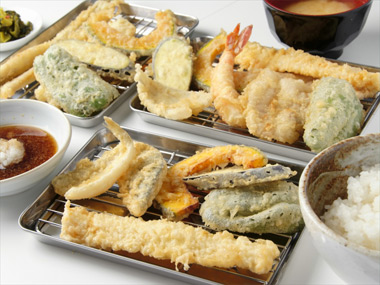
Tempura: The Basic Professional Recipe

A recent comment by Charles at Five Euro Food reminded me it was about time to publish a re-edited version of a former post on Tempura Recipes!

Tempura is not difficult to make. If you keep to the basics and good ingredients, you will be able to make a lot of people happy with healthy and beautiful food.

The following instructions should be amply enough to succeed with this celebrad Japanese gastronomic marvel:

INGREDIENTS:

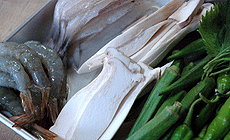
What can you fry as tempura?
-Any green or not vegetable as long as they are cut to the appropriate size. Avocado and pumpkin can be made as tempura!
Important: try to keep all vegetables cut to the same size. There is no need to boil, steam or cook vegetables or else beforehand if they are fresh!
If consistency and thickness varies, sort them out accordingly in compatible batches. The frying will be more even, avoiding disappointing discrepancies.
Wash and dry vegetables.
-Any white-fleshed fish, crustaceans and shellfish. Clean and wipe off excessive humidity. Fry them separately from the vegetables. Some red-fleshed fish can be made as tempura, but they are a bit of an acquired taste.

In short, don’tbe afraid of experimenting!

Vegans and Vegetarians

Before we go any further, vegans and vegetarians can make tempura. Replace the egg white with cornstarch. Wheat flour allergics can use other flour types including rice flour, although they need be of the light-weight and fine sort.

-If you use frozen ingredients, make sure to thaw them completely and wipe off all excess water!

The batter:
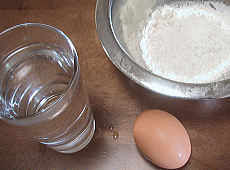
-Use an equal amount of fine light flour and pure water.
1 cup of water for 1 cup of flour and 1 egg white are the right proportions.

Important!
-Flour, water and egg, not only must be at the same temperature, but must be chilled! Leave them together in the fridge before usage!
The batter should be prepared at the last moment after all the ingredients have been cut and laid on the table, the oil brought to the right temperature and the sauces or spices prepared and laid on the table!

-First mix water and egg white (or cornstarch/not too much with that one!). Then pour on the flour and mix lightly.
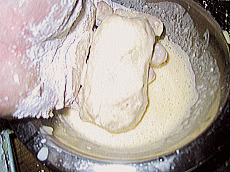
Do not overmix! Flour blobs should still be there! This is the secret for fluffy, light tempura!

Fish, crustaceans and shellfish may be completely dipped in the batter as well as rounded or stick-shaped vegetables including slices of onions, kabocha or avocado.
But in the case of large leafy vegetables such as shiso/perilla or large flat mushrooms such as shiitake, dipping only one side (back side for leaves!) in batter is preferable, otherwise you will end up with masses of fried batter!
Actually, in the case of fish, it is better to dip only the skin side in the batter.

Oil:
-Use plenty.
Use clean fresh oil!
Use salad oil of your preference and sesame oil in a 6:4 ratio.
Bad oil or old oil is bad for your health.
If the oil keep bubbling on upon being heated, change it!

Frying:
-The usual temperature is 180 degrees Celsius, but the ideal is 170 degrees Celsius.
Note: 160 degrees Celsius is not hot enough!
-Use a relatively thin pan for frying as the temperature of the oil will fall down by 4 degrees Celsius when food is plunged into the oil. The oil has to reach its former temperature back as soon as possible.

-Fry vegetables before fish or seafood as the latter’s proteins will change the character of the oil.
-Do not crowd the oil. Drop everything in the middle in small batches.
-Do not overfry. Experience will tell you when to take ingredients out.
-Do not fry twice! Full stop!

Serve on a piece of kitchen paper after having laid the ingredients on a grill for a few seconds to get rid of the excess oil.

Seasoning:
-Personally I eat tempura as it is without anything, but if I use seasoning I like the following:
Matcha powder
Rock salt
Curry mixture powder

Now,if you want to dip your tempura in soup/tsuyu, you can prepare it as follows:
Dashi (konbu/seweed dashi for vegans and vegetarians!): 5 (or 4) tablespoons
Soy sauce: 1 (or 2) tablespoon
Mirin/sweet sake: 1 tablespoon
Heat the whole a little before serving.

NOTE:
-You may use freshly grated daikon, grated ginger, lemon juice or a light dressing of your choice for further seasoning.

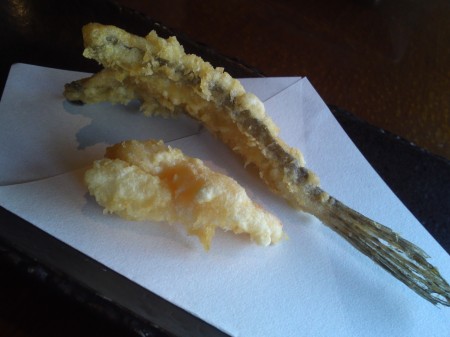
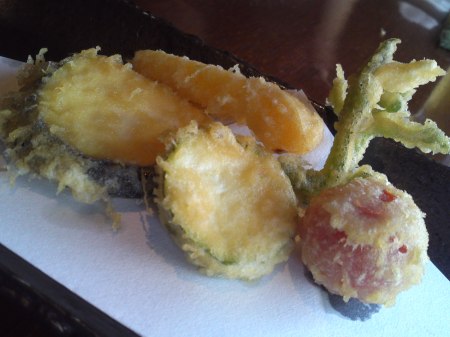
TEMPURA SAMPLES
(All taken at Setsugekka Restaurant in Shimada City!)

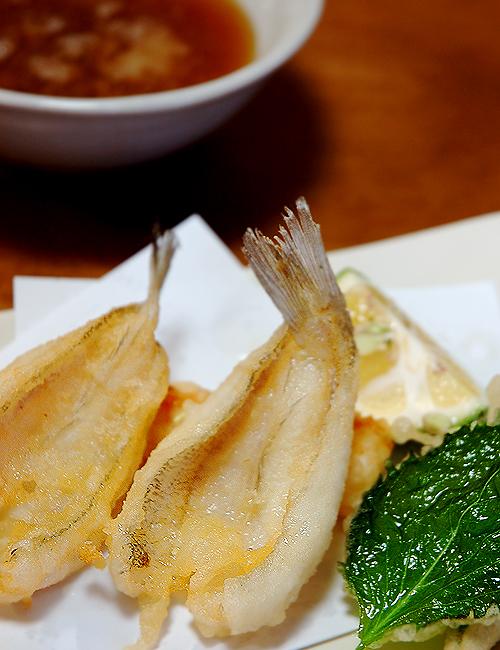
“Kogochi fish” and “nanba shrimp”!

All local vegetables: yellow pimento, sweet potato, plum tomato and ice plant!

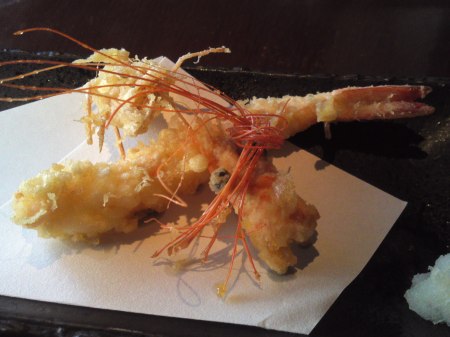
“Kuruma ebi/large prawn”! The whole was edible!
A real piece of art!

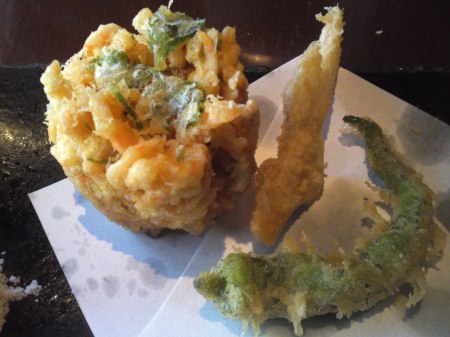
A delicacy you will find only in Shizuoka Prefecture: “Sakura ebi kakiage/cherry shrimps tempura”!
With local “leaf ginger and “shishito/chili pepper”.

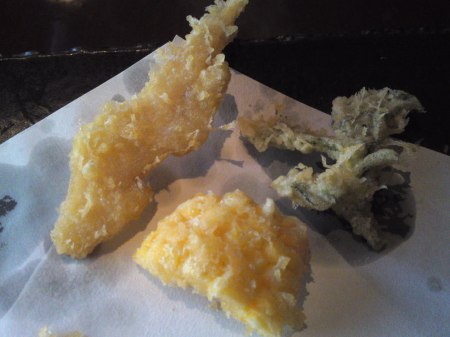
Local vegetables again: leaf ginger, sweet corn and ice plant!

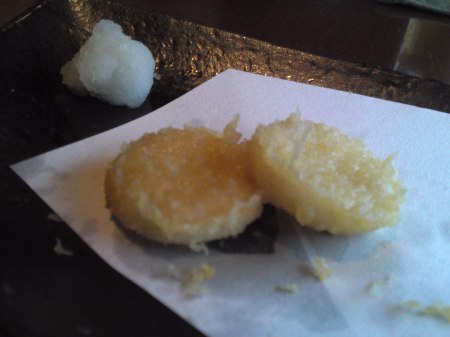
Now, this is a very unusual tempura: “sakekasu/sake white lees tempura”! The white lees came from the neighbors, Oomuraya Brewery!

RECOMMENDED RELATED WEBSITES

Pierre.Cuisine, Francescannotwrite, My White Kitchen, 47 Japanese Farms Through The Eyes of Its Rural Communities, Foodhoe, Chucks Eats, Things that Fizz & Stuff, Five Euro Food by Charles,Red Shallot Kitchen by Priscilla,With a Glass, Nami | Just One Cookbook, Peach Farm Studio, Clumsyfingers by Xethia, PepperBento,Adventures in Bento Making, American Bent, Beanbento, Bento No, Bento Wo Tsukurimashou, Cooking Cute, Eula, Hapabento , Happy Bento, Jacki’s Bento Blog, Kitchen Cow, Leggo My Obento, Le Petit Journal Bento & CO (French), Lunch In A Box,
Susan at Arkonlite, Vegan Lunch Box; Tokyo Tom Baker, Daily Food Porn/Osaka, Only Nature Food Porn, Happy Little Bento, The Herbed Kitchen, J-Mama’s Kitchen, Cook, Eat, Play, Repeat, Bento Lunch Blog (German), Adventures In Bento, Anna The Red’s Bento Factory, Cooking Cute, Timeless Gourmet, Bento Bug, Ideal Meal, Bentosaurus, Mr. Foodie (London/UK), Ohayo Bento,

Must-see tasting websites:

-Sake: Tokyo Through The Drinking Glass, Tokyo Foodcast, Urban Sake, Sake World
-Wine: Palate To Pen, Warren Bobrow, Cellar Tours, Ancient Fire Wines Blog
-Beer: Good Beer & Country Boys, Another Pint, Please!
-Japanese Pottery to enjoy your favourite drinks: Yellin Yakimono Gallery

Izakaya Gastronomy: Dinner at Waga (2012) in Shizuoka City!

Succulent plate of sashimi!

Service: Very friendly and easy-going! Slow food!
Facilities: Very clean overall. Large and clean washroom.
Prices: reasonable
Strong points: Great list of sake and shochu. Typical izakaya gastronomy with a personal touch!

It is not easy to socialize equally with all the good restaurants and izakayas in Shizuoka and arrangements have to be done sometimes! LOL
Anyway, to cut a long story short I managed to persuade the Missus to pay our first visit of the year to Waga, one of our favorite izakayas in Shizuoka City!

Waga is a great place, totally unpretentious, and laughing faces serving you efficiently without a fuss and with plenty of interesting explanations!

The snacks served with the first drink set the tone right away: Fried salmon in sweet and sour sauce!

Always check the specialties of the day!
If you cannot read the menu, no worries as the young staff is recruited in local universities who should manage some English!

The sashimi is top class at Waga and at a reasonable price! This is not Tokyo!
Madai/Seabream in front, Maguro akami/lean tuna, Kanpachi/Greater amberjack and Salmon!

We always order the daikon katsu at Waga!

Waga-style sauteed beansprouts in sesame oil!

You must sample Waga’s (large ) prawns fried in hot sweet and sour sauce!

They come also with great comfort dishes in winter!

Soba with plenty of vegetables and soft pork!

not only so delicious but so comforting and body-warming!

To be continued…

WAGA
Shizuoka City, Aoi Ku, takajyo, 2-1-20, Kuroyanagi Bldg. 1F
Tel.: 054-271-7121
Business hours: 17:30~23:30, 17:30~26:00 (on Fridays, Saturdays and National Holidays)
Closed on Mondays
HOMEPAGE (Japanese)

RECOMMENDED RELATED WEBSITES

Pierre.Cuisine, Francescannotwrite, My White Kitchen, 47 Japanese Farms Through The Eyes of Its Rural Communities, Foodhoe, Chucks Eats, Things that Fizz & Stuff, Five Euro Food by Charles,Red Shallot Kitchen by Priscilla,With a Glass, Nami | Just One Cookbook, Peach Farm Studio, Clumsyfingers by Xethia, PepperBento,Adventures in Bento Making, American Bent, Beanbento, Bento No, Bento Wo Tsukurimashou, Cooking Cute, Eula, Hapabento , Happy Bento, Jacki’s Bento Blog, Kitchen Cow, Leggo My Obento, Le Petit Journal Bento & CO (French), Lunch In A Box,
Susan at Arkonlite, Vegan Lunch Box; Tokyo Tom Baker, Daily Food Porn/Osaka, Only Nature Food Porn, Happy Little Bento, The Herbed Kitchen, J-Mama’s Kitchen, Cook, Eat, Play, Repeat, Bento Lunch Blog (German), Adventures In Bento, Anna The Red’s Bento Factory, Cooking Cute, Timeless Gourmet, Bento Bug, Ideal Meal, Bentosaurus, Mr. Foodie (London/UK), Ohayo Bento,

Must-see tasting websites:

-Sake: Tokyo Through The Drinking Glass, Tokyo Foodcast, Urban Sake, Sake World
-Wine: Palate To Pen, Warren Bobrow, Cellar Tours, Ancient Fire Wines Blog
-Beer: Good Beer & Country Boys, Another Pint, Please!
-Japanese Pottery to enjoy your favourite drinks: Yellin Yakimono Gallery