Tag Archives: グルメ

Japanese Cuisine: Carrot Meatballs

Meatballs, or Meat Balls, are a universal favourite.
They can be conceived in a simple and healthy way as shown in Japanese home cooking:

Carrot Meatballs!

INGREDIENTS: for 4 people

-Minced pork: 500 g
-Egg: 1
-Carrot: 1
-Onion: 1 small
-Daikon: as appropriate/sliced into thin quarters
-Panko/Breadcrumbs: 50 g
-Cornstarch: as appropriate
-salt: 1/2 teaspoon
-Sugar: 2 tablespoons
-Soy sauce: 2 tablespoons
-Water: 450 cc/ml
-Bouillon powder: 2 teaspoons

RECIPE:

-Cut the onion into thin slices. Drop them inside an oven-resistant dish. Cover with cellophane paper. Cook in microwave oven for 2 minutes at 600 Watt. Let cool down completely.

Grate carrot and mix with minced pork.

Add salt, onion, egg and breadcrumbs. Mix well.

-Shape meatballs and cover and roll them into cornstarch.

-In a large pan, bring water to boil.
Lower fir to small. Add bouillon, soy sauce and sugar to make a soup. Mix well.
Drop in sliced daikon and meatballs.
Simmer gently until properly cooked.
Serve hot topped with some greens!

RECOMMENDED RELATED SITES:
Warren Bobrow, Bread + Butter, Zoy Zhang, Hungry Neko, Think Twice, Frank Fariello, Mangantayon, Hapabento, Elinluv Tidbit Corner, Tokyo Terrace, Maison de Christina, Chrys Niles,Lexi, Culinary Musings, Wheeling Gourmet, Comestiblog, Chronicles Of A Curious Cook, Tokyo Through The Drinking Glass, Tokyo Foodcast, Palate To Pen, Yellin Yakimono Gallery, Tokyo Terrace, Hilah Cooking, More than a Mount Full, Arkonite Bento, Happy Little Bento; 5 Star Foodie; Jefferson’s Table; Oyster Culture; Gourmet Fury; Island Vittles; Good Beer & Country Boys; Rubber Slippers In Italy; Color Food daidokoro/Osaka;/a; The Witchy Kitchen; Citron Et Vanille, Lunsj Med Buffet/Estonian Gastronomy (English)

Please check the new postings at:
sake, shochu and sushi

Health & Nutrition Facts in Japanese Food 3: Persimmon/Kaki/柿

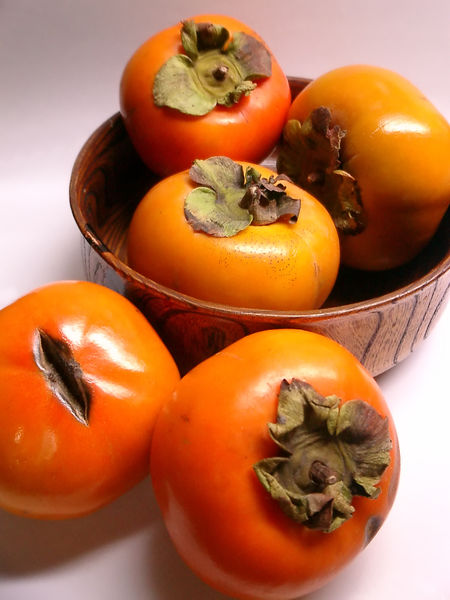
Jiro kaki/squat persimmons

As demonstrated by many food bloggers, cooking and creating great foods and drinks have become incomplete and unsatisfying when not considering the benefits or adverse effects of the same foods and drinks regardless of their taste.
I do not intend to delve into counselling or consulting, but only to offer some knowledge about the good sides of Japanese foods and drinks. I will not extoll on its possible lacks and negative aspects. After all, the Japanese are not the longest-living people in the world for no reason!
I will also offr at least one nutritious or healthy recipe at the end of each posting.

Health & Nutrition Facts in Japanese Food 3: Persimmon/Kaki/柿

A persimmon is the edible fruit of a number of species of trees in the genus Diospyros in the ebony wood family (Ebenaceae). The word Diospyros means “the fruit of the gods” in ancient Greek. The word persimmon is derived from putchamin, pasiminan, or pessamin, from Powhatan, an Algonquian language (related to Blackfoot, Cree and Mohican) of the eastern United States, meaning “a dry fruit”.
Persimmons are generally light yellow-orange to dark red-orange in color, and depending on the species, vary in size from 1.5 to 9 cm (0.5 to 4 in) diameter, and may be spherical, acorn-, or pumpkin-shaped. The calyx often remains attached to the fruit after harvesting, but becomes easier to remove as it ripens. They are high in glucose, with a balanced protein profile, and possess various medicinal and chemical uses.
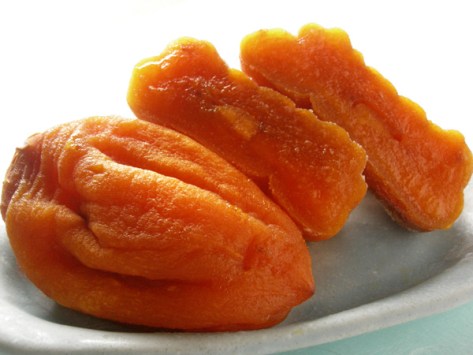
Dried Japanese Hachiya persimmons.

The Japanese Persimmon or kaki (柿) (Diospyros kaki), “shizi” (柿子) in Chinese, is the most widely cultivated species. These are sweet, slightly tangy fruits with a soft to occasionally fibrous texture.
It is edible in its crisp firm state, but has its best flavor when allowed to rest and soften slightly after harvest. The Japanese cultivar ‘Hachiya’ is a widely grown cultivar. The fruit has a high tannin content which makes the immature fruit astringent and bitter. The tannin levels are reduced as the fruit matures. Persimmons like ‘Hachiya’ must be completely ripened before consumption. When ripe, this fruit comprises thick pulpy jelly encased in a waxy thin skinned shell.

The non-astringent persimmon is squat like a tomato and is most commonly sold as fuyu or jiro. Non-astringent persimmons are not actually free of tannins as the term suggests, but rather are far less astringent before ripening, and lose more of their tannic quality sooner. Non-astringent persimmons may be consumed when still very firm to very very soft.

NUTRITION FACTS:

For each 100g it contains:
-Energy: 63 kcal
-Water: 82.2 g
-Proteins: 0.5 g
-Ash: 16.9 g
-Potassium: 200 mg
-Phosphorus: 16 mg
-Manganese: 0.60 mg
-Vitamin A Beta Carotene: 300 micrograms
-Vitamin B1: 0.02 mg
-Vitamin B2: 0.02
-Niacin: 0.3 mg
-Vitamin B6: 0.05 mg
-Vitamin C: 55 mg
-Dietary (roughage) fibre: 2.8 g

HEALTH FACTS & TIPS:

-Combined with cucumber, or with wax gourd/winter melon, or with chickory, or with lettuce, will help recover from diuretic problems, will help prevent stress and improve blood circulation.

-Combined with Chinese cabbage, or with cabbage, or with shungiku/春菊/crown daisy leaves, or with fuki/ふき/giant butterbur, will help prevent cancer and fortify the digestive system.

-Combined with soy beans, or with egg-plant/aubergine, or with potato, or with tomato. will help prevent high blood pressure and blood vessel hardening, heart and cardiovascular diseases and ageing.

-Combined with Jew’s ear mushroom, or with wakame seaweed, or with octopus, will help prevent diabetes and cancer, as well as combat obesity.

RECIPE:

Here is a simple recipe to help fortify the digestive system and help prevent cancer and ageing:

-Persimmon: 1/2
-Tofu: 100~150 g
-Shirataki/Konyaku: 1/2 standard sheet
-Shungiku/crown daisy leaves: as appropriate
-Sesame seed paste: 1 tablespoon
-Sugar: 1 tablespoon

Choose stiil a bit hard. Peel and discard seed. Cut in thin slices about 3 cm long.

Press water out of tofu. Boil the konyaku for a little while. Cut in thin slices about 3 cm long. Cut the leaves off the crown daisy and boil them lightly. Drain thoroughly and cut into 3 cm long pieces.

Drop the tofu in a suribachi/mortar. Add sesame seed paste and sugar and mix well with a pestle.

Place cut persimmon, crown daisy leaves and konyaku on a serving plate. Top the salad with the tofu paste and serve!

RECOMMENDED RELATED SITES:
Warren Bobrow, Bread + Butter, Zoy Zhang, Hungry Neko, Think Twice, Frank Fariello, Mangantayon, Hapabento, Elinluv Tidbit Corner, Tokyo Terrace, Maison de Christina, Chrys Niles,Lexi, Culinary Musings, Wheeling Gourmet, Comestiblog, Chronicles Of A Curious Cook, Tokyo Through The Drinking Glass, Tokyo Foodcast, Palate To Pen, Yellin Yakimono Gallery, Tokyo Terrace, Hilah Cooking, More than a Mount Full, Arkonite Bento, Happy Little Bento; 5 Star Foodie; Jefferson’s Table; Oyster Culture; Gourmet Fury; Island Vittles; Good Beer & Country Boys; Rubber Slippers In Italy; Color Food daidokoro/Osaka;/a; The Witchy Kitchen; Citron Et Vanille

Please check the new postings at:
sake, shochu and sushi

Health & Nutrition Facts in Japanese Food 2: Perilla Leaf/Shiso/紫蘇

As demonstrated by many food bloggers, cooking and creating great foods and drinks have become incomplete and unsatisfying when not considering the benefits or adverse effects of the same foods and drinks regardless of their taste.
I do not intend to delve into counselling or consulting, but only to offer some knowledge about the good sides of Japanese foods and drinks. I will not extoll on its possible lacks and negative aspects. After all, the Japanese are not the longest-living people in the world for no reason!
I will also offr at least one nutritious or healthy recipe at the end of each posting.

Health & Nutrition Facts in Japanese Food 2: Perilla Leaf/Shiso/紫蘇

Perilla frutescens (Green Shiso; Egoma syn. Perilla nankinensis (Lour.) Decne.) is an ornamental plant in the Lamiaceae family.

Edible Shiso Flowers

Its leaves and flowers are used as foods in Japan and its seeds are used to make edible oil in Korea. The leaves are also eaten in Korea. Sometimes, the seeds are ground and added to soup for seasoning in Korea. It is used in traditional Chinese medicine.

Violet varieties are used for pickling and making juices (and even added to sake or shochu).

Egoma and shiso are very similar plants and their seeds are difficult to distinguish even by scanning electron microscope. Their tastes, however, are quite different. Oil was extracted from egoma in many areas of Southeast and East Asia during the historical period and it is still used to cover cookies in rural areas of Korea. Shiso is commonly used for seasoning pickles or as garnish for raw fish dishes in present-day Japan.

Shiso murame/perilla sprouts

It ought to be eaten universally for the sole reason of its high contents in polyphenols and A Beta Carotenes!

NUTRITION FACTS:

For each 100g it contains:
-Energy: 37 kcal
-Water: 86.7 g
-Ash: 7.5 g
-Potassium: 500 mg
-Calcium: 230 mg
-Iron: 1.7 mg
-Manganese: 2.01 mg
-Vitamin A Beta Carotene: 11000 micrograms
-Vitamin K: 690 micrograms
-Vitamin B1: 0.13 mg
-Vitamin B2: 0.34 mg
-Folic Acid: 110 micrograms
-Vitamin C: 26 mg
-Dietary (roughage) fibre: 7.3 g

HEALTH FACTS & TIPS:

-Combined with milk, or with wkame seaweed, or with Jew’s Ear mushroom, or with komatsuna/Jpanese mustard spinach, helps recover from anxiety and short temper, helps prevent blood vessel hardening.

-Combined with oysters, or with liver, or with spinach, or with basket clams/shijimi/シジミ helps preventing anemia and cancer

-Combined with ginger, or with rice vinegar, or with japanese pickled plums/umeboshi/梅干, or with wakame seaweed acts as a sterelizer, helps blood circulation and helps prevent obesity.

-Combined with osmunda japonica/zenmai/ぜんまい, or with kiwi fruit, or with shimeji mushroom/シメジ, or with seaweed, helps prevent cancer, helps skin rejuvenation and helps prevents professional diseases (stress, etc.)

RECIPE:

Here is a recipe for shiso oil preserves which will promote good blood circulation, helps fend off obesity, and improve immunity to allergies:

-Shiso leaves: 20
-Soy sauce: 2 tablespoons
-Sugar: 1 yeaspoon
-Garlic: half a clove
-Fresh ginger: a little
-Chili pepper powder: 1/3 teaspoon
-Ground sesame/surigoma: 1/2 teaspoon

-Mix all the sauce ingredients in a bowl an mix well.

-Wash shiso leaves well. Wipe water off them. Brush leaves one by one on one side only and pile them all brushed surface up.

-Place in a sealed tupperware box and keep in fridge for 1 or 2 days before eating.

RECOMMENDED RELATED SITES:
Warren Bobrow, Bread + Butter, Zoy Zhang, Hungry Neko, Think Twice, Frank Fariello, Mangantayon, Hapabento, Elinluv Tidbit Corner, Tokyo Terrace, Maison de Christina, Chrys Niles,Lexi, Culinary Musings, Wheeling Gourmet, Comestiblog, Chronicles Of A Curious Cook, Tokyo Through The Drinking Glass, Tokyo Foodcast, Palate To Pen, Yellin Yakimono Gallery, Tokyo Terrace, Hilah Cooking, More than a Mount Full, Arkonite Bento, Happy Little Bento; 5 Star Foodie; Jefferson’s Table; Oyster Culture; Gourmet Fury; Island Vittles; Good Beer & Country Boys; Rubber Slippers In Italy; Color Food daidokoro/Osaka;/a; The Witchy Kitchen; Citron Et Vanille

Please check the new postings at:
sake, shochu and sushi

Shizuoka SakeTasting: Sanwa Brewery-Garyubai Junmai Genshu

Sanwa Brewery in Shimizu Ku, Shizuoka City is one of the oldest still active breweries in Shizuoka Prefecture as it was founded in 1686 in Edo Era. Shimizu and Shizuoka were completely separated then. the Name “Sanwa/三和” could be literally translated as the “triple harmony” as it is actually the merger of three different breweries when Sanwa acquired neighbouring Koizumike and Shimizu Breweries about 30 years ago.

Sanwa Brewery, whose brewermaster hails from the Nanbu School in Iwate Prefecture, has the particularity of being the only brewery in Shizuoka Prefecture not to use the Shizuoka yeast, but nonetheless has conducted fruitful research in alternative rice strains.

Sanwa Brewery-Garyubai Junmai Genshu:

Rice: Nihonbare 100%
Rice milled down to 60%
Alcohol: 16~17 degrees (genshu/no pure water added)
Dryness: +2
Acidity: 1.5
Contents: 1.8l
Bottled in March 2010

-Clarity: very clear

-Colour: transparent

-Aroma: Complex. Fruity and flowery. Apricot, bitter chocolate

-Body: Fluid

-Taste: Strong and delicious alcohol attack with junmai petillant back-up warming back of the palate.
Complex. Fruity: Pineapple, apricot, flowers, memories of bitter chocolate and coffee beans.
Lingers for a short while with a sweetish note ending in nuts.
Holds its own well with any food.

My nurukan set!

As “nurukan” (40~45 degrees), comes with dry nuts. Very pleasant with any food.

Overall: A slightly extravagant sake for any food, although one can definitely enjoy it for its own sake (sorry for the pun!)
Could be considered as a “strong” sake in Shizuoka Prefecture.
Definitely the type of sake for a Japanese dining party!

RECOMMENDED RELATED WEBSITES:
-Sake: Tokyo Through The Drinking Glass, Tokyo Foodcast, Urban Sake, Sake World
-Wine: Palate To Pen, Ancient Fire Wines Blog
-Beer: Good Beer & Country Boys, Another Pint, Please!
-Japanese Pottery to enjoy your favourite drinks: Yellin Yakimono Gallery
Warren Bobrow
Tokyo Terrace

Health & Nutrition Facts in Japanese Food 1: Ginger/Shoga/生姜

As demonstrated by many food bloggers, cooking and creating great foods and drinks have become incomplete and unsatisfying when not considering the benefits or adverse effects of the same foods and drinks regardless of their taste.
I do not intend to delve into counselling or consulting, but only to offer some knowledge about the good sides of Japanese foods and drinks. I will not extoll on its possible lacks and negative aspects. After all, the Japanese are not the longest-living people in the world for no reason!
I will also offr at least one nutritious or healthy recipe at the end of each posting.

Health & Nutrition Facts in Japanese Food 1: Ginger/Shoga/生姜

The Japanese make an enormous consumption of ginger, both in its dry and fresh state, from the very new thin roots and stems called “stick ginger” or “leaf ginger/Hash0ga” consumed with miso paste, fresh roots pickled and cooked, to dry roots used in everyday cuisine from stews to herbal teas.

Ginger contains up to three percent of a fragrant essential oil whose main constituents are sesquiterpenoids, with zingiberene as the main component. Smaller amounts of other sesquiterpenoids (β-sesquiphellandrene, bisabolene and farnesene) and a small monoterpenoid fraction (β-phelladrene, cineol, and citral) have also been identified.

Ginger acts as a useful food preservative.

The Japanese consider it effective in preventing colds and lessening menstrual pains.

NUTRITION FACTS:

For each 100g it contains:
-Energy: 30 kcal
-Water: 91.4 g
-Proteins: 0.9 g
-Carbohydrates: 6.6 g
-Ash: 0.7 g
-Natrium: 6 mg
-Potassium: 270 mg
-Calcium: 12 mg
-Magnesium: 27 mg
-Phosphorus: 25 mg
-Iron: 25 mg
-Manganese: 5.01 mg
-Vitamin B1: 0.03 mg
-Vitamin B2: 0.02 mg
-Dietary (roughage) fibre: 2.1 g

Fresh “stick ginger/leaf ginger” and miso paste.

HEALTH FACTS & TIPS:

-Combined with lemon, or with orange, or with strawberry, or kiwi fruit, helps skin rejuvenation, helps prevent obesity and helps combat stress.

-Combined with cabbage, or with broccoli, or oysters, or with nalta jute/Moroheiya/モロヘイヤ, helps prevent gastric disorders (colics, diarrhea).

-Combined with onion, or with leek, or with kikurage/木茸/Jew’s Ear Fungus, or with milk, helps blood circulation, helps prevent high blood pressure and blood vessel hardening.

-Combined with yam/yama imo/山芋, or with rice, or with daikon, or with chicken, helps restore appetite, helps prevent aging, and helps with general digestion.

RECIPE:

This simple recipe helps restore blood circulation and prevent cold extremities:

For 1 person:
-Fresh ginger: 5×5 cm piece
-Milk: 1 cup/200cc/ml
-Honey: 1 tablespoon

-Cut the fresh ginger into thin slices.
-In a pan pour the milk. Add ginger slices. Heat on a low fire until just before boiling point.
-Switch oof fire. Add honey and mix thoroughly. Drink at once!

RECOMMENDED RELATED SITES:
Warren Bobrow, Bread + Butter, Zoy Zhang, Hungry Neko, Think Twice, Frank Fariello, Mangantayon, Hapabento, Elinluv Tidbit Corner, Tokyo Terrace, Maison de Christina, Chrys Niles,Lexi, Culinary Musings, Wheeling Gourmet, Comestiblog, Chronicles Of A Curious Cook, Tokyo Through The Drinking Glass, Tokyo Foodcast, Palate To Pen, Yellin Yakimono Gallery, Tokyo Terrace, Hilah Cooking, More than a Mount Full, Arkonite Bento, Happy Little Bento; 5 Star Foodie; Jefferson’s Table; Oyster Culture; Gourmet Fury; Island Vittles; Good Beer & Country Boys; Rubber Slippers In Italy; Color Food daidokoro/Osaka;/a; The Witchy Kitchen; Citron Et Vanille

Please check the new postings at:
sake, shochu and sushi

Okonomiyaki with Oysters

Here is a simple recipe which should please <a href="Oyster Culture“>Lou-Ann who loves her oysters!

It will also help friends who are looking for new okonomiyaki recipes!

Okonomiyaki with Oysters!

INGREDIENTS: for 2 people?

-All-purpose flour: 2 cups/400 cc
-Water: 1/2 cup/50 cc
-Egg: 1
-Lotus root: 5 cm wide slice, peeled
-Cabbage: 2~3 leaves
-Leek: 1
-Oysters: 12 large (without the shells!)
-Salt & Pepper: as appropriate

-Sauce: of your choice: Worcester sauce, Bulldog sauce, BBQ sauce or a combination of soy sauce, Worcester sauce, bulldog sauce and mustard.

-Mayonnaise: as appropriate
-Chili pepper powder: as appropriate

RECIPE:

-In a large bowl mix the flour, egg and water well first.

-Grate the lotus root and add to the batter and mix.

-Cut the cabbage leaves and leeks in 5cm long strips. Add to batter and mix well.

-Pour oil in a large frypan. Heat the oil, then reduce fire to small. Drop 3:5 of the batter in frypan. Add the oysters (clean and thoroughl drained) on top.

-Cover the oysters with the remaining 2/5 of batter.

-Cook for 8 minutes. Do not pres on top!

-Turn over and cook for 5 more minutes.

-If you are not satisfied with the colour, cook for a little while more on both sides.

-Slide okonmiyaki onto a serving dish. Brush with plenty of sauce. Top with mayonnaise and chili pepper powder!

Great with beer!

RECOMMENDED RELATED SITES:
Warren Bobrow, Bread + Butter, Zoy Zhang, Hungry Neko, Think Twice, Frank Fariello, Mangantayon, Hapabento, Elinluv Tidbit Corner, Tokyo Terrace, Maison de Christina, Chrys Niles,Lexi, Culinary Musings, Wheeling Gourmet, Comestiblog, Chronicles Of A Curious Cook, Tokyo Through The Drinking Glass, Tokyo Foodcast, Palate To Pen, Yellin Yakimono Gallery, Tokyo Terrace, Hilah Cooking, More than a Mount Full, Arkonite Bento, Happy Little Bento; 5 Star Foodie; Jefferson’s Table; Oyster Culture; Gourmet Fury; Island Vittles; Good Beer & Country Boys; Rubber Slippers In Italy; Color Food daidokoro/Osaka;/a; The Witchy Kitchen; Citron Et Vanille

Please check the new postings at:
sake, shochu and sushi

Italian Cuisine: Appetizers at Il Paladino (2)

Service: Excellent and very friendly
Facilities: great and very large washroom, great cleanliness overall
Prices: reasonable to expensive.
Specialty:Sicilian Cuisine. Top-class Italian wines and great collection of Grappa.
no-smoking-logo1 Non-smoking at tables.

As I mentioned before, I’ve found over the years that in Japan, and especially Shizuoka, that it is more fun to ask for a few appetizers with a couple of glasses of good wine at Italian Restaurants (mind you, the same would apply to Spanish Restaurants and izakayas!).
When a good restaurant like Il Paladino in Shizuoka City agrees to it, it is simply great fun! Thiis is I hapoe the continuation of a long series of delicious appetizers!

Salad/appetizer composed of broad beans, Buffala Ricotta Cheese (water buffalo), “Petit Tomato” (Shizuoka), Trevise and Anchovy Dressing.

French white asparaguses the Italian way!

The French white asparaguses were topped with Prosciutto ham fried with echalottes and Parmegianno Cheese!

Tratorria . Il Paladino
420-9839 Shizuoka City, Aoi-Ku, Takajo, 2-8-19
Tel.: 054-253-6537
Opening hours: 11:30~13:30, 17:00~22:00
Closed on Mondays
Credit cards OK (Dinner only)

RECOMMENDED RELATED SITES:
Warren Bobrow, Bread + Butter, Zoy Zhang, Hungry Neko, Think Twice, Frank Fariello, Mangantayon, Hapabento, Elinluv Tidbit Corner, Tokyo Terrace, Maison de Christina, Chrys Niles,Lexi, Culinary Musings, Wheeling Gourmet, Comestiblog, Chronicles Of A Curious Cook, Bento Boutique, Tokyo Through The Drinking Glass, Tokyo Foodcast, Urban Sake, Sake World, Palate To Pen, Yellin Yakimono Gallery, Tokyo Terrace, Hilah Cooking, More than a Mount Full, Arkonite Bento, Happy Little Bento

Please check the new postings at:
sake, shochu and sushi

Tamagoyaki: Ciboulette & Cherry Shrimps

For once, the Missus accepted I took pictures while she made a batch of tamagoyaki/Japanese omelette since yesterday was a national holiday and we had decided to take it as easy as possible for the whole day!

Unforunately I can’t say that the pictures are very good, as I had little time to take them in the dark kitchen with a mobile phone. A real camera would have taken too much time, and eggs cook quickly!

The Missus used 3 eggs for the whole tamagoyai. She beat them with some water (3 tablespoons), a little milk (1 teaspoon), salt ( a pinch) and sugar (1 teaspoon).

Instead of making them plain with the above ingredients, she added plenty of chopped ciboulette/chives that the Japanese have come to grow recently.
She included the sakura ebi/cherry shrimps I had bought at the local supermarket while she was having a rest (she spent the day clearing things at home, her notion of taking it easy for the day!) after having added some sake to them.

She served them with a little momjioroshi/grated daikon with chili pepper.
Next time she makes them it will be easier to convince her to write a posting on them as I’m planning to help her with her own (Japanese) blog!

RECOMMENDED RELATED SITES:
Warren Bobrow, Bread + Butter, Zoy Zhang, Hungry Neko, Think Twice, Frank Fariello, Mangantayon, Hapabento, Elinluv Tidbit Corner, Tokyo Terrace, Maison de Christina, Chrys Niles,Lexi, Culinary Musings, Wheeling Gourmet, Comestiblog, Chronicles Of A Curious Cook, Bento Boutique, Tokyo Through The Drinking Glass, Tokyo Foodcast, Urban Sake, Sake World, Palate To Pen, Yellin Yakimono Gallery, Tokyo Terrace, Hilah Cooking, More than a Mount Full, Arkonite Bento. Island Vittles, Skewer It!

Please check the new postings at:
sake, shochu and sushi

—————————————-
日本語のブログ
—————————————-

Foodbuzz Friend Bloggers Roundup

April 29th being a National Hoiday in Japan, I’m taking the opportunity to check all the links to Friend Bloggers I have referred to for the past 3 years since I started blogging (websites I had started back in 1999 had unfortunately to go with the times!).
It was somewhat a gratifying surprise to discover that the greatest majority of these friends was still very active.

I do have a crowd of friends I have either discovered through Foodbuzz or who later joined the fun. It would be impossible to cite them all, but I would like to thank all and eveyone for enriching my everyday life.

The following friends are special among special and I would like to recommend them as they deserve special attention for obvious and more obscure reasons (there will be other roundups!):

Warren Bobrow: Financier turned gastronomic journalist!

5 Star Foodie: A happy Marriage of Ukrainian and American (and World!) Culinary Delights!

Bread + Butter: The foodie journalist and film director!

Jefferson’s Table: For the love of Jefferson Airplane!

Oyster Culture: A shared love! Hubby is going to kill me! LOL

Gourmet Fury Foodie Fury out of control in Vancouver!

Zoy Zhang: Amazing Zhang!

Hungry Neko: Cats can be gastronomes!

Frank Fariello: The lawyer reminiscing on his Mum’s Italian Recipes!

Mangantayon: Another Shizuoka Foodie!

Hapabento: For the love of Bento!

Elinluv Tidbit Corner: Indonesia forever!

Tokyo Terrace: One ot the Tokyo Tribe!

Maison de Christina: Taiwan forever!

Chrys Niles: Ever an enhusiast!

Lexi: Star-studded!

Culinary Musings: For the love of Hubby!

Wheeling Gourmet: Never Say Die!

Comestiblog: Beware of that one! LOL

Chronicles Of A Curious Cook: Curiousity is a quality!

Tokyo Through The Drinking Glass: One of the Tokyo Tribe!

Tokyo Foodcast: One of the Tokyo Tribe!

Palate To Pen: Wine forever!

Hilah Cooking: The Laughing Instructor!

More than a Mount Full: Would like to invite that friend to Mount Fuji!

Arkonite Bento: For the Love of bento!

Island Vittles: Being stranded on an island does not prevent one from being a great cook!

Skewer It! : For the love of yakitori!

Good Beer & Country Boys: For the love of Beer!

Rubber Slippers In Italy: Growing Shiso in Italy!

Color Food daidokoro/Osaka: One of the Osaka tribe!

The Witchy Kitchen: Always had a soft spot for witches! Check The Life Of A Dragon and you will understand why!

Citron Et Vanille: Vive la France!

Please check the new postings at:
sake, shochu and sushi

—————————————-
日本語のブログ
—————————————-

Cheese Souffle: The Basic Recipe

After being asked about my cheese souffle by a new Foodbuzz friend, I thought it was about time I re-post the recipe for this French classic.
Sorry, as I was caught a bit off my guard I had only and old pic of my cooking available. Let’s hope I will come another one soon!

When you mention the word “Souffle”, the first reaction you get is: “Too difficult!”. It is actually dead easy, and I can tell you that some restaurants make an enormous profit from them!

INGREDIENTS: For 4 people
Eggs: 4
Flour: 50g
Butter: 50g
Milk: 300cc
Shredded cheese: 100g
Salt
White Pepper
Nutmeg
Thyme
Laurel

RECIPE:

Preheat oven to 180 degrees Celsius.
Butter well the inside of a (possibly round) deep oven dish (about 18cm x 8cm). This will help the souffle rise and prevent it fom sticking.

Separate egg yolks from egg whites.
In a large bowl add a little salt to whites and beat them until solid.

On a small fire, prepare a Bechamel sauce (white sauce):
Melt butter completely, pour in flour and mix well with spatula until smooth. Pour in milk and mix well (diffferent people have different techniques, but I found that the best technique is to mix half of the milk little by little first, then pour in the rest and use a whisker to make a smooth sauce). Add salt, pepper and spices. Keep stirring gently.

Once the sauce has thickened to the point of almost solid, take off the fire (or switch off the fire).
Mix in the egg yolks with a spatula until colour is even. Then proceed the same way with the cheese little by little until mixture comes smooth off the spatula.

Check that the whites have not gone back to liquid (That happened to me quite a few times, so make sure to check! In such a case, just beat them again. They will go back to a satisfactory state quite fast.). Mix in half first as delicately as possible with a spatula (not a whisker, or you will break the air bubbles in the whites and the souffle will not rise!). Then do the same with the second half. Pour in the mixture in the dish and put in the oven to bake for 45 minutes ( although that depends with every oven). To check whether the souffle is properly cooked, insert a thin wooden stick or knife deep into the souffle. It should come out smooth.

Before serving, make sure that everybody is at the table before serving. ” The guests wait for a Souffle, a Souffle does not wait for the guests!”

NOTES:

-1) This souffle can be cooked in individual dishes. In that case the cooking time shall be about 30~35 minutes.
-2) Instead of cheese you could use tinned tuna (2 x small cans), or fresh spinach (one bunch; boil it a couple of minutes in salted water first, then drain thouroughly, and mince it as thinly as possible), or crab (add a little brandy to it and mix beforehand), or thin short narrow strips of ham, or even ham & cheese. The variations are endless!

RECOMMENDED RELATED SITES:
Warren Bobrow, Bread + Butter, Zoy Zhang, Hungry Neko, Think Twice, Frank Fariello, Mangantayon, Hapabento, Elinluv Tidbit Corner, Tokyo Terrace, Maison de Christina, Chrys Niles,Lexi, Culinary Musings, Wheeling Gourmet, Comestiblog, Chronicles Of A Curious Cook, Bento Boutique, Tokyo Through The Drinking Glass, Tokyo Foodcast, Urban Sake, Sake World, Palate To Pen, Yellin Yakimono Gallery, Tokyo Terrace, Hilah Cooking, More than a Mount Full, Arkonite Bento. Island Vittles, Skewer It!

Please check the new postings at:
sake, shochu and sushi

—————————————-
日本語のブログ
—————————————-

Bryan Baird’s Newsletter (2010/04/28)

Baird Beer & Taproom Events Bulletin
bryan-sayuri.gif

Seasonal Releases; Golden Week Taproom Hours; Nakameguro Taproom 2-Year Anniversary

Dear Taproom Friend & Baird Beer Enthusiast:

The annual Japan Golden Week holiday is just around the corner and we are kicking it off with the release of three distinct spring seasonal beers: Four Sisters Spring Bock, Temple Garden Yuzu Ale, and Love Potion Ale.

Four Sisters Spring Bock (ABV 7%): This is a heavily wheated German-style Maibock brewed annually for spring release. It is bready, wholesome and extremely refreshing given its strength. It is available both in kegs and bottles (633 ml).
Temple Garden Yuzu Ale (ABV 6%): Yuzu is a Japanese citron fruit the aroma of which is gorgeously spicy and the flavor lemon-like tart. This sprite, snappy ale is fruited with yuzu and hopped in a complementary way. It is a perfect spring libation. It is available also both in kegs and bottles (633 ml).
Love Potion Ale (ABV 7%): Good beer is the lubricant to many wonderful things, none more important than love. Baird Beer and The Taproom played a lubricating role in last year’s matrimony struck between two great friends and patrons — Seiji and Naomi. Love Potion Ale, dark in color and strong in alcohol, is surprisingly sprite and wonderfully aromatic. It is at once playful and provocative yet strong and substantive — much like the love in a good relationship. Enjoy a pint in toast to Seiji and Naomi and their one-year anniversary! Love Potion is available draught-only in very limited quantities.
All three of these spring seasonals will be available beginning Friday, April 30.

Golden Week Taproom Hours

2010 Japan Golden Week kicks off for many this Thursday, April 29 with the the national holiday called Showa Day. All three Taprooms will be open from noon that day. Normal business hours will be observed on Friday, April 30. Then, from Saturday, May 1 through Wednesday, May 5, each Taproom again will open at noon. The Numazu Fishmarket Taproom will be closed for business on Thursday, May 6.

Please plan on spending a part of your Golden Week holiday with us at one of our Taprooms, drinking terrific beer and enjoying the warm camaraderie.

Nakameguro Taproom 2-Year Anniversary Celebration

The Nakameguro Taproom opened its doors for business on Saturday, May 10, 2008. It will be celebrating its 2-year birthday on the weekend of May 8-9 (Saturday-Sunday). During this 2-day party, Baird Beer will be served at low Numazu-prices and a wonderful all-you-can-eat buffet will be available for the hungry at 1,500 yen per person. Sayuri and I will be in attendance on Saturday helping to tap a very special 2-year anniversary ale (details forthcoming shortly). Please mark your calendar and plan on joining us for the festivities.

Cheers,

Bryan Baird

Baird Brewing Company
Numazu, Japan
HOMEPAGE


The Japan Blog List

———————————
Must-see tasting websites:
-Sake: Tokyo Through The Drinking Glass, Tokyo Foodcast, Urban Sake, Sake World
-Wine: Palate To Pen, Warren Bobrow, Cellar Tours, Ancient Fire Wines Blog
-Beer: Good Beer & Country Boys, Another Pint, Please!
-Japanese Pottery to enjoy your favourite drinks: Yellin Yakimono Gallery
——————————–
Please check the new postings at:
sake, shochu and sushi

—————————————-
日本語のブログ
—————————————-

Yakitori Cutting Techniques 7: Shiri/”Hips”

Shiri is often called “hips” in Japanese language. Actually it means bottom/derriere!
I still remember my Mum reserving that morsel for herself every time she roasted a whole chicken: “le cul est pour moi! The ass is for me!” LOL
In any case a healthy chicken should have a prominent “tail”! bear in mind it is not all fat as the chicken need themuscles to strut along its tail erected!

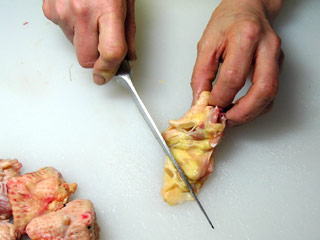
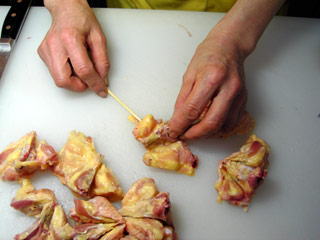
As shown on pic above, insert the knife and cut around the small bone and the meat attached to it.

Cut the fat around the sphincter/anus and discard it together with the sphincter.

Do that operation on both sides. Look at the pic above: you will discard the pieces of fat below the cut hips.

Insert the stick/skewer in the meat passing it just under the bone.

The stick is ready. The bone is a bit hard but succulent with the fat around it.

Now, if you don’t want the bone, cut around the bone as carefully as possible laving no meat or fat with it.

When instering the stick in the cut pieces, respect the same order skin fat/meat for even cooking.

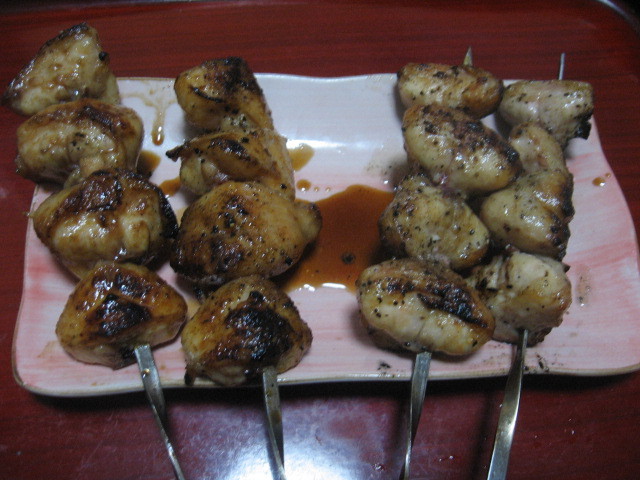
Here are the complete sticks of boneless hips.
Now bear in mind they will cook faster and look smaller!

RECOMMENDED RELATED SITES:
Warren Bobrow, Bread + Butter, Zoy Zhang, Hungry Neko, Think Twice, Frank Fariello, Mangantayon, Hapabento, Elinluv Tidbit Corner, Tokyo Terrace, Maison de Christina, Chrys Niles,Lexi, Culinary Musings, Wheeling Gourmet, Comestiblog, Chronicles Of A Curious Cook, Bento Boutique, Tokyo Through The Drinking Glass, Tokyo Foodcast, Urban Sake, Sake World, Palate To Pen, Yellin Yakimono Gallery, Tokyo Terrace, Hilah Cooking, More than a Mount Full, Arkonite Bento. Island Vittles, Skewer It!

Please check the new postings at:
sake, shochu and sushi

—————————————-
日本語のブログ
—————————————-

Fruit Cocktails by Wataru Matsumoto 4: Blueberry

Service: very professional and friendly.
Facilities: great washroom, great cleanliness overall.
Prices: reasonable, good value.
Strong points: Fruit cocktails. Cozy and a comfortable, for ladies and gentlemen alike.

This is the fourth recipe of a (hopefully long) series of cocktails concocted by Wataru Matsumoto, owner/bartender at BOTANICAL (Comfort bar) in Shizuoka City.
No worries about copyrights as Mr. Matsumoto is only too happy to share his secrets!

INGREDIENTS:

-Bombay sapphire Gin: 1 standard measure
-Lanka Yoghurt Liqueur: 1 teaspoon
-Monin Myrtille Blueberry syrup: 1 teaspoon
-Cranberry juice: 1/2 standard measure
-Fresh blueberries: 6~
-Ice: 1/2 cup

RECIPE:

-Drop all ingredients in a food processor and turn until you obtain a rough kind of “smoothie”.

-Pour in medium white wine glass.

-Cut a large blueberry half way and “plant” it on the edge of the glass.

COMMENTS:

Not as sweet as one would imagine, but still a dessert of a cocktail!

RECOMMENDED RELATED WEBSITES:
-Sake: Tokyo Through The Drinking Glass, Tokyo Foodcast, Urban Sake, Sake World
-Wine: Palate To Pen, Ancient Fire Wines Blog
-Beer: Good Beer & Country Boys, Another Pint, Please!
-Japanese Pottery to enjoy your favourite drinks: Yellin Yakimono Gallery
Warren Bobrow
Tokyo Terrace

————————-
英語を読めれば次のブログを是非ご覧になって下い!
Shizuoka Sake
Shizuoka Shochu
Shizuoka Sushi
Sizuoka Gourmet

Shizuoka SakeTasting: Fuji-Takasago Brewery-Takasago Premium Yamahai Dai-Ginjo Genshu Nama

Fuji-Takasago Brewery certainly makes for long titles!
Located in Fujinomiya City, it is not truly a completely local brewery as it has been absorbed in a bigger conglomerate of the same name.
On the other hand, regular staff are local and the concept of sake brewing is very much according to the Shizuoka tradtion and tastes.

This particular bottle is pretty rare as only 30 (720 ml) of them were made before the rest of the batch was modified with water and more sterilization.

The sake was brewed according to the Yamahai method.
Although it is not a junmai (alcohol was added), it is a genshu, meaning than no pure water was further added to lower the alcohol content. Moreover it is a “nama”, meaning unpasteurized.

Fuji-Takasago Brewery-Takasago Premium Yamahai Dai-Ginjo Genshu Nama

Rice: Yamada Nishiki 100%
Rice milled down to 50%
Alcohol content: 18~19 degrees
Bottled in March 2010
Limited edition: 30 (720 ml) bottles

Clarity: very clear

Colour: Transparent

Aroma: Fruity, complex, fleeting, Pineapple, coconuts.

Body: Fluid

Taste: Sweetish attack. Turns dry and deliciously acid very quickly.
Complex. Cherries, coconuts, mirabelles, pineappple.
Fades away very quickly with notes of bitter chocolate, apricot, coffee beans and dry almonds.
Surprisingly mild for such a high alcohol content.
Holds its own so well with any food.

Overall: Surprisingly elegant for a Yamahai.
No wonder so many breweries in Shizuoka are tackling this kind of sake judged “rustic” in other Prefectures. Shizuoka yeast influence?
Most probably.
Another sake for all seasons, to be appreciated at all temperatures on its own or with food, chilled, at room temperature or “nurukan” (40~45 degrees)!

RECOMMENDED RELATED WEBSITES:
-Sake: Tokyo Through The Drinking Glass, Tokyo Foodcast, Urban Sake, Sake World
-Wine: Palate To Pen, Ancient Fire Wines Blog
-Beer: Good Beer & Country Boys, Another Pint, Please!
-Japanese Pottery to enjoy your favourite drinks: Yellin Yakimono Gallery
Warren Bobrow
Tokyo Terrace

Today’s Lunch Box/Bento (’10/31): Johoku Park Bento

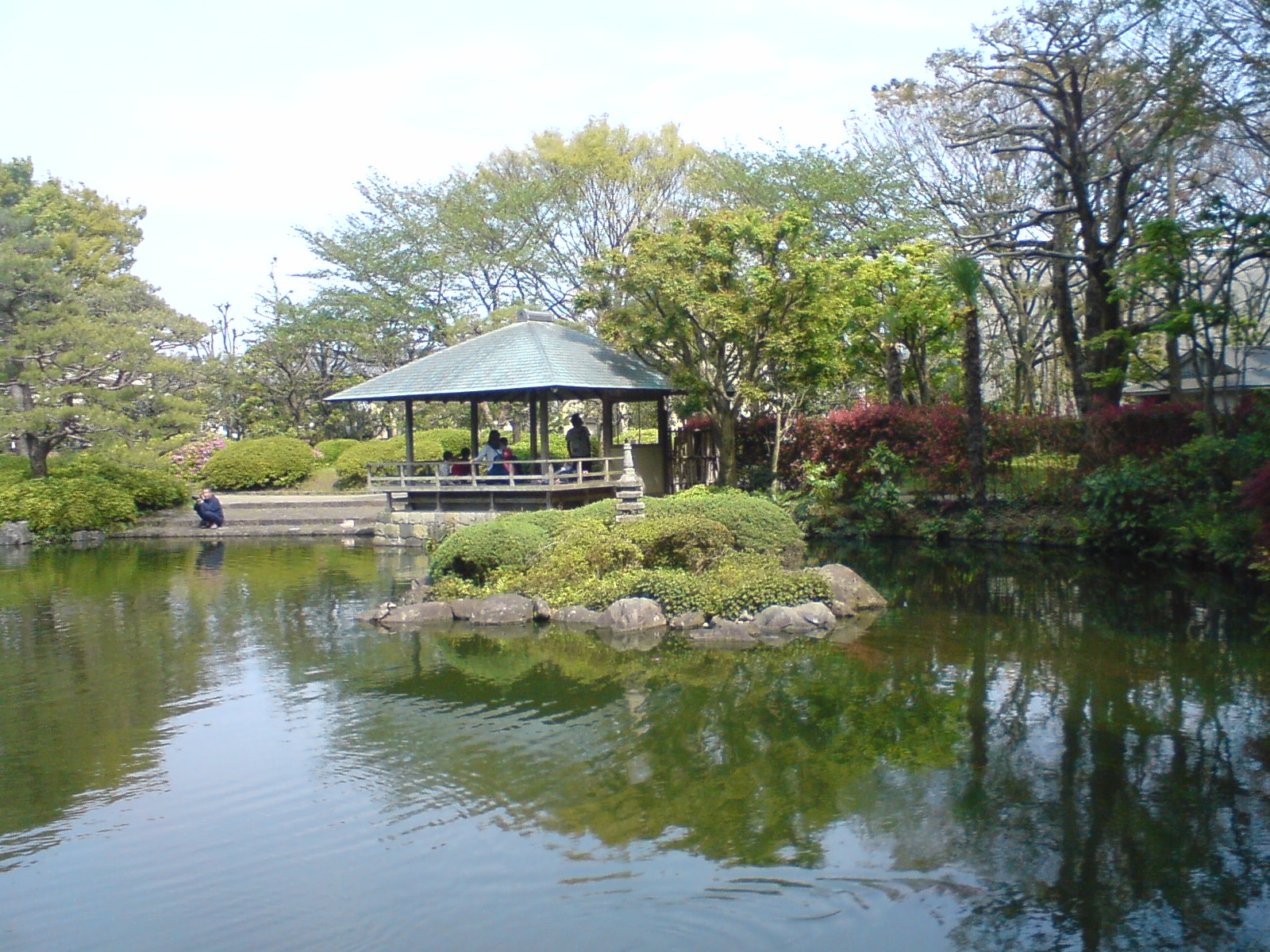
Today’s bento has been named “Johoku Park Bento” because the Missus who had a day off yesterday called me during the afternoon to join her for a walk in Johoku Park during a break at work. I actually had to bicycle there first. LOL.

But it was defunitely worth the trip.
Johoku Park is located by the new Shizuoka Municipal Library and it is the ideal place to stay away from the bustle of city, but still within manageable distance. On the other it gest crowded on Holidays.

One can freely choose his/her right spot for a deserved rest and meal.
If it rains, no worry as there is great cafe called Tables Spoon nearby (I’m planning a post on it)!

The Missus did work a lot preparing today’s bento.

She had concocted the meat balls with minced beef and pork and bits of lotus ro0ts the night before before frying them this morning. The lotus root provided for a welcome crunchy bite. Tomatoes are sweet and grown in Shizuoka. As for the peas in their pods, they come from her family’s garden.

She added chopped red pimento and string beans (boiled) and cheese to the tamagoyaki/Japanese omelette (very soft and yummy). Lettuce and Kyoto-style red pickled cucumbers provided the colours and fibers.

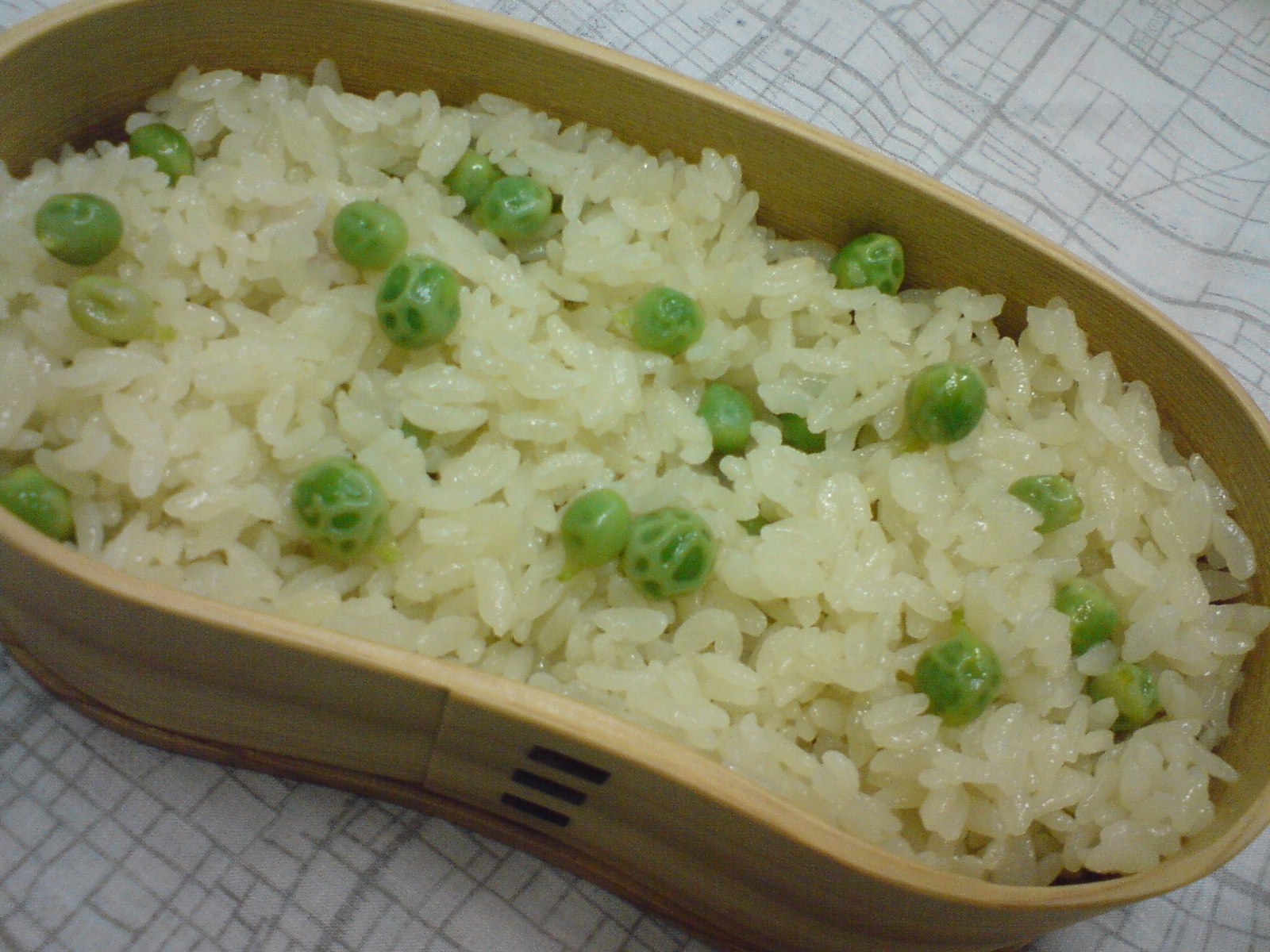
The “mame gohan”/rice and green peas has an interesting story.

She first boiled the green peas inside their pods.
She discarded the pods but used the water she boiled them in to steam the rice, giving it plenty of nutrients and a beautiful colour.
She mixed the boiled peas with the rice only once the rice was steamed. If you steamed together the peas will become mushy.

For dessert fresh orange from her family’s garden and canned Chinese lychees!

Next time, if the weather is fine (it was a horror today…), I plan to take my bento to the park!

Adventures in Bento Making, American Bento, Beanbento, Bento No1, Bento Wo Tsukurimashou, Cooking Cute, Eula, Hapabento , Happy Bento, Jacki’s Bento Blog, Kitchen Cow, Leggo My Obento, Le Petit Journal Bento & CO (French), Lunch In A Box, My Bento Box, Vegan Lunch Box; Tokyo Tom Baker, Daily Food Porn/Osaka, Only Nature Food Porn, Happy Little Bento, The Herbed Kitchen, J-Mama’s Kitchen

Please check the new postings at:
sake, shochu and sushi

—————————————-
日本語のブログ
—————————————-