Category Archives: Cakes

Austrian Gastronomy: Austrian Cake Factory in Fujieda City!

Yesterday my good friend Pat, a cake lover if there is one, kindly drove me all the way to Fujieda City in Kariyado away from it all to pay a visit to an Austrian Chef and his wife who have been creating succulent Austrian cakes and other desserts for the past three years.

Peter Golbach who plied his trade in Wien, New York, Lyon before meeting his wife Shouko/昌子 in Wien where she worked for Sony Co., came to Fujieda City three years to establish a bakery with his wife in her large parents’ house.

It takes a little bit of driving to reach their place but it is worth the effort as you run across some beautiful land off the beaten tracks!

“Austrian Cake Factory”!

If you plan to pay them a deserved visit contact them on their mobile phone first!

The bakery may be Austrian but this is rural Japan!
Peter and his lively wife Shoko are a model of great hospitality and passion for their trade. It was a personal pleasure to meet them in person, I can assure you!

All the cakes and desserts are created in a very clean, sensible, practical and no-frill kitchen!

The ultra modern oven to bake Peter’s creations!

Peter and his wife create 7 varieties of Kugelhof and 1 Sachertorte as well as Vanille Kiffel crescent biscuits, order-made chocolate cakes and cheese cakes and other desserts.
All ingredients are natural and among them feature their own gyokuro tea macha and yuzu lime!

Some of their succulent and beautiful Kugelhof!

My favorite, the Fujieda gyokuro tea macha Kugelhof, a true Shizuoka Kugelhof!

One of Peter’s specialties: Yoghurt and Yuzu Cake!

An order-made Birthday Cake!

The four of us shared a long talk around coffee and some of their cakes reminiscing about the “joys of Europe”!
I had a hard time wrenching myself off their so hospitable home and table!

But I didn’t take my leave before savoring a magnificent yoghurt and lemon mousse!

Peter and Shoko will be selling their cakes in Aoba Park Street in Shizuoka City for 3 days in May.
I will have the pleasure to interview them again and I will announce it in good time beforehand!

Cakes can be ordered and reserved over the phone or by e-mail. Ask for directions!

Peter & Shoko Golbach at Austrian Cake Factory
426-0001, Fujieda City, Kariyado, 1092
E-mail: shoko-amano@hotmail.com
Mobile phone: 090-1629-3004
HOMEPAGE

RECOMMENDED RELATED WEBSITES

Masala Herb by Helene Dsouza in Goa, India
Mummy I Can Cook! by Shu Han in London
Pierre.Cuisine, Francescannotwrite, My White Kitchen, 47 Japanese Farms Through The Eyes of Its Rural Communities, Foodhoe, Chucks Eats, Things that Fizz & Stuff, Five Euro Food by Charles,Red Shallot Kitchen by Priscilla,With a Glass, Nami | Just One Cookbook, Peach Farm Studio, Clumsyfingers by Xethia, PepperBento,Adventures in Bento Making, American Bent, Beanbento, Bento No, Bento Wo Tsukurimashou, Cooking Cute, Eula, Hapabento , Happy Bento, Jacki’s Bento Blog, Kitchen Cow, Leggo My Obento, Le Petit Journal Bento & CO (French), Lunch In A Box,
Susan at Arkonlite, Vegan Lunch Box; Tokyo Tom Baker, Daily Food Porn/Osaka, Only Nature Food Porn, Happy Little Bento, The Herbed Kitchen, J-Mama’s Kitchen, Cook, Eat, Play, Repeat, Bento Lunch Blog (German), Adventures In Bento, Anna The Red’s Bento Factory, Cooking Cute, Timeless Gourmet, Bento Bug, Ideal Meal, Bentosaurus, Mr. Foodie (London/UK), Ohayo Bento,

Must-see tasting websites:

-Sake: Tokyo Through The Drinking Glass, Tokyo Foodcast, Urban Sake, Sake World
-Wine: Palate To Pen, Warren Bobrow, Cellar Tours, Ancient Fire Wines Blog
-Beer: Good Beer & Country Boys, Another Pint, Please!
-Japanese Pottery to enjoy your favourite drinks: Yellin Yakimono Gallery

Green Tea Cakes & Ice Creams at Nanaya by Shizuoka Macha Sweets Factory!

Macha Level 8 Ice cream!

Nanaya Shizuoka Macha Sweets Factory is produced by Marushichi Tea Factory in Fujieda City.
They own two shops, one in Fujieda City and the other in Shizuoka City!
This report is about the Shizuoka Shop!

You can’t miss it on Aoba Kouen Street! It’s all green (Tea green of course!)!

“Marushichi/Round Seven/丸七”. The number “7” is considered as the luckiest number in Japan, and Maru stands for the circle found around the number!
The number “7” can also be pronounced “nana”, hence the name of the shops!

The green color of macha powder must be one of the most beautiful green hues in this world!

All the macha powder used in their cakes and ice creams is exclusively made from green tea grown in Okabe Cho, Fujieda City!

They even offer choux a la creme/”chou ceam” with macha custard inside!

A superbly clean shop!

They also offer all kinds of healthy products by Ichinose!

Don’t forget to take a good look at their commercial film on the TV screen! You’ll learn a lot!

What did I tell you?

They also sell beautiful earthenware tea cups!

Have a good look at their healthy cakes!

But naturally I was mainly attracted by the ice creams which can be savored on site!

Ice cream must be the most forgivable sin in the whole world!

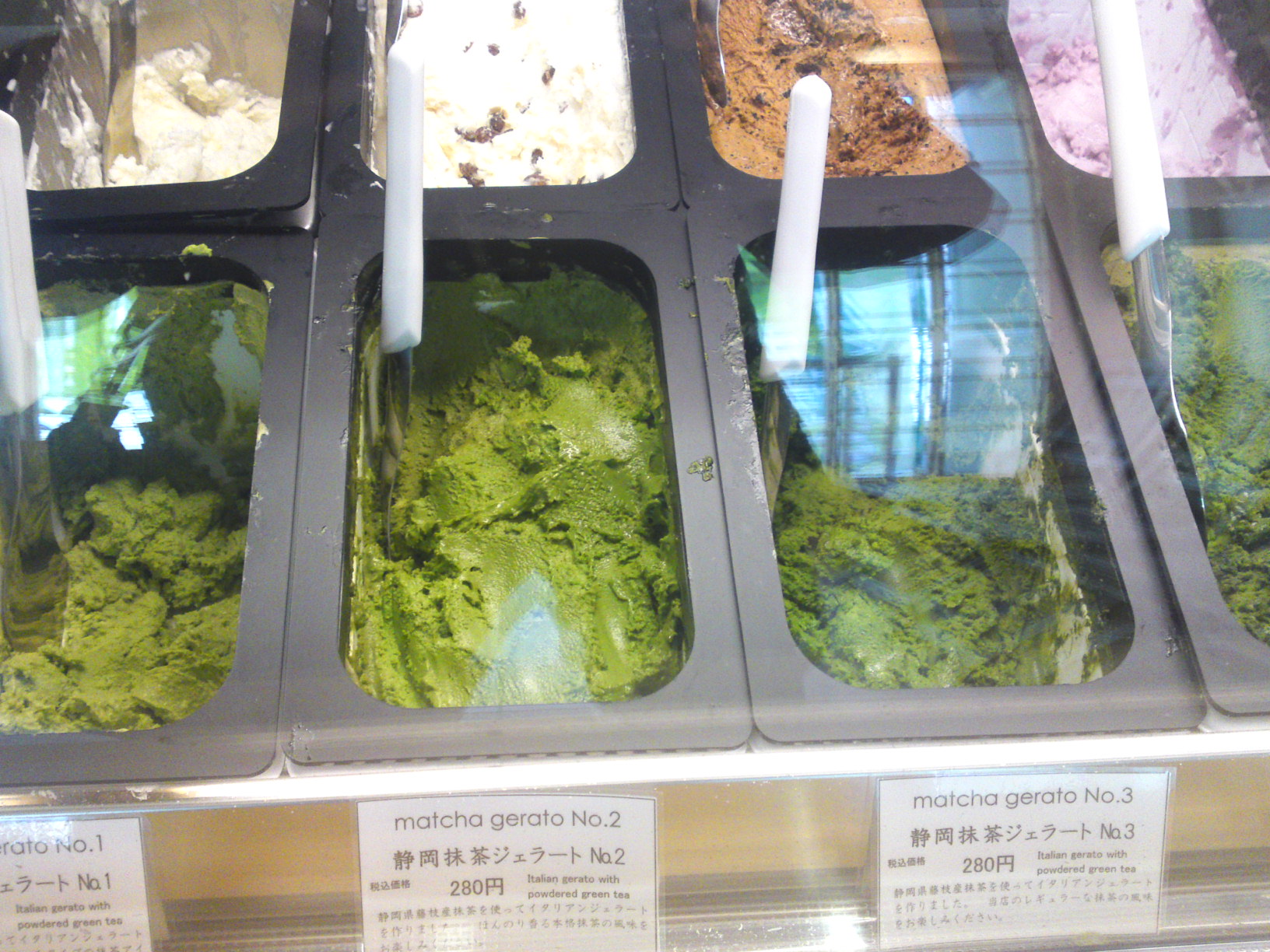
The macha ice creams from level 1 to 8, according to their content in pure macha powder!

You are welcome to enjoy your ice cream at ease on a chair on site! You are even provided with wet paper napkins!

And here was my choice: Macha Cone Level 8, of course!
That deep green color is going to make a lot of friends envious! LOL

NANAYA Shizuoka Shop
Shizuoka City, Aoi Ku, Ryogae Cho, 2-3-1 (Aoba Park Street)
Tel.: 054-251-7783
Opening hours: 11:00~19:00
Closed on Wednesdays 8except on national Holidays)

NANAYA Fujieda Shop
Fujieda City, Naisetosaka Shimo, 141-1
Tel.: 054-646-7783
Opening hours: 10:00~18:00
Closed on Wednesdays (except on National Holidays)
HOMEPAGE (Japanese but look at the pictures!)
STAFF’S BLOG (Japanese, too, but look at the pictures!)

RECOMMENDED RELATED WEBSITES

My White Kitchen, 47 Japanese Farms Through The Eyes of Its Rural Communities, Foodhoe, Chucks Eats, Things that Fizz & Stuff, Five Euro Food by Charles,Red Shallot Kitchen by Priscilla,With a Glass, Nami | Just One Cookbook, Peach Farm Studio, Clumsyfingers by Xethia, PepperBento,Adventures in Bento Making, American Bent, Beanbento, Bento No, Bento Wo Tsukurimashou, Cooking Cute, Eula, Hapabento , Happy Bento, Jacki’s Bento Blog, Kitchen Cow, Leggo My Obento, Le Petit Journal Bento & CO (French), Lunch In A Box,
Susan at Arkonlite, Vegan Lunch Box; Tokyo Tom Baker, Daily Food Porn/Osaka, Only Nature Food Porn, Happy Little Bento, The Herbed Kitchen, J-Mama’s Kitchen, Cook, Eat, Play, Repeat, Bento Lunch Blog (German), Adventures In Bento, Anna The Red’s Bento Factory, Cooking Cute, Timeless Gourmet, Bento Bug, Ideal Meal, Bentosaurus, Mr. Foodie (London/UK), Ohayo Bento,

Must-see tasting websites:

-Sake: Tokyo Through The Drinking Glass, Tokyo Foodcast, Urban Sake, Sake World
-Wine: Palate To Pen, Warren Bobrow, Cellar Tours, Ancient Fire Wines Blog
-Beer: Good Beer & Country Boys, Another Pint, Please!
-Japanese Pottery to enjoy your favourite drinks: Yellin Yakimono Gallery

Shizuoka Dessert: Kumquat Cakes at Aquavite & Pissenlit!

Kumquat tart and Tiramisu as served to the Missus at Aquavite!

Kumquat is kinkan/金柑/”Golden Citrus” in Japanese and it is a major crop in Shizuoka Prefecture. Some are even grown organically!
Just walk in Shizuoka City and you will discover them in many gardens where they are in full season right now!
People eat them under many guises from candied fruit to cakes and even fruit cocktails!
Needless to say that many restaurants vie for fame with cakes created with them!
Here are two creations I just had the pleasure to savor in Shizuoka City:

Italian Cuisine: Kumquat Tart and Tiramisu in Aquavite!

Mine was the same as the Missus’ but presented in a “manly” way! LOL
Both were decorated with chocolate, raspberry, vanilla creams and cocoa powder!

Kumquats are a bit of a bother to prepare.
They must first be washed, then cut in two to get rid of their seeds.
Next they need to be lightly boiled and then candied in sugar, alcohol and what else.
Only then can you include them into succulents tarts!

I do not need to introduce tiramisu made by Chef Masaru Aoki/青木勝 as it has become the reference in our city!
They make the perfect marriage, either savoring it separately or topping the tart with some on your fork (or spoon!)!

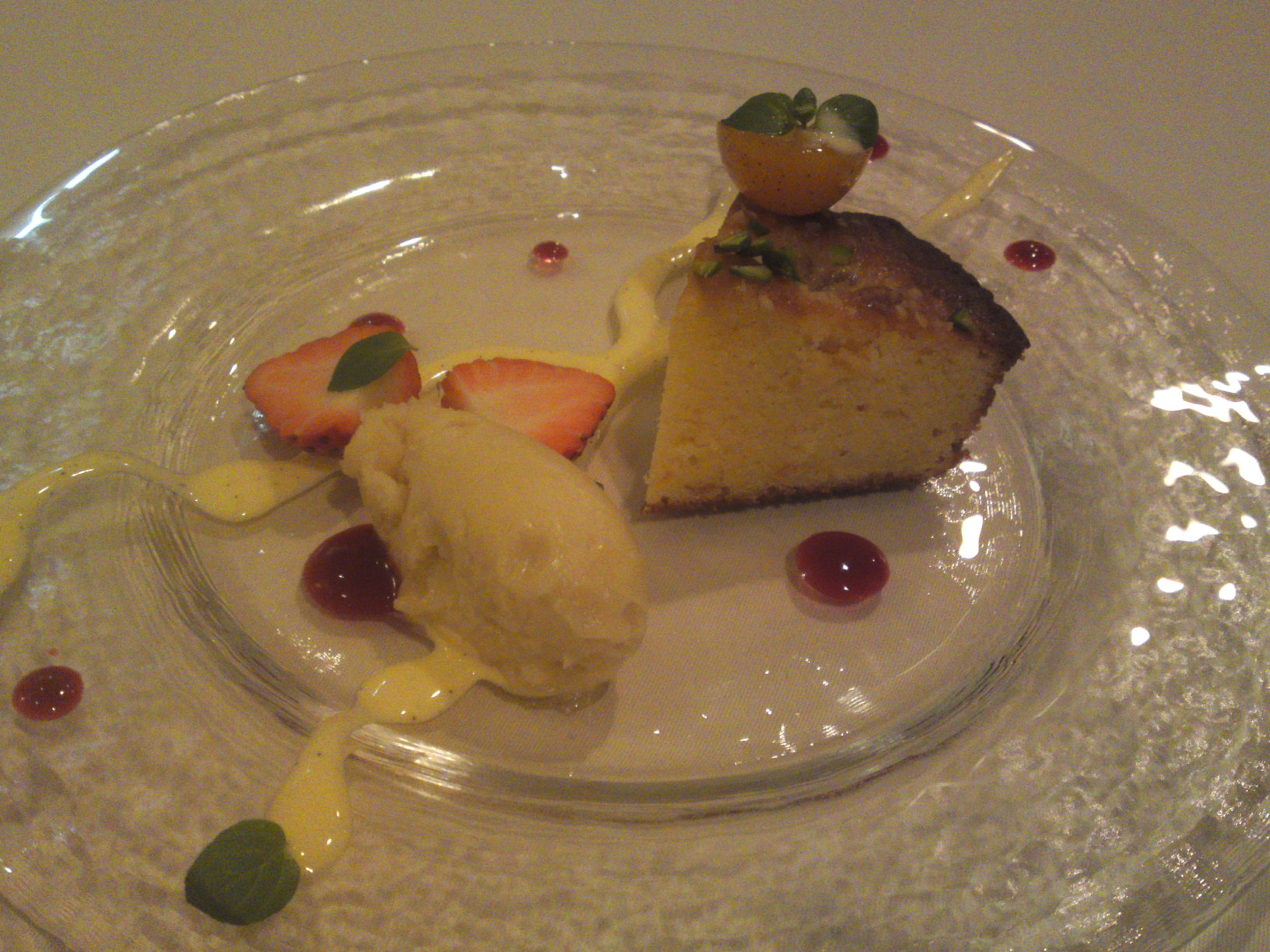
French Cuisine: Kumquat Pound Cake and Black Tea Sorbet at Pissenlit!

Chef Touru Arima/有馬亨 decorated his creation with raspberry and vanilla creams as well as local strawberry and organic mint leaves!

This pound cake must have required quite some preparation with the inclusion of finely chopped candied kumquats!
The kumquats were grown in Mariko, Shizuoka City, an area also famous for its black tea where it was first planted in Japan back in the 19th Century!

Attention to details! You just don’t know where to start from!
I did savor the candied kumquat first as I didn’t trust my sense of balance!
After that it was an exquisite exercise in demolition!

Black tea sorbet made for another perfect marriage with the pound cake, although I tended to eat it separately.
It was a pleasure later to scoop it carefully with whatever was left on the plate! LOL

AQUAVITE
420-0034 Shizuoka Shi, Tokiwa-cho, 1-2-7, Tomii Bldg. 3F
Tel. & fax: 054-2740777
Opening hours: 11:30~14:00 18:00~22:00
HOMEPAGE (Japanese)
Credit Cards OK
Non-smoking private room available!

Service: Excellent and very friendly
Facilities: Great cleanliness overall. Small but beautiful washroom
Prices: Reasonable to expensive.
Strong points: Great use of local products, especially organic vegetables. Top-class Italian wines. Private room for~8 people
—————————–
PISSENLIT
420-0839 Shizuoka City, Aoi Ku, Takajo, 2-3-4
Tel.: 054-270-8768
Fax: 054-627-3868
Business hours: 11:30~14:30; 17:00~22:00
Closed on Tuesdays and Sunday evening
HOMEPAGE (Japanese)
E-Mail: pissenlit2008@ybb.ne.jp
Credit Cards OK
Entirely non-smoking!

Service: Excellent and very friendly.
Facilities: Great cleanliness overall. Superb washroom (mouthwash and toothpicks provided!)!
Prices: Reasonable to slightly expensive, very good value.
Strong points: Interesting wine list. Great use of local products, especially organic vegetables and Shizuoka-bred meat
—————————–

RECOMMENDED RELATED WEBSITES

Five Euro Food by Charles
With a Glass,
Clumsyfingers by Xethia
Adventures in Bento Making, American Bento, Beanbento, Bento No1, Bento Wo Tsukurimashou, Cooking Cute, Eula, Hapabento , Happy Bento, Jacki’s Bento Blog, Kitchen Cow, Leggo My Obento, Le Petit Journal Bento & CO (French), Lunch In A Box, My Bento Box, Vegan Lunch Box; Tokyo Tom Baker, Daily Food Porn/Osaka, Only Nature Food Porn, Happy Little Bento, The Herbed Kitchen, J-Mama’s Kitchen, Cook, Eat, Play, Repeat; Bento Lunch Blog (German); Adventures In Bento; Anna The Red’s Bento Factory; Cooking Cute; Timeless Gourmet; Bento Bug; Ideal Meal; Bentosaurus; Mr. Foodie (London/UK); Ohayo Bento

Must-see tasting websites:

-Sake: Tokyo Through The Drinking Glass, Tokyo Foodcast, Urban Sake, Sake World
-Wine: Palate To Pen, Warren Bobrow, Cellar Tours, Ancient Fire Wines Blog
-Beer: Good Beer & Country Boys, Another Pint, Please!
-Japanese Pottery to enjoy your favourite drinks: Yellin Yakimono Gallery

Bread: Shizuoka Agricultural High School Mari Ishiguro wins Consecutive First Prize at 6th National High School Bread Contest!

Mari Ishiguro/石黒茉莉さん established a record by winning her second consecutive First Prize at the 6th National High School Bread Contest fielding 176 participants from all over Japan!
On the 21st and 22nd of January 2012 the 6th National High School Bread Contest took place in the City of Izu No Kuni in the Izu Peninsula, Shizuoka Prefecture!
Mari who had won last year’s contest with a “Toma Kara Feuille”/”Tomato Mille-Feuilles” did it again with a ‘Toma Kan Pan” creation!

The concept of the bread was indeed an interesting combination of European and Asian cuisines:
“Toma” stands for “tomato” as dried ones were extensively used.
Note that tomatoes were a prerequisite ingredient in submitted recipes as the Government is actively promoting the culture of this vegetable!
“Kan” stands for “kanten/寒天/agar agar” in Japanese with which the bread was coated!
“Pan” stands for bread in Japanese.

Mari Ishiguro is a third year student at the Shizuoka Prefectural Agricultural High School and will graduate next month before attending Cooking College in Tokyo.
The bread might be small but it took no less than 5 hours to prepare and bake!

Cross section of a frozen sample

Creating the bread with a dough surrounding another dough containing dried tomatoes and walnuts took 3 and a half hours, while the coating with agar agar took an hour. Add to this 35 minutes for baking, the whole work took no less than 5 hours!
According to Mari, this year’s concept was totally different from last year’s approach as she wanted to create a bread/cake that could be appreciated chilled.
Moreover, instead of using water in the dough she utilized the natural juice of real tomatoes.
She also compensated the astringency with cocoa powder.
Finally she topped the bread with dried tomatoes before baking it!
She agreed that her “bread” was more a dessert than anything else!

All this creative work was made possible under the teaching of her Bakery Teacher, Tetsuya Ishida/石田哲也!
Mari and her teacher (and all the students and their students) have the chance to belong to a very progressive high school by Japanese standards which emphazises vocational studies above all!

RECOMMENDED RELATED WEBSITES

With a Glass,
Clumsyfingers by Xethia
Adventures in Bento Making, American Bento, Beanbento, Bento No1, Bento Wo Tsukurimashou, Cooking Cute, Eula, Hapabento , Happy Bento, Jacki’s Bento Blog, Kitchen Cow, Leggo My Obento, Le Petit Journal Bento & CO (French), Lunch In A Box, My Bento Box, Vegan Lunch Box; Tokyo Tom Baker, Daily Food Porn/Osaka, Only Nature Food Porn, Happy Little Bento, The Herbed Kitchen, J-Mama’s Kitchen, Cook, Eat, Play, Repeat; Bento Lunch Blog (German); Adventures In Bento; Anna The Red’s Bento Factory; Cooking Cute; Timeless Gourmet; Bento Bug; Ideal Meal; Bentosaurus; Mr. Foodie (London/UK); Ohayo Bento

Must-see tasting websites:

-Sake: Tokyo Through The Drinking Glass, Tokyo Foodcast, Urban Sake, Sake World
-Wine: Palate To Pen, Warren Bobrow, Cellar Tours, Ancient Fire Wines Blog
-Beer: Good Beer & Country Boys, Another Pint, Please!
-Japanese Pottery to enjoy your favourite drinks: Yellin Yakimono Gallery

Café Hanya (般若) in Shimizu Ku, Shizuoka City!

Service: Very friendly and quiet
Facilities: Great overall cleanliness and beautiful gender-separated toilets
Prices: Very reasonable
Strong points: Traditional Coffee shop. Very reasonable “home food”. Very quiet. A rare non-smoking coffee house!
English and French fluently spoken by the owner!

In an era crowded with chain shops of dubious taste and hygiene it is so refreshing to discover a new coffee shop who offers a relaxing calm atmosphere, allows you to stay as long as you want, serves very reasonably-priced meals and spares you from any smoke in a quiet environment only a few minutes walk from the bustle of town and civilization!

just drop off the Tokaido Line at Kusanagi Station, take the first street on the street on the left until you reach a small river and turn right. There you will discover the coffee shop sign!

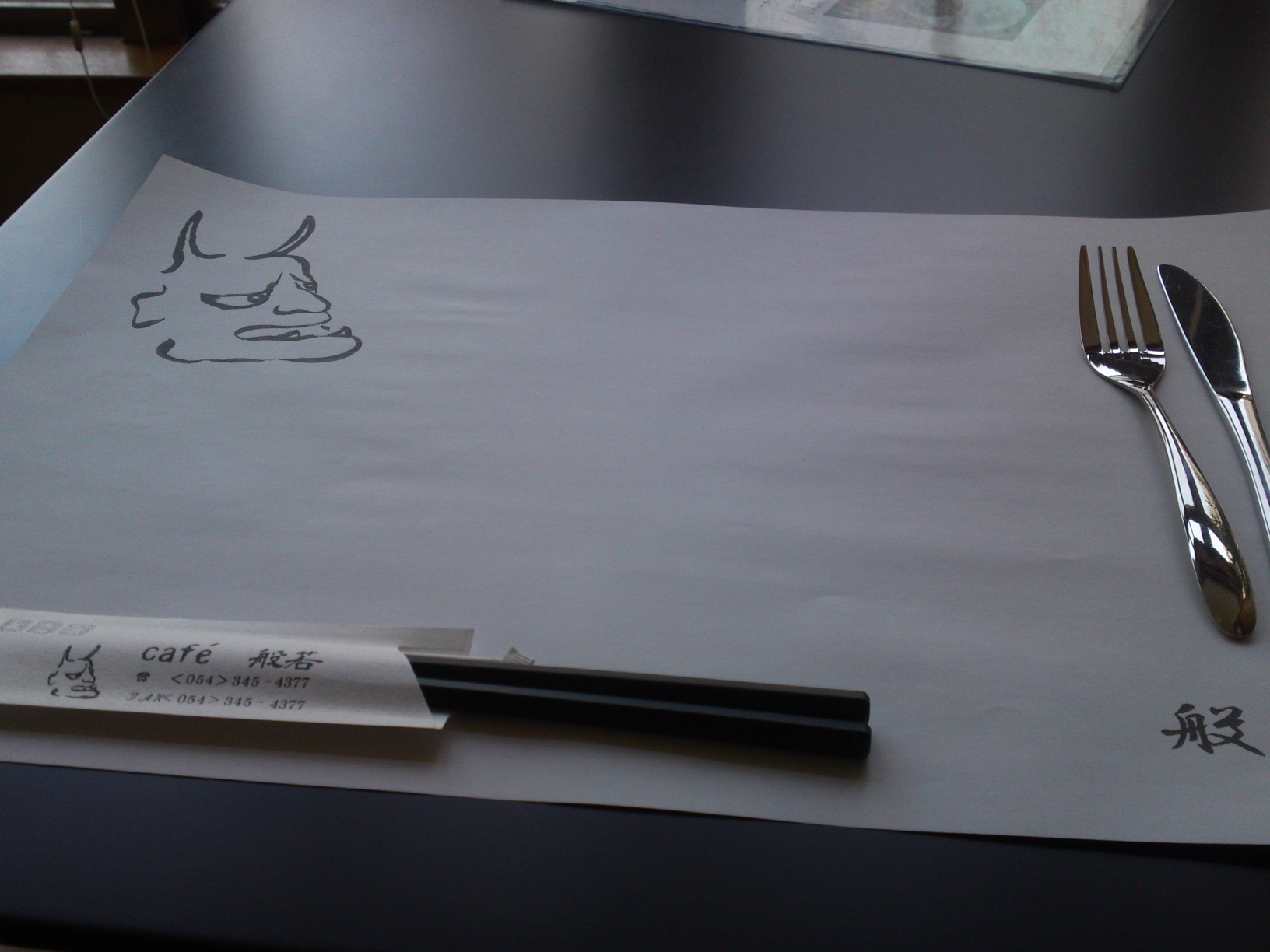
No, this is not a demon, but a protection against evil spirits!

The place used to be a very busy cramming school until the Yokoyamas retired last year and decided to transform it into a quiet and homely coffee house.

They also double up as a tiny gallery for local artists.

The tables and chairs are all different either by walls or large windows.
Just choose your little corner!

There are tables for groups of 4, couples and individuals.

Beautiful noren/entrance curtain opening onto the washroom!

Plenty of reading material as you may stay as long as you want!

Drapes help diffuse the light!

Hanya Noh Theater mask!
Hanya is a character found in the Noh Theater lore!

A lot of customers will be tempted to take the table paper cloth away!

Cute goblin!

A personal toothpick is provided with the chopsticks!

At lunch take a good look at the different set menu as they tend to come up with something different very quickly according to the mood and season!
On that day there were two new sets offered. The picture above shows a baked cheese curry!

I chose the other new set: open hamburger steak lunch!

You can’t beat a fresh homely lunch!

All lunches come with coffee or tea and a dessert!
How much did I pay for that? A mere 800 yen!

For people who just wish for a drink and dessert set I would recommend hot green tea (this is Shizuoka after all!) and home-made cake set!

Such a pleasant way to serve green tea!

To be continued…

Café Hanya (般若)
424-0886 Shizuoka City, Shimizu Ku, Kusanagi, 1-11-2 (3 minutes walk from Kusanagi Station)
Tel.: 054-345-4377
Opening hours: 07:00~18:00
Closed on Sundays and Mondays
HOMEPAGE/BLOG
Entirely non-smoking!

RECOMMENDED RELATED WEBSITES

With a Glass,
Clumsyfingers by Xethia
Adventures in Bento Making, American Bento, Beanbento, Bento No1, Bento Wo Tsukurimashou, Cooking Cute, Eula, Hapabento , Happy Bento, Jacki’s Bento Blog, Kitchen Cow, Leggo My Obento, Le Petit Journal Bento & CO (French), Lunch In A Box, My Bento Box, Vegan Lunch Box; Tokyo Tom Baker, Daily Food Porn/Osaka, Only Nature Food Porn, Happy Little Bento, The Herbed Kitchen, J-Mama’s Kitchen, Cook, Eat, Play, Repeat; Bento Lunch Blog (German); Adventures In Bento; Anna The Red’s Bento Factory; Cooking Cute; Timeless Gourmet; Bento Bug; Ideal Meal; Bentosaurus; Mr. Foodie (London/UK); Ohayo Bento

Must-see tasting websites:

-Sake: Tokyo Through The Drinking Glass, Tokyo Foodcast, Urban Sake, Sake World
-Wine: Palate To Pen, Warren Bobrow, Cellar Tours, Ancient Fire Wines Blog
-Beer: Good Beer & Country Boys, Another Pint, Please!
-Japanese Pottery to enjoy your favourite drinks: Yellin Yakimono Gallery

Café & Brasserie: Patina in Shizuoka City!

Service: Very friendly and smiling
Facilities: Very clean. Beautiful washroom.
Prices: Reasonable
Strong points: A true cafe where to relax and enjoy a good light meal any time of the day.

The fashion for a long time having been to patronize famous/notorious fast-food cafes with a dubious approach to gastronomy and atmosphere the more traditional cafes with a far more authentic cachet had all but disappeared.

Unfortunately Shizuoka City had not escaped from the trend and had, but for one or two establishments, become a barren land as far as coffee shops were concerned.

At long last some courageous individuals and companies are beginning to help reverse that sorry situation.
“Patina” opened on the 12th of December in increasingly fashionable Tenmacho for the pleasure of haven seeking patrons!

Right from the moment you enter you realize that the establishment is both different and reassuringly familiar as if you were traveling back to a more comfortable era.

The whole place is a comforting kind of jumble with seats for every taste from a personal table tucked in a corner to long sofa benches along the wall and mismatched arm chairs at the counter.

You will need quite a few visits before you elect to sit at the same place!

The place doubles up as a cafe and a light meal bistro/brasserie-style coffee-shop so much in evidence in any French city worth its salt. This implies you can either settle for coffee or tea or start drinking in earnest with food to accompany any time of the day!

The whole staff are ladies and the young Chef, Ms. Akiko Kondoh/近藤亜希子さん has plenty of experience and (dinner will come in another article) her elegant confectioneries are worth the visit!

Her apple millefeuille with ice cream is fast becoming a favorite!

And their teas and coffees are not only delicious but served the traditional and proper way!
I’ll meet you in the evening in front of a pâté de campagne and a glass of wine next time in the evening!

PATINA, Café & Brasserie
Shizuoka City, Aoi Ku, Tenmacho, 17-9
tel.: 054-266-9500
Opening hours: 10:00~20:30 (last orders)
Holiday not decided yet
Non-smoking but for a small table away from the other patrons at the end of a long hall before the washroom

RECOMMENDED RELATED WEBSITES

With a Glass,
Clumsyfingers by Xethia
Adventures in Bento Making, American Bento, Beanbento, Bento No1, Bento Wo Tsukurimashou, Cooking Cute, Eula, Hapabento , Happy Bento, Jacki’s Bento Blog, Kitchen Cow, Leggo My Obento, Le Petit Journal Bento & CO (French), Lunch In A Box, My Bento Box, Vegan Lunch Box; Tokyo Tom Baker, Daily Food Porn/Osaka, Only Nature Food Porn, Happy Little Bento, The Herbed Kitchen, J-Mama’s Kitchen, Cook, Eat, Play, Repeat; Bento Lunch Blog (German); Adventures In Bento; Anna The Red’s Bento Factory; Cooking Cute; Timeless Gourmet; Bento Bug; Ideal Meal; Bentosaurus; Mr. Foodie (London/UK); Ohayo Bento

Must-see tasting websites:

-Sake: Tokyo Through The Drinking Glass, Tokyo Foodcast, Urban Sake, Sake World
-Wine: Palate To Pen, Warren Bobrow, Cellar Tours, Ancient Fire Wines Blog
-Beer: Good Beer & Country Boys, Another Pint, Please!
-Japanese Pottery to enjoy your favourite drinks: Yellin Yakimono Gallery

My best 10 Desserts in Shizuoka in 2011!

Dessert plate at Contorno, Mochimune, Shizuoka City!
Chocolate Cake, pear compote and blueberry sauce, sweet tomato, lemon sauce and organic mint.

People have a sweet tooth in Shizuoka Prefecture, but since the region is extravagantly rich in agricultural products real Shizuoka desserts are very much on offer in superlative restaurants!
These are the best ten in my biased opinion.
Note that there is no particular order to them!

Sakekasu/Japanese sake white lees sorbet at Cham, Suruga Ku, Shizuoka City!

Dessert plate at Il Castagno, Aoi Ku, Shizuoka City!
Fig tart, “Pone” expresso coffee and chocolate pudding, peach and plum sorbets!

Dessert plate at Orta, Naka Ku, Hamamtsu City!
Blueberry cheese cake, chocolate cake and mango ice-cream

Fig compote and Darjheeling tea jelly at Pissenlit in Aoi Ku, Shizuoka City!

Pheasant eggs (Hamamatsu City) and sugar cane brown sugar caramel (Kakegawa City) and sugar cane brown sugar sorbet at Testuya Sugimoto in Aoi Ku, Shizuoka City!

Soy sauce (Gotemba City) mousse, frozen mikan orange and lemon sorbet at Tetsuya Sugimoto in Aoi Ku, Shizuoka City!

Peach Compote and vanilla ice cream at Ninosa in Aoi Ku, Shizuoka City!

“Splendeur” by Bernard Heberle at Abondance Cake Shop in Naka Ku, Hamamatsu City!

Carrot Creme Brulee and organic mikan orange caramelisee at Pissenlit in Suruga Ku, Shizuoka City!

If you need the addresses and contacts of all the establishments I’ll be glad to oblige!

RECOMMENDED RELATED WEBSITES

With a Glass,
Clumsyfingers by Xethia
Adventures in Bento Making, American Bento, Beanbento, Bento No1, Bento Wo Tsukurimashou, Cooking Cute, Eula, Hapabento , Happy Bento, Jacki’s Bento Blog, Kitchen Cow, Leggo My Obento, Le Petit Journal Bento & CO (French), Lunch In A Box, My Bento Box, Vegan Lunch Box; Tokyo Tom Baker, Daily Food Porn/Osaka, Only Nature Food Porn, Happy Little Bento, The Herbed Kitchen, J-Mama’s Kitchen, Cook, Eat, Play, Repeat; Bento Lunch Blog (German); Adventures In Bento; Anna The Red’s Bento Factory; Cooking Cute; Timeless Gourmet; Bento Bug; Ideal Meal; Bentosaurus; Mr. Foodie (London/UK); Ohayo Bento

Must-see tasting websites:

-Sake: Tokyo Through The Drinking Glass, Tokyo Foodcast, Urban Sake, Sake World
-Wine: Palate To Pen, Warren Bobrow, Cellar Tours, Ancient Fire Wines Blog
-Beer: Good Beer & Country Boys, Another Pint, Please!
-Japanese Pottery to enjoy your favourite drinks: Yellin Yakimono Gallery

Japanese Vegetarian & Vegan Cakes: Wagashi/和菓子 17: Wagashi Christmas Cakes Pictures

Pyramid-style Christmas Tree?

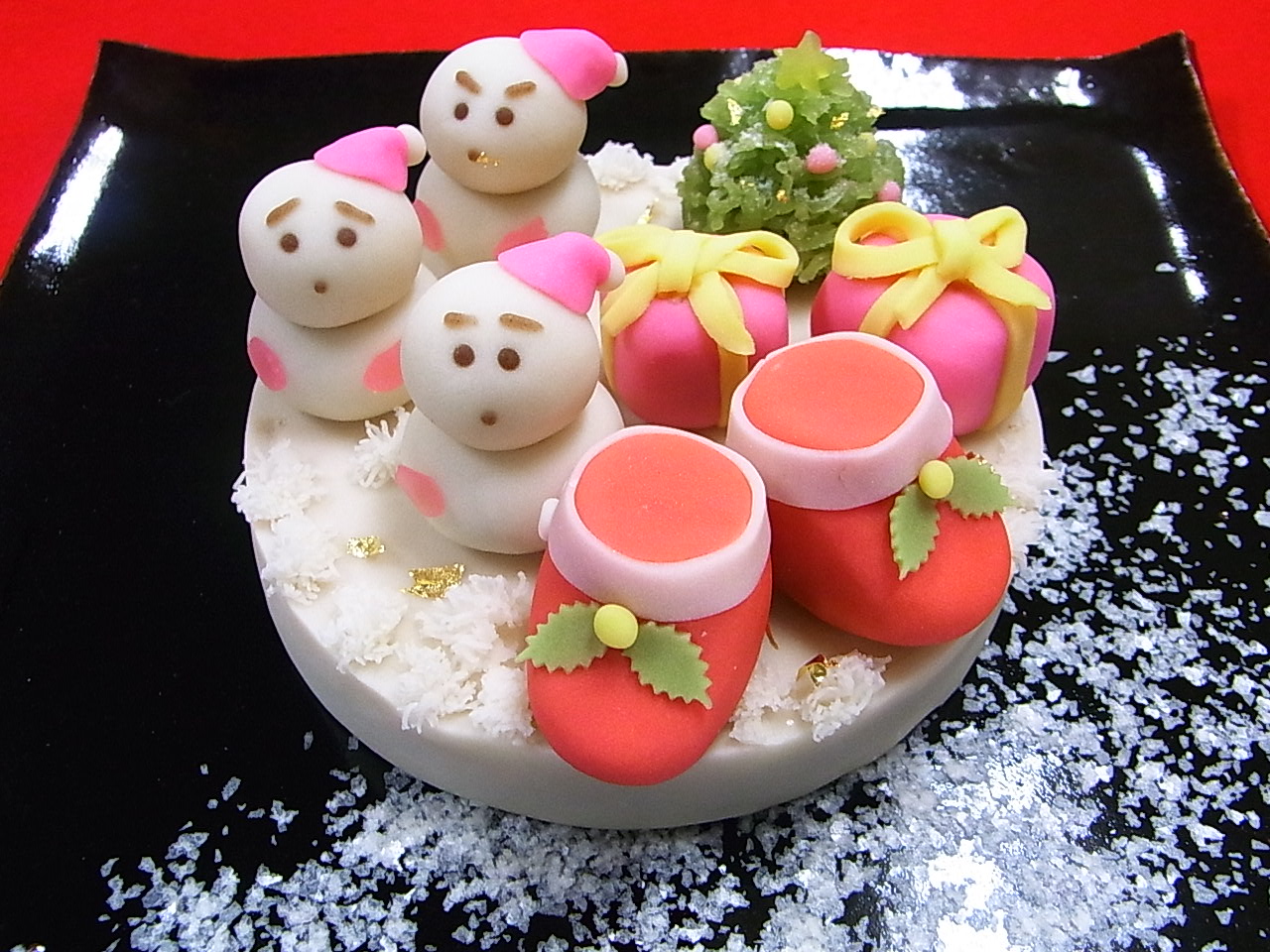
I’m an unrepentant agnostic hedonist (and an omnivore to boot!), but since some of my vegan and vegetarain friends are Christian, I hope these pictures will inspire them!

Flowery Christmas!

What’s in Santa’s bag?

Bring your forks and knives!

Holy (Holly) Christmas!

For the toddlers!

Pity you have to eat it!

Definitely Japanese-style!

They almost look like sushi!

Elegant simplicity!

RECOMMENDED RELATED WEBSITES

With a Glass,
Clumsyfingers by Xethia
Adventures in Bento Making, American Bento, Beanbento, Bento No1, Bento Wo Tsukurimashou, Cooking Cute, Eula, Hapabento , Happy Bento, Jacki’s Bento Blog, Kitchen Cow, Leggo My Obento, Le Petit Journal Bento & CO (French), Lunch In A Box, My Bento Box, Vegan Lunch Box; Tokyo Tom Baker, Daily Food Porn/Osaka, Only Nature Food Porn, Happy Little Bento, The Herbed Kitchen, J-Mama’s Kitchen, Cook, Eat, Play, Repeat; Bento Lunch Blog (German); Adventures In Bento; Anna The Red’s Bento Factory; Cooking Cute; Timeless Gourmet; Bento Bug; Ideal Meal; Bentosaurus; Mr. Foodie (London/UK); Ohayo Bento

Must-see tasting websites:

-Sake: Tokyo Through The Drinking Glass, Tokyo Foodcast, Urban Sake, Sake World
-Wine: Palate To Pen, Warren Bobrow, Cellar Tours, Ancient Fire Wines Blog
-Beer: Good Beer & Country Boys, Another Pint, Please!
-Japanese Pottery to enjoy your favourite drinks: Yellin Yakimono Gallery

Japanese Rice Crackers/ Senbei (煎餅): An introduction

Nori Senbei/Rice Cracker coated with a dry seaweed

I remember eating those rice-crackers a (very) long time ago when I was at college in England!
At the time I never made the relation between these snacks and Japan!

Senbei (煎餅, alternatively spelled sembei) are a type of Japanese rice crackers. They come in various shapes, sizes, and flavors, usually savory but sometimes sweet. Senbei are often eaten with green tea as a casual snack and offered to visiting house guests as a courtesy refreshment.

Senbei are usually cooked by being baked or grilled, traditionally over charcoal. While being prepared they may be brushed with a flavoring sauce, often one made of soy sauce and mirin. They may then be wrapped with a layer of nori. Alternatively they may be flavored with salt or so-called “salad” flavoring.

In China, the same characters used to write senbei are read jiānbǐng (煎餅). There are varieties like Shandong Jianbing and Tianjin Jianbing. However, these are in actuality a different food. In China, they are more like wraps and pancakes, similar to okonomiyaki, whereas in Japan they are hard (not floppy), and are bite-sized snacks rather than meals. However, crackers similar to Japanese senbei can be found in China today. Their modern Chinese name is 仙贝 (or 鲜贝) (Pinyin: xianbei), which reflects the Japanese-language pronunciation of “senbei” (煎餅).

Sweet senbei (甘味煎餅) came to Japan during the Tang Dynasty, the first recorded usage in 737 AD, and still are very similar to Tang traditional styles, originally often baked in the Kansai area, of which include the traditional “roof tile” senbei. These include ingredients like potato and wheat flour or glutinous rice, and are similar to castella cakes. (Distinctly different from what most people would consider as Senbei today).

What Japanese commonly refer to as sembei nowadays was popularized by a shop in the Edo Period, Sōkajuku, which spread salty soy sauce flavored sembei throughout Japan.

There are several types of traditional Japanese senbei. They include the 2 categories, sweet sembei (over 15 types) and rice candy senbei (米菓煎餅), and others, which include even fish senbei (魚せんべい), lotus senbei (蓮根煎餅) and bone senbei (骨せんべい).

Modern senbei versions are very inventive and may include flavorings which can range from kimchi to wasabi to curry to chocolate.

Kansai senbei tend to use glutinous rice and have a lightly seasoned and delicate in texture (saku saku). Kantō senbei were originally based on uruchimai, a non-glutinous rice, and they tend to be more crunchy (kari kari) and richly flavored.

OTHER TYPES OF SENBEI:

ARARE

Arare (あられ “hailstones”) is a type of bite-sized Japanese cracker made from glutinous rice and flavored with soy sauce. The size and shapes are what distinguish arare from senbei.

There are many different sizes, colors, and shapes of arare. Some are sweet, and others savory. One, called norimaki arare (nori meaning an edible seaweed foodstuff in the form of a dried sheet; maki meaning roll shape) is wrapped with dried nori seaweed. Another, kaki no tane (柿の種), takes its name from its resemblance to a persimmon seed. (Kaki is Japanese for “persimmon”.) Kaki no tane are often sold with peanuts, a combination called kakipī (かきピー). These are a popular snack to accompany Japanese beer.

Hina Arare

Japanese typically consume arare to celebrate the Doll Festival (Hinamatsuri), on March 3, Girls’ Day in Japan. The arare made during the festival are very colorful – pink, yellow, white, brown, light green, and so on. Regular arare can be bought throughout the year, but the colorful ones are only available around January to March in anticipation of the Doll Festival.

Arare was brought to the U.S. by Japanese immigrants who came as plantation workers in the early 1900s. In Hawaii, the snack is often called kakimochi (fried rice paste) or mochi crunch. In Hawaii, it’s popular to mix arare with popcorn (some people mix in furikake, too). The popular Hurricane popcorn includes both arare and furikake with the popcorn. Also popular in Hawaii is li hing arare.

FANCY/SNACK/FAST FOOD SEMBEI

One can buy these anywhere in many forms of package and sets.
They are universally popular as snacks for adults and young alike!

SEnbei can even be usedto send messages, such as the above overwritten with “ありがとう/Arigatou/Thnak you”!

AGEMOCHI:

Agemochi (揚げ餅?) is a popular Japanese snack food made from fried mochi (sticky rice). The dry mochi is broken into small pieces, about 1cm cubed, and deep fried. The pieces then puff up. It is usually eaten lightly salted, but there are also various flavoured versions, such as shichimi agemochi, agemochi covered with shichimi seasoning. Agemochi can be purchased anywhere in Japan and is also a common home-made snack.

YATSUHASHI:

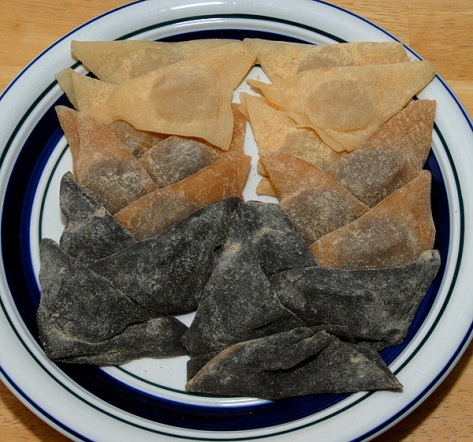
Yatsuhashi (八ツ橋 or 八橋) is a Japanese confectionery sold mainly as a souvenir sweet (miyagegashi). It is one of the best known meibutsu (famous regional products) of Kyoto. It is made from rice flour (上新粉, jōshinko), sugar and cinnamon. Baked, it is similar to senbei. Raw, unbaked yatsuhashi (Nama yatsuhashi) has a soft, mochi-like texture and is often eaten wrapped around red bean paste (餡, an), and may come in a variety of different flavours. Most notable to the Kyoto area is the black version of this. The addition of black bean powder to the wrapper gives a distinctive black color.

KAPPA EBISEN:

Kappa Ebisen (かっぱえびせん) is a Japanese snack food produced by Calbee of Japan. It is a crunchy, shrimp-flavored snack resembling french fries that is very popular in Japan.
The primary ingredients of Kappa Ebisen are wheat flour, vegetable oil, starch, shrimp, sugar, salt, baking powder, amino acid and sweetening.
Kappa Ebisen was first sold in 1964 and has gained wide popularity among Japanese consumers as a snack food.
In 1966, Calbee began exporting Kappa Ebisen to Hawaii and Southeast Asia.[1] It is now sold in dozens of countries worldwide.
There are different flavors of Kappa Ebisen, such as curry flavor, available in Japan and a few other countries.
A similar product known as Saewoo Ggang (새우깡) has been produced by Nongshim of South Korea since 1971. It is not licensed by Calbee.

RECOMMENDED RELATED WEBSITES

With a Glass,
Clumsyfingers by Xethia
Adventures in Bento Making, American Bento, Beanbento, Bento No1, Bento Wo Tsukurimashou, Cooking Cute, Eula, Hapabento , Happy Bento, Jacki’s Bento Blog, Kitchen Cow, Leggo My Obento, Le Petit Journal Bento & CO (French), Lunch In A Box, My Bento Box, Vegan Lunch Box; Tokyo Tom Baker, Daily Food Porn/Osaka, Only Nature Food Porn, Happy Little Bento, The Herbed Kitchen, J-Mama’s Kitchen, Cook, Eat, Play, Repeat; Bento Lunch Blog (German); Adventures In Bento; Anna The Red’s Bento Factory; Cooking Cute; Timeless Gourmet; Bento Bug; Ideal Meal; Bentosaurus; Mr. Foodie (London/UK); Ohayo Bento

Must-see tasting websites:

-Sake: Tokyo Through The Drinking Glass, Tokyo Foodcast, Urban Sake, Sake World
-Wine: Palate To Pen, Warren Bobrow, Cellar Tours, Ancient Fire Wines Blog
-Beer: Good Beer & Country Boys, Another Pint, Please!
-Japanese Pottery to enjoy your favourite drinks: Yellin Yakimono Gallery

Japanese Vegetarian & Vegan Cakes: Wagashi/和菓子 16: Yatsuhashi/-Tabe

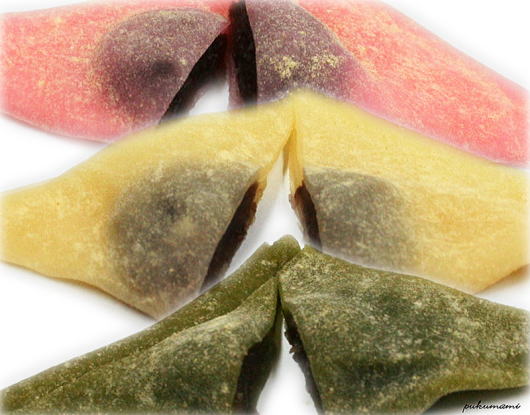
Yatsuhashi (八ツ橋 or 八橋) is a Japanese confectionery sold mainly as a souvenir sweet (miyagegashi/土産菓子). It is one of the best known meibutsu/名物 (famous regional products) of Kyoto.
It is also widely known under the name of O-Tabe/お食べ (“please eat”).

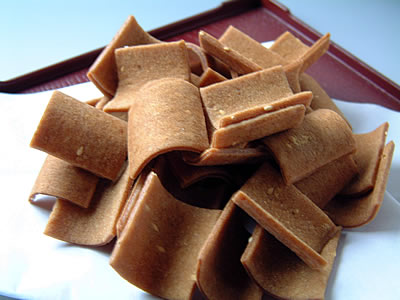
It is made from rice flour (上新粉, jōshinko), sugar and cinnamon. Baked, it is similar to senbei, making it suitable for both vegans and flour allergics!

Baked Yatsuhashi

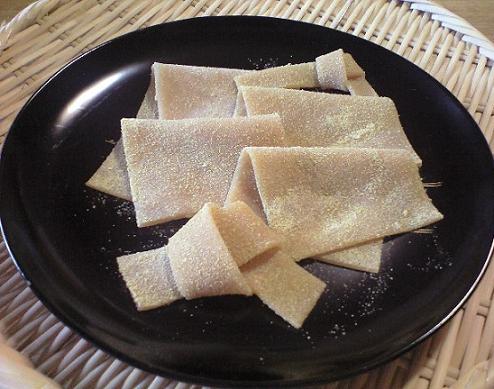
Raw Yatsuhashi

Raw, unbaked yatsuhashi (Nama yatsuhashi/生八橋) has a soft, mochi-like texture and is often eaten wrapped around red bean paste (餡, an), and may come in a variety of different flavours.

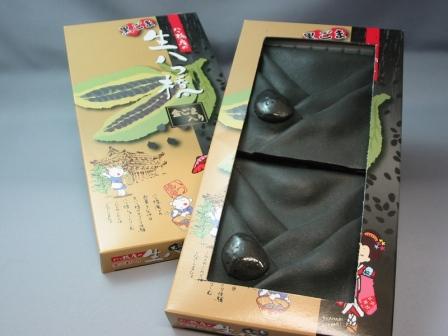
Black Yatsuhashi

Most notable to the Kyoto area is the black version of this. The addition of black bean powder and black sesame seed powder to the wrapper and the an give a distinctive black color.

Different flavoured Yatsuhashi

Not so long ago, there were only a few flavours available.
Now, all kinds of flavours are on sale for the pleasur of all:
Cinnamon, Matcha Tea, Ume an (sweetmeats mixed with Jpanese plum), Mandarine, Strawberries, Cherry blossoms, Ramune, Chocolate-banana, Chocolate, Kyoto baked sweet potato, Chestnuts, Green apple, Blueberries, Mango, Orange, Red wine and more seasonal offerings!

RECOMMENDED RELATED WEBSITES

With a Glass,
Clumsyfingers by Xethia
Adventures in Bento Making, American Bento, Beanbento, Bento No1, Bento Wo Tsukurimashou, Cooking Cute, Eula, Hapabento , Happy Bento, Jacki’s Bento Blog, Kitchen Cow, Leggo My Obento, Le Petit Journal Bento & CO (French), Lunch In A Box, My Bento Box, Vegan Lunch Box; Tokyo Tom Baker, Daily Food Porn/Osaka, Only Nature Food Porn, Happy Little Bento, The Herbed Kitchen, J-Mama’s Kitchen, Cook, Eat, Play, Repeat; Bento Lunch Blog (German); Adventures In Bento; Anna The Red’s Bento Factory; Cooking Cute; Timeless Gourmet; Bento Bug; Ideal Meal; Bentosaurus; Mr. Foodie (London/UK); Ohayo Bento

Must-see tasting websites:

-Sake: Tokyo Through The Drinking Glass, Tokyo Foodcast, Urban Sake, Sake World
-Wine: Palate To Pen, Warren Bobrow, Cellar Tours, Ancient Fire Wines Blog
-Beer: Good Beer & Country Boys, Another Pint, Please!
-Japanese Pottery to enjoy your favourite drinks: Yellin Yakimono Gallery

Japanese Vegetarian & Vegan Cakes: Wagashi/和菓子 15: Daifuku

DAIFUKU-1

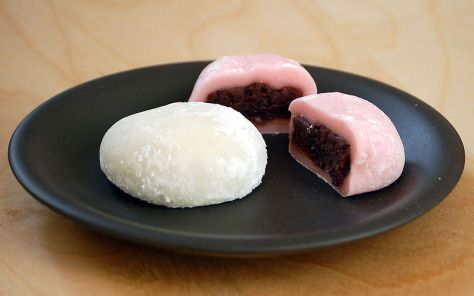
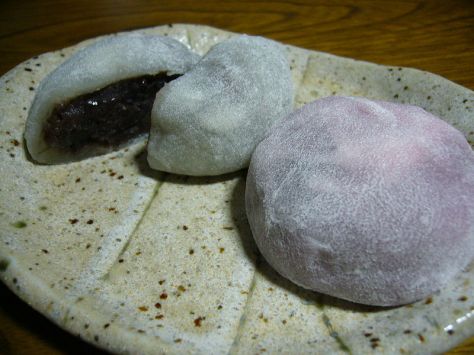
Daifukumochi (大福餅), or Daifuku (大福) (literally “great luck”), is a Japanese confection consisting of a small round mochi (glutinous rice cake) stuffed with sweet filling, most commonly anko, sweetened red bean paste made from azuki beans.

The traditional daifuku, like all Wagashi are vegan in concept.

But Daifuku comes in many varieties.
The most common is white, pale green or pale pink colored mochi filled with anko.
These come in two sizes, one approximately the diameter of a half-dollar coin, the other palm-sized.
Some versions contain whole pieces of fruit, mixtures of fruit and anko or crushed melon paste.
Nearly all daifuku are covered in a fine layer of corn or taro starch to keep them from sticking to each other, or to the fingers. Some are covered with confectioner’s sugar or cocoa.

DAIFUKU-2

HISTORY:
Daifuku were originally called Harabuto mochi (腹太餅) (belly thick rice cake) because of its filling nature. Later the name was changed to Daifuku mochi (大腹餅) (big belly rice cake). Since the pronunciation of Fuku (腹) (belly) and Fuku (福) (luck) is the same in Japanese, the name was further changed to Daifuku mochi (大福餅) (great luck rice cake), a bringer of good luck. By the end of the 18th century, Daifuku were gaining popularity and people began eating them toasted. They were also used for gifts in ceremonial occasions

VATIETIES:

DAIFUKU-3
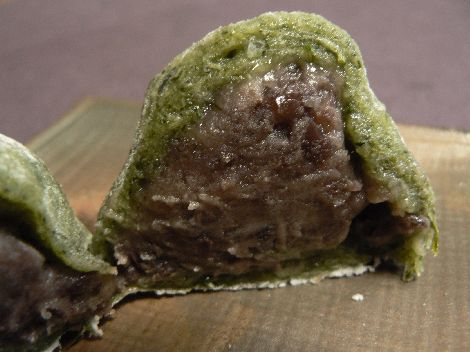
Yomogi daifuku (蓬大福)
A version made with kusa mochi (草餅), which is mochi flavored with mugwort.

DAIFUKU-4
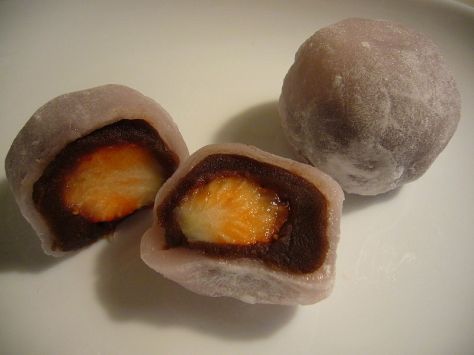
Ichigo daifuku (イチゴ大福)
A variation containing strawberry and sweet filling, most commonly anko, inside a small round mochi. Creams are sometimes used for sweet filling. Because it contains strawberry, it is usually eaten during the spring time. It was invented in the 1980s. Many patisseries claim to have invented the confection, so its exact origin is vague.

DAIFUKU-5
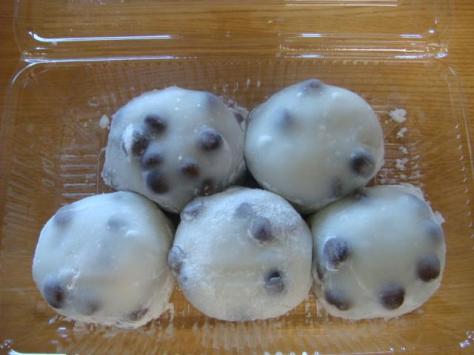
Mame daifuku (豆大福)
Another variation made of mochi mixed with red peas or soy beans.

RECOMMENDED RELATED WEBSITES

With a Glass,
Clumsyfingers by Xethia
Adventures in Bento Making, American Bento, Beanbento, Bento No1, Bento Wo Tsukurimashou, Cooking Cute, Eula, Hapabento , Happy Bento, Jacki’s Bento Blog, Kitchen Cow, Leggo My Obento, Le Petit Journal Bento & CO (French), Lunch In A Box, My Bento Box, Vegan Lunch Box; Tokyo Tom Baker, Daily Food Porn/Osaka, Only Nature Food Porn, Happy Little Bento, The Herbed Kitchen, J-Mama’s Kitchen, Cook, Eat, Play, Repeat; Bento Lunch Blog (German); Adventures In Bento; Anna The Red’s Bento Factory; Cooking Cute; Timeless Gourmet; Bento Bug; Ideal Meal; Bentosaurus; Mr. Foodie (London/UK); Ohayo Bento

Must-see tasting websites:

-Sake: Tokyo Through The Drinking Glass, Tokyo Foodcast, Urban Sake, Sake World
-Wine: Palate To Pen, Warren Bobrow, Cellar Tours, Ancient Fire Wines Blog
-Beer: Good Beer & Country Boys, Another Pint, Please!
-Japanese Pottery to enjoy your favourite drinks: Yellin Yakimono Gallery

Japanese Vegetarian & Vegan Cakes: Wagashi/和菓子 14: Satsuma Imo/Sweet Potatoes-Recipe

SATSUMA-WAGASHI-1

Satsuma Imo or Sweet Potatoes are often used in Japanese cakes/Wagashi.
The great advantage is that it makes for completely vegan cakes with an almost endless source of variations.

Here is the basice recipe from you will be able to improvise!

INGREDIENTS:

-Satsuma/Sweet Potato: 400g (peeled)
-Sugar: 75 g
-Agar agar powder: 3 g
-Salt: a pinch
-Water: 20 ml

RECIPE:

SATSUMA-WAGASHI-2
-Cut the sweet potato into small pieces and wash under clear cold water to take off astringency.
Boil in a pan with 20 ml of water until soft.

-Just before the potatoes are completely cooked, add sugar, agar agar and salt. Bring to boil and switch off fire. Bear in mind there will be very little water. Do not burn the poatoes!

-Transfer potatoes into a frying pan and fry until they get smooth.

-Return to boiling pan and heat to get all excess water out.

-Pass through a sieve, or process.

-Wet the inside of a refrigerator recipient before spreading cellophane paper inside. Pour the potato puree into the recipient and fold the cellophane paper on top, leaving no air between cellophane paper and potato. Chill inside refrigerator.

SATSUMA-WAGASHI-3

Before eating unwrap cellophane paper and cut into preferred shape.
This is where the fun begins!

RECOMMENDED RELATED WEBSITES

With a Glass,
Clumsyfingers by Xethia
Adventures in Bento Making, American Bento, Beanbento, Bento No1, Bento Wo Tsukurimashou, Cooking Cute, Eula, Hapabento , Happy Bento, Jacki’s Bento Blog, Kitchen Cow, Leggo My Obento, Le Petit Journal Bento & CO (French), Lunch In A Box, My Bento Box, Vegan Lunch Box; Tokyo Tom Baker, Daily Food Porn/Osaka, Only Nature Food Porn, Happy Little Bento, The Herbed Kitchen, J-Mama’s Kitchen, Cook, Eat, Play, Repeat; Bento Lunch Blog (German); Adventures In Bento; Anna The Red’s Bento Factory; Cooking Cute; Timeless Gourmet; Bento Bug; Ideal Meal; Bentosaurus; Mr. Foodie (London/UK); Ohayo Bento

Must-see tasting websites:

-Sake: Tokyo Through The Drinking Glass, Tokyo Foodcast, Urban Sake, Sake World
-Wine: Palate To Pen, Warren Bobrow, Cellar Tours, Ancient Fire Wines Blog
-Beer: Good Beer & Country Boys, Another Pint, Please!
-Japanese Pottery to enjoy your favourite drinks: Yellin Yakimono Gallery

Japanese Vegetarian & Vegan Cakes: Wagashi/和菓子13: Recipe-Kabotcha/Pumpkins

WAGASHI-PUMPKIN-1

Just found this recipe to please vegans (and others) with a sweet tooth:
Japanese Cake/Wagashi: Pumpkin/Kabotcha Wagashi!

INGREDIENTS: For 5 cakes
-Pumkin paste: 20 g
-Rice flour: 30 g
-Sugar: 12 g
-Water: 50 ml
-Sweetmeats/Anko (See Recipe here)
-Cornstarch: enough for operation
-Pumpkin seeds or pine nuts: 5 (for decoration)

RECIPE:

WAGASHI-PUMPKIN-2
-Peel skin from pumkin and heat pulp inside microwave oven until soft enough to make paste. Let cool down completely.

WAGASHI-PUMPKIN-3
-In an oven bowl mix well punpkin paste, rice flour, sugar and water until it becomes bubbly. Cover with cellophane paper and heat for 40 seconds at 700W inside microwave oven.

WAGASHI-PUMPKIN-4
-Work the paste until smooth.

WAGASHI-PUMPKIN-5
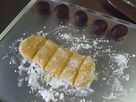
-Using cornstarch to work paste more easily as it will easily stick to your fingers, divide the paste into 5 identical portions.

WAGASHI-PUMPKIN-6
-Divide sweetmeats/anko into 5 identical parts and fashion them into small balls.
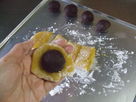
Coat your fingers with a little cornstarch and completely wrap sweetmeat/anko ball with pumpkin paste as shown in picture.

WAGASHI-PUMPKIN-7
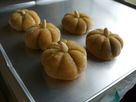
-Make indents around the ball with a wooden sticks to shape the ball into a small pumpkin.

WAGASHI-PUMPKIN-8
-As soon as the ball is finished, gently brush away whatever cornstarch is left on the surface.

WAGASHI-PUMPKIN-9
-On top of each pumpkin cake place a seed for decoration and effect!

WAGASHI-PUMPKIN-10
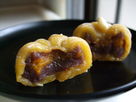
-That is how your “pumpkin” will look when you cut it!

NOTE:
You can sieve the pumpkin pulp first for a finer texture.

RECOMMENDED RELATED WEBSITES

With a Glass,
Clumsyfingers by Xethia
Adventures in Bento Making, American Bento, Beanbento, Bento No1, Bento Wo Tsukurimashou, Cooking Cute, Eula, Hapabento , Happy Bento, Jacki’s Bento Blog, Kitchen Cow, Leggo My Obento, Le Petit Journal Bento & CO (French), Lunch In A Box, My Bento Box, Vegan Lunch Box; Tokyo Tom Baker, Daily Food Porn/Osaka, Only Nature Food Porn, Happy Little Bento, The Herbed Kitchen, J-Mama’s Kitchen, Cook, Eat, Play, Repeat; Bento Lunch Blog (German); Adventures In Bento; Anna The Red’s Bento Factory; Cooking Cute; Timeless Gourmet; Bento Bug; Ideal Meal; Bentosaurus; Mr. Foodie (London/UK); Ohayo Bento

Must-see tasting websites:

-Sake: Tokyo Through The Drinking Glass, Tokyo Foodcast, Urban Sake, Sake World
-Wine: Palate To Pen, Warren Bobrow, Cellar Tours, Ancient Fire Wines Blog
-Beer: Good Beer & Country Boys, Another Pint, Please!
-Japanese Pottery to enjoy your favourite drinks: Yellin Yakimono Gallery

Japanese Vegetarian & Vegan Cakes: Wagashi/和菓子12: Dango-団子-Sweet Dumplings-Recipe

DANGO-1a
(Mitarashi Dango)

Japanese dango are not complicated, although it might be better to make a lot at a time!

INGREDIENTS:
-Rice (“Uruchi Kome”/normal Japnese round rice): 200g
-Water (for dango): 130cc
-Water (for sauce): 60cc
-Cornstarch: 1 teaspoon
-Sugar: 1 teaspoon
-Soy sauce: 2 teaspoons

RECIPE:

DANGO-RECIPE-1

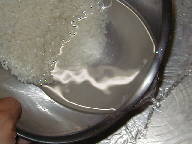
Wash rice thoroughly.
If rice is no-wash type, skip 3 first steps.

DANGO-RECIPE-2

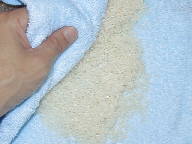
Once the rice washing water is coming out clean, drain rice and spread ontowel. Take off all excess humidity.

DANGO-RECIPE-4

Let the rice dry for two hours.

DANGO-RECIPE-3

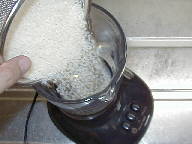
Pour rice in Blender/mixer. First work the blender for only a few seconds at a time until all the rice has been broken completeley. Then blend three times 15 seconds at a time.

DANGO-RECIPE-5

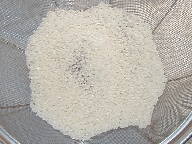
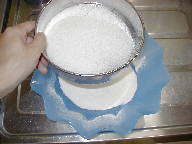
If the rice does not turn into powder easily, sift rice as many times as necessary until all rice has been reduced to powder.

DANGO-RECIPE-6

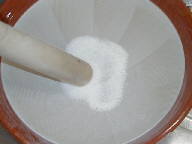
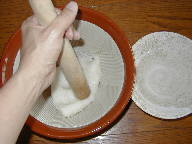
Finish the job with mortar and pestle.

DANGO-RECIPE-7

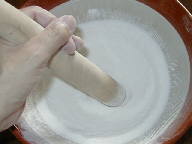
Once the rice has been reduced completely into powder, work the pestle in for 5 more minutes.

DANGO-RECIPE-8

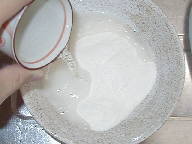
Add water and mix well with spoon.

DANGO-RECIPE-9

Divide into small portions and steam for 15 minutes.

DANGO-RECIPE-10

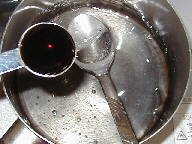
In a pan add cornstarch to water (for the sauce). keep stirring over a low fire. once the water has been become transparent add sugar and soy sauce and mix well until you obtain a smooth syrup. take off fire.

DANGO-RECIPE-11

Fill a glass with water and keep within arm’s reach.
Drop all the steamed dango paste into mortar.
Work dango paste with a wet wooden pestle.
Once the paste has been become sticky and elastic, form small balls (the operation should not last more than 10 minutes).
Wet them to prevent them from sticking to each other.

DANGO-RECIPE-12

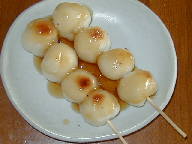
Push a wet (important!) stick through the balls (4 or 5 at the most).
Grill the balls (or not) for better effect.
Serve them smeared with syrup.

RECOMMENDED RELATED WEBSITES

With a Glass,
Clumsyfingers by Xethia
Adventures in Bento Making, American Bento, Beanbento, Bento No1, Bento Wo Tsukurimashou, Cooking Cute, Eula, Hapabento , Happy Bento, Jacki’s Bento Blog, Kitchen Cow, Leggo My Obento, Le Petit Journal Bento & CO (French), Lunch In A Box, My Bento Box, Vegan Lunch Box; Tokyo Tom Baker, Daily Food Porn/Osaka, Only Nature Food Porn, Happy Little Bento, The Herbed Kitchen, J-Mama’s Kitchen, Cook, Eat, Play, Repeat; Bento Lunch Blog (German); Adventures In Bento; Anna The Red’s Bento Factory; Cooking Cute; Timeless Gourmet; Bento Bug; Ideal Meal; Bentosaurus; Mr. Foodie (London/UK); Ohayo Bento

Must-see tasting websites:

-Sake: Tokyo Through The Drinking Glass, Tokyo Foodcast, Urban Sake, Sake World
-Wine: Palate To Pen, Warren Bobrow, Cellar Tours, Ancient Fire Wines Blog
-Beer: Good Beer & Country Boys, Another Pint, Please!
-Japanese Pottery to enjoy your favourite drinks: Yellin Yakimono Gallery
Japanese Vegetarian & Vegan Cakes: Wagashi/和菓子11: Dango-団子-Sweet Dumplings

DANGO-1a
(Mitarashi Dango)

Dango (団子) is a Japanese dumpling made from mochi-ko (rice flour), related to mochi. It is often served with green tea.
In Edo times, they were very popular at tea stands along the country roads.

Dango are eaten year-round, but the different varieties are traditionally eaten in given seasons. Three to four dango are often served on a skewer. One variety of dango from Hokkaidō is made from potato flour and baked with shoyu (soy sauce).

Types of dango:

There are many different varieties of dango which are usually named after the various seasonings served on or with it.

DANGO-2
Chadango: Green-tea flavored Dango.

DANGO-4
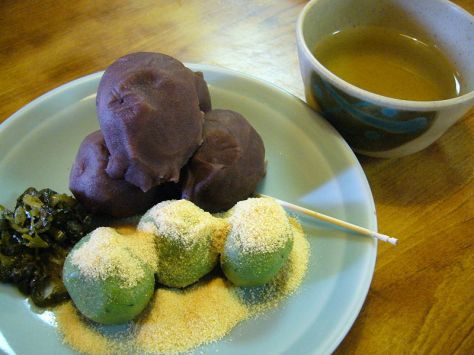
Dango served covered with anko.

Actually, if you want to write all about Dango, you’d need to publish a whole book!

But I will publish an easy recipe tomorrow!

RECOMMENDED RELATED WEBSITES

With a Glass,
Clumsyfingers by Xethia
Adventures in Bento Making, American Bento, Beanbento, Bento No1, Bento Wo Tsukurimashou, Cooking Cute, Eula, Hapabento , Happy Bento, Jacki’s Bento Blog, Kitchen Cow, Leggo My Obento, Le Petit Journal Bento & CO (French), Lunch In A Box, My Bento Box, Vegan Lunch Box; Tokyo Tom Baker, Daily Food Porn/Osaka, Only Nature Food Porn, Happy Little Bento, The Herbed Kitchen, J-Mama’s Kitchen, Cook, Eat, Play, Repeat; Bento Lunch Blog (German); Adventures In Bento; Anna The Red’s Bento Factory; Cooking Cute; Timeless Gourmet; Bento Bug; Ideal Meal; Bentosaurus; Mr. Foodie (London/UK); Ohayo Bento

Must-see tasting websites:

-Sake: Tokyo Through The Drinking Glass, Tokyo Foodcast, Urban Sake, Sake World
-Wine: Palate To Pen, Warren Bobrow, Cellar Tours, Ancient Fire Wines Blog
-Beer: Good Beer & Country Boys, Another Pint, Please!
-Japanese Pottery to enjoy your favourite drinks: Yellin Yakimono Gallery