Tag Archives: Japanese Gastronomy

Potato Gastronomy: The Real Potato Chips!

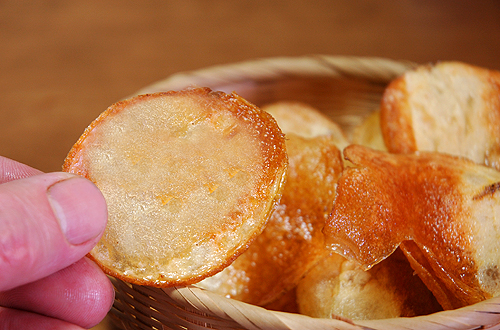
Now, what are real potato chips?

Not the French fries, which are actually Belgian fries.

And not the poor imitations you wolf down with untold amounts of salt and preservatives!

Real potato chips, as known in Great Britain or France (!) are made with potatoes, real ones I mean, and they are easy to make and much, much healthier!

Now, what do you need?
Potatoes, of course, a (very) little salt and good oil.

How do you prepare them?

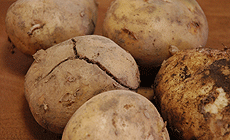
Your potatoes, being old or not, can be used with a simple technique.

If they are old, no problem.
If you brush them (with a real hard brush) under clear water, you will be able to reduce their outer layer to a very thin skin that is edible (actually most of the really beneficient matters are contained in their skin!).

Cut them as thin as possible (with their skin!).

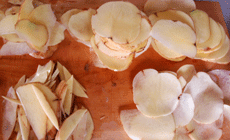
Important: slices of different thickness should not be fried together.
Try to separate them as shown on above pic and fry them separately.
Great fun if you have the kids around!

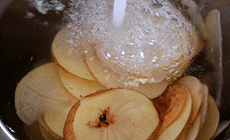
Clean potato slices in cold running water. This is an important step unless you want them to stick together, turn black and make a mess!
Dry them thoroughly inside a large clean cloth (or the water will fly upon frying!).

Heat frying oil to 170 degrees Celsius.

This is how your chips should look just before frying!

Use long wooden chopsticks to prevent chips from sticking to each other.

Your chips will change colour and, if the oil is at proper temperature, swell nicely!

Once you are satisfied with their colour, take them out of the oil and let them rest for a very short while over a fine mesh to get rid of excess oil. Sprinkle a (very) little salt for taste. I personally like some parmegiano and pepper instead of the salt!

Don’t forget the “wrong shapes”! They make for great chips, too, especially with the kids!

I usually serve the round chips with oven-baked chicken or guinea fowl!

Did I mention vegans can eat these?

RECOMMENDED RELATED WEBSITES

The Indian Tourist, Masala Herb by Helene Dsouza in Goa, India
Mummy I Can Cook! by Shu Han in London
Pierre.Cuisine, Francescannotwrite, My White Kitchen, 47 Japanese Farms Through The Eyes of Its Rural Communities, Foodhoe, Chucks Eats, Things that Fizz & Stuff, Five Euro Food by Charles,Red Shallot Kitchen by Priscilla,With a Glass, Nami | Just One Cookbook, Peach Farm Studio, Clumsyfingers by Xethia, PepperBento,Adventures in Bento Making, American Bent, Beanbento, Bento No, Bento Wo Tsukurimashou, Cooking Cute, Eula, Hapabento , Happy Bento, Jacki’s Bento Blog, Kitchen Cow, Leggo My Obento, Le Petit Journal Bento & CO (French), Lunch In A Box,
Susan at Arkonlite, Vegan Lunch Box; Tokyo Tom Baker, Daily Food Porn/Osaka, Only Nature Food Porn, Happy Little Bento, The Herbed Kitchen, J-Mama’s Kitchen, Cook, Eat, Play, Repeat, Bento Lunch Blog (German), Adventures In Bento, Anna The Red’s Bento Factory, Cooking Cute, Timeless Gourmet, Bento Bug, Ideal Meal, Bentosaurus, Mr. Foodie (London/UK), Ohayo Bento,

Must-see tasting websites:

-Sake: Tokyo Through The Drinking Glass, Tokyo Foodcast, Urban Sake, Sake World
-Wine: Palate To Pen, Warren Bobrow, Cellar Tours, Ancient Fire Wines Blog
-Beer: Good Beer & Country Boys, Another Pint, Please!
-Japanese Pottery to enjoy your favourite drinks: Yellin Yakimono Gallery

Japanese Crustacean Species 3: Squiila-Mantis Shrimp-Shako-蝦蛄

A tropical squilla!

Squillae as found on Japanese markets.
Note the dun color as they come from dark northern seas!

The Squilla or “Shako” (蝦蛄in Japanese) is a delicacy that appears on the sushi bar counters from April to Summer, although different varieties can be found in Hokkaido markets (Otaru City in particular) almost all year round.
You will discover it under names such as “Shaku” and “Gazaebi”.
They are actually caught in almost all Japanese seas, but the best are supposed to originate from Hokkaido.

Served boiled or steamed on their own, they make for a great snack!

Like any crustaceans, they can be eaten in many ways.
The Japanese favor the small kind with a violet back. I had the opportunity to buy some very large specimen in Otaru, and eat them just boiled and served with rice vinegar mixed with a little Japanese mustard, or in salads.
They almost disappeared from Tokyo Bay in the 1960’s but reappeared in the 1970’s. Most fishermen in the Kanto (Eastern Japan) area will place them in boxes themselves to sell them directly at fish markets. The market value can vary wildly, but look for the genuine harbor markets and buy them yourself.

Simple nigiri with boiled/steamed squilla

Naturally, they are most popular as nigiri sushi. Customers jokingly ask for “garage” (in English) as “shako” also means (different kanji, of course: 車庫) “garage”!

Seasoned with “tare” sauce.

An unusual offering with grilled squilla!

RECOMMENDED RELATED WEBSITES

The Indian Tourist, Masala Herb by Helene Dsouza in Goa, India
Mummy I Can Cook! by Shu Han in London
Pierre.Cuisine, Francescannotwrite, My White Kitchen, 47 Japanese Farms Through The Eyes of Its Rural Communities, Foodhoe, Chucks Eats, Things that Fizz & Stuff, Five Euro Food by Charles,Red Shallot Kitchen by Priscilla,With a Glass, Nami | Just One Cookbook, Peach Farm Studio, Clumsyfingers by Xethia, PepperBento,Adventures in Bento Making, American Bent, Beanbento, Bento No, Bento Wo Tsukurimashou, Cooking Cute, Eula, Hapabento , Happy Bento, Jacki’s Bento Blog, Kitchen Cow, Leggo My Obento, Le Petit Journal Bento & CO (French), Lunch In A Box,
Susan at Arkonlite, Vegan Lunch Box; Tokyo Tom Baker, Daily Food Porn/Osaka, Only Nature Food Porn, Happy Little Bento, The Herbed Kitchen, J-Mama’s Kitchen, Cook, Eat, Play, Repeat, Bento Lunch Blog (German), Adventures In Bento, Anna The Red’s Bento Factory, Cooking Cute, Timeless Gourmet, Bento Bug, Ideal Meal, Bentosaurus, Mr. Foodie (London/UK), Ohayo Bento,

Must-see tasting websites:

-Sake: Tokyo Through The Drinking Glass, Tokyo Foodcast, Urban Sake, Sake World
-Wine: Palate To Pen, Warren Bobrow, Cellar Tours, Ancient Fire Wines Blog
-Beer: Good Beer & Country Boys, Another Pint, Please!
-Japanese Pottery to enjoy your favourite drinks: Yellin Yakimono Gallery

Oil Varieties: An Introduction

OLIVE-OIL-PRODUCTION
(The Manufacture of Oil drawn and engraved by J Amman in the Sixteenth Century/Wikipedia)

Once again, the other day during my bus ride to work (it’s pouring on weekends these days!), I was thinking of my vegan and vegetarian friends and also my omnivore (I’m one of them!) ones. As far as I can recollect, there is little written about oils and I thought I could write up a useful posting for all to copy and borrow!

Have you ever wondered how many kinds of oil there are out there?

All right, shall we start (and I’m sure to forget some along the way!):

OLIVE OIL
OIL-OLIVES

Now, we all seem to know what olive oile is all about.
But there is only one good type of olive oil: Extra Vrigin Olive Oil! That is what comes out first caused by the natural pressure of all these olives piled upon each other.
The rest is sub-standard, whatever the name.
Back in France (and most probably in may other countries) we have olive oil sommeliers/tasters!
have you ever heard of the expressions: fruitiness, bitterness, pungency, and mouth feel.
And I’m not talking about the olives themselves!
I will not tell and hope I got you hooked!

SWEET ALMOND OIL
OIL-ALMOND

Almond Oil was used as perfume in ancient times.
Light and very fragrant, it is particularly welcome in marinades (raw salmon seasoned with dill or basil) or drizzled over seafood, pasta or fish prior to serving.

ARGAN OIL
OIL-ARGAN

Also called Moroccan Fennel Oil, Argan oil is an oil produced from the kernels of the endemic argan tree, that is valued for its nutritive, cosmetic and numerous medicinal properties. That tree is found only in North Africa.
Bold and wild in taste, it is a favourite of mine. Use it isparingly n salads, couscous and tagines. Works wonders on a beef carpaccio and on goat cheese.

PEANUT and ROASTED PEANUT OIL
OIL-PEANUTS

Peanuts oil is very common, all right, but roasted peanut has a startling flavour. Perfect for salad and cheese dishes. Suited to all warm climate cuisines: Mexican, African, Indonesian.

CANOLA or RAPE SEED OIL
OIL-RAPESEED

The Japanese eat the unopened flowers and young shoots after boiling them.
They reveal a full-bodied in taste with a distinct cabbage flavor. Enhances potato or beet salads. Try it on fresh cottage cheese!

HAZLENUT OIL
OIL-HAZELNUT

Another favourite of mine. I use it extensively in salad dressings.
Hazelnuts are rich in protein and unsaturated fat. Moreover, they contain significant amounts of thiamine and vitamin B6, as well as smaller amounts of other B vitamins.
Suave and lightly aromatic. Great in all types of salads. Replaces butter (vegans, listen!) on all starches, vegetables, fish, pasta, pastries. Adds a festive touch when drizzled on a potato, green bean or carrot dish.

WALNUT OIL
OIL-WALNUT

Another favourite of mine!
In France we make bread, pickles and liqueurs with them!
Walnuts are also an excellent source of omega-3 fatty acids, and have been shown as helpful in lowering cholesterol.
They have a pronounced nutty flavour. Well suited for bitter greens (endives, chicory, dandelion); excellent drizzled on starches. This oil is a good companion to a lightly seasoned fresh cheese. This oil fears heat!

PECAN NUTOIL
OIL-PECAN

Pecans are a good source of protein and unsaturated fats. A diet rich in nuts can lower the risk of gallstones in women. The antioxidants and plant sterols found in pecans reduce high cholesterol by reducing the “bad” LDL cholesterol levels.
It reveals a pronounced nut taste, in between walnut and almond. Good on any type of rice, cold, hot or in a salad.

GRAPE SEED OIL
OIL-GRAPESEED

Grape seed oil is also a preferred cosmetic ingredient for damaged and stressed tissues!
Neutral taste (it is unscented). Perfect for mixing with other more pungent oils; ideal for deep frying. Grape seed contains potent antioxidants such as vitamin E alpha and procyandanians, which contribute to its numerous health benefits.

PINE NUT OIL
PINE-NUT

Pine nut oil has a relatively low smoke point, and is therefore not generally used during cooking. Rather, it is added to foods for “finishing”, to add flavor.
It reveals a very subtle and mild taste. Enhances the flavour of any dish on which it is drizzled. Added in the final moments of cooking, it does wonders with seafood stews, sauces (especially wine) and soups (particularly minestrone).

PISTACHIO OIL
OIL-PISTACHIO

In July 2003, the Food and Drug Administration (FDA) approved the first qualified health claim specific to nuts lowering the risk of heart disease.
Its oil has a very distinct, long-lasting taste. It is not suited to all types of vinegars: balsamic and honey are the best. A vinaigrette composed of this oil, balsamic vinegar, chives and seasoning is superb on an endive and smoked trout (or salmon) salad.

SESAME OIL
OIL-SESAME

In Japan, the best tempura is deep-fried in pure sesame oil only!
Used extensivley all over the World, it has a very strong roasted, nutty flavour. A few drops in a salad or stir fry gives the dish a definite oriental touch.
I use it extensively with tofu, natto and salads!

SOY BEAN OIL
OIL-SOYBEAN

Soy bean oil is mainly used as a bulk cooking oil especially in South Asia and in the Middle East.
The most important point regarding the use of soybeans for human nutrition is the absolute necessity to cook the soybean with “wet” heat in order to destroy the trypsin inhibitors; serine protease inhibitors.
Soybeans are considered by many agencies, including the US Food and Drug Administration, to be a source of complete protein.

MUST-SEE WEBSITE:
1001 HUILES (Engish & French)

RECOMMENDED RELATED WEBSITES

The Indian Tourist, Masala Herb by Helene Dsouza in Goa, India
Mummy I Can Cook! by Shu Han in London
Pierre.Cuisine, Francescannotwrite, My White Kitchen, 47 Japanese Farms Through The Eyes of Its Rural Communities, Foodhoe, Chucks Eats, Things that Fizz & Stuff, Five Euro Food by Charles,Red Shallot Kitchen by Priscilla,With a Glass, Nami | Just One Cookbook, Peach Farm Studio, Clumsyfingers by Xethia, PepperBento,Adventures in Bento Making, American Bent, Beanbento, Bento No, Bento Wo Tsukurimashou, Cooking Cute, Eula, Hapabento , Happy Bento, Jacki’s Bento Blog, Kitchen Cow, Leggo My Obento, Le Petit Journal Bento & CO (French), Lunch In A Box,
Susan at Arkonlite, Vegan Lunch Box; Tokyo Tom Baker, Daily Food Porn/Osaka, Only Nature Food Porn, Happy Little Bento, The Herbed Kitchen, J-Mama’s Kitchen, Cook, Eat, Play, Repeat, Bento Lunch Blog (German), Adventures In Bento, Anna The Red’s Bento Factory, Cooking Cute, Timeless Gourmet, Bento Bug, Ideal Meal, Bentosaurus, Mr. Foodie (London/UK), Ohayo Bento,

Must-see tasting websites:

-Sake: Tokyo Through The Drinking Glass, Tokyo Foodcast, Urban Sake, Sake World
-Wine: Palate To Pen, Warren Bobrow, Cellar Tours, Ancient Fire Wines Blog
-Beer: Good Beer & Country Boys, Another Pint, Please!
-Japanese Pottery to enjoy your favourite drinks: Yellin Yakimono Gallery

Japanese Gastronomy: Vegan Japanese Simmered Egg Plant

Egg plants or aubergines, originating from India, are very popular in Japan and chefs have come up with many simple and succulent recipes in this country!

Here is a very simple one to satisfy the priorities of a vegan or vegetarian.
It makes for a great snack with your drink!

Japanese Simmered Egg plant/Nasi no Ni Komi/茄子乃煮込み

INGREDIENTS For 3 egg plants

Egg plants: 3 shortish and round
Soy sauce: 2 tablespoons
Sugar: 3 tablespoons
Dry short chili (鷹の爪): 1
Sesame oil: as appropriate

RECIPE

1)
Take/cut off the sepals and puncture the egg plant with a tooth pick in dozen places.

2)
In a wok or saucepan drop the egg plants and add soy sauce, sugar and chili. Switch the fire on to hot.
Rool the eggplant in the juices regularly.

3)
Once the liquid has reduced to half, turn the fire down to medium.

4)
Once the liquid has been absorbed by the eggplant add the sesame oil and roll the eggplants in them.
Switch off fire and serve!

RECOMMENDED RELATED WEBSITES

The Indian Tourist, Masala Herb by Helene Dsouza in Goa, India
Mummy I Can Cook! by Shu Han in London
Pierre.Cuisine, Francescannotwrite, My White Kitchen, 47 Japanese Farms Through The Eyes of Its Rural Communities, Foodhoe, Chucks Eats, Things that Fizz & Stuff, Five Euro Food by Charles,Red Shallot Kitchen by Priscilla,With a Glass, Nami | Just One Cookbook, Peach Farm Studio, Clumsyfingers by Xethia, PepperBento,Adventures in Bento Making, American Bent, Beanbento, Bento No, Bento Wo Tsukurimashou, Cooking Cute, Eula, Hapabento , Happy Bento, Jacki’s Bento Blog, Kitchen Cow, Leggo My Obento, Le Petit Journal Bento & CO (French), Lunch In A Box,
Susan at Arkonlite, Vegan Lunch Box; Tokyo Tom Baker, Daily Food Porn/Osaka, Only Nature Food Porn, Happy Little Bento, The Herbed Kitchen, J-Mama’s Kitchen, Cook, Eat, Play, Repeat, Bento Lunch Blog (German), Adventures In Bento, Anna The Red’s Bento Factory, Cooking Cute, Timeless Gourmet, Bento Bug, Ideal Meal, Bentosaurus, Mr. Foodie (London/UK), Ohayo Bento,

Must-see tasting websites:

-Sake: Tokyo Through The Drinking Glass, Tokyo Foodcast, Urban Sake, Sake World
-Wine: Palate To Pen, Warren Bobrow, Cellar Tours, Ancient Fire Wines Blog
-Beer: Good Beer & Country Boys, Another Pint, Please!
-Japanese Pottery to enjoy your favourite drinks: Yellin Yakimono Gallery

Japanese Crustacean Species 2: Large Sweet Prawn-Botan Ebi-牡丹海老

Botanebi/”Botan” Prawn, or “Pandalus nipponesis” for the specialists, is a large prawn found in all seas of Japan, especially off Hokkaido Island, at depths varying from 300 to 500 metres. They are caught at 200~300 metres depth in Suruga Bay and along the Western coast of Izu Peninsula In Shizuoka Prefecture. Once abundant, they have become scarce and only small specimens are found, whereas Hokkaido produces up to 20cm-long prawns.

They are known under different names: “Toyamaebi and Kijiebi”.
It is not a cheap morsel in Sushi bars. But it is interesting to note they are essentially eaten raw as like “Amaebi”. They become very sweet after some time in the refrigerator.

They make for big servings as sushi nigiri!

Now, if you are lucky enough to find them fresh with their eggs, ask your chef to dress them as above for sashimi…

as sushi nigiri,…

or even better, put the eggs on top of a “gunkan nigiri”!

And one more thing, if they are fresh again, don’t forget to ask for the heads deep-fried!

Incidentally, botanebi change sex (gender) with age to end up as big juicy females!

RECOMMENDED RELATED WEBSITES

The Indian Tourist, Masala Herb by Helene Dsouza in Goa, India
Mummy I Can Cook! by Shu Han in London
Pierre.Cuisine, Francescannotwrite, My White Kitchen, 47 Japanese Farms Through The Eyes of Its Rural Communities, Foodhoe, Chucks Eats, Things that Fizz & Stuff, Five Euro Food by Charles,Red Shallot Kitchen by Priscilla,With a Glass, Nami | Just One Cookbook, Peach Farm Studio, Clumsyfingers by Xethia, PepperBento,Adventures in Bento Making, American Bent, Beanbento, Bento No, Bento Wo Tsukurimashou, Cooking Cute, Eula, Hapabento , Happy Bento, Jacki’s Bento Blog, Kitchen Cow, Leggo My Obento, Le Petit Journal Bento & CO (French), Lunch In A Box,
Susan at Arkonlite, Vegan Lunch Box; Tokyo Tom Baker, Daily Food Porn/Osaka, Only Nature Food Porn, Happy Little Bento, The Herbed Kitchen, J-Mama’s Kitchen, Cook, Eat, Play, Repeat, Bento Lunch Blog (German), Adventures In Bento, Anna The Red’s Bento Factory, Cooking Cute, Timeless Gourmet, Bento Bug, Ideal Meal, Bentosaurus, Mr. Foodie (London/UK), Ohayo Bento,

Must-see tasting websites:

-Sake: Tokyo Through The Drinking Glass, Tokyo Foodcast, Urban Sake, Sake World
-Wine: Palate To Pen, Warren Bobrow, Cellar Tours, Ancient Fire Wines Blog
-Beer: Good Beer & Country Boys, Another Pint, Please!
-Japanese Pottery to enjoy your favourite drinks: Yellin Yakimono Gallery

Sushi: Oshizushi-Pressed Sushi-The Techniques

1) Salmon Marinated in Seaweed/Sake Sushi Konbushime
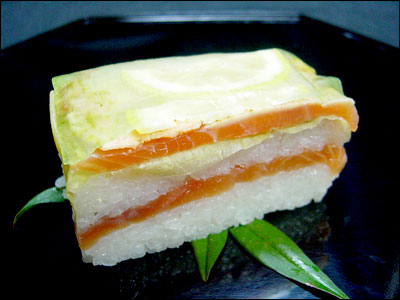
Sushi exists under many forms and guises.
It not all nigiri and (more ubiquitous) sushi rolls!
Have you ever heard of Oshizushi?

Oshizushi (押し寿司, litterally pressed sushi), is a pressed sushi from the Kansai Region, a favourite and specialty of Osaka.

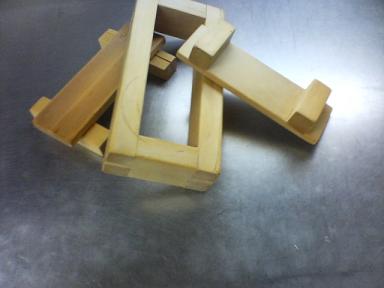
Oshibako unmounted

It is made with the help of a block-shaped piece formed using a wooden mold, called an oshibako/押し箱.
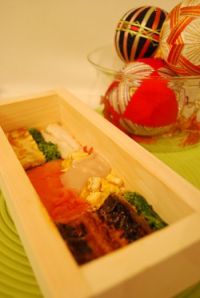
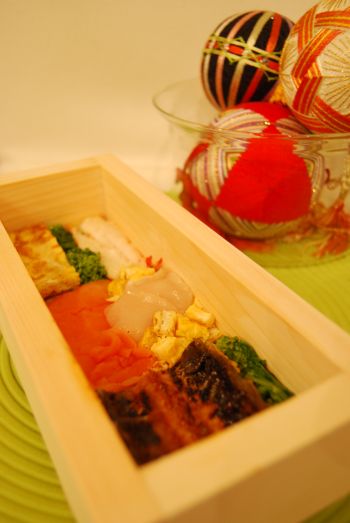
Oshibako lined with toppings

The chef lines the bottom of the oshibako with the toppings, covers them with sushi rice, and then presses the lid of the mold down to create a compact, rectilinear block.
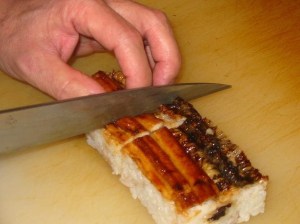
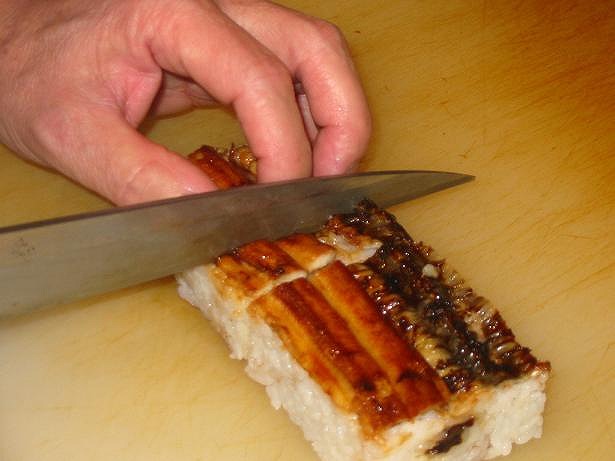
Cutting Grilled Eel Oshizushi

The block is then removed from the mold and then cut into bite-sized pieces.

It is great fun to experiment at home for large parties or the family as you can include almost anything.
Moreover, oshizuhi is easy to transport and include in bento!

The recipes and techniques I’m introducing here are professional, but with a little practice I’m sure you will become a specialist

——————————

Oshizushi/Pressed Sushi Techniques 1: Salmon Marinated in Seaweed/Sake Sushi Konbushime

For sushi rice preparation, check HERE for previous posting!
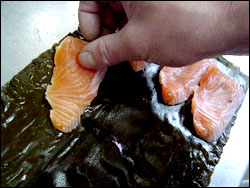
Konbushime/昆布〆means that the fish is “marinated with seaweed.
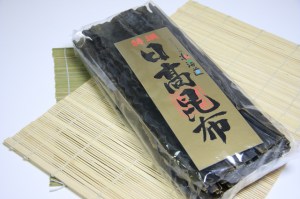
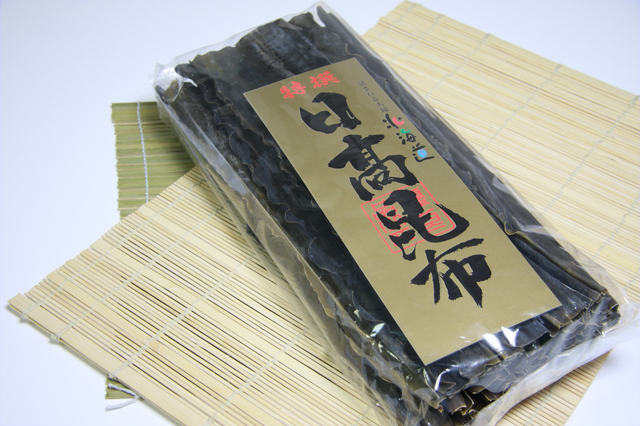
Konbu/Seaweed is now readily available on Japanese and Asian markets all over the world or on the internet.
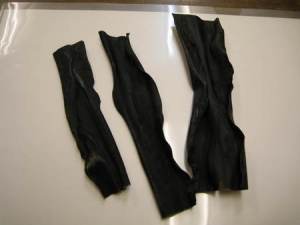
Two types of konbu/seaweed are used:
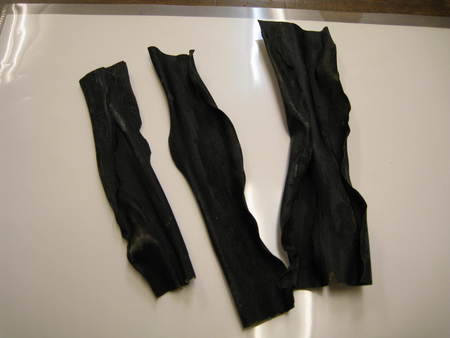
-Dark/black thick Konbu/Seaweed is bought dry and has to be softened in lukewarm water for a while. That particular step is very easy to learn.
Keep in mind it is edible, although after marination, it should be discarded.
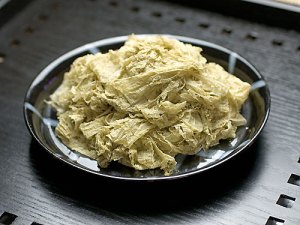
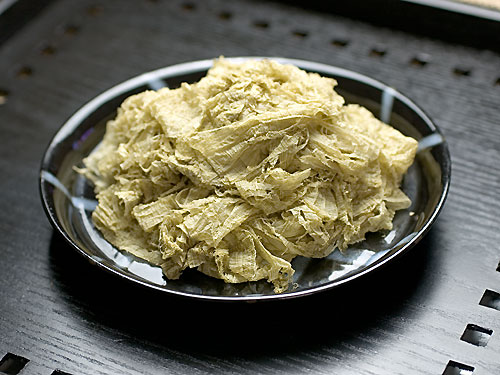
-Thin, light coloured (almost transparent) is used as an ingredient both for taste and the finishing touch. If not available, you may replace it with fine green leaves.
It is called “Kagome Konbu/かごめ昆布”.
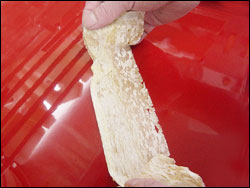
An even better light seaweed is called “Take Kawa Konbu/竹皮昆布/Bamboo Skin Saweed” and is widely used by professionals.

Both light coloured seaweeds have to be softened in lukewarm water, sponged off and spread into thin sheets first. But it is really worth the work!

After having softened the dark konbu, spread it over a clean working table and place the fresh (fresh, please!) salmon slices over one sheet and covering the lot with another sheet.
Wrap it in cellophane paper and leave it in the fridge for at least 30 minutes.
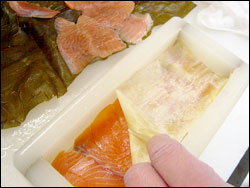
During that time soften light seaweed in lukewarm water and spread it over a clean cloth.

Line the bottom of the oshibako/box with one layer of salmon (no dark seaweed!). Spread light seaweed over the salmon and spread a first layer sushi rice.

Repeat the same operation once more and press.
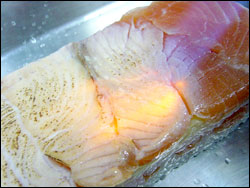
Unloose the sushi out of its box.
The fish should be on top.
Grill the top of the fish lightly with a hand burner just enough to change the colour.
That step will enable to savour two different tastes at the same time!
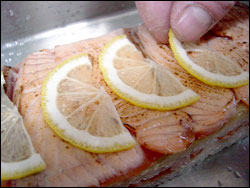
Place very thin slices of lemon (clean organic, please!) on top of the rice.
It will abate the “fishy smell/taste”.
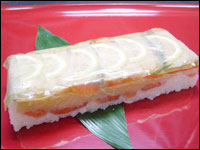
Lay another layer of fine light seaweed over the top.
Cut and serve!
————————-
2) Seared Prime Beef/Gyuniku Aburi

Japanese prime beef has become a registered trademark all over the world be it from Kobe or other regions.
The present sushi was made with “Kuroge Gyuniku/黒毛牛肉/Black Hair Beef from animals raised to the age of 12 months in Fukui Prefecture.
Do check the origin of your beef!

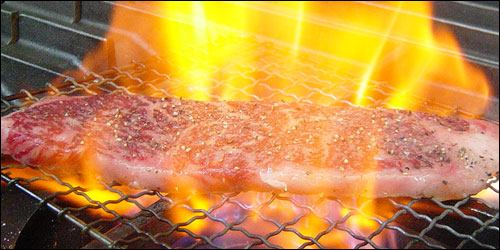
When preparing this slightly extravagant sushi, choose a large slice of prime beef with plenty of “fat veins” as shown on the above picture.
Don’t choose too thick or too thin, either. Think of the proportion of the beef and rice. Bear in mind that the the seared beef will also loose some of its thickness.

Sprinkle the beef with quality ground balck pepper and salt.
Sear it or grill it lightly on both sides quickly.
This process will enhance the sweetness of the meat.

-Slice the meat into bite-sized portions as shown in above picture at a slant after having cut off the fatty extremity.

Lay the bottom of the oshibako/box with slices of beef as shown in above picture in a “staggering” fashion. If you don’t, the slices will slideaway from each other.
Cover with shiso/perilla leaves.
Cover with sushi rice and press.

Soften light seaweed in lukewarm water and spread it over a clean cloth.
Unloose the sushi out of its box.
The beef should be on top.
Spread the light seaweed over the top.
Cut to size and serve immediately for maximum enjoyment!

—————————-

3) Egg Bearing Snow Crab/Seikogani
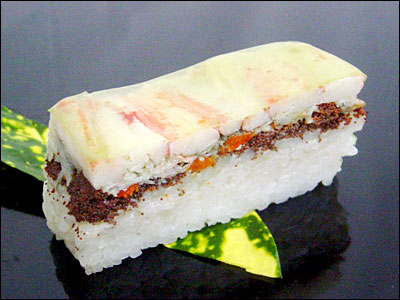
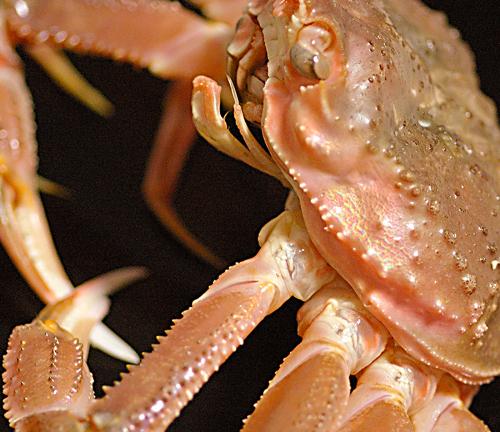
Seikogani is the Japanese name for the female Snow Crab or Zuwagani, when she is bearing her eggs.
Contrary to many other kinds of crabs, the female snow crabs, even when bearing eggs, lose little of their food and taste quality with the added advantage of an extra delicacy and taste. On the other hand the main food is found inside the shell instead of the legs and pincers for the males.
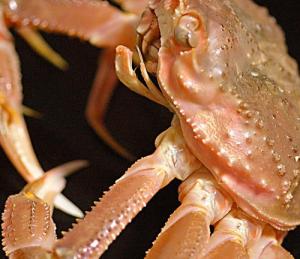
Snow Crab/Zuwagani

Therefore, if you get your hands on such a specimen, do not ignore it, even if they are noticeably smaller than their male counterparts!
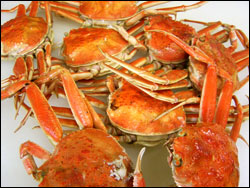
Boiled snow crabs.

The best is actually to combine both male and female into a combination sushi.
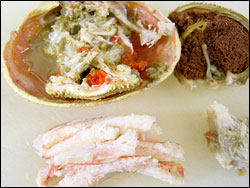
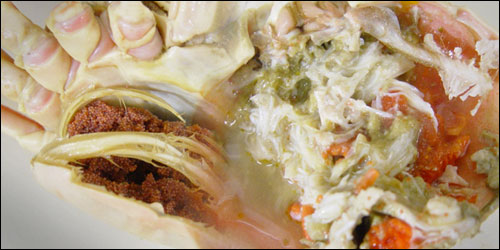
Above are the shells of two snow crabs, the large male one containing white flesh and red brains from both male and female, the smaller female one containing the eggs, and the flesh taken out of the male legs after boiling and cooling.
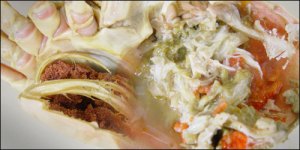
See above picture for better view of the edible morsels: white flesh, red brains (don’t forget these!) and eggs.
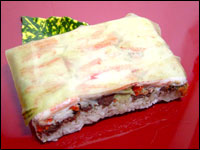
As there is a danger of a general crumbling out of the ingredients, line the bottom of the oshibako/box with a good layer of light seaweed first instead of doing it after you have unloose the sushi out ofits box.
Then place legs flesh tightly parallel to each other to form as compact as possible layer. Cover the leg flesh with the eggs and red brains into a pleasing design.
Finally fill with sushi rice and press.

Unloose sushi from its box and cut to size before serving!
————————————–

4) Seared Seabream/Tai no Aburi
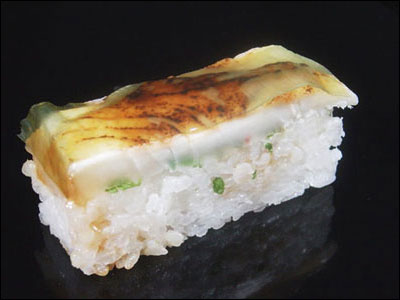
Seabreams or Snappers come in so many varieties all over thw orld that it becomes quite easy to find and adapt to various cuisines.
The Japanese are extremely fond of it either raw or steamed with rice.
When using it as sashimi or sushi, choose a fresh fis. Look at their eyes and press with fingers. And use your nose!
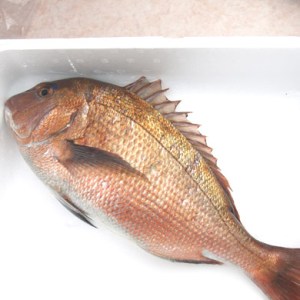
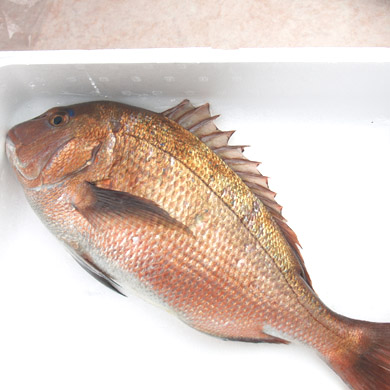
Madai/真鯛 or “True Seabream”, the most commonly used type of seabream in Japan.
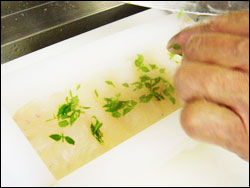
For an extra finishing touch for the taste, use fresh leaves of sansho/山椒 or Japanese pepper (also called ki no me/木の芽).
The English name is Shichuan Pepper, although we are talking of the fresh plant here.
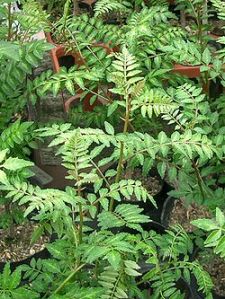
In Japan the dried and powdered leaves of Zanthoxylum sancho are used to make noodle dishes and soups mildly hot and fragrant. The whole fresh leaves, 木の芽 kinome, are used to flavour vegetables, especially bamboo shoots, and to decorate soups. Typically the young shoots are used in this way giving an aromatic lemony flavour to food. They are used to denote spring seasonality in food. The buds, seeds, flowers, and hulls are also used.

Chop some leaves finely enough to use with sushi, but not to fine. Cut them as short as shown in picture.

Soften light seaweed in lukewarm water and spread it over a clean cloth.

Line the bottom of the oshibako/box with slices of seabream fillet as tightly to each other as possible.
Sprinkle with chopped sansho leaves.
Fill with sushi rice and press.
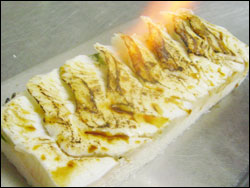
Unloose oshizushi out of the box.
Brush the surface lightly with some soy sauce (I sweeten it a bit by mixing it with a little mirin/sweet sake).
Sear the fish lightly.
Repeat the same process twice more so as to cook only the surface and make it take a nice colour.
This way you will be able to taste the fish in two different ways inside your mouth!
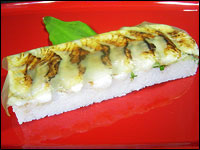
Spread the light seaweed over the top.
Cut to size and serve immediately for maximum enjoyment!

RECOMMENDED RELATED WEBSITES

The Indian Tourist, Masala Herb by Helene Dsouza in Goa, India
Mummy I Can Cook! by Shu Han in London
Pierre.Cuisine, Francescannotwrite, My White Kitchen, 47 Japanese Farms Through The Eyes of Its Rural Communities, Foodhoe, Chucks Eats, Things that Fizz & Stuff, Five Euro Food by Charles,Red Shallot Kitchen by Priscilla,With a Glass, Nami | Just One Cookbook, Peach Farm Studio, Clumsyfingers by Xethia, PepperBento,Adventures in Bento Making, American Bent, Beanbento, Bento No, Bento Wo Tsukurimashou, Cooking Cute, Eula, Hapabento , Happy Bento, Jacki’s Bento Blog, Kitchen Cow, Leggo My Obento, Le Petit Journal Bento & CO (French), Lunch In A Box,
Susan at Arkonlite, Vegan Lunch Box; Tokyo Tom Baker, Daily Food Porn/Osaka, Only Nature Food Porn, Happy Little Bento, The Herbed Kitchen, J-Mama’s Kitchen, Cook, Eat, Play, Repeat, Bento Lunch Blog (German), Adventures In Bento, Anna The Red’s Bento Factory, Cooking Cute, Timeless Gourmet, Bento Bug, Ideal Meal, Bentosaurus, Mr. Foodie (London/UK), Ohayo Bento,

Must-see tasting websites:

-Sake: Tokyo Through The Drinking Glass, Tokyo Foodcast, Urban Sake, Sake World
-Wine: Palate To Pen, Warren Bobrow, Cellar Tours, Ancient Fire Wines Blog
-Beer: Good Beer & Country Boys, Another Pint, Please!
-Japanese Pottery to enjoy your favourite drinks: Yellin Yakimono Gallery
Japanese Crustacean Species 1: White Shrimp-Shiro Ebi-白海老

Having obtained more information and species, I decided to restart the Series on Crustaceans for the sake of secure information! I might end amending this series every 2 years!

Deep-fried white shrimp

Shiroebi or White Shrimp is not as known as other shrimp/prawn varieties. However, it is a very popular crustacean in Japanese cuisine.
Also known under the the names of “Shiraebi, Hirataebi and Bekkoebi”, it is mainly caught between depths of 40 and 200 metres off the coasts of Toyama Bay on the other side of Japan and Suruga Bay in Shizuoka Prefecture.

It is mainlly served as sashimi with some ponzu and grated fresh ginger or freshly grated wasabi in Shizuoka Prefecture.

It is popular as sushi although one needs large specimen as the biggest are only 7 cm long.
One popular way to serve them as sushi in the Kansai area is as oshizushi/preshed sushi, either raw or marinated with seaweed as shown above.

One easier way to serve it sushi is gunkan/mothership and it allows for great decoration with flying fish roe and grated ginger for example!

Shiroebi appears on our tables between April and November in many guises:
The picture above shows on the right the shiroebi in its natural flesh whereas on the left it has been kept between two sheets of wetted seaweed for a while as “kombu-jime”, another very popular way to prepare all kinds of sashimi/sushi.

White Shrimps also enter in the preparation of a kind of “Tamagoyaki”/Japanese Omelette when they are first processed into a paste and mixed thoroughly with beaten eggs, sieved and then cooked.

The Japanese also love them as soft sembei/rice crackers.

An original recipe that will please Japanese and expats alike: Shiro Ebi Hamburger!

The annual catch has exceeded 600 tonnes in recent years, half of them in Toyama.
They are also exported whole.

RECOMMENDED RELATED WEBSITES

The Indian Tourist, Masala Herb by Helene Dsouza in Goa, India
Mummy I Can Cook! by Shu Han in London
Pierre.Cuisine, Francescannotwrite, My White Kitchen, 47 Japanese Farms Through The Eyes of Its Rural Communities, Foodhoe, Chucks Eats, Things that Fizz & Stuff, Five Euro Food by Charles,Red Shallot Kitchen by Priscilla,With a Glass, Nami | Just One Cookbook, Peach Farm Studio, Clumsyfingers by Xethia, PepperBento,Adventures in Bento Making, American Bent, Beanbento, Bento No, Bento Wo Tsukurimashou, Cooking Cute, Eula, Hapabento , Happy Bento, Jacki’s Bento Blog, Kitchen Cow, Leggo My Obento, Le Petit Journal Bento & CO (French), Lunch In A Box,
Susan at Arkonlite, Vegan Lunch Box; Tokyo Tom Baker, Daily Food Porn/Osaka, Only Nature Food Porn, Happy Little Bento, The Herbed Kitchen, J-Mama’s Kitchen, Cook, Eat, Play, Repeat, Bento Lunch Blog (German), Adventures In Bento, Anna The Red’s Bento Factory, Cooking Cute, Timeless Gourmet, Bento Bug, Ideal Meal, Bentosaurus, Mr. Foodie (London/UK), Ohayo Bento,

Must-see tasting websites:

-Sake: Tokyo Through The Drinking Glass, Tokyo Foodcast, Urban Sake, Sake World
-Wine: Palate To Pen, Warren Bobrow, Cellar Tours, Ancient Fire Wines Blog
-Beer: Good Beer & Country Boys, Another Pint, Please!
-Japanese Pottery to enjoy your favourite drinks: Yellin Yakimono Gallery

Japanese Shellfish Species 12: Surf Clam-Ubagai-姥貝

UBAGAI-1

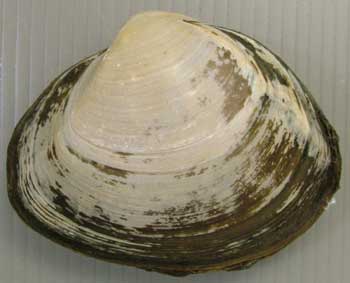
“Ubagai/姥貝” (Pseudocardium sachalinense) or more commonly called “Hokkigai/北寄貝” when served as sashimi or sushi have many names in English.
Member of the Trough Shells Groups, they are called Surf Clams, or more precisely, as pertains to the varieties eaten in Japan, either Japanese Surf Clams or Sakhalin Surf Clams as they are collected both along Japan and Sakhalin Islands shores. in Ainu, the original language of Hokkaido, it is called “poksey” or tutturep”.

8,000 tonnes are caught in Japan every year. 94% of fresh/live Surf Clams are collected in Hokkaido, Aomori, Fukushima and Miyagi Prefectures.
About 4,000 tonnes are imported frozen from Canada.
They are popular dried, in soups or cooked with vegetables and rice.

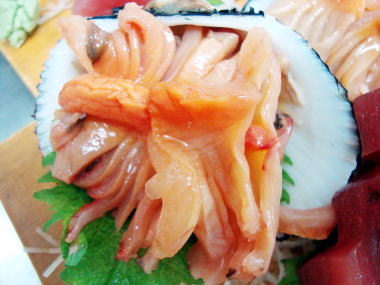
Their “tongues” can be appreciated as sashimi, but are most popular lightly poached and cooled down.
The color is black when raw.

The tongue turns red when it is heated as bakes, steamed or boiled.

That is the way they are usually processed before being served as sushi nigiri, either straight, or with a few small incisions for better effect! Very satisfying and beautiful!

RECOMMENDED RELATED WEBSITES

The Indian Tourist, Masala Herb by Helene Dsouza in Goa, India
Mummy I Can Cook! by Shu Han in London
Pierre.Cuisine, Francescannotwrite, My White Kitchen, 47 Japanese Farms Through The Eyes of Its Rural Communities, Foodhoe, Chucks Eats, Things that Fizz & Stuff, Five Euro Food by Charles,Red Shallot Kitchen by Priscilla,With a Glass, Nami | Just One Cookbook, Peach Farm Studio, Clumsyfingers by Xethia, PepperBento,Adventures in Bento Making, American Bent, Beanbento, Bento No, Bento Wo Tsukurimashou, Cooking Cute, Eula, Hapabento , Happy Bento, Jacki’s Bento Blog, Kitchen Cow, Leggo My Obento, Le Petit Journal Bento & CO (French), Lunch In A Box,
Susan at Arkonlite, Vegan Lunch Box; Tokyo Tom Baker, Daily Food Porn/Osaka, Only Nature Food Porn, Happy Little Bento, The Herbed Kitchen, J-Mama’s Kitchen, Cook, Eat, Play, Repeat, Bento Lunch Blog (German), Adventures In Bento, Anna The Red’s Bento Factory, Cooking Cute, Timeless Gourmet, Bento Bug, Ideal Meal, Bentosaurus, Mr. Foodie (London/UK), Ohayo Bento,

Must-see tasting websites:

-Sake: Tokyo Through The Drinking Glass, Tokyo Foodcast, Urban Sake, Sake World
-Wine: Palate To Pen, Warren Bobrow, Cellar Tours, Ancient Fire Wines Blog
-Beer: Good Beer & Country Boys, Another Pint, Please!
-Japanese Pottery to enjoy your favourite drinks: Yellin Yakimono Gallery

Sushi: Shizuoka Chirashi Zushi at Ekimae Matsuno Sushi Restaurant!

Shizuoka Chirashi Zuzhi!

Service: Very friendly, attentive and informative
Facilities: Overall clean if a bit old-fashioned
Prices: Reasonable
Strong points: Mainly local fish and seafood. Local sake. Always ready to improvise!

Chirashi Zushi/散らし寿司 means “Decoration Sushi” in Japanese.
It can be considered as one of the oldest ways to make sushi in Japan!
The great advantage is the total freedom of design and inspiration!

Last Monday after having tasted many sake at the Shizuoka Sake: 2012 Shizuoka Prefecture New Sake Tasting Annual Meet, I and my good friend Marcus Grandon decided we had to eat something to help digest all that sake before we resumed work!
I had been wanting to eat Ekimae Matsunosushi Restaurant’s Shizuoka Chirashizushi lunch for a long time and this was the right occasion!

It is a full lunch indeed with small cockles miso soup.

Also featured are ginger and daikon pickles and a small dessert under the form of home-made kumquat compote!

The Shizuoka Shirashi zushi plate!
Let’s have a closer look and see what we can recognize!

Tuna, tamagoyaki/Jpaanese omelette, Soboro/sweet crumbled omelet, dried sakura ebi/Cherry shrimps, nori/dried seaweed.

Tuna, shirasu/boiled sardine whiting, tamagoyaki/omelet/ anago/conger eel, shimesaba/pickled mackerel, dried sakura ebi.

Tuna, freshly grated wasabi, shirasu, tamagoyaki, anago, shimesaba, soboro and nori!

And it is a different offering every day!

To be followed…

EKIMAE MATSUNO SUSHI/駅前松乃寿
Shizuoka Shi, Aoi Ku, Koya Machi, 3-3 (Just in front of Shizuoka JR Railway Station
Tel.: 054-252-0123
Business hours: 11:00~21:00
Closed on Wednesdays and 3rd Tuesday
HOMEPAGE (Japanese)

RECOMMENDED RELATED WEBSITES

The Indian Tourist, Masala Herb by Helene Dsouza in Goa, India
Mummy I Can Cook! by Shu Han in London
Pierre.Cuisine, Francescannotwrite, My White Kitchen, 47 Japanese Farms Through The Eyes of Its Rural Communities, Foodhoe, Chucks Eats, Things that Fizz & Stuff, Five Euro Food by Charles,Red Shallot Kitchen by Priscilla,With a Glass, Nami | Just One Cookbook, Peach Farm Studio, Clumsyfingers by Xethia, PepperBento,Adventures in Bento Making, American Bent, Beanbento, Bento No, Bento Wo Tsukurimashou, Cooking Cute, Eula, Hapabento , Happy Bento, Jacki’s Bento Blog, Kitchen Cow, Leggo My Obento, Le Petit Journal Bento & CO (French), Lunch In A Box,
Susan at Arkonlite, Vegan Lunch Box; Tokyo Tom Baker, Daily Food Porn/Osaka, Only Nature Food Porn, Happy Little Bento, The Herbed Kitchen, J-Mama’s Kitchen, Cook, Eat, Play, Repeat, Bento Lunch Blog (German), Adventures In Bento, Anna The Red’s Bento Factory, Cooking Cute, Timeless Gourmet, Bento Bug, Ideal Meal, Bentosaurus, Mr. Foodie (London/UK), Ohayo Bento,

Must-see tasting websites:

-Sake: Tokyo Through The Drinking Glass, Tokyo Foodcast, Urban Sake, Sake World
-Wine: Palate To Pen, Warren Bobrow, Cellar Tours, Ancient Fire Wines Blog
-Beer: Good Beer & Country Boys, Another Pint, Please!
-Japanese Pottery to enjoy your favourite drinks: Yellin Yakimono Gallery
Gastronomic Nightmares in Japan: Calories Count at McDonald’s, Starbucks & Mr. Donuts

McDonald’s at Shinjuku, Tokyo

As demonstrated by many food bloggers, cooking and creating great foods and drinks have become incomplete and unsatisfying when not considering the benefits or adverse effects of the same foods and drinks regardless of their taste.
I do not intend to delve into counselling or consulting, but only to offer some knowledge about the nutrition and health facts in Japanese food.
The Japanese have their own imported diners represented mainly by McDonald’s, Starbucks and Mr. Donuts. Since they are doing good business here, I was curious about the calories intake in their offerings.
Here are the results of my research. Please note that these numbers concern only food served inside Japan. I will let you judge the benefits!

MCDONALD’S

-Double Quarter Pounder Cheese: 825 kcl
-Bacon Lettuce burger: 422 kcl
-Hamburger: 274 kcl
-Cheese Burger: 322 kcl
-Teriyaki Mac Burger: 509 kcl
-Fillet Fish: 352 kcl
-Chicken Mac Nuggets (5 pieces+bbq sauce): 322 kcl
-Cinnamon Melts: 449 kcl
-Mac Fried Potatoes (M size): 454 kcl
-Mac Shake Chocolate (S size9: 211 kcl
-Hot Apple Pie: 211 kcl

Starbucks, Shinjuku, Tokyo

STARBUCKS

Below drinks are all Tall Size

-Matcha Cream Frapuccino: 430 kcl
-Caramel Frapuccino: 307 kcl
-Caffe Mocha: 320 kcl
-Starbucks Latte: 203 kcl
-Soy Latte: 200 kcl
-Mango Passion Tea Frapuccino: 144 kcl
-Caramel Makiart: 189 kcl
-Drip Coffee: 20 kcl

Mr. Donuts, Sendai City

MR. DONUTS

-Cookie Cruller Coconuts: 397 kcl
-Choco Fashion: 307 kcl
-Honey Cello: 192 kcl
-Old Fashion: 277 kcl
-Baked Chou Custard & Whip: 176 kcl
-Double Chocolate: 240 kcl
-Rich Donut Honey dip: 190 kcl
-Bon.De.Ring: 225 kcl
-French Cruller: 158 kcl

As an indication a non-active (physical exercise) lady needs 1750 kcl a day, a moderately active lady needs 2050 kcl a day and a physically active lady needs 2350 kcl a day. Count 20% more for a gentleman.

RECOMMENDED RELATED WEBSITES

The Indian Tourist, Masala Herb by Helene Dsouza in Goa, India
Mummy I Can Cook! by Shu Han in London
Pierre.Cuisine, Francescannotwrite, My White Kitchen, 47 Japanese Farms Through The Eyes of Its Rural Communities, Foodhoe, Chucks Eats, Things that Fizz & Stuff, Five Euro Food by Charles,Red Shallot Kitchen by Priscilla,With a Glass, Nami | Just One Cookbook, Peach Farm Studio, Clumsyfingers by Xethia, PepperBento,Adventures in Bento Making, American Bent, Beanbento, Bento No, Bento Wo Tsukurimashou, Cooking Cute, Eula, Hapabento , Happy Bento, Jacki’s Bento Blog, Kitchen Cow, Leggo My Obento, Le Petit Journal Bento & CO (French), Lunch In A Box,
Susan at Arkonlite, Vegan Lunch Box; Tokyo Tom Baker, Daily Food Porn/Osaka, Only Nature Food Porn, Happy Little Bento, The Herbed Kitchen, J-Mama’s Kitchen, Cook, Eat, Play, Repeat, Bento Lunch Blog (German), Adventures In Bento, Anna The Red’s Bento Factory, Cooking Cute, Timeless Gourmet, Bento Bug, Ideal Meal, Bentosaurus, Mr. Foodie (London/UK), Ohayo Bento,

Must-see tasting websites:

-Sake: Tokyo Through The Drinking Glass, Tokyo Foodcast, Urban Sake, Sake World
-Wine: Palate To Pen, Warren Bobrow, Cellar Tours, Ancient Fire Wines Blog
-Beer: Good Beer & Country Boys, Another Pint, Please!
-Japanese Pottery to enjoy your favourite drinks: Yellin Yakimono Gallery
Dekopon Oranges Producer: Nobuhiko Onuma

Nobuhiko Onuma/小沼宣彦 between his daughter/睦代, and wife, Yoshiko/良子!

Dekopon (デコポン) is a seedless and very sweet citrus fruit, a hybrid between Kiyomi and ponkan (Nakano no.3), developed in Japan in 1972 starting from Kyushu Island. Originally a brand name, Dekopon has become a genericized trademark and it is used to refer to all brands of the fruit; the generic name is shiranuhi or shiranui (不知火). Dekopon is distinctive due to its sweet taste, large size and the large protruding bump on the top of the fruit.
Shizuoka prefecture has become a major producer thanks to its ideal climate.

Okitsu Mountains under a glaring sun.

I recently had the chance to make a new friend, Ms. Chikayo Onuma working as a nurse at the Shizuoka Children’s Hospital, whose parents are producers of Dekopon and other oranges in Okitsu, Shimizu Ku, Shizuoka City!
Her parents were very kind to accept this foreign resident to visit and interview them!
Okitsu in Shizuoka Prefecture is nationally famous for its citrus fruits thanks to an ideal sun exposure and wide differences of temperature between day and night contributing to an extraordinary sweetness of the fruit.

Unfortunately the picking season was finished but we still had a lot to talk about before moving to the Onuma’s home to have a look at their crops.
Mr. Onuma produces an annual crop of 3,000 kg of Dekopon, 1,000 kg of Aoshima (Aoshima Shutarou) Oranges, as well as Kiyomi and Suruga Elegant varieties.

A typical farmhouse in Shizuoka Prefecture!

Mr. Onuma sells some of his crop through the JA but mostly deals with a network of private customers and accepts orders through the phone/fax as long as there are any fruit left. You had better hurry as they will disappear soon!

Mr. Onuma was kind enough to prepare an explanation of the cultivation for my perusal:
May: Flowering
July~August: Pruning and thinning the trees to keep only the best fruit. A neck braking work!
From August: regular watering
About the 20th of November: Each fruit is individually protected with a paper bag. More neck-breaking work!
From January 20th: Harvesting.

But the work is far from being finished as I will explain later!

Moreover, fungicide has to be spread 12 times a year.
Mr. Onuma told me that he keeps any such fungicide to a minimum and does not use any other agrichemicals.

More work is to come as the fruit will be stored in a dark cool shed to mature.
The fruit must attain a level of 13 on the official sweetness scale before they may be called Dekopon.
Mr. Onuma’s crop of Dekopon has been awarded the special appellation of shiranuhi (不知火) by the Prefecture, as a sure mark of its excellence!

Mr. Ozawa’ shiranuhi have even been prized in spite of the fierce competition!

Even Japanese nationals will be hard pressed to pronounce the Kanji for shiranuhi (不知火) properly!

Temperature inside the shed is strictly regulated!

And the place is also kept dark at all times!

Moreover, each fruit has to be individually wrapped in an open vinyl pouch!
I can’t start to imagine all the work and time spent!

Not to mention all the back-breaking work carrying 10 kg trays out and preparing orders!

Mr. Ozawa’s dekopon in my bento!

All this to make sure that all the fruit reach customers in the perfect state!
Thank you so much, Mr. Onuma!

Nobuhiko Onuma/小沼宣彦, Dekopon and oranges producer
424-Shizuoka City, Shimizu Ku, Okitsu Inoue Machi, 177
424-0202静岡市清水区興津井上町177
Tel./Fax: 054-369-2670

RECOMMENDED RELATED WEBSITES

The Indian Tourist, Masala Herb by Helene Dsouza in Goa, India
Mummy I Can Cook! by Shu Han in London
Pierre.Cuisine, Francescannotwrite, My White Kitchen, 47 Japanese Farms Through The Eyes of Its Rural Communities, Foodhoe, Chucks Eats, Things that Fizz & Stuff, Five Euro Food by Charles,Red Shallot Kitchen by Priscilla,With a Glass, Nami | Just One Cookbook, Peach Farm Studio, Clumsyfingers by Xethia, PepperBento,Adventures in Bento Making, American Bent, Beanbento, Bento No, Bento Wo Tsukurimashou, Cooking Cute, Eula, Hapabento , Happy Bento, Jacki’s Bento Blog, Kitchen Cow, Leggo My Obento, Le Petit Journal Bento & CO (French), Lunch In A Box,
Susan at Arkonlite, Vegan Lunch Box; Tokyo Tom Baker, Daily Food Porn/Osaka, Only Nature Food Porn, Happy Little Bento, The Herbed Kitchen, J-Mama’s Kitchen, Cook, Eat, Play, Repeat, Bento Lunch Blog (German), Adventures In Bento, Anna The Red’s Bento Factory, Cooking Cute, Timeless Gourmet, Bento Bug, Ideal Meal, Bentosaurus, Mr. Foodie (London/UK), Ohayo Bento,

Must-see tasting websites:

-Sake: Tokyo Through The Drinking Glass, Tokyo Foodcast, Urban Sake, Sake World
-Wine: Palate To Pen, Warren Bobrow, Cellar Tours, Ancient Fire Wines Blog
-Beer: Good Beer & Country Boys, Another Pint, Please!
-Japanese Pottery to enjoy your favourite drinks: Yellin Yakimono Gallery

Shizuoka Sake: 2012 Shizuoka Prefecture New Sake Tasting Annual Meet

All pictures credited to MARCUS GRANDON

On the 26th of March 2012 was the 2012 Edition of the Shizuoka New Sake Tasting Annual Meet (in Japanese 静岡県清酒鑑評会出品酒きき酒会) held on the 4th floor of Aoi Tower in front of Shizuoka JR Station.

I still managed to go to the wrong building and arrived late. But my good friend Marcus Grandon I have succeeded in turning into a true Japanese sake fan saved my day and had started taking pictures! For once I didn’t have to worry about this aspect of reporting as Marcus is a professional photographer!

This kind of event has become quite a big affair and the organizing Shizuoka Prefecture Sake Breweries Association does have to limit numbers!
Professionals, amateurs, bloggers and sake lovers were already in the midst of serious tasting business and quite a few were taking notes!

A dedicated taster!

A great opportunity to meet some old and new friends!

Kokkou/国香, one of the vaunted Shizuoka sake!
The event, although based on personal (some people did crash, though!) invitations was free of charge and each guest was provided with a tasting glass and pamphlets describing the sake on display!

The brewers were also on hand to answer the questions asked by true sake officionados!

Guests poured the sake themselves!

And certainly enjoyed it!

Naturally the ladies took the opportunity to share some light talk!

The next event is for June in Yaizu City!
Don’t miss it!

RECOMMENDED RELATED WEBSITES

The Indian Tourist, Masala Herb by Helene Dsouza in Goa, India
Mummy I Can Cook! by Shu Han in London
Pierre.Cuisine, Francescannotwrite, My White Kitchen, 47 Japanese Farms Through The Eyes of Its Rural Communities, Foodhoe, Chucks Eats, Things that Fizz & Stuff, Five Euro Food by Charles,Red Shallot Kitchen by Priscilla,With a Glass, Nami | Just One Cookbook, Peach Farm Studio, Clumsyfingers by Xethia, PepperBento,Adventures in Bento Making, American Bent, Beanbento, Bento No, Bento Wo Tsukurimashou, Cooking Cute, Eula, Hapabento , Happy Bento, Jacki’s Bento Blog, Kitchen Cow, Leggo My Obento, Le Petit Journal Bento & CO (French), Lunch In A Box,
Susan at Arkonlite, Vegan Lunch Box; Tokyo Tom Baker, Daily Food Porn/Osaka, Only Nature Food Porn, Happy Little Bento, The Herbed Kitchen, J-Mama’s Kitchen, Cook, Eat, Play, Repeat, Bento Lunch Blog (German), Adventures In Bento, Anna The Red’s Bento Factory, Cooking Cute, Timeless Gourmet, Bento Bug, Ideal Meal, Bentosaurus, Mr. Foodie (London/UK), Ohayo Bento,

Must-see tasting websites:

-Sake: Tokyo Through The Drinking Glass, Tokyo Foodcast, Urban Sake, Sake World
-Wine: Palate To Pen, Warren Bobrow, Cellar Tours, Ancient Fire Wines Blog
-Beer: Good Beer & Country Boys, Another Pint, Please!
-Japanese Pottery to enjoy your favourite drinks: Yellin Yakimono Gallery
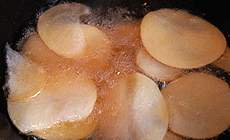
Japanese Shellfish Species 10: Ark Shell-Bloody Clam-Akagai-赤貝

AKAGAI-5
(Ark shell sashimi in its own shell)

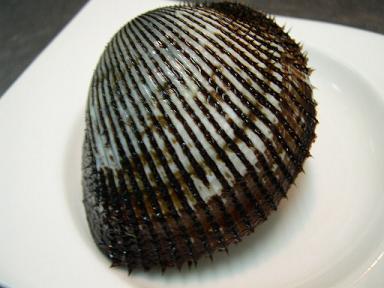
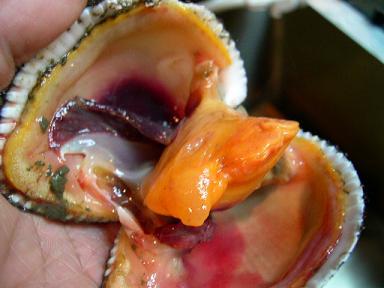
Akagai or Ark Shell tends to frighten potential sheffish amateurs because of its other English name, “Bloody Shell”, not only because of its deep reddish-orange colour, but also because of the reddish water it gives off upon opening.

AKAGAI-1

Now, shellfish does not have blood in our mammal concept.
Bear in mind that many shellfish are used for dyeing cloth, and if if I’m not mistaken, ark shells fulfill both utilitarian and gastronomic needs.

AKAGAI-2

It does require some skill to open and present.

AKAGAI-3

The main “Tongue” and “Thread/Akahimo” are edible.

The best season is Autumn, although they are available all year round. They are pretty abondant along the Japan southern coastlines, but many of them are also imported from Korea and China amounting to 80% of the total domestic consumption.

Ark shells are usually not served cooked.
Sashimi (see top picture) is very much appreciated but sushi nigiri is definitely the most popular way to savour them!

RECOMMENDED RELATED WEBSITES

The Indian Tourist, Masala Herb by Helene Dsouza in Goa, India
Mummy I Can Cook! by Shu Han in London
Pierre.Cuisine, Francescannotwrite, My White Kitchen, 47 Japanese Farms Through The Eyes of Its Rural Communities, Foodhoe, Chucks Eats, Things that Fizz & Stuff, Five Euro Food by Charles,Red Shallot Kitchen by Priscilla,With a Glass, Nami | Just One Cookbook, Peach Farm Studio, Clumsyfingers by Xethia, PepperBento,Adventures in Bento Making, American Bent, Beanbento, Bento No, Bento Wo Tsukurimashou, Cooking Cute, Eula, Hapabento , Happy Bento, Jacki’s Bento Blog, Kitchen Cow, Leggo My Obento, Le Petit Journal Bento & CO (French), Lunch In A Box,
Susan at Arkonlite, Vegan Lunch Box; Tokyo Tom Baker, Daily Food Porn/Osaka, Only Nature Food Porn, Happy Little Bento, The Herbed Kitchen, J-Mama’s Kitchen, Cook, Eat, Play, Repeat, Bento Lunch Blog (German), Adventures In Bento, Anna The Red’s Bento Factory, Cooking Cute, Timeless Gourmet, Bento Bug, Ideal Meal, Bentosaurus, Mr. Foodie (London/UK), Ohayo Bento,

Must-see tasting websites:

-Sake: Tokyo Through The Drinking Glass, Tokyo Foodcast, Urban Sake, Sake World
-Wine: Palate To Pen, Warren Bobrow, Cellar Tours, Ancient Fire Wines Blog
-Beer: Good Beer & Country Boys, Another Pint, Please!
-Japanese Pottery to enjoy your favourite drinks: Yellin Yakimono Gallery
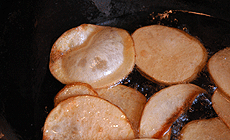
Organic Vegetables Salad at Pissenlit in Shizuoka City!

Service: Excellent and very friendly.
Facilities: Great cleanliness overall. Superb washroom (mouthwash and toothpicks provided!)!
Prices: Reasonable to slightly expensive, very good value.
Strong points: Interesting wine list. Great use of local products, especially organic vegetables and Shizuoka-bred meat.

Spring is very near and vegetables have become sweet for all the cold weather we had to put up with, which just shows that nature is still making us favors!
It is always a pleasure to savor a whole salad of them for a “quick lunch” at Pissenlit in Shizuoka City, a restaurant which plays a major role in making them known to all!

I took a “sneak review” of the vegetables on offer in the kitchen as I came late enough not to disturb any guests!

All organic vegetables!

Vegetables mainly come from Shizen no Chikara Farm in Shizuoka City, Kitayama Farm in Fujinomiya City and Hirokawa Farm in Mishima City!

But while Chef Touru Arima/有馬亨さん was busy preparing my order I was served a succulent and hot organic kabocha potage!

The salad!

Sometimes I experience almost more pleasure taking photographs than actually eating these little treasures!

Vegetable flan/pudding, the only non-vegetarian/vegan elemnt in the salad. If you are vegetarian, this should be no problem, just tell the chef!

And the dressings are always such superb finisihing touches!

To be continued…

PISSENLIT

420-0839 Shizuoka City, Aoi Ku, Takajo, 2-3-4
Tel.: 054-270-8768
Fax: 054-627-3868
Business hours: 11:30~14:30; 17:00~22:00
Closed on Tuesdays and Sunday evening
HOMEPAGE (Japanese)
E-Mail: pissenlit2008@ybb.ne.jp
Credit Cards OK
Entirely non-smoking!

RECOMMENDED RELATED WEBSITES

The Indian Tourist, Masala Herb by Helene Dsouza in Goa, India
Mummy I Can Cook! by Shu Han in London
Pierre.Cuisine, Francescannotwrite, My White Kitchen, 47 Japanese Farms Through The Eyes of Its Rural Communities, Foodhoe, Chucks Eats, Things that Fizz & Stuff, Five Euro Food by Charles,Red Shallot Kitchen by Priscilla,With a Glass, Nami | Just One Cookbook, Peach Farm Studio, Clumsyfingers by Xethia, PepperBento,Adventures in Bento Making, American Bent, Beanbento, Bento No, Bento Wo Tsukurimashou, Cooking Cute, Eula, Hapabento , Happy Bento, Jacki’s Bento Blog, Kitchen Cow, Leggo My Obento, Le Petit Journal Bento & CO (French), Lunch In A Box,
Susan at Arkonlite, Vegan Lunch Box; Tokyo Tom Baker, Daily Food Porn/Osaka, Only Nature Food Porn, Happy Little Bento, The Herbed Kitchen, J-Mama’s Kitchen, Cook, Eat, Play, Repeat, Bento Lunch Blog (German), Adventures In Bento, Anna The Red’s Bento Factory, Cooking Cute, Timeless Gourmet, Bento Bug, Ideal Meal, Bentosaurus, Mr. Foodie (London/UK), Ohayo Bento,

Must-see tasting websites:

-Sake: Tokyo Through The Drinking Glass, Tokyo Foodcast, Urban Sake, Sake World
-Wine: Palate To Pen, Warren Bobrow, Cellar Tours, Ancient Fire Wines Blog
-Beer: Good Beer & Country Boys, Another Pint, Please!
-Japanese Pottery to enjoy your favourite drinks: Yellin Yakimono Gallery
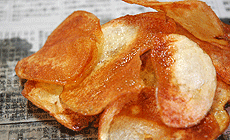
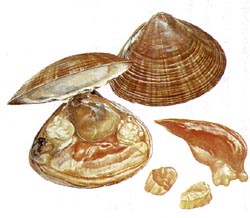
Jaoanese Shellfish Species 9: Round Clam-Hen Clam/Bakagai

AOYAGI-1

“Bakagai”, or Round clam/Hen Clam in English, is found mainly in the Central part of Honshu Island.

AOYAGI-2

Actually, you have a good chance to discover them at low tide all over Japan.

AOYAGI-6

It is a versatile shellfish as it provides for two distinct morsels:

AOYAGI-5

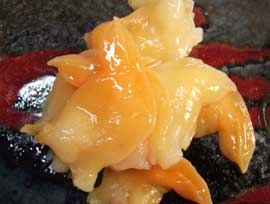
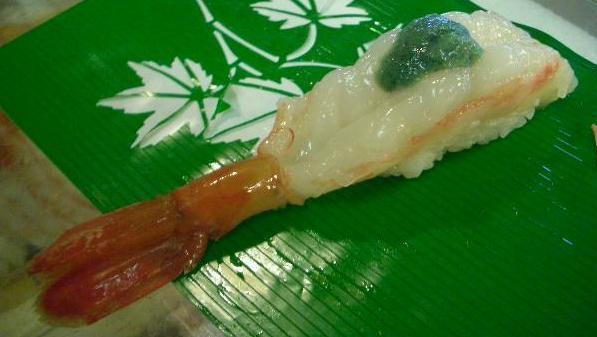
The “Tongue” called “Aoyagi”. It is very popular in Japan for its colour and sweetness. It is both eaten as Sashimi and…
AOYAGI-3

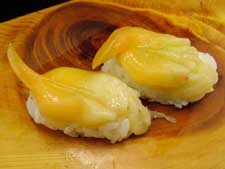
Sushi as nigiri.

AOYAGI-4

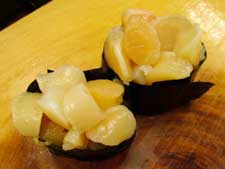
The second morsel, one of two muscle parts is called “Kobashira/Small pillar”.
Sushi chefs will keep them until they have enough to serve as sashimi or even better as suhi as gunkan!

Make sure to order either “Aoyagi” or “Kobashira” unless you want to start a long conversation by ordering “Bakagai”! esecially considering that “baka” in japanese means “Idiot”!

RECOMMENDED RELATED WEBSITES

The Indian Tourist, Masala Herb by Helene Dsouza in Goa, India
Mummy I Can Cook! by Shu Han in London
Pierre.Cuisine, Francescannotwrite, My White Kitchen, 47 Japanese Farms Through The Eyes of Its Rural Communities, Foodhoe, Chucks Eats, Things that Fizz & Stuff, Five Euro Food by Charles,Red Shallot Kitchen by Priscilla,With a Glass, Nami | Just One Cookbook, Peach Farm Studio, Clumsyfingers by Xethia, PepperBento,Adventures in Bento Making, American Bent, Beanbento, Bento No, Bento Wo Tsukurimashou, Cooking Cute, Eula, Hapabento , Happy Bento, Jacki’s Bento Blog, Kitchen Cow, Leggo My Obento, Le Petit Journal Bento & CO (French), Lunch In A Box,
Susan at Arkonlite, Vegan Lunch Box; Tokyo Tom Baker, Daily Food Porn/Osaka, Only Nature Food Porn, Happy Little Bento, The Herbed Kitchen, J-Mama’s Kitchen, Cook, Eat, Play, Repeat, Bento Lunch Blog (German), Adventures In Bento, Anna The Red’s Bento Factory, Cooking Cute, Timeless Gourmet, Bento Bug, Ideal Meal, Bentosaurus, Mr. Foodie (London/UK), Ohayo Bento,

Must-see tasting websites:

-Sake: Tokyo Through The Drinking Glass, Tokyo Foodcast, Urban Sake, Sake World
-Wine: Palate To Pen, Warren Bobrow, Cellar Tours, Ancient Fire Wines Blog
-Beer: Good Beer & Country Boys, Another Pint, Please!
-Japanese Pottery to enjoy your favourite drinks: Yellin Yakimono Gallery