Category Archives: 農業

Soba Restaurant along the Ten-Hama Railway Line: Hazuki!

Service: Very friendly
Facilities: Very traditional
Prices: Reasonable
Strong points: Authenticity and great soba/buckwheat noodles!
Entirely non-smoking!

There would be many stops to choose from for lunch along the Tenhama Private Railway line running between The Cities of Kakegawa and Hamamatsu deep into the country up the Tenryuu River and around the Lake Hamana.
This is rural country in Shizuoka prefecture, and whereas the comfort of larger cities might be missing you are truly experiencing rural authenticity! And that of course applies to food, too!

A seat of local wood donated by the local citizens living by Futamata Honcho Railway Station!

One such place is a soba shop called Hazuki/葉月, just beside the entry/exit of tiny Futamata Honcho Station!

It was blistering hot outside and we were happy to find the place so near the station!

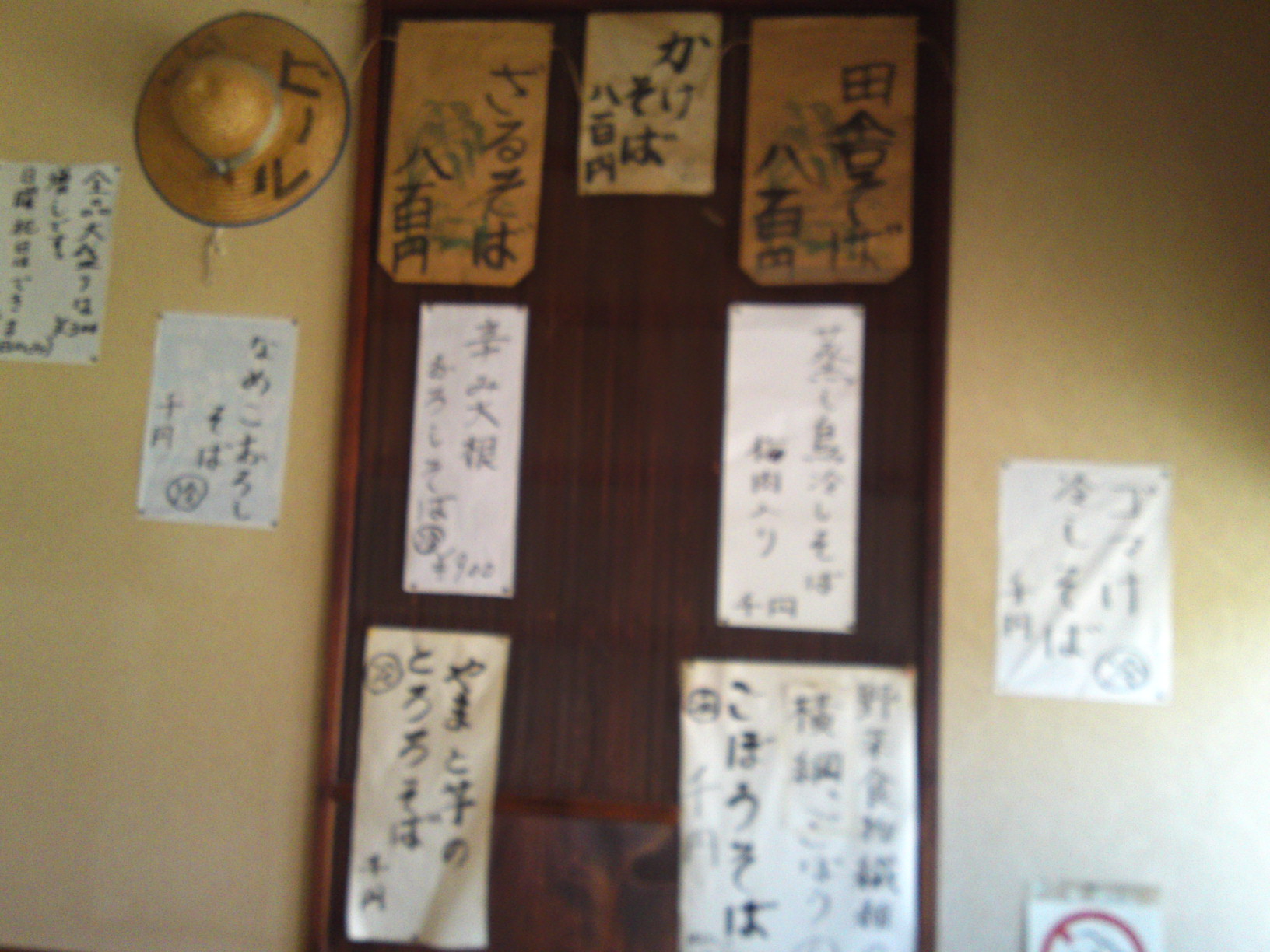
For the menu, look on the wall!

Two lions guard the place!

This is what I personally ordered: Goobou soba/Burdock root soba.
Served hot, yes! I was asked, “these are hot soba, are you ok!” by the surprised owner.
I learned a long time ago it is always better for your constitution to eat hot than icy in a great heat!

The Missus ordered cold “karami daikon oroshi soba”, cold buckwheat noodles topped with grated daikon.

There are no less than 4 signs clearing stating that smoking is most unwelcome!

The Missus’ cold buckwheat noodles!

You certainly cannot beat the freshness as the daikon and kawairedaikonn:daikon sprouts are local vegetables probably coming from a nearby garden!

My very generous gobou soba!

The burdock root is “Yokozuna Gobou” variety!
Very tasty and crunchy! A delicacy actually!

Soba must one of the best and healthiest ways to take a repast on a long trip!

HAZUKI (Te Uchi Soba Hazuki/手打そば葉月)
Hamamatsu City, Futamata Honcho, Futamata, 2396-19 (just on the right as you go out of the station!)
Business hours: 10:30~16:00 (unless the soup stock runs out before!)
Closed on Thursdays (except National Holidays)
tel.: 0539-35-9066

RECOMMENDED RELATED WEBSITES

With a Glass,
Clumsyfingers by Xethia
Adventures in Bento Making, American Bento, Beanbento, Bento No1, Bento Wo Tsukurimashou, Cooking Cute, Eula, Hapabento , Happy Bento, Jacki’s Bento Blog, Kitchen Cow, Leggo My Obento, Le Petit Journal Bento & CO (French), Lunch In A Box, My Bento Box, Vegan Lunch Box; Tokyo Tom Baker, Daily Food Porn/Osaka, Only Nature Food Porn, Happy Little Bento, The Herbed Kitchen, J-Mama’s Kitchen, Cook, Eat, Play, Repeat; Bento Lunch Blog (German); Adventures In Bento; Anna The Red’s Bento Factory; Cooking Cute; Timeless Gourmet; Bento Bug; Ideal Meal; Bentosaurus; Mr. Foodie (London/UK); Ohayo Bento

Must-see tasting websites:

-Sake: Tokyo Through The Drinking Glass, Tokyo Foodcast, Urban Sake, Sake World
-Wine: Palate To Pen, Warren Bobrow, Cellar Tours, Ancient Fire Wines Blog
-Beer: Good Beer & Country Boys, Another Pint, Please!
-Japanese Pottery to enjoy your favourite drinks: Yellin Yakimono Gallery

Today’s Lunch Box/Bento (’11/35): Shiira Bento!

“Shiira/シイラ” is the Japanese name for Mahi-mahi, Dorado,or Common dolphinfish!

It is a very popular and reasonably-priced fish in Japan you can eat in all manners. This particular one came from Kochi Prefecture in Shikoku Island although they are also caught of our shores in Shizuoka!

This time the Missus kept things simple with the rice.
After steaming it she mixed it with some finely chopped carrot and parsely and topped it with broken walnuts.

She strived for balance in nutrients as well in colors for the “side dish”!

Having cut the fillets of shiira into proper-size bits she took off the small bones with pincers before covering the pieces of fish with flour, seasoning, egg and panko and shallow frying (fried in shallow oil, not deep) them.
She added lemon for more seasoning and color and plenty of lettuce for the fibers and vitamin C!

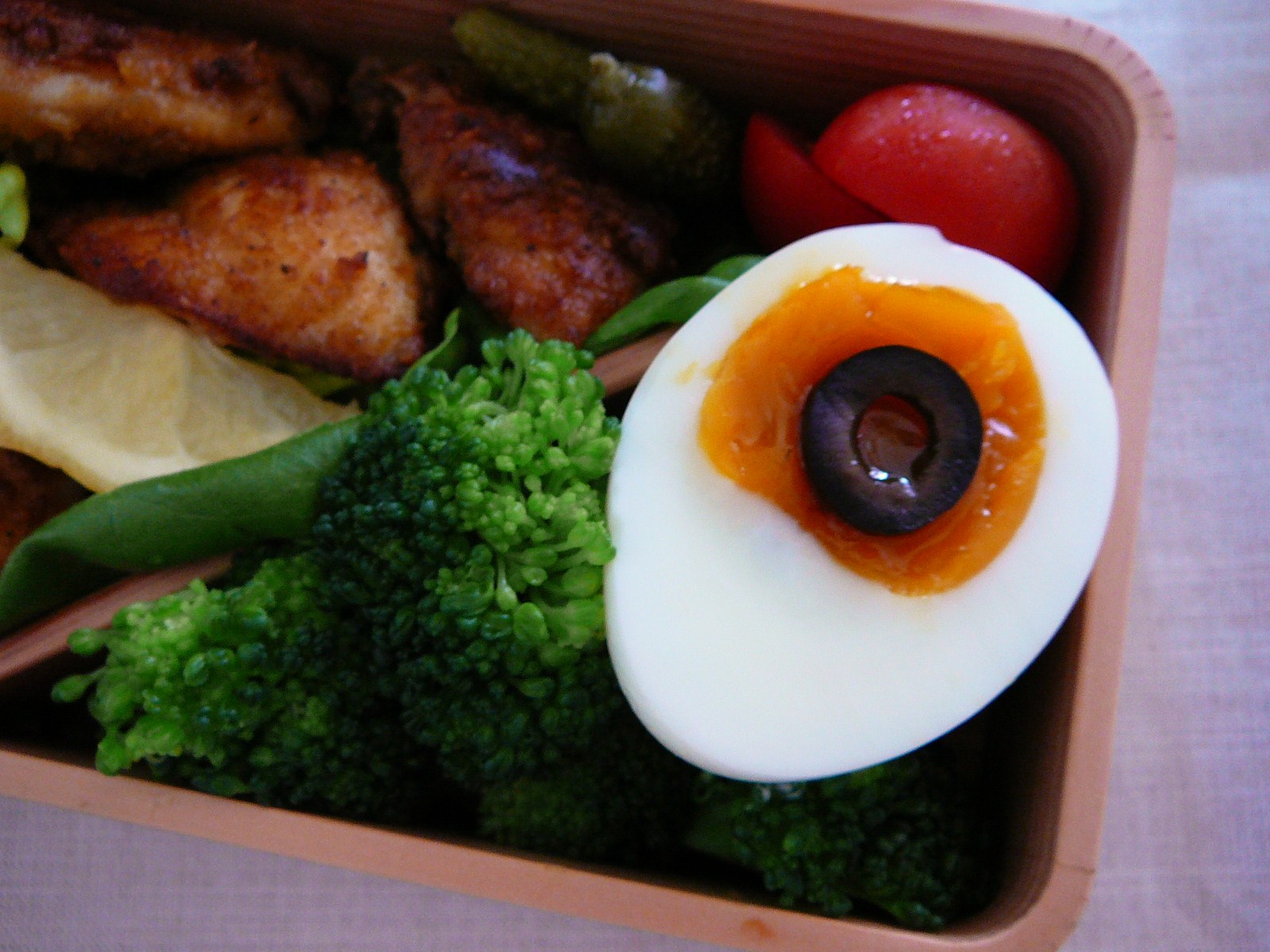
For the “garnish”, she placed her favorite half-boiled egg decorated with black olive, boiled broccoli on a small bed of tartare sauce, French cornichons and tomatoes (the latter for dessert!).

Very tasty, but a little short of satisfaction (I guess the Missus is significantly reducing the calories!)!

RECOMMENDED RELATED WEBSITES

With a Glass,
Clumsyfingers by Xethia
Adventures in Bento Making, American Bento, Beanbento, Bento No1, Bento Wo Tsukurimashou, Cooking Cute, Eula, Hapabento , Happy Bento, Jacki’s Bento Blog, Kitchen Cow, Leggo My Obento, Le Petit Journal Bento & CO (French), Lunch In A Box, My Bento Box, Vegan Lunch Box; Tokyo Tom Baker, Daily Food Porn/Osaka, Only Nature Food Porn, Happy Little Bento, The Herbed Kitchen, J-Mama’s Kitchen, Cook, Eat, Play, Repeat; Bento Lunch Blog (German); Adventures In Bento; Anna The Red’s Bento Factory; Cooking Cute; Timeless Gourmet; Bento Bug; Ideal Meal; Bentosaurus; Mr. Foodie (London/UK); Ohayo Bento

Blueberries with no pesticides in Shizuoka City: Masako Mochizuki!

Mrs. Masako Mochizuki/望月正子さん!

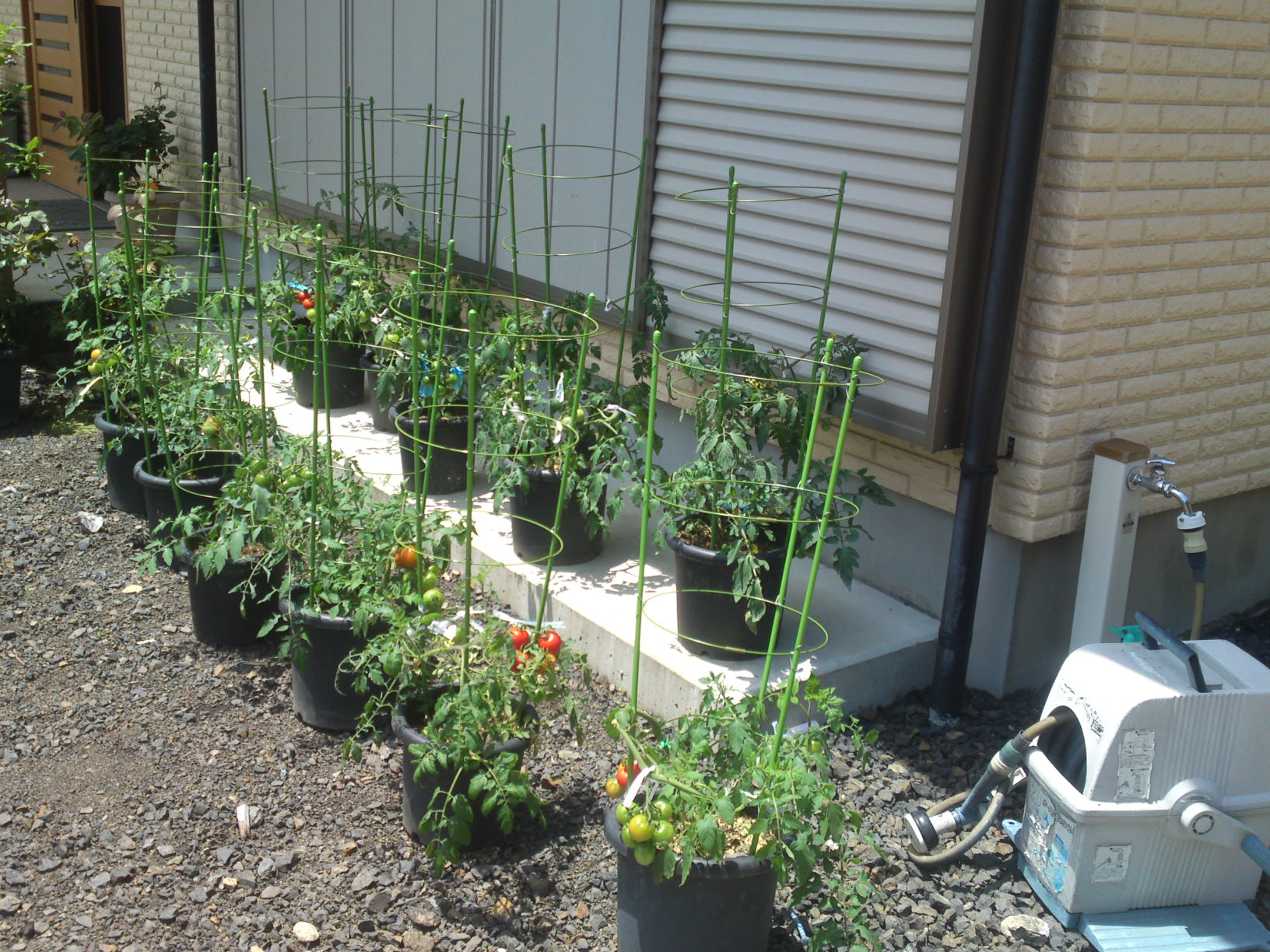
A true farmer’s abode growing their own food (tomatoes)!

In Shizuoka (and in Japan most of the time for that matter) you very quickly move from the sea to deep into mountains within minutes when you embark into an interview of a local farmer!

Overgrown asparaguses in the foreground and fig trees in the background!

This is when you need friends, especially considering I do not drive (I never did in my life!).
Mind you, I could use a bus or even my bicycle in that case as we went as far as Gojima/後島 up the Abe River, a beautiful trip in itself!

But my good friend, Mrs. Natsuko Koyanagi/小柳奈津子さん, who knows all the farmers along the river, was on hand again to help me!

This is green tea land, too!

Tell the truth, Masako Mochizuki is a celebrity in the region. If you are lost just ask for the blueberry lady’s house!

The blueberry fields with nets to fend off birds!

The Mochizuki family, like all farmers around, had been growing tea and other staple crops when 15 years ago a friend approached Masako personally to ask her to grow blueberries, known to be extremely beneficent to health and eyes in particular!

One of the gadgets to fend off birds. Masako San said that it actually turned more into decoration than anything else!

A remarkable fact is that Masako San does not use any pesticide whatsoever, a notable rarity for that particular crop!
As for fertilizer she mixes only the minimum with home-made compost and others!

She grows 40 varieties, 10 of for sale, in 5 fields on a total area of 700 tsubo/2,300 sauqre meters.
I just can’t describe or take a picture (I’ll come back again anyway!) of all varieties or I’ll into a boring specialist!
But let me show a few of the trees that attracted my attention!

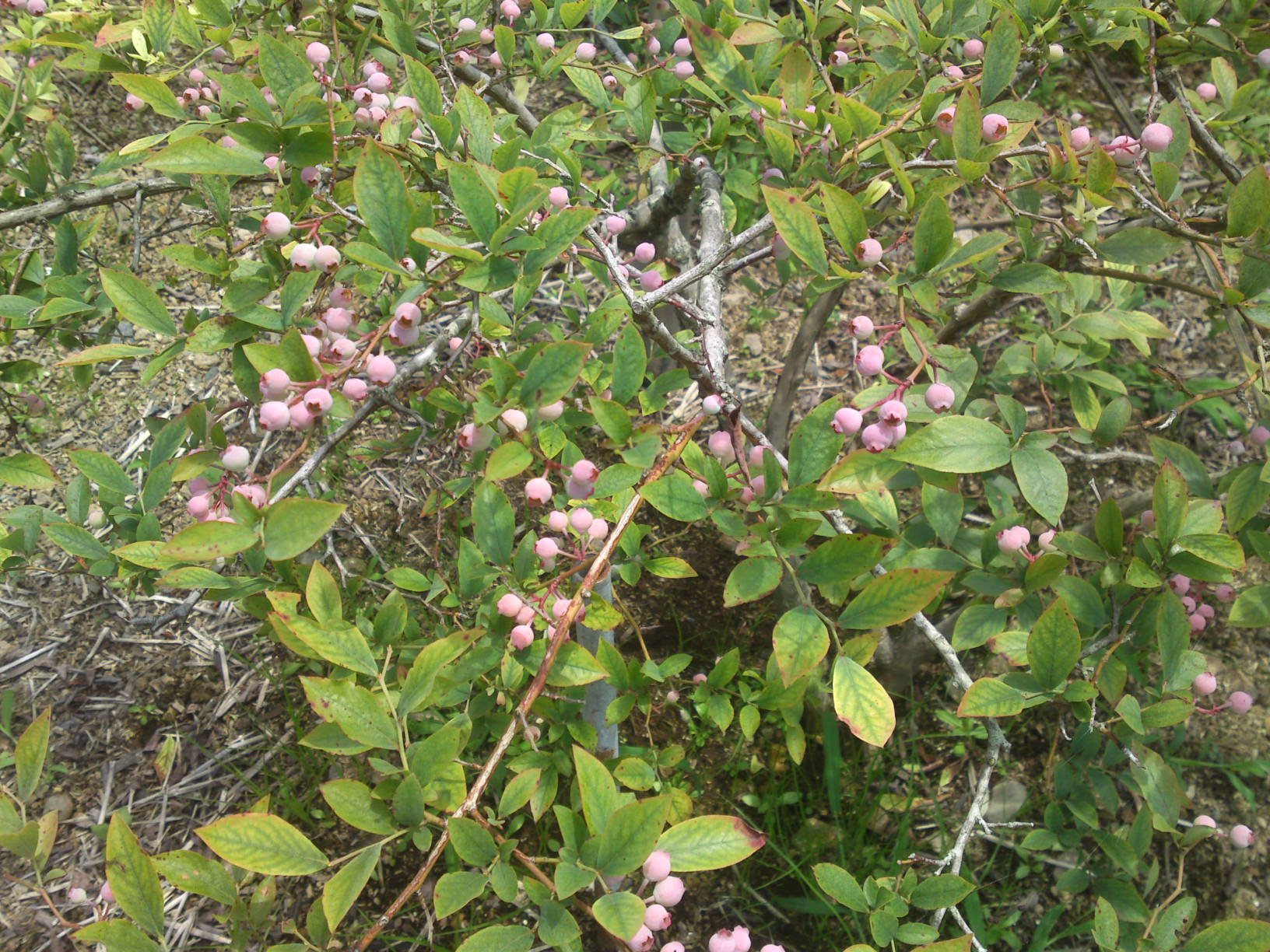
The different varieties will mature at different times. The above won’t be ready for harvest before at least a week.
That does not prevent Masako San and her husband from picking 10 kg of blueberries every morning between June and August!

Small type.

Even smaller but still unripe.

Definitely not ripe!

Medium-sized type with a great balance in taste! I picked quite a few of these!

The big ones, absolute beauties!

The same, to be eaten one at a time! LOL

My personal harvest of two varieties. Considering that the same trees had been harvested early that morning, I was more than satisfied!

A very small part of the morning’s harvest. Truly enormous and so sweet with the right touch of acidity!
I know a lot of chef friends who are going to ask questions!

As I said previously, blueberry is also considered as natural medicine in this country, so Masako, apart of creating jams and jellies, also make blueberry soap!

BLUEBERRY GOSHIMA/ブルーベリー後島
Mr.s Masako Mochizuki/望月正子さん
421-2105 Shizuoka City, Aoi Ku, Goshima, 145-1
421-2105静岡市葵区後島145の1
Tel. & Fax: 054-294-0590
Mobile phone: 090-3938-2328
E-mail: masako77@agate.plala.or.jp
Private orders welcome!

RECOMMENDED RELATED WEBSITES

With a Glass,
POPCORNHOMESTEAD in Tokyo by Joan Lambert Bailey,
Clumsyfingers by Xethia
Adventures in Bento Making, American Bento, Beanbento, Bento No1, Bento Wo Tsukurimashou, Cooking Cute, Eula, Hapabento , Happy Bento, Jacki’s Bento Blog, Kitchen Cow, Leggo My Obento, Le Petit Journal Bento & CO (French), Lunch In A Box, My Bento Box, Vegan Lunch Box; Tokyo Tom Baker, Daily Food Porn/Osaka, Only Nature Food Porn, Happy Little Bento, The Herbed Kitchen, J-Mama’s Kitchen, Cook, Eat, Play, Repeat; Bento Lunch Blog (German); Adventures In Bento; Anna The Red’s Bento Factory; Cooking Cute; Timeless Gourmet; Bento Bug; Ideal Meal; Bentosaurus; Mr. Foodie (London/UK); Ohayo Bento

Must-see tasting websites:

-Sake: Tokyo Through The Drinking Glass, Tokyo Foodcast, Urban Sake, Sake World
-Wine: Palate To Pen, Warren Bobrow, Cellar Tours, Ancient Fire Wines Blog
-Beer: Good Beer & Country Boys, Another Pint, Please!
-Japanese Pottery to enjoy your favourite drinks: Yellin Yakimono Gallery

Today’s Lunch Box/Bento (’11/34): Alien Chicken Faces Bento!

Now, what made me call this bento, Alien Chicken Faces Bento?
The Missus is going to kill me for publishing such a title LOL
Mind you, I can always plead the sudden rise in temperatures as a good excuse!

Anyway, the rice first:
The Missus steamed it with a dash of soy sauce and dashi/soupstock added to the water.
Once steamed she mixed it with boiled black beans.

She added home-pickles mini-melons for fibers and vinegar.
These mini-melons mainly come from the musk melon farmes in the area of Fukuroi City who have to pare down their plants. A good way to avoid waste and turn a reject into gastronomy!

Now, for the accompaniment box:
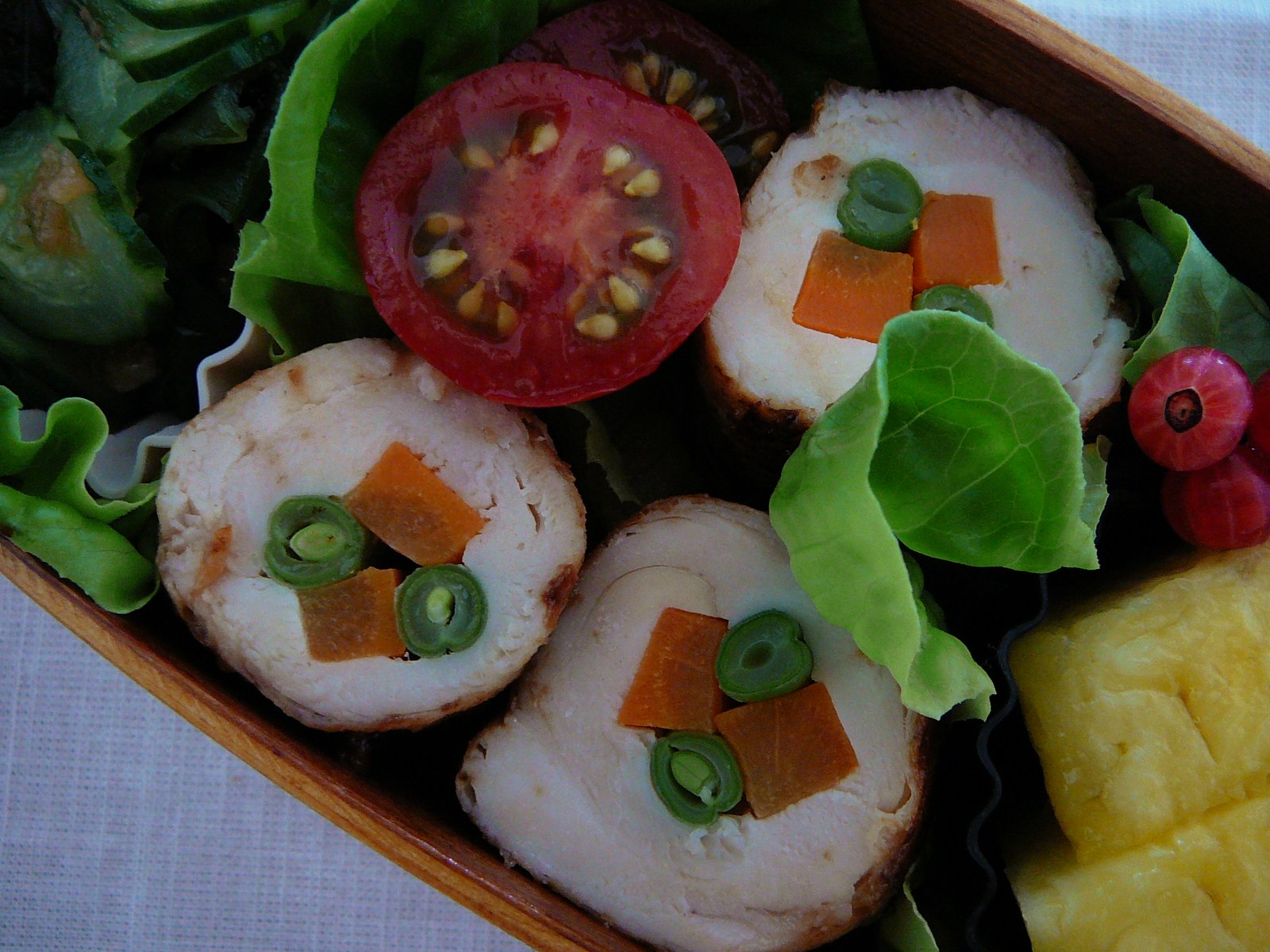
Can you see the alien faces peeking out?

The Missus made her usual pickle corner with home-pickled cucumber mixed with seaweed (wakame) and umeboshi pulp with a little more ponzu!
Very appreciated on hot days!

Now, do you agree they look alien?
The Missus did work hard to conceive them with sasami/Chicken breast fillets she had first flattened before rolling them around boiled carrots strips and stringbeans and stir-fry them together.
She added plenty of local lettuce and small plum tomatoes for fibers and vitamins!

The dessert added plenty of colors with pineapple and redcurrants from our balcony garden (the redcurrants, not the pineapple!)!

Very colorful and summerlike bento! Very satisfying and yummy!
Loved those alien faces…

RECOMMENDED RELATED WEBSITES

With a Glass,
Clumsyfingers by Xethia
Adventures in Bento Making, American Bento, Beanbento, Bento No1, Bento Wo Tsukurimashou, Cooking Cute, Eula, Hapabento , Happy Bento, Jacki’s Bento Blog, Kitchen Cow, Leggo My Obento, Le Petit Journal Bento & CO (French), Lunch In A Box, My Bento Box, Vegan Lunch Box; Tokyo Tom Baker, Daily Food Porn/Osaka, Only Nature Food Porn, Happy Little Bento, The Herbed Kitchen, J-Mama’s Kitchen, Cook, Eat, Play, Repeat; Bento Lunch Blog (German); Adventures In Bento; Anna The Red’s Bento Factory; Cooking Cute; Timeless Gourmet; Bento Bug; Ideal Meal; Bentosaurus; Mr. Foodie (London/UK); Ohayo Bento

Shizuoka Ekiben/Railway Station Bento: Shizuoka Furusato Bento

Been in a bit of a hurry today and couldn’t prepare any schedule or meal.
I decided to visit the ekiben stand in Shizuoka City JR Railway Station for the first time in 3 weeks!

There I acquired an ekiben I had been wanting to sample for some time: Furusato Bento/Home Town (Home Country) Bento!

The wrapping paper ia almost a collector’s item showing the main agricultural products of our Prefecture! Can you see them?

Shizuoka Prefecture is most famous in Japan not only for Mount Fuji, but also for its green tea, oranges, strawberries and musk melons!

As usual, Tokaiken Co. had clearly stated the ingredients on its wrapper!

The food was well protected by the hard transparent paper cover. A hand towel was also provided. Good hygiene!

Now, what do we have here?

The rice was steamed with the juices of the Katsuo kakuni/鰹角煮/Simmered bonito, another typical product of Shizuoka Prefecture and a preserved chestnut.

Plenty to accompany the rice!

Simmered and boiled vegetables: Boiled carrot. Boiled taro/sato imo and cut in the shape of a mushroom! String bean. Konbu maki/simmered seaweed roll. Bamboo shoot. Fuki/蕗/giant butterbur.

Boiled shrimp, small bottle of soy sauce, tamagoyaki/Japanese omelette, lettuce and another specialty of Shizuoka: sakuraebi kakiage/Cherry shrimps tempura!

And one more specialty from Shizuoka: pickled wasabi stems and leaves!

And for dessert, a fruit from Shizuoka: Orange!

This ekiben was well-balanced with no meat but only seafood, eggs and vegetables, but was still very tasty and fulfilling!

To be continued…

RECOMMENDED RELATED WEBSITES

With a Glass,
POPCORNHOMESTEAD in Tokyo by Joan Lambert Bailey,
Clumsyfingers by Xethia
Adventures in Bento Making, American Bento, Beanbento, Bento No1, Bento Wo Tsukurimashou, Cooking Cute, Eula, Hapabento , Happy Bento, Jacki’s Bento Blog, Kitchen Cow, Leggo My Obento, Le Petit Journal Bento & CO (French), Lunch In A Box, My Bento Box, Vegan Lunch Box; Tokyo Tom Baker, Daily Food Porn/Osaka, Only Nature Food Porn, Happy Little Bento, The Herbed Kitchen, J-Mama’s Kitchen, Cook, Eat, Play, Repeat; Bento Lunch Blog (German); Adventures In Bento; Anna The Red’s Bento Factory; Cooking Cute; Timeless Gourmet; Bento Bug; Ideal Meal; Bentosaurus; Mr. Foodie (London/UK); Ohayo Bento

Must-see tasting websites:

-Sake: Tokyo Through The Drinking Glass, Tokyo Foodcast, Urban Sake, Sake World
-Wine: Palate To Pen, Warren Bobrow, Cellar Tours, Ancient Fire Wines Blog
-Beer: Good Beer & Country Boys, Another Pint, Please!
-Japanese Pottery to enjoy your favourite drinks: Yellin Yakimono Gallery

Joboticaba and Tropical Fruits at Nishikawa Garden!

Jaboticaba!

I finally made it to Nishikawa Garden!
It is located far into Mariko, a good hour by bicycle from the center of Shizuoka City!

I thought I was lost by the end of my journey and had to retrace my route before making another U-turn and finding the board sign I was looking for!

I knew I was in the right place when I discovered the “Truck cafe” at the entrance of the greenhouse!
I couldn’t afford to make any mistake as they open the greenhouse and cafe to the public only on Sundays!

Yoshinari and Aya Nishikawa/西川宣成と文夫妻!

Mr. Nishikawa, a tea and citrus grower got interested in tropical fruit about 8 years ago and started experimenting with Jaboticaba and mangoes in particular.

The original Jaboticaba tree!

Having succeeded with their cultivation inside his two big greenhouses, he opened Jaboticaba Cafe and Garden in October 2009 to allow customers to visit his greenhouses and buy his products on Sundays!

I first visited his mango garden.
Interestingly enough they are not on sale as they are completely booked by private clients!

Although this particular crop is not officially registered as such it is grown organically without pesticides or artificial fertilizers!

Mr. Nishikawa does not follow the general practice of pairing the trees to one single mango for each main branch.
He believes in natural growth!

These will become beauties soon, but I won’t be able to buy a single one then…

Jaboticaba is an odd fruit indeed!
Mr. Nishhikawa originally imported the seeds from Okinawa.
Although “classified” as a tropical fruit it grows best in temperate conditions (around 20 degrees) and can resist lower temperatures as long as no frost occurs.
A visit to the Wikipedia Site should give you a good idea of its rarity outside Southern America, the more for it because of its fragility!

The fruit-bearing flowers appear directly on the trunk and branches away from the leaves!

Then the many flowers suddenly become green fruit before maturing later into a big dark red pearl!

Mr. Nishikawa cultivates four varieties depending on size and fruiting seasons!
All are sweet with a taste both reminiscent of lychees and grapes.

The smallest variety!
It is packed with polyphenols and antioxydants!

Some Jaboticaba are grown in Kyushu and Okinawa islands but don’t appear on the markets because of their fragility.
The only other place where they are grown in Japan (some are in Taiwan) is Nishikawa Garden in Shizuoka City! And organic to boot!

Organic coffee trees on sale!

Mr. Nishikawa has also succeeded with the organic culture of coffee but the crop is just too small to be marketed!

Now, the Nishikawas struck on the great idea of creating a Cafe to encourage customers and their families to taste the various products they make with Jaboticaba and other crops!

The cafe extends inside the greenhouse!

Choose your seat!

Have a good look at the menu before choosing between breads, cakes, jaboticaba drinks and others!

Beautiful home-made breads!

Yummy cakes, some of them made from recipes offered by Pissenlit Restaurant in Shizuoka City!

A lovely panacotta with jaboticaba jelly!
This is the only place you will find jaboticaba jelly in Japan!
They even make jams!

My neighbors were sipping those beautiful jaboticaba soda drinks!

Mrs. Nishikawa has a very unusual hobby!
Oranges that cannot be sold because of blemishes on their skin are peeled before being processed.
Mrs. Nishikawa collects the soft white part between the skin and the flesh, dries it between sheets of newspaper and use it to make this big picture of jaboticaba trees!
The technique is called “oshibana/押し花” or “Pressed Flower Art” in English!
Who said farmers could not be artists!

To be continued…

Cafe Jaboticaba (mr. & Mrs. Nishikawa)
421-0103 Shizuoka City, Suruga Ku, Mariko, 7324
Mobile phone: 090-7605-3491
Business hours: Sundays only, 10:00~17:00

RECOMMENDED RELATED WEBSITES

With a Glass,
Clumsyfingers by Xethia
Adventures in Bento Making, American Bento, Beanbento, Bento No1, Bento Wo Tsukurimashou, Cooking Cute, Eula, Hapabento , Happy Bento, Jacki’s Bento Blog, Kitchen Cow, Leggo My Obento, Le Petit Journal Bento & CO (French), Lunch In A Box, My Bento Box, Vegan Lunch Box; Tokyo Tom Baker, Daily Food Porn/Osaka, Only Nature Food Porn, Happy Little Bento, The Herbed Kitchen, J-Mama’s Kitchen, Cook, Eat, Play, Repeat; Bento Lunch Blog (German); Adventures In Bento; Anna The Red’s Bento Factory; Cooking Cute; Timeless Gourmet; Bento Bug; Ideal Meal; Bentosaurus; Mr. Foodie (London/UK); Ohayo Bento

Japanese Izakaya: Odakkui

The first snack comes with a message!

Service: Very friendly
Facilities: Old but clean. Interesting and clean washroom!
Prices: appropriate
Strong points: Local traditional cuisine. Great sake and shochu!

Izakayas are the pillar of Japanese gastronomy as they are the best indication of any local food enjoyed in any particular region.
Naturally there are izakayas and izakayas!
To discover a worthy establishment you need only follow a few rules of the thumb:
A good izakaya serves:
-Local food made with local ingredients whenever possible.
-Variety in cooked and raw dishes
-At least one or two superlative local sake (or local drinks)
-A good choice of drinks to satisfy all tastes and priorities.
The (necessary) extras are:
-Conviviality
-Keen interest in customers’ requests
-Traditional atmosphere

Oddakui, although a celebrated (reserve your seat beforehand!) institution in Shizuoka City it is not easy to find as it is located on the second floor of an unremarkable building. Look for the sign below, and…

and above your head!

The MOTH: Naofumi Ohshiro/大代直史!

Naofumi is not only a great izakaya oyakata, he is also a remarkable business as he opened Yasaitei/やさい亭 with the help of Chef Aki Suzuki/鈴木朋 to offer a complementary establishment to his customers with an accent on vegetables while Odakkui/おだっ喰い serves typical izakaya food from sashimi to oden and croquettes (the last two a must!)

Naofumi has his customers’ bien-être at heart: a message greets each of them wrapped around the chopsticks!
One problem with such establishments is trying to take pictures without a flash!
But don’t worry, do refer to Odakkui’s Homepage for a great rendition of their food and atmosphere!

The little details that make a place so welcoming!

A great sake from Shizuoka: Shisizumi Brewery in Fujieda City!
The ladies must try the umeshu made with brown sugar!

This salad is called “Shizuoka Umare Sarada/静岡生まれサラダ/Shizuoka Birthplace Salad!
it is made with mitsuba/三つ葉/Japanese honeywort and shirasu/シラス/hard mouth sardine whitebait!
Shizuoka Prefecture is known all over Japan for its shirasu!

The whitefish has been steamed and cooled down beforehand.
With avocado in between, it certainly makes for a complete and healthy dish!

Although the menu is worth exploring, you ought to sample their suigyoza/dumplings in soup!
Even the Chinese would come for that!

They (or the Vietnamese!) would also come for the Raw Spring Rolls!

Yummy and so healthy again!

The customers are always offered a dessert before leaving: Brûlé Pudding and Strawberry Sorbet! Another detail which spells the difference!
Sorry for the fuzzy picture!

This is only a short start as I must sample their croquettes, oden and sashimi! LOL

ODAKKUI/おだっ喰い
420-0034 Shizuoka City, Aoi Ku, Tokiwa Cho, 1-8-1, Aoba Yokocho, 2F
Tel.]Fax: 054-253-6900
Business hours: 17:00~24:00
Closed on Mondays
HOMEPAGE

RECOMMENDED RELATED WEBSITES

With a Glass,
Clumsyfingers by Xethia
Adventures in Bento Making, American Bento, Beanbento, Bento No1, Bento Wo Tsukurimashou, Cooking Cute, Eula, Hapabento , Happy Bento, Jacki’s Bento Blog, Kitchen Cow, Leggo My Obento, Le Petit Journal Bento & CO (French), Lunch In A Box, My Bento Box, Vegan Lunch Box; Tokyo Tom Baker, Daily Food Porn/Osaka, Only Nature Food Porn, Happy Little Bento, The Herbed Kitchen, J-Mama’s Kitchen, Cook, Eat, Play, Repeat; Bento Lunch Blog (German); Adventures In Bento; Anna The Red’s Bento Factory; Cooking Cute; Timeless Gourmet; Bento Bug; Ideal Meal; Bentosaurus; Mr. Foodie (London/UK); Ohayo Bento

Must-see tasting websites:

-Sake: Tokyo Through The Drinking Glass, Tokyo Foodcast, Urban Sake, Sake World
-Wine: Palate To Pen, Warren Bobrow, Cellar Tours, Ancient Fire Wines Blog
-Beer: Good Beer & Country Boys, Another Pint, Please!
-Japanese Pottery to enjoy your favourite drinks: Yellin Yakimono Gallery

Today’s Lunch Box/Bento (’11/31): New Home Bento!

Due to our moving to a new home just completed the Missus simply had not the time to make a bento for me for nearly a month!
Thus this is my first bento made in our new home!

The Missus kept everything simple this time. She said more complicated affairs will still have to wait!
After having steamed she rice she mixed it with her own pickled Japanese pepper seeds/sanshou/山椒 and added a “kinpira” of carrots and burdock roots/gobou/牛蒡 she had prepared last night. It certainly made for simple and nice colors.

The “side box/dish” also came in simple colors and healthy balance!

She deep-fried (actually shallow-fried) “tontoro/soft pork” cut into rough strips, not with breadcrumbs, but with karaage crumbs which are a lot finer. She placed them on a bed of Shizuoka-grown celery (our Prefecture grows half of the total Japanese crop!) and added a touch of color and balance with lemon pieces for seasoning and sweet pearl tomatoes for taste and vitamins!

She finally added her own pickled cucumber (with black sesame seeds) and boiled black beans (bought in a market).

If she plans to concoct something more complicated in the future I’m not going to complain! LOL

RECOMMENDED RELATED WEBSITES

With a Glass,
Clumsyfingers by Xethia
Adventures in Bento Making, American Bento, Beanbento, Bento No1, Bento Wo Tsukurimashou, Cooking Cute, Eula, Hapabento , Happy Bento, Jacki’s Bento Blog, Kitchen Cow, Leggo My Obento, Le Petit Journal Bento & CO (French), Lunch In A Box, My Bento Box, Vegan Lunch Box; Tokyo Tom Baker, Daily Food Porn/Osaka, Only Nature Food Porn, Happy Little Bento, The Herbed Kitchen, J-Mama’s Kitchen, Cook, Eat, Play, Repeat; Bento Lunch Blog (German); Adventures In Bento; Anna The Red’s Bento Factory; Cooking Cute; Timeless Gourmet; Bento Bug; Ideal Meal; Bentosaurus; Mr. Foodie (London/UK); Ohayo Bento

Zucchini Flower Fritters (updated)

Zucchini flowers have been a long-time favorite of people living around the Mediterranean Sea, especially in Italy and French Provence.
The Japanese have recently grown fond of not only zucchini, but also their flowers and are growing them with a vengeance!
It is little wonder they come up with their own, if much simpler, version of zucchini flower fritters!
Since we are again in season (at long last) I tohought it might help some friends!

INGREDIENTS: For 4 people

-Zucchini Flowers: 4
-Prawns/shrimps: 6 (medium-sized)
-Mozzarella Cheese (they make it in Japan, now, even in Shizuoka Prefecture! And that from real water buffaloes!): 1
-Onion: 3 tablespoons (very finely chopped)
-Flour: as appropriate (or if you are Japanese food cognizant, use tempura batter. Rice flour is OK, too)
-Lemon juice: 1/2
-Baby leaves mix for accompaniment: as much as you like!
-Salt: as appropriate
-Pepper: as appropriate
-White wine: a little

RECIPE:

-Take the pistils out the zucchini flowers.

-“Peel” the shrimps if necessary and clean them. Cut them into 2 cm long pieces. Cut off half of the zucchini green part (not the flower) and cut again into 1 cm long pieces.

-Lightly fry the zucchini and shrimps with olive oil. Season with a litle salt, pepper and white wine. Transfer into a bowl and let cool for a while.

-Cut the mozzarella into small pieces and add into the bowl. Mix the lot.

-Delicately open the zucchini flowers and fill them with the above mixture. Do not fill completely as you need to close the flower by twisting their extremities.

-Either wrap the flowers in a little flour or tempura batter and delicately them fry them in shallow olive oil.

-Serve with baby leaves seasoned with a very little salt, some pepper and wine vinegar, and a wedge of lemon/lime.

RECOMMENDED RELATED SITES:
With a Glass,
Bread + Butter, Zoy Zhang, Hungry Neko, Think Twice, Frank Fariello, Mangantayon, Hapabento, Elinluv Tidbit Corner, Tokyo Terrace, Maison de Christina, Chrys Niles,Lexi, Culinary Musings, Wheeling Gourmet, Comestiblog, Chronicles Of A Curious Cook, Tokyo Through The Drinking Glass, Tokyo Foodcast, Palate To Pen, Yellin Yakimono Gallery, Tokyo Terrace, Hilah Cooking, More than a Mount Full, Arkonite Bento, Happy Little Bento; 5 Star Foodie; Jefferson’s Table; Oyster Culture; Gourmet Fury; Island Vittles; Good Beer & Country Boys; Rubber Slippers In Italy; Color Food daidokoro/Osaka;/a; The Witchy Kitchen; Citron Et Vanille, Lunsj Med Buffet/Estonian Gastronomy (English), Cook, Eat, Play, Repeat, Chrisoscope, Agrigraph, The Agriculture Portal to shizuoka!

Vegetarian Italian Cuisine at Piatto!

Service: Very friendly and relaxed. Slow food!
Equipment: Great cleanliness and splendid washroom
Prices: Appropriate
Strong Points: Vegetables, especially local and organic whenever possible. Local products. Good French and Italian wine-list

I’m not a vegetarian, but if one can come up with a superlative vegetarian dish I will not hesitate!
And if the vegetables are organic and local to boot I will ignore meat and fish for the whole meal (and postpone the latter to my next visit! LOL)

Kazuo Igarashi originally comes from Tokyo, but with a wife from Shizuoka and a constant access to extravagant ingredients convinced him to open Piatto in downtown Shizuoka City on June 12th 2006.
Since then he has acquired such a fame that his own peers advised me to pay him a visit as soon as possible!

Kazuo’s cuisine is definitely Italian in inspiration but his small establishment is a happy fusion of European and Japanese influences with plates and dishes being chosen among the artworks of three different potters. Food is served on wooden (wood and fabric material and colors are everywhere!) trays with wooden chopsticks and spoons (although you can ask for forks and knives!) and in art glassware. Frankly speaking I would need to write a separate article to describe the place (which I will do next time!)!

I almost cried when I found a Mercurey white wine on his menu! Mercurey is my home-place back in Bourgogne, France!
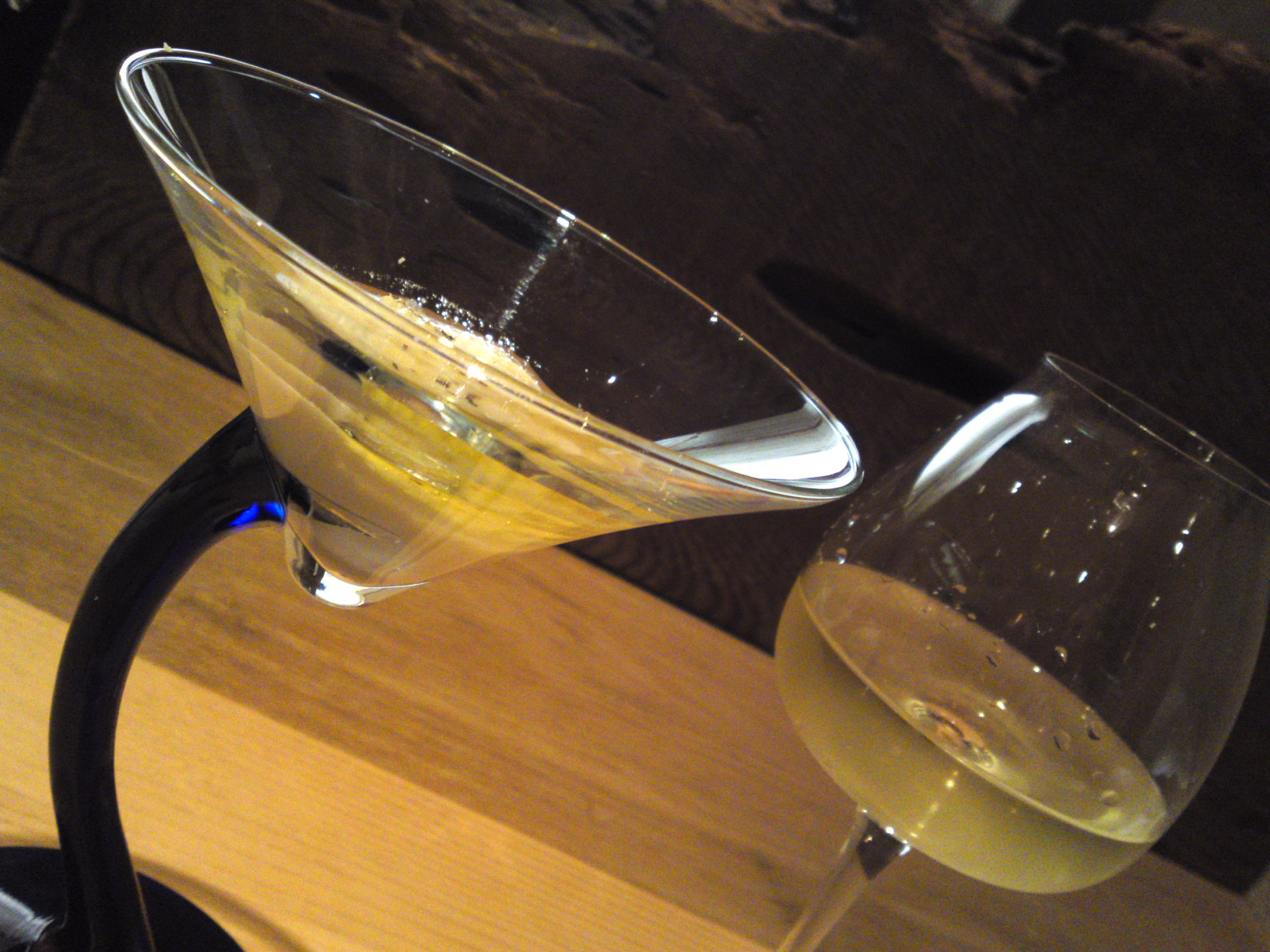
A very tasty appetizer was served in a beautiful glass: yuuba (skimmed tofu sheet) with parmegiano, pepper and olive oil!

A first for me!

“Bagna Couda”: Italian-style hot dip vegetable tray!

The small deep dish was placed on larger pot containing a combustible to heat the dip.
Both the dish and “burner” were made of sophisticated Japanese pottery!

The dip recipe is a secret of course but it does contain parmegiano and anchovy paste!
I did not leave a drop!

The vegetables, all local and most organic, were more of a Japanese concept, proving that superlative Italian gastronomy can be successfully achieved anywhere if you have quality ingredients!

A little explanation here:
The eggplant is mizu nasu/水茄子, a variety which is eaten raw. The renkon/蓮根/lotus root and takenoko/筍/bamboo shoot are definitely Japanese in concept.
And even more so the mini melons eaten as vegetables in our Prefecture!

Kazuo’s focaccia seems to be known all over town.
Carrot focaccia to finish my dip sauce!

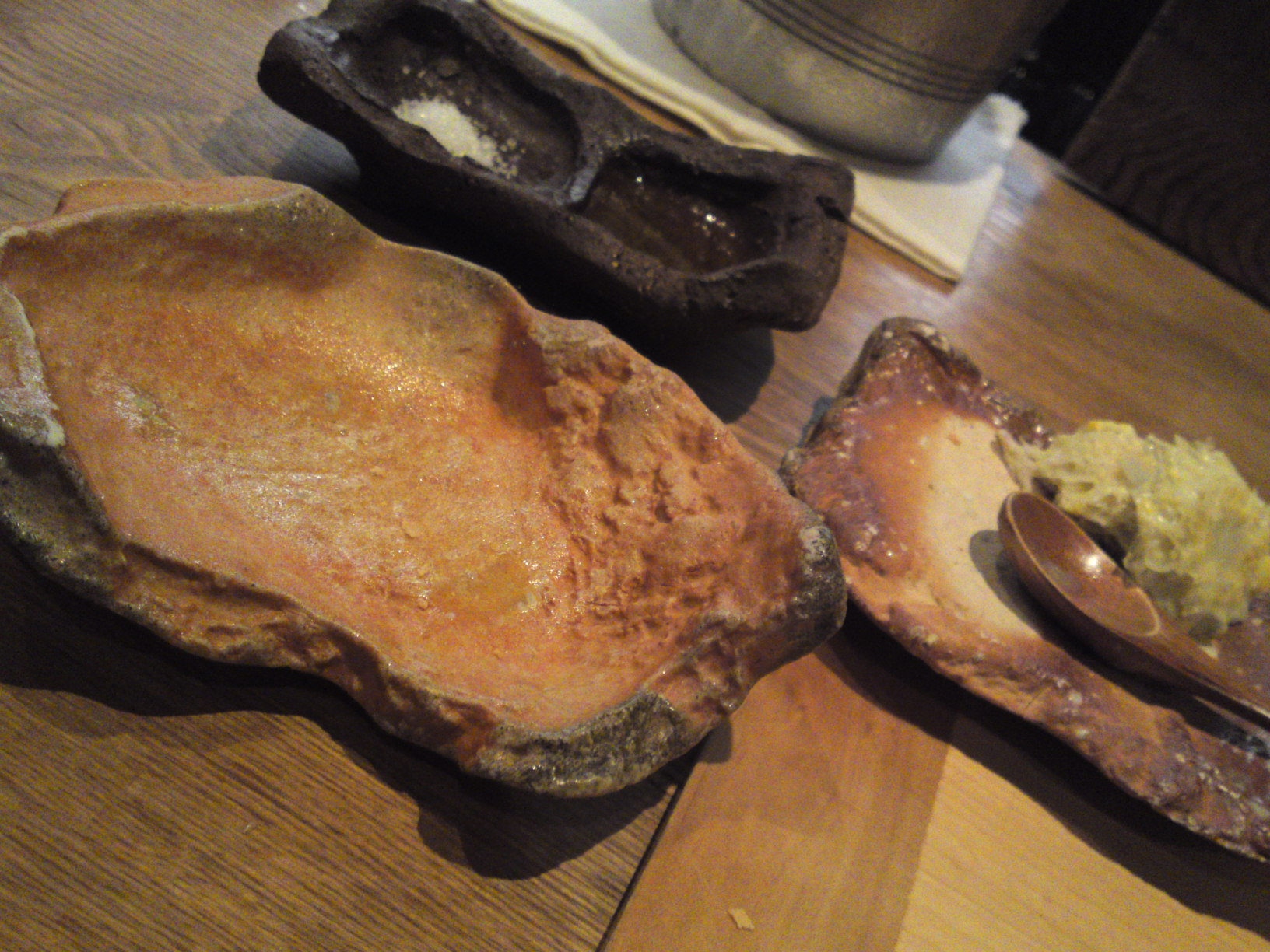
What did I tell you about pottery?
I know some people who would visit the place just to have the pleasure in eating with them!

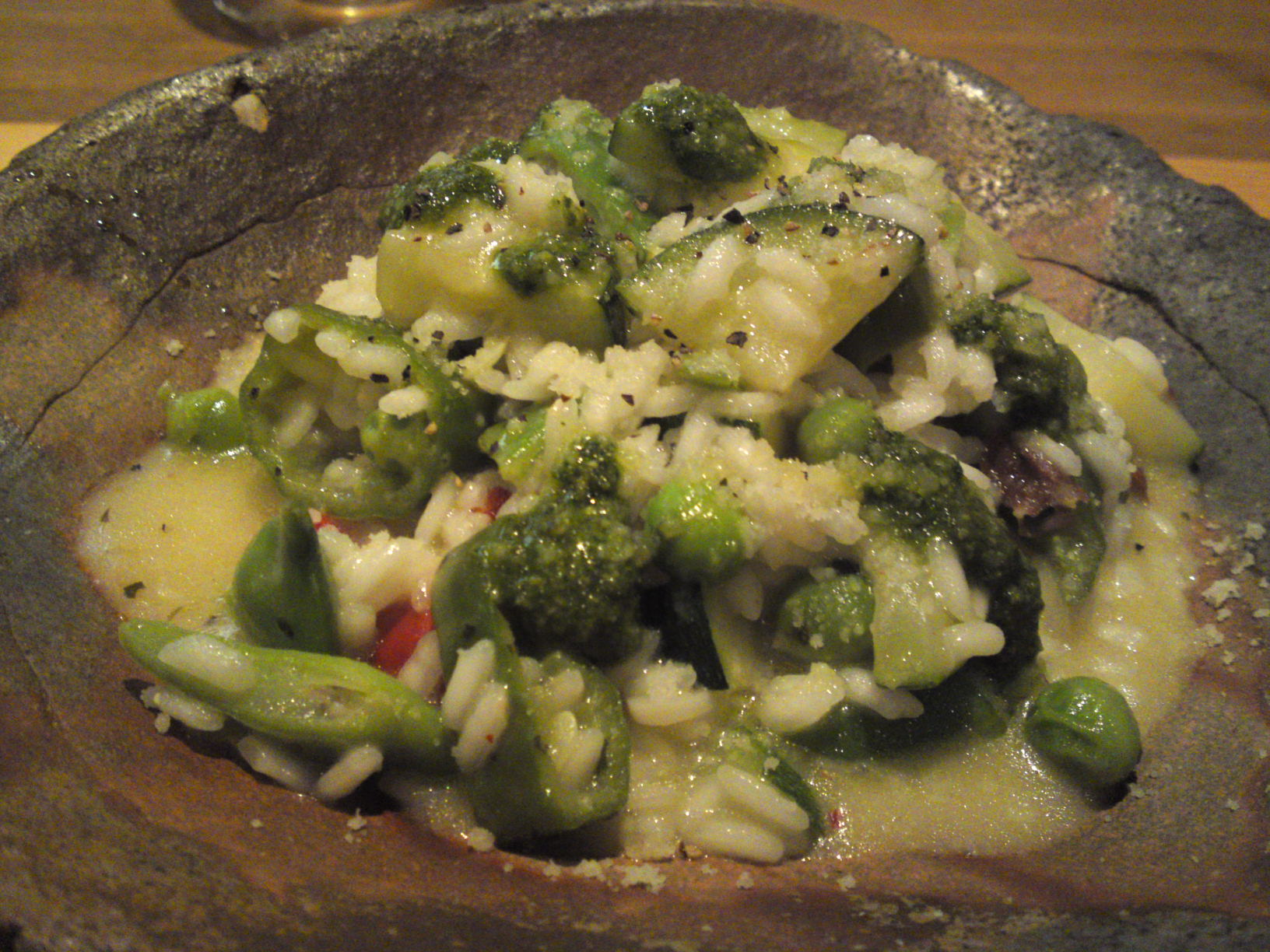
A risotto was of course on the cards!
I just asked Kazuo to concoct me one with vegetables!

It just shows that green can be become such an appetizing color in the hands of a great chef!

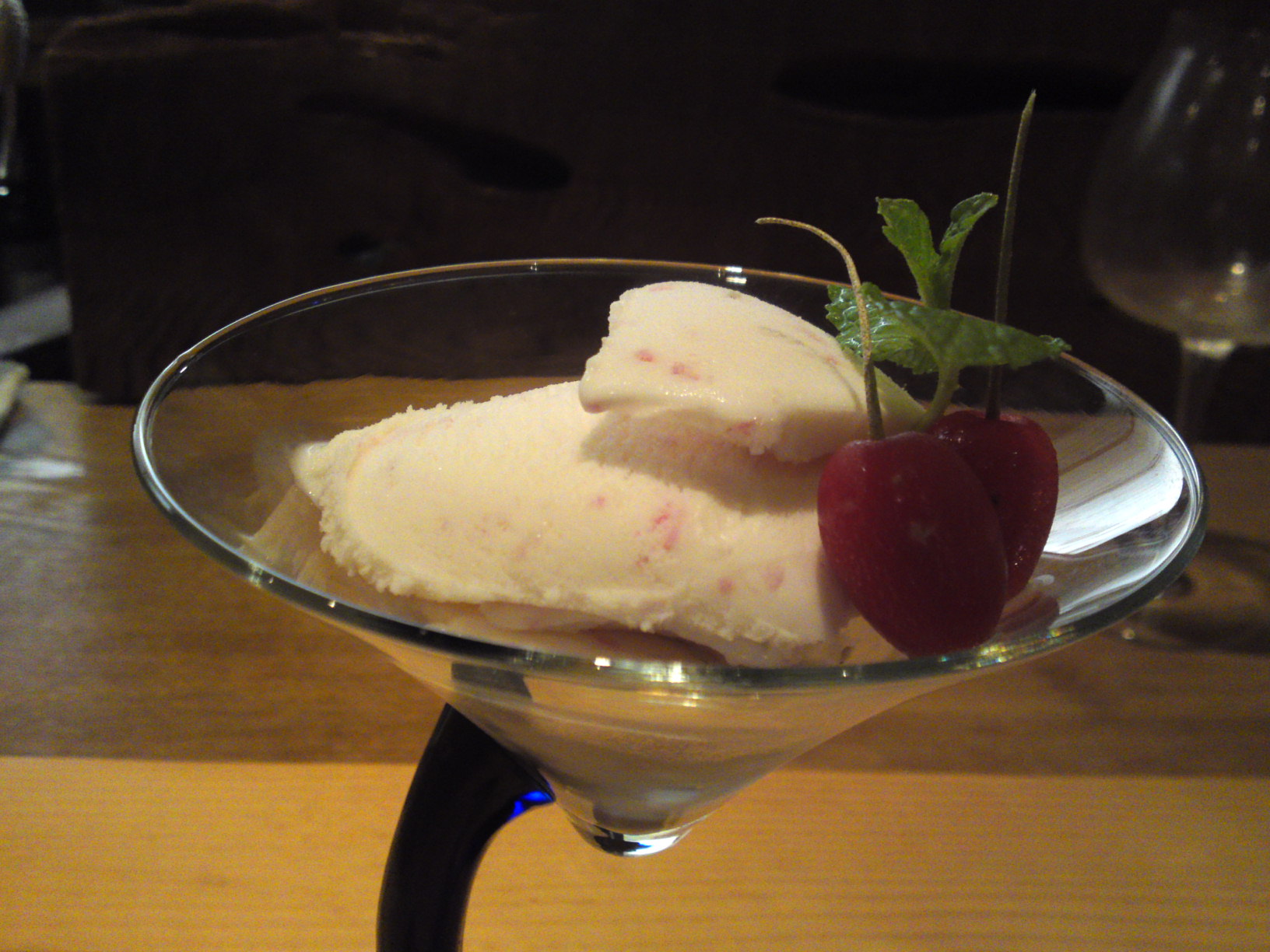
Even the dessert was local!
Can you guess?

I almost took the same picture: Cherry tree flower Ice cream! Yes you read well: flowers!

I’m afraid this is still a bit short of an article as Kazuo Ishigarashi’s cuisine will take time to explore, but don’t woory, I’ll be back soon!

PIATTO
Shisuoka Shi, Aoi Ku, Kooyamachi, 5-12, 2F
TEl.: 054-253-8844
Business hours: Lunch, 11:30~14:30 on Monday, Saturday, Sunday & National Holidays. Dinner: 17:30~23:00
Closed on Thursdays
Credit Cards OK
HOMEPAGE (Japanese and a little English)

RECOMMENDED RELATED SITES:
With a Glass,
Bread + Butter, Zoy Zhang, Hungry Neko, Think Twice, Frank Fariello, Mangantayon, Hapabento, Elinluv Tidbit Corner, Tokyo Terrace, Maison de Christina, Chrys Niles,Lexi, Culinary Musings, Wheeling Gourmet, Comestiblog, Chronicles Of A Curious Cook, Tokyo Through The Drinking Glass, Tokyo Foodcast, Palate To Pen, Yellin Yakimono Gallery, Tokyo Terrace, Hilah Cooking, More than a Mount Full, Arkonite Bento, Happy Little Bento; 5 Star Foodie; Jefferson’s Table; Oyster Culture; Gourmet Fury; Island Vittles; Good Beer & Country Boys; Rubber Slippers In Italy; Color Food daidokoro/Osaka;/a; The Witchy Kitchen; Citron Et Vanille, Lunsj Med Buffet/Estonian Gastronomy (English), Cook, Eat, Play, Repeat, Chrisoscope, Agrigraph, The Agriculture Portal to shizuoka!

Vegan Feast with Shizuoka Products at Yasaitei!

Service: Very friendly and attentive
Facilities: Very clean overall. Superb toilets.
Prices: Appropriate
Strong points: Great choice of local & Japanese vegetables. Kansai-style oden. All traditionally-clad ladies staff in a traditional izakaya. Good wines, shochu and sake List.

Chef Aki Suzuki/鈴木朋 never rests on her laurels in a constant search for new local vegetables of the best quality and freshness to please and titillate her customers.
Luckily enough, Shizuoka Prefecture is fast developing into THE reference when it comes to variety and quality of vegetables in Japan.
Moreover, whenever a producer cannot achieve a full organic culture the predominant trend is to reduce any artificial fertilizer or pesticide to a strict minimum.

The result is that the general level has reached such an elevated status that vegetables imported from other Prefectures are of an unheard quality.
It is thus easy to understand why restaurants and izakayas in Shizuoka Prefecture are increasingly using only the safest vegetables as a matter of course!

A very Japanese setting!
With my first glass of my favorite local rice-shochu, “Doman” by Hamamatsu-Tenjingura Brewery, the o-toshi/first snack was a morsel that vegans would run for!

Tokoroten/心太/seaweed jelly!
Served with some finely chopped dry nori/seaweed and Japanese hot mustard, it makes for a delicious healthy snack, even for an omnivore like me!

The sashimi plate of the day!
All the vegetables came from Shizuoka Prefecture and almost half of them were organic!

I know this corn as I have already written about it. Kankan Musume Corn by Takeshi Ichikawa in Iwata City. Served raw, it is so juicy and sweet!

This ko aka daikon/radish/小赤大根 come from Shizen no Chikara Organic Farm in Shizuoka City. Their raw leaves are great with grain mustard!

Juicy daikon and crisp perilla leaf/shiso/紫蘇. The sweet onion/tamanegi/玉葱 behind the shiso leaf is also from Shizen no Chikara Organic Farm.

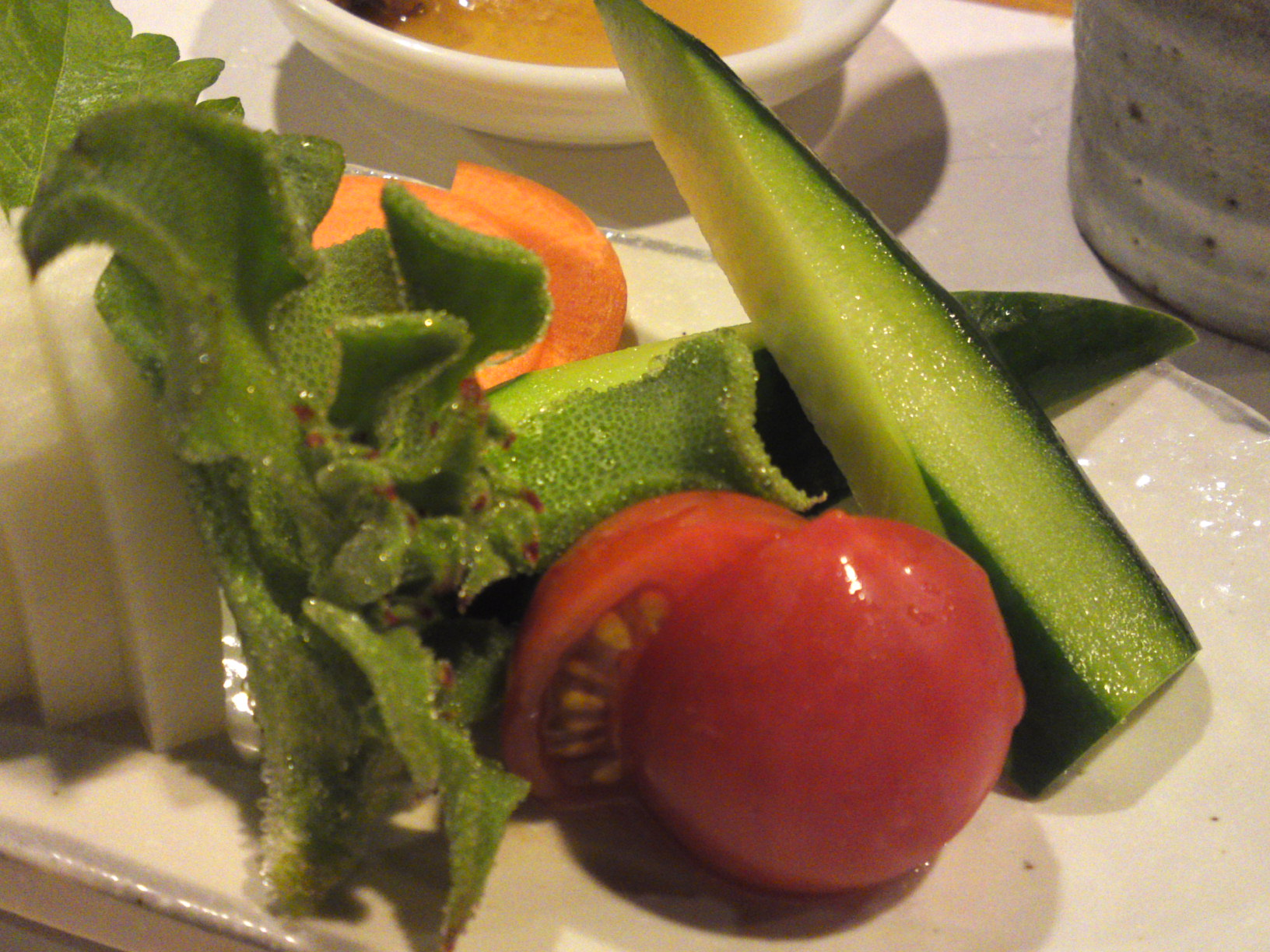
Juicy tomatoes (from the same farm!), crispy cucumber and quaint ice-plants!

Organic carrot backing up the chopped sweet onion!

As usual the “dressing” consisted of top-class kome miso (the miso paste contains whole rice grains), sesame oil and salt!

Aki san had just received organic broad beans (you can eat them raw!). I asked her to prepare some as tempura!

Little jewels!

And I was off to my second report of the night… LOL

YASAITEI/野菜亭
Shizuoka City, Aoi Ku, Tokiwa-Cho, 1-6-2 Green Heights Wamon 1-C
Tel.: 054-2543277
Business hours: 17:30~22:00
Closed on Sundays
Reservations highly recommended
Seating: 6 at counter + 12 at tables
Set Courses: 3,000, 4,000, 5,000 yen
HOMEPAGE (Japanese)

RECOMMENDED RELATED SITES:
With a Glass,
Bread + Butter, Zoy Zhang, Hungry Neko, Think Twice, Frank Fariello, Mangantayon, Hapabento, Elinluv Tidbit Corner, Tokyo Terrace, Maison de Christina, Chrys Niles,Lexi, Culinary Musings, Wheeling Gourmet, Comestiblog, Chronicles Of A Curious Cook, Tokyo Through The Drinking Glass, Tokyo Foodcast, Palate To Pen, Yellin Yakimono Gallery, Tokyo Terrace, Hilah Cooking, More than a Mount Full, Arkonite Bento, Happy Little Bento; 5 Star Foodie; Jefferson’s Table; Oyster Culture; Gourmet Fury; Island Vittles; Good Beer & Country Boys; Rubber Slippers In Italy; Color Food daidokoro/Osaka;/a; The Witchy Kitchen; Citron Et Vanille, Lunsj Med Buffet/Estonian Gastronomy (English), Cook, Eat, Play, Repeat, Chrisoscope, Agrigraph, The Agriculture Portal to shizuoka!

Chinese Cuisine: Hana Oto

Service: Very friendly and attentive
Equipment: Great general cleanliness. Beautiful toilets
Prices: reasonable
Strong points: Great use of local ingredients in beautiful Chinese Cuisine. Great sake and shochu!

Whatever the nationality or the genre of the gastronomy, a good chef makes an exclusively use of ingredients not only superlative but whenever possible local! Only then the skills make the difference between a good and a great chef!

The entrance to Hana Oto/華音 is simple and unassuming, always a good sign!

Chef Yuusuke Toozaki/登崎雄介 had recently to move to a larger establishment to be able to welcome all his guests!
It is always a good idea to reserve a seat either at the counter or on the tatami floor!

The man himself (frightening smile!)

First of all he caters for all tastes as far as drinks come!

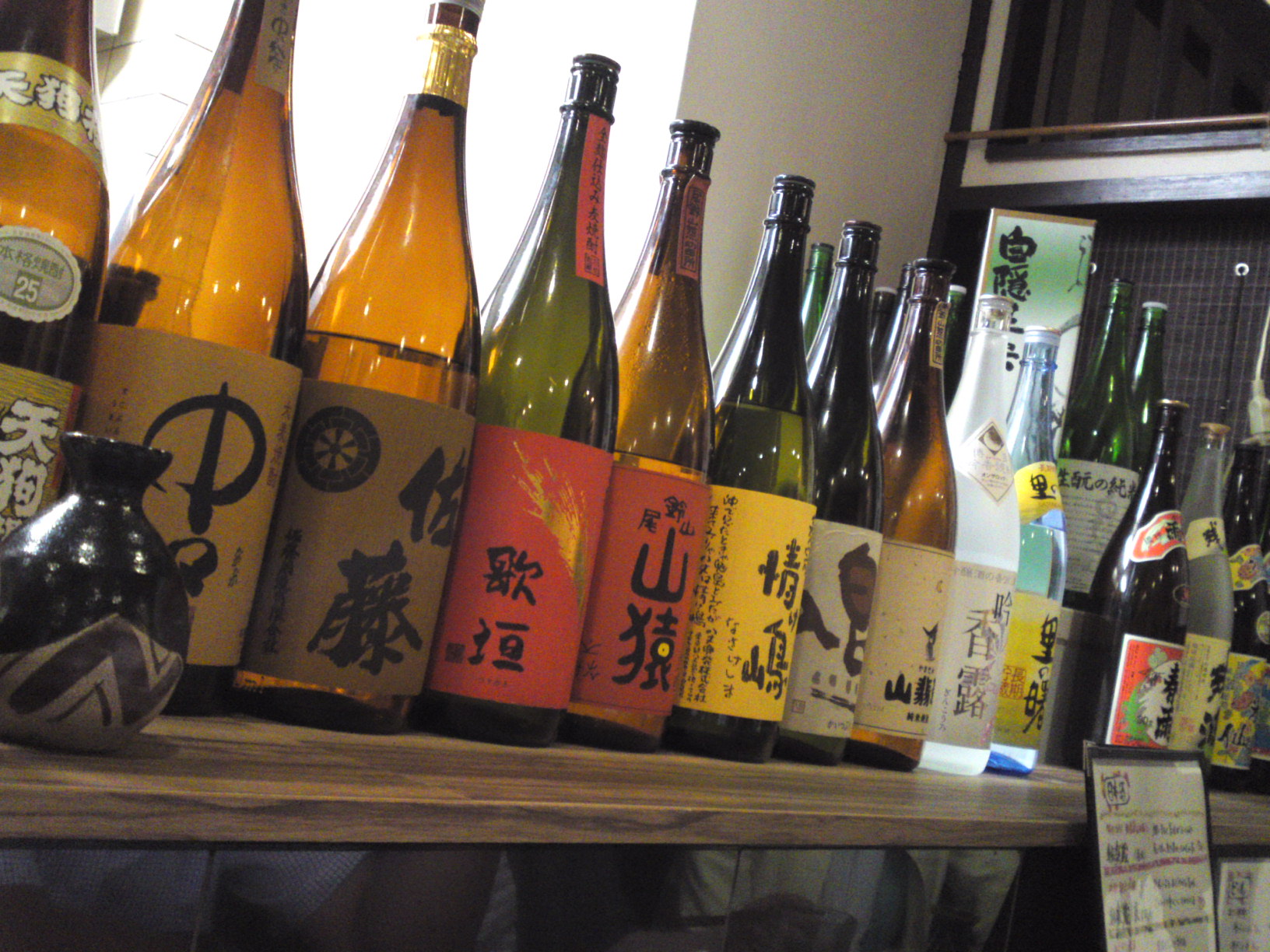
A shochu paradise!

You may as well as consult him before choosing a shochu if that is what you want!
Of course beer and wine are available!

Nice tokkuri!

As for the Japanese sake, there is plenty to choose from, too!
At least three great sake from Shizuoka Prefecture are catered!

Now Hana Oto is one of the rare restaurants serving Amagi Shamo, arguably the best chicken in the Prefecture and probably Japan!

This chicken is, among others, fed with wasabi leaves and soy milk from Izu Peninsula!

Served with freshly grated Shizuoka wasabi (and maybe a little soy sauce), a rare delicacy!

On that night I had beautiful sake brewed by Eikun (Yui) and Sugii (Fujieda) breweries!

Jukusei Tomato to Tamago Pirikara Itame/熟成とまとト卵ピリ辛炒め/Stir-fried hot ripe tomatoes and eggs!

Toozaki san makes an extensive use of the best quality vegetables of the Prefecture!
These ripe tomatoes were grown at Suzuki Tomato Garden in Shizuoka City!

A fulfilling and healthy dish with a great balance!

Unctuous eggs fried to perfection!

Nasu no Shyouga Shoyu Itame/茄子の生姜醤油炒め/Stir-ried eggplants in ginger and soy sauce!

These eggplants were grown organically in a family garden in Shimizu Ku, Shizuoka City, proving a great search for the best ingredients!

Matsuki Farm Romeenu Retasu to Hikiniku no Pirikara Itame/松木ファームロメーンレタストひき肉のピリ辛炒め/Hot stir-fried Matsuki Farm Romaine Lettuce and minced meat!

The Romaine lettuce was organically grown at Matsuki Farm in Fujinomiya City!

Well, you can be assured this is only the start of a long relationship considering the untried dishes and the changes with seasons!
Keep tuned! LOL

HANA OTO/華音
420-0032 Shizuoka Shi, Aoi Ku, Ryougae Cho, 5-8, Shin Kamogawa Bldg., 2F-D
Business hours: 17:30~24:00
Closed on Mondays

RECOMMENDED RELATED SITES:
With a Glass,
Bread + Butter, Zoy Zhang, Hungry Neko, Think Twice, Frank Fariello, Mangantayon, Hapabento, Elinluv Tidbit Corner, Tokyo Terrace, Maison de Christina, Chrys Niles,Lexi, Culinary Musings, Wheeling Gourmet, Comestiblog, Chronicles Of A Curious Cook, Tokyo Through The Drinking Glass, Tokyo Foodcast, Palate To Pen, Yellin Yakimono Gallery, Tokyo Terrace, Hilah Cooking, More than a Mount Full, Arkonite Bento, Happy Little Bento; 5 Star Foodie; Jefferson’s Table; Oyster Culture; Gourmet Fury; Island Vittles; Good Beer & Country Boys; Rubber Slippers In Italy; Color Food daidokoro/Osaka;/a; The Witchy Kitchen; Citron Et Vanille, Lunsj Med Buffet/Estonian Gastronomy (English), Cook, Eat, Play, Repeat, Chrisoscope, Agrigraph, The Agriculture Portal to shizuoka!

Vegetarian Japanese Lunch at Locomani!

Service: Very friendly although a bit shy!
Equipment: Great overall cleanliness
Prices: reasonable
Strong points: Vegetarian menus. Healthy rice flour cakes.
Completely non-smoking!

Light-hearted vegetarianism has become increasingly popular with vegetarians and non-vegetarians in this City and Prefecture.
The access to abundant vegetables, many of them organic all year round, is the main reason. Another reason is that this region of Japan is noted for its exceptional gastronomy and that gastronomes are happy to switch to a healthier and lighter fare from time to time to give a much needed rest to their system!

A Mediterranean look to the facade!

Menus of the day written on blackboard outside,

and inside!

All wood warm atmosphere inside.

Keep an eye (and a space inside your stomach!) open the home-made very healthy cakes!

Cream cheese cake!

Natural brownies made with rice flour!

Apple and walnuts pound cake made with rice flour!

Mr. Shigeyuki Aoshima/青島茂幸 prepares at least 2 full vegetarian and one non-vegetarian courses every day apart of single dishes and others.
As the menus change regularly according to the vegetables in season one does not tire from visiting the place regularly!
This time I chose the “deep-fried soy bean meat lunch course/大豆ミート唐揚げランチ”!

Raw and cooked vegetable salads (some from Shizen no hikara Organic Farm!)!

Lettuce and warm potato & onion salads!

String bean salad and Japanese-style pickled cucumber and seaweed!

Deep-fried soy bean “meat” with grated daikon (and ponzu)!

Rice (half whole/genmai and half polished)!

Miso soup and organic tea!

I couldn’t resist a dessert!

A succulent cream cheese cake!

I certainly felt both full and healthy!

LOCOMANI
420-0839 Shizuoka City, Aoi Ku, Takajyo, 1-10-6
Tel.: 054-260-6622
Closed every Wednesday and one Monday
HOMEPAGE (Japanese)

RECOMMENDED RELATED SITES:
With a Glass,
Bread + Butter, Zoy Zhang, Hungry Neko, Think Twice, Frank Fariello, Mangantayon, Hapabento, Elinluv Tidbit Corner, Tokyo Terrace, Maison de Christina, Chrys Niles,Lexi, Culinary Musings, Wheeling Gourmet, Comestiblog, Chronicles Of A Curious Cook, Tokyo Through The Drinking Glass, Tokyo Foodcast, Palate To Pen, Yellin Yakimono Gallery, Tokyo Terrace, Hilah Cooking, More than a Mount Full, Arkonite Bento, Happy Little Bento; 5 Star Foodie; Jefferson’s Table; Oyster Culture; Gourmet Fury; Island Vittles; Good Beer & Country Boys; Rubber Slippers In Italy; Color Food daidokoro/Osaka;/a; The Witchy Kitchen; Citron Et Vanille, Lunsj Med Buffet/Estonian Gastronomy (English), Cook, Eat, Play, Repeat, Chrisoscope, Agrigraph, The Agriculture Portal to shizuoka!

Miso: The Basics (updated)

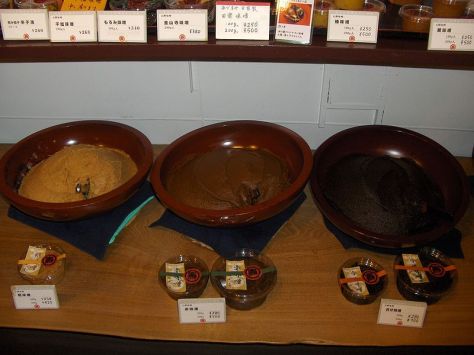
MISO-1
Three types of miso

Since Sissi and her many friends seem to be more than interested in miso I thought it was grand time i published again this old article of mine, hoping it will prove useful to many

Miso (みそ or 味噌) is a traditional Japanese seasoning produced by fermenting rice, barley and/or soybeans, with salt and a yeast called kōjikin (麹菌) in Japanese, the most typical miso being made with soybeans. The result is a thick paste used for sauces and spreads, pickling vegetables or meats, and mixing with dashi soup stock to serve as miso soup, Misoshiru (味噌汁), a Japanese culinary staple. High in protein and rich in vitamins and minerals, miso played an important nutritional role in feudal Japan. Miso is still very widely used in Japan, both in traditional and modern cooking, and has been gaining world-wide interest. Miso is typically salty, but its flavor and aroma depend on various factors in the ingredients and fermentation process. Different varieties of miso have been described as salty, sweet, earthy, fruity, and savory, and there is an extremely wide variety of miso available.
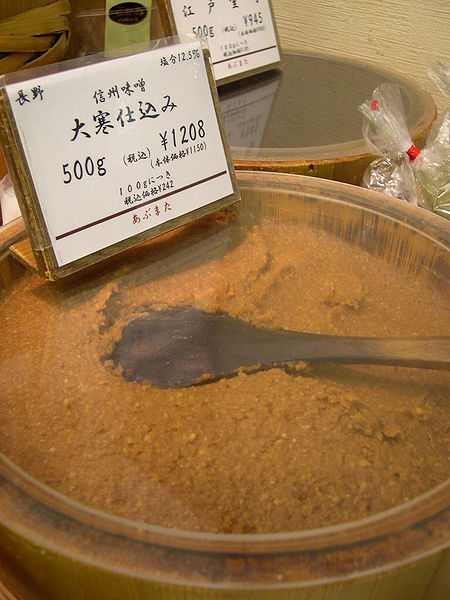
MISO-8
Miso from Nagano Prefecture on sale in Kyoto

The predecessor of miso originated in China during the 3rd century BC or earlier, and it is probable that this, together with related fermented soy-based foods, was introduced to Japan at the same time as Buddhism in the 6th century AD.This fermented food was called “Shi”.
Until the Muromachi era, miso was made without grinding the soybeans, somewhat like natto. In the Kamakura era, a common meal was made up of a bowl of rice, some dried fish, a serving of miso, and a fresh vegetable. In the Muromachi era, Buddhist monks discovered that soybeans could be ground into a paste, spawning new cooking methods where miso was used to flavor other foods.
In the Sengoku (Feudal) era, miso was useful as a military provision and precious nourishing food for soldiers.
During the Edo period miso was also called hishio and kuki.
In the modern era, the industrial method of producing miso in large quantities was established and it became rare to make miso at home, although miso made in farms has suddenly become fashinable as a health food.
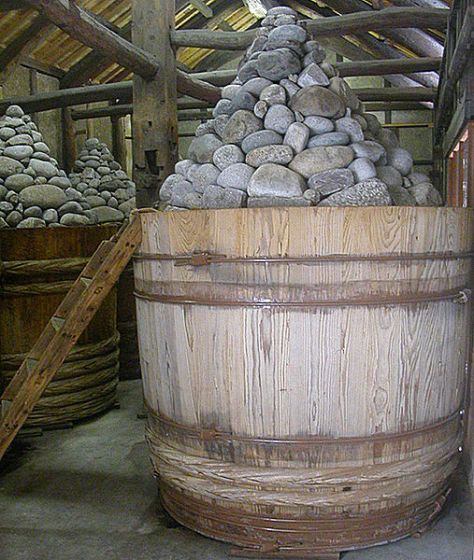
MISO-2
Miso being fermented inside a large wood cask

VARIETIES (FLAVOUR)

The taste, aroma, texture, and appearance of any specific miso vary with the miso type as well as the region and season for which the miso was made. The ingredients used, temperature and duration of fermentation, salt content, variety of kōji/yeast, and fermenting vessel all contribute. The most common flavor categories of soy miso are:

Shiromiso, “white miso”
Akamiso, “red miso”
MISO-5
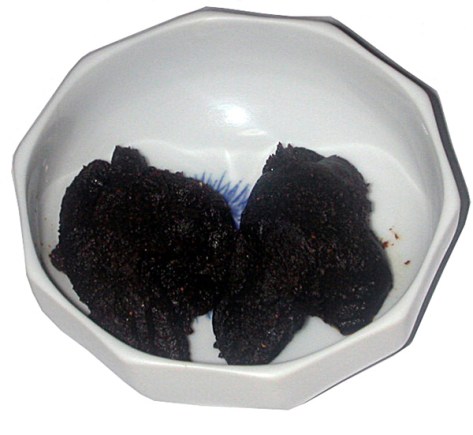
Kuromiso, “black miso”

Hatchomiso
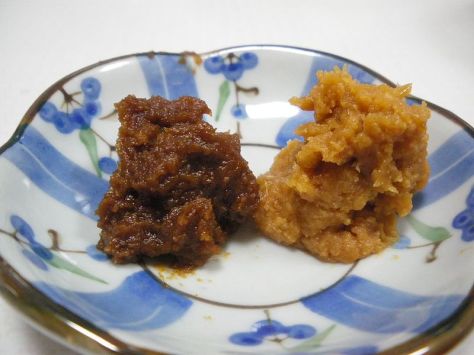
White and red (shiromiso and akamiso) are the basic types of miso available in all of Japan as well as overseas. Different varieties are preferred in particular regions. For example, in the eastern Kantō region that includes Tokyo, the lighter shiromiso is popular, while in the western Kansai region encompassing Osaka, Kyoto, and Kobe, darker brownish hatchomiso is preferred, and akamiso is favored in the Tokai area.
MISO-4
Akamiso and shiromiso

VARIETIES (INGREDIENTS)

The raw materials used to produce miso may include any mix of soybeans, barley, rice, buckwheat, millet, rye, wheat, hemp seed, and cycad, among others. Lately, producers in other countries have also begun selling miso made from chick peas, corn, azuki beans, amaranth, and quinoa. Fermentation time ranges from as little as five days to several years. The wide variety of Japanese miso is difficult to classify, but is commonly done by grain type, color, taste, and background.

MISO-6
Kinzanji/Kinzan Temple (金山寺味噌) miso

mugi (麦): barley
tsubu (粒): whole wheat/barley
aka (赤): red, made with rice koji and soybeans, medium flavor, most widely used in Japan
Hatchō (八丁): aged, strongest flavor, used mostly in Central Japan
shiro (白): rice, sweet white, fresh
shinshu (信州): rice, brown color
genmai (玄米): brown rice
awase (合わせ): layered, typically in supermarket
moromi (醪): chunky, healthy (kōji/yeast is unblended)
nanban (南蛮): chunky, sweet, for dipping sauce
inaka (田舎): farmstyle
taima (大麻): hemp seed
sobamugi (蕎麦): buckwheat
hadakamugi (裸麦): rye
meri (蘇鉄): made from cycad pulp, Buddhist temple diet
gokoku (五穀): “5 grains”: soy, wheat, barley, proso millet, and foxtail millet
Many regions have their own specific variation on the miso standard. For example, the soybeans used in Sendai miso are much more coarsely mashed than in normal soy miso.

Miso made with rice (including shinshu and shiro miso) is called kome (rice) miso (米味噌).
MISO-3
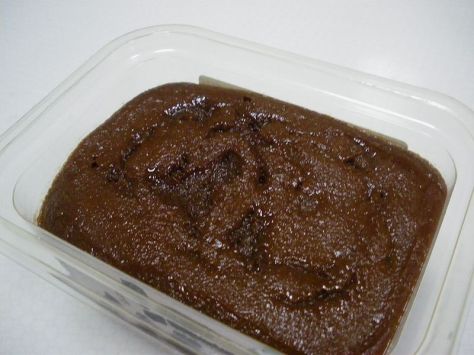
Miso sold in plastic container.

STORAGE AND PREPARATION

Miso typically comes as a paste in a sealed container, and should be kept refrigerated after opening. It can be eaten raw, and cooking changes its flavor and nutritional value; when used in miso soup, most cooks do not allow the miso to come to a full boil. Some people, especially those outside of Japan, go so far as to only add miso to preparations after they have cooled, to preserve the biological activity of the kōjikin/fermented yeast. Since miso and soy foods play a large role in the Japanese diet, there are a variety of cooked miso dishes as well.
MISO-7
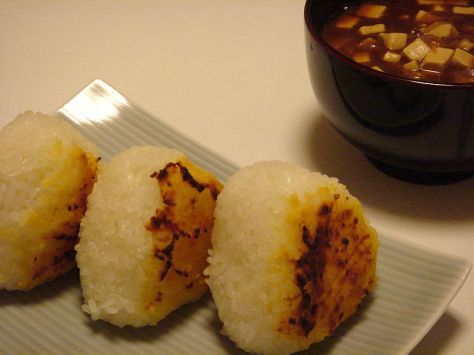
Grilled miso seasoned rice balls and miso soup

MISO AS FOOD

Miso is a part of many Japanese-style meals. It most commonly appears as the main ingredient of miso soup, which is eaten daily by much of the Japanese population. The pairing of plain rice and miso soup is considered a fundamental unit of Japanese cuisine. This pairing is the basis of a traditional Japanese breakfast, although more and more Japanese in big towns eat European style as opposed to people living in the country.
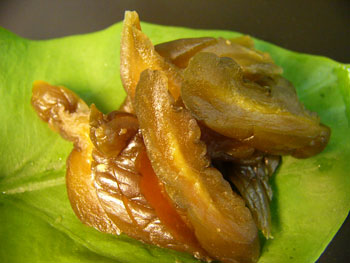
MISO-9
Cucmber pickled in “gold miso”

Miso is used in many other types of soup and souplike dishes, including some kinds of ramen, udon, nabe, and imoni. Generally, such dishes have the title miso prepended to their name (for example, miso-udon), and have a heavier, earthier flavor and aroma compared to other Japanese soups that are not miso-based.
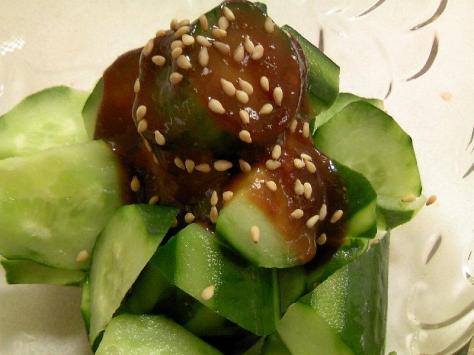
MISO-10
Fresh cucumber served with miso and sesame seeds

Many traditional confections use a sweet, thick miso glaze, such as mochidango. Miso glazed treats are strongly associated with Japanese festivals, although they are available year-round at supermarkets. The consistency of miso glaze ranges from thick and taffy-like to thin and drippy.

Soy miso is used to make a type of pickle called “misozuke” (味噌漬け). These pickles are typically made from cucumber, daikon, hakusai/Chinese cabbage, or eggplant/aubergine, and are sweeter and less salty than the standard Japanese salt pickle. Barley miso, or nukamiso (糠味噌), is used to make another type of pickle. Nukamiso is a fermented product, and considered a type of miso in Japanese culture and linguistics, but does not contain soy, and so is functionally quite different. Like soy miso, nukamiso is fermented using kōji mold.

Other foods with miso as an ingredient include:

dengaku (charcoal-grilled miso covered tofu)
yakimochi (charcoal-grilled miso covered mochi)
miso braised vegetables or mushrooms
marinades: fish or chicken can be marinated in miso and sake overnight to be grilled.
corn on the cob in Japan is usually coated with shiro miso, wrapped in foil and grilled.
sauces: sauces like misoyaki (a variant on teriyaki) are common.

NUTRITION AND HEALTH

The nutritional benefits of miso have been widely touted by commercial enterprises and home cooks alike. However, claims that miso is high in vitamin B12 have been contradicted in some studies. Part of the confusion may stem from the fact that some soy products are high in B vitamins (though not necessarily B12), and some, such as soy milk, may be fortified with vitamin B12. Some, especially proponents of healthy eating, suggest that miso can help treat radiation sickness, citing cases in Japan and Russia where people have been fed miso after the Chernobyl nuclear disaster and the atomic bombings of Hiroshima and Nagasaki. Also some experts suggest that miso is a source of Lactobacillus acidophilus or Lecithin which is a kind of phospholipid caused by fermentation is effective in the prevention of high blood pressure. Miso contains salt. A small amount is essential to animal life but most scientists believe an excess of it can cause a variety of health problems.

RECOMMENDED RELATED SITES:
With a Glass,
Bread + Butter, Zoy Zhang, Hungry Neko, Think Twice, Frank Fariello, Mangantayon, Hapabento, Elinluv Tidbit Corner, Tokyo Terrace, Maison de Christina, Chrys Niles,Lexi, Culinary Musings, Wheeling Gourmet, Comestiblog, Chronicles Of A Curious Cook, Tokyo Through The Drinking Glass, Tokyo Foodcast, Palate To Pen, Yellin Yakimono Gallery, Tokyo Terrace, Hilah Cooking, More than a Mount Full, Arkonite Bento, Happy Little Bento; 5 Star Foodie; Jefferson’s Table; Oyster Culture; Gourmet Fury; Island Vittles; Good Beer & Country Boys; Rubber Slippers In Italy; Color Food daidokoro/Osaka;/a; The Witchy Kitchen; Citron Et Vanille, Lunsj Med Buffet/Estonian Gastronomy (English), Cook, Eat, Play, Repeat, Chrisoscope, Agrigraph, The Agriculture Portal to shizuoka!

Italian Cuisine: Shizuoka Agricultural products-Lunch at Via Del Borgo!

On a hot day (and the temperature has been hovering around a very unseasonal 30 degress celsius these past days) an Italian restaurant is probaby a good bet for lunch.
About time to check the latest lunch menu at Via Del Borgo, then!

One good thing about this spacious restaurant is that you can choose your spot among the available space without having to explain your reasons (not evident in Japan!)

<

I have already introduced Chef Takahiko Katoh/加藤隆彦 and I intend to folllow him around if he intends to go independent someday (all great chefs are bound to in Shizuoka), so let's have a look at what I had the pleasure to taste this time:
Onion confit crostini!

Antipasti misto!

Grilled zucchini and bamboo shoot (the latter from Shizuoka) and pork and vegetables roll.

Light vegetable omelette.

Avocado and Scallops with pomegranate seeds and balsamico dressing.

Home-baked bread, premium olive oil and wine!

White beans and asapragus tips soup.

Crispy asparagus tips (not the overcooked and soggy stuff!)!

I said before this the place for risotto!
Chicken ragu and mushrooms risotto!

For a better view!

For once I chose the fish main dish: pan-fried and oven-baked red grouper with cold fruit tomato ratatouille and hot sauteed vegetables.
All ingredients are from Shizuoka Prefecture!

The fruit tomatoes offered an intriguing contrast with their chilled swetness!

All vegetables sauteed to perfection to enhance their taste and flavor: small spring onion, okra, rape seed flower and maountain wild mountain vegetables!

I usually do not eat cooked fish skin but the marriage of the tender flesh with and of the crackling skin of this madai/真鯛/red grouper was too much to ignore and I was rewarded with a supreme experience! Probably the “simplest” and best way to enjoy white-fleshed fish!

Panacotta and fruit for a light and delicious dessert!

Instead of the usual coffee I had a refreshing orange juice and the little biscuits!

To be continued… LOL

Service: professional and friendly
Facilities: Extremely clean overall and beautiful washroom
Prices: reasonable
Strong points: Local products extensively used. Good Italian wine list. Private rooms available.
Private rooms can be made non-smoking with full isolation!

VIA DEL BORGO
420-0034, Shizuoka Shi, Aoi Ku, Tokiwa Cho, 3-2-7
Tel.: 054-221-7666
Business hours: 11:30~13:30, 18:00~21:00 (last orders)
Private rooms available.
HOMEPAGE (Japanese)
Credit Cards OK

RECOMMENDED RELATED SITES:
Warren Bobrow, Bread + Butter, Zoy Zhang, Hungry Neko, Think Twice, Frank Fariello, Mangantayon, Hapabento, Elinluv Tidbit Corner, Tokyo Terrace, Maison de Christina, Chrys Niles,Lexi, Culinary Musings, Wheeling Gourmet, Comestiblog, Chronicles Of A Curious Cook, Tokyo Through The Drinking Glass, Tokyo Foodcast, Palate To Pen, Yellin Yakimono Gallery, Tokyo Terrace, Hilah Cooking, More than a Mount Full, Arkonite Bento, Happy Little Bento; 5 Star Foodie; Jefferson’s Table; Oyster Culture; Gourmet Fury; Island Vittles; Good Beer & Country Boys; Rubber Slippers In Italy; Color Food daidokoro/Osaka;/a; The Witchy Kitchen; Citron Et Vanille, Lunsj Med Buffet/Estonian Gastronomy (English), Cook, Eat, Play, Repeat, Chrisoscope, Agrigraph, The Agriculture Portal to shizuoka!