Tag Archives: 静岡

Green Tea: Shizuoka Prefecture Tea First Auctions in 2012 in Shizuoka City!

As proved every year with this most important event Tea growers are early-risers!
Since Marufuku Tea Factory (Shizuoka City) in the person of Ms. Asami Itoh/伊藤麻美 had again kindly invited me to attend and interview at the official first day of the new tea auctions (officially) held today (April 25rd) I found myself the only European (journalist) present at the early hour of 6:00 a.m.!

As a special guest I was wearing a cap with Marufuku Tea Factory written on it (the only foreign journalist offered the privilege that day!)!

But most people must have gathered there since 5:00 a.m. notwithstanding the bad weather!

A tea massage demonstration was held outside for the benefit of the media!

It is fun to take the local media at work!

The local “Chya Musume”/Tea Ladies serving fresh tea to all! The tea was Hon Yama Tea from around Shizuoka City!

The real tea auctions had been taking place from very early inside the Shizuoka Tea Hall where (officially) 800 people were busy selling and buying green tea from all over the Prefecture!
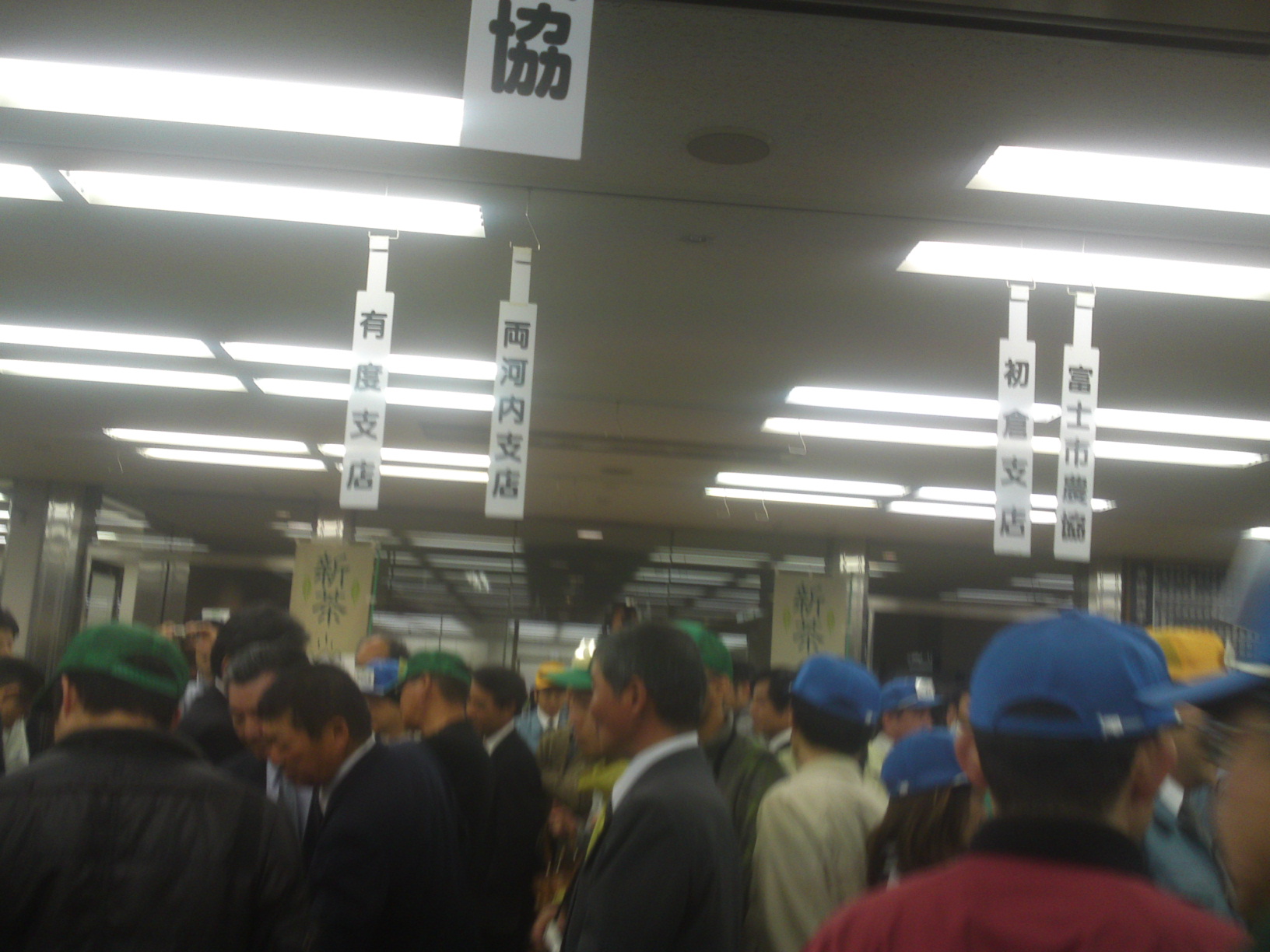
Signs and names clearly indicated which teas were auctioned by which growers at which desks!

Mr. Fumiaki Ichikawa/市川文明さん, auctioning the tea of Marufuku Tea Factory/丸福製茶株式会社!
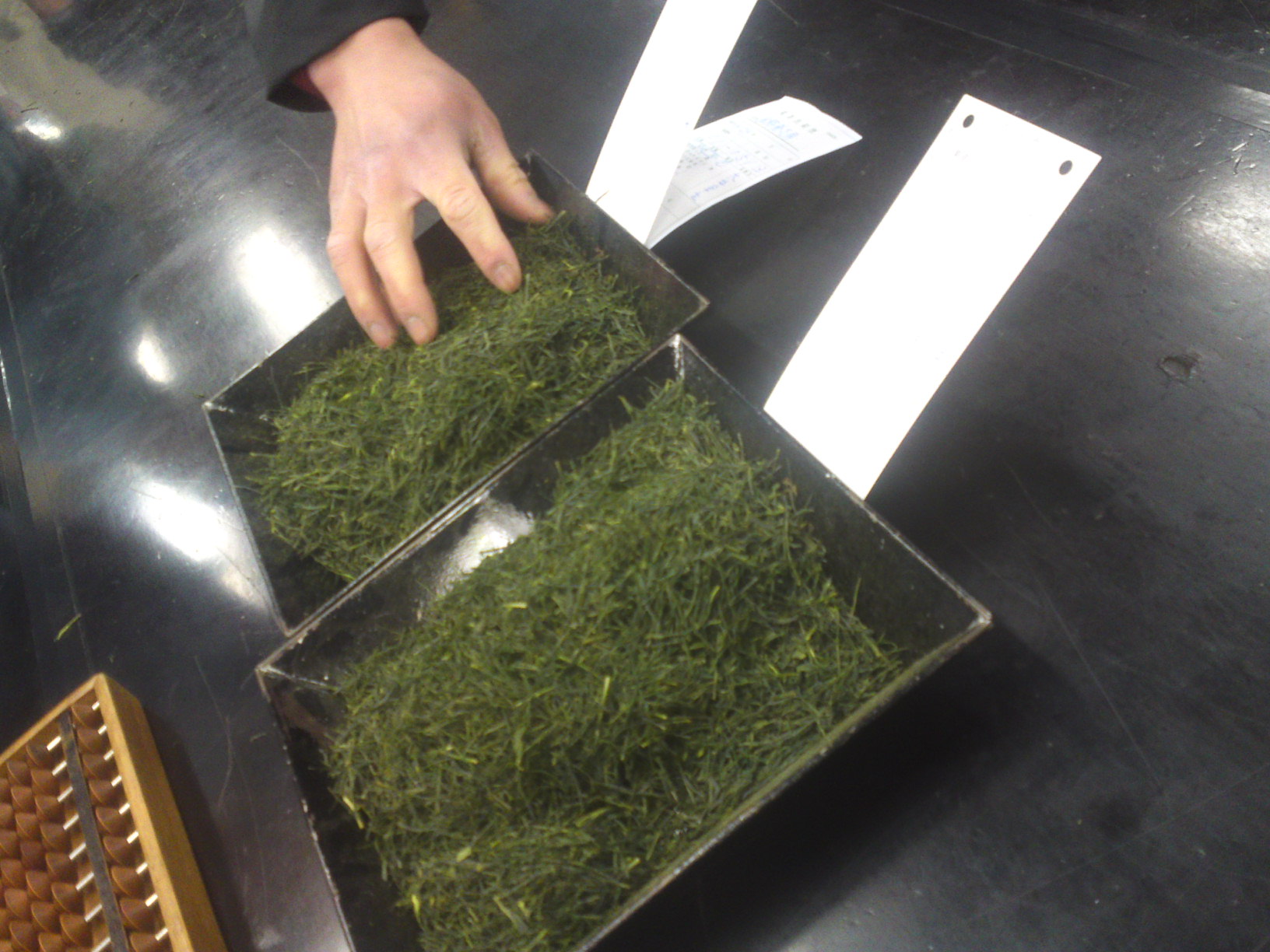
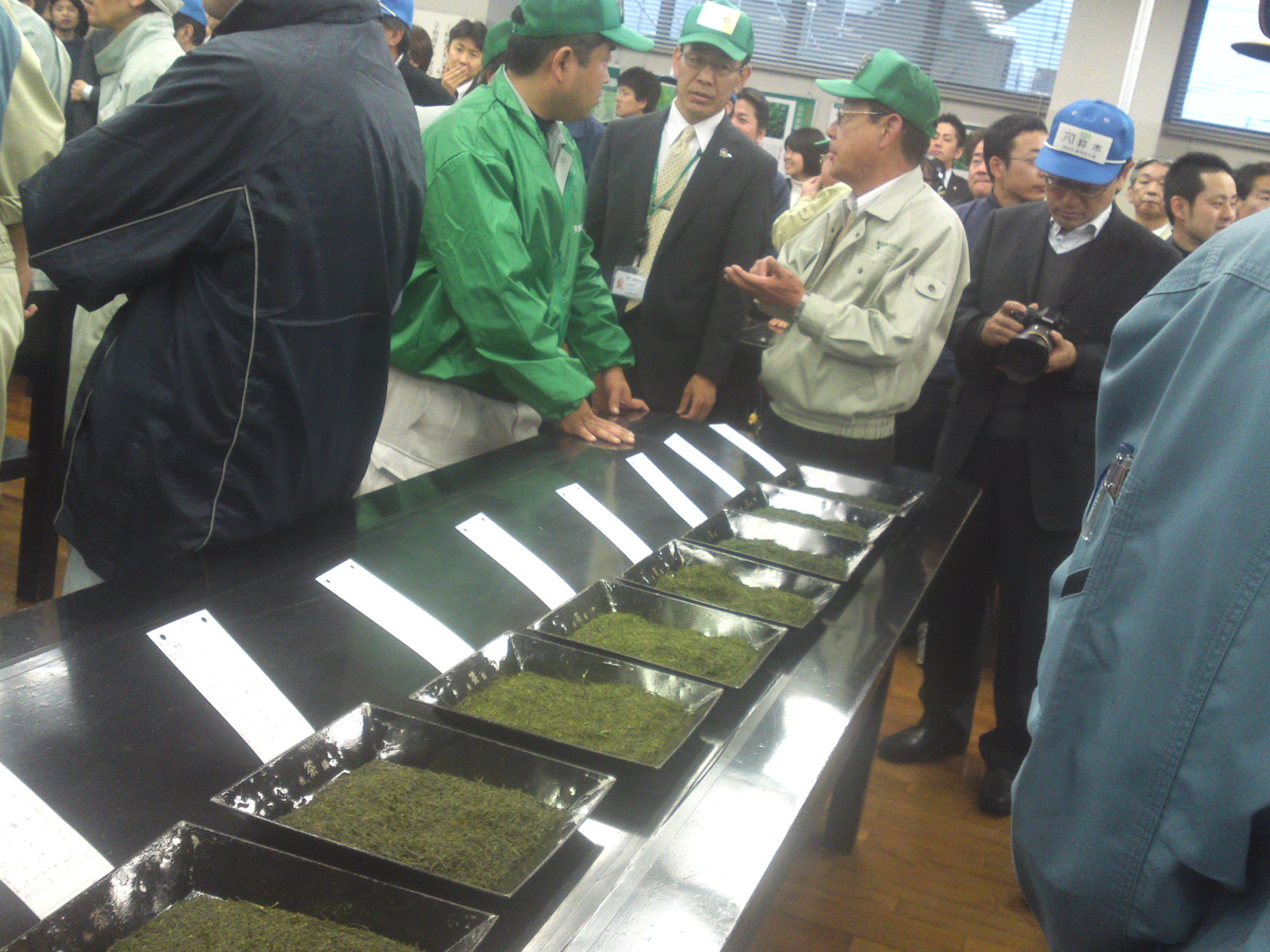
All the green tea on auction is asai-mushi tya/浅い蒸し茶/tea that had been lightly steamed during the previous night!

Each tray of tea was placed with an auction card and tea box with the company trademark.

The card with the proposed price and the tea box of the same company!

At the bottom of a card a client had agreed to buy one batch of 10 kg!

The time had come for the official speeches and the TV crews were ready to shoot the noon and evening news of the day.

The Chairman of the Shizuoka Prefecture Tea Growers Association.

The political bigwigs!
This is an event that the very top local politicians cannot afford to miss!

The Tea Ladies were certainly all ears!

Shizuoka Prefecture Governor, Heita Kawakatsu/川勝平太静岡県知事!

Shizuoka City Mayor, Nobuhiro Tanabe/田辺信宏静岡市長!

The auction is always concluded with the traditional hand clapping!
In this case it was done in the “sanbonjime/triple clapping” style!

Outside some were busy preparing food for sale for all those hungry people!

A local farmer was even selling tea trees in pots!

Note: In spite of all the recent radioactivity scares this year’s tea is not only absolutely safe, it is at least as good as last year’s!
Next report will be in the tea-fields picking up the Ichiban Cha (First leaves of the year)!

Marufuku Tea Factory
420-0006 Shizuoka Shi, Aoi Ku, Wakamatsu, Cho, 25
Tel.: 054-271-2011
Fax: 054-271-2010
Mobile: 090-3250-4188

CHA-O (Director, Ms. Asami Itoh)
420-0006 Shizuoka Shi, Aoi Ku, Wakamatsu Cho, 94
Tel: 054-253-8421
Fax: 054-253-8413
HOMEPAGE

RECOMMENDED RELATED WEBSITES

Green Tea Club by Satoshi Nihonyanagi in Shizuoka!, Mind Some by Tina in Taiwan, Le Manger by Camille Oger (French), The Indian Tourist, Masala Herb by Helene Dsouza in Goa, India, Mummy I Can Cook! by Shu Han in London, Pierre.Cuisine, Francescannotwrite, My White Kitchen, 47 Japanese Farms Through The Eyes of Its Rural Communities, Foodhoe, Chucks Eats, Things that Fizz & Stuff, Five Euro Food by Charles,Red Shallot Kitchen by Priscilla,With a Glass, Nami | Just One Cookbook, Peach Farm Studio, Clumsyfingers by Xethia, PepperBento,Adventures in Bento Making, American Bent, Beanbento, Bento No, Bento Wo Tsukurimashou, Cooking Cute, Eula, Hapabento , Happy Bento, Jacki’s Bento Blog, Kitchen Cow, Leggo My Obento, Le Petit Journal Bento & CO (French), Lunch In A Box,
Susan at Arkonlite, Vegan Lunch Box; Tokyo Tom Baker, Daily Food Porn/Osaka, Only Nature Food Porn, Happy Little Bento, The Herbed Kitchen, J-Mama’s Kitchen, Cook, Eat, Play, Repeat, Bento Lunch Blog (German), Adventures In Bento, Anna The Red’s Bento Factory, Cooking Cute, Timeless Gourmet, Bento Bug, Ideal Meal, Bentosaurus, Mr. Foodie (London/UK), Ohayo Bento,

Must-see tasting websites:

-Sake: Tokyo Through The Drinking Glass, Tokyo Foodcast, Urban Sake, Sake World
-Wine: Palate To Pen, Warren Bobrow, Cellar Tours, Ancient Fire Wines Blog
-Beer: Good Beer & Country Boys, Another Pint, Please!
-Japanese Pottery to enjoy your favourite drinks: Yellin Yakimono Gallery

Japanese Fish Species 8: Thread-Sail Filefish-Kawahagi-カワハギ

Kawahagi or Thread-sail Filefish (or simply Filefish) is an angler’s favourite in summer, although it is caught almost all year round in Shizuoka.
Like any other fishes, it has other names such as “Gihagi, “Hagi”, “Gyuu”, “Subuta” or “Bakuchiuchi”.
It is fairly common in Central and South Japan.
It is called Leatherjacket down in Australia where it is considered a pest!

The skin should be rough like that of a shark and brightly coloured.
Avoid sticky skin fish.
The bigger the size, the greater the taste (anglers, enjoy!)

In Kansai area, it replaces Fugu/Globefish when it is out of season for its similarity as sashimi.

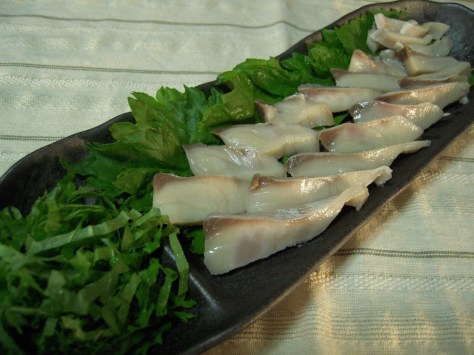
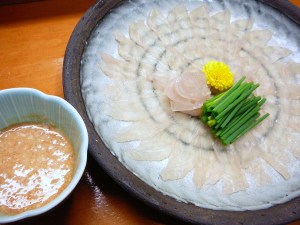
Actually it makes for superlative sashimi as demonstrated by the above O-Tsukuri served at Sushi Ko in Shizuoka City!

012

The same served with its own liver dip!

It can make for a spectacular sashimi presentation as a whole fish sashimi plate!

Both its flesh and liver can be served raw!

Australians would be surprised to discover it served as tartare on Italian-style crostinis!

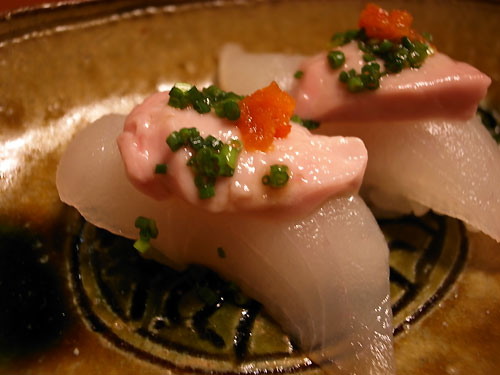
The perfect Kawahagi sushi nigiri must have be topped with its own liver!

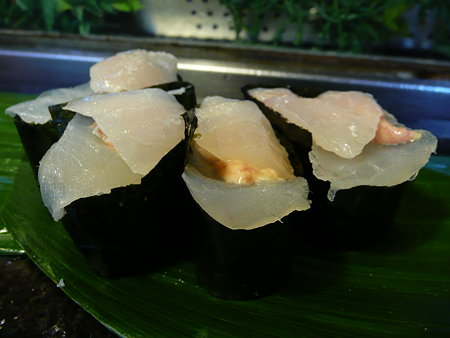
Cut in small slices, it makes for beautiful sushi gunkan!

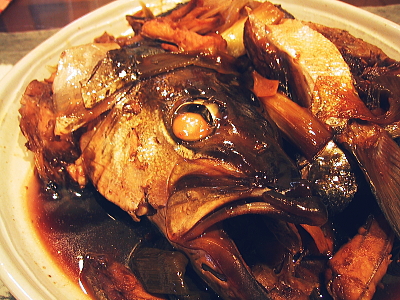
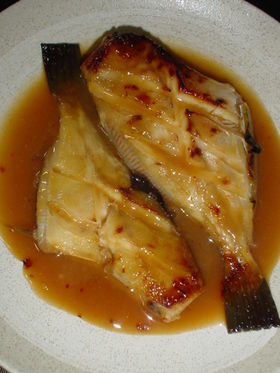
Cooked, it is very popular simmered in soy sauce, mirin and sugar. A great accompaniment for a nice bowl of freshly steamed rice!

If you want to serve it as tempura, first season it with umeboshi/Japanese pickled plums flesh of the sweet kind.

Now, what does this remind you of? Foie gras? Almost right! Grilled kawahagi Liver!

RECOMMENDED RELATED WEBSITES

Green Tea Club by Satoshi Nihonyanagi in Shizuoka!, Mind Some by Tina in Taiwan, Le Manger by Camille Oger (French), The Indian Tourist, Masala Herb by Helene Dsouza in Goa, India, Mummy I Can Cook! by Shu Han in London, Pierre.Cuisine, Francescannotwrite, My White Kitchen, 47 Japanese Farms Through The Eyes of Its Rural Communities, Foodhoe, Chucks Eats, Things that Fizz & Stuff, Five Euro Food by Charles,Red Shallot Kitchen by Priscilla,With a Glass, Nami | Just One Cookbook, Peach Farm Studio, Clumsyfingers by Xethia, PepperBento,Adventures in Bento Making, American Bent, Beanbento, Bento No, Bento Wo Tsukurimashou, Cooking Cute, Eula, Hapabento , Happy Bento, Jacki’s Bento Blog, Kitchen Cow, Leggo My Obento, Le Petit Journal Bento & CO (French), Lunch In A Box,
Susan at Arkonlite, Vegan Lunch Box; Tokyo Tom Baker, Daily Food Porn/Osaka, Only Nature Food Porn, Happy Little Bento, The Herbed Kitchen, J-Mama’s Kitchen, Cook, Eat, Play, Repeat, Bento Lunch Blog (German), Adventures In Bento, Anna The Red’s Bento Factory, Cooking Cute, Timeless Gourmet, Bento Bug, Ideal Meal, Bentosaurus, Mr. Foodie (London/UK), Ohayo Bento,

Must-see tasting websites:

-Sake: Tokyo Through The Drinking Glass, Tokyo Foodcast, Urban Sake, Sake World
-Wine: Palate To Pen, Warren Bobrow, Cellar Tours, Ancient Fire Wines Blog
-Beer: Good Beer & Country Boys, Another Pint, Please!
-Japanese Pottery to enjoy your favourite drinks: Yellin Yakimono Gallery
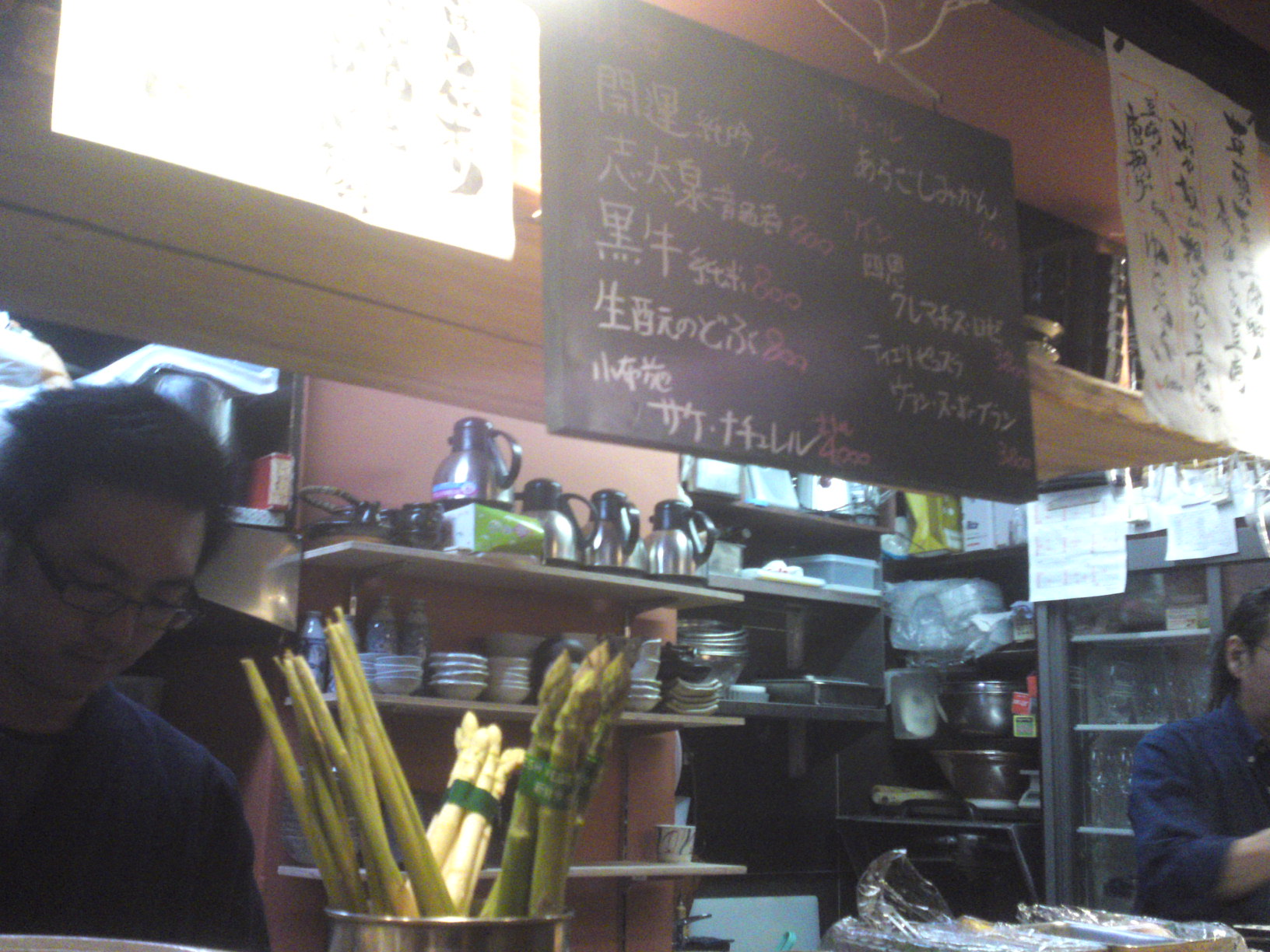
Japanese Izakaya: Kohaku in Shizuoka City!

Extravagant sashimi plate at Kohaku!

Service: Very friendly and welcoming. Great explanations.
Facilities & Equipment: Very clean and great washroom
Prices: Appropriate
Strong points: Traditional and modern izakaya gastronomy. Very inventive cuisine with introduction of some Western concepts. Great seafood. Great sake list. Wine and other alcohols available. Intensive use of local products combined with ingredients from other prefectures!

It is always an intense pleasure to discover a new izakaya even in a town where you have lived for 36 years!
My good friend, Yasushi Imaizumi, owner of IMAIZUMI Co Ltd. had been raving about Kohaku so we decided to visit the place last Friday!

Located in Shichiken-Cho Street which has recently become a “back street” with the disappearance of all the cinemas/movie theaters relocated to the 9th floor of Cenova Department Store it moved to its new address under a new name last November significantly contributing to the revival of an interesting street of Shizuoka City!

A daily hand-brushed menu posted outside is always a good sign!

Takashi Kawauguchi/川口貴士さん works there everyday at lunch and dinner with a true passion for his craft. The family is helping especially his mother, a great source of local lore, and occasionally by his sister and father. The latter surprised me when he mentioned a now defunct izakaya called “Wa no Ji” I used to patronize in the late 1970’s! I wonder if he knows some of my “secrets”!

A small but traditional entrance.
Sorry for the fuzzy picture but it was a dark rainy night!
As I will report again for lunch (they apparently serve an extravagant curry with all kinds of different toppings!) I promise to come up with a better picture!

Great calligraphy again!

The place was empty at 7:00 when we entered but we soon found out it had almost been completely reserved so be warned!
Reserve a seat the counter where you will be able to share some genial talk with the chef and the regular customers!

If you don’t read Japanese, do not worry. You will probably end up with everybody explaining everything!
Now, if you do read Japanese take your time in choosing the dishes because there is enough to tempt you coming back every week!

A traditional Japanese setting!

You will discover a great attention to details with an individual wooden tray for your plates and cups!

Plenty of drinks to choose from, especially local sake and shochu from everywhere else!
But it might be a good idea to check with the Chef first!

These top-class local Shizuoka sake were not on the menu!

Neither were these sake actually concocted by a winery in Yamanashi Prefecture!

You are in Shizuoka Prefecture looking at the richest sea in Japan, so you must order a plate of sashimi which is always bound to include a great majority of local products, some of which you will never find elsewhere unless you have very deep pockets!

The specialty of Shizuoka, fresh sakura ebi/cherry shrimps, surrounded by maguro akami/lean tuna, aji/horse mackerel and saba/mackerel!

Another rare specialty from Shizuoka, raw shirasu/hard mouth sardine whiting flanked by another famous fish of our Prefecture, katsuo, bonoto sashimi!
I know a lot of people who come all the way from Tokyo just to sample those three seafoods!

But like any izakaya worth its salt, the cooked cuisine is the main attraction at Kohaku!
Home-made liver paste! As a Frenchman, I can assure you it was a real beauty!

Now, pate and terrine spell the difference between bistros back home in France, but here in Japan home-made satsumaage/deep-fried fish and vegetable paste will tell you at once which the good izakayas are!

I will have to forget other izakayas for a while as there are just too many beauties to sample at Kohaku:
Kakuni/角煮! Dongpo pork (pork belly)!

Chef Kawaguchi takes a long time in cooking his kakuni, but he will coat it with cornstarch before frying it lightly for a last touch! You simply must sample this Chinese/Japanese true delicacy!

What with all the great sake we were drinking, there was a limit to what you could eat in a single evening. Therefore we decided to try another dish for which Kohaku is celebrated: Ox tail stew!

Now, this is real Western gastronomy served with fresh fried potato wedges!
With all that great sauce available Yasushi asked the Chef to boil some pasta on the quick, which was done on the spot. Before savoring the pasta we had poured on our plate with plenty of sauce, Takashi’s sister came to us to grate some fresh parmesan on it without being asked!
Now, I call that great attention!

To be continued, of course, what with the lunch curry!

KOHAKU/旬彩こはく

420-0085 Shizuoka Shi, Aoi Ku, Shichiken-Cho, 18-1, PIVOT Shizuoka, 1F
Tel.: 054-221-0589
Opening hours: 11:30~14:30, 17:00~23:00

RECOMMENDED RELATED WEBSITES

Green Tea Club by Satoshi Nihonyanagi in Shizuoka!, Mind Some by Tina in Taiwan, Le Manger by Camille Oger (French), The Indian Tourist, Masala Herb by Helene Dsouza in Goa, India, Mummy I Can Cook! by Shu Han in London, Pierre.Cuisine, Francescannotwrite, My White Kitchen, 47 Japanese Farms Through The Eyes of Its Rural Communities, Foodhoe, Chucks Eats, Things that Fizz & Stuff, Five Euro Food by Charles,Red Shallot Kitchen by Priscilla,With a Glass, Nami | Just One Cookbook, Peach Farm Studio, Clumsyfingers by Xethia, PepperBento,Adventures in Bento Making, American Bent, Beanbento, Bento No, Bento Wo Tsukurimashou, Cooking Cute, Eula, Hapabento , Happy Bento, Jacki’s Bento Blog, Kitchen Cow, Leggo My Obento, Le Petit Journal Bento & CO (French), Lunch In A Box,
Susan at Arkonlite, Vegan Lunch Box; Tokyo Tom Baker, Daily Food Porn/Osaka, Only Nature Food Porn, Happy Little Bento, The Herbed Kitchen, J-Mama’s Kitchen, Cook, Eat, Play, Repeat, Bento Lunch Blog (German), Adventures In Bento, Anna The Red’s Bento Factory, Cooking Cute, Timeless Gourmet, Bento Bug, Ideal Meal, Bentosaurus, Mr. Foodie (London/UK), Ohayo Bento,

Must-see tasting websites:

-Sake: Tokyo Through The Drinking Glass, Tokyo Foodcast, Urban Sake, Sake World
-Wine: Palate To Pen, Warren Bobrow, Cellar Tours, Ancient Fire Wines Blog
-Beer: Good Beer & Country Boys, Another Pint, Please!
-Japanese Pottery to enjoy your favourite drinks:

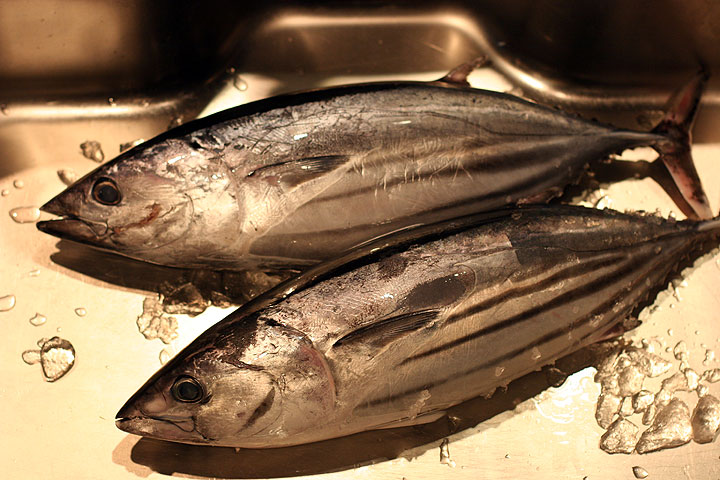
Japanese Fish Species 7: Bonito-Katuso-鰹

Bonito or “katsuo” in Japanese are extensively caught by fishermen from Numazu, Shimizu, Yaizu and Omaezaki Harbours (all Shizuoka Prefecture). The main fishing areas are Shizuoka, Mie, Kochi & Miyazaki Prefectures.
It is also called “katsu” (Tohoku Region), “Honkatsuo” (Kyushu Island), “Magatsuo” (Shikoku and Kyushu Islands. N.B.: the same name designates another fish in other parts of Japan!), “Suji” (Yamaguchi & Wakayama Pref.).
It appears on the markets early Spring~Autumn as “sho gatsuo” (first bonito in Spring) and “modori gatsuo” (return bonito end of Autumn).
They are traditionally line-caught but nets have been used extensively in recent years.
Of the same family this is the only tuna variety whose stocks are still preserved.

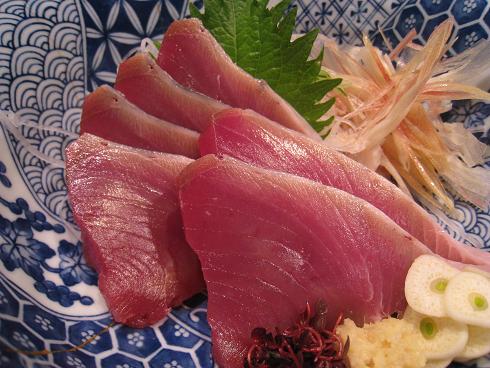
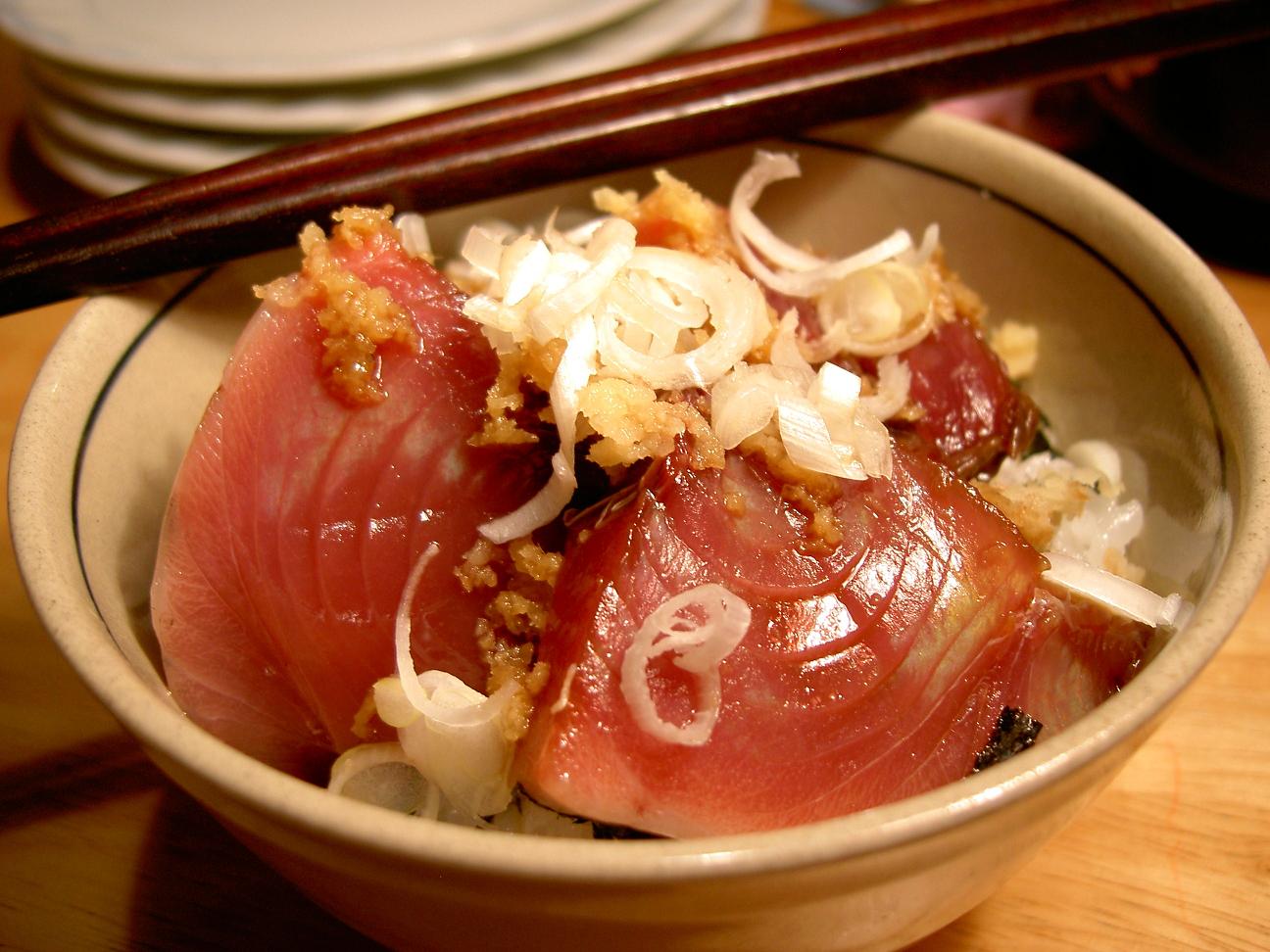
It can be appreciated raw, as sashimi with its skin or without it, preferably served with a saucer of soy sauce (shoyu) mixed with thin slices of fresh garlic, or with wasabi, a touch of lemon and shoyu,

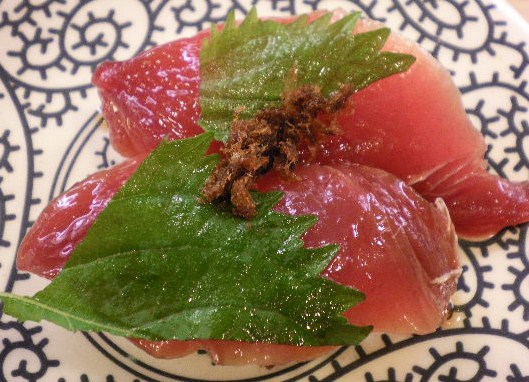
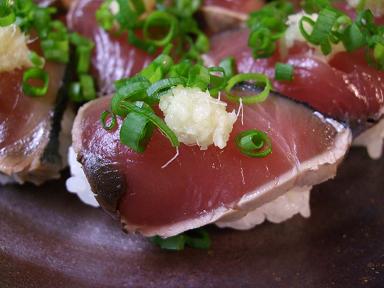
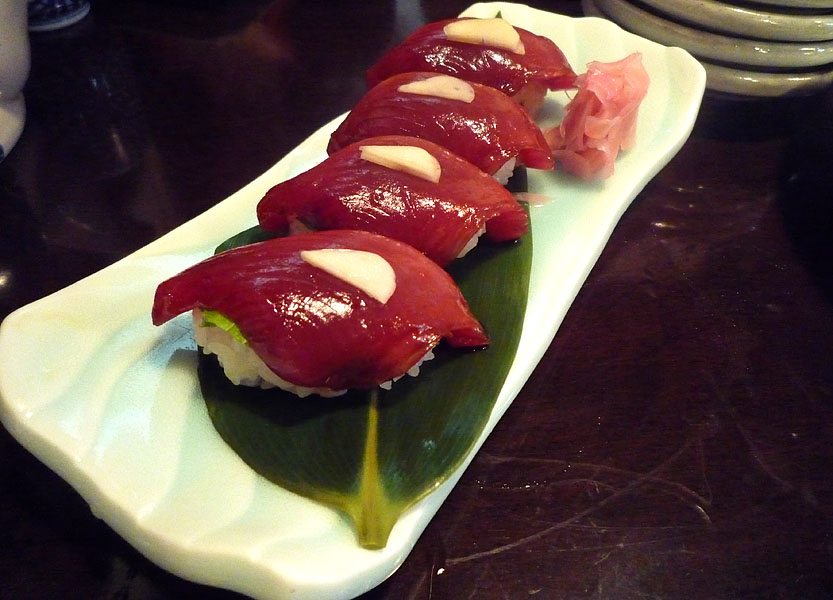
or as nigiri topped with grated fresh ginger a thin slice of garlic, unless you prefer grated fresh ginger with chopped thin leeks.

The same is done with lightly grilled/aburi (or tataki) bonito as sushi nigiri.

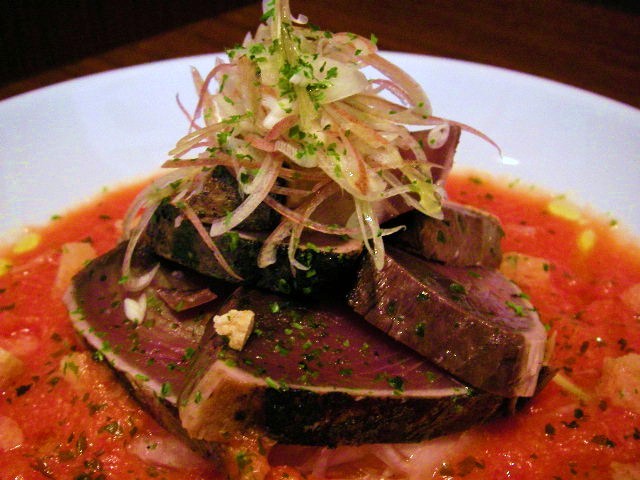
Another very popular way to eat it that will please Europeans and North Americans alike, is “tataki”.

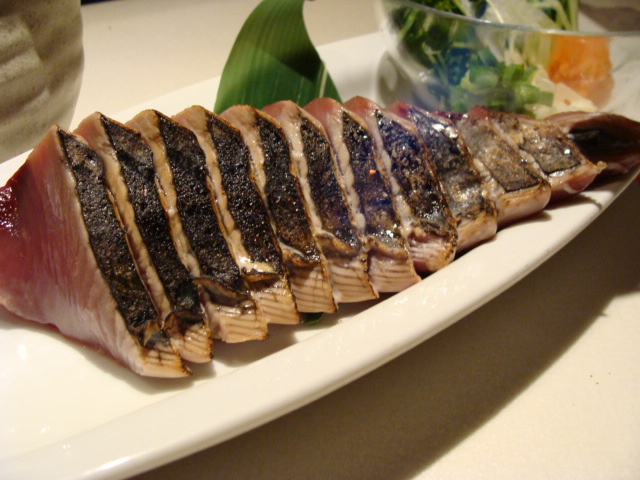
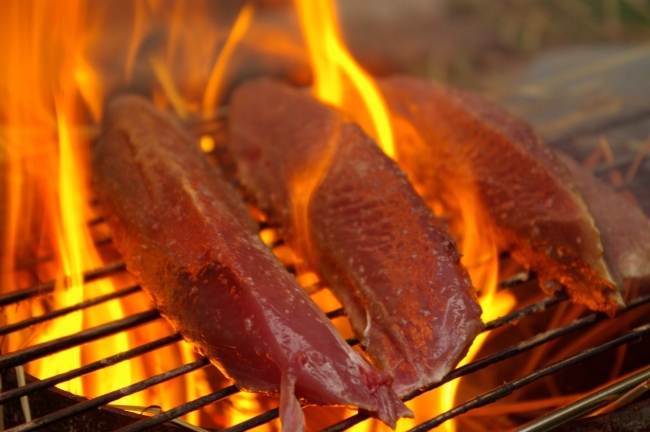
The fish is first seared/grilled over charcoal until it is lightly cooked on the whole outside then plunged into iced water to stop it from cooking any longer. It is then cut into large slices and served with freshly chopped garlic and thin leeks, “shiso” leaves (perilla/beefsteak plant) and wasabi.

Note 1: in restaurants specify whether you want the skin or not when ordering sashimi.

Note 2: the same fish is a staple food in Sri Lanka where it is first smoked and then prepared as soup or curry!

It is one of the most versatile fish in Japan.
It can be appreciated in many ways:
As a simple donburi/on a bowl or rice at home (see above picture),

Lightly seared and served as carpaccio,

as bogata sushi/whole fish stuffed with sushi rice,

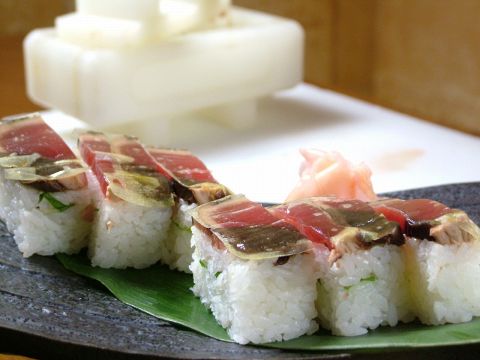
as oshizushi/pressed sushi,

but my favourite is probably as zuke/marinated in soy sauce, mirin, sake, etc. before being served with a slice of garlic!

RECOMMENDED RELATED WEBSITES

Green Tea Club by Satoshi Nihonyanagi in Shizuoka!, Mind Some by Tina in Taiwan, Le Manger by Camille Oger (French), The Indian Tourist, Masala Herb by Helene Dsouza in Goa, India, Mummy I Can Cook! by Shu Han in London, Pierre.Cuisine, Francescannotwrite, My White Kitchen, 47 Japanese Farms Through The Eyes of Its Rural Communities, Foodhoe, Chucks Eats, Things that Fizz & Stuff, Five Euro Food by Charles,Red Shallot Kitchen by Priscilla,With a Glass, Nami | Just One Cookbook, Peach Farm Studio, Clumsyfingers by Xethia, PepperBento,Adventures in Bento Making, American Bent, Beanbento, Bento No, Bento Wo Tsukurimashou, Cooking Cute, Eula, Hapabento , Happy Bento, Jacki’s Bento Blog, Kitchen Cow, Leggo My Obento, Le Petit Journal Bento & CO (French), Lunch In A Box,
Susan at Arkonlite, Vegan Lunch Box; Tokyo Tom Baker, Daily Food Porn/Osaka, Only Nature Food Porn, Happy Little Bento, The Herbed Kitchen, J-Mama’s Kitchen, Cook, Eat, Play, Repeat, Bento Lunch Blog (German), Adventures In Bento, Anna The Red’s Bento Factory, Cooking Cute, Timeless Gourmet, Bento Bug, Ideal Meal, Bentosaurus, Mr. Foodie (London/UK), Ohayo Bento,

Must-see tasting websites:

-Sake: Tokyo Through The Drinking Glass, Tokyo Foodcast, Urban Sake, Sake World
-Wine: Palate To Pen, Warren Bobrow, Cellar Tours, Ancient Fire Wines Blog
-Beer: Good Beer & Country Boys, Another Pint, Please!
-Japanese Pottery to enjoy your favourite drinks: Yellin Yakimono Gallery

Japanese Fish Species 6: Amberjack-Kampachi-環八

KAMPACHI-1

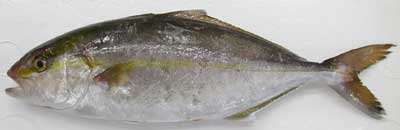
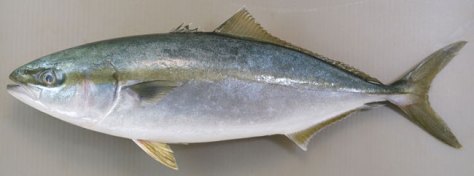
With the first days of Autumn Kampachi or Amberjack is appearing on our plates in Japan, although we have them almost all year round in Shizuoka!

The fish seems to have so many names in any language: Amberjack, Purplish Amberjack, Yellowtail, Greater Yellowtail, and Ruderfish in English, whereas in Japanese it is called Kampachi, Akahana, Kampa, or Shokko among others, not accounting for regional names!.

KAMPACHI-3

It is caught along Central and South Honshu Island, including a lot in Suruga Bay in Shizuoka Prefecture!
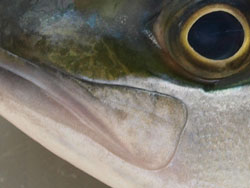
It is a very popular fish as it happens to come just in between Hiramasa/Young Japanese Amberjack-Five ray Yellowtail in Summer and Buri/Mature Japanese Amberjack-Five Ray Yellowtail in Winter, making a favourite for the season, but bringing a lot of confusion on foreign tables because of the similar names.
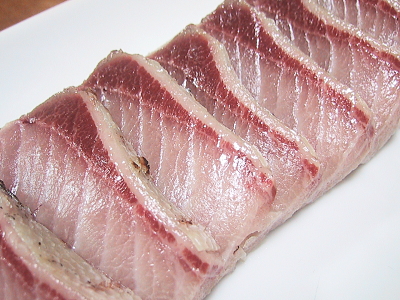
Kampachi (Seriola dumerili (Risso) in Latin) and Buri (Seriola quinqueradiata Temminck and Schlegel in Latin) are very similar but their season is different. Beware of scams! Actually the meat looks different.

KAMPACHI-2BURI-SUSHI

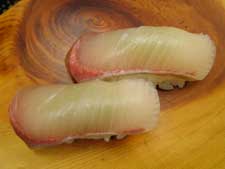
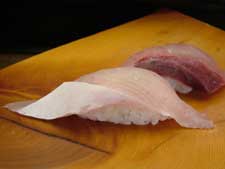
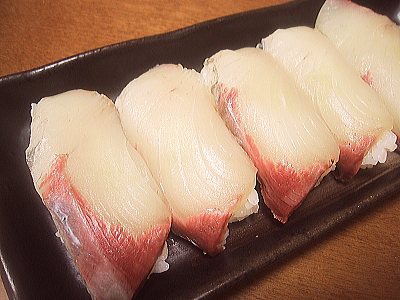
Kampachi vs Buri Sushi

Natural Kampachi is quite rare in Japan these days whereas human-raised are plenty.

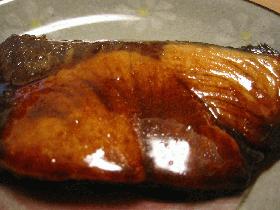
Japanese-style simmered Amberjack

Kampachi is savoured in many ways: Sashimi & Sushi, Grilled (Yakimono), Simmered (Nizuke), Meuniere and fried.
Choose comparatively small specimens. Beware of the large cheap specimens!

Ask for a variation in Sushi called “Kampachi Aburi”/kampachi lightly grilled on one side: a beauty!

RECOMMENDED RELATED WEBSITES

Green Tea Club by Satoshi Nihonyanagi in Shizuoka!, Mind Some by Tina in Taiwan, Le Manger by Camille Oger (French), The Indian Tourist, Masala Herb by Helene Dsouza in Goa, India, Mummy I Can Cook! by Shu Han in London, Pierre.Cuisine, Francescannotwrite, My White Kitchen, 47 Japanese Farms Through The Eyes of Its Rural Communities, Foodhoe, Chucks Eats, Things that Fizz & Stuff, Five Euro Food by Charles,Red Shallot Kitchen by Priscilla,With a Glass, Nami | Just One Cookbook, Peach Farm Studio, Clumsyfingers by Xethia, PepperBento,Adventures in Bento Making, American Bent, Beanbento, Bento No, Bento Wo Tsukurimashou, Cooking Cute, Eula, Hapabento , Happy Bento, Jacki’s Bento Blog, Kitchen Cow, Leggo My Obento, Le Petit Journal Bento & CO (French), Lunch In A Box,
Susan at Arkonlite, Vegan Lunch Box; Tokyo Tom Baker, Daily Food Porn/Osaka, Only Nature Food Porn, Happy Little Bento, The Herbed Kitchen, J-Mama’s Kitchen, Cook, Eat, Play, Repeat, Bento Lunch Blog (German), Adventures In Bento, Anna The Red’s Bento Factory, Cooking Cute, Timeless Gourmet, Bento Bug, Ideal Meal, Bentosaurus, Mr. Foodie (London/UK), Ohayo Bento,

Must-see tasting websites:

-Sake: Tokyo Through The Drinking Glass, Tokyo Foodcast, Urban Sake, Sake World
-Wine: Palate To Pen, Warren Bobrow, Cellar Tours, Ancient Fire Wines Blog
-Beer: Good Beer & Country Boys, Another Pint, Please!
-Japanese Pottery to enjoy your favourite drinks: Yellin Yakimono Gallery

Japan Gastronomy and Society: Own picked Straberries on Sale in Shizuoka City!

if you go to the country in Japan, especially in farming-rich areas you will discover many people selling thir own garden/field fruit or vegetables on makeshift stands.

I found this stand yesterday in the entrance of a small company building whose business is totally unrelated to farming but whose owner apparently grows his own benihoppe/Red Cheeks Strawberries.
He had put quite a lot on sale. 300 yen for at leat 500 grams of small but delicious, especilally for jams, is dead cheap!

Since “grown at home” is mentioned the company owner’s family muts be a local farming family!

A simple box is left on the stand for coins to be put inside.
Nobody was ther to look after it.
Back home in France the strawberries and the money box would have disappeared within five minutes!

No wonder Japan is such a safe and resilient country!

RECOMMENDED RELATED WEBSITES

Green Tea Club by Satoshi Nihonyanagi in Shizuoka!, Mind Some by Tina in Taiwan, Le Manger by Camille Oger (French), The Indian Tourist, Masala Herb by Helene Dsouza in Goa, India, Mummy I Can Cook! by Shu Han in London, Pierre.Cuisine, Francescannotwrite, My White Kitchen, 47 Japanese Farms Through The Eyes of Its Rural Communities, Foodhoe, Chucks Eats, Things that Fizz & Stuff, Five Euro Food by Charles,Red Shallot Kitchen by Priscilla,With a Glass, Nami | Just One Cookbook, Peach Farm Studio, Clumsyfingers by Xethia, PepperBento,Adventures in Bento Making, American Bent, Beanbento, Bento No, Bento Wo Tsukurimashou, Cooking Cute, Eula, Hapabento , Happy Bento, Jacki’s Bento Blog, Kitchen Cow, Leggo My Obento, Le Petit Journal Bento & CO (French), Lunch In A Box,
Susan at Arkonlite, Vegan Lunch Box; Tokyo Tom Baker, Daily Food Porn/Osaka, Only Nature Food Porn, Happy Little Bento, The Herbed Kitchen, J-Mama’s Kitchen, Cook, Eat, Play, Repeat, Bento Lunch Blog (German), Adventures In Bento, Anna The Red’s Bento Factory, Cooking Cute, Timeless Gourmet, Bento Bug, Ideal Meal, Bentosaurus, Mr. Foodie (London/UK), Ohayo Bento,

Must-see tasting websites:

-Sake: Tokyo Through The Drinking Glass, Tokyo Foodcast, Urban Sake, Sake World
-Wine: Palate To Pen, Warren Bobrow, Cellar Tours, Ancient Fire Wines Blog
-Beer: Good Beer & Country Boys, Another Pint, Please!
-Japanese Pottery to enjoy your favourite drinks: Yellin Yakimono Gallery

Japanese Fish Species 5: Stone Flounder-Ishigarei-石鰈

Ishigarei, イシガレイ、石鰈 in Japanese, is another popular flatfish/flounder in this country. For the specialists the Englidh name is Stone flounder, and its Latin name Kareus bicoloratus. Interestingly enough these fishes are commonly called flatfishes in English, wheeras the Jaapnese write them as “leaf Fishes”!

In Japan, depending upon the region it will be called other names, such as Ishimochi, Ishimochigarei or Shirogarei.
Their season is mainly in Summer in Hokkaido and Eastern Japan, although they might appear a lot earlier in Shizuoka.

Ishigarei is considered the best of all flounders in this country. People generally avoid to catch them during the female egg incubation, but the same egg-bearing fish are a delicacy in Tokyo.

Always choose “lively” specimens when buying them as the taste will soon deteriorate if the fish is not dressed quickly first.
If an angler-friend of yours calls on the phone with one of them, don’t discuus and buy the fish!

Stone flounders make for such superlative sashimi that it becomes a bit of a waste to consume it in another way.

But who would pass such a Japanese-style carpaccio?

Or an Italian Carpaccio?

Sushi lovers will appreciate it as a sushi nigiri!

A truly extravagant sushi nigiri display. Eat it quickly!

Alright, you were not lucky enough to get it absolutely fresh.
In this case simmer it the Japanese way as Ishigarei Ni (Ni stands for simmer) with soy sauce, sake, mirin and ginger!

Or do it the Italian way with olive oil and dry tomatoes!

RECOMMENDED RELATED WEBSITES

Green Tea Club by Satoshi Nihonyanagi in Shizuoka!, Mind Some by Tina in Taiwan, Le Manger by Camille Oger (French), The Indian Tourist, Masala Herb by Helene Dsouza in Goa, India, Mummy I Can Cook! by Shu Han in London, Pierre.Cuisine, Francescannotwrite, My White Kitchen, 47 Japanese Farms Through The Eyes of Its Rural Communities, Foodhoe, Chucks Eats, Things that Fizz & Stuff, Five Euro Food by Charles,Red Shallot Kitchen by Priscilla,With a Glass, Nami | Just One Cookbook, Peach Farm Studio, Clumsyfingers by Xethia, PepperBento,Adventures in Bento Making, American Bent, Beanbento, Bento No, Bento Wo Tsukurimashou, Cooking Cute, Eula, Hapabento , Happy Bento, Jacki’s Bento Blog, Kitchen Cow, Leggo My Obento, Le Petit Journal Bento & CO (French), Lunch In A Box,
Susan at Arkonlite, Vegan Lunch Box; Tokyo Tom Baker, Daily Food Porn/Osaka, Only Nature Food Porn, Happy Little Bento, The Herbed Kitchen, J-Mama’s Kitchen, Cook, Eat, Play, Repeat, Bento Lunch Blog (German), Adventures In Bento, Anna The Red’s Bento Factory, Cooking Cute, Timeless Gourmet, Bento Bug, Ideal Meal, Bentosaurus, Mr. Foodie (London/UK), Ohayo Bento,

Must-see tasting websites:

-Sake: Tokyo Through The Drinking Glass, Tokyo Foodcast, Urban Sake, Sake World
-Wine: Palate To Pen, Warren Bobrow, Cellar Tours, Ancient Fire Wines Blog
-Beer: Good Beer & Country Boys, Another Pint, Please!
-Japanese Pottery to enjoy your favourite drinks: Yellin Yakimono Gallery
French Recipe: Okabe Venison Bourgogne Wine Stew and Penne!

My plate!

What with wild deer making themselves a real nuisance in Shizuoka Prefecture (and almost all over Japan) succulent meat is readily avalaible if you know when, where and whom to ask!
The other day my good friend Yasushi Imaizumi/今泉康さん, owner of IMAIZUMI Fashion Company and a well-known local gastronome, gave me a good 2 kg of venison from a deer that had been culled by licensed hunters in Okabe, Fuijeda City!

Being a native of Bourgogne, France, I knew the simple way to prepare it: Wine Stew/Bourguignon as for beef!
Although the meat was basically rump whereas meat on the bone would have been more proper, I still cooked it in the above manner.
This was a source of a bone of contention with the Dragon as I was for the analog recipe whereas she cooks such dishes through pressure cooking (autocuiseur/圧力鍋 !
If you are for the pressure cooker, the process is the same though the cooking will take only a few minutes but you still will need to strain and reduce the sauce.
Now, i did it the long ang and traditonal way:
-I cut the meat (about 2~3kg of it) into large chunks and marinated them overnight with a cup of whisky (you can try cognac or even vodka!), a bit of salt, plenty of pepper, bay leaves, a little sage and plenty of thyme powder (whole would have been best!).
-The next day, I took the meat out of its marinade and drained it. Some people wipe the marinade off but I don’t. The beauty of the Bourguignonne recipe is that it is wide open to priorities!
I didn’t discard the marinade!
-I cut a large carrot into big chunks, peeled a whole garlic and separated the cloves. I did not cut the latter. I peeled a large hard fresh onion. Some people would cut the onion into quarters but I wanted to keep it for the dish whereas quartered onion would have almost melted.
-I first fried cubes of baco in a little olive oil in a learge pan.
-I then fried the venison (with the bacon) all over in plenty more olive oil over a hot fire. Once the meat had completely changed color I dropped the carrot in, added some flour and cooked until the flour became a foxy color.
-I then reduced the fire to very low. I added the garlic, some tomato ketchup, the whole marinade and 2 thirds of a bottle of strong red wine (it was Italian as I didn’t have a French one!). People in Corsica also add a good portion of fresh home-made pistou/pesto, bvut I didn’t have the time or will to prepare it although I love it.
-I mixed the whole roughly and placed the onion in the middle punctured with a couple of whole cloves, put the lid on and cooked the whole on a very little fire for over 2 hours.
=I then took the venison, bacon and onion carefully out and drained the sauce.
I discarded the vegetables and reduced the sauce to a good half.
While it was reducing I cut the venison into single-bite chunks.
Once the sauce had been properly reduced I asted it and seasoned a little more and I put the venison and bacon back into the sauce and cooked it on a low fire while I was preparing some penne in plenty of salted water in which I had poured some olive oil.
I dropped the penne inside two large plates, placed plenty of venison in the middle, poure enough sauce (there was olenty left for the next two days!). On top of it all I placed the hot and (only then!) quartered onion for better effect and enjoyment. I put a finaltouch by sprinkling plenty of chopped fresh parsley all over it.

Pretty simple and open to variations!

The Dragon’s plate!

RECOMMENDED RELATED WEBSITES

Green Tea Club by Satoshi Nihonyanagi in Shizuoka!, Mind Some by Tina in Taiwan, Le Manger by Camille Oger (French), The Indian Tourist, Masala Herb by Helene Dsouza in Goa, India, Mummy I Can Cook! by Shu Han in London, Pierre.Cuisine, Francescannotwrite, My White Kitchen, 47 Japanese Farms Through The Eyes of Its Rural Communities, Foodhoe, Chucks Eats, Things that Fizz & Stuff, Five Euro Food by Charles,Red Shallot Kitchen by Priscilla,With a Glass, Nami | Just One Cookbook, Peach Farm Studio, Clumsyfingers by Xethia, PepperBento,Adventures in Bento Making, American Bent, Beanbento, Bento No, Bento Wo Tsukurimashou, Cooking Cute, Eula, Hapabento , Happy Bento, Jacki’s Bento Blog, Kitchen Cow, Leggo My Obento, Le Petit Journal Bento & CO (French), Lunch In A Box,
Susan at Arkonlite, Vegan Lunch Box; Tokyo Tom Baker, Daily Food Porn/Osaka, Only Nature Food Porn, Happy Little Bento, The Herbed Kitchen, J-Mama’s Kitchen, Cook, Eat, Play, Repeat, Bento Lunch Blog (German), Adventures In Bento, Anna The Red’s Bento Factory, Cooking Cute, Timeless Gourmet, Bento Bug, Ideal Meal, Bentosaurus, Mr. Foodie (London/UK), Ohayo Bento,

Must-see tasting websites:

-Sake: Tokyo Through The Drinking Glass, Tokyo Foodcast, Urban Sake, Sake World
-Wine: Palate To Pen, Warren Bobrow, Cellar Tours, Ancient Fire Wines Blog
-Beer: Good Beer & Country Boys, Another Pint, Please!
-Japanese Pottery to enjoy your favourite drinks: Yellin Yakimono Gallery
Japanese Fish Species 4: Sole-Olive Flounder-Bastard Halibut-Tonguefish-Hirame-平目

Hirame/平目

“Hirame” could be translated in many ways depending of your country of origin: Flat Fish, Sole, Turbot (although the latter should define “karei”) and what else. There are many varieties, wild or human-raised. In Japanese, the names are numerous: Hirame, Shitabirame, Ooguchikarei, Oyanirami, etc.

Actually, they can be divided into two main groups:

1)The Olive flounder or Bastard halibut (Paralichthys olivaceus; Japanese: ヒラメ/平目) is a species of large-tooth flounder native to the north-western Pacific Ocean.
It is often referred to as the Japanese flatfish or Korea(n) flatfish (광어) when mentioned in the context of those countries.
It is the most common flatfish species raised in aquaculture in Korea. They are raised in Japan and China as well.

Shitabirame/舌平目

2) Tonguefishes (shitabirame/舌平目in Japanese) are a family, Cynoglossidae, of flatfishes. They are distinguished by the presence of a long hook on the snout overhanging the mouth, and the absence of pectoral fins. Their eyes are both on the left side of their body, which also lacks a pelvic fin.

The best season is Autumn to Winter. They are still available until Spring in Shizuoka Prefecture. Wild ones come from Hokkaido and Aomori. Human-raised ones mainly hail from Oita, Ehime, Mie, and Kagoshima Prefectures.

Hirame Sashimi

The domestic wild catch is around 7,600 tonnes a year, while farmed fish amounts to around 7,100 tonnes a year. A recent increase has been observed in recent years, though. A lot are imported from Korea through Fukuoka and Shimoseki.
They are found in tropical and subtropical oceans, mainly in shallow waters and estuaries, though a few species are found in deep sea floors, and a few in rivers.

Hirame can be enjoyed in many ways:
As sashimi, cut in various thickness, according to the chef’s preference and presented artfully.

It can be enjoyed cut in small dices, as tartare, especially shitabirame/tonguefish with tomato and strawberry!

Of course, hiirame is great as sushi nigiri with all kinds of seasoning. I prefer it just seasoned with a little lemon juice or yuzu (if available) and salt (preferably “snow salt” from Okinawa!

The Japanese have a fondness for “engawa”, that is the frilled border along the fillets which are usually thrown away in other countries. The texture is different, almost crunchy.

Hirame is great marinated with konbu/seaweed as konbujime/seaweed marinated.

The same konbujime hirame can be served as oshizushi/pressed sushi topped with more seaweed!

An interesting oshizusshi combination is hirame topped with kabu/turnip and seasoned with yuzu juice and zest!

It is also very popular dried as himono/干物, especially shitabirame/tonguefish.

Naturally the Japanese all kinds of hirame cooked in the French way in a simple and succulent manner as above,

or as a beautiful gratin!

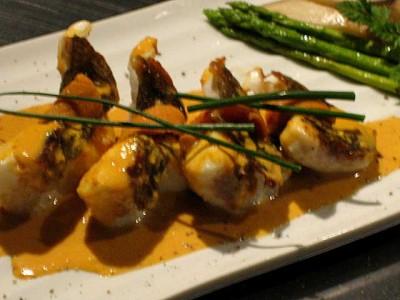
Last, but not least, how about grilled hirame with uni/sea urchin sauce?

RECOMMENDED RELATED WEBSITES

Green Tea Club by Satoshi Nihonyanagi in Shizuoka!, Mind Some by Tina in Taiwan, Le Manger by Camille Oger (French), The Indian Tourist, Masala Herb by Helene Dsouza in Goa, India, Mummy I Can Cook! by Shu Han in London, Pierre.Cuisine, Francescannotwrite, My White Kitchen, 47 Japanese Farms Through The Eyes of Its Rural Communities, Foodhoe, Chucks Eats, Things that Fizz & Stuff, Five Euro Food by Charles,Red Shallot Kitchen by Priscilla,With a Glass, Nami | Just One Cookbook, Peach Farm Studio, Clumsyfingers by Xethia, PepperBento,Adventures in Bento Making, American Bent, Beanbento, Bento No, Bento Wo Tsukurimashou, Cooking Cute, Eula, Hapabento , Happy Bento, Jacki’s Bento Blog, Kitchen Cow, Leggo My Obento, Le Petit Journal Bento & CO (French), Lunch In A Box,
Susan at Arkonlite, Vegan Lunch Box; Tokyo Tom Baker, Daily Food Porn/Osaka, Only Nature Food Porn, Happy Little Bento, The Herbed Kitchen, J-Mama’s Kitchen, Cook, Eat, Play, Repeat, Bento Lunch Blog (German), Adventures In Bento, Anna The Red’s Bento Factory, Cooking Cute, Timeless Gourmet, Bento Bug, Ideal Meal, Bentosaurus, Mr. Foodie (London/UK), Ohayo Bento,

Must-see tasting websites:

-Sake: Tokyo Through The Drinking Glass, Tokyo Foodcast, Urban Sake, Sake World
-Wine: Palate To Pen, Warren Bobrow, Cellar Tours, Ancient Fire Wines Blog
-Beer: Good Beer & Country Boys, Another Pint, Please!
-Japanese Pottery to enjoy your favourite drinks: Yellin Yakimono Gallery
Shizuoka Sake Tasting: Takashima Brewery-Hakuin Masamune-Junmai Daiginjyo Yamahai

Yamahai is a traditional way of making sake which leaves a lot to nature.
It is difficult to master and most breweries avoid even mentioning the name!

But Takashima Brewery in Numazu City are extremely proud of their Yamahai and do not hesitate to advertise it clearly for all to see on their labels!

And making a top-premium Junmai Daiginjyo out of a Yamahai is not only extravagant, it is also a true tour de force!
One ought to enjoy such nectar slowly out of an high quality earthenware sake cup!

Takashima Brewery-Hakuin Masamune-Junmai Daiginjyo Yamahai-Genshu

Rice: Komachi
Milled down to: 45%
Alcohol: 16~17 degrees (genshu/no pure water added)
Yeast: Shizuoka NEW-5
Dryness: + 4
Acidity: 1.5
Bottled in February 2012

Clarity: Very clear
Color: Faint golden hue
Aroma: Assertive and fruity. Bananas, oranges
Body: Fluid and a little liquorish
Taste: Fruity attack, sweetish at first but turning quickly dry.
Strong junmai petillant.
Banana backed by dark chocolate and sweet nuts with a late appearance from oranges.
Lingers for a while warming the back of the palate and throat.
Complex. Dark chocolate asserting itself with the second sip with further attack from junmai petillant and dry almonds.
So pleasant and easy to drink.
Gets drier with food with very strong junmai petillant and oranges.

Comment: A discovery!
To turn a Yamahai in such a superlative sake is simply a mark of the extraordinary skills of Takashima Brewery!
Can be indifferently enjoyed on its own or with food, a feat not easily done with Junmai Daiginjyo!
Will definitely rate as one of best 5 sakes drunk in 2012 even by April!

RECOMMENDED RELATED WEBSITES

Green Tea Club by Satoshi Nihonyanagi in Shizuoka!, Mind Some by Tina in Taiwan, Le Manger by Camille Oger (French), The Indian Tourist, Masala Herb by Helene Dsouza in Goa, India, Mummy I Can Cook! by Shu Han in London, Pierre.Cuisine, Francescannotwrite, My White Kitchen, 47 Japanese Farms Through The Eyes of Its Rural Communities, Foodhoe, Chucks Eats, Things that Fizz & Stuff, Five Euro Food by Charles,Red Shallot Kitchen by Priscilla,With a Glass, Nami | Just One Cookbook, Peach Farm Studio, Clumsyfingers by Xethia, PepperBento,Adventures in Bento Making, American Bent, Beanbento, Bento No, Bento Wo Tsukurimashou, Cooking Cute, Eula, Hapabento , Happy Bento, Jacki’s Bento Blog, Kitchen Cow, Leggo My Obento, Le Petit Journal Bento & CO (French), Lunch In A Box,
Susan at Arkonlite, Vegan Lunch Box; Tokyo Tom Baker, Daily Food Porn/Osaka, Only Nature Food Porn, Happy Little Bento, The Herbed Kitchen, J-Mama’s Kitchen, Cook, Eat, Play, Repeat, Bento Lunch Blog (German), Adventures In Bento, Anna The Red’s Bento Factory, Cooking Cute, Timeless Gourmet, Bento Bug, Ideal Meal, Bentosaurus, Mr. Foodie (London/UK), Ohayo Bento,

Must-see tasting websites:

-Sake: Tokyo Through The Drinking Glass, Tokyo Foodcast, Urban Sake, Sake World
-Wine: Palate To Pen, Warren Bobrow, Cellar Tours, Ancient Fire Wines Blog
-Beer: Good Beer & Country Boys, Another Pint, Please!
-Japanese Pottery to enjoy your favourite drinks: Yellin Yakimono Gallery

Japanese Fish Species 3: Yellowtail-Buri-鰤

BURI-1

Buri/鰤 or Yellowtail, as Hiramasa or young Yellowtail is caught in Summer and Buri/Mature Yellowtail is caught in Winter.

How do you recognize them apart?

BURI-AGO
Buri has a “square chin” as they say in Japanese. Look at the back extremity of the mouth,

BURI-HIRAMASA-AGO
whereas it is more rounded for the hiramasa.

In Japan they are caught south of Hokkaido Island.
They come under many names: Wakashi, Inada, Warasa, Wakana, Hamachi and Mejiro.

Buri/Yellowyail is most popular when caught in rising waters in Winter when called Kan Buri/寒鰤 or “Cold Yellowtail”.

BURI-SASHIMI

Buri sashimi after light grill/Aburi/炙り

Young Yellowtails are best eaten as sahimi or

BURI-SUSHI-2

Buri Sushi

or as sushi as they are leaner then.

Older buri, containing a lot of fat, are better eaten cooked as

BURI-TERIYAKI

Buri Teriyaki,

BURI-ARA

Buri Ara with the whole head, or

BURI-MOPPONZU

Buri Mopponzu, including innards, especially liver and heart.

In the West of Japan, a New Year Meal cannot be conceived without buri!

Natural Buri catch accounts for 70,000~80,000 tonnes, while human-raised buri accounts for over 130,000 tonnes every year.
Imported buri accounts for less than 3,000 tonnes.

RECOMMENDED RELATED WEBSITES

Green Tea Club by Satoshi Nihonyanagi in Shizuoka!, Mind Some by Tina in Taiwan, Le Manger by Camille Oger (French), The Indian Tourist, Masala Herb by Helene Dsouza in Goa, India, Mummy I Can Cook! by Shu Han in London, Pierre.Cuisine, Francescannotwrite, My White Kitchen, 47 Japanese Farms Through The Eyes of Its Rural Communities, Foodhoe, Chucks Eats, Things that Fizz & Stuff, Five Euro Food by Charles,Red Shallot Kitchen by Priscilla,With a Glass, Nami | Just One Cookbook, Peach Farm Studio, Clumsyfingers by Xethia, PepperBento,Adventures in Bento Making, American Bent, Beanbento, Bento No, Bento Wo Tsukurimashou, Cooking Cute, Eula, Hapabento , Happy Bento, Jacki’s Bento Blog, Kitchen Cow, Leggo My Obento, Le Petit Journal Bento & CO (French), Lunch In A Box,
Susan at Arkonlite, Vegan Lunch Box; Tokyo Tom Baker, Daily Food Porn/Osaka, Only Nature Food Porn, Happy Little Bento, The Herbed Kitchen, J-Mama’s Kitchen, Cook, Eat, Play, Repeat, Bento Lunch Blog (German), Adventures In Bento, Anna The Red’s Bento Factory, Cooking Cute, Timeless Gourmet, Bento Bug, Ideal Meal, Bentosaurus, Mr. Foodie (London/UK), Ohayo Bento,

Must-see tasting websites:

-Sake: Tokyo Through The Drinking Glass, Tokyo Foodcast, Urban Sake, Sake World
-Wine: Palate To Pen, Warren Bobrow, Cellar Tours, Ancient Fire Wines Blog
-Beer: Good Beer & Country Boys, Another Pint, Please!
-Japanese Pottery to enjoy your favourite drinks: Yellin Yakimono Gallery

Today’s Bento/Lunch Box (12/17): Wasabi Musubi and Kabocha Mimosa Egg Bento!

Some of my work brings me in close contact with local farmers and it certainly has its perks as you will discover in this particular bento!

First, the “wasabi musubi”!
But before explaining that particular bit let me say that the “decoration” consists of chikuwa/steamed fish paste roll, a variety of kamaboko you can buy anywhere and that the Missus filled with fresh cucumber and boiled broccoli flowers.

The wasabi leaves and stems were given to me by Mr. Mochizuki who cultivates wasabi in Utogi, its birthplace!
The Missus pickled them separately, with konbu seaweed added to the leaves.
She made musubi balls with freshly steamed rice mixed with pickled wasabi stems and enveloped them in pickled wasabi leaves!
I very much doubt you can do that outside Shizuoka Prefecture!

The side box contained two more products I obtained from local farmers!

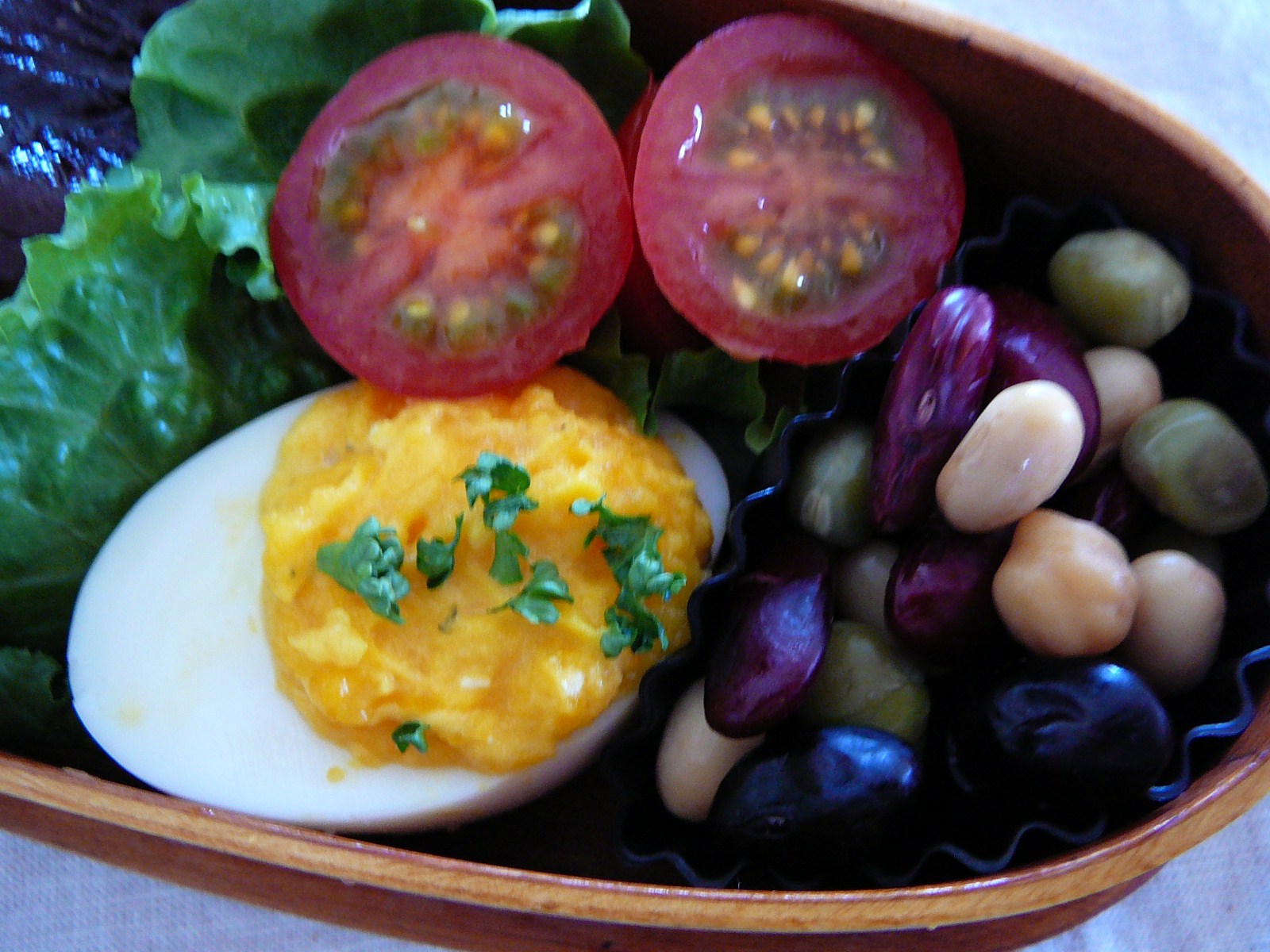
The egg mimosa was made by mixing the boiled egg yolk with boiled kabocha from Mr. Oda’s Farm in Yaizu City!
The Missus added some mini tomatoes, salad beans and lettuce to complete the salad!

The Missus then introduced ton toro pork/very soft pork she cooked together with fresh shiitake grown organically by Mr. Nanjyo in Do, near Utogi. She used the recipe for tebasaki adding coca cola and chili pepper for a very zippy concoction! I know more but the Missus said this was how far I could reveal her secrets!

A very unusual and tasty bento!

RECOMMENDED RELATED WEBSITES

Green Tea Club by Satoshi Nihonyanagi in Shizuoka!, Mind Some by Tina in Taiwan, Le Manger by Camille Oger (French), The Indian Tourist, Masala Herb by Helene Dsouza in Goa, India, Mummy I Can Cook! by Shu Han in London, Pierre.Cuisine, Francescannotwrite, My White Kitchen, 47 Japanese Farms Through The Eyes of Its Rural Communities, Foodhoe, Chucks Eats, Things that Fizz & Stuff, Five Euro Food by Charles,Red Shallot Kitchen by Priscilla,With a Glass, Nami | Just One Cookbook, Peach Farm Studio, Clumsyfingers by Xethia, PepperBento,Adventures in Bento Making, American Bent, Beanbento, Bento No, Bento Wo Tsukurimashou, Cooking Cute, Eula, Hapabento , Happy Bento, Jacki’s Bento Blog, Kitchen Cow, Leggo My Obento, Le Petit Journal Bento & CO (French), Lunch In A Box,
Susan at Arkonlite, Vegan Lunch Box; Tokyo Tom Baker, Daily Food Porn/Osaka, Only Nature Food Porn, Happy Little Bento, The Herbed Kitchen, J-Mama’s Kitchen, Cook, Eat, Play, Repeat, Bento Lunch Blog (German), Adventures In Bento, Anna The Red’s Bento Factory, Cooking Cute, Timeless Gourmet, Bento Bug, Ideal Meal, Bentosaurus, Mr. Foodie (London/UK), Ohayo Bento,

Must-see tasting websites:

-Sake: Tokyo Through The Drinking Glass, Tokyo Foodcast, Urban Sake, Sake World
-Wine: Palate To Pen, Warren Bobrow, Cellar Tours, Ancient Fire Wines Blog
-Beer: Good Beer & Country Boys, Another Pint, Please!
-Japanese Pottery to enjoy your favourite drinks: Yellin Yakimono Gallery

Japanese Fish Species 2: Mullet-Bora-鯔

There are at least 12 recognized kinds of mullet being caught all over the world.
The flathead mullet in particular is an important food fish for many around the world, and can be both fished and farmed. The roe of this mullet is salted, dried, and compressed to make a specialty food across the world, such as Korean myeongran jeot, Japanese karasumi, Italian botargo, and Egyptian batarekh . In Egypt, the fish itself is salted, dried, and pickled to make feseekh.

Flathead Mullet, Mugil Cephalus in Latin, or Bora/鯔/鰡 in Japanese, will reach length of over 80 cm in Japan, although the average length will more around 50 cm.

It is caught south of Hokkaido near river mouths or in bays receiving lots of river waters.
Like any othe fish, it will be called other names depending upon the region: Isegoi (Western Japan), Itanebora (Ehime Prefecture), Mabora (Hiroshima Prefecture), Tsukura (Okinawa), Kuchime, Mejiro, Hebuna, Haku, Makuchi, Kurome, or Merome.

It is a versatile fish:

Served raw as sashimi in Japanese Cuisine or,

as carpaccio in Italian style.

It is more unusual as sushi nigiri (front two) and will probably be found as such only locally.

To answer a query from a friend, it is more encountered cooked:
Deep-fried and served with a soy-based sauce is common to many asian countries.

Deep-fried before being served with a sweet and sour sauce,

or the same again with tofu is popular in Taiwan (and in Japan!).

First steamed and then served with a sauce made with sweet pickled plum and miso is supposed to be of Chinese origin, but can be found again in many Asians countries.

But for all these recipes, the most valuable (and very expensive at that!) is the roe of the female mullets!

It is served as it is, extravagantly in Japanese or Italian cuisine sashimi or carpaccio.

The combinations are infinite!

An extravagant salad of Japanese and Italian inspiration!

Grated over an extravagant pasta dish!

RECOMMENDED RELATED WEBSITES

Green Tea Club by Satoshi Nihonyanagi in Shizuoka!, Mind Some by Tina in Taiwan, Le Manger by Camille Oger (French), The Indian Tourist, Masala Herb by Helene Dsouza in Goa, India, Mummy I Can Cook! by Shu Han in London, Pierre.Cuisine, Francescannotwrite, My White Kitchen, 47 Japanese Farms Through The Eyes of Its Rural Communities, Foodhoe, Chucks Eats, Things that Fizz & Stuff, Five Euro Food by Charles,Red Shallot Kitchen by Priscilla,With a Glass, Nami | Just One Cookbook, Peach Farm Studio, Clumsyfingers by Xethia, PepperBento,Adventures in Bento Making, American Bent, Beanbento, Bento No, Bento Wo Tsukurimashou, Cooking Cute, Eula, Hapabento , Happy Bento, Jacki’s Bento Blog, Kitchen Cow, Leggo My Obento, Le Petit Journal Bento & CO (French), Lunch In A Box,
Susan at Arkonlite, Vegan Lunch Box; Tokyo Tom Baker, Daily Food Porn/Osaka, Only Nature Food Porn, Happy Little Bento, The Herbed Kitchen, J-Mama’s Kitchen, Cook, Eat, Play, Repeat, Bento Lunch Blog (German), Adventures In Bento, Anna The Red’s Bento Factory, Cooking Cute, Timeless Gourmet, Bento Bug, Ideal Meal, Bentosaurus, Mr. Foodie (London/UK), Ohayo Bento,

Must-see tasting websites:

-Sake: Tokyo Through The Drinking Glass, Tokyo Foodcast, Urban Sake, Sake World
-Wine: Palate To Pen, Warren Bobrow, Cellar Tours, Ancient Fire Wines Blog
-Beer: Good Beer & Country Boys, Another Pint, Please!
-Japanese Pottery to enjoy your favourite drinks: Yellin Yakimono Gallery

Fuji Okamura Ranch in Fujinomiya City.Fuji. Beef by Chiyoji Okamura!

Ever solid Chiyoji Okamura!

Last Friday after our superb lunch at Restaurant Bio-S, the owner Kazuhiro Matsuki/松木一浩 kindly drove me and my journalists friends, Camille Oger and Julien Morelo, through forests at the foot of Mount Fuji to Okamura Ranch.
Okamura Ranch is one of the three beef producers established at the foot of Mount Fuji (there are 13 in all the Prefecture).

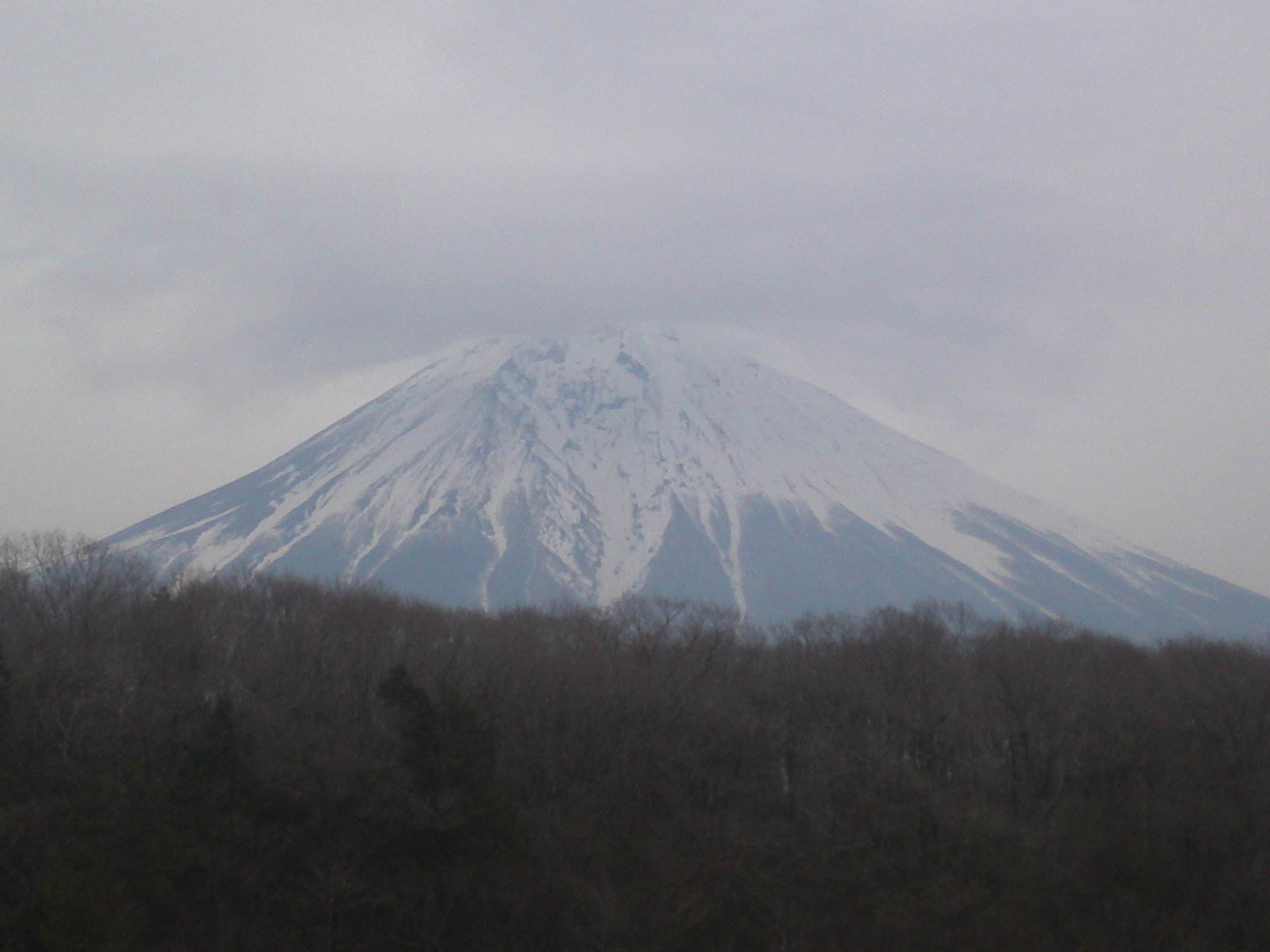
View of Mount Fuji from Okamura Ranch!

Chiyoji Okamura/岡村千代次さん was born in Shiga Prefecture in 1955.
The fifth child of a large family there was little left for him back home.
Having graduated from Tokyo Agricultural University in 1978 he tried his hand at agriculture before coming to Fujinomiya City in 1990 to establish a beef producing ranch with 30 heads of cattle. He is now looking after 300+ heads throughout a year.

The meadows reserved to pregnant cows.

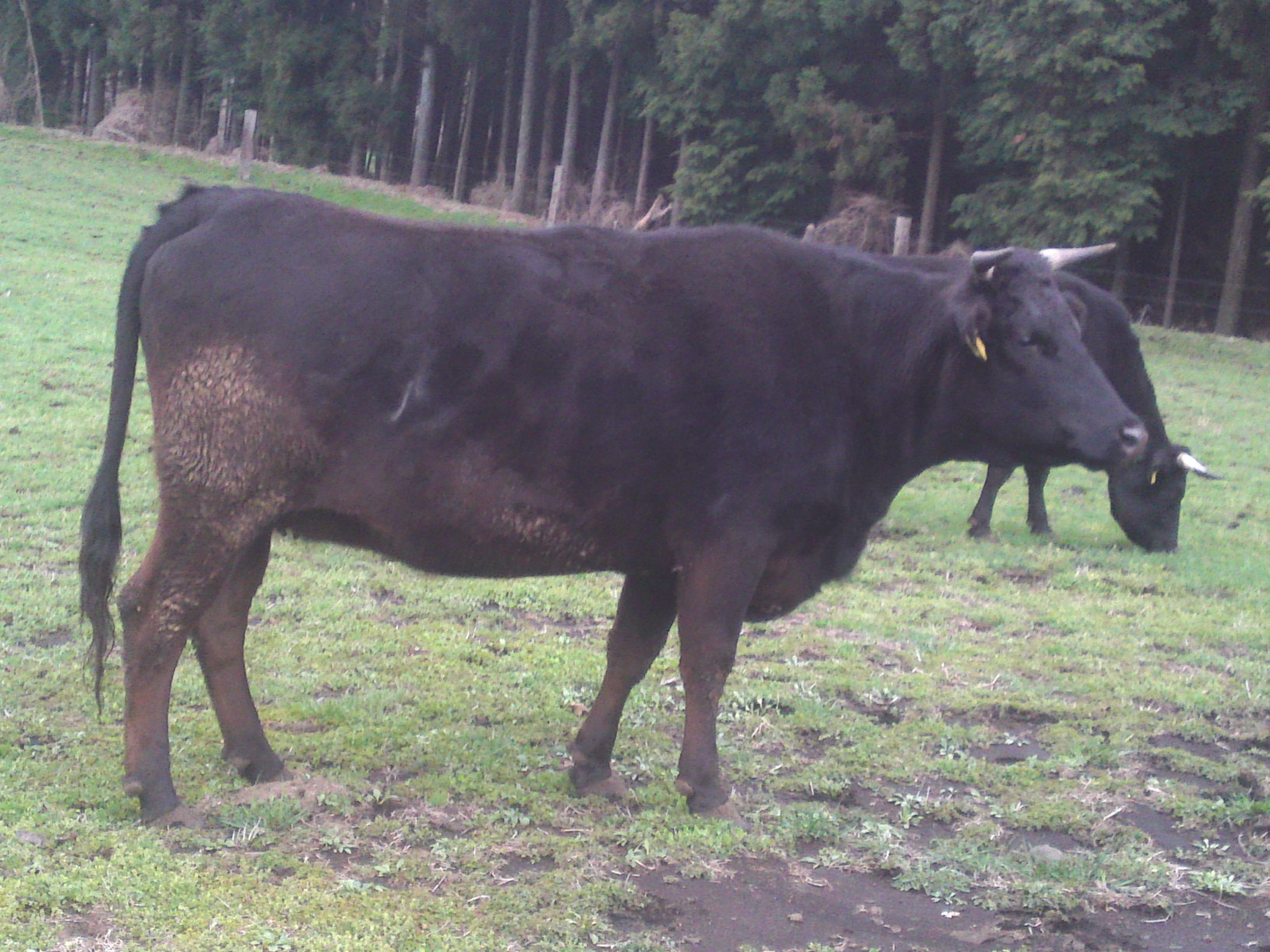
He basically breeds his own cows (there is not a single bull on the premises) from 2-months old calves bought from a calf breeder or breeds his own calves after having artificially inseminated his cows.
If a male is born he is castrated while females will be later inseminated.

Very healthy but a bit shy pregnant cows.

The cows are culled for meat after 24 months, a short time compared to meat cattle in Europe.
The abattoirs are located so far from the ranch that the cows never realize their fate and feel very little stress.
Interestingly enough, Mr. Okamura does not produce calves for meat.

A smiling cow!

The beef breed in Okamura Ranch is originally a hybrid of meat-producing cattle and milk-producing cattle.
The BSE problem a few years ago convinced him that the traceability of his meat was of the utmost importance.
He will always meet personally his clients, be they traders or restaurants, before he agrees to sell his meat to them.

In spite of the daily care (no holidays there) vital for the good health of his cows, Mr. Okamura and his wife seem happy enough to spend all their time on the ranch and in their enormous (by Japanese standards) house where they regularly hold bbq’s. After all the two of them look after the cows and have to assume all the roles of cattle farmers and veterinarians!

The cow sheds and the farm were all rebuilt in 2003 and Mr. Okamura’s Fujisan Beef was officially recogniszed as an independent beef brand by the Shizuoka Prefecture Ministry of Agriculture and Forestry in 2006!

Each calf lives in its own shed for maximum comfort and well-being.

The sheds are a model of cleanliness!
What with Mount Fuji and the surrounding nature, there is no pollution and the water and natural grass are of superlative quality.
As for fodder Mr. Okamura imports it all from America through a very strictly regulated route.
The used straw and droppings are recycled as natural fertilizer for neighboring farmers.

All these animals need a lot of feed, mainly consisting of cereals including corn and barley!
Mr. Okamura’s own blend of feed devised trough his years of experience and experimenting make the difference!

The sheds are regularly cleaned and provided with fresh straw for maximum hygiene.
Mrs. Okumura takes charge of feeding the calves twice a day and of all the accounts of their business while Mr. Okamura takes care of all the rest.
Quite a few students ask to work with them as interns but only a few are accepted after careful screening.

A very hungry calf!

This is all extremely hard work and I very much doubt that the Okamuras will ever get fat. They are actually extremely fit and smiling and passionate in spite of their shyness.
The result?

Superlative meat difficult to surpass!
it was interesting to note, and Mr. Matsuki concurred, that Mr. Okamura produces an extremely tender red beef without the use of fat as found in other famed beef, a feat that will ask a lot to equal indeed!

Fujisan Okamura Ranch
418-0102 Fujinomiya Shi, Hitoana, 137-318
Tel.: 0544-52-3668
Fax: 0544-52-3668
E-mail: oka5@alpha.ocn.ne.jp

RECOMMENDED RELATED WEBSITES

Green Tea Club by Satoshi Nihonyanagi in Shizuoka!, Mind Some by Tina in Taiwan, Le Manger by Camille Oger (French), The Indian Tourist, Masala Herb by Helene Dsouza in Goa, India, Mummy I Can Cook! by Shu Han in London, Pierre.Cuisine, Francescannotwrite, My White Kitchen, 47 Japanese Farms Through The Eyes of Its Rural Communities, Foodhoe, Chucks Eats, Things that Fizz & Stuff, Five Euro Food by Charles,Red Shallot Kitchen by Priscilla,With a Glass, Nami | Just One Cookbook, Peach Farm Studio, Clumsyfingers by Xethia, PepperBento,Adventures in Bento Making, American Bent, Beanbento, Bento No, Bento Wo Tsukurimashou, Cooking Cute, Eula, Hapabento , Happy Bento, Jacki’s Bento Blog, Kitchen Cow, Leggo My Obento, Le Petit Journal Bento & CO (French), Lunch In A Box,
Susan at Arkonlite, Vegan Lunch Box; Tokyo Tom Baker, Daily Food Porn/Osaka, Only Nature Food Porn, Happy Little Bento, The Herbed Kitchen, J-Mama’s Kitchen, Cook, Eat, Play, Repeat, Bento Lunch Blog (German), Adventures In Bento, Anna The Red’s Bento Factory, Cooking Cute, Timeless Gourmet, Bento Bug, Ideal Meal, Bentosaurus, Mr. Foodie (London/UK), Ohayo Bento,

Must-see tasting websites:

-Sake: Tokyo Through The Drinking Glass, Tokyo Foodcast, Urban Sake, Sake World
-Wine: Palate To Pen, Warren Bobrow, Cellar Tours, Ancient Fire Wines Blog
-Beer: Good Beer & Country Boys, Another Pint, Please!
-Japanese Pottery to enjoy your favourite drinks: Yellin Yakimono Gallery

Vegan Sashimi at Yasaitei in Shizuoka City (April 2012)!

Service: Excellent and very friendly
Facilities: Very clean, Beautiful washroom
Prices: reasonable
Specialties: Vegan and vegetarian Cuisine, Izakaya gastronomy, local products, oden. Good list of sake, shochu. Wines also available.

With the warm days coming quickly one is always in search of refreshing food and drinks.
Fortunately in Shizuoka City this is not a problem at all with the abundance of vegetables!

Yasaitei, like many izakayas in Japan, puts salt in front of their entrance to ward off evil spirits.
They even asked a oni/goblin to look after them!

A single look at the counter will let you know you have entered vegan and vegetarian heaven although the food is designed for all tastes and priorities!

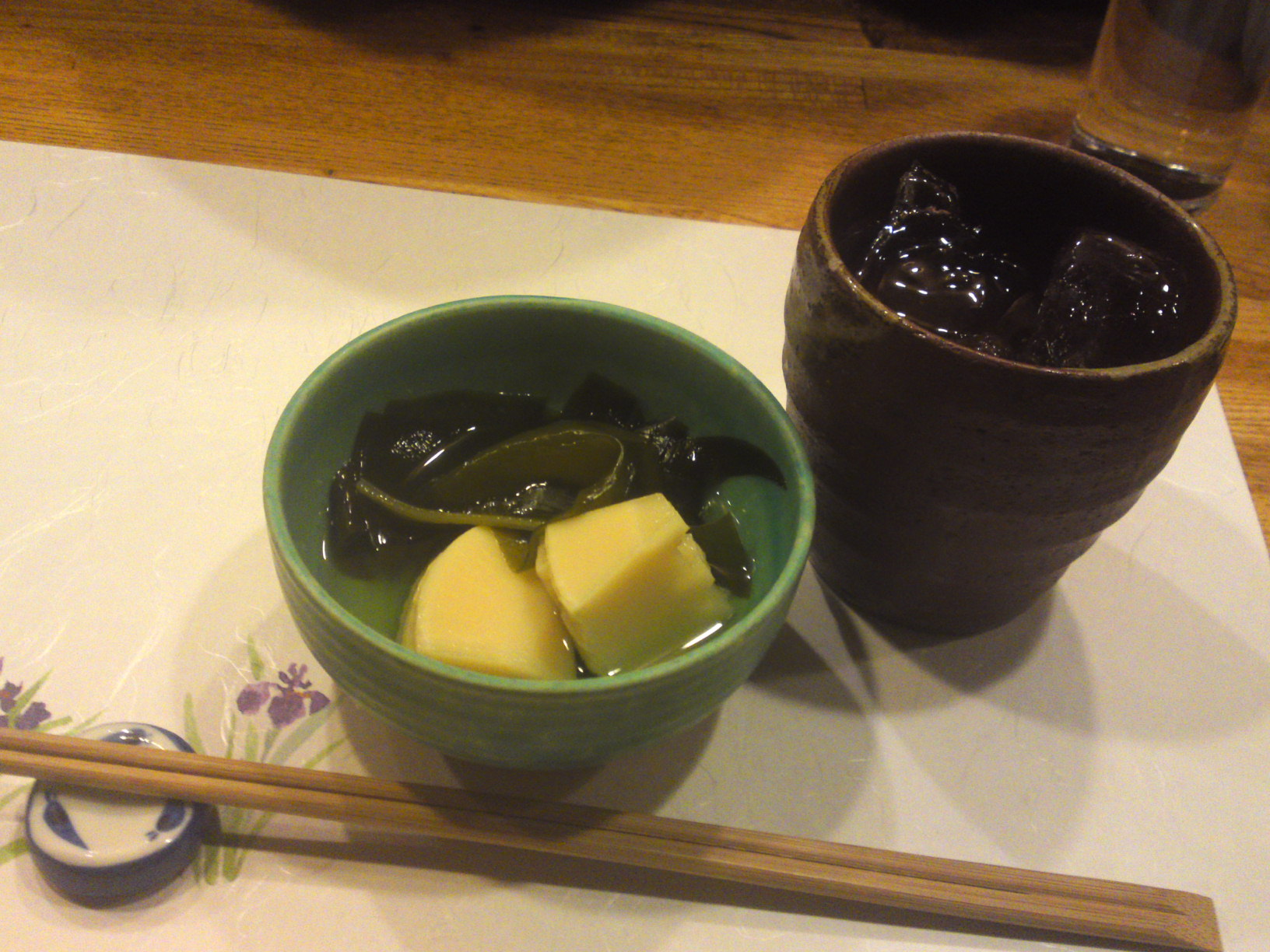
Although you might have to check the dashi, the first snack coming with my shochu (shochu is vegan by the way!)! People with special priorities will appreciate!

Thick boiled wakame seaweed and new bamboo shoots o-hitashi/japanese-style appetizer!

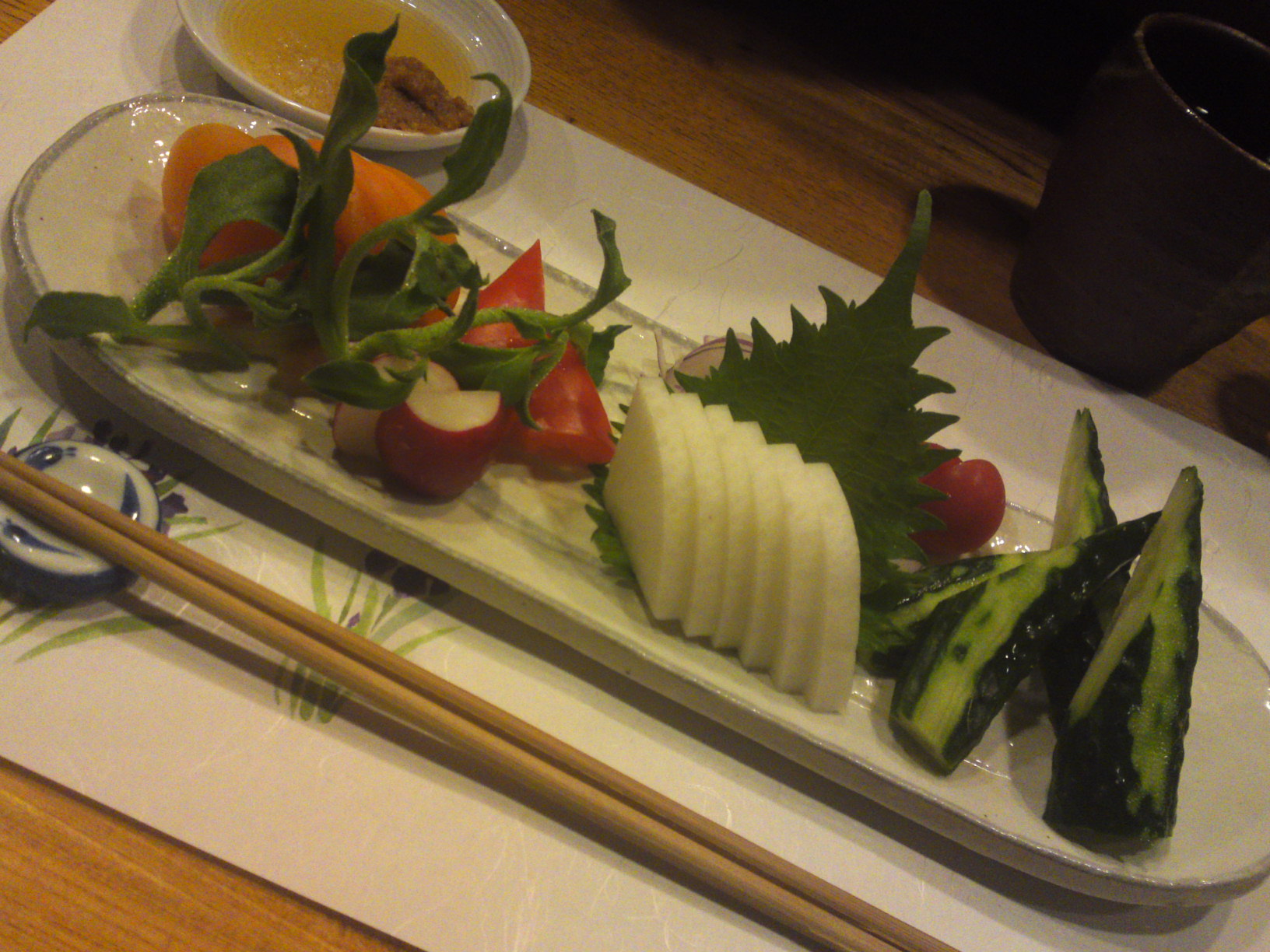
The main attraction of the day: Vegan Sashimi Plate conceived with local vegetables!

The dressing is made of sesame oil, salt and red miso paste only, so no problems!
Now what did the plate consist of?

“Cindy” orange tomatoes (very sweet) and ice plant.

Small red radish and red pimento.

Juicy and mild daikon on shiso leaves.

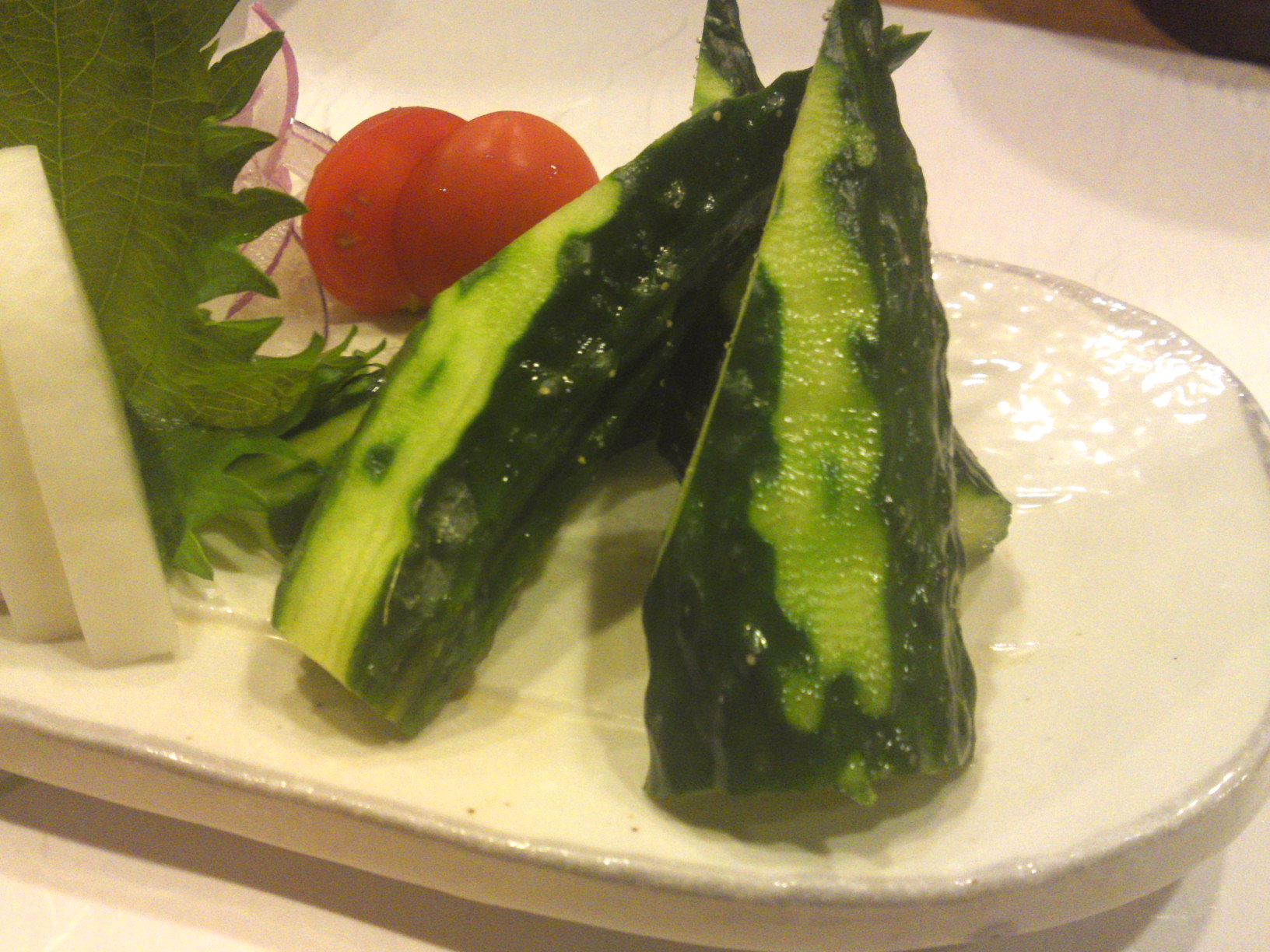
Crunchy and juicy cucumber and mini tomatoes.

And finally chopped red onion giving support!
So tasty and healthy!

To be followed…

YASAITEI
Shizuoka City, Aoi Ku, Tokiwa-Cho, 1-6-2 Green Heights Wamon 1-C
Tel.: 054-2543277
Business hours: 17:30~22:00
Closed on Sundays
Reservations highly recommended
Seating: 6 at counter + 14 at tables
Set Courses: 3,000, 4,000, 5,000 yen
Individual orders (carte) welcome
Parties welcome
HOMEPAGE (Japanese)
Smoking allowed

RECOMMENDED RELATED WEBSITES

Green Tea Club by Satoshi Nihonyanagi in Shizuoka!, Mind Some by Tina in Taiwan, Le Manger by Camille Oger (French), The Indian Tourist, Masala Herb by Helene Dsouza in Goa, India, Mummy I Can Cook! by Shu Han in London, Pierre.Cuisine, Francescannotwrite, My White Kitchen, 47 Japanese Farms Through The Eyes of Its Rural Communities, Foodhoe, Chucks Eats, Things that Fizz & Stuff, Five Euro Food by Charles,Red Shallot Kitchen by Priscilla,With a Glass, Nami | Just One Cookbook, Peach Farm Studio, Clumsyfingers by Xethia, PepperBento,Adventures in Bento Making, American Bent, Beanbento, Bento No, Bento Wo Tsukurimashou, Cooking Cute, Eula, Hapabento , Happy Bento, Jacki’s Bento Blog, Kitchen Cow, Leggo My Obento, Le Petit Journal Bento & CO (French), Lunch In A Box,
Susan at Arkonlite, Vegan Lunch Box; Tokyo Tom Baker, Daily Food Porn/Osaka, Only Nature Food Porn, Happy Little Bento, The Herbed Kitchen, J-Mama’s Kitchen, Cook, Eat, Play, Repeat, Bento Lunch Blog (German), Adventures In Bento, Anna The Red’s Bento Factory, Cooking Cute, Timeless Gourmet, Bento Bug, Ideal Meal, Bentosaurus, Mr. Foodie (London/UK), Ohayo Bento,

Must-see tasting websites:

-Sake: Tokyo Through The Drinking Glass, Tokyo Foodcast, Urban Sake, Sake World
-Wine: Palate To Pen, Warren Bobrow, Cellar Tours, Ancient Fire Wines Blog
-Beer: Good Beer & Country Boys, Another Pint, Please!
-Japanese Pottery to enjoy your favourite drinks: Yellin Yakimono Gallery