Tag Archives: Agriculture

Japanese Gastronomy: Juicy Hamburger Recipe-Nikujiru Afureru Hanbaagu-肉汁あふれるハンバーグ

JUICY-HAMBAAGU-1

The Japanese make a clear distinction between hamburgers served sandwiched between buns or bread and open hamburgers.

They call the American variety served between buns “hanbaaga” whereas minced meat steaks (stak hache in French) “hanbaagu”! Very little diffrenec in pronuciation but big difference in concept and serving!

Moreover the Japanese like their “hanbaagu” as “juicy” as possible, which explains why so many people prefer the open hamburgers in this country.
Here is a slightly off the beaten tracks recipe which should please those who like their favorite food soft and juicy!

Bear in mind that I leave the quantities open to allow for personal priorities. This is only the basic recipe left open to many variations!

INGREDIENTS:

Finely ground meat: preferably a mixture of beef and pork. Beef only is fine (for hallal and kosher cuisinesin particular)!
Finely chopped onion
Salt
Black pepper
Nutmeg
Breadcrumbs/panko
Milk (replace with light beef stock for kosher cuisine)
Eggs
Butter (skip or use fake butter for kosher cuisine)
Balsamico vinegar
Optional spices: Chili pepper, etc.
Optional vegetables: finely chopped vegetables (garlic, carrits, etc.) to be added to chopped onion

RECIPE:

JUICY-HAMBAAGU-2

Right away this recipe differs from more conventional ones:
On a cold frying pan drop finely chopped onion. Pour oil over the onion (not before dropping the onion in the frying pan) and stir-fry over low fire. This will allow oil to coat onion and prevent the taste to escape! Fry onion until they have become soft and transparent.
Let the onion cool completely first!
JUICY-HAMBAAGU-3

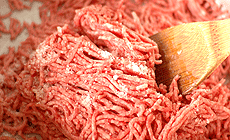
In a bowl drop the meat and add salt. Mix the salt in with a spatula.
Do not use your fingers! Otherwise the fat inside the meat will liquefy.

JUICY-HAMBAAGU-4

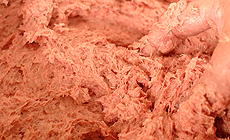
Mix the salt and meat until the meat attains a paste aspect. This requires some effort but this is one the keys for a juicy and soft “hanbaagu”!
JUICY-HAMBAAGU-5

Once you have achieved a paste form add onion, bredacrumbs, egg, milk, black pepper and mix well.
This time mix by hand! You should obtain a very sticky mixture than.

Note: as for salt added to the meat, the right amount is 0.8 % of the meat weight. This is the best amount to help control the amount of of water inside all ingredients. Too much salt and the meat will become watery. Not enough salt and the meat will dry down. A bit complicated, I understand! Actually this the amount of salt found inside a human body!

JUICY-HAMBAAGU-6

On a cold frying pan pour some oil. Deposit the hanbaagu over the oil and fry over a low fire.
A hot fire will mean a hard surface and a raw inside! Moreover the water contained inside the meat will escape and break the hanbaagu.
This is another important key to a juicy hanbaagu!

JUICY-HAMBAAGU-7

Do not put a lid over the meat! Other wise the temperature will rise too quickly and the hanbaagu will end flat!
Sponge off the first liquid coming out of the meat with kitchen paper as shown above.
When the bottom face has been properly cooked turn over and again sponge off any liquid coming out.

JUICY-HAMBAAGU-8

As an indication, once more than half of the meat has turned whitish it means that the bottom face is properly cooked. At this time turn the hanbaagu over.

JUICY-HAMBAAGU-9

It will take 12~13 minutes to cook the hanbaagu properly on both faces. When yo see some transparent juices seeping out the meat will have been cooked properly.

JUICY-HAMBAAGU-10

Take hanbaagu off the frying pan.
Add balsamico vinegar to the juices and reduce until half of it over a medium fire.
Add salt then if necessary.
Mix in some butter to liaise the sauce.
Place the hanbaagu over the sauce and coat both sides/faces and serve immediately with the rest of the sauce poured over the meat.

JUICY-HAMBAAGU-11

When you cut the hanbaagu it should be soft and well cooked but juices should not run out. But you bite it you will then be able to taste the juices inside the meat!

Bon appetit!

RECOMMENDED RELATED WEBSITES

Shop with Intent by Debbie
BULA KANA in Fiji
Kraemer’s Culinary blog by Frank Kraemer in New York,Tokyo Food File by Robbie Swinnerton, Green Tea Club by Satoshi Nihonyanagi in Shizuoka!, Mind Some by Tina in Taiwan, Le Manger by Camille Oger (French), The Indian Tourist, Masala Herb by Helene Dsouza in Goa, India, Mummy I Can Cook! by Shu Han in London, Pierre.Cuisine, Francescannotwrite, My White Kitchen, Foodhoe, Chucks Eats, Things that Fizz & Stuff, Five Euro Food by Charles,Red Shallot Kitchen by Priscilla,With a Glass, Nami | Just One Cookbook, Peach Farm Studio, Clumsyfingers by Xethia, PepperBento, Hapabento, Kitchen Cow, Lunch In A Box, Susan at Arkonlite, Vegan Lunch Box; Tokyo Tom Baker, Daily Food Porn/Osaka, Only Nature Food Porn, Happy Little Bento, J-Mama’s Kitchen, Cook, Eat, Play, Repeat, Bento Lunch Blog (German), Adventures In Bento, Anna The Red’s Bento Factory, Ohayo Bento,

Must-see tasting websites:

-Sake: Tokyo Through The Drinking Glass, Tokyo Foodcast, Urban Sake, Sake World
-Wine: Palate To Pen, Warren Bobrow, Cellar Tours, Ancient Fire Wines Blog
-Beer: Another Pint, Please!, Beering In Good Mind: All about Craft Beer in Kansai by Nevitt Reagan!
-Whisky: Nonjatta: All about whisky in Japan by Stefan Van Eycken
-Japanese Pottery to enjoy your favourite drinks: Yellin Yakimono Gallery

Non gastronomy must-see sites by Shizuoka Residents

HIGHOCTANE/HAIOKU by Nick Itoh in Shizuoka City

The Best Aoshima Mandarines in Japan: Mr. Kuniaki Oishi in Okabe, Fujieda City!

SN3O3304

Mrs. Reiko Oishi/大石礼子さん and Mr. Kuniaki Oishi/大石邦昭さん, Aoshima mandarines producers in Okabe, Fujieda City!

Shizuoka Prefecture, among other products such as green tea, wasabi, strawberries and a lot more, is celebrated all over Japan for its oranges!
The other day my good Australian friends, Nick and Yayoi Shannon, who live in Okabe, Fujieda City called me as they wanted me to meet a neighbor of theirs who had just been awarded the top prize by the Japan Agriculture, Forestry and Fisheries Minister for its Aoshima mandarines!

SN3O3286

The Oishi’s Farmhouse!

Interestingly enough it became a real expedition last Sunday as we were joined by another good friend, Robert Hirai, an American friend who is a photographer when not working as a navigator on ships!

SN3O3287

Time slip!

Mr. Kuniaki Oishi and his wife are the 7th generation of farmers living and working in the mountains of Okabe in Fujieda City, an area celebrated for its great agricultural and wild game. They also represent the 4th generation as Aoshima Mandarines growers.

SN3O3288

Shizuoka Governor Heita kawakatsu/川勝平太県知事 tasting Mr. Kuniaki Oishi’s Aoshima Mandarines!
The paper article mentions that they are 1,000 yen worth (10 US$!) each!

The Oishi’s being used to those foreigners living nearby readily took in their stride this invasion with great smiles and true hospitality!
Interviewing them was more a pleasurable and enriching chat than anything else.
Although he received the 2nd top accolade from Shizuoka Prefecture in 2011 and the very top national prize in 2012, Mr. Kuniaki Oshima (71) struck me with his modesty: “I can only say that I finally started to master my skills at the age of 60”! Farmers certainly could impart a lot of wisdom and humility to us city dwellers!

SN3O3291

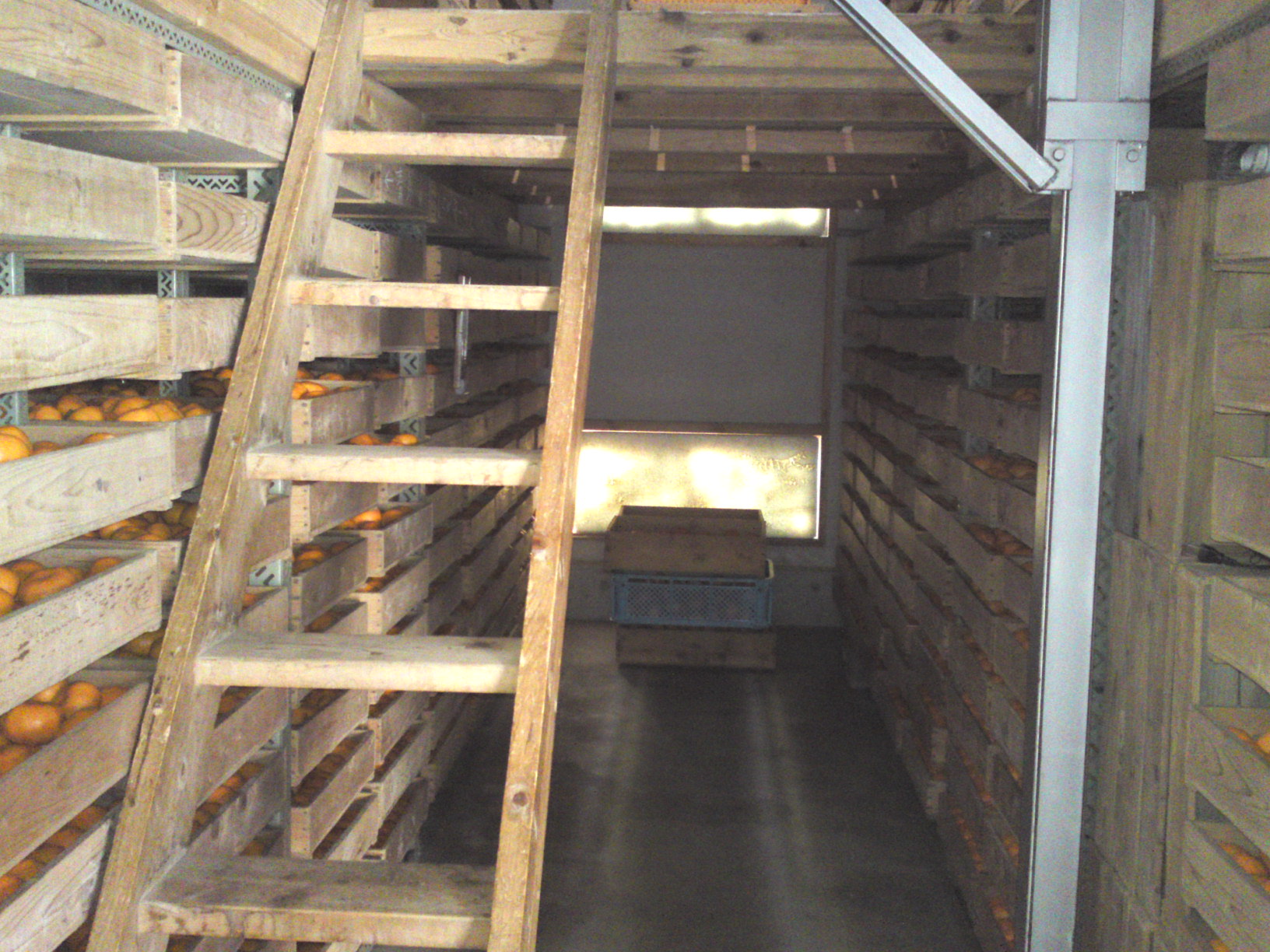
The “maturing shed”!

Before visiting Mr. Oishi’s fields, we were invited to have a look inside the maturing shed!
The harvest is done in December, which meant we did not interfere too much with the grower’s work.
Mandarines are stored inside a shed to mature for two months before being marketed.
Incidentally, Aoshima mandarines are a variety born a long time ago in Shizuoka Prefecture!

SN3O3292

Maturing certainly requires skills and precise storing conditions.
The temperature is maintained as low as 5 degrees Celsius and a regular air circulation must be sustained throughout the whole shed where the mandarines are carefully stored in the dark.

SN3O3294

Moreover, the shed must be absolutely clean and dry and totally free of insects!
All the wood inside the shed is “dead”, meaning that insects will not find it amenable to their nefarious activities!
We were kindly offered to taste the mandarines out of their boxes.

SN3O3293

Although sweet, the balance in sweetness, acidity and “umami” was beyond words!
The Japanese, judges and growers alike, are very picky in their survey and Mr. Oishi had to satisfy no less than 12 different criteria from shape and sweetness to biting/chewing impression!
Needless to say that coming top in 6 of them, especially overall taste, helped him acquire the top reward!

SN3O3295

Then we all embarked in one car and a small truck for a visiting expedition of the Oishi’s fields covering one full hectare on very steep slopes over 400-meter altitude in the nearby mountains!

SN3O3299

On the way I noticed these electric wires to keep civets, monkeys, deer and wild boars away!

SN3O3297

Recently wild boars have become a real plague!
This cage trap can catch a female and at least three cubs which will be culled and have their meat distributed around!

SN3O3298

A very Japanese contraption consisting of one “rail” to easily carry harvest inside boxes that descend along terribly steep slopes. They have been used for quite some time now but bear in mind that people still had to walk up and down unpaved roads to reach their fields not so long ago!

SN3O3308

Access to the fields is done by small trucks up tortuous roads but all the work has to be done on foot!

SN3O3310

Although we are at an altitude of only 400 neters the landscape made the climb all the worth for it to us city dwellers!

SN3O3309

It’s lucky that the harvesting is done in winter as the scorching heat in summer allows work only during the first and last few hours of the day!

SN3O3300

For all the size of the mountains, space is limited as sun exposure is vital.
Moreover, a big difference of temperature between daytime and nighttime is the first condition for sweet fruit!

SN3O3301

Organic agriculture is impossible in these conditions but Kuniaki Oishi uses only the strict minimum of pesticides and fertilizers he buys from the local government agricultural offices.

SN3O3302

Even so it is back breaking work as the fields and trees have to be provided with mulch and protected with plastic sheets at various times of the year!
No wonder growers never get fat in this area!
And they are so fit!

SN3O3311

And trees have a limited life.
This twenty-year old tree with almost a ten-centimeter thick trunk will have to be cut and replaced in twenty tears time!

It certainly makes you humble to realize all the work behind those fruit we take for granted!
Mr. and Mrs Osihi, thank you so much for your hospitality, patience and great smiles!

Kuniaki Oishi
Aoshima mandarines Grower/Producer
421-1115 Fujieda City, Okabe Cho, Niufune, 192
Tel.: 054-668-0618
Mr. Oishi’s products are sold at the JA stores and other shos, as well as through a very limited private list of customers.

RECOMMENDED RELATED WEBSITES

Kraemer’s Culinary blog by Frank Kraemer in New York,Tokyo Food File by Robbie Swinnerton, Green Tea Club by Satoshi Nihonyanagi in Shizuoka!, Mind Some by Tina in Taiwan, Le Manger by Camille Oger (French), The Indian Tourist, Masala Herb by Helene Dsouza in Goa, India, Mummy I Can Cook! by Shu Han in London, Pierre.Cuisine, Francescannotwrite, My White Kitchen, Foodhoe, Chucks Eats, Things that Fizz & Stuff, Five Euro Food by Charles,Red Shallot Kitchen by Priscilla,With a Glass, Nami | Just One Cookbook, Peach Farm Studio, Clumsyfingers by Xethia, PepperBento, Hapabento, Kitchen Cow, Lunch In A Box, Susan at Arkonlite, Vegan Lunch Box; Tokyo Tom Baker, Daily Food Porn/Osaka, Only Nature Food Porn, Happy Little Bento, J-Mama’s Kitchen, Cook, Eat, Play, Repeat, Bento Lunch Blog (German), Adventures In Bento, Anna The Red’s Bento Factory, Ohayo Bento,

Must-see tasting websites:

-Sake: Tokyo Through The Drinking Glass, Tokyo Foodcast, Urban Sake, Sake World
-Wine: Palate To Pen, Warren Bobrow, Cellar Tours, Ancient Fire Wines Blog
-Beer: Good Beer & Country Boys, Another Pint, Please!, Beering In Good Mind: All about Craft Beer in kanzai by Nevitt Reagan!
-Japanese Pottery to enjoy your favourite drinks: Yellin Yakimono Gallery

Non gastronomy must-see sites by Shizuoka Residents

HIGHOCTANE/HAIOKU by Nick Itoh in Shizuoka City

Japanese Easy Recipe: Lotus Root and Pork Balls

Lotus root can be used with meat to make delicious and easy to prepare balls/meat balls!
A comfort food appreciated everywhere and a great snack if you like beer!

INGREDIENTS: (For 2 people)

Minced pork meat: 200 g
Lotus root: 60 g
Salt: one pinch
Soy sauce: 1 tablespoon
Ginger: 1 fresh cube 2x2x2 cm
Cornstarch: As appropriate

RECIPE:

in a large ball drop the minced pork.
Grate the lotus root over it.
Add salt.
Mix until you obtain a smooth paste.
Grate fresh ginger over it and add soy sauce.
Mix well.

Prepare one-bite sized balls and coat hem with cornstarch.
Deep-fry at 170 degrees (the best temperature!) until they have a attained a crispy brown color.

Serve at once with some leafy greens for best balance.

So simple and so yummy!
Naturally you can add spices of your liking to the recipe!

RECOMMENDED RELATED WEBSITES

Kraemer’s Culinary blog by Frank Kraemer in New York,Tokyo Food File by Robbie Swinnerton, Green Tea Club by Satoshi Nihonyanagi in Shizuoka!, Mind Some by Tina in Taiwan, Le Manger by Camille Oger (French), The Indian Tourist, Masala Herb by Helene Dsouza in Goa, India, Mummy I Can Cook! by Shu Han in London, Pierre.Cuisine, Francescannotwrite, My White Kitchen, Foodhoe, Chucks Eats, Things that Fizz & Stuff, Five Euro Food by Charles,Red Shallot Kitchen by Priscilla,With a Glass, Nami | Just One Cookbook, Peach Farm Studio, Clumsyfingers by Xethia, PepperBento,Adventures in Bento Making, American Bent, Beanbento, Bento No, Bento Wo Tsukurimashou, Cooking Cute, Eula, Hapabento , Happy Bento, Jacki’s Bento Blog, Kitchen Cow, Leggo My Obento, Le Petit Journal Bento & CO (French), Lunch In A Box,
Susan at Arkonlite, Vegan Lunch Box; Tokyo Tom Baker, Daily Food Porn/Osaka, Only Nature Food Porn, Happy Little Bento, The Herbed Kitchen, J-Mama’s Kitchen, Cook, Eat, Play, Repeat, Bento Lunch Blog (German), Adventures In Bento, Anna The Red’s Bento Factory, Cooking Cute, Timeless Gourmet, Bento Bug, Ideal Meal, Bentosaurus, Mr. Foodie (London/UK), Ohayo Bento,

Must-see tasting websites:

-Sake: Tokyo Through The Drinking Glass, Tokyo Foodcast, Urban Sake, Sake World
-Wine: Palate To Pen, Warren Bobrow, Cellar Tours, Ancient Fire Wines Blog
-Beer: Good Beer & Country Boys, Another Pint, Please!, Beering In Good Mind: All about Craft Beer in kanzai by Nevitt Reagan!
-Japanese Pottery to enjoy your favourite drinks: Yellin Yakimono Gallery

Halloween Melon at Cenova Department Store in Shizuoka City!

Shizuoka Prefecture is famous all over Japan for its melons of the highest quality (and price!) in this country!
Just I was shopping this evening I noticed this cute display in the fruit section!

I had a good look, but d\frankly speaking I would be hard put to put a name of the variety.
It was not really ripe either, otherwise that kind of melon would have melted inside!

The melon is genuine but the skin color is probably artificially induced (not exposed to the sun or whatever) and obviously grown only fora decorative purpose.
But it still is worth its entertainment value!

RECOMMENDED RELATED WEBSITES

Kraemer’s Culinary blog by Frank Kraemer in New York,Tokyo Food File by Robbie Swinnerton, Green Tea Club by Satoshi Nihonyanagi in Shizuoka!, Mind Some by Tina in Taiwan, Le Manger by Camille Oger (French), The Indian Tourist, Masala Herb by Helene Dsouza in Goa, India, Mummy I Can Cook! by Shu Han in London, Pierre.Cuisine, Francescannotwrite, My White Kitchen, Foodhoe, Chucks Eats, Things that Fizz & Stuff, Five Euro Food by Charles,Red Shallot Kitchen by Priscilla,With a Glass, Nami | Just One Cookbook, Peach Farm Studio, Clumsyfingers by Xethia, PepperBento,Adventures in Bento Making, American Bent, Beanbento, Bento No, Bento Wo Tsukurimashou, Cooking Cute, Eula, Hapabento , Happy Bento, Jacki’s Bento Blog, Kitchen Cow, Leggo My Obento, Le Petit Journal Bento & CO (French), Lunch In A Box,
Susan at Arkonlite, Vegan Lunch Box; Tokyo Tom Baker, Daily Food Porn/Osaka, Only Nature Food Porn, Happy Little Bento, The Herbed Kitchen, J-Mama’s Kitchen, Cook, Eat, Play, Repeat, Bento Lunch Blog (German), Adventures In Bento, Anna The Red’s Bento Factory, Cooking Cute, Timeless Gourmet, Bento Bug, Ideal Meal, Bentosaurus, Mr. Foodie (London/UK), Ohayo Bento,

Must-see tasting websites:

-Sake: Tokyo Through The Drinking Glass, Tokyo Foodcast, Urban Sake, Sake World
-Wine: Palate To Pen, Warren Bobrow, Cellar Tours, Ancient Fire Wines Blog
-Beer: Good Beer & Country Boys, Another Pint, Please!, Beering In Good Mind: All about Craft Beer in kanzai by Nevitt Reagan!
-Japanese Pottery to enjoy your favourite drinks: Yellin Yakimono Gallery

Fuji Okamura Ranch in Fujinomiya City.Fuji. Beef by Chiyoji Okamura!

Ever solid Chiyoji Okamura!

Last Friday after our superb lunch at Restaurant Bio-S, the owner Kazuhiro Matsuki/松木一浩 kindly drove me and my journalists friends, Camille Oger and Julien Morelo, through forests at the foot of Mount Fuji to Okamura Ranch.
Okamura Ranch is one of the three beef producers established at the foot of Mount Fuji (there are 13 in all the Prefecture).

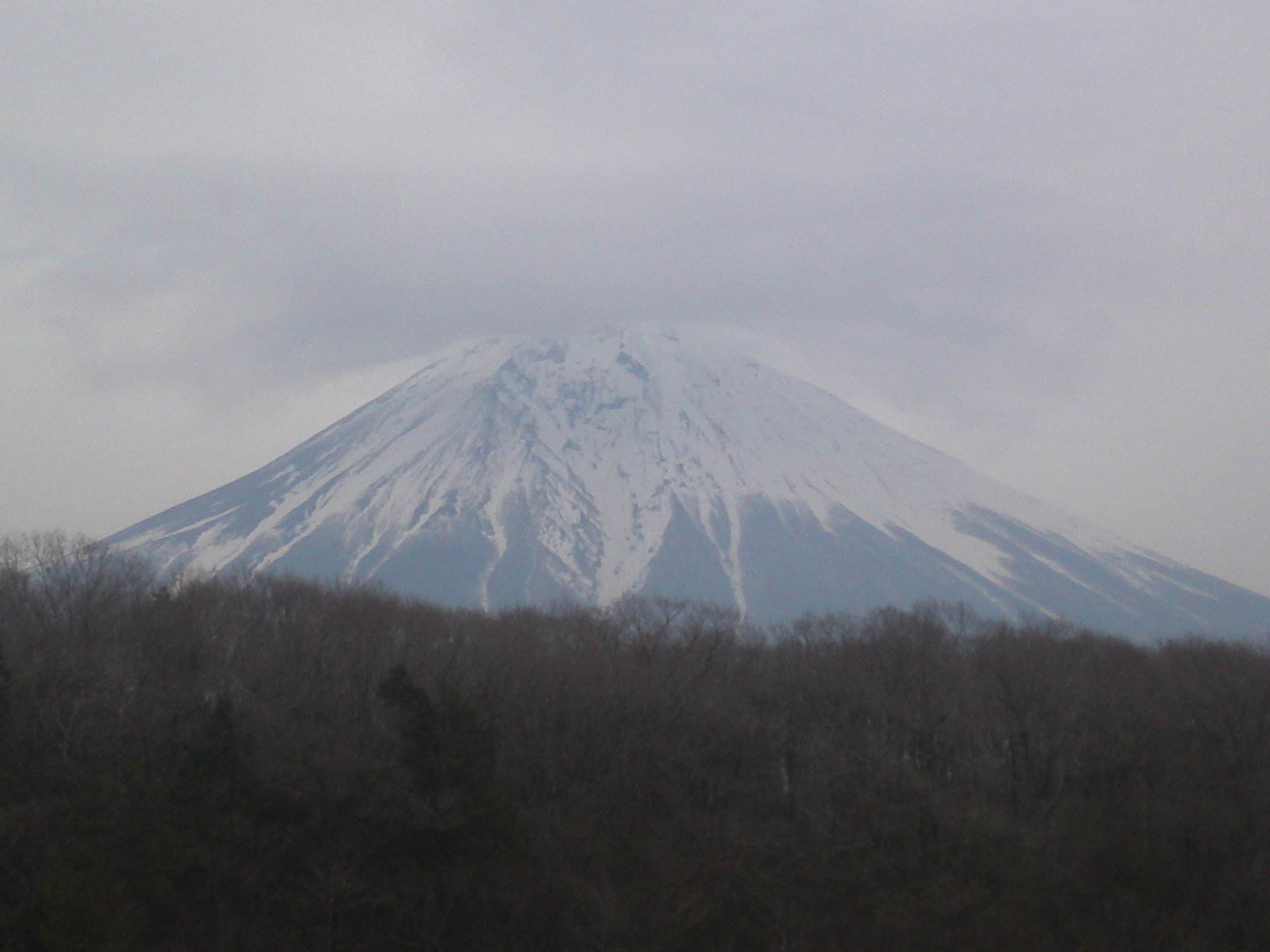
View of Mount Fuji from Okamura Ranch!

Chiyoji Okamura/岡村千代次さん was born in Shiga Prefecture in 1955.
The fifth child of a large family there was little left for him back home.
Having graduated from Tokyo Agricultural University in 1978 he tried his hand at agriculture before coming to Fujinomiya City in 1990 to establish a beef producing ranch with 30 heads of cattle. He is now looking after 300+ heads throughout a year.

The meadows reserved to pregnant cows.

He basically breeds his own cows (there is not a single bull on the premises) from 2-months old calves bought from a calf breeder or breeds his own calves after having artificially inseminated his cows.
If a male is born he is castrated while females will be later inseminated.

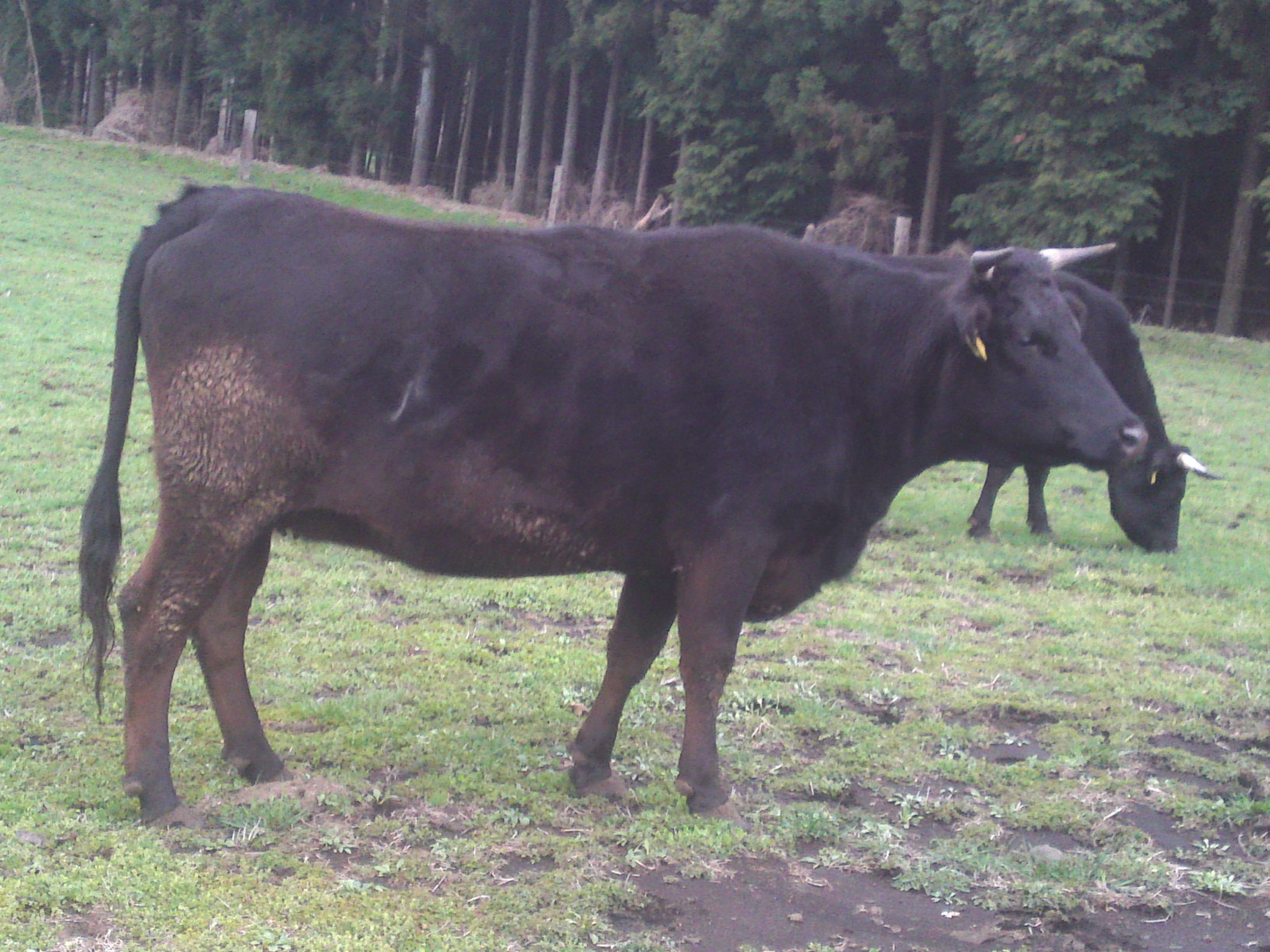
Very healthy but a bit shy pregnant cows.

The cows are culled for meat after 24 months, a short time compared to meat cattle in Europe.
The abattoirs are located so far from the ranch that the cows never realize their fate and feel very little stress.
Interestingly enough, Mr. Okamura does not produce calves for meat.

A smiling cow!

The beef breed in Okamura Ranch is originally a hybrid of meat-producing cattle and milk-producing cattle.
The BSE problem a few years ago convinced him that the traceability of his meat was of the utmost importance.
He will always meet personally his clients, be they traders or restaurants, before he agrees to sell his meat to them.

In spite of the daily care (no holidays there) vital for the good health of his cows, Mr. Okamura and his wife seem happy enough to spend all their time on the ranch and in their enormous (by Japanese standards) house where they regularly hold bbq’s. After all the two of them look after the cows and have to assume all the roles of cattle farmers and veterinarians!

The cow sheds and the farm were all rebuilt in 2003 and Mr. Okamura’s Fujisan Beef was officially recogniszed as an independent beef brand by the Shizuoka Prefecture Ministry of Agriculture and Forestry in 2006!

Each calf lives in its own shed for maximum comfort and well-being.

The sheds are a model of cleanliness!
What with Mount Fuji and the surrounding nature, there is no pollution and the water and natural grass are of superlative quality.
As for fodder Mr. Okamura imports it all from America through a very strictly regulated route.
The used straw and droppings are recycled as natural fertilizer for neighboring farmers.

All these animals need a lot of feed, mainly consisting of cereals including corn and barley!
Mr. Okamura’s own blend of feed devised trough his years of experience and experimenting make the difference!

The sheds are regularly cleaned and provided with fresh straw for maximum hygiene.
Mrs. Okumura takes charge of feeding the calves twice a day and of all the accounts of their business while Mr. Okamura takes care of all the rest.
Quite a few students ask to work with them as interns but only a few are accepted after careful screening.

A very hungry calf!

This is all extremely hard work and I very much doubt that the Okamuras will ever get fat. They are actually extremely fit and smiling and passionate in spite of their shyness.
The result?

Superlative meat difficult to surpass!
it was interesting to note, and Mr. Matsuki concurred, that Mr. Okamura produces an extremely tender red beef without the use of fat as found in other famed beef, a feat that will ask a lot to equal indeed!

Fujisan Okamura Ranch
418-0102 Fujinomiya Shi, Hitoana, 137-318
Tel.: 0544-52-3668
Fax: 0544-52-3668
E-mail: oka5@alpha.ocn.ne.jp

RECOMMENDED RELATED WEBSITES

Green Tea Club by Satoshi Nihonyanagi in Shizuoka!, Mind Some by Tina in Taiwan, Le Manger by Camille Oger (French), The Indian Tourist, Masala Herb by Helene Dsouza in Goa, India, Mummy I Can Cook! by Shu Han in London, Pierre.Cuisine, Francescannotwrite, My White Kitchen, 47 Japanese Farms Through The Eyes of Its Rural Communities, Foodhoe, Chucks Eats, Things that Fizz & Stuff, Five Euro Food by Charles,Red Shallot Kitchen by Priscilla,With a Glass, Nami | Just One Cookbook, Peach Farm Studio, Clumsyfingers by Xethia, PepperBento,Adventures in Bento Making, American Bent, Beanbento, Bento No, Bento Wo Tsukurimashou, Cooking Cute, Eula, Hapabento , Happy Bento, Jacki’s Bento Blog, Kitchen Cow, Leggo My Obento, Le Petit Journal Bento & CO (French), Lunch In A Box,
Susan at Arkonlite, Vegan Lunch Box; Tokyo Tom Baker, Daily Food Porn/Osaka, Only Nature Food Porn, Happy Little Bento, The Herbed Kitchen, J-Mama’s Kitchen, Cook, Eat, Play, Repeat, Bento Lunch Blog (German), Adventures In Bento, Anna The Red’s Bento Factory, Cooking Cute, Timeless Gourmet, Bento Bug, Ideal Meal, Bentosaurus, Mr. Foodie (London/UK), Ohayo Bento,

Must-see tasting websites:

-Sake: Tokyo Through The Drinking Glass, Tokyo Foodcast, Urban Sake, Sake World
-Wine: Palate To Pen, Warren Bobrow, Cellar Tours, Ancient Fire Wines Blog
-Beer: Good Beer & Country Boys, Another Pint, Please!
-Japanese Pottery to enjoy your favourite drinks: Yellin Yakimono Gallery

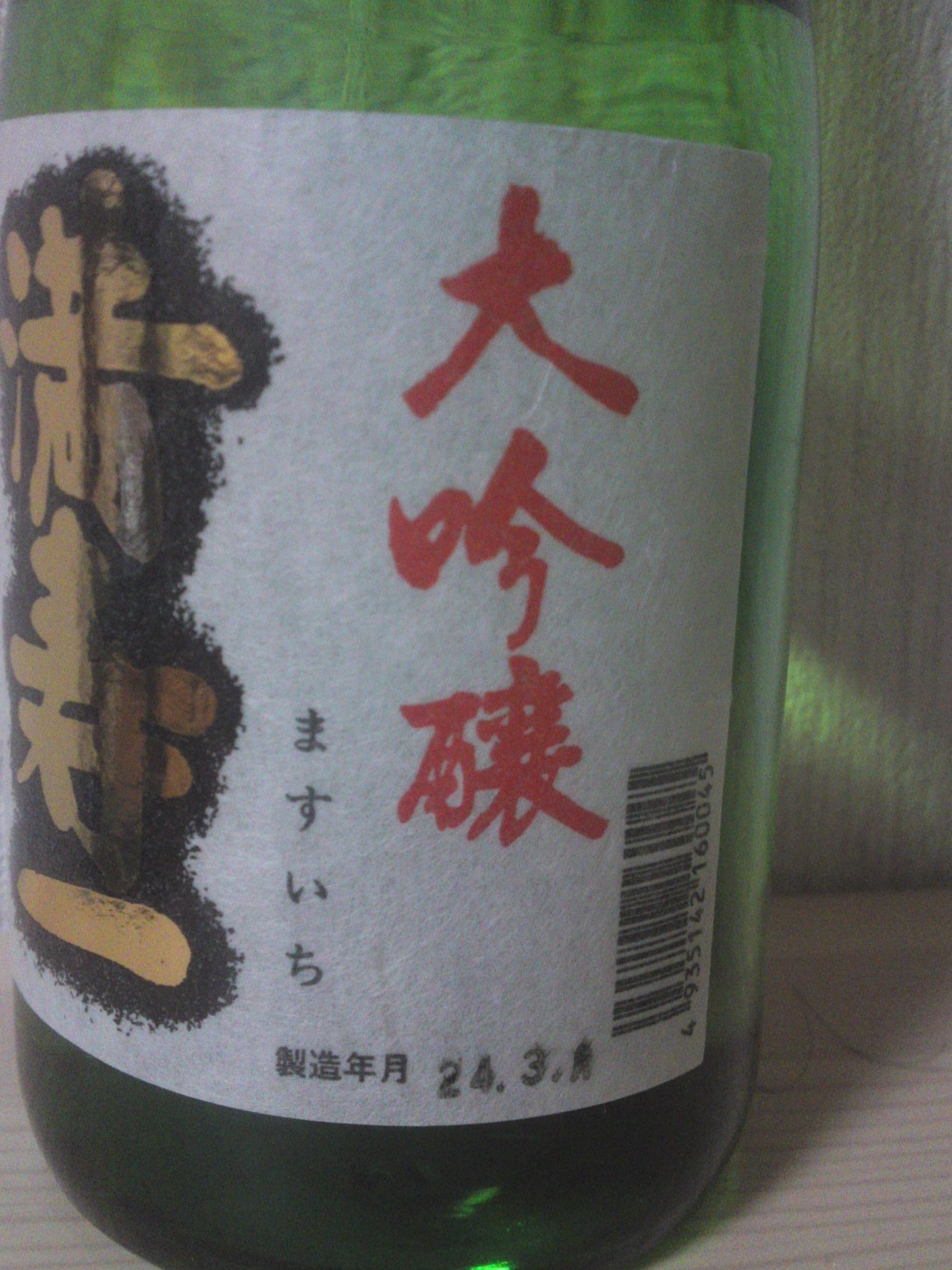
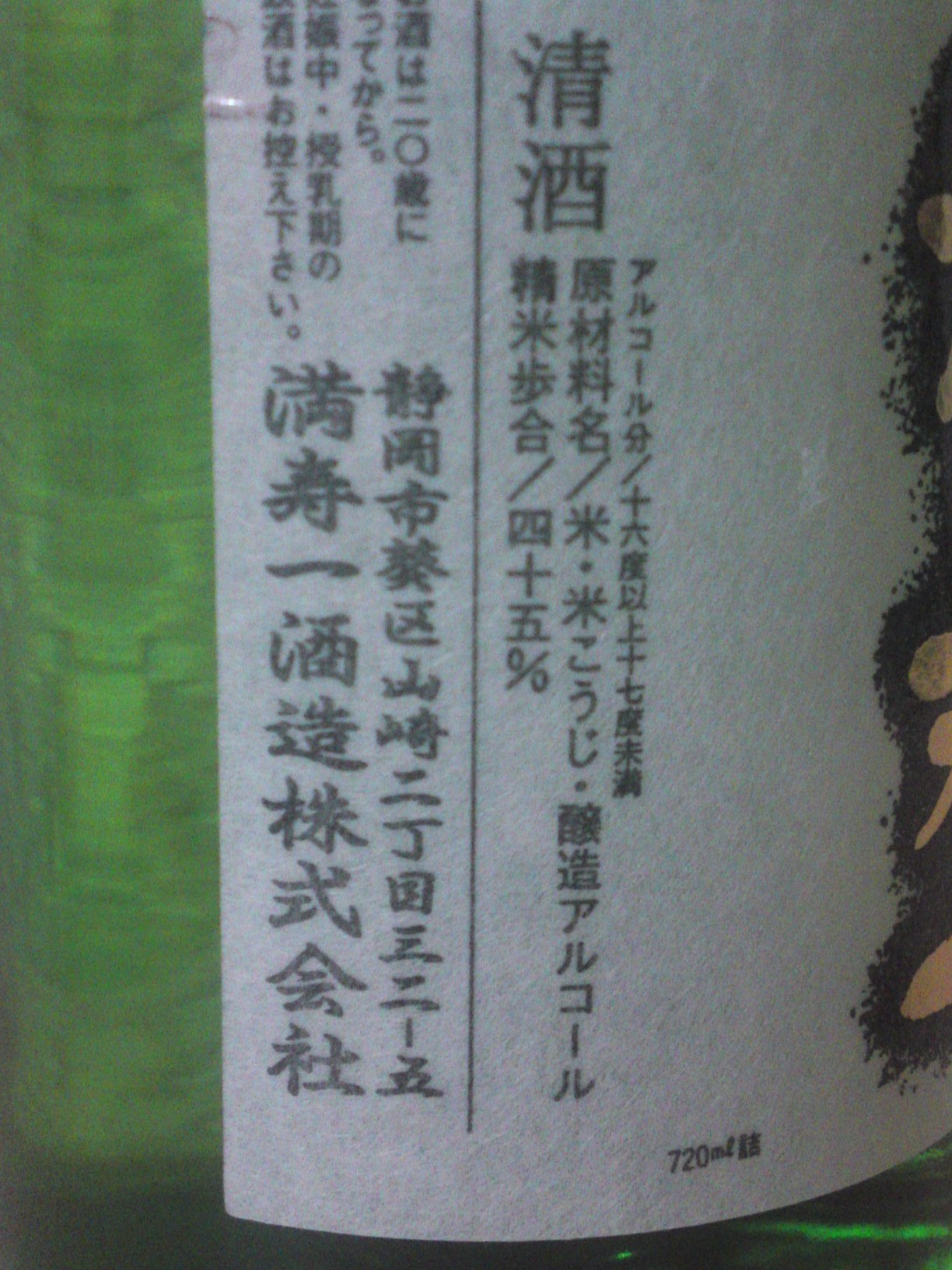
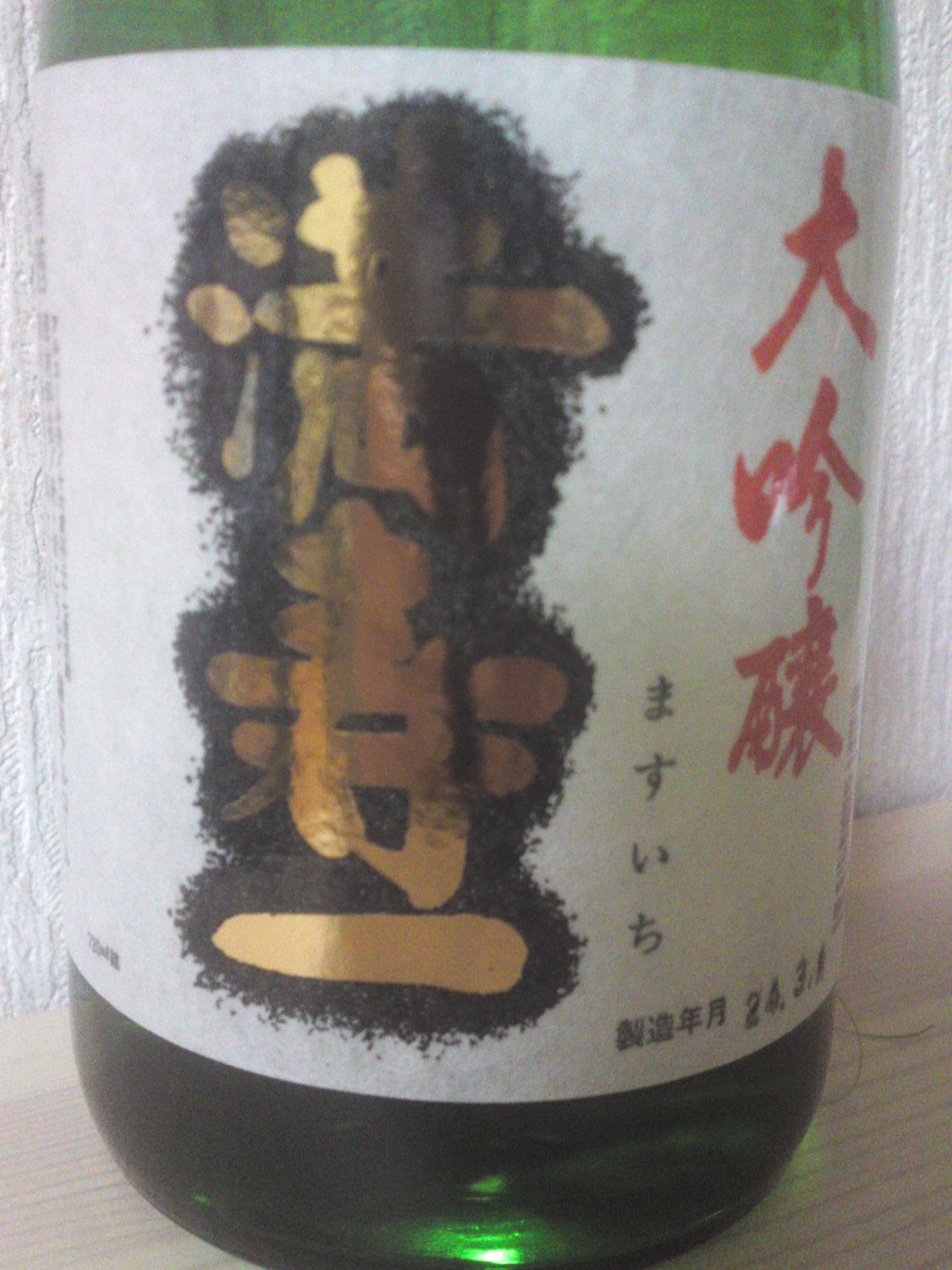
Shizuoka Sake Tasting: Masu Ichi Brewery- The Last Bottle? Masu Ichi Dai Ginjyo

Masu Ichi Brewery has not been making sake for the past year and will not ever as his owner/masterbrewer Denjirou Masui/増井伝次郎 just passed away at the age of 49 leaving no successor willing to take over the brewery founded in 1882.

Denjirou Masui

Denjirou was his brewer’s name given by his mentor Denbei kawamura, the godfather of Shizuoka Sake and the creator of the Shizuoka sake yeast. He was one of the only three brewers of the Shida School.
His sake is fast disappearing and this particular one is the first of a series of “last bottles” I’m scouring the Prefecture to get my hands on for posterity!
This is therefore the third bottle! (More coming!)

This is a Dai ginjyo, meaning the top premium variety blended with pure rice alcohol!

Clarity: Very clear
Color: Transparent
Aroma: Light, elegant and fruity. Melon, pineapple, banana.
Body: Fluid
Taste: Dry and fruity attack backed up by pleasant alcohol.
Complex. Oranges, melon, pineapple.
Disappears quickly.
Very elegant in spite of its dryness.
Drinks very easily.
Oranges asserting themselves with the second sip.
Varies little with food with a drier note.

Overall: Very elegant sake!
Best appreciated on its own, as food tends to interfere with it more than marrying with it. Nevertheless would make for an extravagant aperitif and would enhance the taste of light vegetables such as white asparaguses!
Obviously a sake conceived for tasting!

RECOMMENDED RELATED WEBSITES

Le Manger by Camille Oger (French), The Indian Tourist, Masala Herb by Helene Dsouza in Goa, India, Mummy I Can Cook! by Shu Han in London, Pierre.Cuisine, Francescannotwrite, My White Kitchen, 47 Japanese Farms Through The Eyes of Its Rural Communities, Foodhoe, Chucks Eats, Things that Fizz & Stuff, Five Euro Food by Charles,Red Shallot Kitchen by Priscilla,With a Glass, Nami | Just One Cookbook, Peach Farm Studio, Clumsyfingers by Xethia, PepperBento,Adventures in Bento Making, American Bent, Beanbento, Bento No, Bento Wo Tsukurimashou, Cooking Cute, Eula, Hapabento , Happy Bento, Jacki’s Bento Blog, Kitchen Cow, Leggo My Obento, Le Petit Journal Bento & CO (French), Lunch In A Box,
Susan at Arkonlite, Vegan Lunch Box; Tokyo Tom Baker, Daily Food Porn/Osaka, Only Nature Food Porn, Happy Little Bento, The Herbed Kitchen, J-Mama’s Kitchen, Cook, Eat, Play, Repeat, Bento Lunch Blog (German), Adventures In Bento, Anna The Red’s Bento Factory, Cooking Cute, Timeless Gourmet, Bento Bug, Ideal Meal, Bentosaurus, Mr. Foodie (London/UK), Ohayo Bento,

Must-see tasting websites:

-Sake: Tokyo Through The Drinking Glass, Tokyo Foodcast, Urban Sake, Sake World
-Wine: Palate To Pen, Warren Bobrow, Cellar Tours, Ancient Fire Wines Blog
-Beer: Good Beer & Country Boys, Another Pint, Please!, CATCHCARRI
-Japanese Pottery to enjoy your favourite drinks: Yellin Yakimono Gallery

Shizuoka Sake Tasting: Masu Ichi Brewery- The Last Bottle? Masu Ichi Junmai Ginjyo

Masu Ichi Brewery has not been making sake for the past year and will not ever as his owner/masterbrewer Denjirou Masui/増井伝次郎 just passed away at the age of 49 leaving no successor willing to take over the brewery founded in 1882.

Denjirou Masui

Denjirou was his brewer’s name given by his mentor Denbei kawamura, the godfather of Shizuoka Sake and the creator of the Shizuoka sake yeast. He was one of the only three brewers of the Shida School.
His sake is fast disappearing and this particular one is the first of a series of “last bottles” I’m scouring the Prefecture to get my hands on for posterity!
This is therefore the second bottle! (More coming!)

That beautiful bottle cap is also going to disappear…

It is a junmai ginjyo, meaning no alcohol was blended in and that is a premium sake of ginjyo level!

Rice milled down to 50 %
Alcohol: 15~16 degrees
Bottled in March 2012

Clarity: very clear
Color: Transparent
Aroma: Assertive and fruity. Complex.
Melon. Liquorice. Pleasant alcohol.
Body: Fluid
Taste: Very deep attack backed with junmai petillant. Fruity. Complex.
Almonds, melon and faint oranges.
Disappears on a dry coffee beans note.
Varies little with food with a strong accent on oranges and dry almonds.
Coffee beans and dark chocolate make a strong comeback once away from food.

Overall: A very dry but elegant sake!
Very enjoyable on its own but particularly pleasant with vegetables.
Actually happily marries with any food, be it Japanese or Western gastronomy.
Would also make for a great aperitif, although its dryness would be the perfect match for chocolate!

RECOMMENDED RELATED WEBSITES

Le Manger by Camille Oger (French), The Indian Tourist, Masala Herb by Helene Dsouza in Goa, India, Mummy I Can Cook! by Shu Han in London, Pierre.Cuisine, Francescannotwrite, My White Kitchen, 47 Japanese Farms Through The Eyes of Its Rural Communities, Foodhoe, Chucks Eats, Things that Fizz & Stuff, Five Euro Food by Charles,Red Shallot Kitchen by Priscilla,With a Glass, Nami | Just One Cookbook, Peach Farm Studio, Clumsyfingers by Xethia, PepperBento,Adventures in Bento Making, American Bent, Beanbento, Bento No, Bento Wo Tsukurimashou, Cooking Cute, Eula, Hapabento , Happy Bento, Jacki’s Bento Blog, Kitchen Cow, Leggo My Obento, Le Petit Journal Bento & CO (French), Lunch In A Box,
Susan at Arkonlite, Vegan Lunch Box; Tokyo Tom Baker, Daily Food Porn/Osaka, Only Nature Food Porn, Happy Little Bento, The Herbed Kitchen, J-Mama’s Kitchen, Cook, Eat, Play, Repeat, Bento Lunch Blog (German), Adventures In Bento, Anna The Red’s Bento Factory, Cooking Cute, Timeless Gourmet, Bento Bug, Ideal Meal, Bentosaurus, Mr. Foodie (London/UK), Ohayo Bento,

Must-see tasting websites:

-Sake: Tokyo Through The Drinking Glass, Tokyo Foodcast, Urban Sake, Sake World
-Wine: Palate To Pen, Warren Bobrow, Cellar Tours, Ancient Fire Wines Blog
-Beer: Good Beer & Country Boys, Another Pint, Please!, CATCHCARRI
-Japanese Pottery to enjoy your favourite drinks: Yellin Yakimono Gallery

Shizuoka Sake: 2012 Shizuoka Prefecture New Sake Tasting Annual Meet

All pictures credited to MARCUS GRANDON

On the 26th of March 2012 was the 2012 Edition of the Shizuoka New Sake Tasting Annual Meet (in Japanese 静岡県清酒鑑評会出品酒きき酒会) held on the 4th floor of Aoi Tower in front of Shizuoka JR Station.

I still managed to go to the wrong building and arrived late. But my good friend Marcus Grandon I have succeeded in turning into a true Japanese sake fan saved my day and had started taking pictures! For once I didn’t have to worry about this aspect of reporting as Marcus is a professional photographer!

This kind of event has become quite a big affair and the organizing Shizuoka Prefecture Sake Breweries Association does have to limit numbers!
Professionals, amateurs, bloggers and sake lovers were already in the midst of serious tasting business and quite a few were taking notes!

A dedicated taster!

A great opportunity to meet some old and new friends!

Kokkou/国香, one of the vaunted Shizuoka sake!
The event, although based on personal (some people did crash, though!) invitations was free of charge and each guest was provided with a tasting glass and pamphlets describing the sake on display!

The brewers were also on hand to answer the questions asked by true sake officionados!

Guests poured the sake themselves!

And certainly enjoyed it!

Naturally the ladies took the opportunity to share some light talk!

The next event is for June in Yaizu City!
Don’t miss it!

RECOMMENDED RELATED WEBSITES

The Indian Tourist, Masala Herb by Helene Dsouza in Goa, India
Mummy I Can Cook! by Shu Han in London
Pierre.Cuisine, Francescannotwrite, My White Kitchen, 47 Japanese Farms Through The Eyes of Its Rural Communities, Foodhoe, Chucks Eats, Things that Fizz & Stuff, Five Euro Food by Charles,Red Shallot Kitchen by Priscilla,With a Glass, Nami | Just One Cookbook, Peach Farm Studio, Clumsyfingers by Xethia, PepperBento,Adventures in Bento Making, American Bent, Beanbento, Bento No, Bento Wo Tsukurimashou, Cooking Cute, Eula, Hapabento , Happy Bento, Jacki’s Bento Blog, Kitchen Cow, Leggo My Obento, Le Petit Journal Bento & CO (French), Lunch In A Box,
Susan at Arkonlite, Vegan Lunch Box; Tokyo Tom Baker, Daily Food Porn/Osaka, Only Nature Food Porn, Happy Little Bento, The Herbed Kitchen, J-Mama’s Kitchen, Cook, Eat, Play, Repeat, Bento Lunch Blog (German), Adventures In Bento, Anna The Red’s Bento Factory, Cooking Cute, Timeless Gourmet, Bento Bug, Ideal Meal, Bentosaurus, Mr. Foodie (London/UK), Ohayo Bento,

Must-see tasting websites:

-Sake: Tokyo Through The Drinking Glass, Tokyo Foodcast, Urban Sake, Sake World
-Wine: Palate To Pen, Warren Bobrow, Cellar Tours, Ancient Fire Wines Blog
-Beer: Good Beer & Country Boys, Another Pint, Please!
-Japanese Pottery to enjoy your favourite drinks: Yellin Yakimono Gallery

Shizuoka Sake Tasting: Masu Ichi Brewery- The Last Bottle? Masu Ichi Honjozo Suruga No Kuni Shida Brewmaster

Masu Ichi Brewery has not been making sake for the past year and will not ever as his owner/masterbrewer Denjirou Masui/増井伝次郎 just passed away at the age of 49 leaving no successor willing to take over the brewery founded in 1882.

Denjirou Masui

Denjirou was his brewer’s name given by his mentor Denbei kawamura, the godfather of Shizuoka Sake and the creator of the Shizuoka sake yeast. He was one of the only three brewers of the Shida School.
His sake is fast disappearing and this particular one is the first of a series of “last bottles” I’m scouring the Prefecture to get my hands on for posterity!

It is a honjozo, meaning that it was blended with water and pure sake alcohol after pressing.
Its name “Suruga no Kuni” means the “Country of Suruga”. Suruga is also the name of the wide bay off Shizuoka Prefecture.

Rice milled down to 60%
Alcohol: 15~16 degrees.
Bottled in March 2012

Clarity: Very clear.
Color: Transparent.
Aroma: Assertive, fruity and dry. Complex. Banana, dark chocolate, vanilla.
Body: fluid, somewhat sirupy.
Taste: A very distinct attack, fruity and dry. Very complex.
Starts almost sweetish to take a very dry turn with a solid and pleasant alcohol backup.
Green apples, nuts.
Disappears fairly quickly while warming up the back of the palate with dry nuts, walnuts and chestnuts finish.
Dark chocolate and coffee beans tend to peek out later.
Changes little with food, although more dryness will appear later.
Marries beautifully with any food.

Overall: A very solid but elegant sake perfect for food, especially izakaya gastronomy and Western meat fare although it is thoroughly enjoyable on its own.
At 60% millage it is simply an extravagant honjozo!
A sake for all seasons, very macho in approach by Shizuoka standards!

RECOMMENDED RELATED WEBSITES

Masala Herb by Helene Dsouza in Goa, India
Mummy I Can Cook! by Shu Han in London
Pierre.Cuisine, Francescannotwrite, My White Kitchen, 47 Japanese Farms Through The Eyes of Its Rural Communities, Foodhoe, Chucks Eats, Things that Fizz & Stuff, Five Euro Food by Charles,Red Shallot Kitchen by Priscilla,With a Glass, Nami | Just One Cookbook, Peach Farm Studio, Clumsyfingers by Xethia, PepperBento,Adventures in Bento Making, American Bent, Beanbento, Bento No, Bento Wo Tsukurimashou, Cooking Cute, Eula, Hapabento , Happy Bento, Jacki’s Bento Blog, Kitchen Cow, Leggo My Obento, Le Petit Journal Bento & CO (French), Lunch In A Box,
Susan at Arkonlite, Vegan Lunch Box; Tokyo Tom Baker, Daily Food Porn/Osaka, Only Nature Food Porn, Happy Little Bento, The Herbed Kitchen, J-Mama’s Kitchen, Cook, Eat, Play, Repeat, Bento Lunch Blog (German), Adventures In Bento, Anna The Red’s Bento Factory, Cooking Cute, Timeless Gourmet, Bento Bug, Ideal Meal, Bentosaurus, Mr. Foodie (London/UK), Ohayo Bento,

Must-see tasting websites:

-Sake: Tokyo Through The Drinking Glass, Tokyo Foodcast, Urban Sake, Sake World
-Wine: Palate To Pen, Warren Bobrow, Cellar Tours, Ancient Fire Wines Blog
-Beer: Good Beer & Country Boys, Another Pint, Please!
-Japanese Pottery to enjoy your favourite drinks: Yellin Yakimono Gallery

Japanese Gastronomy: Soba-The Basic Recipe (Buckwheat Noodles)

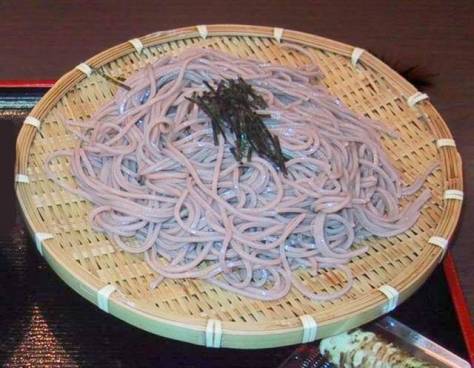
soba-saru

I’ve been asked for some time how to make your own soba/buckwheat noodles at home.
It is not that difficult, although you might need some particular tools.
Here is a simple recipe from which you can freely improvise.

INGREDIENTS:
Enough for 5 people
Buckwheat Flour/Soba-ko: 400g
Wheat flour (normal): 100g
Cold water: 250g
Some additional buckwheat flour for folding

TOOLS:
Large pan
Wooden rolling pin
Large Chinese/Japanese-style chopping knife
Wooden working surface/board
Board for guiding knife

RECIPE:

First step:
soba_1
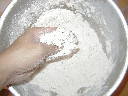
Pour buckwheat flour and Wheat flour into a large basin/pan and mix well.
Pour in one third of the water slowly in a thin flow. Mix with tip of fingers.

Step 2:
soba_2
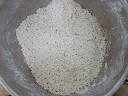
Break eventual hard lumps between fingers.

Step 3:
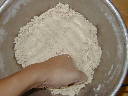
soba_3
Repeat step 1 twice again until you obtain a fine mixture.
Work as fast as possible.

Step 4:
soba_4
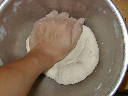
Once satisfied with the uniformity of the mixture, press hard with your knuckles.

Step 5:
soba_5
Once the flour has changed into one lump, fold and press with palm of the hand.

Step 6:
soba_6
Repeat Step 5 until lump has become shiny. Fold into a ball.

Step 7:
soba_7
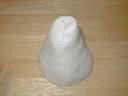
Shape the lump into a pyramid.

Step 8:
soba_8
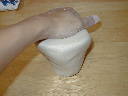
Turn pyramid onto its tip and press hard as to form a saucer.

Step 9:
soba_9
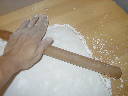
Start spreading lump with wooden roll pin. first angle by angle as to form square.

Step 10:
soba_10
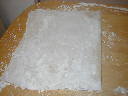
Once you have spread the lump until the square has diminished to a 2 mm thickness, first sprinkle some buckwheat flour all over the surface and fold in two.

Step 11:
soba_11
Sprinkle with buckwheat flour and fold again (4 layers).

Step 12:
soba_12
Cut soba lump with the heavy chopping knife, using the wooden guide board for even cutting by shifting the guide board slightly after each cut.

Step 13:
soba_13
Bring a large large pan of water to boil, drop noodles into water separating them between your fingers as they fall out. Boil for 2~3 minutes stirring with long chopsticks.

Step 14:
soba_14
Take noodles out of pan (the soba tsuyu/soba soup can be used hot later) with a sieve and coll down under running cold water. Drain.

Step 15:
soba_15
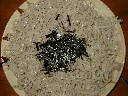
Serve onto plate with or without dry seaweed, wasabi, soba soup or whatever you feel like.
You could also make maki with the same soba.
Variations are many!

RECOMMENDED RELATED WEBSITES

Masala Herb by Helene Dsouza in Goa, India
Mummy I Can Cook! by Shu Han in London
Pierre.Cuisine, Francescannotwrite, My White Kitchen, 47 Japanese Farms Through The Eyes of Its Rural Communities, Foodhoe, Chucks Eats, Things that Fizz & Stuff, Five Euro Food by Charles,Red Shallot Kitchen by Priscilla,With a Glass, Nami | Just One Cookbook, Peach Farm Studio, Clumsyfingers by Xethia, PepperBento,Adventures in Bento Making, American Bent, Beanbento, Bento No, Bento Wo Tsukurimashou, Cooking Cute, Eula, Hapabento , Happy Bento, Jacki’s Bento Blog, Kitchen Cow, Leggo My Obento, Le Petit Journal Bento & CO (French), Lunch In A Box,
Susan at Arkonlite, Vegan Lunch Box; Tokyo Tom Baker, Daily Food Porn/Osaka, Only Nature Food Porn, Happy Little Bento, The Herbed Kitchen, J-Mama’s Kitchen, Cook, Eat, Play, Repeat, Bento Lunch Blog (German), Adventures In Bento, Anna The Red’s Bento Factory, Cooking Cute, Timeless Gourmet, Bento Bug, Ideal Meal, Bentosaurus, Mr. Foodie (London/UK), Ohayo Bento,

Must-see tasting websites:

-Sake: Tokyo Through The Drinking Glass, Tokyo Foodcast, Urban Sake, Sake World
-Wine: Palate To Pen, Warren Bobrow, Cellar Tours, Ancient Fire Wines Blog
-Beer: Good Beer & Country Boys, Another Pint, Please!
-Japanese Pottery to enjoy your favourite drinks: Yellin Yakimono Gallery

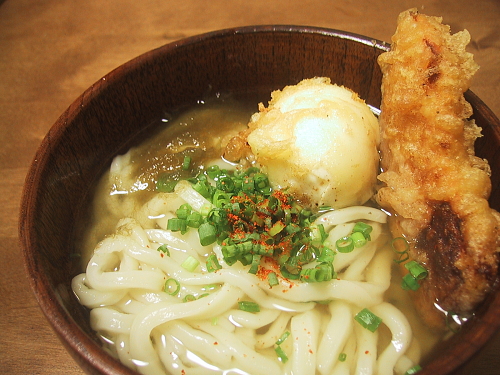
Japanese Gastronomy: Udon-The Basic Recipe

Udon/饂飩/うどん, although not suitable for wheat allergics, can be easily turned vegetarian or vegan, depending on the soup and seasonings/accompaniments.
It is fullfilling and healthy and can be eaten hot in soup or fried, or cold, especially in salads!

INGREDIENTS (basic):

-Wheat flour: 1 kg (fine, light type)
-Salt: 40 g (can be reduced to 30 g)
-Water: 460 ml

RECIPE:

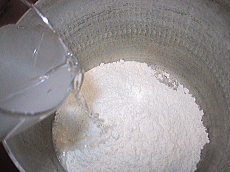
Dissolve salt in water first.
Pour flour in an all-purpose large bowl.
Pour the water onto the flour little by little.

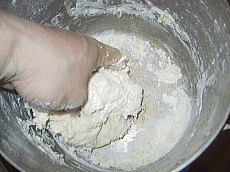
Mix and knead little by little until all the water has been used.
At that time you may think you haven’t added enough water. Don’t worry. Just keep kneading for 10 minutes. it will eventually become smooth.

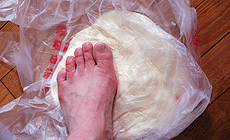
The following is interesting. In restaurants it is done with a special wooden lever with the chef standing on one end!
Wrap the dough in a cellophane paper and press the whole (wash your feet!) with the whole foot until the dough has spread somewhat flat. Take the dough out of the cellophane paper, shape it into a ball, wrap it again and press again with your foot.
Do that for 15 minutes.
Do not skip that step!
Ask hubby or (big) kids to help if necessary!

Shape the dough in a ball, wrap it in cellophane paper and leave it to rest for a while.

Sprinkle flour on a working table.
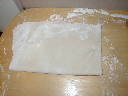
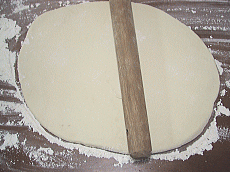
Roll the dough out into a 3 mm thick sheet.

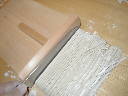
Sprinkle flour on the dough sheet surface, fold the dough as shown on pic above and cut every 3 mm to obtain square section noodles/udon.

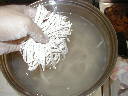
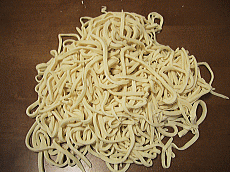
Shake and separate the udon and gather them as in picture above.
They are ready!

Throw the udon in water heated just before boiling point. Cook (make sure the water does not boil) for 6 minutes.
You can use the udon just after after but it is better to go through the next step:

Drop the udon into a strainer and wash them quickly under cold clear water. They will look far more appetizing this way and easy to conserve until you drop them into soup, fry them or dress them into a salad!

As for the soup, there are many ways to make it, whereas you are vegan, vegetarian or omnivore. If you use dashi, use konbu/seaweed dashi if you are not an omnivore. One can add soy sauce, mirin/sweet sake and sugar.
Serve the udon as they are or with chopped leeks and aburaage tofu and so forth!

RECOMMENDED RELATED WEBSITES

Masala Herb by Helene Dsouza in Goa, India
Mummy I Can Cook! by Shu Han in London
Pierre.Cuisine, Francescannotwrite, My White Kitchen, 47 Japanese Farms Through The Eyes of Its Rural Communities, Foodhoe, Chucks Eats, Things that Fizz & Stuff, Five Euro Food by Charles,Red Shallot Kitchen by Priscilla,With a Glass, Nami | Just One Cookbook, Peach Farm Studio, Clumsyfingers by Xethia, PepperBento,Adventures in Bento Making, American Bent, Beanbento, Bento No, Bento Wo Tsukurimashou, Cooking Cute, Eula, Hapabento , Happy Bento, Jacki’s Bento Blog, Kitchen Cow, Leggo My Obento, Le Petit Journal Bento & CO (French), Lunch In A Box,
Susan at Arkonlite, Vegan Lunch Box; Tokyo Tom Baker, Daily Food Porn/Osaka, Only Nature Food Porn, Happy Little Bento, The Herbed Kitchen, J-Mama’s Kitchen, Cook, Eat, Play, Repeat, Bento Lunch Blog (German), Adventures In Bento, Anna The Red’s Bento Factory, Cooking Cute, Timeless Gourmet, Bento Bug, Ideal Meal, Bentosaurus, Mr. Foodie (London/UK), Ohayo Bento,

Must-see tasting websites:

-Sake: Tokyo Through The Drinking Glass, Tokyo Foodcast, Urban Sake, Sake World
-Wine: Palate To Pen, Warren Bobrow, Cellar Tours, Ancient Fire Wines Blog
-Beer: Good Beer & Country Boys, Another Pint, Please!
-Japanese Pottery to enjoy your favourite drinks: Yellin Yakimono Gallery

Vegan Life & Gastronomy in Japan (& Shizuoka)

Vegan Fried Avocado

I have always been intrigued by the priorities and needs of my vegan and vegetarian friends. I’m an incorrigible omnivore and will ever be, but I can appreciate other gastronomies, be they even based on vegetables only.
I also hold a deep interest in anything organic, although I don’t make it a tenet of my everyday life.
As a general rule I strive for balance.
Vegans and vegetarians have their reasons to be so, and that is their private concern. Full stop.
On the other hand, I cannot be forced into changing my ways. I did recently have to fend a concerted hate mail assault by a group of slightly misled vegans following an article of mine, but that is not going to stop me from trying to help my friends in this country.

Many vegans and vegetarians harbour doubts as to whether visit Japan, or Shizuoka for that matter.
They should not be wary of the life here. I dare say that it is almost the ideal country for them to live!
Shizuokaisalso a paradise for organic vegetables. I know of one extraordinary farmer who grows more than 190 varieties on 3 ha in Fujinomiya City!
Alright, vegans and vegetarians certainly need to be prepared!

Japanese Vegan Dashi

The very first query I have to field is:
-“But they use dashi everywhere!”
The Japanese certainly do, but there two basic kinds of dashi/Japanese soupstocks: one made with dry bonito shavings and the other made with konbu/seaweed. Check Vegan Dashi Recipe.

Now miso is also vegan, so you can imagine all the soup recipes you can concoct! Just Have a look at Vegan Recipes and you will discover what I’m suggesting!

-“Alright! Now, I have my soup to keep me hot in winter. But I also fancy a drink with my food. Now, what would you recommend?”
Well there is a atriaght easy answer: Japanese Sake!
To cut a long story short, do read what I wrote about the ultimate vegan drink!
Let just me say that true high quality (Shizuoka is the best! Lucky, aren’t I?) is made with pure water, rice, and yeast. That is all! Sometimes lactic acid is used, but it is of vegetal origin.
Incidentally, high quality shochu is also vegan!

Vegan sashimi at Yasaitei, Japan.

Now, that we have covered this important subject, shall we go to our main concern, namely vegetables?
You will be, I’m ready to bet about it, really flabbergasted by the variety of vegetables available in this country and especially Shizuoka, a famed area for organic vegetable cultivation.
The Japanese are even cultivating vegetables that have been forgotten elsewhere!
Check the following:
Vegetables Facts & Tips.
For Vegans and Vegetarians: Forgotten Vegetables.

tomii-veg31

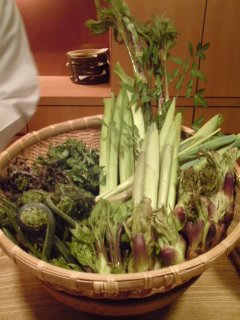
Mountain vegetables at Tomii, Shzuoka City.

Have you heard of the Japanese mountain vegetables/Sansai/山菜?
It is just mind-boggling to discover them all!
Check: Japanese Mountain Vegetables!

Do not forget that tea and soba can be vegan! How about a combination of tea and soba for a quick lunch?

CHAZUKE-1

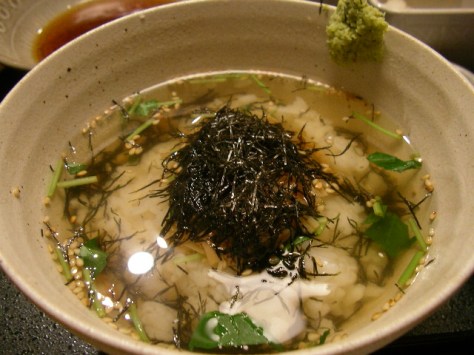
Chazuke

And how about Somen, Chazuke, and Tofu?

zarudofu

“Zarudofu”

Learn how to make your own Tofu!

tofu-kinds-5

“Tofu Doughnuts” at Shizutetsu Supermarket in Shizuoka City

Ever heard of Tofu Donuts?
Why don’t you try your hand after reading that easy Vegan Tofu Donut Recipe?

Vegan sushi plate at Sushi Ko, Shizuoka City.

-“I want to eat sushi, but how can I get vegan sushi in Japan?”
That should not be a problem.
First why don’t you have a look at the following:
Vegan & Vegetarian Sushi.
Vegan Sushi Recipe Suggestions.

Just walk around and try to find a friendly Sushi Restaurant along with some friends first and gently ask for vegetable sushi (without the bonito shavings or mayonnaise!). Keep going to the same place and soon or later the chef will enjoy the challenge and even propose you new creations.
Or check the Sushi Rice Basic Recipe and try making it at home!

And Wasabi is also vegan!

Mozuku seaweed served at Yasaitei, Shizuoka City.

Do not forget all the possibilities offered by seaweed, probably the most ubiquitous gastronomic ingredient in this country!
And ther are plenty of varieties: check Seaweed, the Vegetable of the Oceans!
Actually Shizuoka is not only a great producer of agar but also boasts the greatest number of edible seaweed varieties!

The all-organic vegetables lunch tray at Magokoro in Kamakura, Kanagawa Prefecture. They have a vegan version!

I’m not that keen on religion, but if your are a Buddhist, Japanese temples sometimes offer vegan/vegetarian meals! Kamakura is just but an example!

WAGASHI-1

Wagashi Tray.

-“And what for dessert?”
I knew you were going to ask that!
Have you heard of Wagashi?
Just reading about it will make you salivate!

Aright, if you need help, just drop me a line!LOL
At least I sincerely hope I have contributed to the image of Japan you wished to see!

RECOMMENDED RELATED WEBSITES

Masala Herb by Helene Dsouza in Goa, India
Mummy I Can Cook! by Shu Han in London
Pierre.Cuisine, Francescannotwrite, My White Kitchen, 47 Japanese Farms Through The Eyes of Its Rural Communities, Foodhoe, Chucks Eats, Things that Fizz & Stuff, Five Euro Food by Charles,Red Shallot Kitchen by Priscilla,With a Glass, Nami | Just One Cookbook, Peach Farm Studio, Clumsyfingers by Xethia, PepperBento,Adventures in Bento Making, American Bent, Beanbento, Bento No, Bento Wo Tsukurimashou, Cooking Cute, Eula, Hapabento , Happy Bento, Jacki’s Bento Blog, Kitchen Cow, Leggo My Obento, Le Petit Journal Bento & CO (French), Lunch In A Box,
Susan at Arkonlite, Vegan Lunch Box; Tokyo Tom Baker, Daily Food Porn/Osaka, Only Nature Food Porn, Happy Little Bento, The Herbed Kitchen, J-Mama’s Kitchen, Cook, Eat, Play, Repeat, Bento Lunch Blog (German), Adventures In Bento, Anna The Red’s Bento Factory, Cooking Cute, Timeless Gourmet, Bento Bug, Ideal Meal, Bentosaurus, Mr. Foodie (London/UK), Ohayo Bento,

Must-see tasting websites:

-Sake: Tokyo Through The Drinking Glass, Tokyo Foodcast, Urban Sake, Sake World
-Wine: Palate To Pen, Warren Bobrow, Cellar Tours, Ancient Fire Wines Blog
-Beer: Good Beer & Country Boys, Another Pint, Please!
-Japanese Pottery to enjoy your favourite drinks: Yellin Yakimono Gallery

Kyoto Gastronomy: Kyoto Vegetables-Kyoyasai/京野菜

I have just come back from a 3-day “holiday” in Kyoto, a touristic spot famed all over the world.
Kyoto does have its own gastronomy, what with the untold number of temples of different religions and sects.
Vegetables have been the staple of the city for a long time and when they are grown in Kyoto they are simply called “Kyo-yasai” (“kyo” for “Kyoto” and “yasai” for “vegetables”).
There are officially 41 traditional varieties of them including 21 with a registered brand/controlled appelation and 43 more varieties have also been recently recognised as such.

One way to discover them if you do not have the opportunity or time to discover vegetable fields is to visit the long and narrow Nishiki/錦 covered market in Central Kyoto.

Unfortunately, in my own view, the market has turned into a crowded touristic spot with all the pitfalls bound to open under your feet.
The real Kyoto vegetables are the minority and you need to understand Japanese to discern what is real and what is “fake”. I even found anorexic wasabi imported from South Korea!
Moreover, so-called Kyo-yasai are increasingly being grown away from Kyoto, especially in Shizuoka where the single town of Iwata grows 80% of all “ebi-imo”, one of the most representative vegetables of the famed city!

But there is another way to discover those celebrated vegetables for the pleasure of vegans, vegetarians and vegans!
About lunch time or before dinner time, just walk past the restaurants lining the side and back streets!

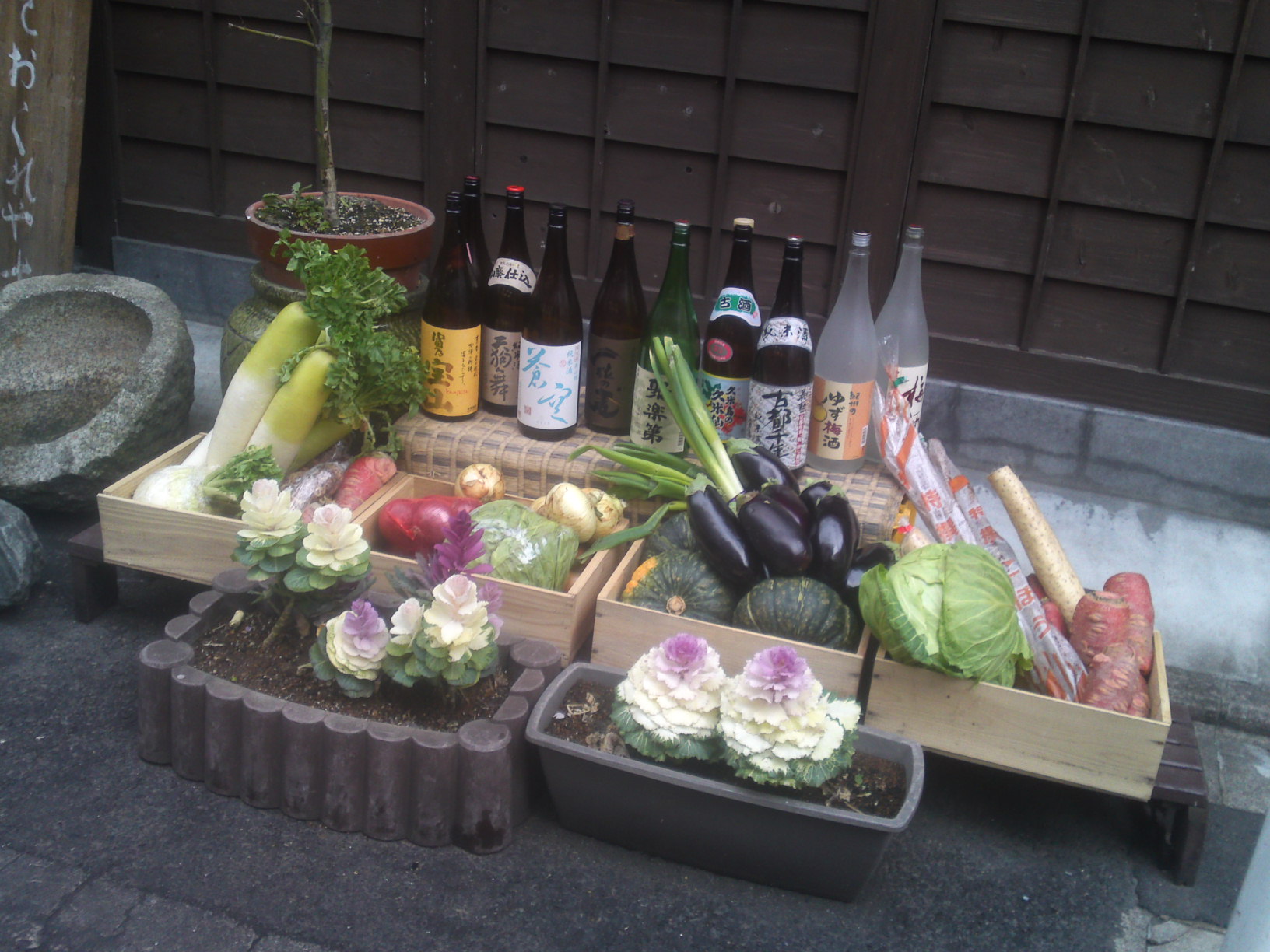
All izakayas and restaurants proud of their vegetables will display them outside for all to see!

They make for great souvenir photographs to show back home!

For a closer view!
Do you recognize any?

Even in front of Italian restaurants!

Placed in front of the outdoors menu board…

For a more distant view to discover the small Japanese restaurant at lunch time!

In front of another busy Japanese restaurant at night!

But this was my favorite!

Lined between a small cabbage garden and a great queue of Japanese sake!

I hope this will give you another idea as to how visit Kyoto!

RECOMMENDED RELATED WEBSITES

Masala Herb by Helene Dsouza in Goa, India
Mummy I Can Cook! by Shu Han in London
Pierre.Cuisine, Francescannotwrite, My White Kitchen, 47 Japanese Farms Through The Eyes of Its Rural Communities, Foodhoe, Chucks Eats, Things that Fizz & Stuff, Five Euro Food by Charles,Red Shallot Kitchen by Priscilla,With a Glass, Nami | Just One Cookbook, Peach Farm Studio, Clumsyfingers by Xethia, PepperBento,Adventures in Bento Making, American Bent, Beanbento, Bento No, Bento Wo Tsukurimashou, Cooking Cute, Eula, Hapabento , Happy Bento, Jacki’s Bento Blog, Kitchen Cow, Leggo My Obento, Le Petit Journal Bento & CO (French), Lunch In A Box,
Susan at Arkonlite, Vegan Lunch Box; Tokyo Tom Baker, Daily Food Porn/Osaka, Only Nature Food Porn, Happy Little Bento, The Herbed Kitchen, J-Mama’s Kitchen, Cook, Eat, Play, Repeat, Bento Lunch Blog (German), Adventures In Bento, Anna The Red’s Bento Factory, Cooking Cute, Timeless Gourmet, Bento Bug, Ideal Meal, Bentosaurus, Mr. Foodie (London/UK), Ohayo Bento,

Must-see tasting websites:

-Sake: Tokyo Through The Drinking Glass, Tokyo Foodcast, Urban Sake, Sake World
-Wine: Palate To Pen, Warren Bobrow, Cellar Tours, Ancient Fire Wines Blog
-Beer: Good Beer & Country Boys, Another Pint, Please!
-Japanese Pottery to enjoy your favourite drinks: Yellin Yakimono Gallery

Japanese Gastronomy: Yuzu Koshio/Lime & Chilies Mix-Recipe

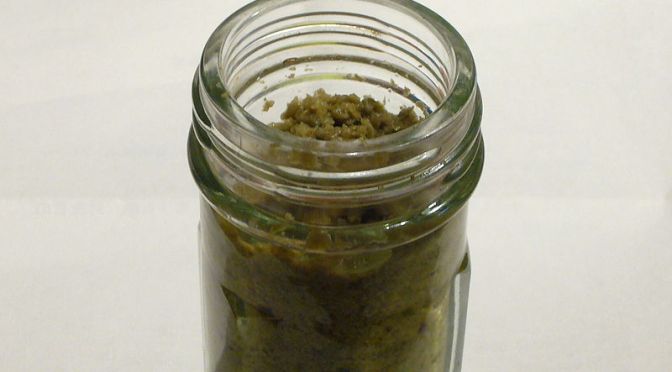
YUZU-KOSHIO-1

Yuzu Koshio or lime and Chili mix is prepared with green hot chili (as opposed to red one) and lime skin/zest.
It is quite comnon in Kyushu Island, especially in Oita Prefecture, as well as far as in Okinawa.
It is quickly becoming more and more popular all over Japan, and is even locally produced in our Prefecture, Shizuoka!
It is a very versatile condiment that can be used in all kinds of Asian cuisines by vegans, vegetarians and omnivores alike!

Here is a simple recipe. Don’t forget you can replace green chilies with red chilies for two varieties!

INGREDIENTS:

-Green lime: 1 large
-Fresh green chilies: 6
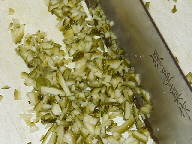
-Salt: to taste

RECIPE:

YUZU-KOSHIO-2

-Peel the lime.
Wash the lime zests and green chilies in clean cold water.

YUZU-KOSHIO-3

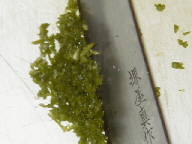
-Chop lime zests as fine as possible.

YUZU-KOSHIO-4

-Cut the chilies in two, discard the seeds and chop them all as fine as possible.

YUZU-KOSHIO-5

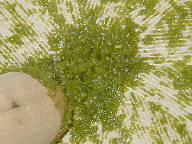
-Grind lime zests and chilies with a pestle so as to obtain a paste.

YUZU-KOSHIO-6

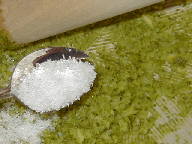
-Add salt (experimentation might be needed there) and mix well.

YUZU-KOSHIO-7

-Add lime juice (experimentation might be needed there, too) and mix well.

YUZU-KOSHIO-8

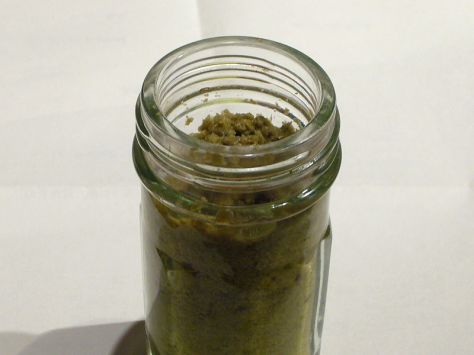
-Wrap the mix in cellophane paper and store in a tupperware box, or pour it inside a small bottle. Keep it in the fridge away from the light.
Consume as soon as possible!

RECOMMENDED RELATED WEBSITES

Masala Herb by Helene Dsouza in Goa, India
Mummy I Can Cook! by Shu Han in London
Pierre.Cuisine, Francescannotwrite, My White Kitchen, 47 Japanese Farms Through The Eyes of Its Rural Communities, Foodhoe, Chucks Eats, Things that Fizz & Stuff, Five Euro Food by Charles,Red Shallot Kitchen by Priscilla,With a Glass, Nami | Just One Cookbook, Peach Farm Studio, Clumsyfingers by Xethia, PepperBento,Adventures in Bento Making, American Bent, Beanbento, Bento No, Bento Wo Tsukurimashou, Cooking Cute, Eula, Hapabento , Happy Bento, Jacki’s Bento Blog, Kitchen Cow, Leggo My Obento, Le Petit Journal Bento & CO (French), Lunch In A Box,
Susan at Arkonlite, Vegan Lunch Box; Tokyo Tom Baker, Daily Food Porn/Osaka, Only Nature Food Porn, Happy Little Bento, The Herbed Kitchen, J-Mama’s Kitchen, Cook, Eat, Play, Repeat, Bento Lunch Blog (German), Adventures In Bento, Anna The Red’s Bento Factory, Cooking Cute, Timeless Gourmet, Bento Bug, Ideal Meal, Bentosaurus, Mr. Foodie (London/UK), Ohayo Bento,

Must-see tasting websites:

-Sake: Tokyo Through The Drinking Glass, Tokyo Foodcast, Urban Sake, Sake World
-Wine: Palate To Pen, Warren Bobrow, Cellar Tours, Ancient Fire Wines Blog
-Beer: Good Beer & Country Boys, Another Pint, Please!
-Japanese Pottery to enjoy your favourite drinks: Yellin Yakimono Gallery

Japanese Gastronomy: Oysters steamed in Rice/Kaki Meshi Recipe

Winter means a large supply of fresh oyters in Japan and many other countries! But we certainly need some fresh and simple ideas to consume them, even if raw oysters are the norm.
Oyster chowder is a traditional option for example.
Have you heard of this typical Japanese dish called “Kaki Meshi/牡蠣飯, or oysters steamed in rice?
It has the advantage of being a hearty, simple and very healthy recipe.

Here is the basic recipe. There are plenty of options open for it!
INGREDIENTS: As I often do with basic Japanese recipes, I leave it to you as for exact quantities to accomodate personal preferences and priorities.

-Oysters/蠣
-Rice/米
-Soy sauce/醤油
-Japanese sake/酒
-Dashi/Japanese soup stock/出汁
-Grated daikon/大根おろし
-Ginger/生姜/cut into very fine strips
-Lime/yuzu/柚子/grated zest
-Thin leeks/子葱/コネギ
-Trefoil/Mitsuba/三葉

RECIPE:

Oysters:
Using fresh oysters in their shells (don’t forget to take them out!LOL) is a bit too extravagant for this recipe, and hard work.
In Japan they can be found in any markets sold packed in water. This country being very strict on hygiene rules, I have no problem using them.

Rice:
Prepare the rice before opening the pack of oysters.
3 “go”, or about 540 cc (liquid measure) should be enough. Use Japanese round rice. Check if it has to be washed first or not, as both varieties are available.
(After washing the rice, if necessary) let soak the rice in clear water for 30 minutes.
Drain thoroughly.

Massaging the oysters in grated daikon:
This is a very important step which will ensure that the oysters are properly cleaned.
Prepare enough grated daikon.
If you use oysters just taken out of their shells, massaging them with salt might be better.
Wash quickly under clear clean water and drain thoroughly.

Pre-cooking the oysters:
In pan pour just enough sake and soft soy sauce variety to simmer the the oysters in for 2~3 minutes.
The more sake, the better!
Do experiment!

Sieving/filter the juices:
Take oysters out with a sieve ladle and keep aside.
Strain/filter the juices into the rice cooker.

Preparing the rice steaming liquid/soup:
Add dashi/Japanese soup stock so that the total liquid is the equivalent of the rice volume x 1.2=about 650 cc.

Steaming:
Pour the rice into the steaming liquid.
Place oysters and ginger on top.
Close rice cooker and switch on.

Wait until the rice is cooked.
DO NOT OPEN the cooker at once, but leave it closed for 10 more minutes!
Open the cooker.
Drop in 90% of the chopped thin leeks, grated yuzu zest and cut trefoil.
Mix in quickly.
Serve at once sprinkled with some more thin leeks, grated yuzu and cut trefoil.

RECOMMENDED RELATED WEBSITES

Masala Herb by Helene Dsouza in Goa, India
Mummy I Can Cook! by Shu Han in London
Pierre.Cuisine, Francescannotwrite, My White Kitchen, 47 Japanese Farms Through The Eyes of Its Rural Communities, Foodhoe, Chucks Eats, Things that Fizz & Stuff, Five Euro Food by Charles,Red Shallot Kitchen by Priscilla,With a Glass, Nami | Just One Cookbook, Peach Farm Studio, Clumsyfingers by Xethia, PepperBento,Adventures in Bento Making, American Bent, Beanbento, Bento No, Bento Wo Tsukurimashou, Cooking Cute, Eula, Hapabento , Happy Bento, Jacki’s Bento Blog, Kitchen Cow, Leggo My Obento, Le Petit Journal Bento & CO (French), Lunch In A Box,
Susan at Arkonlite, Vegan Lunch Box; Tokyo Tom Baker, Daily Food Porn/Osaka, Only Nature Food Porn, Happy Little Bento, The Herbed Kitchen, J-Mama’s Kitchen, Cook, Eat, Play, Repeat, Bento Lunch Blog (German), Adventures In Bento, Anna The Red’s Bento Factory, Cooking Cute, Timeless Gourmet, Bento Bug, Ideal Meal, Bentosaurus, Mr. Foodie (London/UK), Ohayo Bento,

Must-see tasting websites:

-Sake: Tokyo Through The Drinking Glass, Tokyo Foodcast, Urban Sake, Sake World
-Wine: Palate To Pen, Warren Bobrow, Cellar Tours, Ancient Fire Wines Blog
-Beer: Good Beer & Country Boys, Another Pint, Please!
-Japanese Pottery to enjoy your favourite drinks: Yellin Yakimono Gallery